
- AI growth prediction tools analyze historical data to forecast subscriber and view milestones
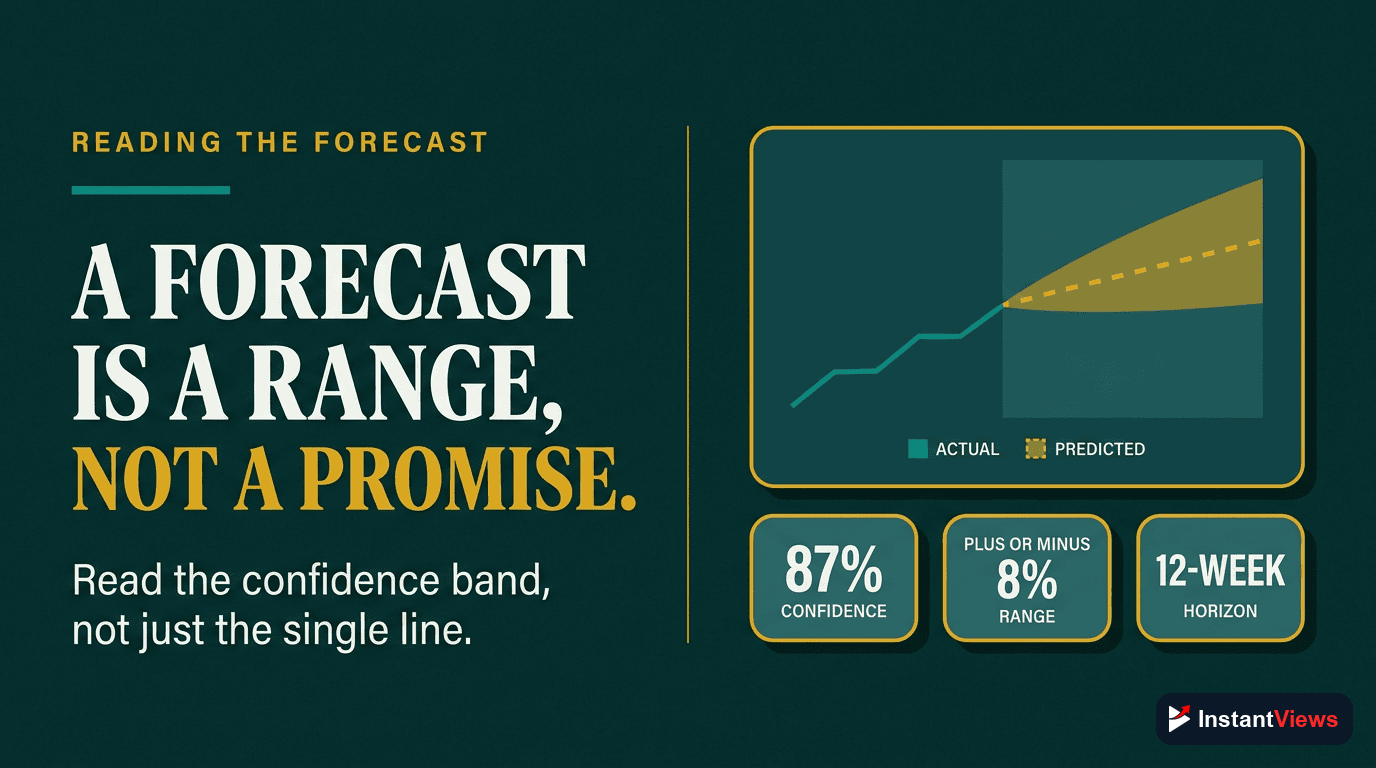
- Short-term predictions (30 days) achieve 70-85% accuracy for consistent uploaders
- Key inputs include upload frequency, engagement rates, and watch time trends
- Use predictions for goal-setting and strategy, not as guaranteed outcomes
- Viral content and algorithm changes can significantly alter any prediction
Every YouTube creator wonders the same thing: When will I hit 1,000 subscribers? 100,000? A million? With AI-powered growth prediction tools, you can now get data-driven estimates that help you plan your content strategy and set realistic goals.
Growth prediction technology has advanced significantly in 2026, using machine learning models trained on millions of channels to forecast your channel's trajectory. But how accurate are these predictions, and how should you use them?
This guide explains how YouTube growth prediction works, which tools deliver the best results, and how to use forecasts to accelerate your channel's growth.
How AI Growth Prediction Works
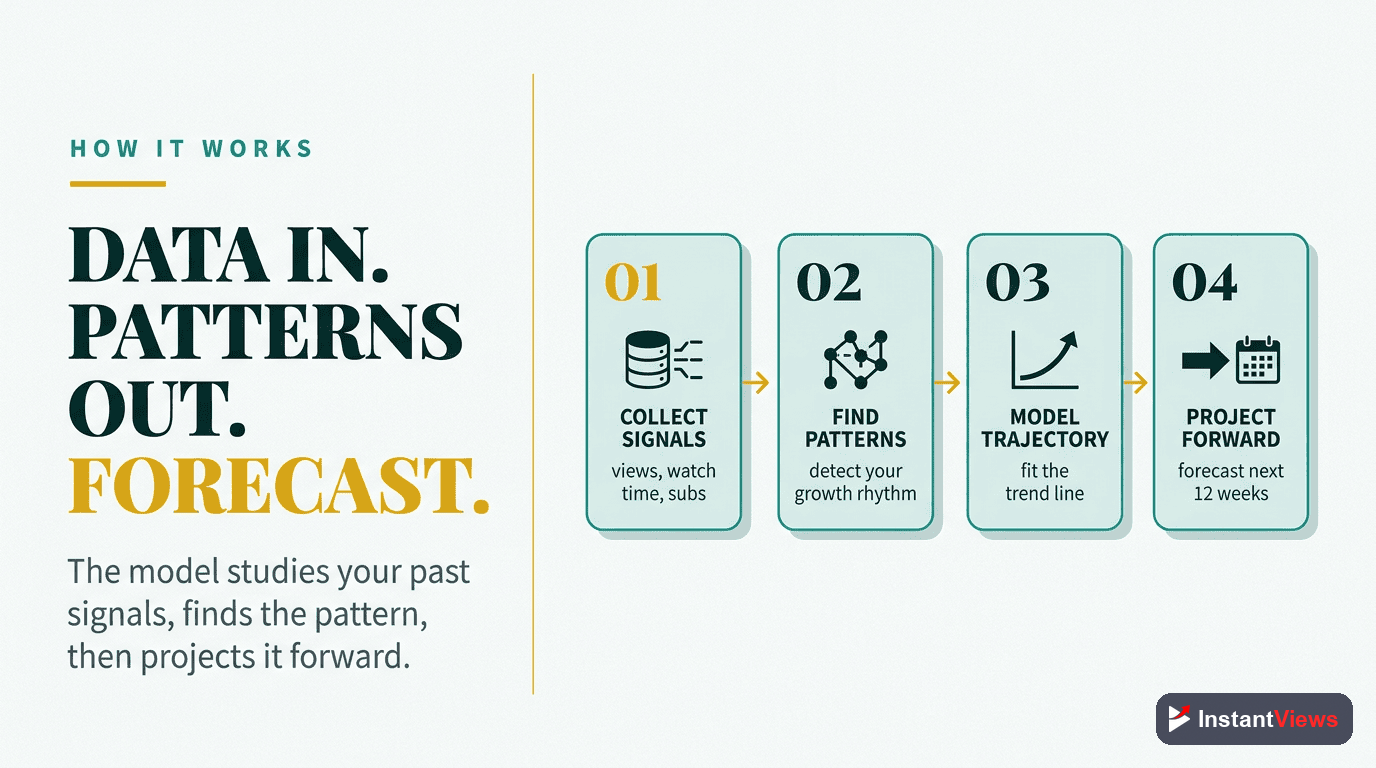
AI growth prediction tools analyze patterns in your channel's historical data and compare them to similar channels to forecast future performance. Here is what they examine:
Core Data Inputs
- Historical subscriber growth - Daily, weekly, and monthly subscriber changes over time
- View velocity - How quickly videos accumulate views after publishing
- Upload frequency - Consistency and volume of content production
- Engagement metrics - Likes, comments, shares, and their trends
- Watch time patterns - Average view duration and total watch time growth
What AI Models Consider
| Factor | Weight | Why It Matters |
|---|---|---|
| Recent Trend | High | Most predictive of near-term growth |
| Upload Consistency | High | Algorithm favors consistent creators |
| Engagement Rate | Medium-High | Indicates content quality and audience fit |
| Niche Average | Medium | Sets realistic ceilings and floors |
| Seasonality | Medium | Holiday periods and school schedules |
| Channel Age | Low-Medium | New channels grow differently than established ones |
Understanding Prediction Accuracy
Not all predictions are created equal. Accuracy varies significantly based on the timeframe and channel characteristics.
Accuracy by Timeframe
| Prediction Window | Typical Accuracy | Confidence Level |
|---|---|---|
| 7 Days | 85-92% | Very High |
| 30 Days | 70-85% | High |
| 90 Days | 55-75% | Moderate |
| 6 Months | 40-60% | Low-Moderate |
| 1 Year | 25-45% | Low |
Factors That Reduce Accuracy
- Inconsistent uploads - Sporadic posting creates unpredictable patterns
- Niche changes - Pivoting content types breaks historical comparisons
- Algorithm updates - YouTube changes how content is recommended
- External events - Viral moments, controversies, or platform changes
- New channels - Limited data means wider prediction ranges
No prediction tool can account for viral videos. A single viral hit can add more subscribers in a week than predictions estimated for the entire year. Use predictions as a baseline, not a ceiling.
How to Use Growth Predictions Strategically
Growth predictions are most valuable when used to inform decisions, not dictate them. Here are strategic applications:
1. Set Realistic Milestones
Use predictions to set achievable goals:
- If predictions show 1,000 subscribers in 4 months, plan monetization prep accordingly
- Set stretch goals at 120-150% of predicted growth
- Break annual goals into monthly checkpoints
- Adjust expectations based on your upload consistency
2. Identify Growth Opportunities
Compare your predicted growth to top performers in your niche:
- If predictions are below niche average, analyze what top channels do differently
- Look for content types that drive above-average growth
- Identify upload frequencies that correlate with faster growth
3. Plan Resource Allocation
Predictions help you decide when to invest in your channel:
- Equipment upgrades - Time purchases to reach monetization
- Team expansion - Hire editors when revenue projections support it
- Content investments - Budget for higher production based on growth trajectory
Predict Your Channel Growth
Use our free Growth Prediction Calculator to see when you will hit your next milestone.
Try Growth Calculator →
Beating Your Growth Predictions
Predictions are based on current trajectories. Here is how to outperform them:
Increase Upload Consistency
The YouTube algorithm rewards predictable publishing schedules. Channels that post at the same time each week typically grow 40-60% faster than sporadic uploaders.
Optimize for Click-Through Rate
Better thumbnails and titles increase your CTR, leading to more impressions and subscribers. A 1% CTR improvement can translate to 20-30% more views over time.
Improve Audience Retention
Videos that keep viewers watching longer get pushed to more people. Focus on your first 30 seconds - this is where most viewers decide to stay or leave.

Frequently Asked Questions
AI growth predictions are typically 70-85% accurate for short-term forecasts (30 days) when channels maintain consistent upload schedules. Long-term predictions (6-12 months) are less reliable due to algorithm changes, viral content, and market shifts. Use predictions as directional guidance, not guarantees.
Growth prediction tools analyze historical subscriber counts, view velocity, engagement rates, upload frequency, watch time trends, audience retention patterns, and seasonal fluctuations. Advanced tools also consider niche benchmarks and algorithm update impacts.
Yes, growth calculators can estimate milestone dates based on your current growth rate. However, predictions assume consistent performance. Viral videos, algorithm changes, or upload gaps can significantly alter timelines. Use predictions to set realistic goals and track progress.
Predictions fail when unexpected events occur: viral videos, algorithm updates, channel strikes, extended breaks, or major niche changes. AI models are based on historical patterns and cannot predict black swan events or sudden creator decisions.
Improve predicted growth by increasing upload consistency, optimizing thumbnails and titles for CTR, improving audience retention in the first 30 seconds, engaging with comments, and analyzing which content types perform best. Growth prediction tools can help identify which metrics need improvement.
Use growth predictions as one input among many for business decisions. They are valuable for setting expectations and identifying trends, but should not be the sole basis for major investments. Always consider multiple scenarios and maintain financial buffers for uncertainty.