- Spotting trends early gives you a massive competitive advantage on YouTube
- The best time to publish is during the rising phase, before peak interest
- Use Google Trends, social media, and competitor monitoring to identify trends
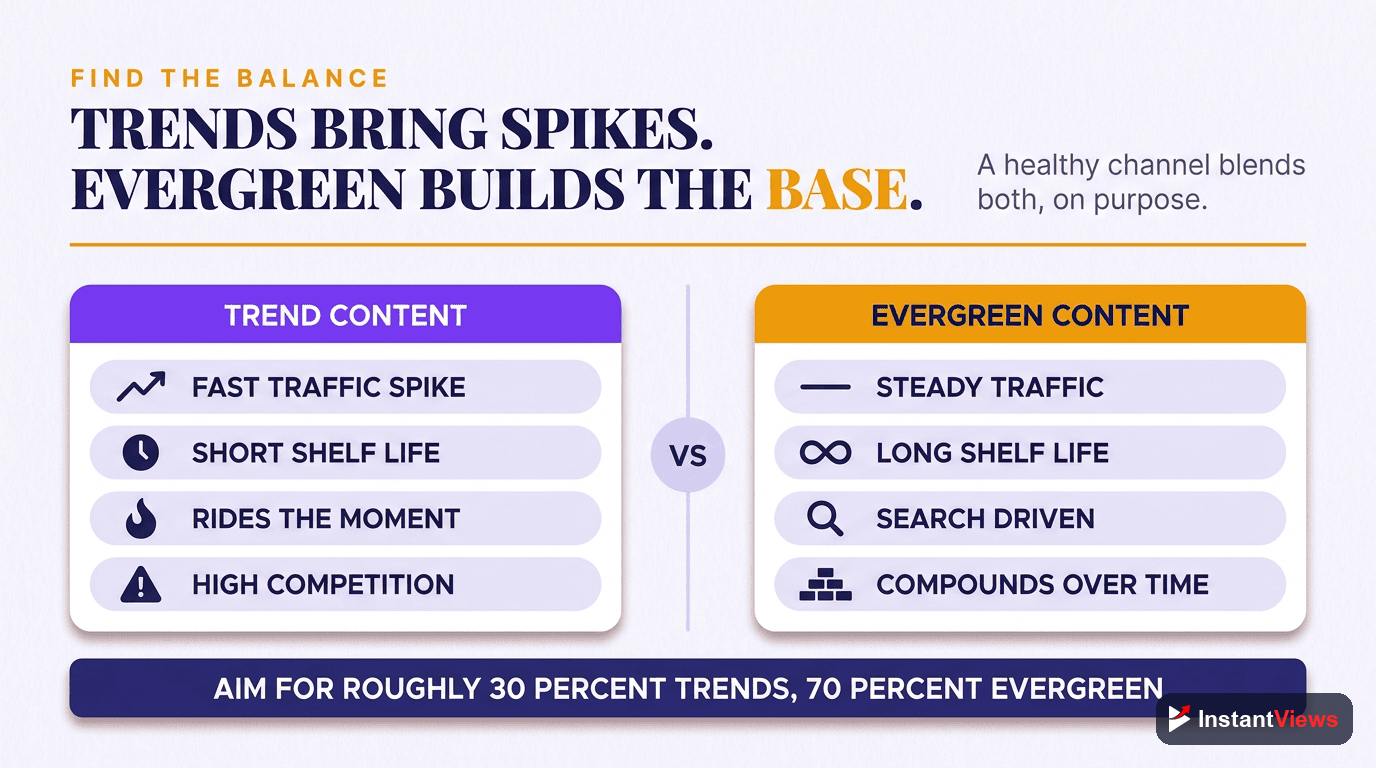
- Balance trend content (spikes) with evergreen content (consistent views)
- Add unique angles to stand out from the flood of trend-chasing content
Riding a trend at the right moment can transform a small channel overnight. Videos published early in a trend's lifecycle can capture massive search volume and suggested video traffic that would otherwise go to larger channels.
But trend-chasing is a double-edged sword. Publish too early and there is no search volume. Publish too late and you are drowned out by competition. Understanding the trend lifecycle is essential for making trends work for your channel.
This guide teaches you how to identify emerging trends, time your content perfectly, and create trend videos that continue generating views long after the initial spike.
Understanding the Trend Lifecycle
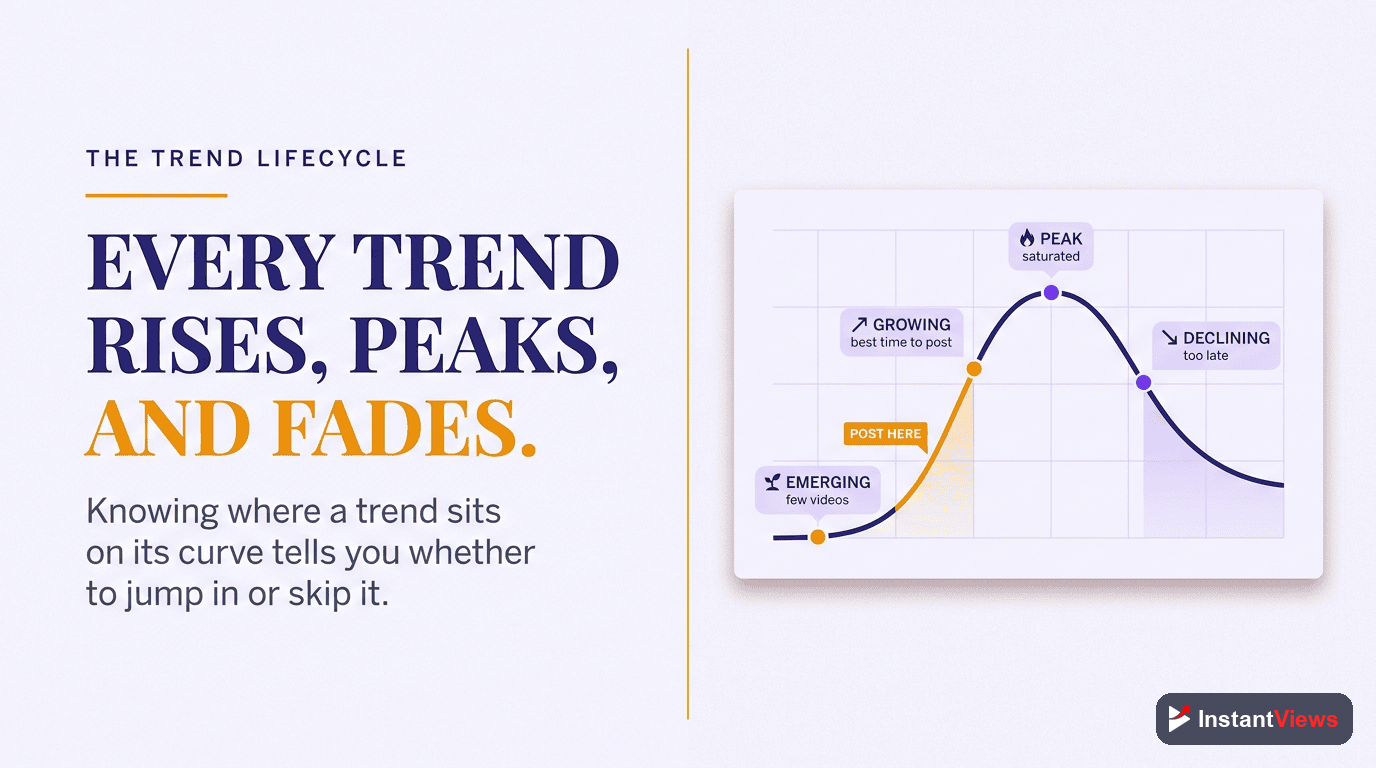
Every trend follows a predictable pattern. Understanding where a trend is in its lifecycle helps you decide whether and when to create content:
| Phase | Characteristics | Strategy |
|---|---|---|
| Emergence | Few creators covering, low search volume | High risk, high reward if trend takes off |
| Rising | Growing interest, moderate competition | Optimal timing for most creators |
| Peak | Maximum interest, high competition | Only viable with unique angle or speed |
| Declining | Interest fading, saturated content | Generally avoid unless evergreen angle |
| Residual | Stable low interest, established content | Hard to compete with existing videos |
How to Find Emerging Trends
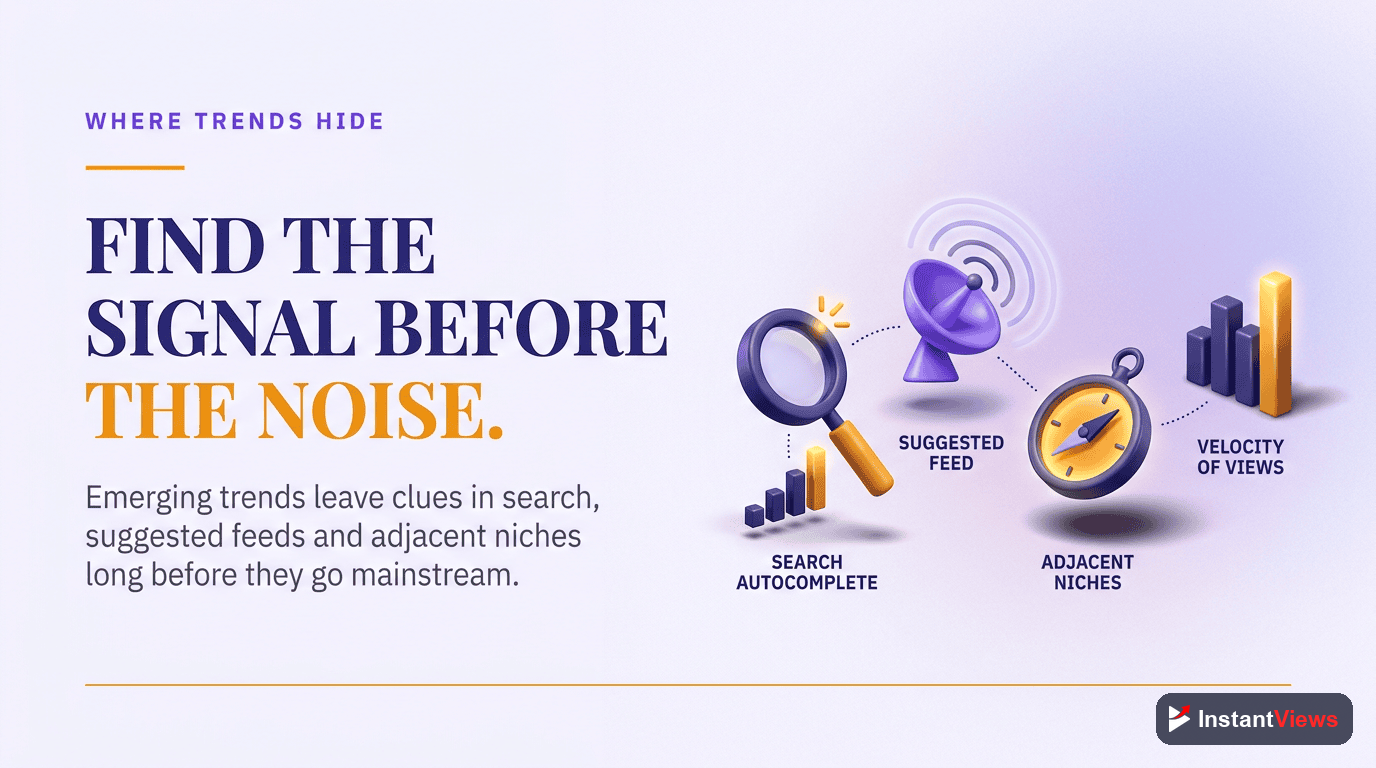
Successful trend-spotting requires monitoring multiple sources. Here are the most effective methods:
Google Trends
Google Trends is the most reliable tool for identifying rising topics:
- Filter by "YouTube Search" for YouTube-specific trends
- Check "Rising" queries - these are gaining momentum
- Set alerts for keywords in your niche
- Compare multiple terms to gauge relative interest
Social Media Monitoring
| Platform | What to Monitor | Trend Speed |
|---|---|---|
| Twitter/X | Trending hashtags, viral tweets | Very fast (hours) |
| Rising posts, niche subreddits | Fast (hours to days) | |
| TikTok | Trending sounds, viral formats | Very fast (hours) |
| Explore page, hashtag trends | Moderate (days) | |
| News Sites | Breaking stories, announcements | Immediate |
YouTube-Specific Tools
- YouTube Trending Page - Already-peaked trends, useful for pattern recognition
- VidIQ Keyword Tool - Shows trending keywords with competition data
- TubeBuddy Keyword Explorer - Identifies rising search terms
- Competitor Channel Monitoring - See what topics leaders are covering
Trend Timing Strategies
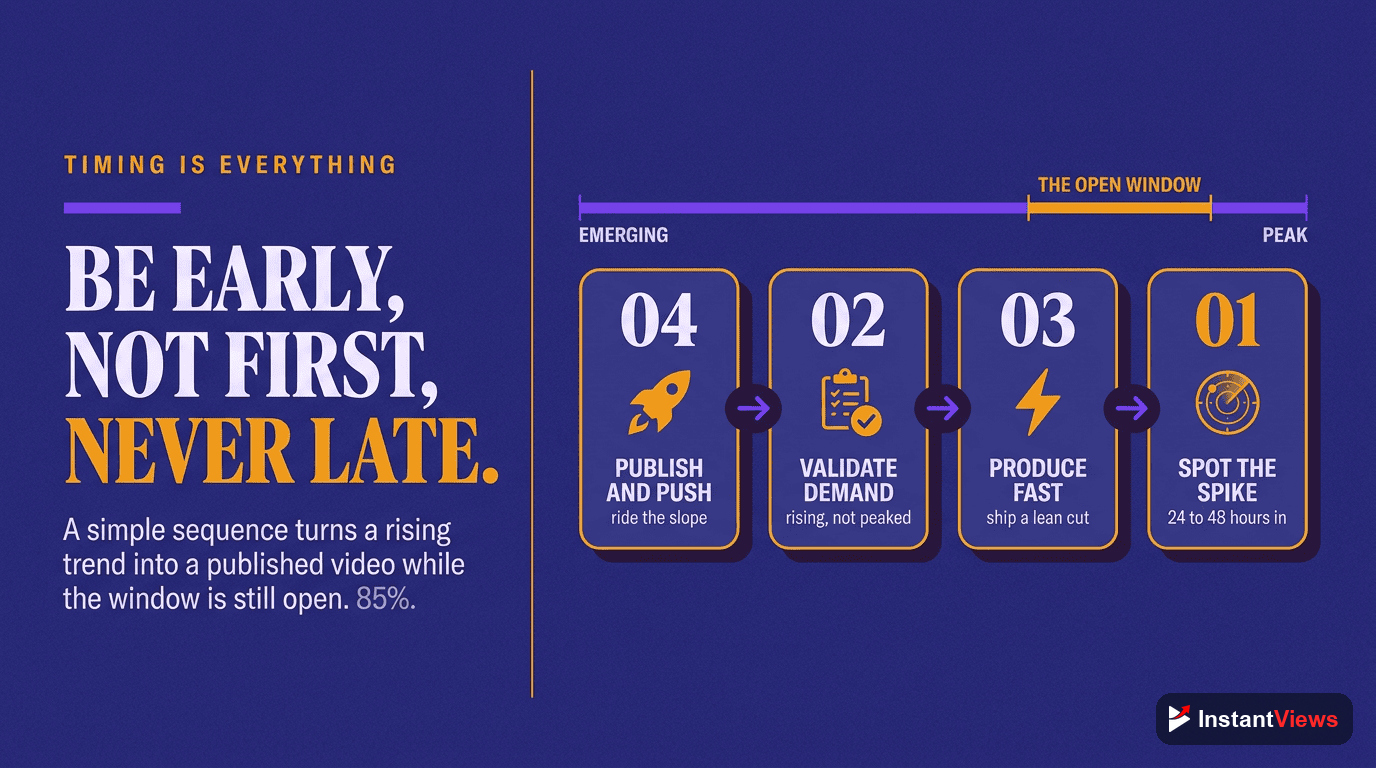
Different types of trends require different timing strategies:
Fast Trends (Hours to Days)
Breaking news, memes, and viral moments require immediate action:
- Decision time: 30 minutes to 2 hours
- Production time: Same day, simplified production
- Quality tradeoff: Speed beats polish
- Examples: Breaking news, celebrity incidents, viral clips
Medium Trends (Days to Weeks)
Product launches, movie releases, and cultural events allow more planning:
- Decision time: 1-3 days of research
- Production time: 2-5 days
- Quality tradeoff: Balance speed and quality
- Examples: Tech launches, game releases, sports events
Slow Trends (Weeks to Months)
Seasonal trends and cultural shifts allow full production value:
- Decision time: Plan weeks ahead
- Production time: Full production cycle
- Quality tradeoff: Quality can win
- Examples: Holiday content, annual events, industry changes
Do not spend a week perfecting a trend video only to publish after the trend has peaked. Better to publish a good video at the right time than a perfect video when interest has faded.
Creating Unique Trend Content
When everyone covers the same trend, differentiation becomes critical:
Finding Your Angle
- Niche perspective - Cover the trend from your specific expertise
- Contrarian take - Offer a different opinion (respectfully)
- Deeper analysis - Go beyond surface-level coverage
- How-to application - Show practical use of the trend
- Combination - Merge the trend with your existing content style
Adding Evergreen Value
Make trend content last longer by including timeless elements:
- Include tutorials or educational content
- Provide context that remains relevant
- Focus on principles, not just the specific trend
- Update titles and thumbnails as the trend evolves
Discover Trending Topics
Use our Trend Analysis tool to find rising topics in your niche before they peak.
Try Trend Analyzer →
Balancing Trends and Evergreen Content
A sustainable channel needs both trend content and evergreen content:
Recommended Content Mix
| Content Type | Percentage | Purpose |
|---|---|---|
| Evergreen | 60-70% | Consistent long-term views |
| Trend Content | 20-30% | Traffic spikes, new subscribers |
| Community Content | 10-15% | Audience engagement, loyalty |
Frequently Asked Questions
Use YouTube's Trending page, Google Trends filtered for YouTube, Twitter/X trending topics, and niche-specific tools like VidIQ or TubeBuddy. Also monitor competitor channels, Reddit communities, and news sources in your niche for emerging topics.
The sweet spot is during the rising phase before peak. For fast-moving trends (breaking news, memes), you need to publish within hours. For slower trends (new products, movies), you can have 1-3 days. Being too early means less search volume; too late means high competition.
No, balance trending and evergreen content. Trend videos bring spikes of traffic and new subscribers, while evergreen content provides consistent views over time. A good ratio is 20-30% trend content and 70-80% evergreen for most channels.
Common reasons include: posting too late (after peak), poor thumbnail/title optimization, content not matching search intent, too much competition from larger channels, or the trend being too niche. Analyze timing, competition, and your unique angle.
Add evergreen value to trend content by including tutorials, broader context, or timeless insights. For example, instead of just "New iPhone Review," add "Features You'll Still Use in 2 Years." This extends the video's lifespan beyond the initial trend.
Yes, but with the right strategy. Focus on sub-niches within trends, provide unique perspectives, target long-tail keywords, and publish quickly. Smaller channels often win by being more specific or covering angles that big channels ignore.