- A 'good' Average View Duration (AVD) depends entirely on video length; focus on Average Percentage Viewed (APV) instead.
- In 2026, the average YouTube retention rate sits between 35% and 45%.
- For videos under 10 minutes, aim for a 50% to 70% APV to signal strong engagement.
- Over 55% of viewers drop off within the first 60 seconds across all YouTube videos.
- Improving average retention by just 10 percentage points can yield a 25%+ increase in algorithmic impressions.
If you are staring at your YouTube Studio analytics wondering, "What is a good average view duration on YouTube?" you are not alone. It is the single most common question creators ask when trying to decode the algorithm. The frustrating reality? There is no single magic number. A three-minute AVD is incredible for a four-minute video, but a disaster for a twenty-minute documentary.
In 2026, YouTube's recommendation engine is more ruthless than ever. It does not just care that someone clicked your thumbnail; it demands proof that the viewer stayed. This proof is measured through Average View Duration (AVD) and Average Percentage Viewed (APV). Understanding the difference between these two metrics—and knowing the exact benchmarks for your specific video length and niche—is the difference between going viral and flatlining.
We have analyzed verified 2026 data from leading analytics platforms like LenosTube, Gyre.pro, and Virvid.ai to bring you concrete answers. This isn't guesswork. This is a data-driven breakdown of exactly what constitutes a "good" retention rate today, where viewers are dropping off, and how you can fix your pacing to satisfy the algorithm.
- AVD vs. APV: Understanding the Difference
- 2026 Benchmarks: What is a Good APV by Video Length?
- YouTube Shorts Benchmarks: A Different Beast
- Average Retention Rates by Niche (2026 Data)
- The Harsh Reality of the Retention Curve
- How AVD Drives the 2026 Algorithm
- How to Fix Your First 30 Seconds
- Beating the 45-75 Second Drop-Off
- Eliminating the "End Drop"
- How to Track Your AVD in YouTube Studio
- FAQ
AVD vs. APV: Understanding the Difference
Before diving into the benchmarks, it is crucial to understand the terminology. Creators often use "Average View Duration" and "Retention Rate" interchangeably, but YouTube Studio tracks them as two distinct, albeit related, metrics. If you are optimizing for a good average view duration on youtube, you need to look at both.

Average View Duration (AVD)
- Absolute time spent watching
- Expressed in minutes/seconds
- Total watch time ÷ total plays
Average Percentage Viewed (APV)
- Percentage of video watched
- Also called Retention Rate
- Relative to total video length
Why does this distinction matter? Because AVD is inherently tied to how long your video is. You cannot compare the AVD of a 3-minute vlog to a 45-minute podcast. Therefore, when industry experts discuss benchmarks, they are almost always referring to Average Percentage Viewed (APV).
While APV is the benchmark standard, YouTube's algorithm values absolute watch time (AVD) heavily for long-form content. Keeping a viewer for 10 minutes on a 30-minute video (33% APV) often generates more algorithmic weight than keeping them for 2 minutes on a 3-minute video (66% APV).
2026 Benchmarks: What is a Good APV by Video Length?
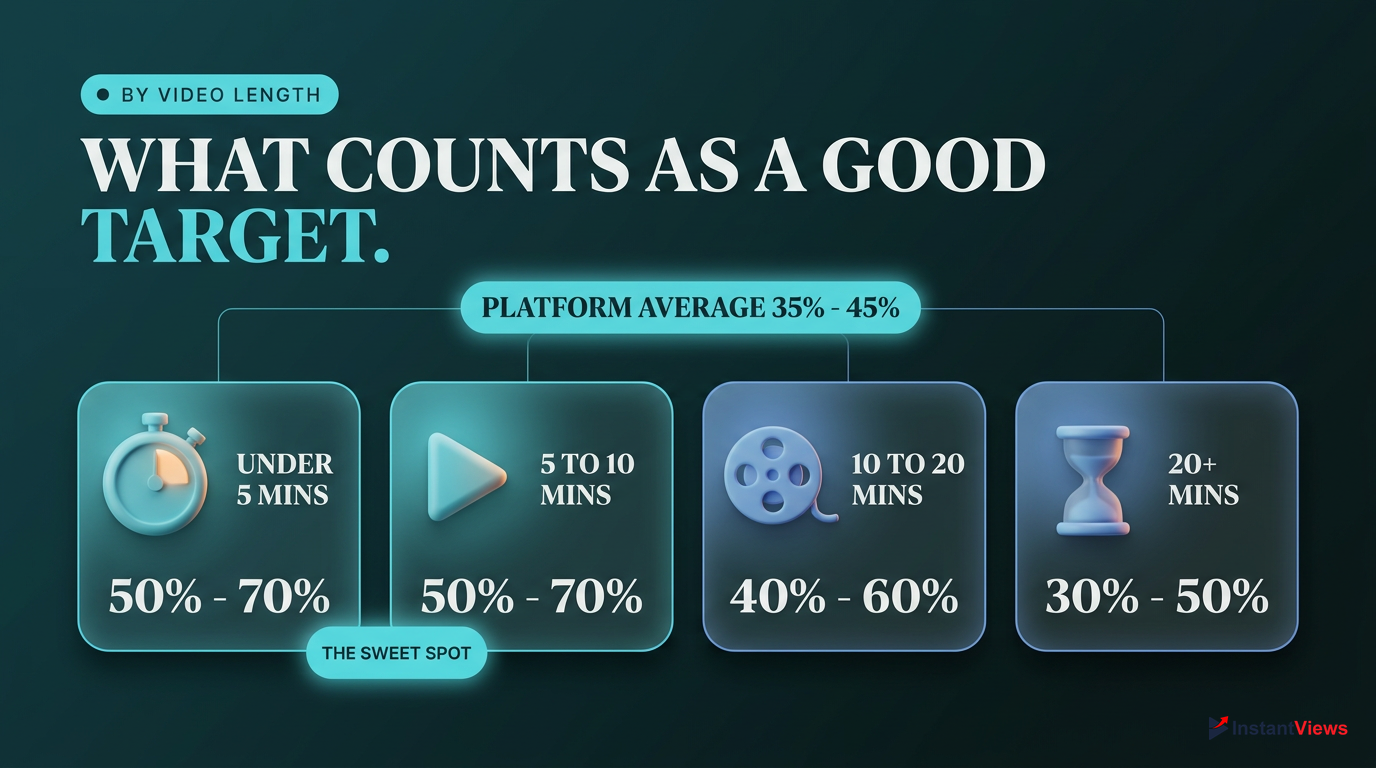
Because video length dictates the commitment required from the viewer, retention benchmarks shift significantly depending on runtime. In 2026, the platform-wide average retention rate sits between 35% and 45%. However, hitting "average" won't trigger massive algorithmic promotion.
| Video Length | Category | Good/Target APV | Example AVD Target |
|---|---|---|---|
| Under 5 mins | Short Videos | 50% – 70% | 2 - 2.5+ mins (on a 4m video) |
| 5 to 10 mins | Medium Videos | 50% – 70% | 3.5 - 5+ mins (on a 7m video) |
| 10 to 20 mins | Long Videos | 40% – 60% | 4 - 6+ mins (on a 10m video) |
| 20+ mins | Extra-Long | 30% – 50% | 8+ mins (on a 40m video) |
For short and medium videos (under 10 minutes), the viewer commitment is low, so they are more likely to watch to the end. This 5-to-10-minute range is widely considered the YouTube "sweet spot" for balancing monetization potential with high engagement.
For long-form content, the percentage naturally drops, but the absolute AVD remains high. As noted by Gyre.pro's 2026 Watch Time Benchmarks, keeping 20% of an audience on a 40-minute video still yields 8 minutes of AVD per viewer, which the algorithm heavily rewards.
YouTube Shorts Benchmarks: A Different Beast
If you are analyzing a good average view duration on youtube for Shorts, throw the long-form rulebook out the window. YouTube Shorts run on a completely decoupled recommendation engine. Because the content is so brief (typically 15 to 60 seconds), the algorithm expects extreme density.
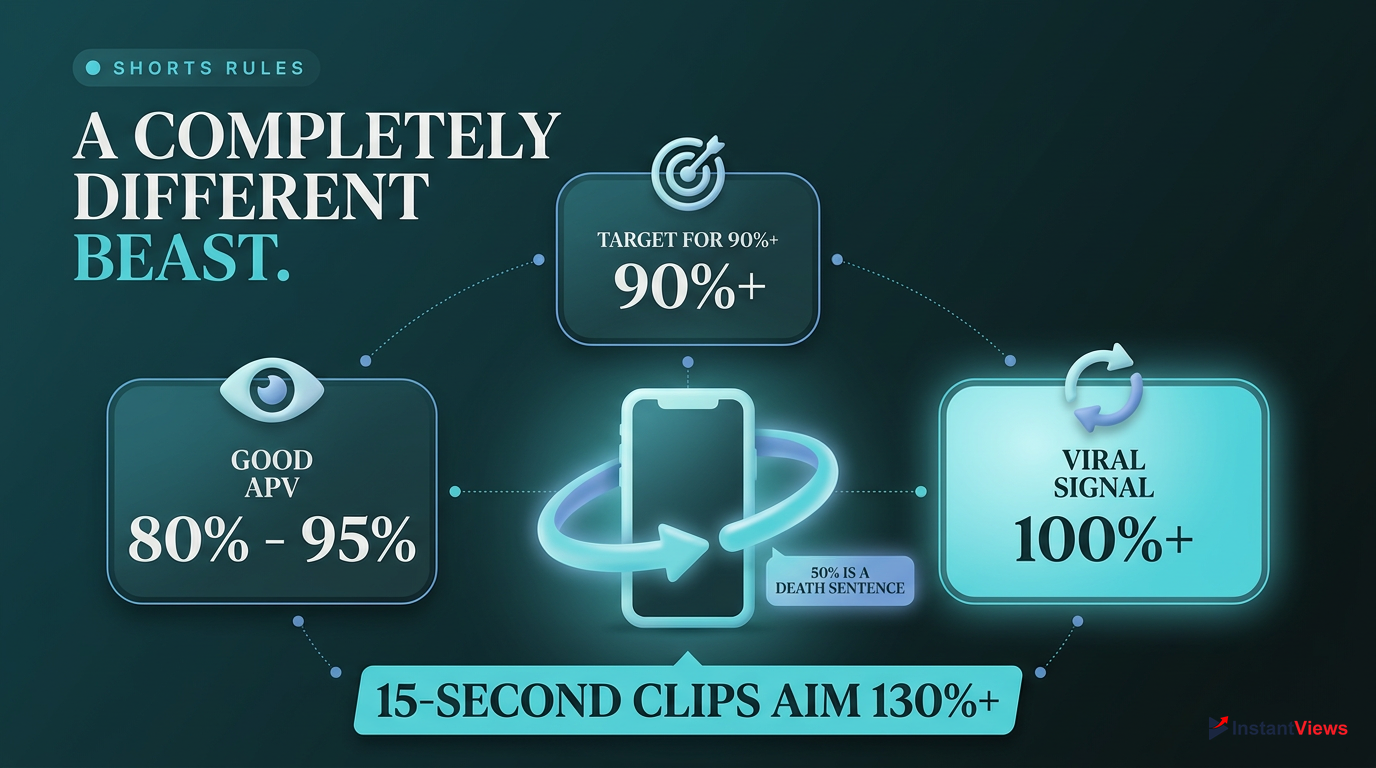
According to 2026 data from FluxNote, a 50% retention rate on a Short is considered a "death sentence" for its reach. The swipe-away nature of the Shorts feed means you must hook the viewer instantly and hold them until the video loops.
The ultimate viral signal for a YouTube Short is an APV over 100%. This means the average user watched the entire video and allowed it to loop. For a 15-second clip, top creators consistently aim for greater than 130% APV.
For Shorts up to 60 seconds, the target drops slightly to 75% – 85%+, but the pressure to maintain rapid pacing remains intense. If your Short is failing to gain traction, check the APV first; if it's below 70%, the algorithm has already moved on.
Average Retention Rates by Niche (2026 Data)
Not all audiences consume content the same way. A viewer watching a fast-paced gaming montage has a different attention span than someone following a complex finance tutorial. Therefore, a good average view duration on youtube varies significantly by content category.
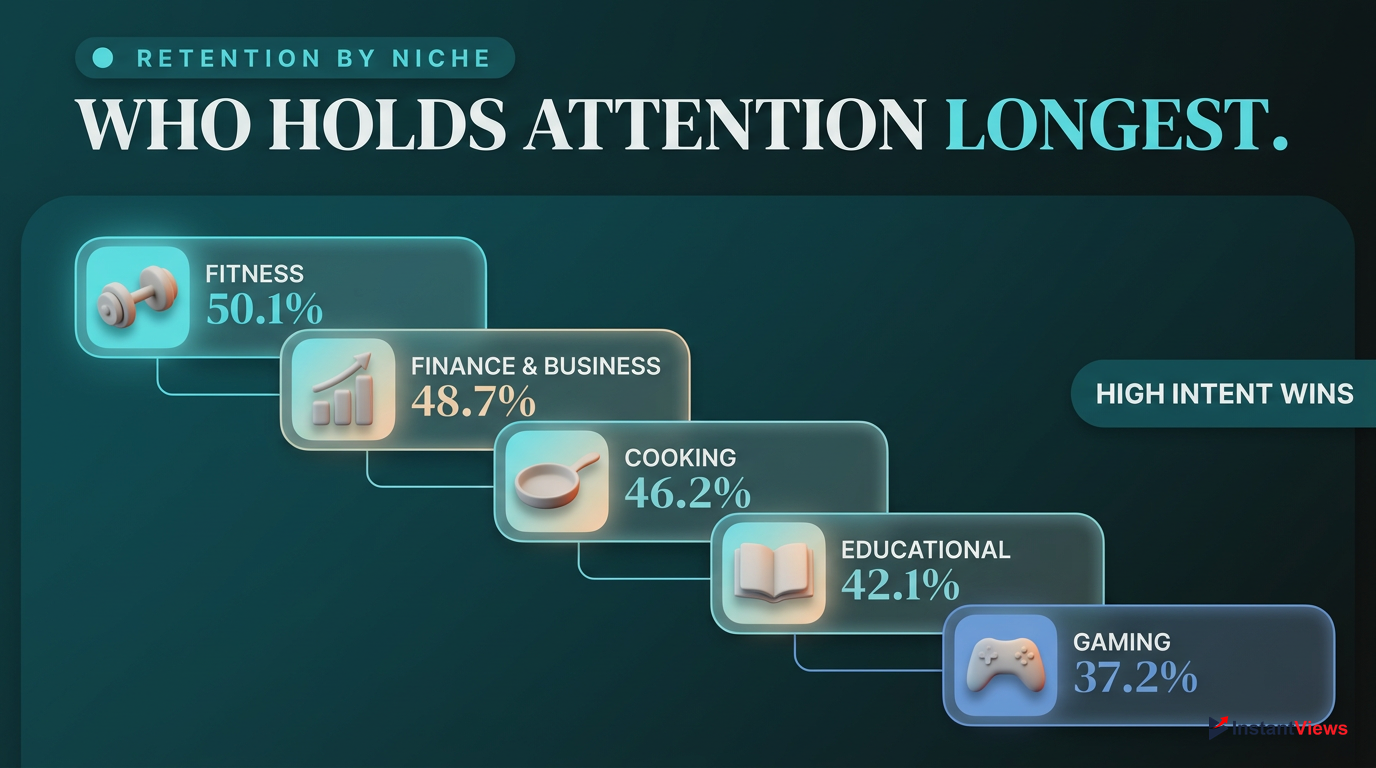
Based on LenosTube's 2026 Audience Retention Benchmarks, here is how different niches stack up regarding average retention rates:
Why do Fitness and Finance lead the pack? Intent. Viewers clicking on a workout routine or a stock market analysis have high intent—they need the specific information provided to achieve a goal, making them more likely to watch the entire video.
Gaming (37.2%)
Lower retention due to younger demographics and high competition for attention.
Tech Reviews (34.1%)
Viewers often skip to the specific spec or conclusion they care about.
Entertainment Vlogs (31.5%)
Highly dependent on personality; casual viewers drop off quickly if the pacing lags.
If you are in the Entertainment or Commentary (32.8%) niches, do not panic if your APV is hovering around 35%. You are performing at the industry average for your category.
The Harsh Reality of the Retention Curve
The Audience Retention Curve in YouTube Studio is the most brutal, honest feedback you will receive as a creator. It shows exactly where viewers abandon your video. 2026 data from Virvid.ai and Retention Rabbit reveals some harsh realities about modern attention spans.
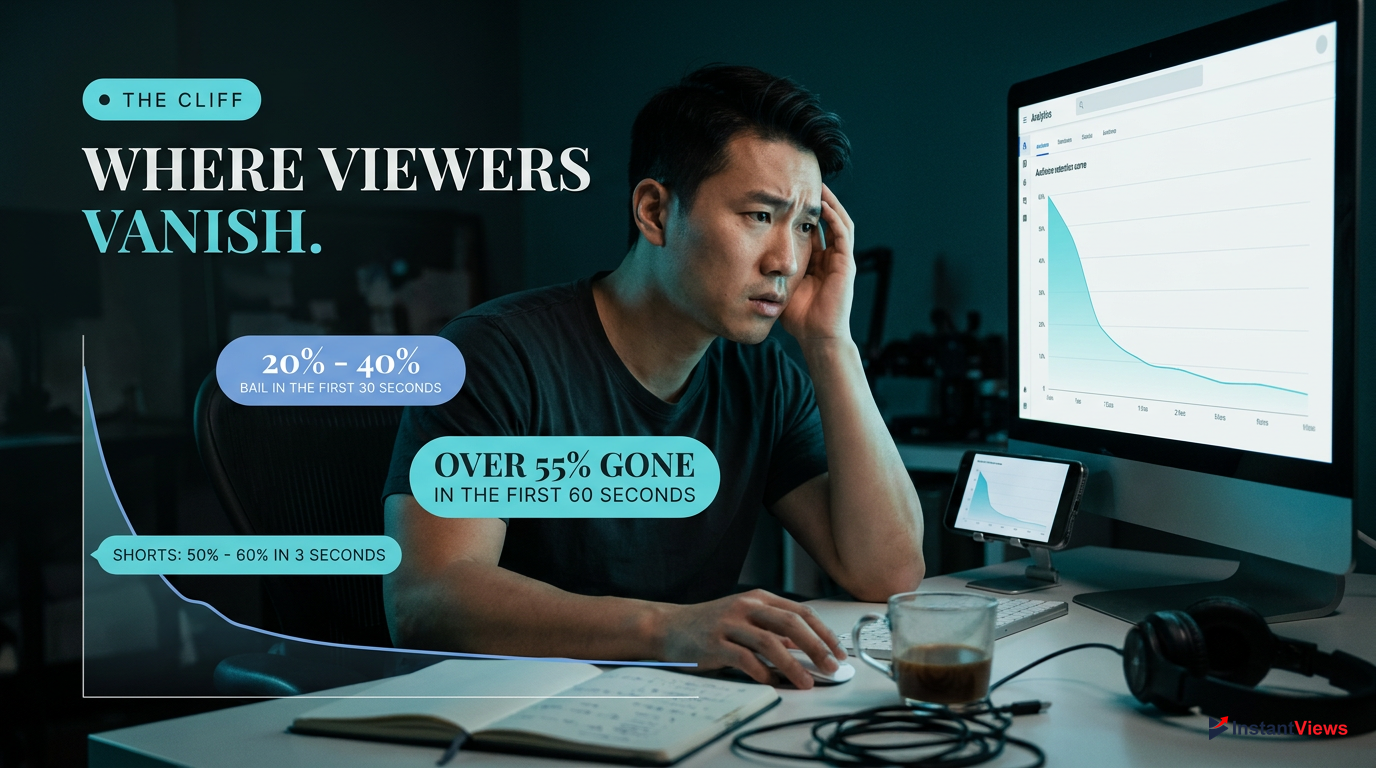
Across all YouTube videos, regardless of length, over 55% of viewers drop off within the first 60 seconds. If your intro is slow, you have already lost the majority of your potential audience.
The drop-offs happen in distinct phases, and understanding them is key to improving your AVD:
- The 30-Second Hook: 20% to 40% of viewers will bail within the first 30 seconds.
- The Shorts Drop-Off: For YouTube Shorts, a staggering 50% to 60% of viewer drop-offs happen in the first three seconds.
- The U.S. Market Dip: For U.S. audiences, viewer drop-off accelerates sharply between 45 and 75 seconds.
- The "End Drop": Most videos see a natural drop in the last 15%–20% of the runtime as viewers realize the video is wrapping up.
In 2026, the first 30 seconds act as a standalone ranking input. If a video drifts early and loses a massive chunk of viewers immediately, the algorithm will suppress distribution before even evaluating the rest of the video's performance.
How AVD Drives the 2026 Algorithm
YouTube's algorithm is essentially a massive feedback loop driven primarily by two metrics: Click-Through Rate (CTR) and Retention (AVD/APV). To put it simply: CTR gets viewers in the door; AVD proves the video was worth their time.
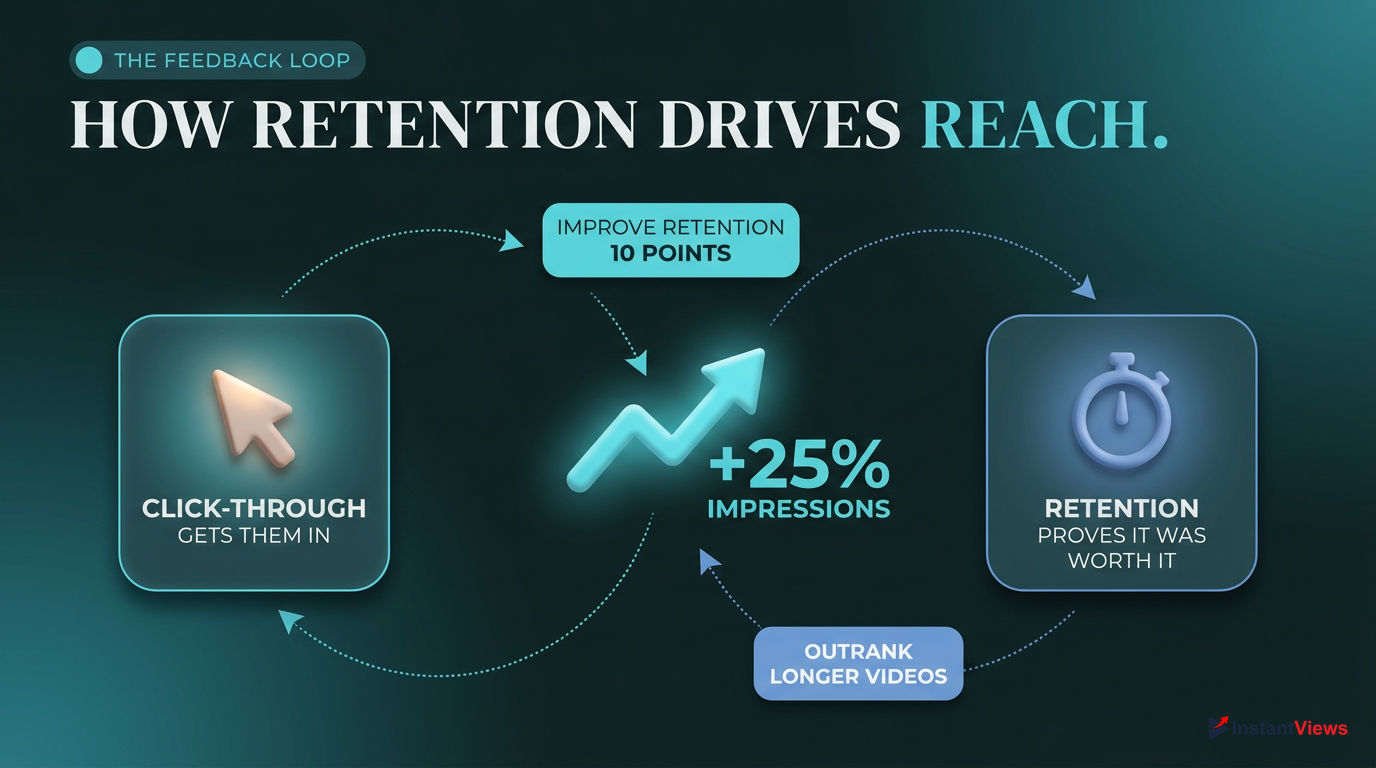
According to Miraflow.ai's 2026 Home Feed Distribution Guide, YouTube tracks both absolute and relative retention for long-form videos. This creates an interesting dynamic where shorter, highly engaging videos can outrank longer, mediocre ones.
The most crucial takeaway from 2026 data is the "Multiplier Effect." Channels that manage to improve their average retention by just 10 percentage points see a correlated 25%+ increase in impressions from the algorithm. You don't need to double your retention to see massive growth; incremental improvements yield exponential algorithmic rewards.
A 6-minute video with 80% retention (4.8 minutes watched) will often outperform a 20-minute video with 30% retention (6 minutes watched) in algorithmic recommendations because the shorter video signals a much higher rate of viewer satisfaction.
How to Fix Your First 30 Seconds
Since 20% to 40% of viewers abandon a video in the first 30 seconds, fixing your hook is the fastest way to achieve a good average view duration on youtube. The algorithm judges this initial window harshly.
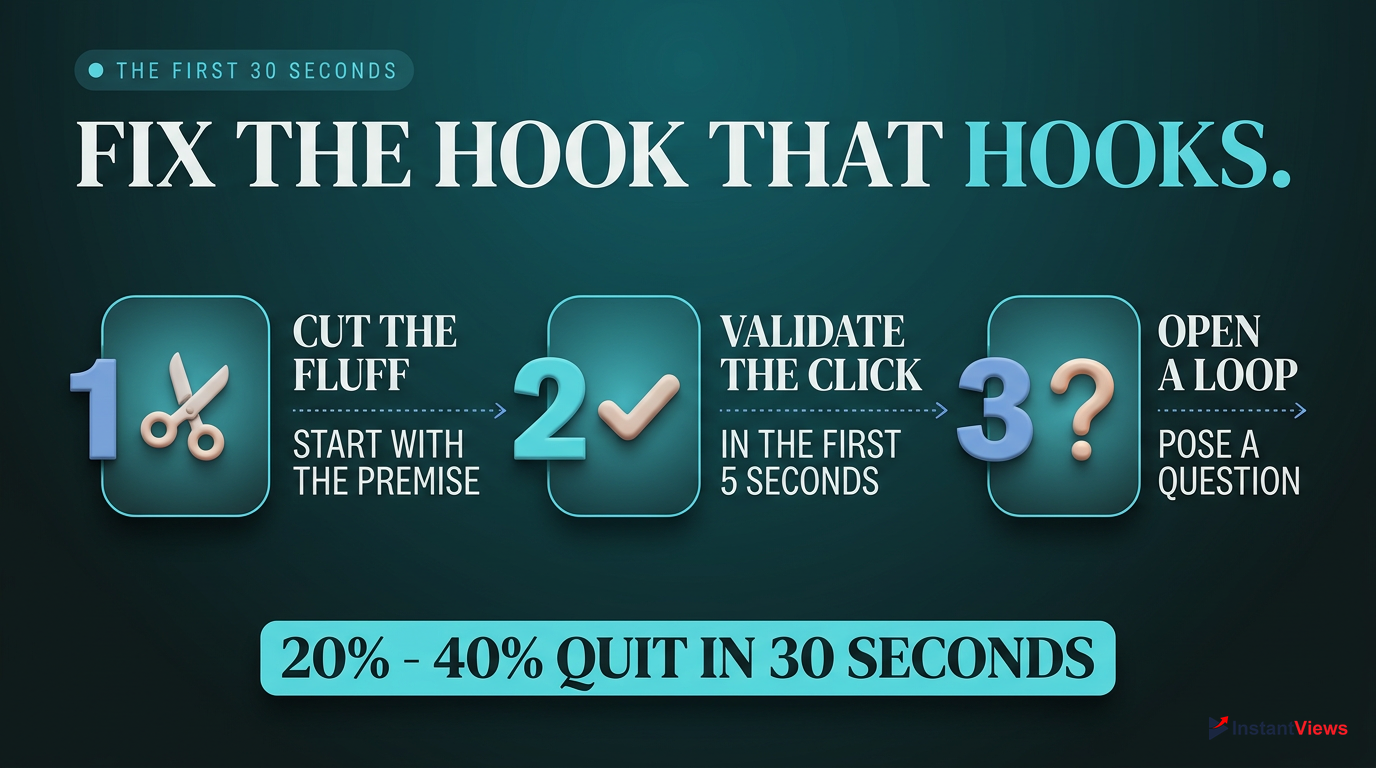
If your retention curve looks like a cliff diving straight down at the 0:15 mark, you are likely making one of these common mistakes: a long animated intro, a rambling greeting, or failing to deliver on the thumbnail's promise immediately.
Cut the Fluff
Remove "Hey guys, welcome back to my channel." Start immediately with the core premise or the most exciting visual of the video.
Validate the Click
Within the first 5 seconds, visually or verbally confirm that the viewer is in the right place based on the title and thumbnail.
Open a Loop
Pose a question, show a bizarre result, or state a problem that will only be resolved later in the video to create curiosity.
- Survives the 30-second algorithmic check
- Sets the pace for the rest of the video
- Kills CTR momentum instantly
- Wastes the rest of your good content
Beating the 45-75 Second Drop-Off
As highlighted by VideoBoosters' 2026 U.S. Viewer Statistics, there is a specific danger zone for U.S. audiences: the sharp drop-off between 45 and 75 seconds. Viewers who survive the initial hook often get bored here if the video settles into a monotonous rhythm.
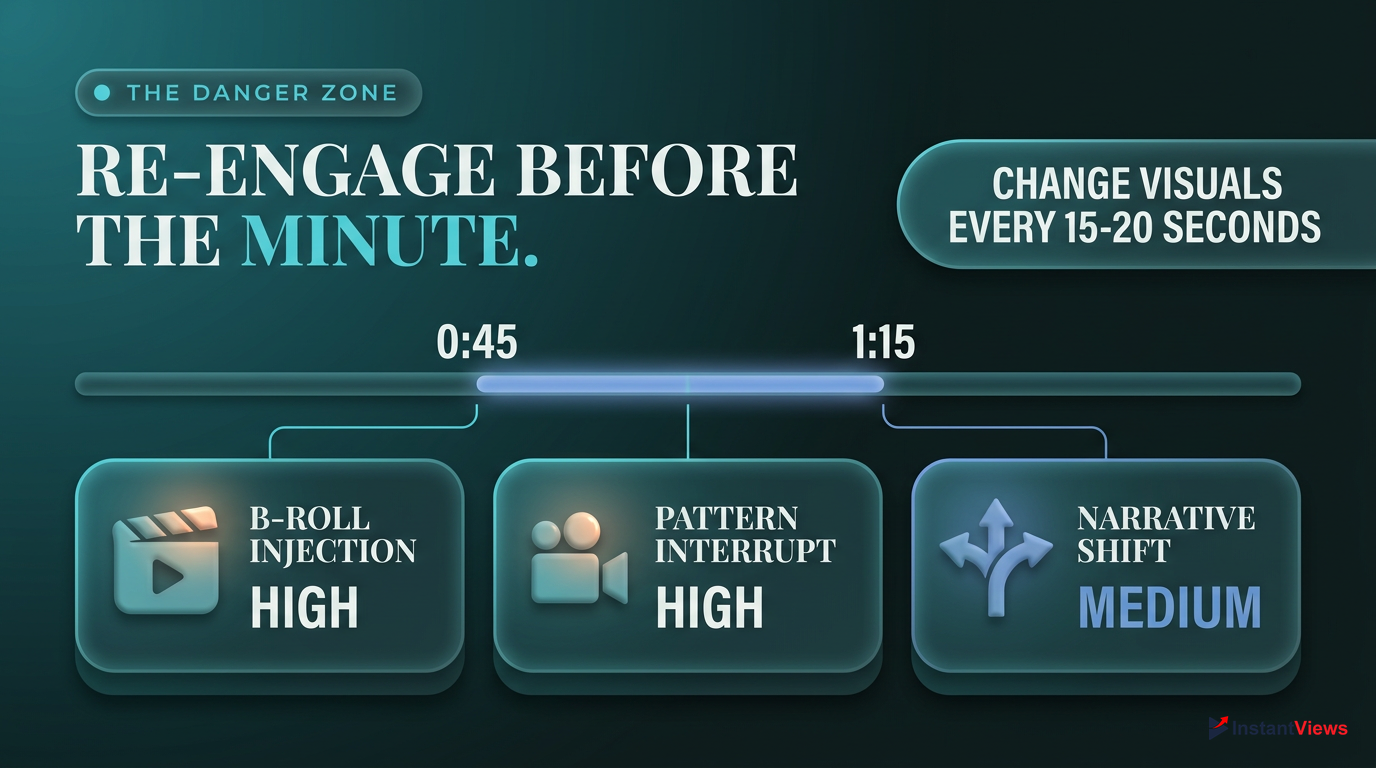
To maintain a good average view duration on youtube, you must actively re-engage the viewer before the one-minute mark.
| Tactic | Implementation | Impact on AVD |
|---|---|---|
| B-Roll Injection | Add relevant secondary footage at 0:45 | High |
| Pattern Interrupt | Change camera angle or zoom at 0:50 | High |
| Narrative Shift | Introduce a new complication at 1:00 | Medium |
Videos that introduce a second narrative beat or a significant visual change before the one-minute mark perform significantly better. This is called a "pattern interrupt."
The human brain naturally habituates to static visuals. By changing the visual stimulus every 15-20 seconds (especially around the 1-minute mark), you reset the viewer's attention span, preventing them from clicking away.
Eliminating the "End Drop"
Look at any retention curve, and you will likely see a steep decline in the last 15% to 20% of the runtime. This is the "End Drop." It happens because viewers realize the video is wrapping up and click away before the end screen appears.
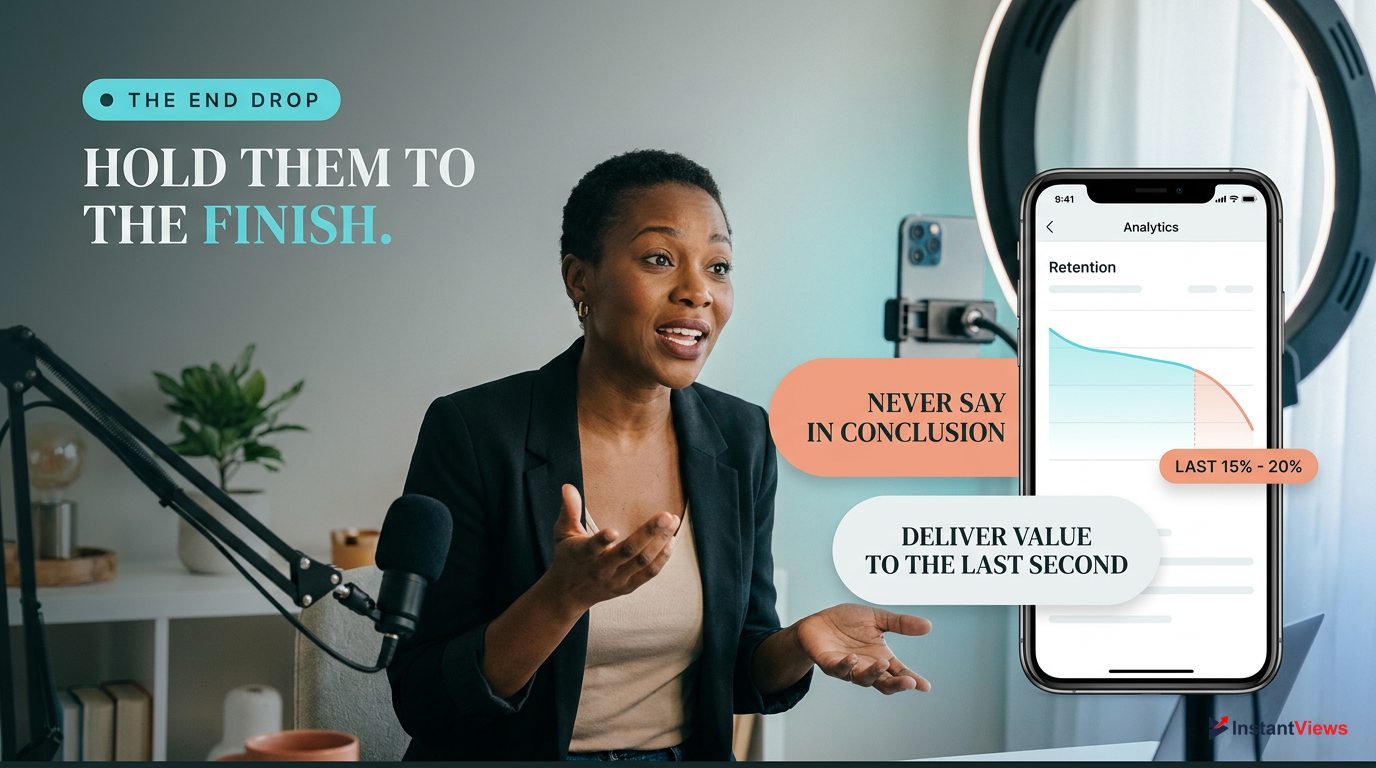
While some drop-off is natural, minimizing it is crucial for maximizing your overall AVD and ensuring viewers see your end-screen elements (which drive binge-watching).
Never Say "In Conclusion"
Avoid wrap-up language like "That's all for today," "To summarize," or "Thanks for watching." These are auditory cues to leave.
Deliver Value Until the Last Second
Save a crucial piece of advice, the final reveal, or the punchline for the very end of the video.
Use the "Next Video" Bridge
Instead of saying goodbye, transition smoothly by saying, "If you struggled with X in this video, you need to watch this video next where I solve Y," while pointing to the end screen.
By keeping viewers engaged through the final 20% of your video, you not only boost your AVD but significantly increase the chances of them clicking an end-screen element, which YouTube heavily rewards as a "session start."
How to Track Your AVD in YouTube Studio
Now that you know what a good average view duration on youtube is in 2026, you need to know exactly where to find and analyze this data within your own channel. YouTube Studio provides granular tools to dissect your retention.
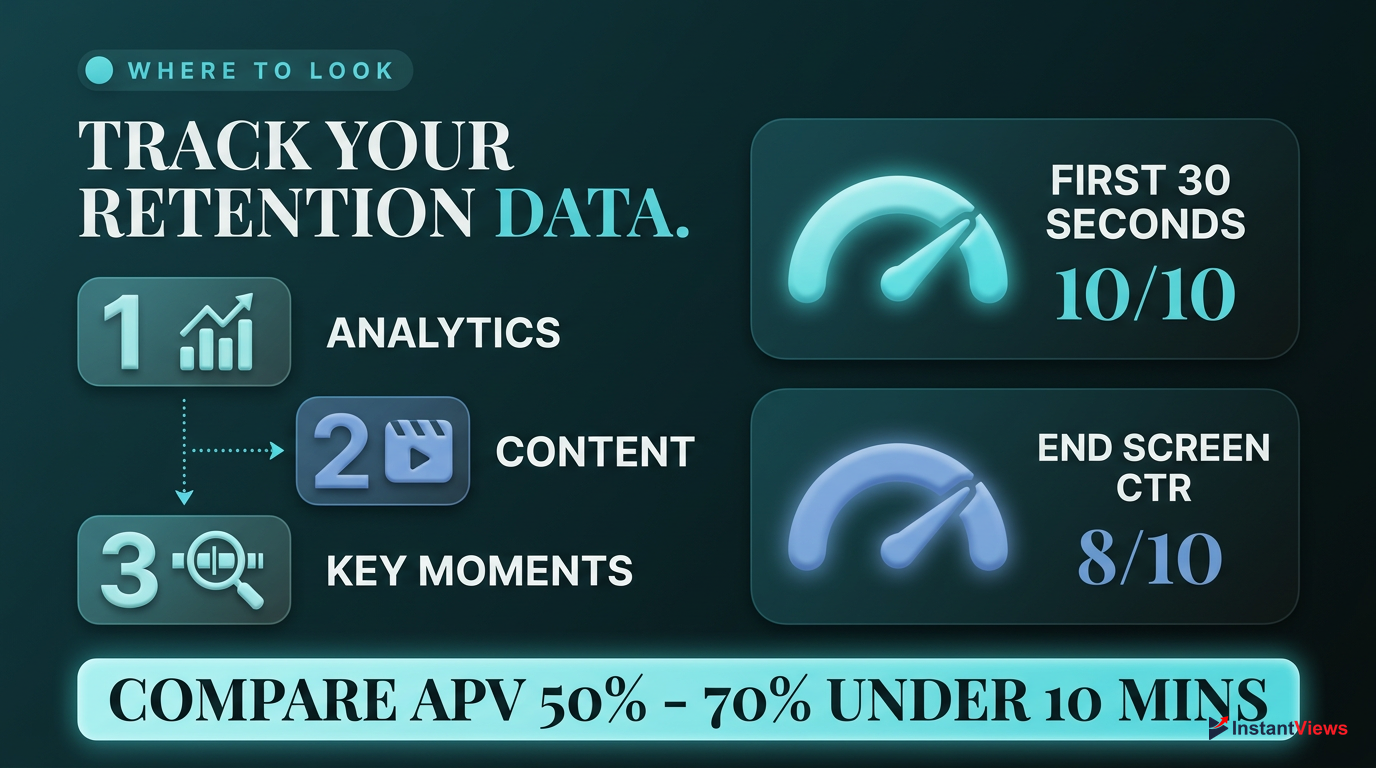
To find your retention data, navigate to YouTube Studio > Analytics > Content > Videos. Click on a specific video, then scroll down to the "Key moments for audience retention" module. Here, you will see the exact percentage of viewers still watching at the 0:30 mark, alongside your overall AVD and APV.
Don't obsess over a single number. Compare your APV against the 2026 benchmarks for your specific video length (50-70% for under 10 mins). Focus on fixing the first 30 seconds, beating the 60-second dip, and eliminating wrap-up language at the end.
By consistently analyzing your retention curves, identifying where viewers leave, and applying pattern interrupts, you can incrementally increase your AVD. Remember the multiplier effect: just a 10% improvement in retention can trigger a massive wave of algorithmic impressions.
Frequently Asked Questions
For a 10-minute video in 2026, a good Average Percentage Viewed (APV) is between 40% and 60%. This translates to an Average View Duration (AVD) of 4 to 6 minutes. Hitting this benchmark signals strong engagement to the algorithm.
It depends on the video length. For an extra-long video (20+ minutes), 30% to 50% is the target benchmark. However, for a short or medium video (under 10 minutes), 30% is considered poor and indicates severe pacing or hook problems.
Shorts require extreme density. A good APV for Shorts is 80% to 95%. For Shorts under 30 seconds, you should target 90%+ retention. The ultimate viral signal is crossing 100%, meaning the average user let the video loop.
Between 20% and 40% of viewers leave in the first 30 seconds because the video fails to validate the thumbnail, has a slow animated intro, or features rambling greetings. The algorithm uses this 30-second window as a primary ranking input.
Average View Duration (AVD) is the absolute time spent watching, expressed in minutes and seconds. Average Percentage Viewed (APV), or Retention Rate, is the percentage of the total video length that the average viewer watches.
In 2026, the "Multiplier Effect" shows that channels improving their average retention by just 10 percentage points see a correlated 25%+ increase in impressions. Incremental improvements in AVD yield exponential algorithmic rewards.
According to 2026 data, Fitness (50.1%) and Finance/Business (48.7%) have the highest average retention rates. This is due to high viewer intent; audiences need the specific information provided to achieve a personal goal.
Eliminate the "End Drop" by avoiding wrap-up language like "in conclusion" or "thanks for watching." Deliver value until the last second, and transition smoothly by pointing to an end-screen video that solves their next logical problem.
U.S. audiences show a sharp drop-off between 45 and 75 seconds if a video settles into a monotonous rhythm. To prevent this, introduce a "pattern interrupt"—a visual change, b-roll, or new narrative beat—before the one-minute mark.
YouTube tracks both. For long-form content, absolute watch time (AVD) is heavily rewarded. However, a shorter video with very high percentage retention (e.g., 80%) will often outperform a longer video with poor retention (e.g., 30%) because it signals higher satisfaction.