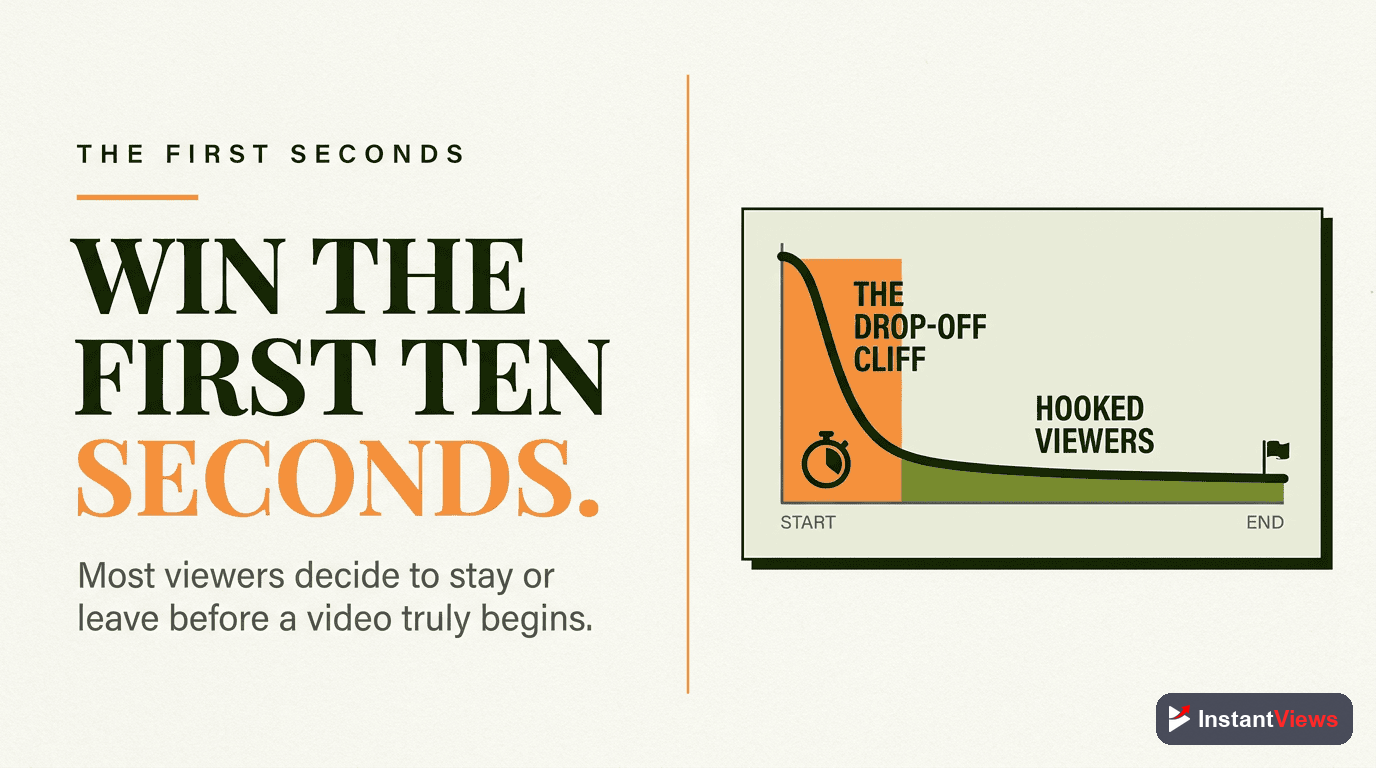
- The first 30 seconds determine whether viewers stay or leave - 20% of viewers drop off within 10 seconds
- 9 proven hook types work across all YouTube niches: questions, previews, bold statements, and more
- Strong hooks can increase average view duration by 40-60%
- Use the InstantViews Hook Analyzer to score your intro before publishing
- Match your hook style to your content type for maximum effectiveness
You have exactly 8 seconds to convince a viewer to keep watching. That's not an opinion - it's YouTube data. In those critical first moments, viewers decide whether your video is worth their time.
The difference between a viral video and one that flops often comes down to the hook. MrBeast, the most successful YouTuber of all time, spends more time perfecting his first 30 seconds than any other part of his videos. Mastering the first 3 seconds of your video is critical to preventing early drop-offs.
This guide breaks down the 9 most effective YouTube hook strategies, with real examples and data on which ones work best for different content types. These techniques work in tandem with broader audience retention strategies to keep viewers watching longer.
- Why Hooks Matter More Than Ever
- Hook #1: The Bold Statement
- Hook #2: The Result Preview
- Hook #3: The Compelling Question
- Hook #4: The Open Loop
- Hook #5: The Pattern Interrupt
- Hook #6: The Controversy
- Hook #7: The Story Tease
- Hook #8: The Direct Value Promise
- Hook #9: The Social Proof
- Choosing the Right Hook
- FAQ
Why Hooks Matter More Than Ever
YouTube's algorithm heavily weights audience retention - specifically, how many viewers stick around after the first 30 seconds. A video that loses 50% of viewers in the first 30 seconds will be pushed far less than one that retains 80%.
Here's what the data shows:
- 20% of viewers leave within the first 10 seconds
- 33% leave within the first 30 seconds
- Videos with strong hooks get 2-3x more impressions
- A 10% improvement in 30-second retention can mean 50% more views
Never start with "Hey guys, welcome back to my channel!" This wastes precious seconds and gives viewers no reason to stay. Get to the hook immediately.
Hook #1: The Bold Statement
The Bold Statement
Open with a surprising fact, contrarian take, or statement that challenges common assumptions. This immediately creates tension and curiosity.
"Everything you've been told about SEO is wrong. I spent $50,000 testing it, and here's what actually works."
Why it works: Bold statements trigger the brain's "that can't be right" response. Viewers stay to either confirm their beliefs or learn something new.
How to use it: Find a common belief in your niche and challenge it with data or experience. The more specific and verifiable your claim, the more powerful the hook.
Hook #2: The Result Preview
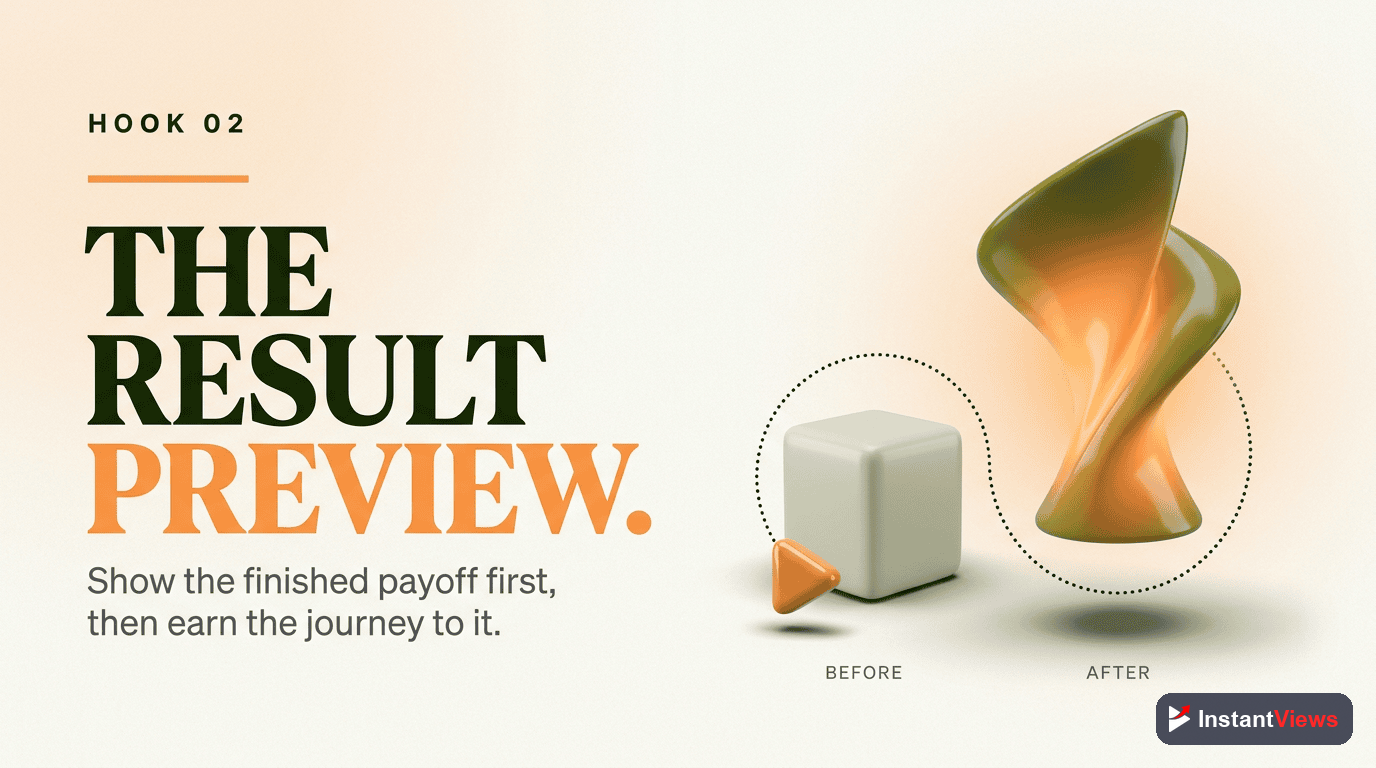
The Result Preview
Show the end result first, then promise to reveal how to achieve it. This works because people are motivated by outcomes, not processes.
"This video got 2 million views in 48 hours. I'm going to show you exactly how I structured it, second by second."
Why it works: Showing proof of results builds instant credibility and creates a knowledge gap viewers want to fill.
How to use it: Always start with your best result. Show screenshots, numbers, or visual proof within the first 5 seconds.
Hook #3: The Compelling Question
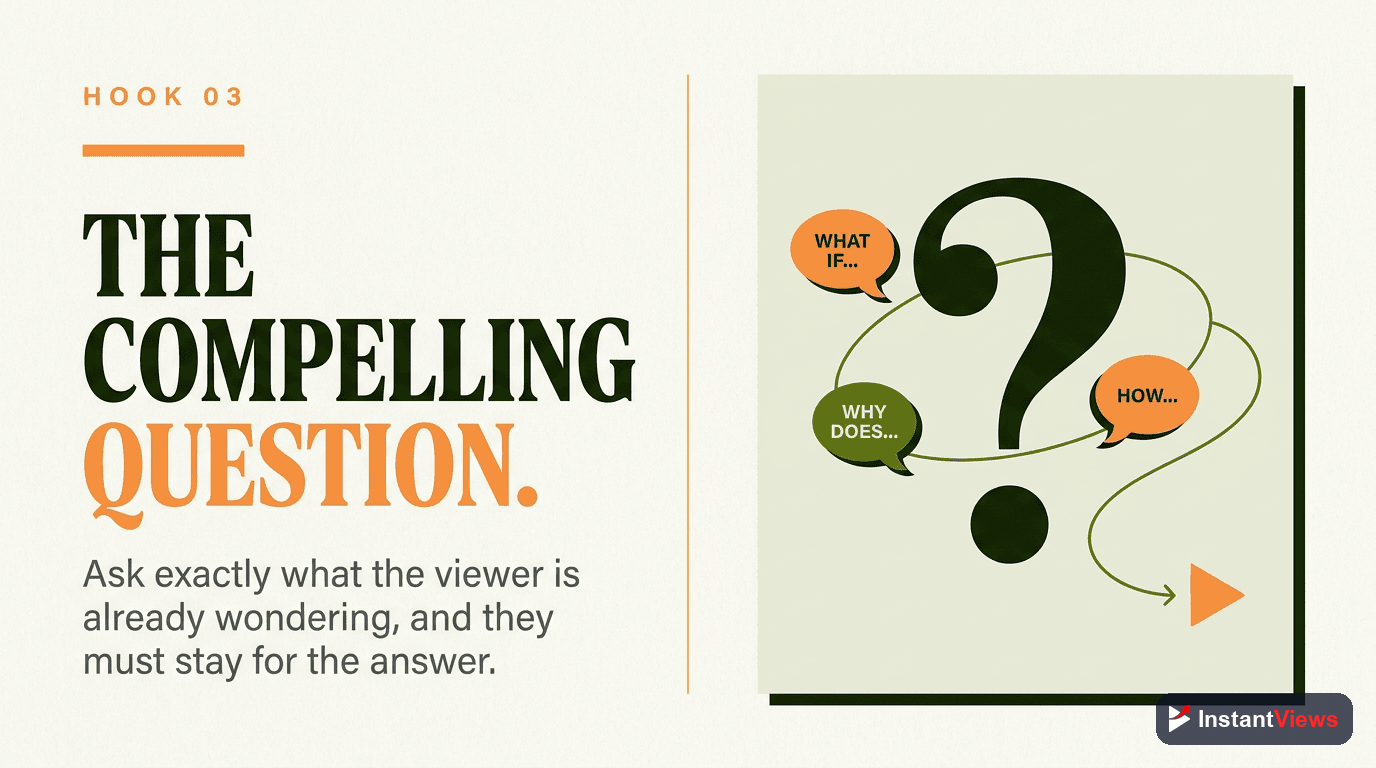
The Compelling Question
Ask a question your target audience desperately wants answered. The question should touch on a pain point, desire, or curiosity.
"Why do some YouTube channels explode while others with better content stay stuck at 100 subscribers?"
Why it works: Questions activate the brain's problem-solving mode. Viewers feel compelled to stay and find the answer.
How to use it: Make sure your question reflects a real frustration or curiosity your audience has. Generic questions don't work - specificity creates connection.
Hook #4: The Open Loop
The Open Loop
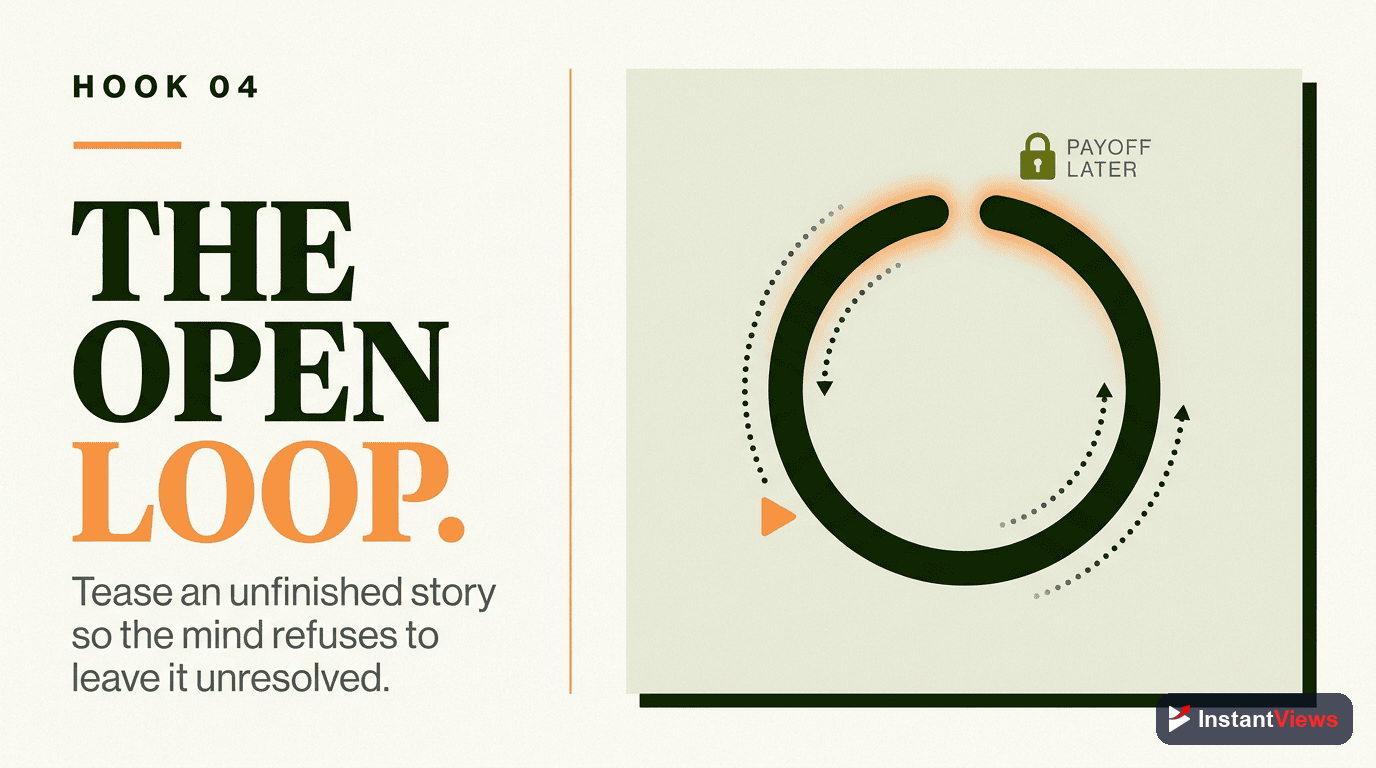
Start telling a story or revealing information, then deliberately leave it unfinished. The brain hates incomplete patterns and will stay to get closure.
"Last week, I made a $10,000 mistake on YouTube. It was the best thing that ever happened to my channel, and I'll explain why in a minute. But first..."
Why it works: The Zeigarnik Effect shows that people remember uncompleted tasks better than completed ones. Open loops exploit this psychological principle.
How to use it: Tease something intriguing, then pivot to setup or context. Promise to close the loop later (and actually do it).
Hook #5: The Pattern Interrupt
The Pattern Interrupt
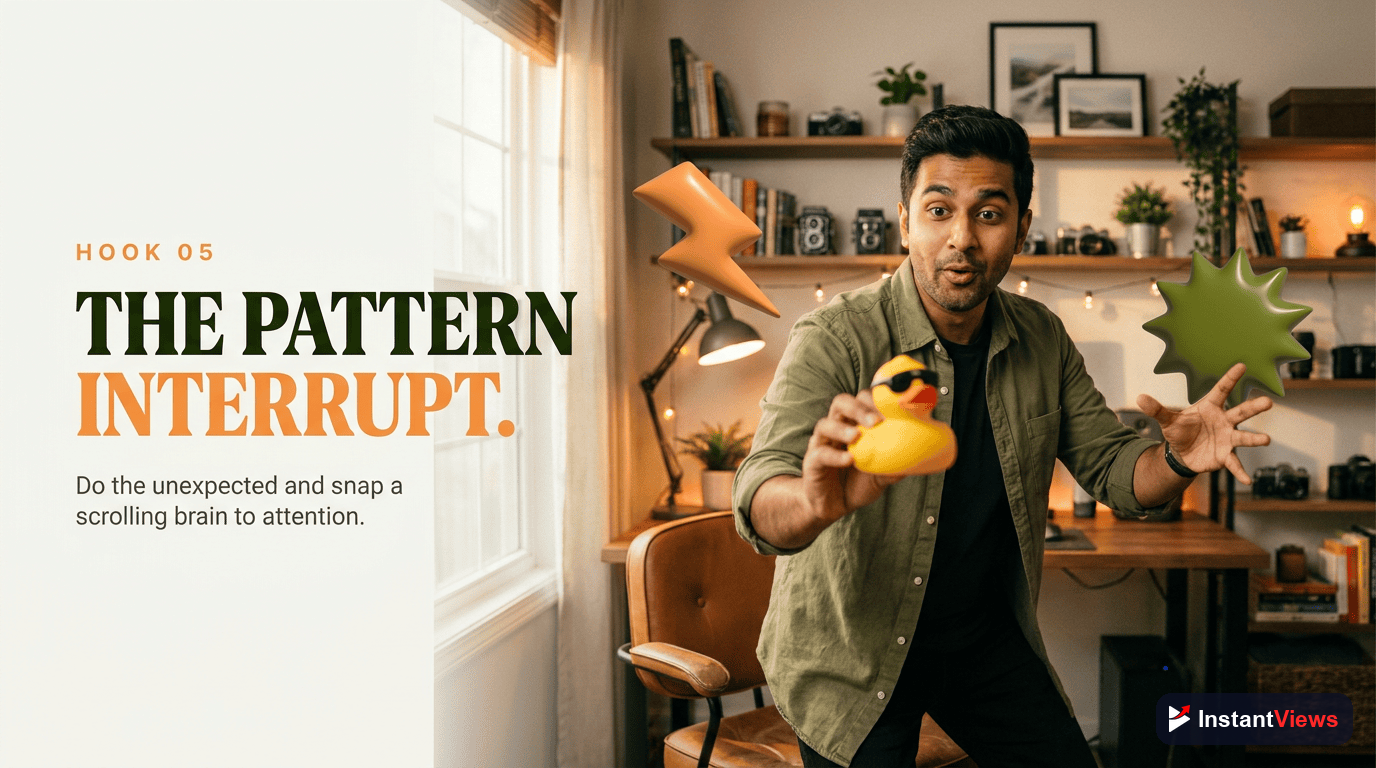
Do something unexpected that breaks viewers out of autopilot. This could be visual, auditory, or behavioral - anything that makes them pay attention.
*Throws laptop in pool* "That's what happens to people who skip this video's most important tip. Now that I have your attention..."
Why it works: Pattern interrupts break through the noise of endless content. When viewers see something unexpected, their brains snap to attention. Learn more about effective pattern interrupts to maintain engagement throughout your videos.
How to use it: The interrupt must be relevant to your content, not random. Connect the unexpected element to your main message.
Hook #6: The Controversy
The Controversy
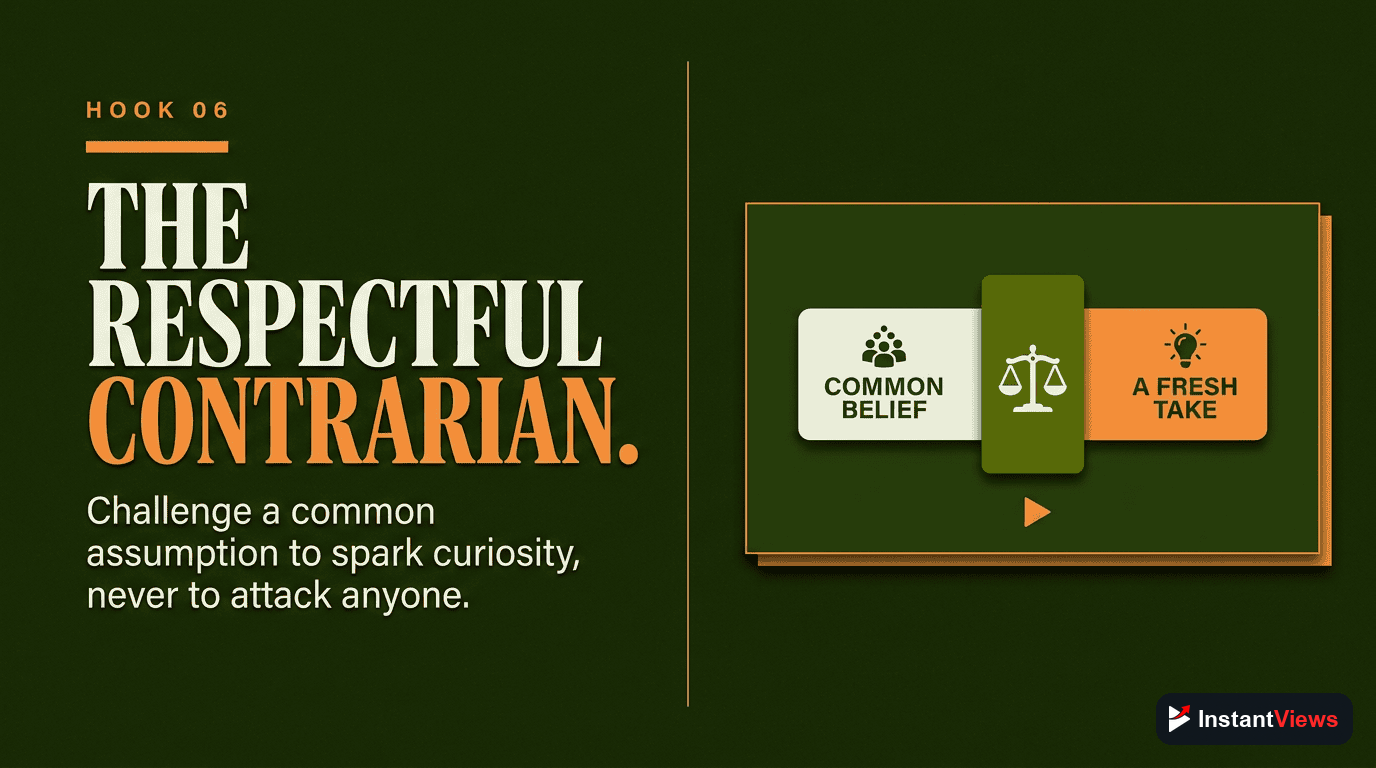
Take a stance on a divisive topic in your niche. Controversy generates engagement because people want to either agree passionately or argue.
"Instagram is dead for business in 2026. If you're still posting there, you're wasting your time. Here's the data..."
Why it works: Controversy triggers emotional responses. Viewers stay either to have their beliefs validated or to hear why they disagree.
How to use it: Back up your controversial take with evidence. Empty controversy feels clickbaity; supported controversy feels authoritative.
Hook #7: The Story Tease
The Story Tease
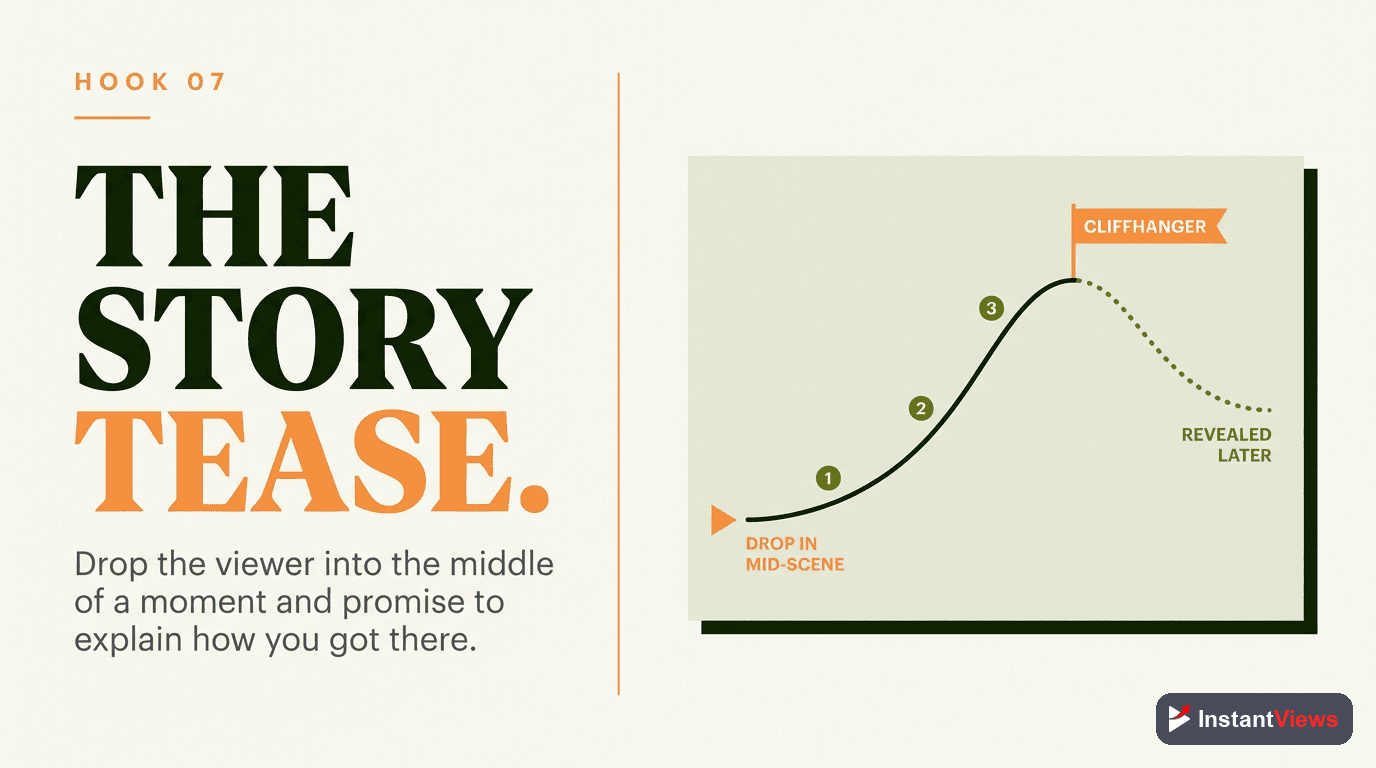
Begin with the most dramatic moment of a story, then rewind. Humans are hardwired for stories - especially ones that start with tension.
"I was about to delete my channel. After 3 years and 500 videos, I had $47 in my bank account. Then I discovered one thing that changed everything."
Why it works: Stories create emotional investment. When viewers connect with your struggle, they want to see your triumph.
How to use it: Start at the emotional peak, not the chronological beginning. Vulnerability increases connection.
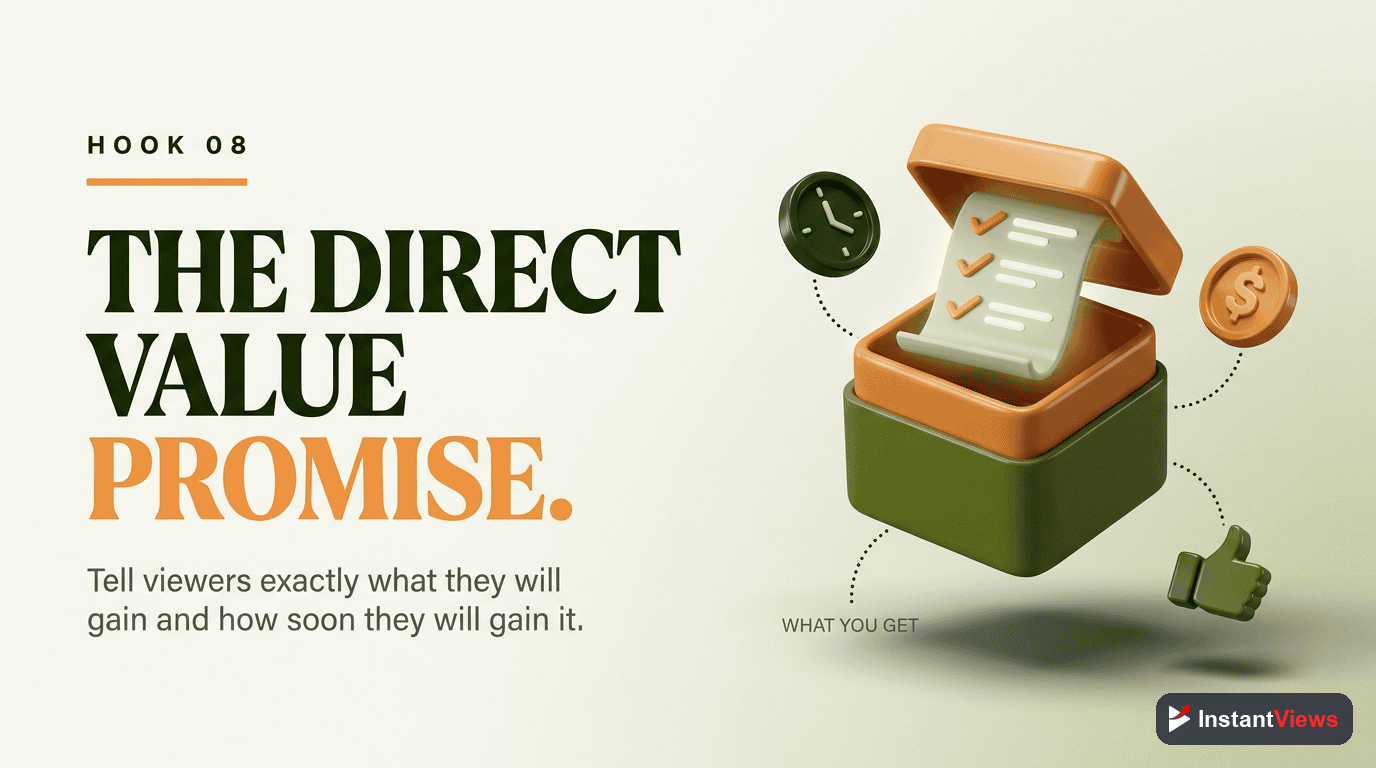
Hook #8: The Direct Value Promise
The Direct Value Promise
Immediately tell viewers exactly what they'll learn and why it matters. No buildup, no teasing - just straight value communication.
"In the next 10 minutes, you'll learn the exact YouTube thumbnail formula that increased my CTR from 4% to 12%. Let's start with the most important element."
Why it works: Busy viewers appreciate knowing exactly what they'll get. Specificity (exact numbers, timeframes) builds trust.
How to use it: Be specific about the outcome. "Learn YouTube" is weak. "Increase your CTR by 3x" is compelling.
Hook #9: The Social Proof
The Social Proof
Lead with credibility - your results, testimonials, or credentials that prove you're worth listening to.
"This strategy helped 47 of my students quit their jobs in the last year. Today I'm giving it away for free."
Why it works: Social proof reduces skepticism. If others have succeeded, viewers believe they can too.
How to use it: Use specific numbers and verifiable claims. "Helped thousands" is weak. "Helped 47 people quit their jobs" is powerful.
Analyze Your Video Hook
Get an instant hook score and specific improvement suggestions with our Video Analyzer tool.
Analyze Your Video →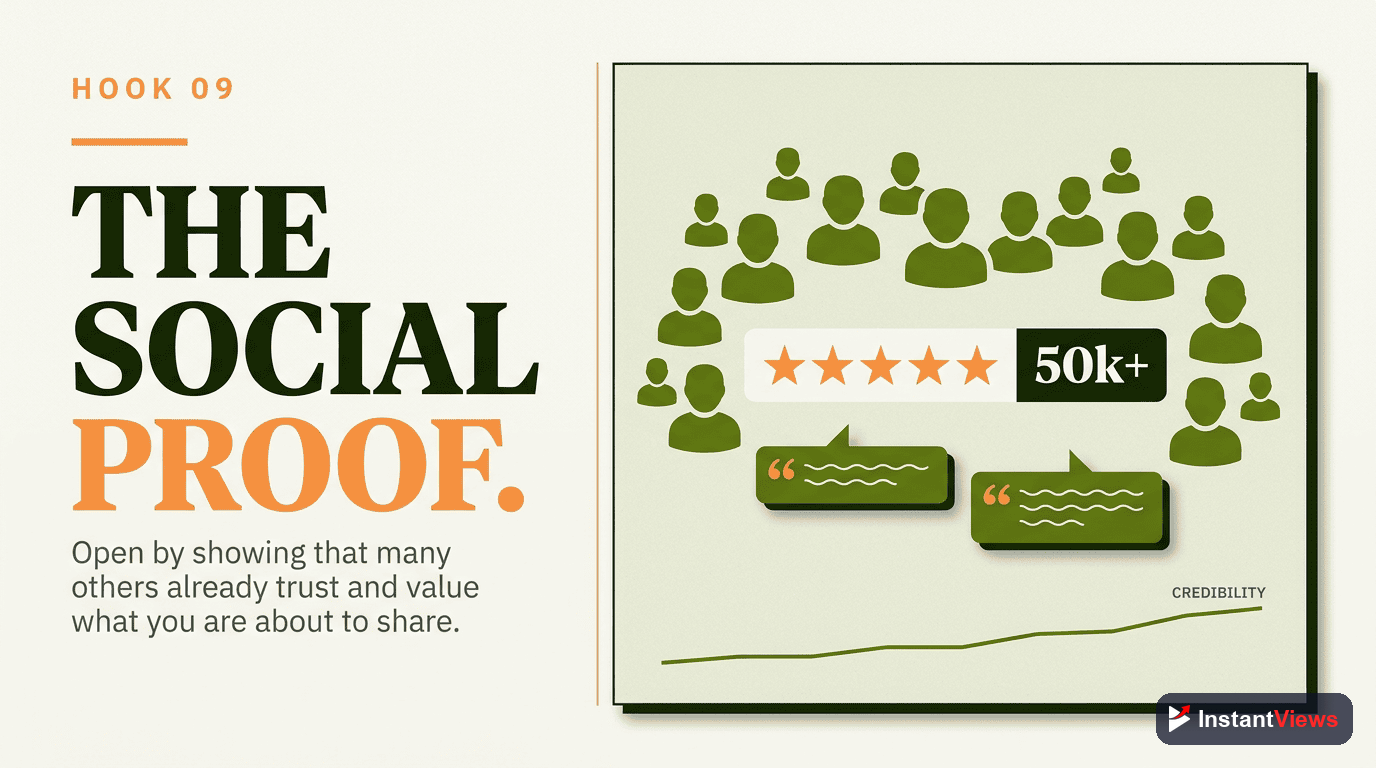
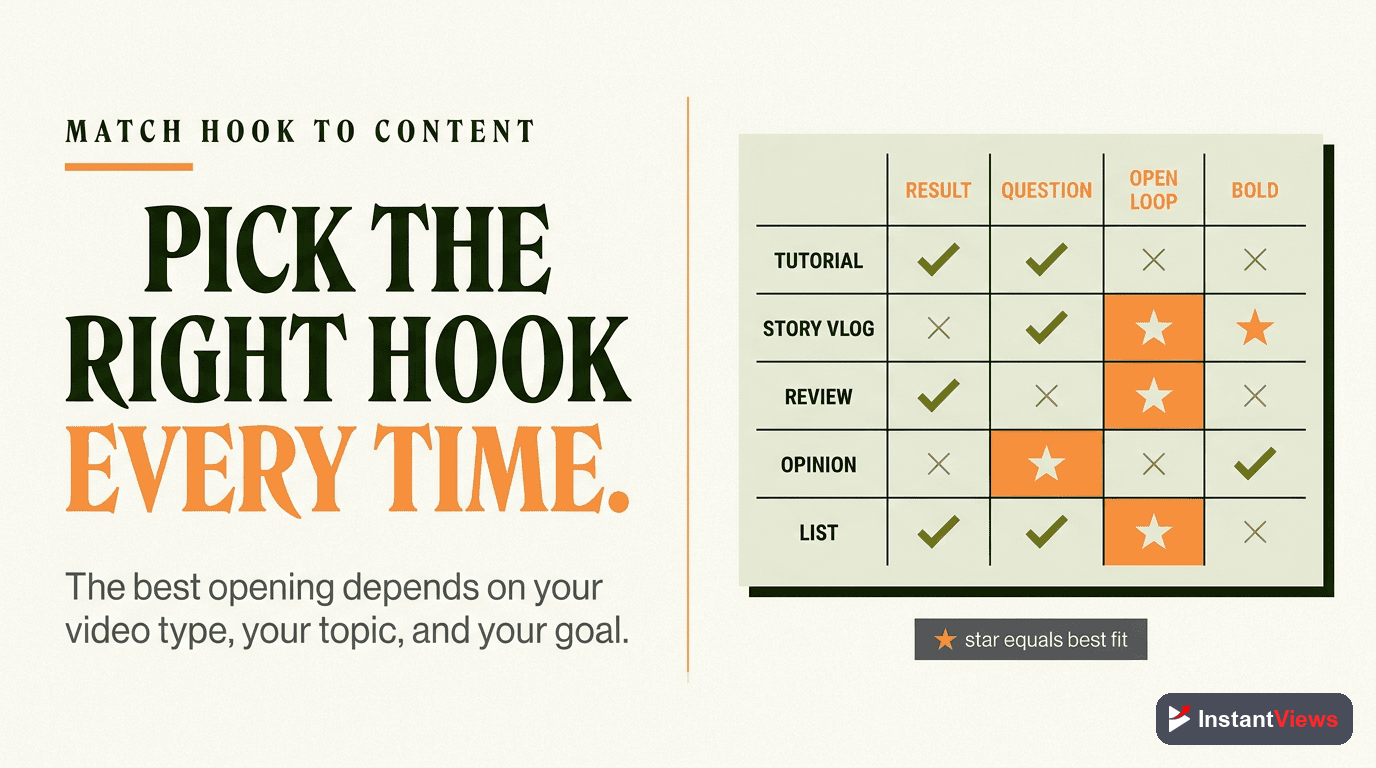
Choosing the Right Hook for Your Content
Different hook types work better for different content. Here's a quick guide:
| Content Type | Best Hooks | Avoid |
|---|---|---|
| Tutorials | Result Preview, Direct Value | Pattern Interrupt, Controversy |
| Vlogs | Story Tease, Open Loop | Direct Value, Social Proof |
| Commentary | Controversy, Bold Statement | Result Preview |
| Entertainment | Pattern Interrupt, Story Tease | Direct Value, Social Proof |
| Educational | Bold Statement, Compelling Question | Pattern Interrupt |
| Business | Social Proof, Result Preview | Pattern Interrupt, Controversy |
Final Tips for Stronger Hooks
- Never waste the first 5 seconds - Start with your hook, not greetings
- Match energy to content - High energy for entertainment, calm authority for education
- Test multiple versions - Use the InstantViews analyzer to compare hook effectiveness
- Study your analytics - Check 30-second retention for every video
- Learn from the best - Watch how top creators in your niche hook viewers
"The hook is where videos are won or lost. I spend more time on the first 30 seconds than the rest of the video combined." - MrBeast
Frequently Asked Questions
The ideal YouTube hook is 5-15 seconds. You need to grab attention within the first 5 seconds, but your full hook setup should complete within 15-30 seconds. After that, viewers expect you to deliver on the promise.
An effective hook creates curiosity, promises value, and establishes credibility - all within seconds. The best hooks combine emotional triggers (curiosity, fear of missing out, surprise) with a clear value proposition.
No. Different content types benefit from different hooks. Tutorials work well with result previews, vlogs with emotional moments, and educational content with surprising facts. Match your hook to your content style.
Check your YouTube Analytics for the first 30-second retention rate. If more than 70% of viewers are still watching at 30 seconds, your hook is effective. Below 50% means you need to improve it.
Not directly on YouTube, but you can use the InstantViews Video Analyzer to score your hook before uploading. You can also create multiple versions and test with a small audience before publishing.
Yes, significantly. YouTube measures audience retention from the very first second. Videos with strong hooks get better retention, which signals quality to the algorithm, leading to more recommendations.