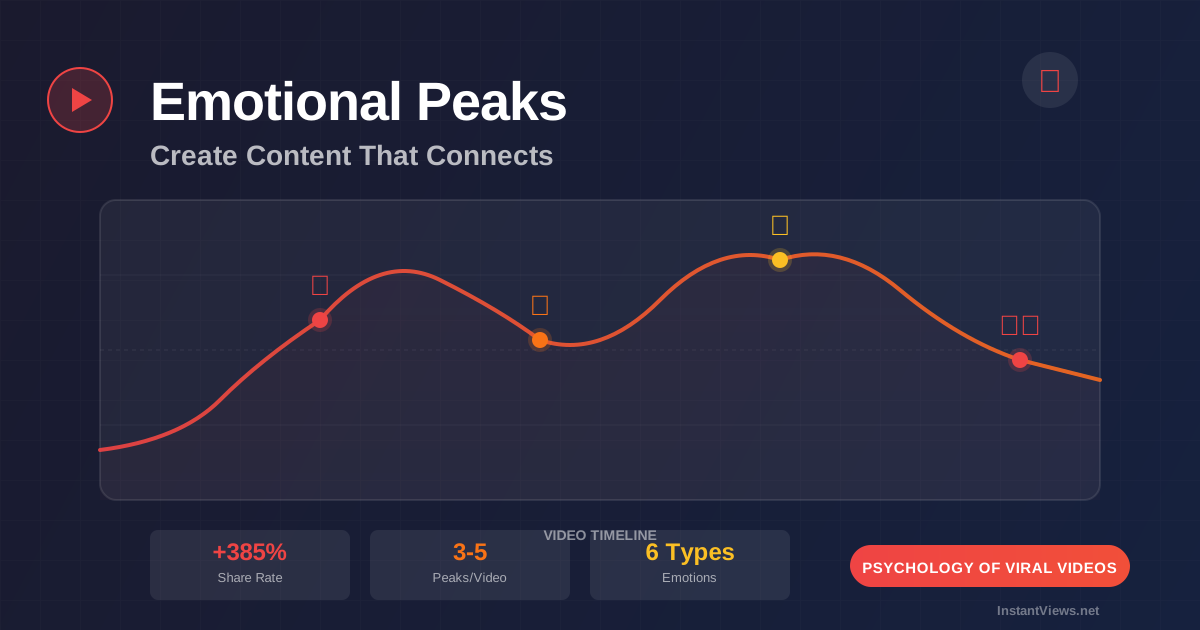
- Emotional peaks are the secret weapon of viral content - they create memorable moments that viewers share
- Videos with strategic emotional peaks get 3-4x more shares than emotionally flat content
- 6 core emotions drive different outcomes: Joy (shares), Surprise (retention), Inspiration (loyalty), Curiosity (CTR), Empathy (connection), Excitement (engagement)
- The emotional journey matters more than individual peaks - map your video's emotional arc
- Use the InstantViews Video Analyzer to identify emotional retention spikes and optimize placement
Every video that goes viral has one thing in common: emotional peaks. Not just emotion - but specific, intentional moments that trigger a psychological response strong enough to make viewers stop scrolling, keep watching, and hit share.
MrBeast doesn't just entertain. Casey Neistat doesn't just vlog. Ali Abdaal doesn't just educate. They engineer emotional moments that create deep connections with millions of viewers. Understanding emotional peaks is crucial for improving audience retention and mastering video pacing techniques.
This guide reveals the psychology behind emotional peaks and shows you exactly how to create content that resonates on a deeper level.
- Why Emotion Drives Everything
- Emotion Type #1: Joy & Delight
- Emotion Type #2: Surprise & Shock
- Emotion Type #3: Inspiration & Hope
- Emotion Type #4: Curiosity & Mystery
- Emotion Type #5: Empathy & Vulnerability
- Emotion Type #6: Excitement & Anticipation
- How to Create Emotional Peaks
- Mapping Your Emotional Journey
- FAQ
Why Emotion Drives Everything
YouTube's algorithm doesn't measure emotion directly - but it measures everything emotion influences:
- Watch Time: Emotional engagement keeps viewers watching
- Shares: We share content that makes us feel something
- Comments: Emotional peaks trigger responses
- Return Viewers: Emotional connection builds loyalty
Research from the Wharton School shows that content with high emotional arousal (positive or negative) is 3-4x more likely to be shared than emotionally neutral content.
| Emotion Type | Primary Effect | Share Rate |
|---|---|---|
| Joy / Delight | Sharing, Positive Association | +385% |
| Surprise / Shock | Retention, Replay | +412% |
| Inspiration | Loyalty, Subscription | +298% |
| Curiosity | CTR, Watch Time | +243% |
| Empathy | Connection, Comments | +267% |
| Excitement | Engagement, Energy | +356% |
"People will forget what you said, people will forget what you did, but people will never forget how you made them feel." - Maya Angelou
Emotion Type #1: Joy & Delight
Joy & Delight
Positive moments that make viewers smile, laugh, or feel good. Joy is the most shareable emotion - we naturally want to spread happiness.
A cooking channel reveals a perfectly risen soufflé after building tension. A tech reviewer's genuine excitement when a product exceeds expectations. A fitness creator celebrating a client's transformation.
How to create it: Build anticipation before the joy payoff. The bigger the buildup, the stronger the emotional release. Show genuine reactions - forced happiness feels manipulative.
When to use it: Reveals, transformations, victories, achievements, surprise gifts, wholesome moments.
Emotion Type #2: Surprise & Shock
Surprise & Shock
Unexpected moments that break patterns and demand attention. Surprise triggers the orienting response - our brain stops everything to process the unexpected.
A budget breakdown that reveals an unexpected cost. A tutorial that shows a completely different approach than expected. A plot twist in a story vlog that changes everything.
How to create it: Set clear expectations, then violate them in a meaningful way. The surprise should be relevant, not random. Timing is critical - too early and it loses impact, too late and viewers leave.
When to use it: Result reveals, contrarian takes, unexpected data, plot developments, challenge twists.
Emotion Type #3: Inspiration & Hope
Inspiration & Hope
Moments that make viewers believe in possibility. Inspiration doesn't just feel good - it motivates action and creates deep loyalty to creators who provide it.
A before/after transformation that proves change is possible. A small creator's journey to success. An underdog victory. A breakthrough moment after struggle.
How to create it: Show the struggle before the triumph. Inspiration without context feels hollow. Make it relatable - viewers need to see themselves in the story.
When to use it: Transformation stories, success journeys, overcoming obstacles, achieving goals, breakthrough moments.
Emotion Type #4: Curiosity & Mystery
Curiosity & Mystery
The information gap that demands to be filled. Curiosity is the emotion that keeps viewers watching past the hook and through the entire video.
"I discovered something in my analytics that changed everything..." Opening an unfinished loop. Asking a question you deliberately don't answer immediately. Revealing part of a result before explaining the process.
How to create it: Create knowledge gaps throughout your video. Preview outcomes without explaining methods. Ask questions before providing answers. Use open loops strategically.
When to use it: Throughout the entire video to maintain engagement. Especially powerful in the first 30 seconds and at midpoint drop-off zones.
Emotion Type #5: Empathy & Vulnerability
Empathy & Vulnerability
Authentic human moments that create deep connection. When creators show vulnerability, viewers respond with loyalty and trust.
Sharing a personal failure before teaching the lesson. Showing genuine struggle in a behind-the-scenes. Admitting uncertainty or mistakes. Revealing the emotional cost of success.
How to create it: Share real struggles, not curated highlights. Vulnerability must be genuine - viewers can sense performance. Balance vulnerability with value - it's not therapy content unless that's your niche.
When to use it: Personal story videos, behind-the-scenes, failure/lesson content, journey updates, community connection moments.
Emotion Type #6: Excitement & Anticipation
Excitement & Anticipation
High-energy moments that build momentum and engagement. Excitement is contagious - your energy directly influences viewer energy.
The buildup to a big reveal. Countdown to a launch. Reaction to unexpected results. The final seconds before a transformation reveal. Competition finales.
How to create it: Use pacing, music, and editing to build energy. Let anticipation build before the payoff. Match your energy to the moment - forced excitement feels fake.
When to use it: Reveals, launches, competitions, challenges, live reactions, announcement videos.
Don't confuse emotional manipulation with emotional connection. Fake tears, manufactured drama, and forced reactions destroy trust. Create genuine moments or don't create them at all.
How to Create Emotional Peaks
Emotional peaks don't happen by accident. Here's the framework top creators use:
1. Identify Your Core Emotion
Every video should have one primary emotion you're building toward. What do you want viewers to feel when they finish? Work backward from that feeling. This planning should be integrated into your script writing process from the start.
2. Map the Journey
Don't just plan content - plan the emotional arc. Where will viewers feel curiosity? When will surprise hit? Where does inspiration peak?
3. Build Contrast
Emotional peaks need valleys. You can't have constant intensity. Lower energy moments make peaks feel higher.
4. Use the 3-Part Formula
- Setup: Create context and expectations
- Tension: Build anticipation or conflict
- Release: Deliver the emotional payoff
This pattern works for every emotion. The timing and intensity vary, but the structure remains consistent.
5. Enhance With Production
- Music: Shifts mood instantly
- Pacing: Slow builds tension, fast creates excitement
- Visuals: Close-ups for intimacy, wide shots for scale
- Silence: Strategic pauses amplify emotional moments
Mapping Your Emotional Journey
For a typical 10-minute video, here's an effective emotional map:
| Timestamp | Emotion | Purpose |
|---|---|---|
| 0:00-0:30 | Curiosity/Surprise | Hook viewers immediately |
| 0:30-3:00 | Mild Interest | Build context and credibility |
| 3:00-3:30 | Peak #1 (Surprise/Insight) | First "aha" moment |
| 3:30-6:00 | Engagement | Deliver main value |
| 6:00-6:30 | Peak #2 (Joy/Excitement) | Maintain momentum at midpoint |
| 6:30-9:00 | Building Tension | Setup for finale |
| 9:00-10:00 | Peak #3 (Inspiration/Resolution) | Memorable ending |
This isn't a rigid formula - it's a framework. Adjust based on your content type and length.
Common Mistakes to Avoid
- Too Many Peaks: Emotional exhaustion is real. Space your peaks or viewers tune out
- No Build-Up: Peaks without context feel random and manipulative
- Mismatched Energy: Your energy must match the emotion you're creating
- Ignoring Analytics: Check retention graphs to see which emotional moments actually work
- Copying Others: What works for MrBeast might not work for your audience. Find your authentic emotional voice
"The best videos make people feel something they didn't expect to feel. That's what makes them share." - Casey Neistat
Analyze Your Video's Emotional Impact
See exactly where viewers engage emotionally with retention spikes, rewatch patterns, and sentiment analysis.
Analyze Your Video →Frequently Asked Questions
Emotional peaks are moments in your video that trigger strong emotional responses - joy, surprise, inspiration, or even frustration. These peaks create memorable moments that viewers associate with your content, increasing shares and watch time.
For a 10-minute video, aim for 3-5 emotional peaks. Too many can exhaust viewers, too few can feel flat. Space them strategically throughout your content to maintain engagement from start to finish.
Absolutely. Educational content benefits greatly from emotional peaks - moments of "aha!" realization, inspiring transformations, or surprising facts. These moments make learning memorable and shareable.
Authenticity comes from genuine moments, not manipulation. Share real struggles, celebrate actual victories, and show vulnerability. Viewers can sense when emotion is forced versus when it's real.
Different content types use different emotional triggers. Gaming content uses excitement and surprise, business content uses inspiration and empowerment, while personal vlogs use vulnerability and connection. Match the emotion to your niche.
Use the InstantViews Video Analyzer to identify retention spikes, re-watch patterns, and comment sentiment. These metrics reveal where viewers are emotionally engaged. High retention + comments at specific timestamps indicate emotional peaks.