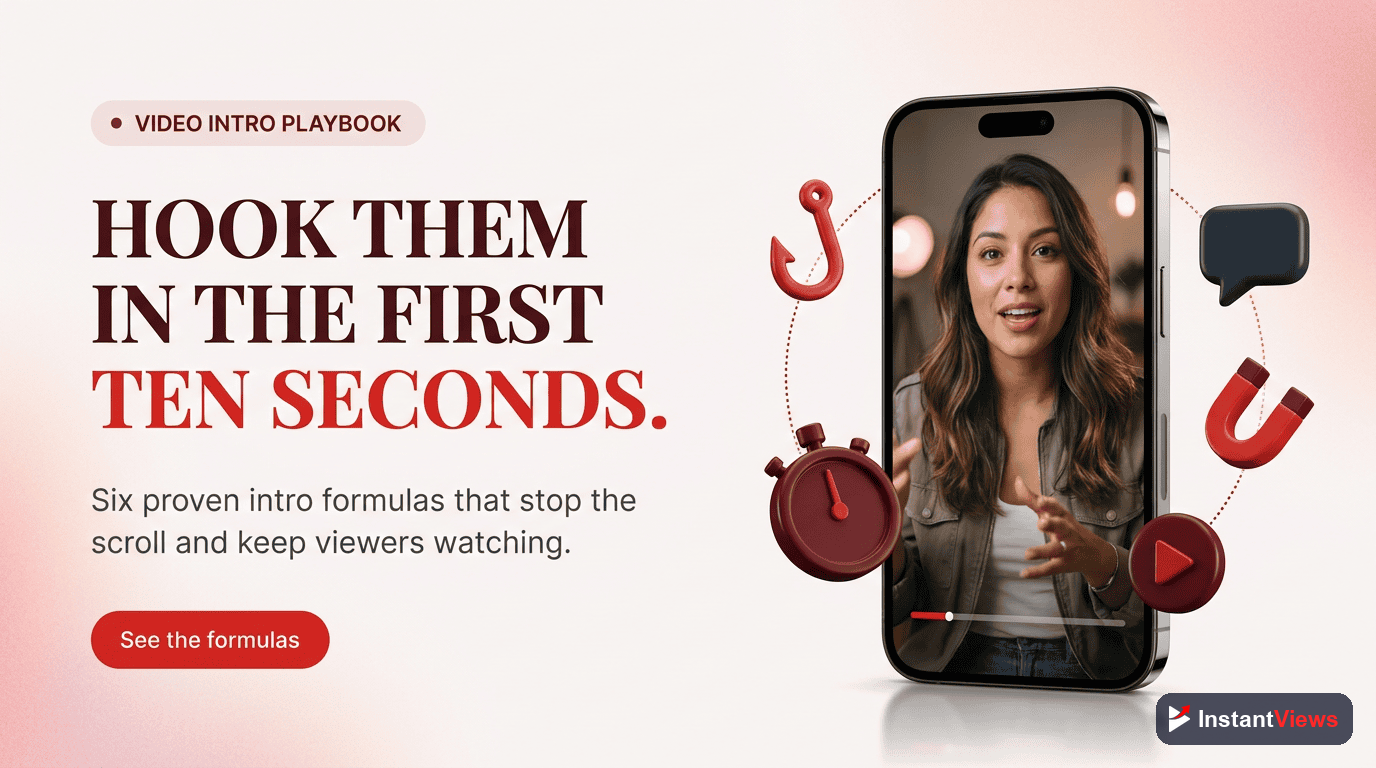
- Your video intro must hook viewers within 5-8 seconds or risk losing them forever
- 6 proven intro formulas work across all YouTube content types and niches
- Successful creators skip generic greetings and jump straight to value
- The best intros create curiosity, promise value, and establish credibility
- Use the InstantViews Video Analyzer to score your intro before publishing
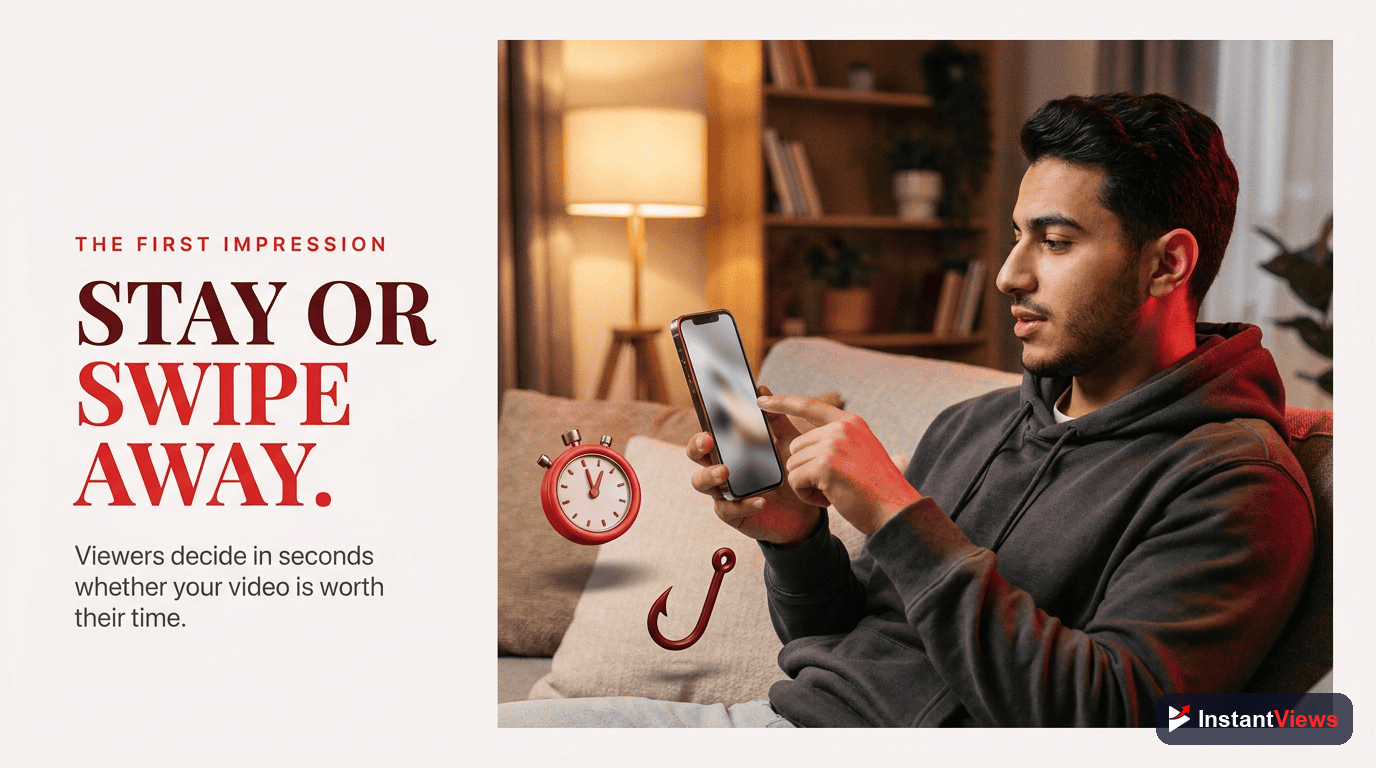
Your video intro is make-or-break. Within 8 seconds, viewers decide whether to stay or scroll away. That's not enough time for a fancy animated logo sequence or a long-winded greeting. Understanding effective hook strategies is essential for capturing attention in those critical first 3 seconds.
The data is clear: videos that grab attention immediately get 3-5x more watch time than those that waste the first 10 seconds. Yet most creators still start with "Hey guys, welcome back to my channel" - instantly losing potential viewers.
This guide reveals the exact intro formulas used by successful YouTube creators, complete with templates you can adapt for your own videos.
- Why Video Intros Matter
- Anatomy of a Great Intro
- Formula #1: Hook + Promise + Preview
- Formula #2: Problem + Agitation + Solution
- Formula #3: Result + Method + Credibility
- Formula #4: Story + Stakes + Promise
- Formula #5: Question + Answer Preview + Why It Matters
- Formula #6: Controversy + Evidence + Value Prop
- Real Examples from Top Creators
- Common Intro Mistakes to Avoid
- FAQ
Why Video Intros Matter
YouTube's algorithm heavily favors videos that keep viewers watching. The first 30 seconds are the most critical period for retention - and your intro occupies the most important part of that window.
Consider these statistics:
- 62% of viewers decide within 10 seconds whether to keep watching
- Videos with strong intros see 40-60% higher average view duration
- Every second you waste in the intro costs you 5-10% of your audience
- A 15% improvement in intro retention can lead to 100% more views from recommendations
Never use the same intro for every video. Generic branded intros (animated logos, theme music) decrease retention by 20-30%. Each video needs a custom intro that's specific to that content.
Anatomy of a Great Intro
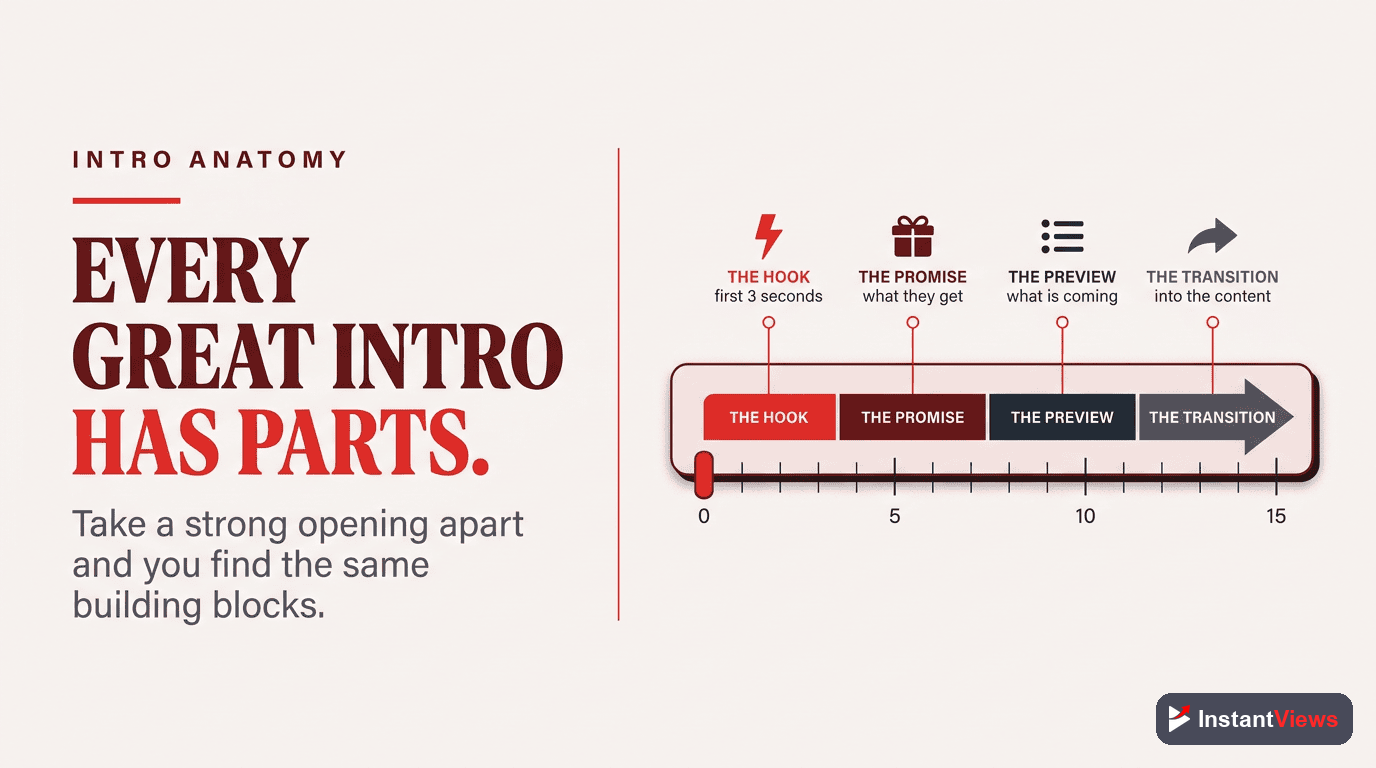
Before diving into specific formulas, understand that every effective intro accomplishes three objectives:
- Creates Curiosity - Makes viewers want to know more
- Promises Value - Tells viewers what they'll gain
- Establishes Credibility - Proves you're worth listening to
The best intros deliver all three in 5-10 seconds. Here's how.
Formula #1: Hook + Promise + Preview
Hook + Promise + Preview
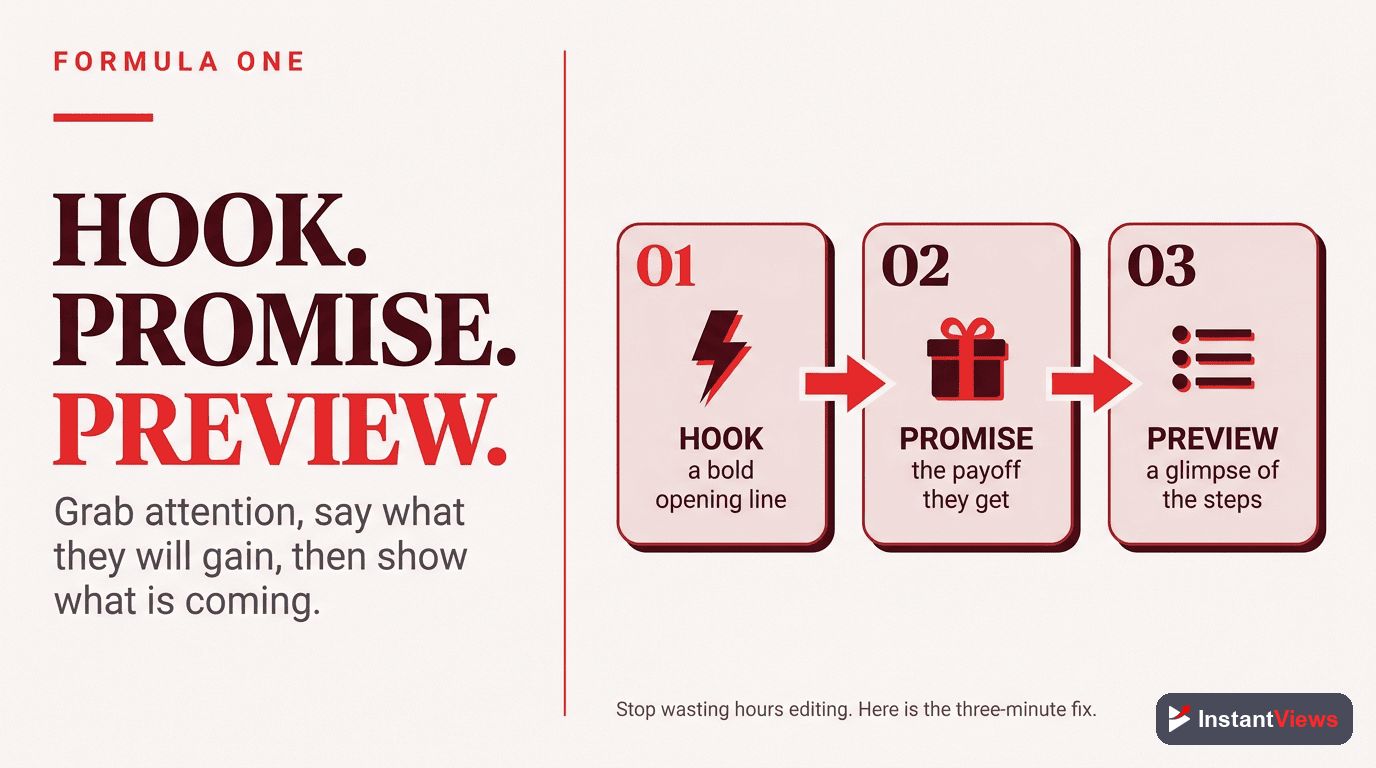
Start with a compelling hook that grabs attention, immediately promise specific value, then preview what's coming to create anticipation.
[Surprising statement/question] + In this video, I'll show you [specific outcome] + We'll cover [key points]
"Most YouTubers are optimizing the wrong metrics. In this video, I'll show you the 3 metrics that actually predict viral growth. We'll analyze real channels that used these insights to go from 1,000 to 100,000 subscribers in 6 months."
Why it works: This formula front-loads value while creating multiple curiosity loops. Viewers stay because they want to know the surprising insight, learn the specific outcome, and see the real examples.
Best for: Educational content, tutorials, strategy videos, case studies
Formula #2: Problem + Agitation + Solution
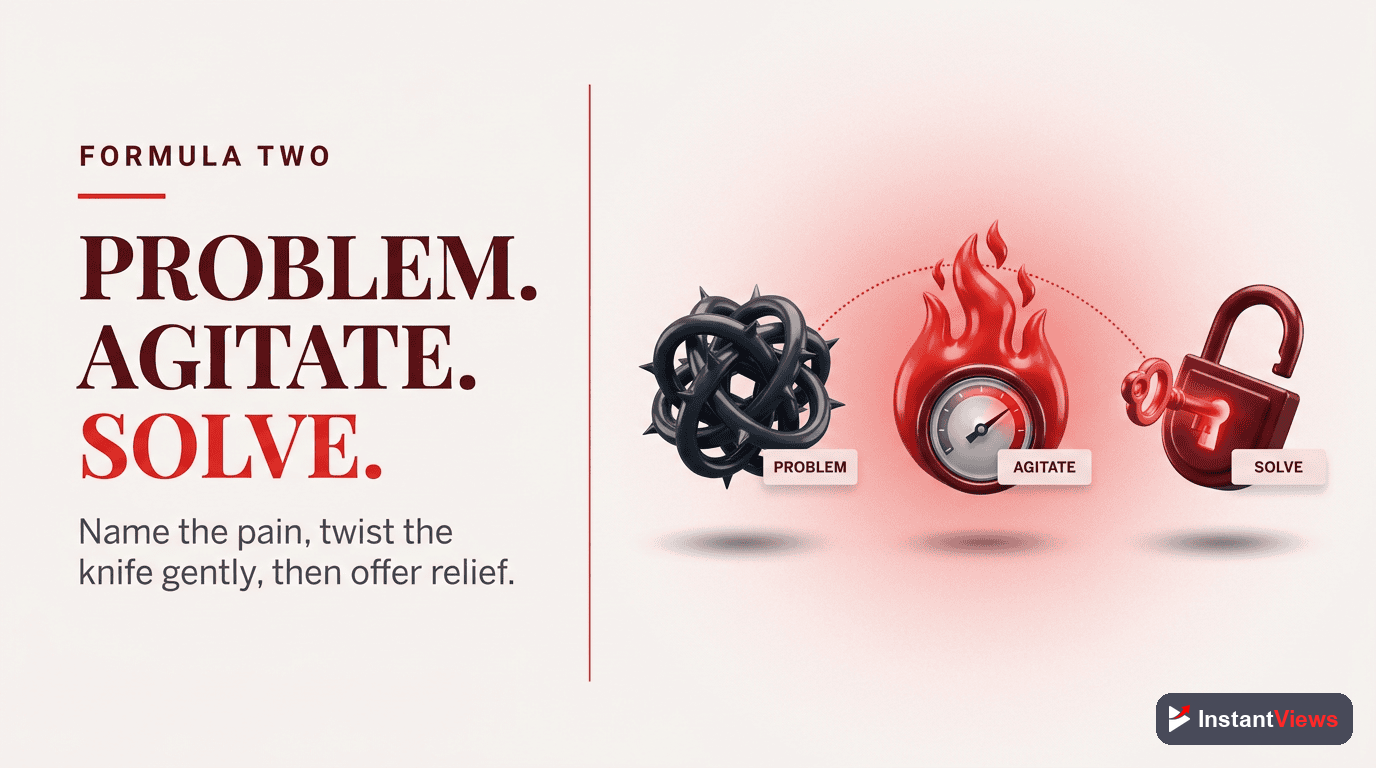
Problem + Agitation + Solution
Identify a problem your audience faces, emphasize why it matters and what's at stake, then promise a solution.
[State problem] + Here's why this is costing you [consequence] + I'm going to show you [solution]
"Your thumbnails are getting clicks, but your videos aren't getting views. Here's why this is killing your channel growth - YouTube's algorithm thinks your content is clickbait. I'm going to show you how to fix the disconnect between your thumbnails and your intros."
Why it works: This taps into pain points and creates urgency. When you articulate a problem viewers are experiencing, they immediately feel understood and want your solution.
Best for: Problem-solving content, troubleshooting, optimization videos
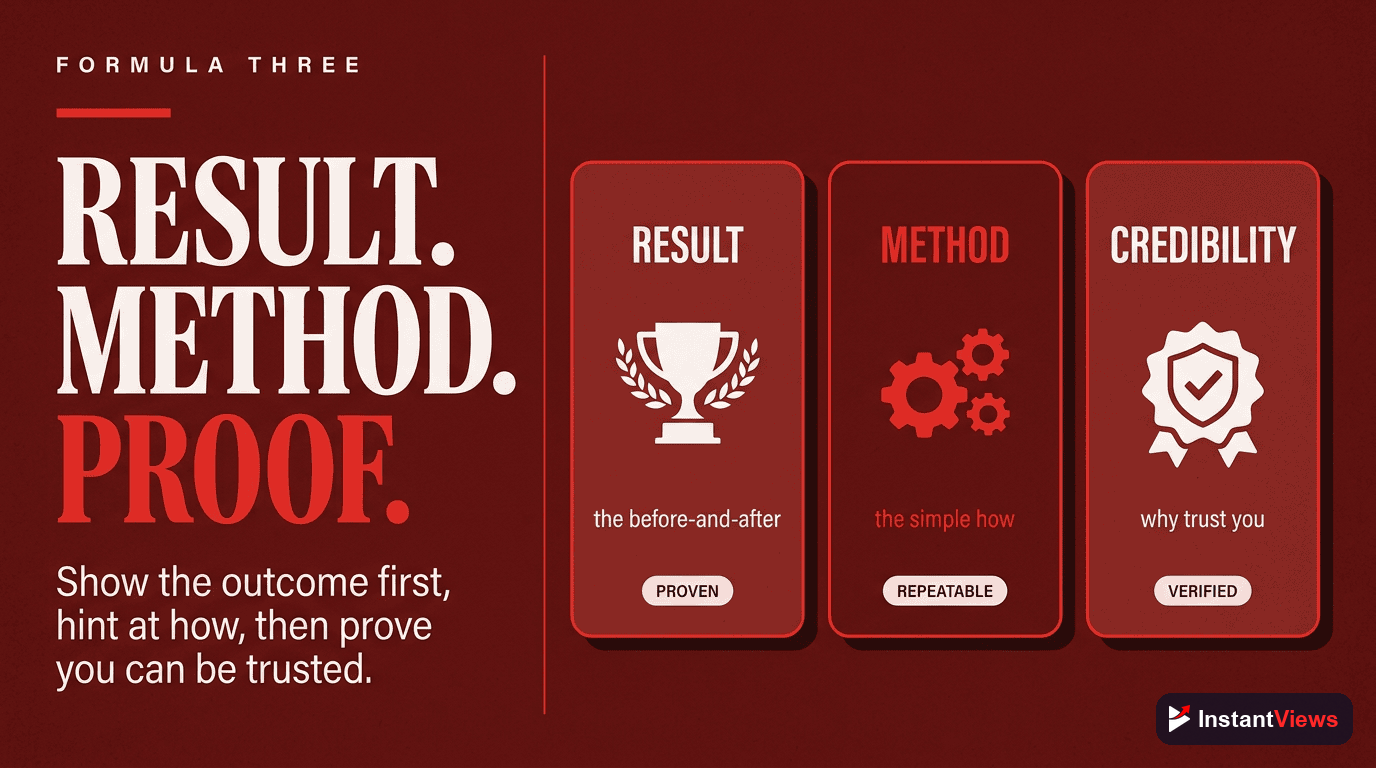
Formula #3: Result + Method + Credibility
Result + Method + Credibility
Show impressive results first, tease the method used to achieve them, then establish why viewers should trust you.
[Show result] + I used [method/strategy] + I've [credibility statement]
"This video got 5 million views with zero subscribers. I used a specific intro formula that hooks viewers in the first 3 seconds. I've tested this on over 200 videos, and I'm breaking down exactly how it works."
Why it works: Results create instant credibility and curiosity. When viewers see proof that your method works, they want to learn it. The credibility statement removes skepticism.
Best for: Case studies, results-focused tutorials, before/after content
Formula #4: Story + Stakes + Promise
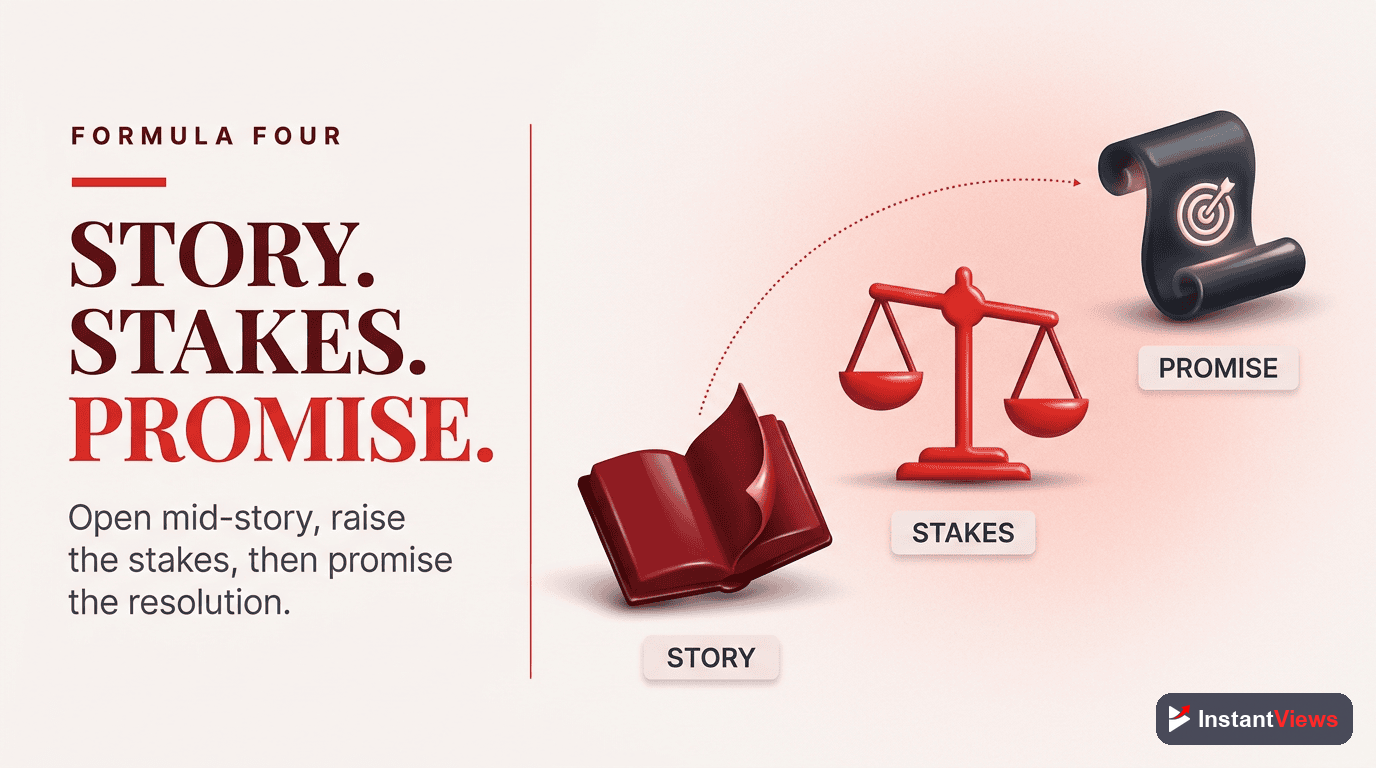
Story + Stakes + Promise
Begin at the most dramatic point of a personal story, explain what was at risk, then promise to reveal how it resolved.
[Dramatic story moment] + [What was at stake] + By the end of this video, you'll see [resolution/lesson]
"I was one video away from quitting YouTube. Three years of work, 400 videos, and I'd made $200 total. By the end of this video, you'll see exactly what changed - and why the conventional advice you're following might be holding you back."
Why it works: Stories create emotional investment. When viewers connect with your struggle, they want to see your triumph. The stakes raise the tension and make the resolution more valuable.
Best for: Personal journey content, transformation videos, motivational content
Formula #5: Question + Answer Preview + Why It Matters
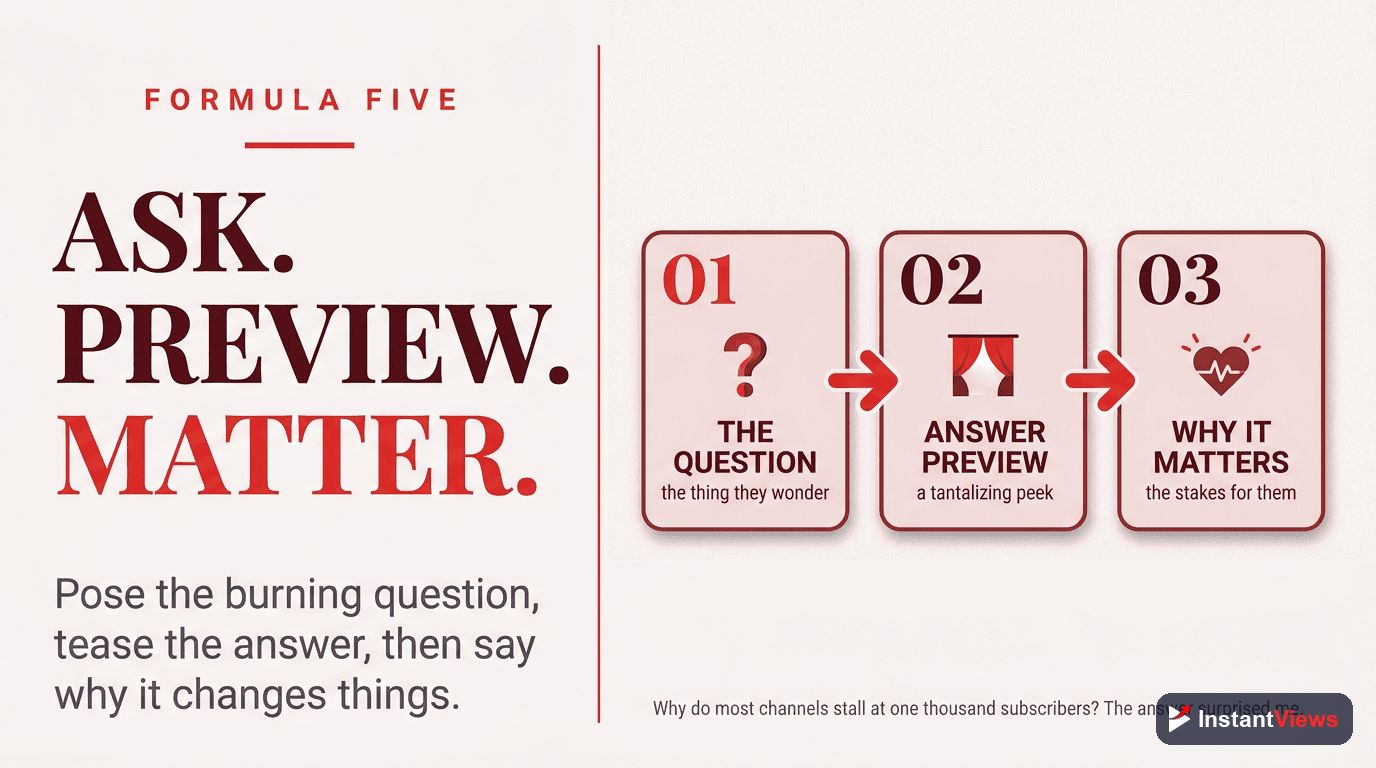
Question + Answer Preview + Why It Matters
Ask a compelling question your audience wants answered, tease that you have the answer, then explain why the answer is important.
[Ask question] + The answer is [surprising/counterintuitive] + This matters because [consequence]
"Why do some channels with 'bad' thumbnails get millions of views? The answer is counterintuitive - and it challenges everything you've been taught about YouTube. This matters because you might be spending hours perfecting the wrong things."
Why it works: Questions activate the brain's problem-solving mode. The preview creates curiosity (if the answer is surprising). The "why it matters" statement gives viewers a reason to care.
Best for: Explanatory content, myth-busting, analysis videos
Formula #6: Controversy + Evidence + Value Prop
Controversy + Evidence + Value Prop
Make a controversial or contrarian statement, back it up with evidence, then explain what viewers will gain from this perspective.
[Controversial take] + I have [data/evidence] + Here's what this means for [viewer benefit]
"Posting daily on YouTube will kill your channel. I analyzed 500 creators who tried daily uploads - 73% saw their views per video drop by half. Here's what the algorithm really rewards, and how to grow faster with fewer uploads."
Why it works: Controversy triggers emotional responses. Viewers stay either to have their beliefs validated or to hear why they disagree. Evidence adds credibility and reduces the "clickbait" feeling.
Best for: Opinion content, commentary, strategy debates, myth-busting
Score Your Video Intro
Get instant feedback on your intro with our AI-powered Video Analyzer. See your intro score and specific improvements before you publish.
Analyze Your Video →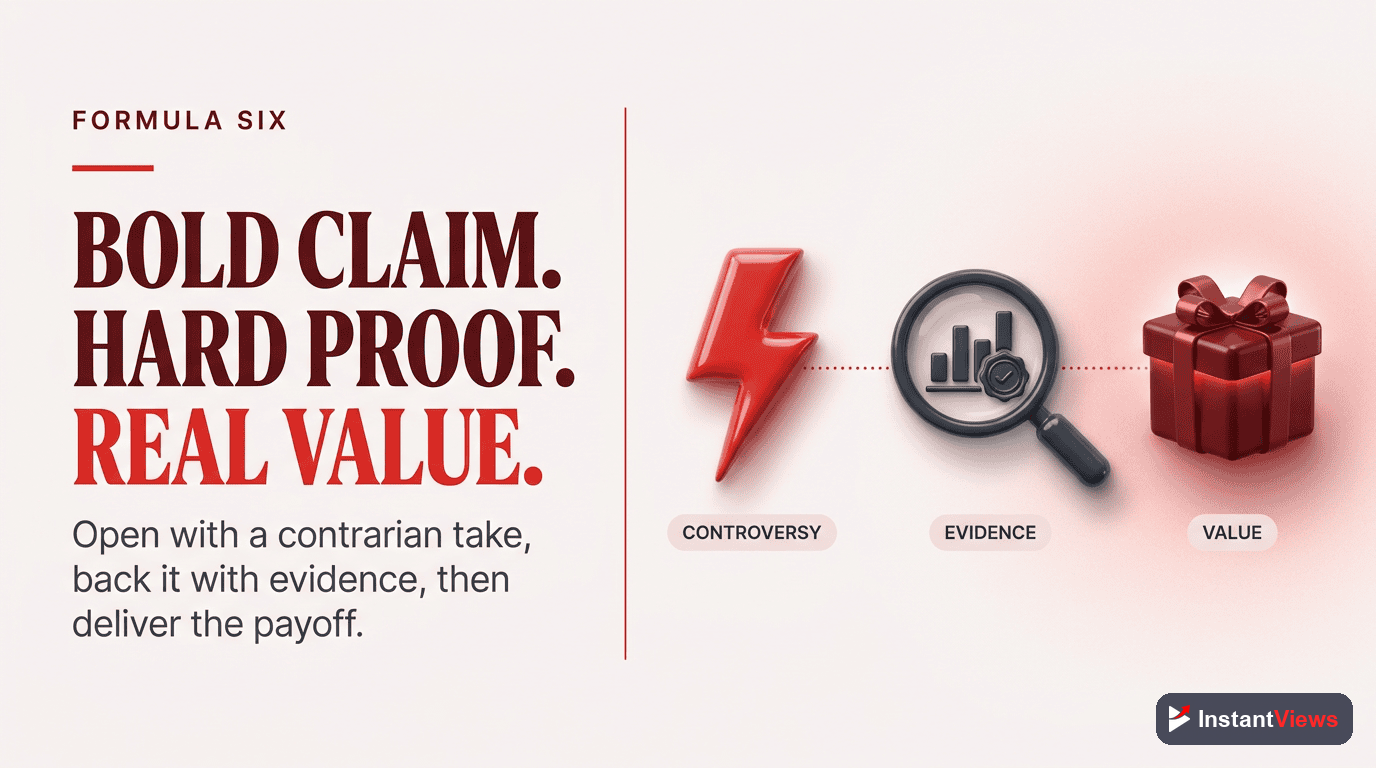
Real Examples from Top Creators
Let's look at how successful creators apply these formulas:
| Creator | Formula Used | Opening Line |
|---|---|---|
| MrBeast | Hook + Promise + Preview | "I just spent 50 hours buried alive. We're going to see if I can survive..." |
| Ali Abdaal | Result + Method + Credibility | "This simple productivity system helped me build a $5M business. Here's exactly how it works..." |
| Marques Brownlee | Question + Answer Preview | "What makes a smartphone camera actually good? The answer might surprise you..." |
| Paddy Galloway | Controversy + Evidence | "Most YouTube advice is wrong. I analyzed 10,000 viral videos and here's what actually works..." |
| Casey Neistat | Story + Stakes + Promise | "So I just broke my camera in the middle of nowhere. Here's what happened next..." |
Notice how each creator jumps immediately into value. No "Hey what's up guys," no channel introductions, no asking viewers to like and subscribe. They know the first 5 seconds are critical.
Common Intro Mistakes to Avoid
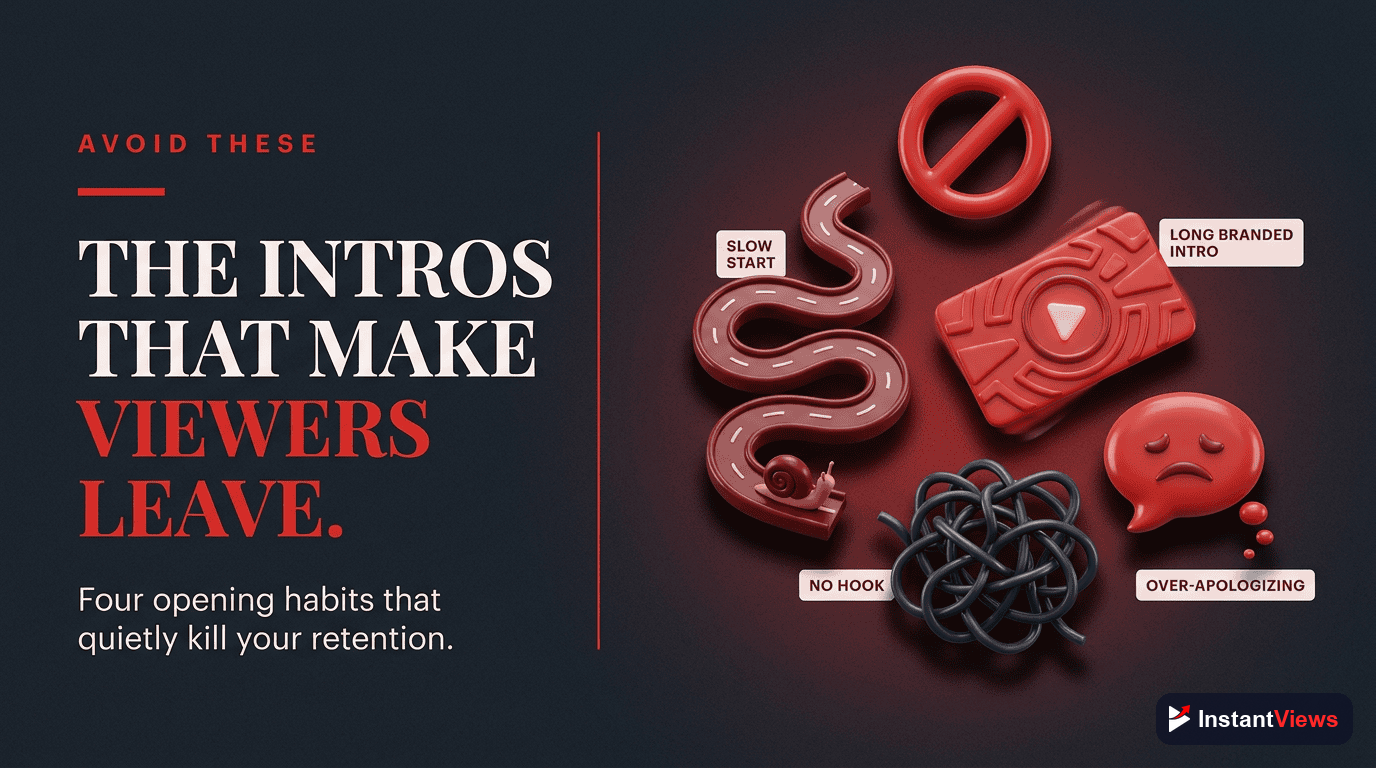
1. The Generic Greeting
"Hey guys, welcome back to my channel! If you're new here, make sure to subscribe..."
Why it fails: Wastes 10-15 seconds saying nothing of value. Viewers who clicked your video already know it's your channel.
2. The Animated Logo Intro
A 5-10 second branded animation with music before the content starts.
Why it fails: Creates a barrier between the click and the payoff. Viewers lose interest before your content even begins.
3. The Over-Explainer
"Today we're going to talk about thumbnails. Thumbnails are really important because they determine whether people click. Without good thumbnails, your videos won't get views..."
Why it fails: States the obvious and bores viewers before delivering any unique insight.
4. The Early Subscribe Ask
"Before we get started, hit that subscribe button and notification bell..."
Why it fails: Asks for commitment before proving value. This decreases retention and trust.
Putting It All Together
Here's your action plan for creating compelling intros:
- Choose a formula that matches your content type
- Write 3-5 variations of your intro using that formula
- Test with the Video Analyzer to score each version
- Record the highest-scoring intro and time it (aim for 5-10 seconds)
- Check your retention graph after publishing to see how it performed
- Iterate based on data - if retention drops early, adjust your approach
"Your intro isn't about you or your channel. It's about immediately demonstrating that this video will solve a problem, answer a question, or deliver entertainment. Make that clear in 5 seconds or lose the viewer." - YouTube Creator Insider
Frequently Asked Questions
The ideal YouTube intro is 5-10 seconds maximum. Research shows that viewers decide whether to stay or leave within the first 8 seconds. Your intro should quickly establish value and create curiosity without wasting time on unnecessary branding or lengthy introductions.
No. Generic branded intros (like animated logo sequences) hurt retention. Instead, create custom intros for each video that are specific to that content. Your intro should tease what makes THIS particular video worth watching, not just promote your channel brand.
Your intro should accomplish three things: create curiosity about the topic, promise specific value, and establish why viewers should trust you. Avoid generic greetings like "Hey guys, welcome back." Instead, jump straight into a hook that makes viewers want to stay.
Only if you are new to the platform or targeting new audiences. For established channels, skip self-introductions and get straight to value. Returning subscribers already know who you are - they clicked because of your title and thumbnail, not to hear you introduce yourself again.
Check YouTube Analytics for your audience retention graph. If you see a sharp drop in the first 30 seconds, your intro needs work. Use the InstantViews Video Analyzer to score your intro before publishing and get specific suggestions for improvement.
No. Asking for subscribes before delivering value trains viewers to leave. Data shows that subscribe requests in the first 30 seconds decrease retention by 15-25%. Earn the subscribe first by proving your value, then ask later in the video or at the end.