- Understanding search intent is critical for YouTube SEO success - it determines whether viewers engage with your content
- The four main intent types are informational, navigational, transactional, and commercial investigation
- Analyzing top-ranking videos reveals patterns that show what viewers expect for specific queries
- Matching your content format to search intent can increase retention by 60% or more
- The InstantViews Video Analyzer automatically identifies search intent for your target keywords
Every YouTube search reveals what viewers want - but most creators ignore this critical signal. They optimize for keywords without understanding the intent behind those searches, resulting in videos that rank briefly but fail to engage. Proper keyword research combined with intent analysis is the foundation of YouTube SEO success.
Search intent is the difference between a video that gets clicks but no watch time, and one that converts searchers into loyal subscribers. When you match intent, YouTube's algorithm notices - and rewards you with better rankings and more visibility.
This guide breaks down everything you need to know about YouTube search intent analysis, from identifying intent types to optimizing your content for maximum engagement.
What is Search Intent for YouTube?
Search intent - also called user intent or query intent - is the underlying goal behind a viewer's search query. It's not just what they search for, but why they're searching.
On YouTube, search intent reveals:
- What problem they want solved - Learning, entertainment, purchasing guidance, or navigation
- What format they expect - Tutorial, review, comparison, entertainment, or educational content
- How deep they want to go - Quick overview or comprehensive deep dive
- Their stage in the decision process - Just researching, actively comparing, or ready to act
Types of Search Intent
YouTube search intent falls into four main categories. Understanding each helps you create content that matches viewer expectations.
Informational Intent
Viewers want to learn something or understand a concept. They're seeking knowledge, not necessarily to take immediate action.
• "How does photosynthesis work"
• "What is blockchain explained"
• "Why do cats purr"
• "History of ancient Rome"
Educational videos, explainer content, tutorials, how-to guides, deep dives, documentary-style videos
Navigational Intent
Viewers are looking for a specific channel, video, or creator. They know what they want and are navigating directly to it.
• "MrBeast latest video"
• "Apple keynote 2025"
• "PewDiePie channel"
• "SNL weekend update"
Brand consistency, clear channel naming, recognizable thumbnails, series/playlists for returning viewers
Transactional Intent
Viewers are ready to take action - typically making a purchase decision. They want information that helps them buy or commit.
• "Best laptop for gaming 2025"
• "iPhone 15 Pro review"
• "Nike running shoes unboxing"
• "How to buy Bitcoin"
Product reviews, unboxings, buying guides, detailed demonstrations, pros/cons analysis, "best of" lists
Commercial Investigation
Viewers are researching before making a decision. They're comparing options, evaluating features, and gathering information.
• "iPhone vs Samsung 2025"
• "Best video editing software comparison"
• "Canon vs Sony cameras"
• "WordPress vs Shopify for beginners"
Comparison videos, versus content, detailed feature breakdowns, side-by-side testing, tier lists
Why Search Intent Matters for YouTube SEO
YouTube's algorithm is obsessed with one thing: viewer satisfaction. When viewers get what they're looking for, they watch longer, engage more, and return for more content.
Here's why matching search intent directly impacts your rankings:
1. Retention Signals Quality
When your content matches intent, viewers watch longer. A viewer searching "how to tie a tie" who lands on a 30-minute fashion documentary will leave immediately. But a 3-minute step-by-step tutorial? They'll watch to the end.
YouTube interprets high retention as a quality signal, boosting your video in search and recommendations.
2. Click-Through Rate Depends on Intent Match
Your thumbnail and title should signal intent match. If someone searches for a comparison but your thumbnail looks like a tutorial, they won't click - even if you rank well.
3. Engagement Metrics Improve
Intent-matched videos get more:
- Comments (viewers engage when content delivers)
- Likes (satisfaction drives positive reactions)
- Shares (people share helpful content that meets needs)
- Saves (viewers bookmark content they found valuable)
4. Lower Bounce Rate
When viewers immediately return to search results (bounce), YouTube knows your content didn't satisfy the query. This tanks your rankings fast.
| Metric | Intent Matched | Intent Mismatched |
|---|---|---|
| Average Retention | 55-70% | 20-35% |
| CTR from Search | 8-15% | 2-5% |
| Bounce Rate | 15-25% | 50-75% |
| Engagement Rate | 6-12% | 1-3% |
"The creators who dominate search understand that keywords are just the beginning. Search intent is where real optimization happens. Understanding algorithm factors like intent matching is crucial for long-term success." - YouTube Creator Insider Team
How to Analyze Viewer Search Intent
Identifying search intent isn't guesswork - it's a systematic research process. Here's how to analyze intent for any keyword:
Step 1: Search Your Target Keyword
Go to YouTube and search your exact target keyword. Don't sign out or use incognito - YouTube's personalization actually helps show you what typical viewers see.
Step 2: Analyze Top 10 Results
Look at the top-ranking videos and identify patterns:
- Video length: Are they quick (3-5 min) or comprehensive (15-30 min)?
- Thumbnail style: Educational, entertainment, or commercial?
- Title format: How-to, listicle, review, comparison, or explanation?
- View count: Which formats get the most engagement?
- Upload date: Does freshness matter (news, reviews) or are older videos still ranking (evergreen tutorials)?
For each top-ranking video, note:

1. Video length: _____ minutes
2. Format: Tutorial / Review / Comparison / Educational / Entertainment
3. Production quality: High / Medium / Low
4. Thumbnail style: Text-heavy / Image-focused / Face thumbnail
5. Title pattern: Question / How-to / Listicle / Statement
6. Primary intent: Informational / Navigational / Transactional / Commercial
7. Depth level: Surface / Moderate / Deep dive
Step 3: Check YouTube Autocomplete
Type your keyword and see what autocomplete suggests. These suggestions reveal actual user intent:
- "how to" = Informational intent
- "vs" or "comparison" = Commercial investigation
- "review" or "unboxing" = Transactional intent
- Brand/creator names = Navigational intent
Step 4: Read Video Comments
Top comments on ranking videos reveal what viewers wanted and whether they got it. Look for:
- "This is exactly what I needed" = Intent matched
- "I was looking for X, but this showed Y" = Intent mismatch
- Questions asking for more detail = Opportunity to go deeper
- Requests for specific formats = Unmet intent variations
Step 5: Check "People Also Watch"
YouTube's suggested videos show related intent patterns. If all suggested videos are comparisons, that's the dominant intent. If they mix tutorials and reviews, multiple intents exist.
Matching Content to Intent
Once you've identified search intent, structure your content to match. Here's how to optimize for each intent type:
For Informational Intent:
- Hook: State the question you're answering in the first 5 seconds
- Structure: Clear chapters covering different aspects of the topic
- Depth: Go comprehensive - viewers want to fully understand
- Pacing: Educational but engaging - not too slow, not too fast
- CTA: Subscribe for more educational content, link to related topics
For Transactional Intent:
- Hook: Show the product immediately and state what you'll reveal
- Structure: Specs, features, pros/cons, price, verdict
- Depth: Detailed enough to make a decision - show it in action
- Pacing: Quick but thorough - respect viewer's decision timeline
- CTA: Links to purchase, affiliate disclosure, comparison to alternatives
For Commercial Investigation:
- Hook: State what you're comparing and your conclusion upfront
- Structure: Head-to-head comparison across key criteria
- Depth: Balanced coverage - don't skip details on either option
- Pacing: Methodical - viewers are analyzing, not impulse deciding
- CTA: Help them decide based on use case, link to individual reviews
For Navigational Intent:
- Brand consistency: Viewers expect your style - deliver it
- Clear titles: Episode numbers, series names, clear labeling
- Playlists: Make it easy to find related content
- Upload schedule: Regular posting when viewers expect it
Analyze Your Video's Search Intent Match
Get instant feedback on whether your content matches search intent. Our Video Analyzer identifies gaps and suggests optimizations.
Try Video Analyzer Free →Intent-Based Optimization Strategies
Beyond content format, optimize every element of your video for search intent:
Title Optimization by Intent
Informational: "How to [Result]" or "What is [Topic] Explained"
Transactional: "[Product] Review" or "Is [Product] Worth It?"
Commercial: "[Option A] vs [Option B]" or "Best [Category] for [Use Case]"
Navigational: "[Brand/Creator] - [Specific Content]"
Thumbnail Strategy by Intent
| Intent Type | Thumbnail Elements | Text Overlay |
|---|---|---|
| Informational | Diagrams, clear visuals of result | "How to", "Complete Guide", step indicators |
| Transactional | Product front-and-center, ratings | "Review", "Worth It?", verdict preview |
| Commercial | Split-screen showing both options | "VS", "Better?", comparison indicators |
| Navigational | Brand logo, consistent style | Episode/series info, branding |
Description Optimization
Your first 2-3 lines should immediately confirm intent match. Mastering description optimization helps reinforce intent signals to both viewers and YouTube's algorithm:
- Informational: "Learn how to [specific outcome] with this step-by-step guide..."
- Transactional: "Honest review of [product] after [time period]. Here's whether it's worth buying..."
- Commercial: "Detailed comparison of [A] vs [B] to help you decide which is better for..."
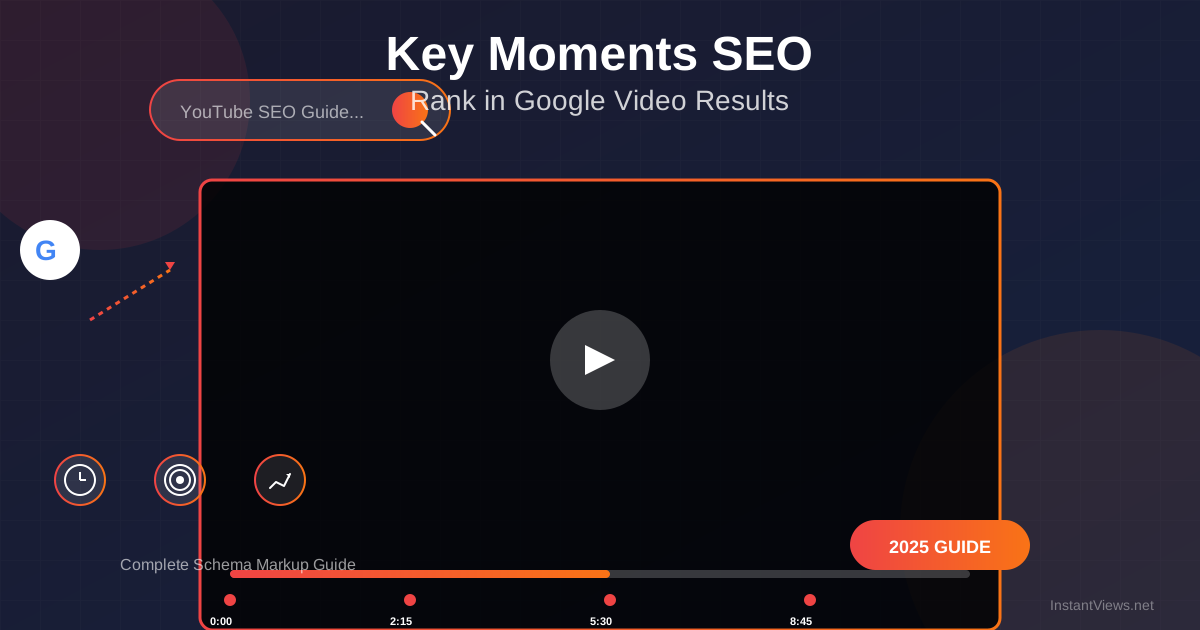
Chapter/Timestamp Strategy
Structure your chapters to match intent-based viewing patterns. For our detailed guide on this, see YouTube Key Moments SEO.
How InstantViews Video Analyzer Helps Identify Search Intent
The InstantViews Video Analyzer automates search intent analysis and provides actionable recommendations:
1. Automatic Intent Detection
Enter your target keyword and the analyzer:
- Scans top 20 ranking videos
- Identifies dominant intent type
- Shows intent distribution (what percentage of results match each type)
- Reveals secondary intents you can target
2. Format Recommendations
Based on top performers, get specific guidance on:
- Optimal video length
- Recommended content structure
- Suggested chapter breakdown
- Pacing and depth recommendations
3. Competitive Intent Analysis
See how top-ranking videos structure their content:
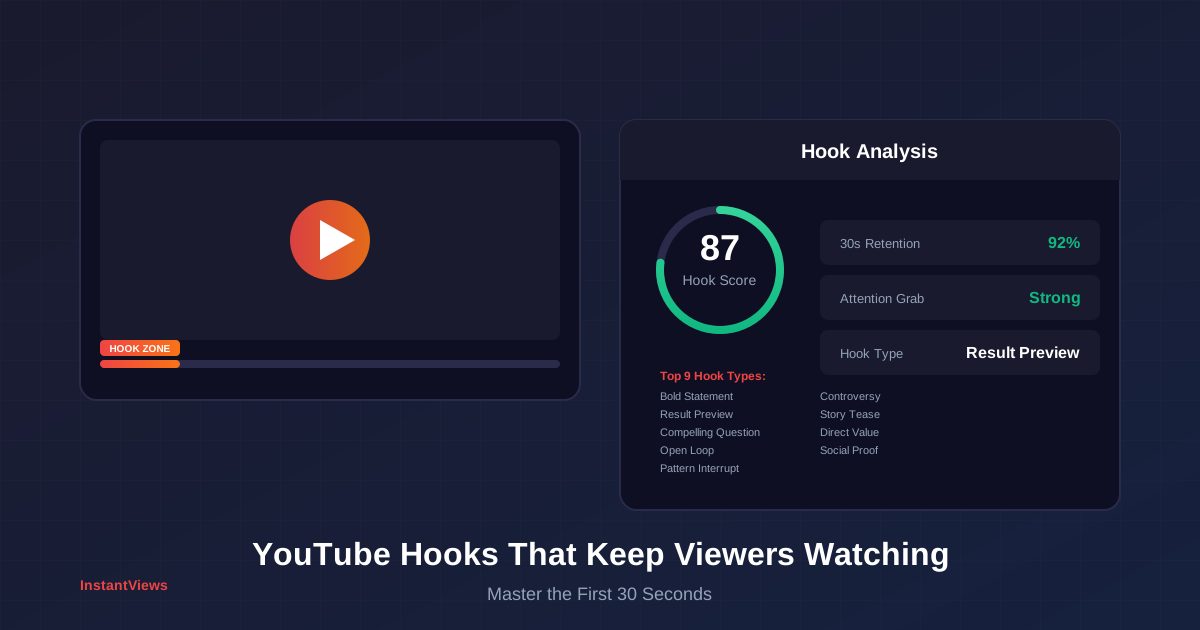
- Hook analysis - what works in the first 30 seconds
- Content flow patterns
- Call-to-action strategies
- Retention optimization techniques
4. Intent Gap Identification
Discover underserved intent variations where you can rank more easily:
- Related searches with lower competition
- Intent angles competitors miss
- Opportunities to target multiple intents in one video
Learn more about using the Video Analyzer in our complete video analysis guide.
Common Search Intent Mistakes
Avoid these intent-matching errors that tank video performance:
1. Assuming Intent Without Research
Don't guess what viewers want based on the keyword alone. "iPhone 15" could mean unboxing, review, comparison, tutorials, or feature breakdown. Always research.
2. Mixing Multiple Intents Poorly
Trying to serve everyone serves no one. If you must cover multiple intents, use clear chapters and state upfront what you'll cover.
A 20-minute video that spends 15 minutes on informational content then 5 minutes on product review will fail for both intents. Viewers with transactional intent won't wait through the tutorial, and educational viewers will feel the review is tacked on.
3. Misleading Titles/Thumbnails
Clickbait that signals the wrong intent destroys retention. If your title promises a comparison but you only review one product, viewers leave immediately.
4. Wrong Video Length
Intent dictates ideal length:
- Quick how-to (informational, simple task): 3-5 minutes
- Deep dive (informational, complex topic): 15-30 minutes
- Product review (transactional): 8-12 minutes
- Comparison (commercial): 10-18 minutes
Going too long or too short signals intent mismatch to viewers.
5. Ignoring Intent Evolution
Search intent changes over time. A keyword that was informational last year might be transactional now. Regularly re-analyze your target keywords.
Measuring Intent Match Success
Track these metrics to verify you're matching search intent effectively:
Retention Graph Analysis
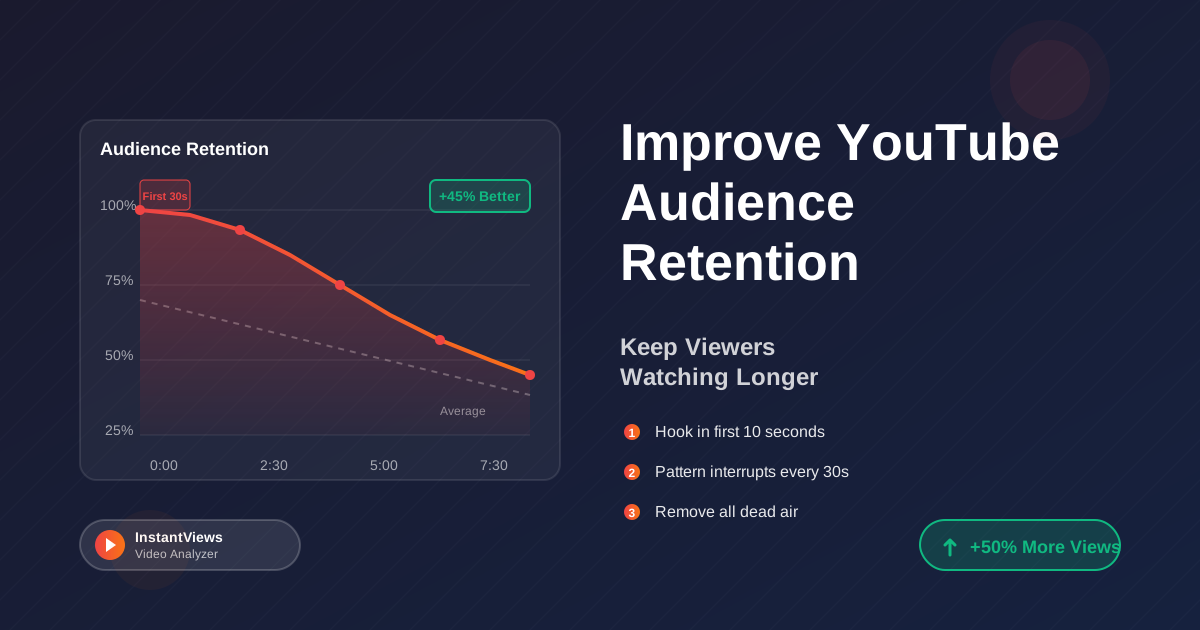
A well-matched intent shows a smooth retention curve with natural drop-off points at chapter transitions. Sudden cliffs indicate intent mismatch.
For detailed retention optimization, see our guide on improving YouTube audience retention.
Traffic Source Analysis
Check where views come from in YouTube Analytics:
- High search traffic + good retention = Intent matched perfectly
- High search traffic + poor retention = Wrong content for the intent
- Low search traffic = Keyword/optimization issue, not intent
- High browse/suggested traffic = Content is engaging but may not match search intent
Engagement Patterns
Intent-matched videos get specific engagement:
- Informational: High saves, playlist adds, shares to students/learners
- Transactional: Link clicks, high likes/dislikes (people have opinions), purchase-intent comments
- Commercial: Comments asking follow-up questions, debate in comments, comparison requests
Bounce Rate from Search
YouTube doesn't publicly show bounce rate, but you can infer it:
- High impressions + low CTR = Title/thumbnail doesn't signal intent
- High CTR + low retention = Content doesn't match promised intent
- High CTR + high retention + low avg view duration = Video too long for intent
Frequently Asked Questions
Search intent on YouTube refers to the underlying goal or purpose behind a viewer's search query. It reveals what the viewer actually wants to accomplish - whether they want to learn something (informational), find a specific channel or video (navigational), make a purchase decision (transactional), or compare options (commercial investigation). Understanding search intent helps you create content that matches viewer expectations.
To identify search intent, analyze the top-ranking videos for your target keyword. Look at their format (tutorial, review, comparison), length, tone, and what questions they answer. Use YouTube's autocomplete suggestions, check the "People Also Watch" section, and review video comments to understand what viewers are looking for. The InstantViews Video Analyzer can automatically identify search intent patterns for your target keywords.
The four main types are: 1) Informational intent - viewers want to learn or understand something (how-to videos, tutorials, educational content), 2) Navigational intent - viewers search for a specific channel or video, 3) Transactional intent - viewers want to make a purchase or take action (product reviews, unboxings, buying guides), and 4) Commercial investigation - viewers are comparing options before deciding (comparison videos, "best of" lists, versus content).
YouTube's algorithm prioritizes videos that satisfy search intent because they generate higher engagement metrics. When your content matches what viewers want, they watch longer, interact more, and are less likely to bounce back to search results. This signals to YouTube that your video is relevant, which improves your rankings. Mismatched intent leads to poor retention and lower rankings, even with perfect keyword optimization.
YouTube search intent is more action-oriented and entertainment-focused. While Google users often want quick text answers, YouTube viewers expect engaging video content. YouTube intent often includes demonstration ("show me how"), entertainment value, and longer-form explanations. The same keyword can have different intent on YouTube versus Google - for example, "chocolate cake" on Google might show recipes (text), while on YouTube it shows baking tutorials (video demonstration).
Yes, but it's challenging and requires strategic structuring. The best approach is to have a primary intent with secondary intents addressed through timestamps and chapters. For example, a product review video (transactional intent) can include a tutorial section (informational intent) and comparisons (commercial investigation). Use YouTube chapters to help viewers jump to the specific intent they're looking for, and optimize your description to mention all intent types covered.