- Audience personas help you create targeted content that increases engagement by 63% and watch time by 45%
- YouTube Analytics provides comprehensive demographic and interest data for building accurate personas
- Create 3-5 detailed personas representing distinct viewer segments with unique needs and preferences
- Tailor video topics, format, length, and thumbnails to match persona preferences for maximum resonance
- InstantViews Video Analyzer automatically identifies audience personas from your top-performing content
Most YouTube creators make content based on gut feeling. They pick topics they find interesting, create videos they'd want to watch, and hope their audience agrees. This backwards approach is why 90% of channels never reach 1,000 subscribers.
The successful 10%? They know exactly who they're creating for. They understand their viewers' demographics, interests, pain points, and viewing habits. They've created detailed audience personas that guide every content decision.
This comprehensive guide will show you how to create YouTube audience personas that transform your content strategy from guesswork into a data-driven system for consistent growth.
What Are Audience Personas?
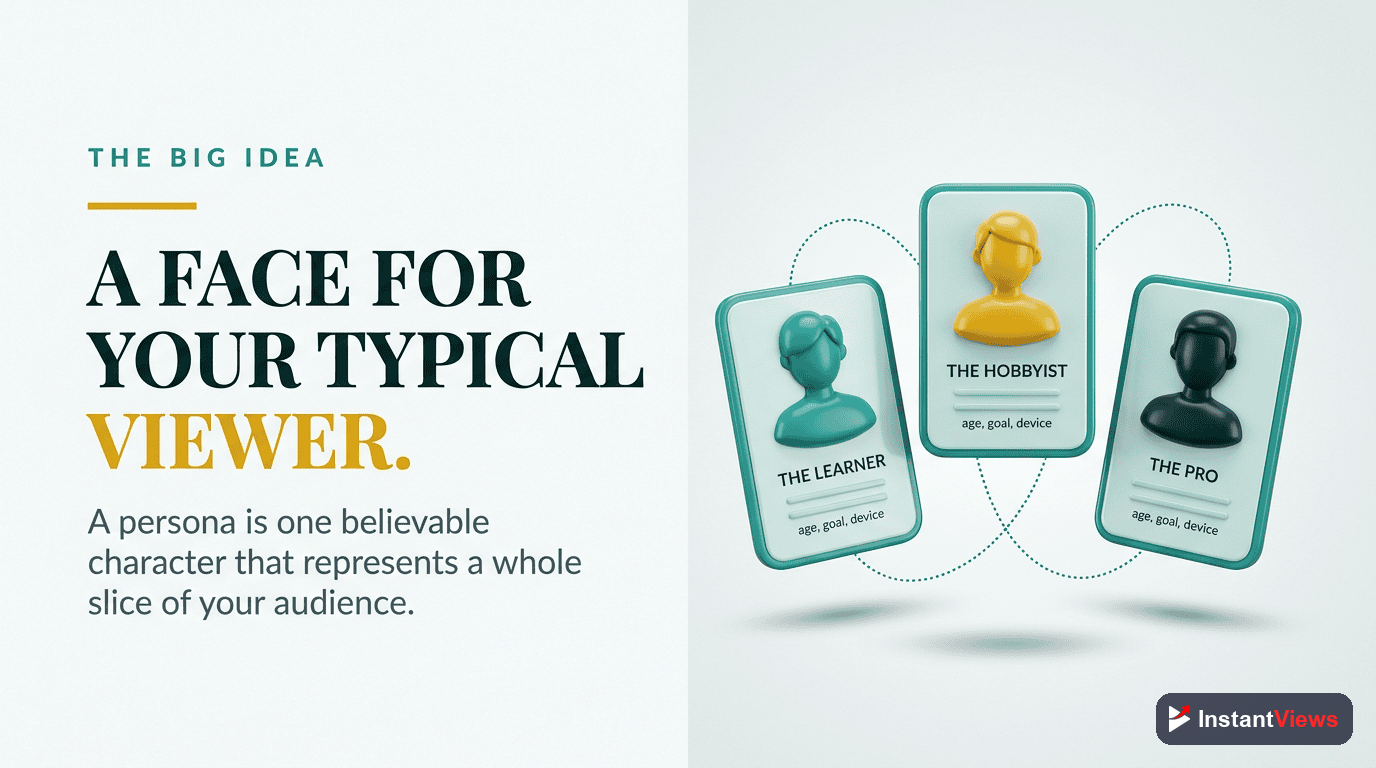
An audience persona is a semi-fictional representation of your ideal viewer, based on real data and research. It's a detailed profile that includes demographics, interests, goals, challenges, and content consumption habits.
Unlike broad demographic categories like "males 18-34," personas are rich, human profiles:
Tech-Savvy Taylor
Age: 26 | Gender: Male | Location: Urban US
Job: Junior Software Developer
Goals: Learn new programming frameworks, stay updated on tech trends, advance career
Pain Points: Limited time, overwhelmed by information, needs practical tutorials
Viewing Habits: Watches during lunch breaks and evenings, prefers 8-15 minute tutorials, seeks step-by-step guides
Content Preferences: Code walkthroughs, framework comparisons, career advice, productivity tips
This level of detail transforms how you create content. Instead of making "programming tutorials," you make "10-minute React tutorials with downloadable code" because you know Taylor watches during lunch and values efficiency.
Why Personas Matter for YouTube Success
Channels that use audience personas see dramatic improvements in key metrics:
- 63% higher engagement - Content that speaks directly to viewer needs gets more likes, comments, and shares
- 45% longer watch time - Videos aligned with persona preferences keep viewers watching
- 2.3x better CTR - Thumbnails and titles that appeal to specific personas stand out
- 56% faster subscriber growth - Viewers subscribe when every video feels made for them
But the biggest benefit isn't numbers—it's clarity. With defined personas, you'll never wonder what to make next. You'll know exactly what topics your audience wants, how long videos should be, and what style resonates.
Collecting Demographic Data
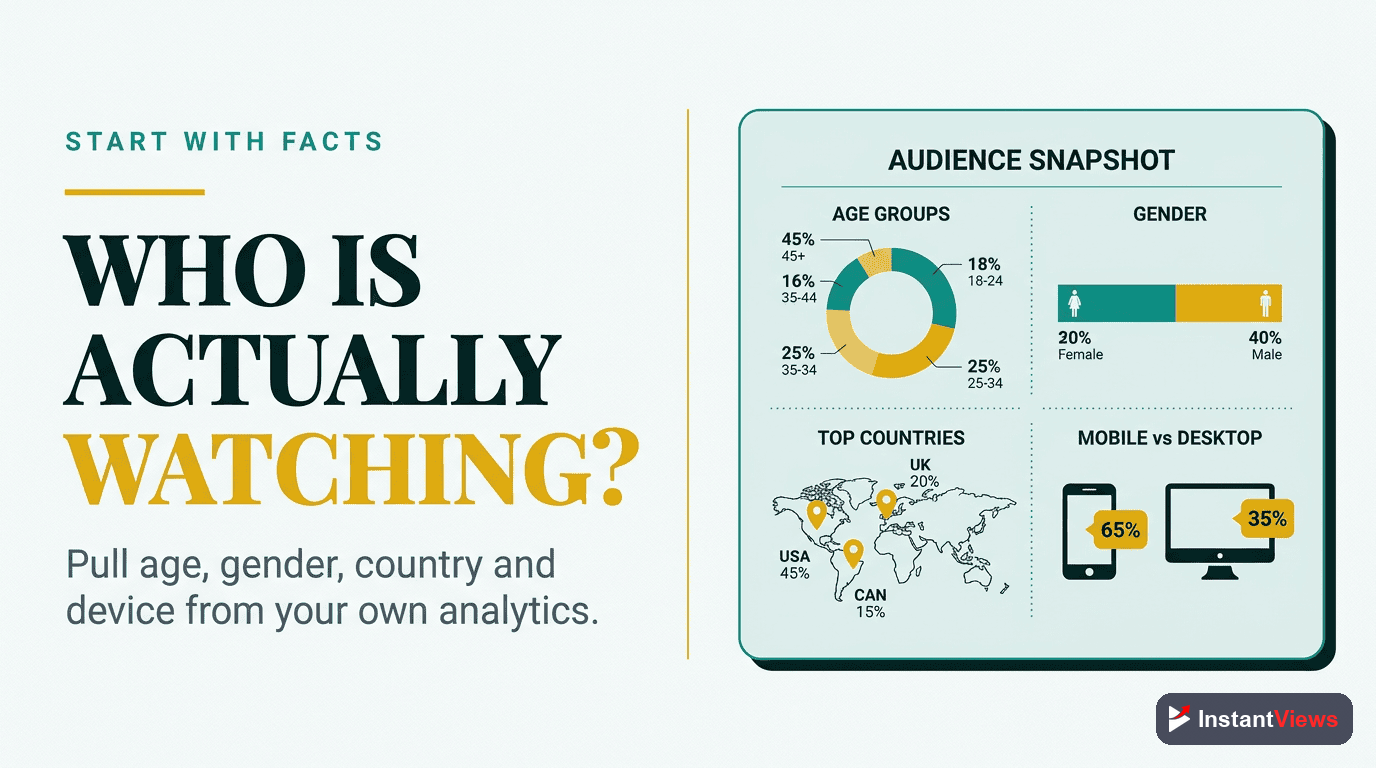
Building accurate personas starts with data. YouTube Analytics provides everything you need to understand who's watching your videos.
Accessing YouTube Demographics
Go to YouTube Studio > Analytics > Audience to find:
- Age distribution - Shows viewer age ranges (18-24, 25-34, 35-44, etc.)
- Gender breakdown - Male vs. female viewer percentages
- Geographic data - Top countries, cities, and languages
- Device types - Mobile, desktop, TV, tablet viewing patterns
- Subscription status - Percentage of subscribers vs. non-subscribers
| Data Point | How to Use It | Persona Impact |
|---|---|---|
| Age Range | Adjust language complexity and cultural references | Determines tone, pacing, and topic selection |
| Gender | Influence examples, case studies, and visual style | Shapes presentation and relatability |
| Location | Time zone awareness, regional examples | Affects upload timing and localization |
| Device | Optimize for mobile viewing if dominant | Impacts text size, visual complexity |
| Subscription | Balance content for new vs. returning viewers | Determines intro length and context needed |
Beyond YouTube Analytics
Supplement YouTube data with:
- Comment analysis - What questions do viewers ask? What problems do they mention?
- Community posts - Poll your audience about their interests and preferences
- Social media insights - Check follower demographics on Instagram, Twitter, TikTok
- Competitor research - Analyze similar channels to understand the broader niche audience
Understanding Viewer Interests
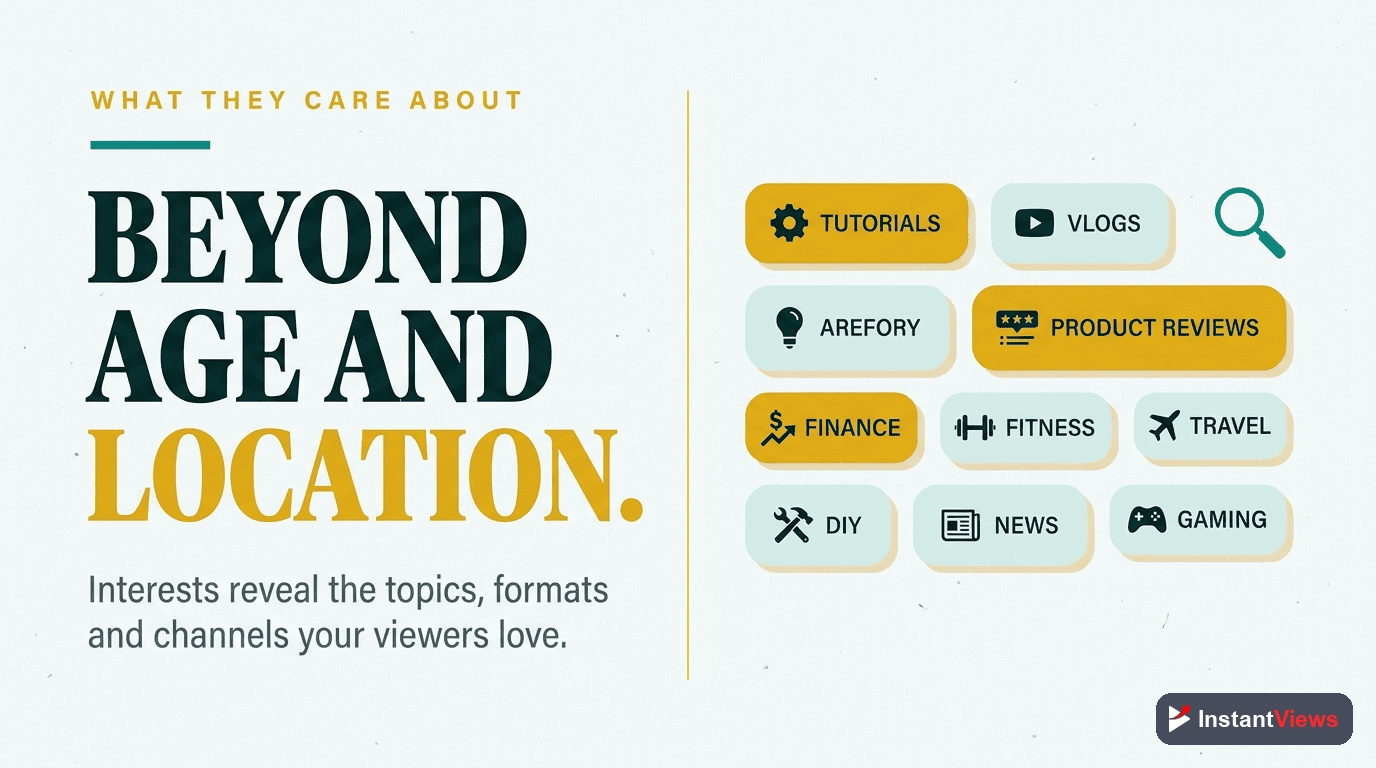
Demographics tell you who your viewers are. Interests tell you what they care about.
YouTube's Interest Categories
In YouTube Analytics under Audience > Viewers Also Watch, you'll see:
- Other channels your viewers watch
- Video categories they engage with
- Topics they search for
- Related content they consume
This data reveals the broader context of your viewers' interests. If you run a cooking channel and see your viewers also watch fitness content, that's a persona signal: "Health-Conscious Hannah" who wants nutritious recipes, not just delicious ones.
Interest Clustering
Group viewer interests into themes. If 40% of your audience watches productivity, business, and self-improvement content, that's one persona. If 35% watches gaming, tech reviews, and streaming content, that's a different persona with different needs.
Cluster 1 (Professional Development): Business channels, career advice, productivity tools, skill-building content
Cluster 2 (Entertainment Focus): Gaming, movie reviews, comedy sketches, reaction videos
Cluster 3 (Creative Learning): Design tutorials, photography tips, creative software, artistic inspiration
Identifying Pain Points
The most effective personas include what viewers struggle with. To find pain points:
- Read video comments—what problems do viewers mention?
- Check search terms in YouTube Analytics—what are viewers looking for?
- Review low-performing videos—what questions weren't answered?
- Monitor community discussions in your niche (Reddit, Discord, forums)
"Your audience doesn't watch your videos for information. They watch to solve problems. Personas that capture those problems create content that feels essential, not optional."
Analyzing Behavior Patterns
How viewers watch your content is just as important as who they are and what they like.
Key Behavioral Metrics
1. Watch Time Patterns
Check when your viewers are most active in YouTube Studio > Analytics > Audience > When Your Viewers Are on YouTube. This reveals:
- Best upload times for maximum early engagement
- Whether viewers watch during work hours (professionals) or evenings (students/hobbyists)
- Weekend vs. weekday viewing patterns
2. Session Duration
How long do viewers stay on YouTube after watching your video? Long sessions suggest engaged viewers who consume multiple videos—they're prime candidates for audience retention optimization.
3. Traffic Sources
Where viewers find your videos reveals their discovery habits:
| Traffic Source | Viewer Type | Content Implication |
|---|---|---|
| YouTube Search | Problem-solvers seeking specific solutions | Create SEO-optimized how-to and tutorial content |
| Browse Features | Casual viewers exploring recommendations | Focus on eye-catching thumbnails and broad appeal |
| Suggested Videos | Binge-watchers consuming related content | Create series and playlists with consistent topics |
| External Sources | Social media followers and website visitors | Provide context for new viewers unfamiliar with channel |
| Playlists | Deep-dive learners seeking comprehensive content | Develop structured learning paths and course-style videos |
4. Engagement Patterns
Analyze which videos get the most likes, comments, and shares. These patterns reveal what content formats resonate with different persona segments.
Identify Your Audience Personas Automatically
The InstantViews Video Analyzer analyzes your top-performing videos to identify distinct audience personas, their content preferences, and optimal video strategies.
Analyze Your Audience →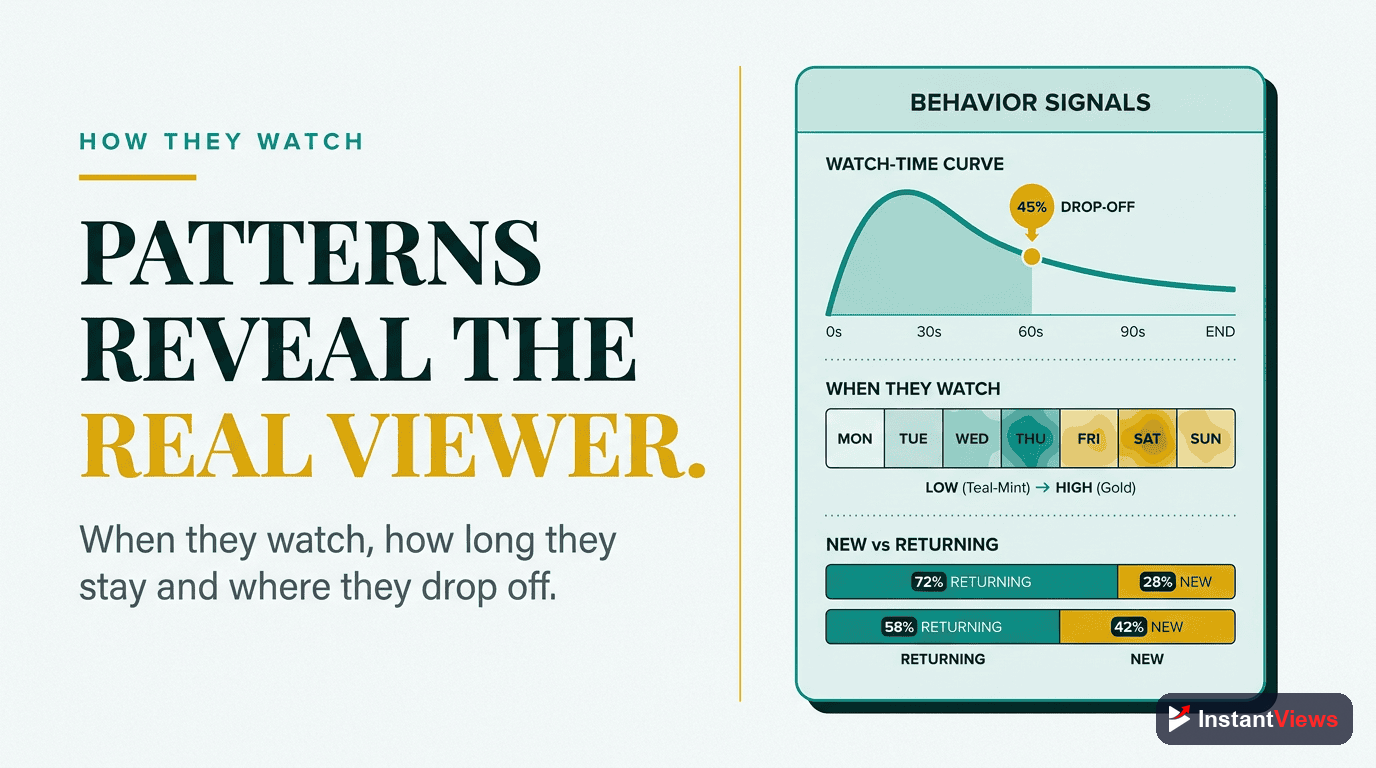
How to Create Viewer Personas
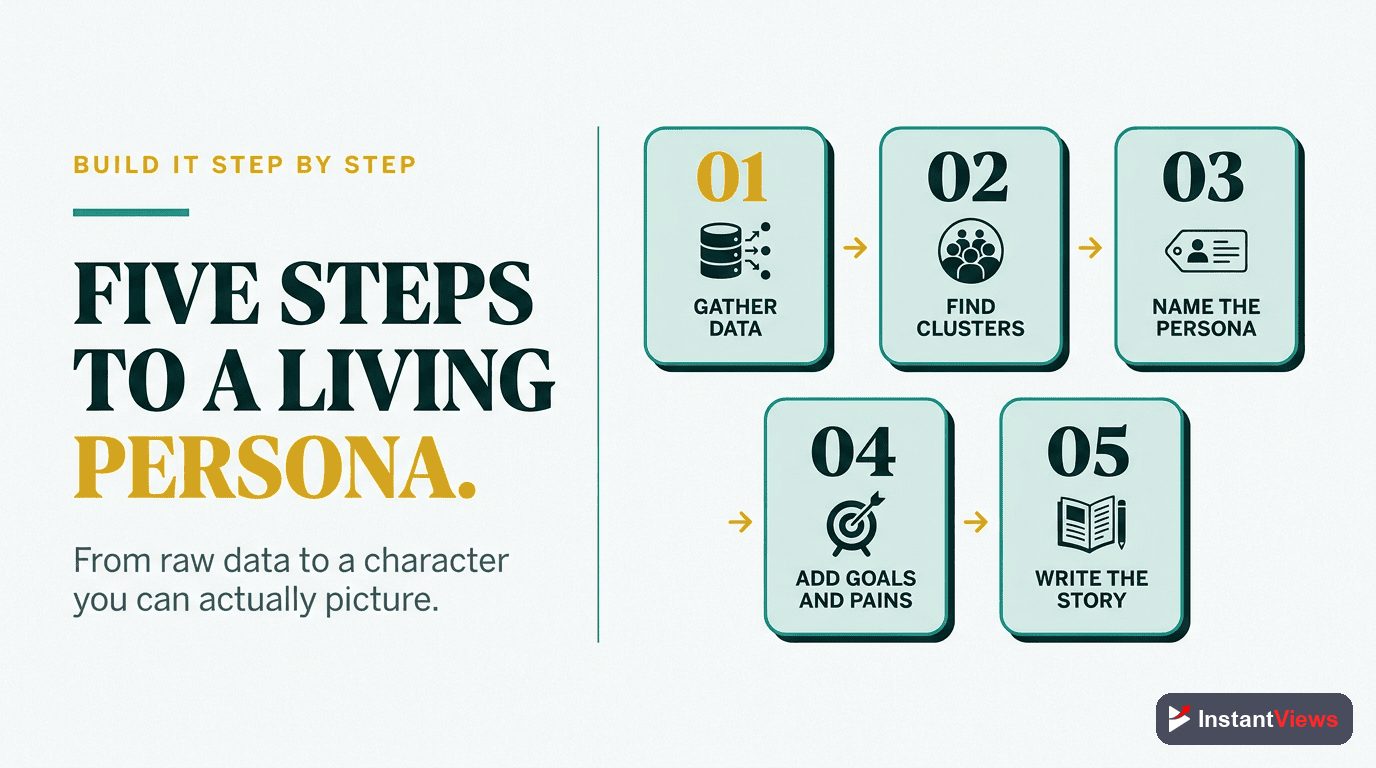
Now that you've collected data, it's time to build actual personas. Follow this systematic process:
Step 1: Segment Your Audience
Look for natural clusters in your data:
- Age groups with significantly different viewing patterns
- Geographic regions with distinct interests
- Traffic sources that bring different viewer types
- Watch time patterns indicating different use cases
Most channels have 3-5 meaningful segments that warrant separate personas.
Step 2: Create Persona Templates
For each segment, document:
Complete Persona Framework
Basic Information
- Name (make it memorable and relevant)
- Age and gender
- Location and timezone
- Occupation and education level
Goals and Motivations
- What are they trying to achieve?
- Why do they watch YouTube content in your niche?
- What success looks like to them
Pain Points and Challenges
- What problems do they face?
- What frustrates them about existing content?
- What obstacles prevent them from achieving goals?
Viewing Habits
- When do they watch YouTube?
- What device do they use?
- How long are their viewing sessions?
- Do they binge-watch or watch sporadically?
Content Preferences
- Preferred video length
- Favorite content formats (tutorials, vlogs, discussions)
- Tone and style preferences (formal vs. casual)
- Topics they engage with most
Step 3: Name and Humanize
Give each persona a memorable name and photo. This might seem silly, but it works. "Create content for Tech-Savvy Taylor" is more actionable than "target males 25-34 in tech."
Step 4: Prioritize Personas
Rank personas by:
- Size - What percentage of your audience does this represent?
- Value - Which personas watch longest, engage most, and convert best?
- Growth potential - Which personas are growing vs. shrinking?
Your top 1-2 personas should drive 60-70% of your content decisions.
Don't create personas based on who you wish your audience was. Build them from actual data. Your ideal viewer and your real viewer might be different—serve the real one and your channel will grow.
Tailoring Content to Personas
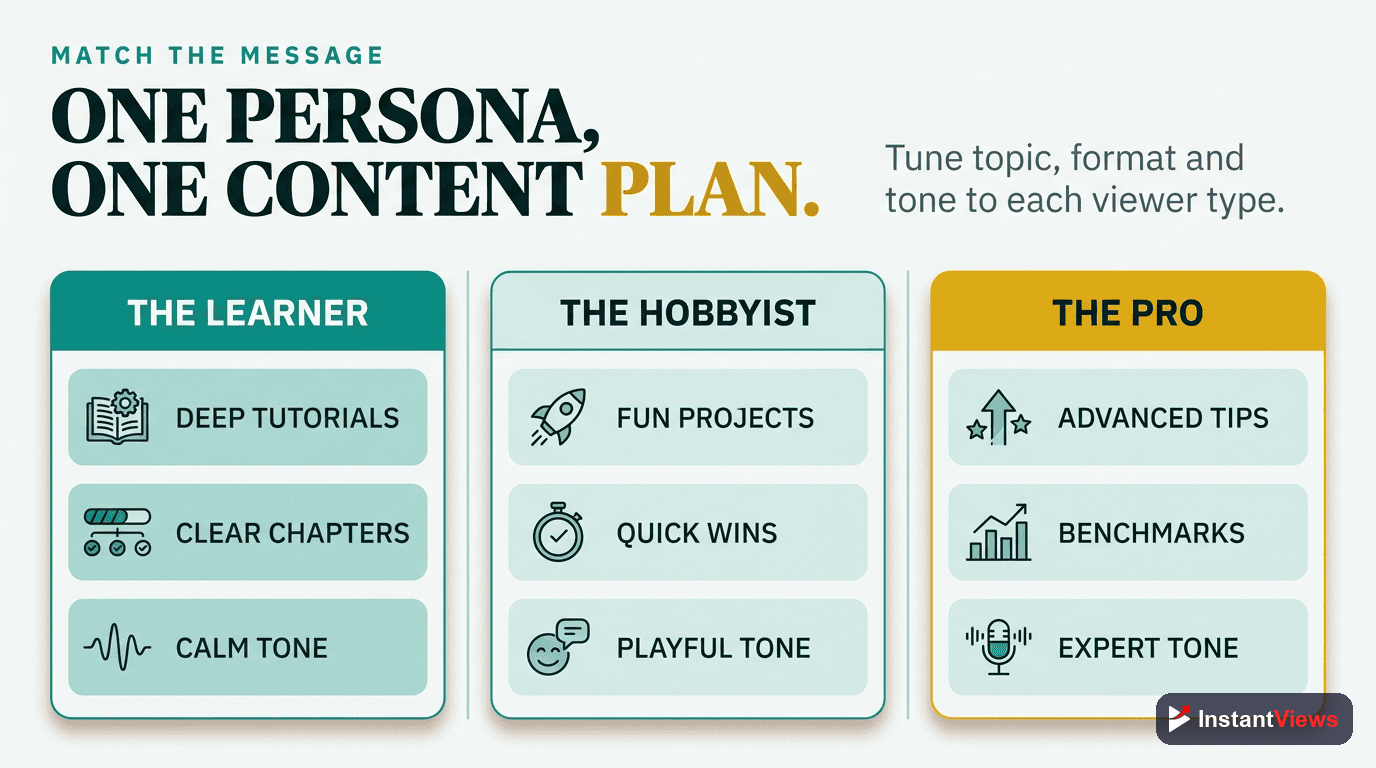
Personas only matter if they change how you create. Here's how to apply them to every content decision:
Video Topics
Match topics to persona pain points and goals:
- Student Persona: "How to learn X fast" (time-constrained, exam-focused)
- Professional Persona: "Advanced X techniques for experts" (career advancement)
- Hobbyist Persona: "Fun X projects for weekends" (entertainment and creativity)
Video Length
Different personas have different attention spans and available time:
| Persona Type | Optimal Length | Reason |
|---|---|---|
| Busy Professional | 8-12 minutes | Limited time, wants quick value |
| Deep Learner | 20-40 minutes | Seeks comprehensive understanding |
| Entertainment Seeker | 6-10 minutes | Casual viewing, easily distracted |
| Tutorial Student | 15-25 minutes | Follows along step-by-step |
Use YouTube chapters to serve multiple personas in one video—busy professionals can jump to key points while deep learners watch everything.
Tone and Style
Younger personas often prefer casual, energetic presentation. Professional personas appreciate concise, formal delivery. Match your on-camera energy, editing pace, and language to persona preferences.
Thumbnails and Titles
Create thumbnails and titles that speak to persona pain points:
- For time-constrained viewers: "The 5-Minute X Solution"
- For results-focused viewers: "How I Got X Results in X Days"
- For curious learners: "The Science Behind X (Explained)"
Upload Timing
Schedule uploads when your primary persona is most active on YouTube. Check the "When Your Viewers Are on YouTube" tab in Analytics.
Using InstantViews Video Analyzer to Identify Personas
Manual persona research is time-consuming. The InstantViews Video Analyzer automates the process by analyzing your content and audience data to identify distinct viewer segments.
How Video Analyzer Identifies Personas
The tool analyzes:
- Engagement patterns - Which videos appeal to which audience segments
- Watch time clustering - Viewer groups with similar viewing durations
- Topic affinities - Content themes that resonate with specific demographics
- Traffic source personas - Different viewer types from search vs. browse vs. external
- Retention profiles - Where different viewer types drop off or re-engage
Automated Persona Reports
Video Analyzer generates detailed persona profiles including:
- Demographic breakdown for each segment
- Top-performing content for each persona
- Optimal video length recommendations
- Best upload times for each audience segment
- Content gaps and opportunities
Instead of spending hours in YouTube Analytics, get comprehensive persona insights in minutes. The tool tracks how personas evolve over time, alerting you when audience composition shifts significantly.
Persona-Based Content Recommendations
Based on your personas, Video Analyzer suggests:
- Video topics with high potential for each persona
- Title and thumbnail strategies tailored to persona preferences
- Optimal video structure and pacing for maximum retention
- Content calendar balance across persona segments
Continuous Persona Optimization
The Video Analyzer doesn't just create static personas—it tracks how they evolve. When a new persona segment emerges or an existing one shifts behavior, you'll get real-time alerts with updated content recommendations.
"New Persona Detected: Your 45+ audience segment has grown 40% this month and shows strong preference for longer, in-depth tutorials (25+ minutes). Consider creating a weekly deep-dive series for this segment."
Common Persona Mistakes to Avoid
Even with good data, creators make these persona mistakes:
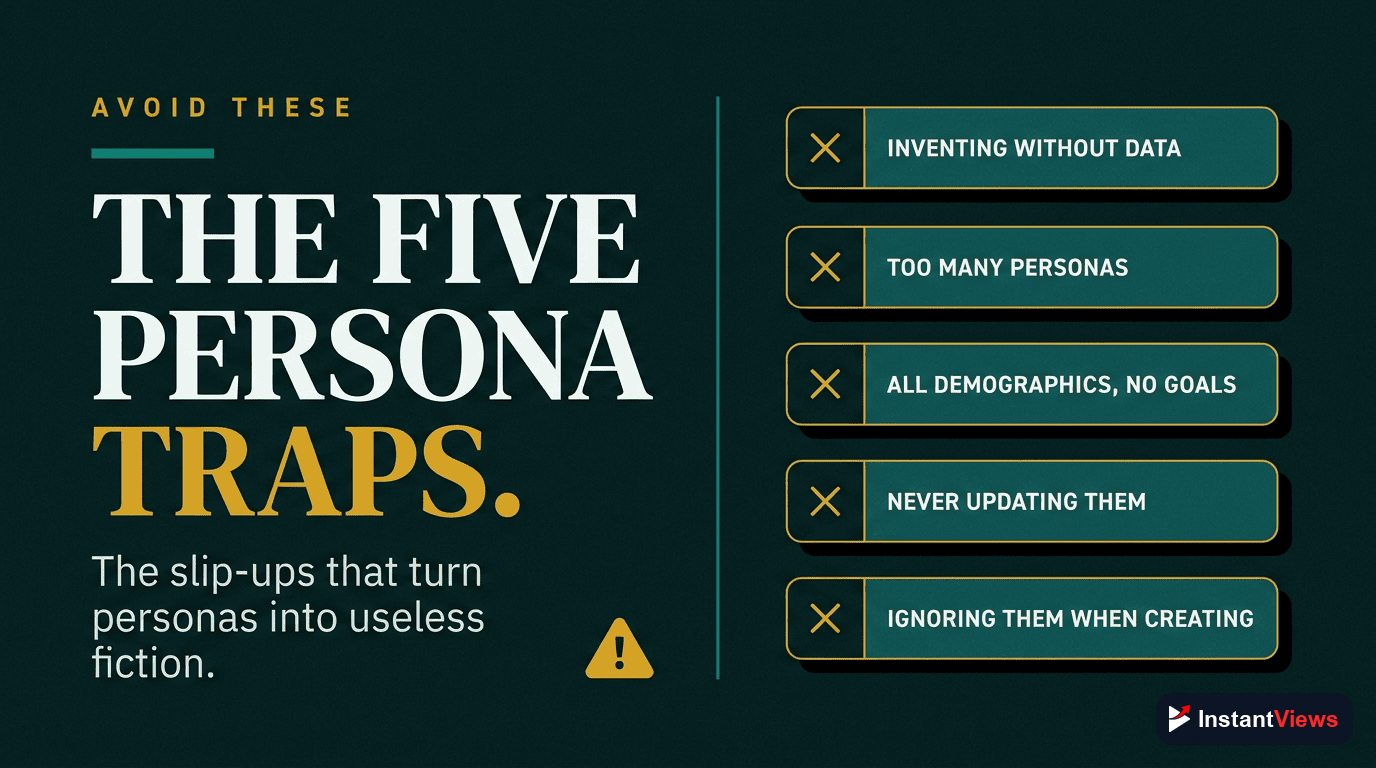
1. Too Many Personas
Creating 10+ personas dilutes your focus. Stick to 3-5 meaningful segments. If you have smaller audience groups, combine them into broader personas with shared characteristics.
2. Demographic-Only Personas
"Males 25-34" isn't a persona—it's a demographic. True personas include psychographics: goals, pain points, motivations, and behavior patterns.
3. Ignoring Secondary Personas
Don't only create content for your largest persona. Secondary personas represent growth opportunities and prevent audience stagnation.
4. Static Personas
Audiences evolve. Review and update personas quarterly. What worked last year might not reflect your current viewership.
5. Persona Theater
Creating beautiful persona documents that sit unused is pointless. Reference personas before every video. Ask: "Which persona is this for? Does it match their preferences?"
6. Assumption-Based Personas
Build personas from data, not assumptions. Your intuition about your audience is often wrong. Let YouTube Analytics and viewer behavior guide persona development.
Never ignore data that contradicts your assumptions. If analytics show your audience is different than you expected, adjust your personas and content—don't force your preferred persona on an unwilling audience.
Frequently Asked Questions
YouTube audience personas are detailed, semi-fictional representations of your ideal viewers based on real data about demographics, interests, behaviors, and pain points. They help you create targeted content that resonates with specific viewer segments, improving engagement and watch time.
Create 3-5 audience personas for most YouTube channels. Having too many (more than 5) dilutes your focus, while too few (1-2) oversimplifies your audience. Each persona should represent a distinct viewer segment with unique characteristics, needs, and content preferences.
YouTube Analytics provides comprehensive demographic data. Go to YouTube Studio > Analytics > Audience tab to see age, gender, geography, watch time patterns, and viewer interests. For deeper insights, use the InstantViews Video Analyzer to identify persona patterns across your top-performing videos.
Use personas to guide every content decision: video topics (address persona pain points), tone and language (match persona preferences), video length (fit persona viewing habits), and thumbnails/titles (appeal to persona interests). Create a content calendar that rotates between personas to serve your entire audience.
Yes, but strategically. Create primary content that appeals to your largest persona while occasionally producing targeted content for secondary personas. Use YouTube chapters to segment videos so different personas can jump to relevant sections. This maximizes reach while maintaining persona-specific value.
Review and update personas quarterly or after major channel milestones (50k subscribers, 100k views, etc.). Audience composition changes as your channel grows, and viewer preferences evolve with trends. Use the Video Analyzer monthly to track persona behavior shifts and adjust your strategy accordingly.