- AI-powered prediction models forecast watch time with 75-85% accuracy before you publish
- Predictive analytics analyze pacing, hooks, thumbnails, and metadata to estimate retention
- Early predictions let you optimize underperforming content before wasting upload opportunities
- Machine learning identifies patterns from millions of videos to predict your video's performance
- Combining predictions with creator instinct produces the best optimization results
Imagine knowing exactly how your video will perform before you upload it. Not guessing, not hoping - actually predicting with 80%+ accuracy whether viewers will watch 2 minutes or 20.
That's what modern watch time prediction delivers. By analyzing content patterns, metadata, and historical data, AI can forecast audience retention before your video goes live.
This guide reveals the exact prediction methods top creators and agencies use to eliminate guesswork and optimize every upload for maximum watch time.
Why Predict Watch Time?
YouTube's algorithm prioritizes watch time above all other metrics. Videos that keep viewers watching longer get exponentially more recommendations.
But most creators only learn about retention problems after publishing - when it's too late to fix them without re-uploading (which resets all engagement signals).
Watch time prediction solves this by:
- Identifying problems early - Weak hooks, pacing issues, or boring segments get flagged before publishing
- Saving upload opportunities - Don't waste one of your limited weekly uploads on a video that will underperform
- Optimizing systematically - Know exactly which elements need improvement rather than guessing
- Benchmarking performance - Compare predictions against your niche to set realistic goals
Predictions work best with at least 10-20 published videos in your channel. New channels rely more on industry benchmarks until they build channel-specific data patterns.

Method #1: Content Pattern Analysis
Content Pattern Analysis
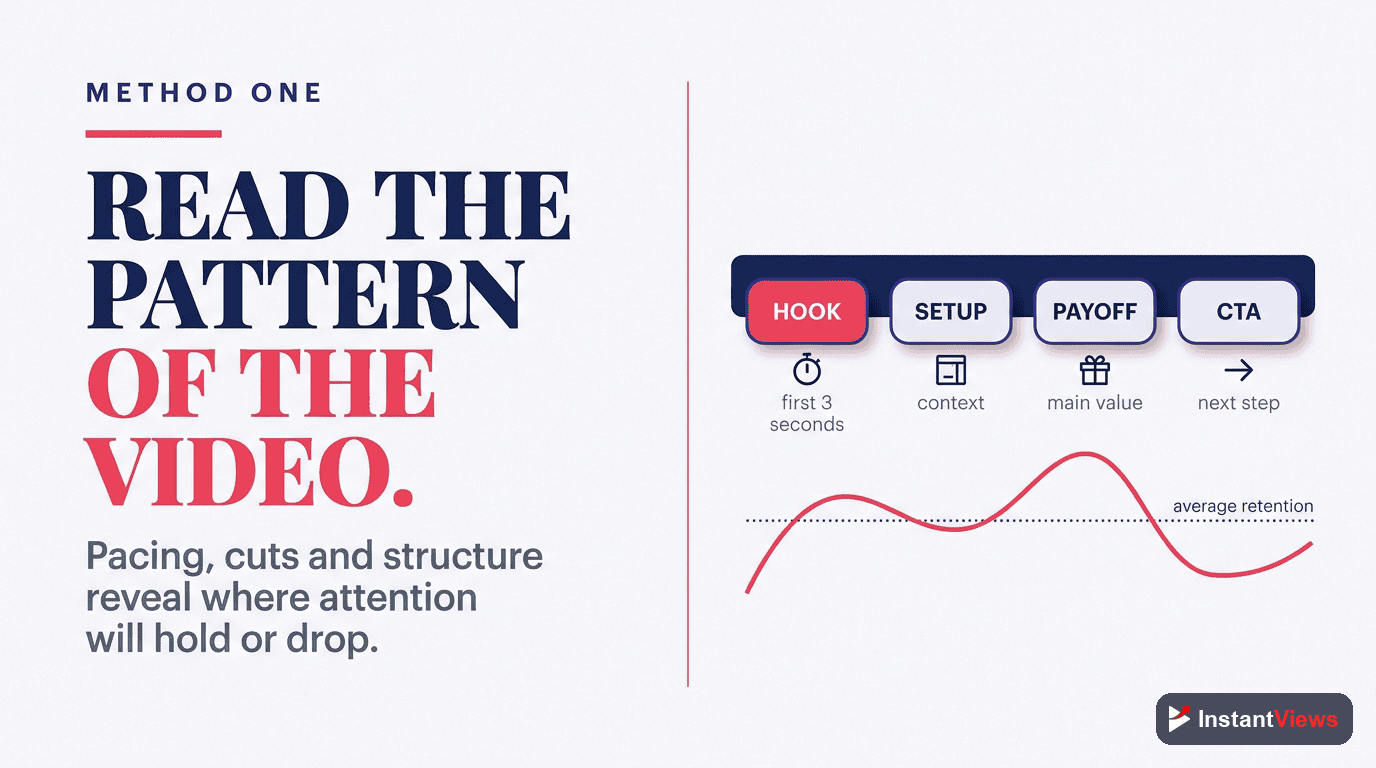
AI analyzes your video's pacing, scene changes, visual variety, and content structure to predict viewer engagement patterns throughout the video.
Scene change frequency, visual complexity, on-screen text density, shot composition, editing pace, transitions, and content variety across the timeline.
How it works: Machine learning models analyze frame-by-frame data to identify patterns that correlate with high or low retention. For example, videos that maintain 8-12 scene changes per minute typically retain viewers 40% longer than static-camera content.
What you'll learn: Exact timestamps where viewers are predicted to drop off, allowing you to re-edit those sections before publishing.
Method #2: Historical Data Modeling
Historical Data Modeling
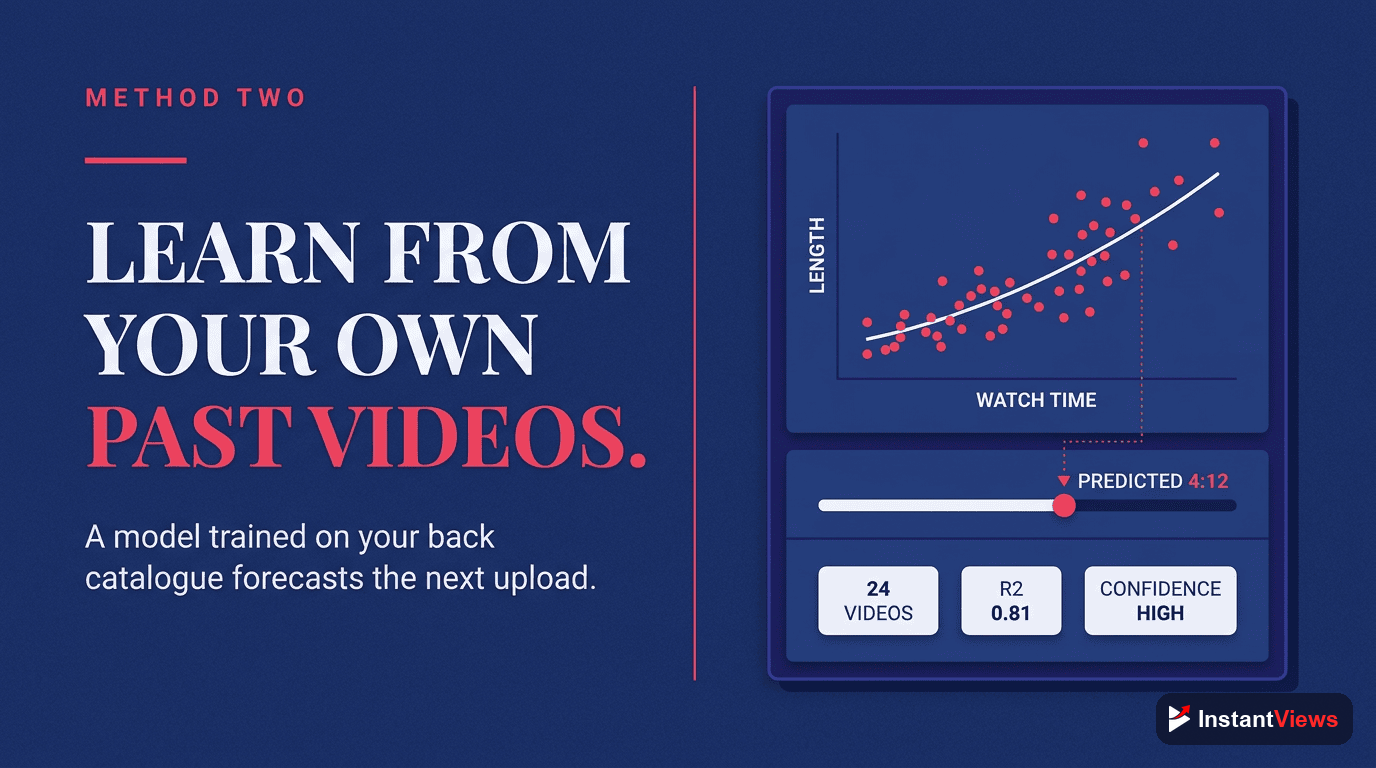
Compares your video against your channel's historical performance patterns to predict how it will perform relative to your previous uploads.
Your past 50-100 videos' retention curves, average view duration patterns, topic performance history, and audience behavior trends specific to your channel.
How it works: The system identifies patterns in your successful vs. unsuccessful videos. If your 10-minute tutorials average 52% retention but your vlogs only get 38%, the model predicts performance based on which category your new video fits.
What you'll learn: Expected average view duration, predicted retention curve shape, and comparison to your top-performing videos.
Method #3: Metadata Performance Scoring
Metadata Performance Scoring
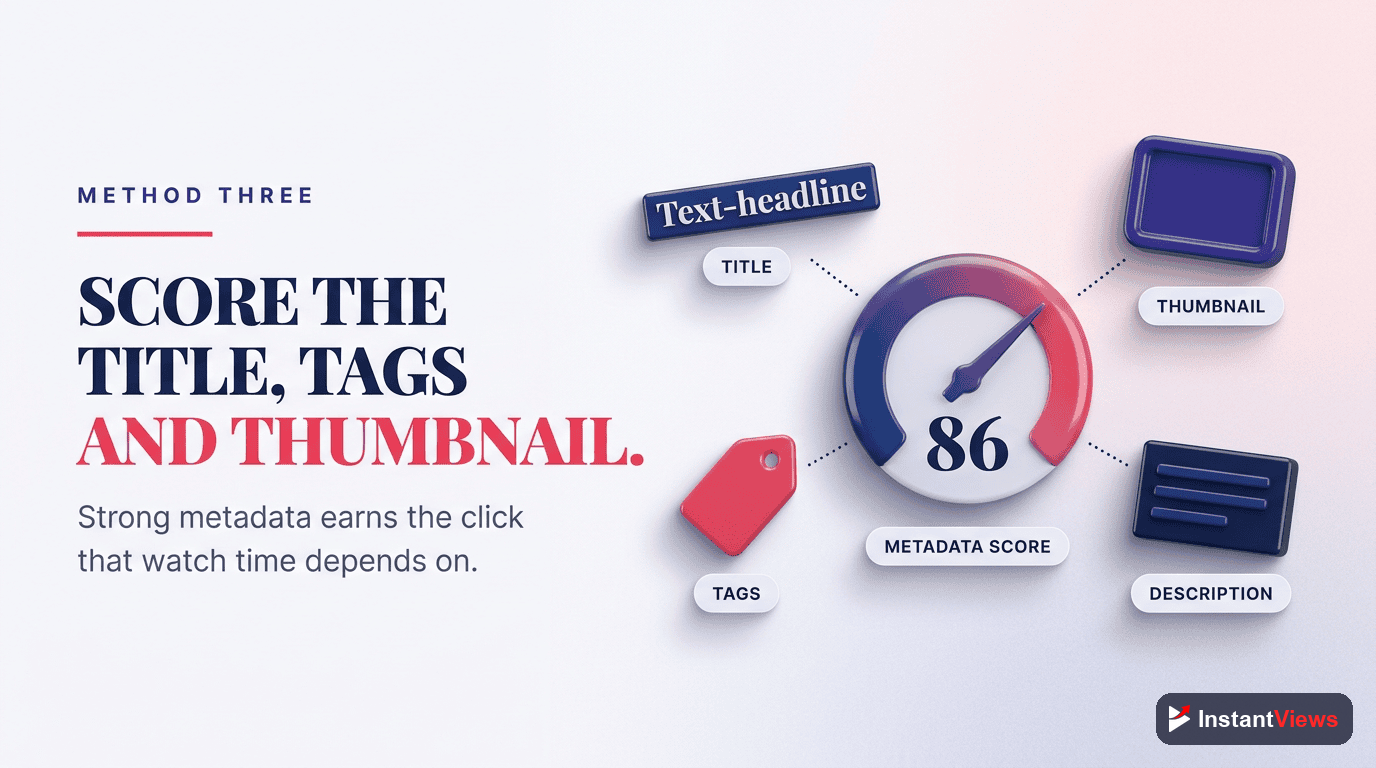
Evaluates your title, thumbnail, description, and tags to predict click-through rate and initial viewer expectations, which directly impact retention.
Title length and structure, keyword strength, thumbnail color psychology, face presence, text readability, expectation alignment, and clickbait risk score.
How it works: AI analyzes millions of title-thumbnail combinations to identify patterns in high-performing metadata. It also checks if your title promises match your content delivery (misalignment kills retention).
What you'll learn: Predicted CTR, expectation mismatch warnings, and metadata optimization suggestions before you film.
Method #4: Visual Engagement Prediction
Visual Engagement Prediction
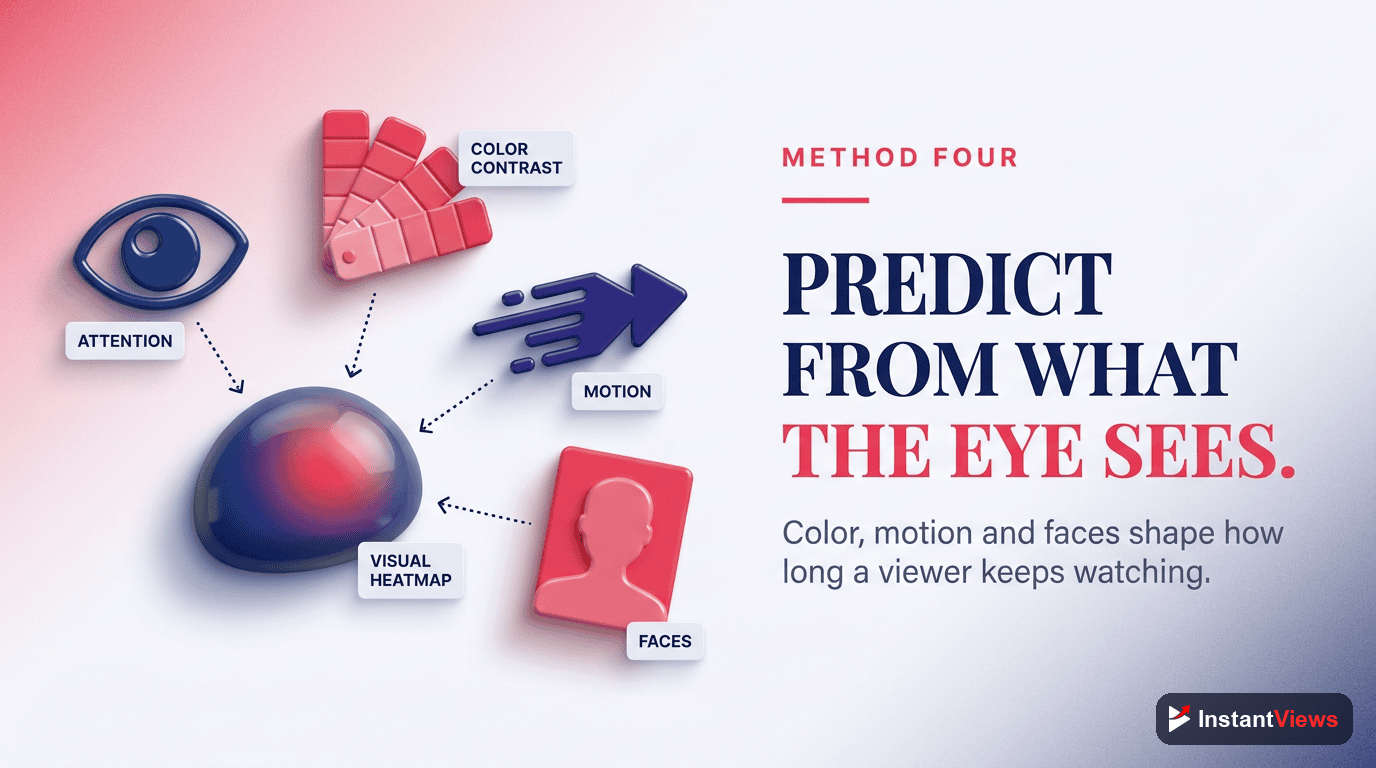
Analyzes visual elements like faces, motion, color patterns, and composition to predict which scenes will hold attention and which will cause viewers to leave.
Face detection and emotion, movement intensity, color vibrancy, screen complexity, text overlay effectiveness, and visual interest scores per second.
How it works: Computer vision identifies moments of high and low visual interest. Videos with human faces in 70%+ of frames typically get 25% higher retention than faceless content in most niches.
What you'll learn: Visual engagement timeline, low-interest segments that need B-roll or effects, and optimal thumbnail frame recommendations.
Method #5: Audio Pattern Recognition
Audio Pattern Recognition
Examines speech patterns, music, pacing, silence, and audio energy levels to predict engagement based on how the video sounds.
Speech rate (words per minute), vocal energy, pause frequency, background music presence, audio clarity, and silence duration that signals boredom.
How it works: Audio analysis reveals pacing issues. Creators speaking at 150-160 words per minute with minimal dead air maintain 30% higher retention than slower, pause-heavy delivery.
What you'll learn: Speaking pace recommendations, silence warnings, energy dip locations, and optimal background music placement.

Method #6: Audience Behavior Forecasting
Audience Behavior Forecasting
Uses your subscriber behavior patterns and niche benchmarks to predict how your specific audience will respond to this video's content and style.
Your audience's average session time, topic preferences, retention patterns by video length, time of day performance, and competitive niche benchmarks.
How it works: The model learns your audience's unique behavior. If your viewers consistently watch 18-minute videos but drop off at 8 minutes on 20-minute content, it will warn you when a video exceeds your audience's optimal length.
What you'll learn: Optimal video length for your audience, topic resonance predictions, and best publishing time based on viewer availability patterns.
Predict Your Video's Watch Time
Get AI-powered watch time predictions and optimization recommendations before you publish.
Analyze Your Video →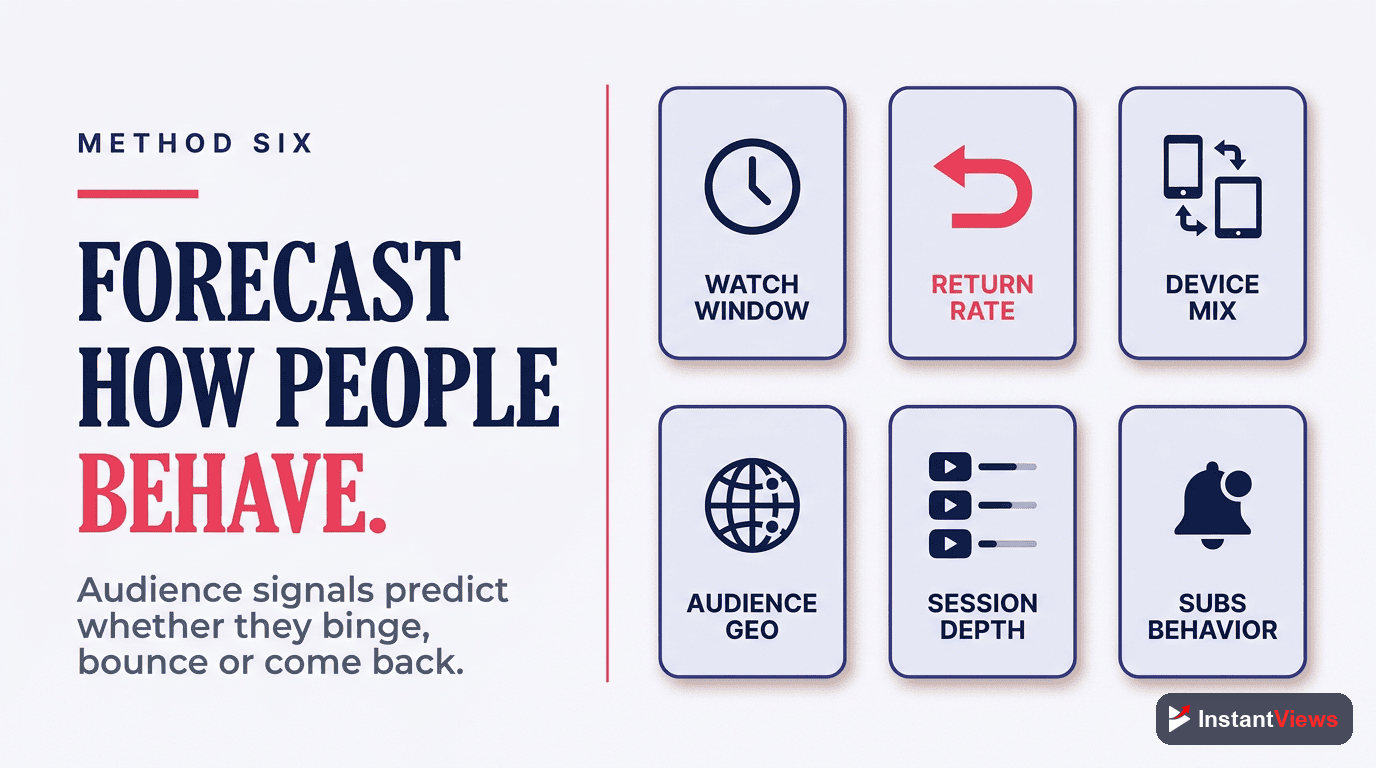
Using Predictions for Optimization
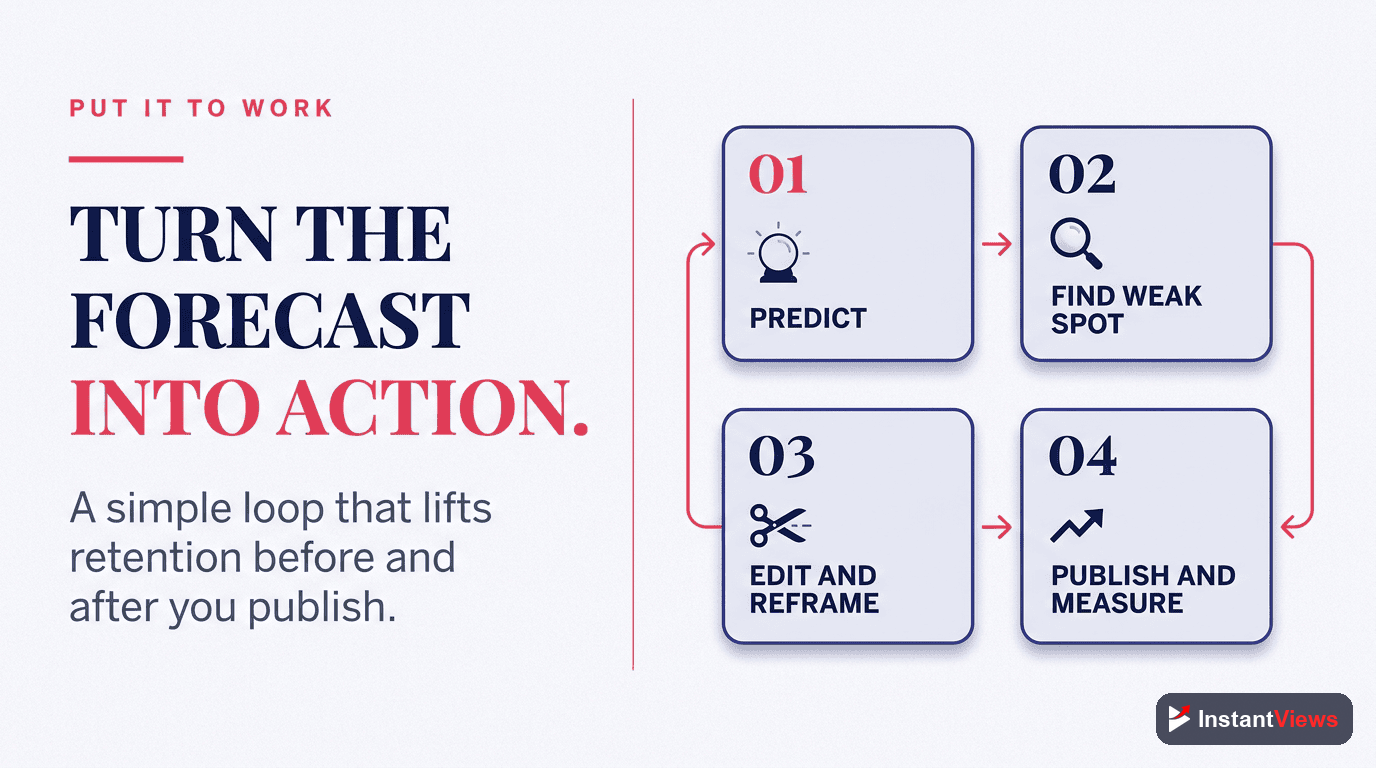
Predictions are only valuable if you act on them. Here's how to use forecast data to improve your videos:
1. Pre-Production Optimization
Before filming, test your title, thumbnail, and content plan:
- Run metadata scoring to ensure title-thumbnail alignment
- Check predicted CTR against your channel average
- Verify your topic has audience behavior support
- Estimate optimal video length for your audience
2. Post-Production Refinement
After editing, identify weak points before publishing:
- Review frame-by-frame retention predictions
- Re-edit sections with predicted drop-offs over 15%
- Strengthen your hook if 30-second retention predicts below 70%
- Add visual variety to low-engagement segments
- Tighten pacing in predicted slow zones
3. A/B Testing Variations
Test different versions to find the best performer:
| Element | What to Test | Impact on Prediction |
|---|---|---|
| Hook Length | 5-sec vs. 15-sec vs. 30-sec | +12-18% retention variance |
| Video Length | 8-min vs. 12-min vs. 15-min | +20-30% watch time variance |
| Pacing Style | Fast cuts vs. steady pace | +8-15% retention variance |
| Thumbnail | Face vs. text vs. action | +25-40% CTR variance |
| Title Formula | Question vs. number vs. benefit | +15-25% CTR variance |
4. Benchmark Comparison
Understand if your predictions are competitive:
- 90%+ predicted retention at 30 seconds: Exceptional hook, publish immediately
- 70-89% predicted retention at 30 seconds: Good hook, minor tweaks optional
- 50-69% predicted retention at 30 seconds: Weak hook, needs strengthening
- Below 50% predicted retention at 30 seconds: Critical issue, complete hook redesign required
5. Continuous Learning
Compare predictions to actual performance after publishing:
- Track prediction accuracy for each video
- Note which prediction methods were most accurate
- Adjust your optimization priorities based on actual vs. predicted variance
- Feed real performance data back into models for improved future predictions
"We reduced our failed video rate from 40% to under 10% by using watch time predictions to kill or fix underperforming content before publishing. It's like having a crystal ball for YouTube." - Growth Agency Founder
Advanced Prediction Strategies
Retention Curve Matching
Don't just aim for high retention - aim for the right retention curve shape for your goals:
- Flat curve (steady retention): Best for algorithm performance, even viewing throughout
- High start with gradual decline: Good hook but weak close, optimize ending
- Dips and recoveries: Engaging content with weak segments, remove valleys
- Spike at specific timestamp: Key moment drawing viewers, highlight in metadata
Seasonal and Trending Adjustments
Predictions should account for external factors:
- Trending topics often get 20-30% higher retention than predictions suggest
- Seasonal content performs differently during vs. outside season
- Current events can boost retention on relevant topics
- Algorithm changes may temporarily affect prediction accuracy
Frequently Asked Questions
Modern AI-powered prediction models can forecast watch time with 75-85% accuracy when analyzing pre-upload content. Accuracy improves to 90%+ once you have channel-specific historical data. The predictions work best for established channels with consistent content styles.
You need your video file (for content analysis), metadata (title, description, tags), thumbnail, and ideally your channel's historical performance data. The more data points available, the more accurate the prediction. For new channels, predictions rely on industry benchmarks.
Absolutely! That's the main benefit of predictions. If your video scores low on predicted retention, you can re-edit pacing, strengthen your hook, adjust the thumbnail, or modify your title before publishing. This prevents wasting upload slots on underperforming content.
AI models analyze hundreds of factors including video pacing, scene changes, hook strength, audio patterns, visual engagement, historical performance patterns, and metadata quality. Machine learning algorithms compare these against millions of successful videos to generate predictions.
Use predictions as one data point, not the only factor. Experienced creators should combine prediction insights with their audience knowledge. However, if predictions consistently contradict your expectations, it's worth investigating why - the data often reveals blind spots.
For a 10-minute video, 50%+ (5 minutes) is excellent. For longer content (20+ minutes), 40-45% is strong. Short-form content (under 3 minutes) should aim for 70%+ retention. These benchmarks vary by niche - educational content typically has higher retention than entertainment.