- Understanding viewer demographics helps you create targeted content that resonates with your actual audience
- Age, gender, location, and device data reveal crucial insights about content preferences and viewing habits
- Geographic data determines optimal upload times and helps with content localization strategies
- Device and platform analytics inform video formatting and technical optimization decisions
- InstantViews Video Analyzer provides advanced demographic analysis with actionable content recommendations
Understanding your YouTube viewer demographics isn't just about knowing numbers - it's about creating content that actually connects with the people watching your videos.
Yet most creators either ignore demographic data completely or don't know how to apply it effectively. They create content for an imagined audience instead of their real one, then wonder why engagement stays flat.
This guide will show you exactly how to analyze and leverage YouTube demographic data to create better content, increase engagement, and grow your channel strategically.
- What is YouTube Demographic Data?
- How to Access Your Demographic Data
- Understanding Age and Gender Analytics
- Geographic Data Insights
- Device and Platform Data
- Using Demographics for Content Targeting
- InstantViews Video Analyzer Demographic Insights
- Demographics-Based Optimization Strategies
- Common Demographic Analysis Mistakes
- FAQ
What is YouTube Demographic Data?
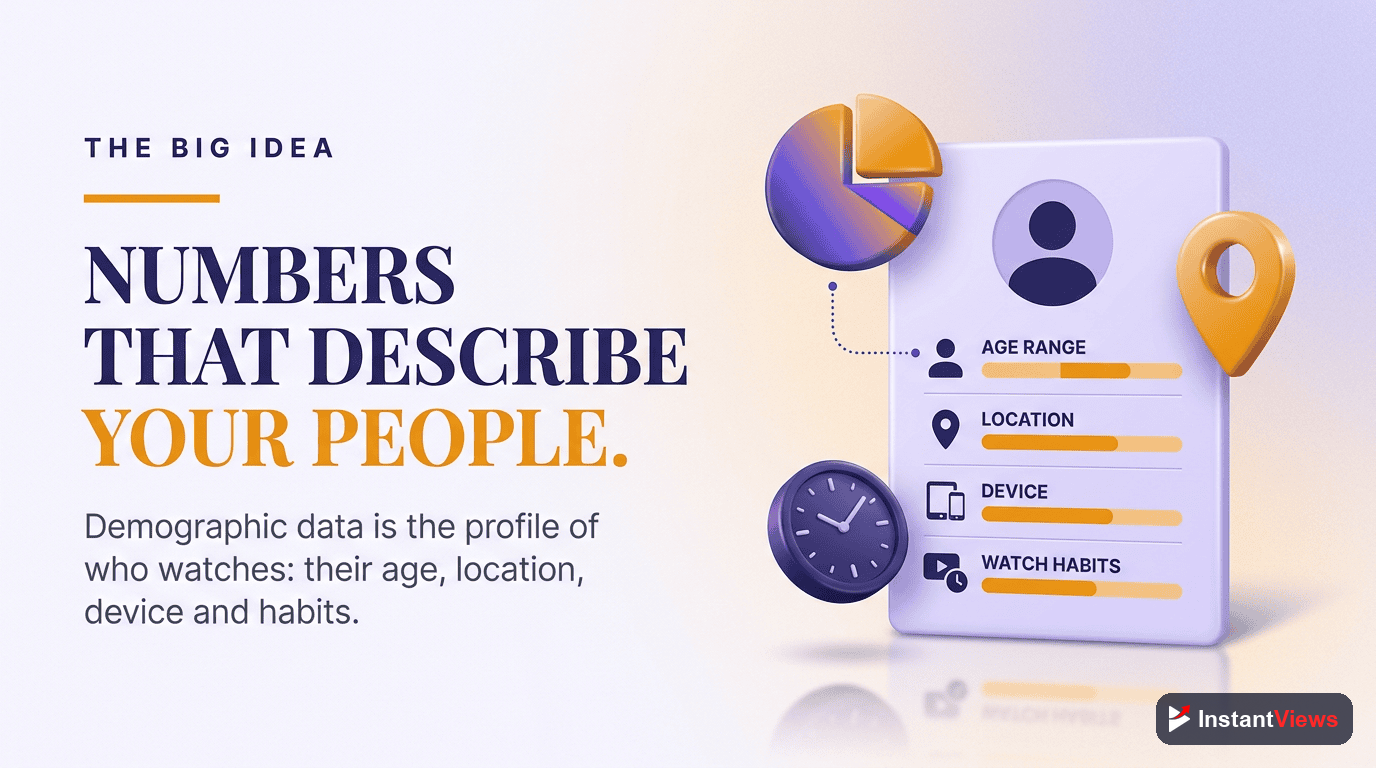
YouTube demographic data provides detailed information about who watches your videos. This includes:
- Age ranges - Distribution across 13-17, 18-24, 25-34, 35-44, 45-54, 55-64, and 65+ age groups
- Gender breakdown - Percentage of male, female, and unspecified viewers
- Geographic location - Countries, cities, and regions where your audience lives
- Device types - Whether viewers watch on mobile, desktop, TV, or tablets
- Platform data - YouTube app vs. browser, operating systems
This data comes from viewer Google accounts and device information, making it generally accurate for most metrics (though age and gender can have limitations if users don't provide this information).
How to Access Your Demographic Data
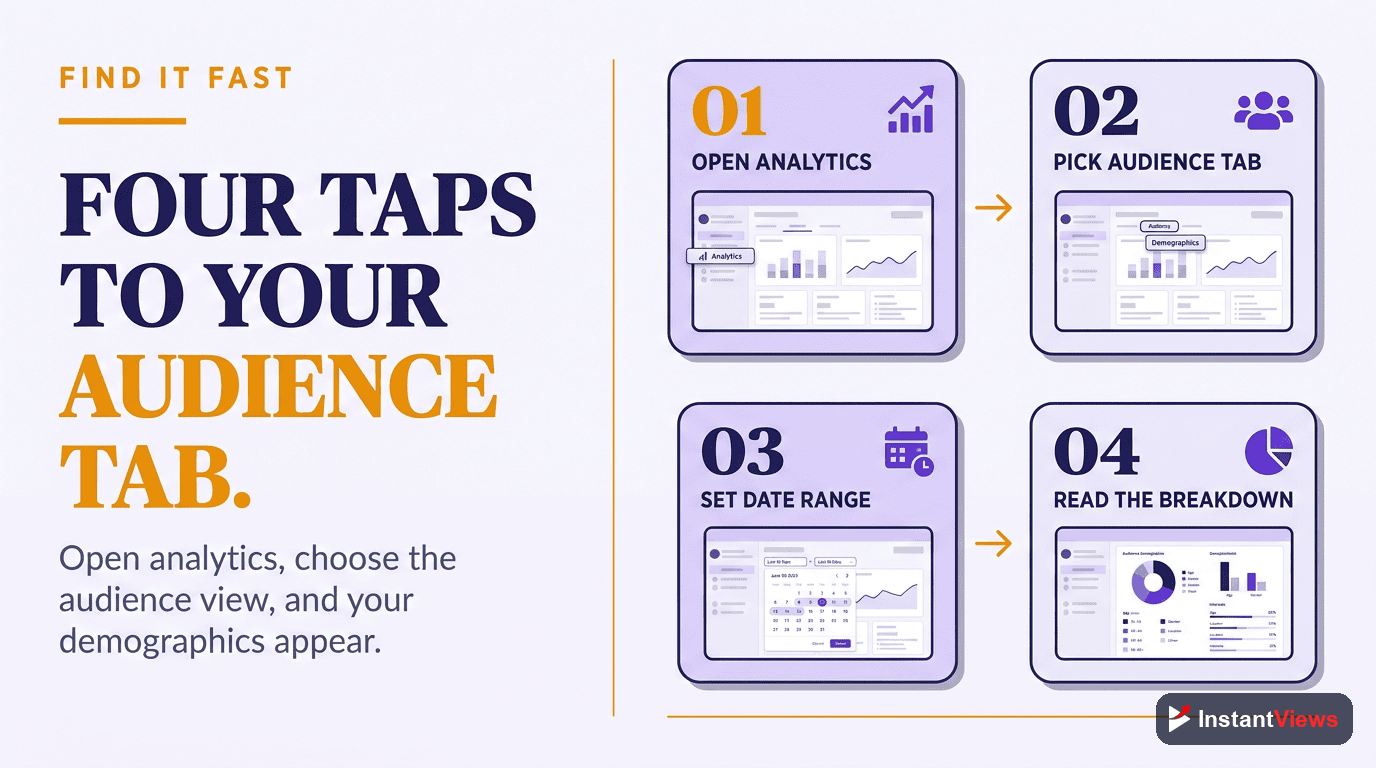
To view your YouTube demographics:
- Go to YouTube Studio
- Click Analytics in the left sidebar
- Select the Audience tab
- Scroll down to see demographic breakdowns
You can view demographics for:
- Your entire channel - Overall audience composition
- Specific time periods - Last 7 days, 28 days, 90 days, lifetime
- Individual videos - Go to video analytics and check the Audience tab
- Returning vs. new viewers - See demographic differences between viewer types
Demographic data requires sufficient view counts to protect viewer privacy. If you have very few views, some demographic categories may show as "Not enough data" until you reach minimum thresholds.
Understanding Age and Gender Analytics
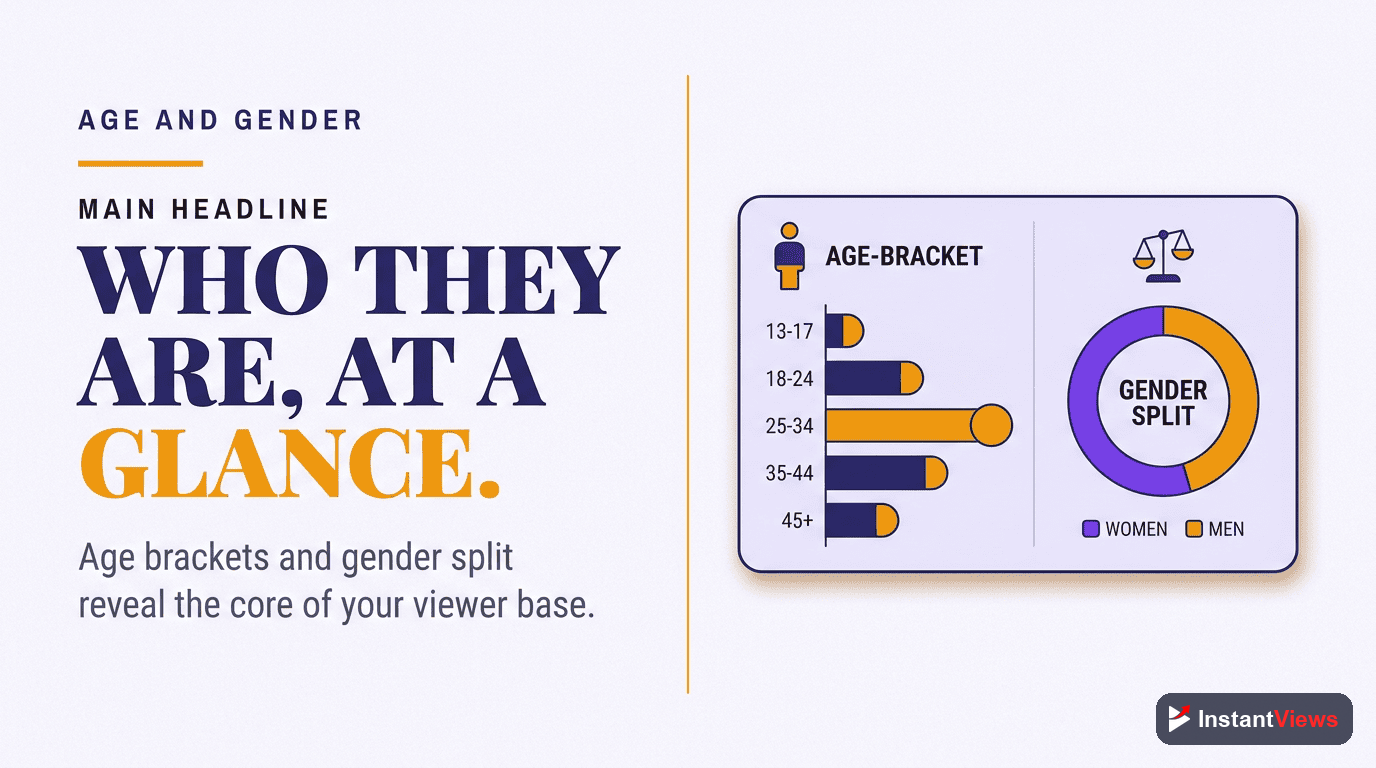
Age and gender data reveals critical insights about your audience composition and content preferences.
Age Distribution Insights
Different age groups have distinct viewing behaviors and content preferences:
| Age Group | Typical Characteristics | Content Preferences |
|---|---|---|
| 13-17 | High engagement, trend-focused, short attention span | Gaming, trends, memes, quick entertainment |
| 18-24 | Active sharers, seeking identity/lifestyle content | How-tos, vlogs, career advice, entertainment |
| 25-34 | Highest engagement and purchasing power | In-depth tutorials, productivity, finance, tech |
| 35-44 | Value-focused, seeking practical information | Business, parenting, home improvement, health |
| 45-54 | Deliberate viewers, longer watch times | News, documentaries, expertise-driven content |
| 55+ | Loyal audience, prefers longer-form content | Tutorials, history, hobbies, informational |
Gender Distribution Analysis
Gender breakdown helps you understand content preferences and adjust your approach:
- Male-skewed audiences typically prefer tech, gaming, finance, sports, and educational content
- Female-skewed audiences often engage more with lifestyle, beauty, wellness, parenting, and relationship content
- Balanced audiences indicate broad appeal topics like cooking, travel, general entertainment, or news
Content Alignment
If your content targets a specific demographic but attracts a different one, you have two options: adjust your content to match your target audience's preferences, or pivot your strategy to serve the audience you're actually reaching.
A tech channel expecting a 25-34 male audience might discover they're attracting 45-54 viewers. Instead of fighting this, create more detailed, slower-paced tutorials that match the actual audience's learning preferences.
Geographic Data Insights
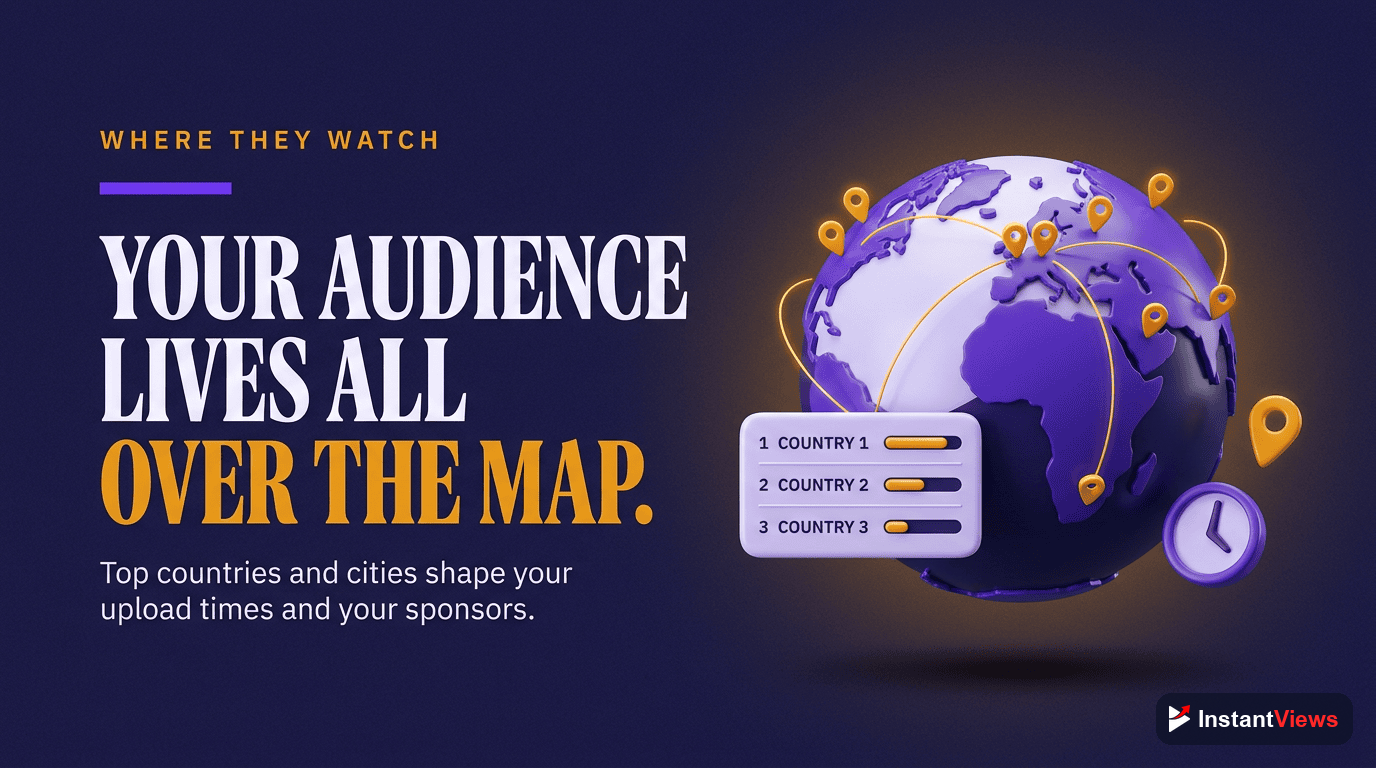
Geographic demographics reveal where your audience lives, which impacts several strategic decisions:
1. Upload Timing Optimization
Schedule uploads when your primary geographic audience is most active. If 60% of your viewers are in the United States, upload between 2-4 PM EST to catch the afternoon/evening engagement peak.
2. Content Localization
Geographic data helps you decide:
- Language considerations - Add subtitles for non-native speakers in your top countries
- Cultural references - Use examples and references that resonate with your primary locations
- Regional topics - Address location-specific issues or trends
- Pronunciation and terminology - Use vocabulary familiar to your main audience
3. Monetization Strategy
Geographic location affects CPM (cost per thousand views). Viewers from high-CPM countries like the US, Canada, UK, and Australia generate more ad revenue than viewers from lower-CPM regions.
| Country Tier | Typical CPM Range | Strategic Approach |
|---|---|---|
| Tier 1 (US, UK, CA, AU) | $4-12+ | Prioritize content that appeals to these markets |
| Tier 2 (EU, Japan, Korea) | $2-6 | Good revenue potential with volume |
| Tier 3 (Most other countries) | $0.50-3 | Focus on sponsorships over ad revenue |
Device and Platform Data
Understanding which devices your audience uses significantly impacts how you should optimize your videos.
Mobile vs. Desktop Viewing
Device data determines your technical optimization priorities:
Mobile Optimization Priorities
When most viewers watch on mobile devices, optimize for smaller screens:
- Use larger text in graphics and thumbnails
- Avoid complex visuals that don't translate to small screens
- Keep important information centered (safe zones for vertical/mobile viewing)
- Use vertical or square formats for Shorts and social cross-posting
- Test thumbnails on mobile before publishing
Desktop Optimization Priorities
Desktop viewers typically watch longer and engage with more complex content:
- Create detailed graphics and charts that benefit from larger screens
- Use screen recordings and tutorials (desktop viewers expect this)
- Longer video formats work better (desktop = dedicated viewing time)
- Include links in descriptions (easier to click on desktop)
TV Viewing Optimization
If 15%+ of your audience watches on TV screens:
- Design for 10-foot viewing distance - even larger text and graphics
- Minimize small details that won't be visible from across a room
- Create lean-back content - less requiring pausing or rewinding
- Focus on continuous watching - TV viewers often binge content
Analyze Your Audience with AI
Get detailed demographic insights and content recommendations with InstantViews Video Analyzer. Understand exactly what your audience wants.
Try Video Analyzer Free →
Using Demographics for Content Targeting
Once you understand your demographics, apply these insights strategically:
1. Content Topic Selection
Create content that matches your audience's life stage and interests:
- Young audience (13-24): Trends, social media tips, entry-level career advice, entertainment
- Mid-career (25-44): Advanced skills, business growth, investing, work-life balance
- Experienced (45+): Expertise sharing, legacy topics, in-depth analysis, teaching
2. Presentation Style Adaptation
Adjust your delivery based on demographic preferences:
| Demographic | Preferred Style | Video Length |
|---|---|---|
| Younger (13-24) | Fast-paced, energetic, casual, meme references | 5-10 minutes |
| Young Professional (25-34) | Direct, actionable, professional but relatable | 8-15 minutes |
| Established (35-54) | Authoritative, detailed, value-focused | 12-20+ minutes |
| Mature (55+) | Clear, thorough, patient pacing | 15-30+ minutes |
3. Thumbnail and Title Optimization
Design thumbnails and titles that appeal to your actual demographic:
- Younger audiences respond to bold colors, expressive faces, and curiosity gaps
- Professional audiences prefer clean design, clear value propositions, and credibility markers
- Older audiences want clarity, direct headlines, and obvious benefits

InstantViews Video Analyzer Demographic Insights
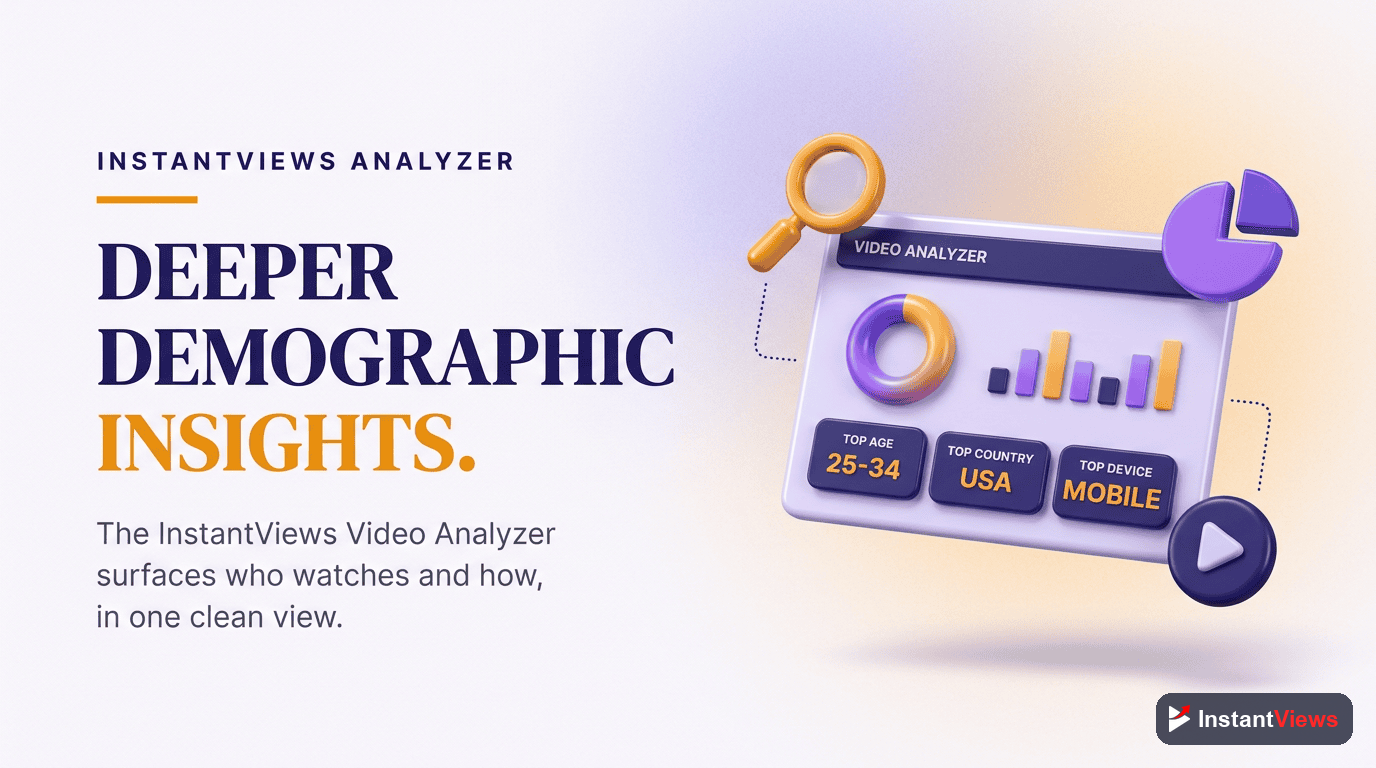
The InstantViews Video Analyzer takes demographic analysis to the next level with AI-powered insights that go beyond basic YouTube Analytics.
Advanced Demographic Features
The Video Analyzer provides:
Audience Segment Analysis
Identifies your highest-value audience segments based on engagement metrics, not just view counts. Discover which demographic groups watch longest, engage most, and convert best.
Demographic Benchmarking
Compare your audience demographics to similar channels and industry averages. Understand if you're reaching the right audience compared to competitors in your niche.
Content-Demographic Matching
See which specific videos attract which demographic segments. The analyzer identifies patterns in what content resonates with different age groups, genders, and locations.
Demographic Shift Tracking
Monitor how your audience composition changes over time. Detect demographic shifts early so you can adapt your content strategy before engagement drops.
AI Content Recommendations
Receive specific content suggestions based on your audience demographics. The AI analyzes what similar demographic groups watch and recommends topics, formats, and styles that will resonate.
Demographics-Based Optimization Strategies
Apply these proven strategies to leverage your demographic data:
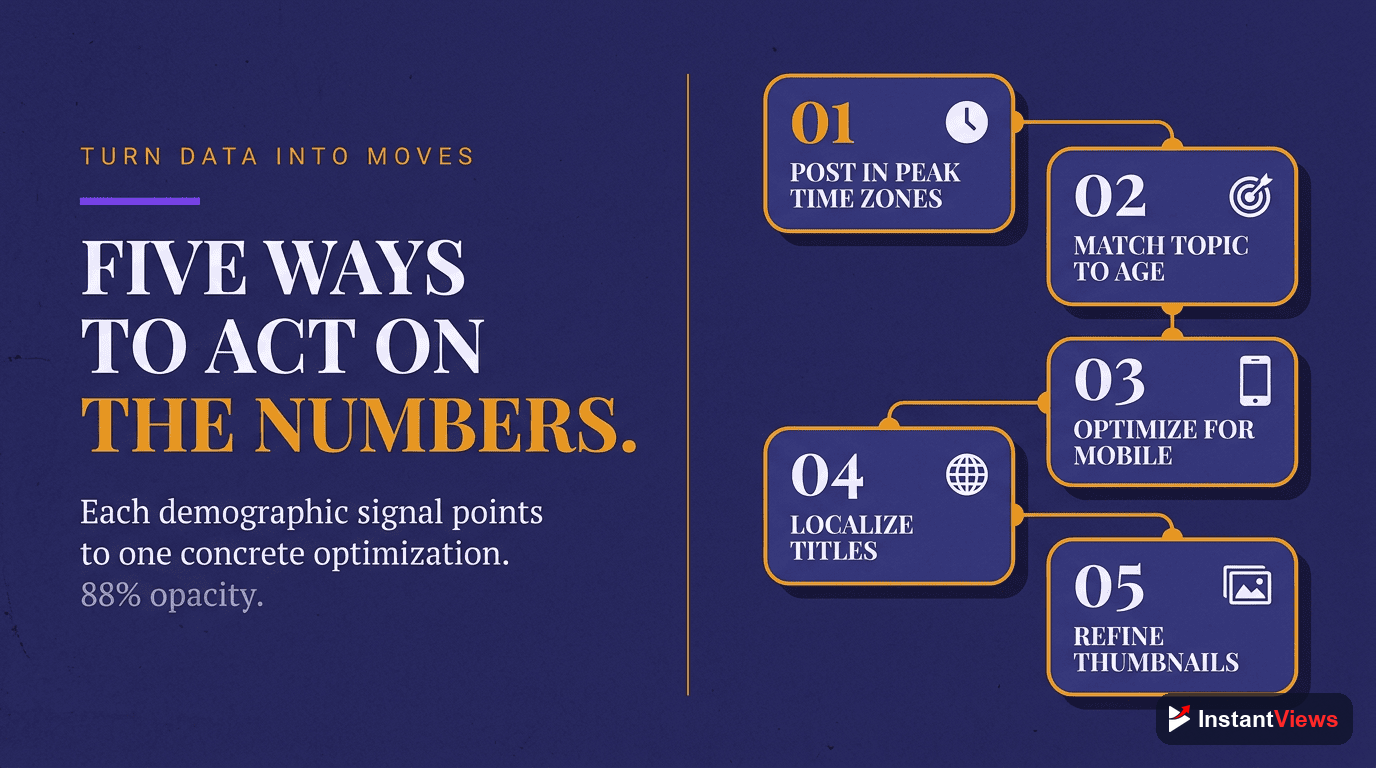
Strategy 1: Create Demographic-Specific Content Series
If your analytics show multiple strong demographic segments, create separate content series targeting each group. Use YouTube chapters to segment videos so different demographics can jump to relevant sections.
Strategy 2: Schedule Based on Geographic Clusters
If you have concentrated audiences in specific time zones, create a posting schedule that hits peak hours for your top 3 geographic regions. Stagger uploads if you have global audiences.
Strategy 3: Age-Appropriate Monetization
Younger audiences respond to affiliate links and creator merchandise. Older, professional audiences engage better with premium courses, consulting, and B2B products. Match your monetization strategy to your actual demographic.
Strategy 4: Device-Optimized End Screens
If your audience is primarily mobile, use larger end screen elements positioned for thumb reach. Desktop audiences can handle more complex end screen layouts with multiple CTAs.
Common Demographic Analysis Mistakes
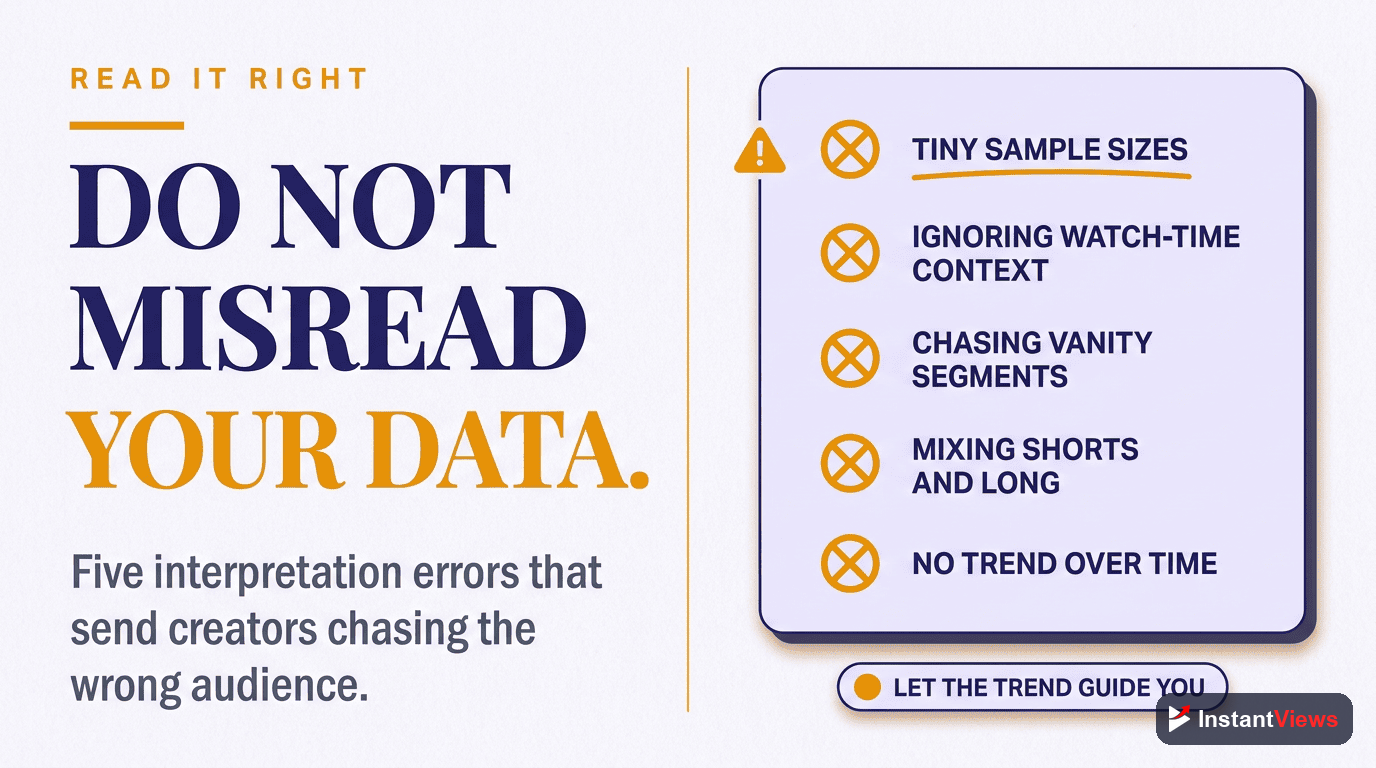
Avoid these frequent errors when working with demographic data:
1. Chasing the "Ideal" Demographic
Many creators try to force their content to attract 18-34 males because that's a "valuable" demographic. If your content naturally attracts a different audience that engages highly, serve that audience instead of fighting it.
2. Ignoring Small But Engaged Segments
A demographic segment that represents only 15% of views but has 80% average view duration is more valuable than a segment with 50% of views but 30% view duration. Look at engagement, not just volume.
3. Making Dramatic Changes Based on Short-Term Data
Demographics can fluctuate video-to-video. Look at 90-day trends before making major content strategy changes. One viral video can temporarily skew your demographics.
4. Overlooking Geographic Cultural Differences
Even within English-speaking countries, cultural references and preferences vary significantly. UK, US, Canadian, and Australian audiences respond to different styles and topics.
5. Not Testing Demographic Hypotheses
If you believe a specific demographic would love your content but they're not showing up, test targeted content specifically for that group. Measure the results before assuming they're not interested.
"The best content strategy serves the audience you have, not the audience you wish you had. Demographics tell you who's actually watching - listen to that data." - YouTube Creator Strategy Team
Actionable Next Steps
To effectively leverage demographic data:
- Audit your current demographics - Review your last 90 days of data for channel and top videos
- Identify your core audience segment - Which demographic shows highest engagement?
- Analyze content patterns - What content attracts your best audience segments?
- Create a demographic-aligned content plan - Plan your next 10 videos specifically for your core audience
- Use InstantViews Video Analyzer - Get AI-powered demographic insights and content recommendations
- Test and measure - Track how demographic-targeted content performs compared to your baseline
- Refine continuously - Demographics evolve; review quarterly and adjust strategy
Remember: demographic data is a tool for understanding your audience, not a rulebook. Use it to inform decisions, test hypotheses, and create content that genuinely serves the people who choose to watch your videos.
Frequently Asked Questions
You can find demographic data in YouTube Studio under Analytics > Audience. This section shows age ranges, gender distribution, geographic locations, and viewing devices. For deeper insights, use the InstantViews Video Analyzer which provides enhanced demographic analysis and actionable recommendations based on your audience composition.
YouTube demographic data is generally accurate but has limitations. Age and gender are based on users' Google account information, which some users may not provide or keep updated. Geographic data is highly accurate based on IP addresses. Device data is 100% accurate. Overall, treat demographics as directional insights rather than exact numbers.
There is no universally "best" age demographic - it depends on your content and business goals. The 18-34 age group has the highest engagement rates and purchasing power. However, 35-54 tends to have more disposable income. Focus on who your product/content serves best rather than chasing the largest demographic.
To shift your audience demographics: 1) Adjust your content topics to appeal to your target demographic, 2) Change thumbnail and title styles to match your target audience's preferences, 3) Upload at times when your target demographic is most active, 4) Use YouTube ads to reach specific demographics, 5) Analyze which videos attract your desired audience and create more similar content.
Individual video demographics can vary significantly from overall channel demographics because different content attracts different audiences. A tech tutorial might skew male and 18-34, while a lifestyle vlog might attract more females and 25-44. This is normal and valuable - it shows which content types resonate with specific audience segments.
InstantViews Video Analyzer provides advanced demographic analysis by comparing your audience data to industry benchmarks, identifying audience segments with highest engagement, suggesting content adjustments for target demographics, and tracking demographic shifts over time. It turns raw demographic data into actionable content strategies.