- YouTube quality scoring combines production quality, engagement metrics, and viewer satisfaction signals
- Audience retention is the single most important factor - videos need 50%+ average view duration
- Technical quality matters, but engagement always beats resolution in the algorithm
- Quality scores update in real-time and can improve long after upload
- Use InstantViews Video Analyzer to benchmark your quality score against top performers
YouTube's algorithm doesn't just count views anymore. It measures quality - and that quality score determines whether your video gets 1,000 views or 1,000,000.
But what exactly is "quality" to YouTube? It's not just 4K resolution or expensive equipment. The platform uses a sophisticated scoring system that weighs dozens of factors to determine if your content deserves to be recommended.
This guide breaks down the exact metrics that matter, how YouTube weighs each factor, and what you can do to maximize your quality score before and after publishing.
What is Video Quality Scoring?
Video quality scoring is YouTube's internal system for evaluating whether content deserves to be promoted. Think of it as a grade that determines how aggressively the algorithm recommends your video.
The score considers:
- Production quality - Audio, video, and editing standards
- Engagement metrics - How viewers interact with your content
- Retention patterns - Whether people watch to the end
- Satisfaction signals - Do viewers come back for more?
Videos with high quality scores appear more frequently in recommendations, search results, and suggested videos. Low scores limit your reach, regardless of how many subscribers you have.
YouTube doesn't publish exact quality score thresholds, but analyzing top-performing videos reveals clear patterns. Videos scoring above 75/100 get significantly more algorithmic push.
Factor #1: Production Quality (15% Weight)
Production Quality
Technical aspects including audio clarity, video stability, lighting, and editing professionalism. While important, production quality is weighted less than engagement metrics.
- Ensure clear audio with no background noise (most critical)
- Use stable footage - handheld shaking hurts quality scores
- Proper lighting that shows faces clearly
- Clean edits with smooth transitions
- Consistent color grading throughout
Reality check: A 1080p video with perfect audio and editing will score higher than a 4K video with echo-y audio or poor pacing. YouTube prioritizes watchability over technical specs.
The minimum production standard in 2026: 1080p resolution, clear audio, stable footage. Anything below this significantly hurts your score.

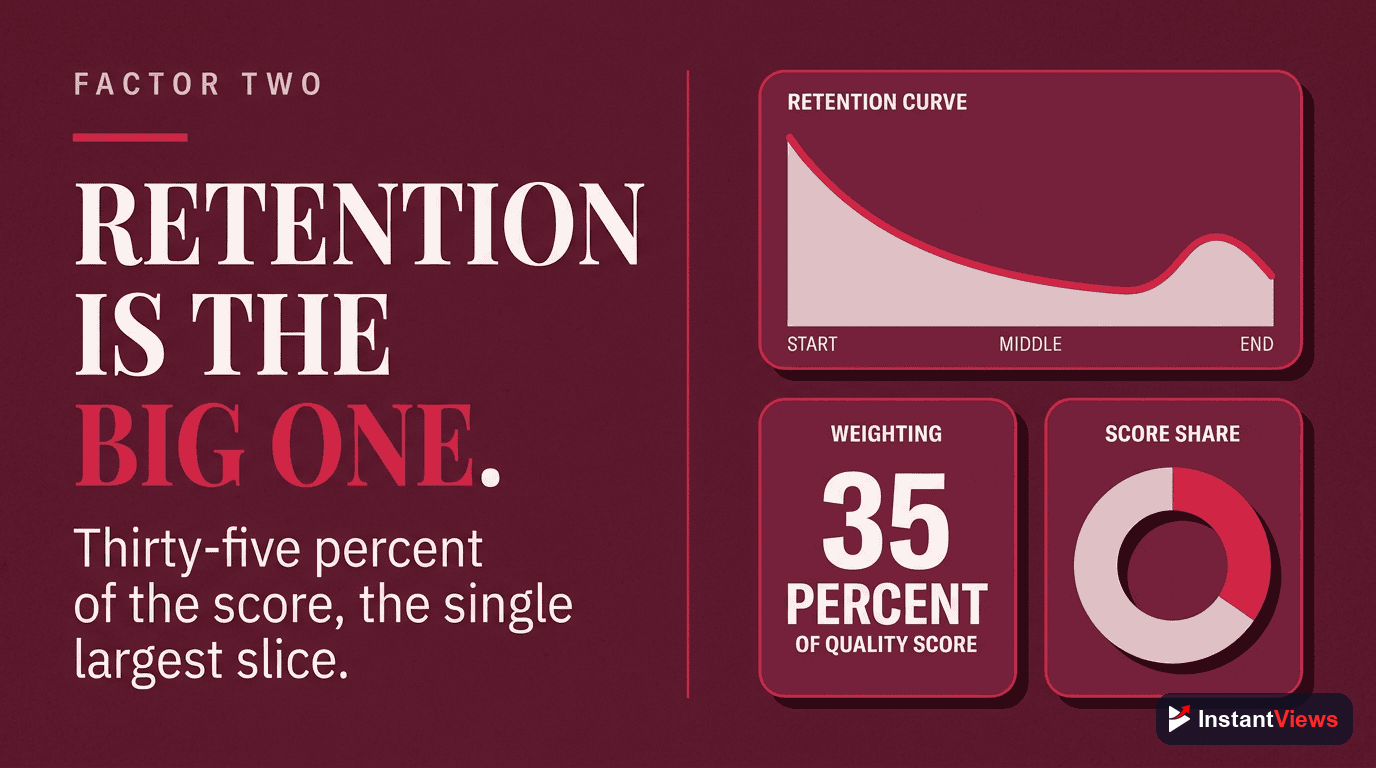
Factor #2: Audience Retention (35% Weight)
Audience Retention
The single most important factor. YouTube measures what percentage of your video viewers watch, and where they drop off. High retention signals valuable content.
- 70%+ retention: Exceptional - guaranteed algorithmic boost
- 50-70% retention: Good - competitive for recommendations
- 40-50% retention: Average - limited algorithmic reach
- Below 40%: Poor - significant handicap in recommendations
Audience retention isn't just about the average - YouTube analyzes your retention curve. Videos that maintain viewership throughout score better than those with steep drop-offs.
Critical moments:
- First 30 seconds: Must retain 70%+ or algorithm penalizes
- Mid-roll retention: Dips are expected, but sharp cliffs hurt your score
- End retention: Videos watched to completion get major boosts
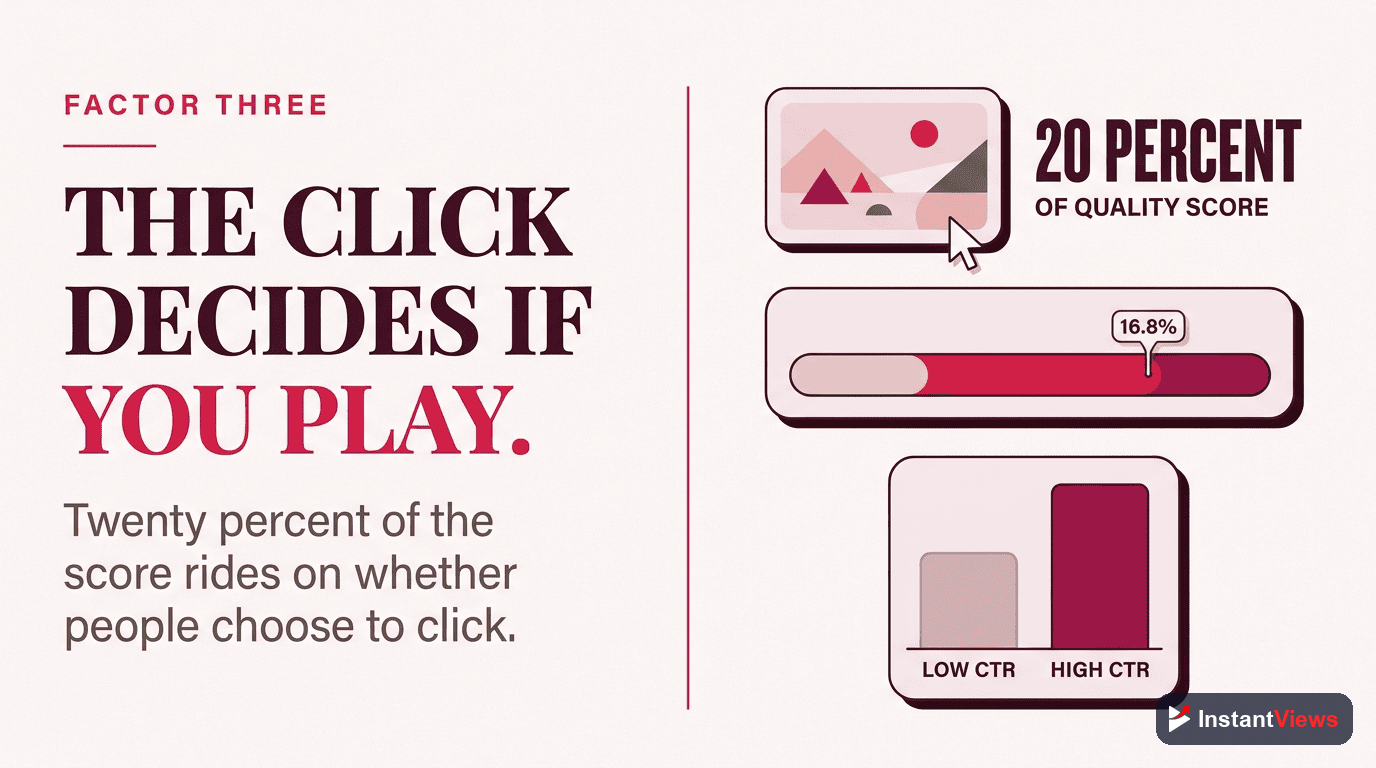
Factor #3: Click-Through Rate (20% Weight)
Click-Through Rate (CTR)
Percentage of people who see your video and click to watch. High CTR signals that your thumbnail and title effectively communicate value.
- Entertainment/Viral: 10-15% CTR needed
- How-To/Tutorial: 8-12% CTR competitive
- Educational: 6-10% CTR acceptable
- Niche/B2B: 4-8% CTR can succeed
CTR is contextual - YouTube compares your performance to similar videos in your niche. A 6% CTR might be excellent for highly-targeted content but poor for broad entertainment.
What impacts CTR:
- Thumbnail contrast - Must stand out on mobile
- Title curiosity gap - Promise value without giving it away
- Accurate representation - Clickbait hurts retention (next factor)
- Facial expressions - Emotion-showing faces increase CTR by 30%+
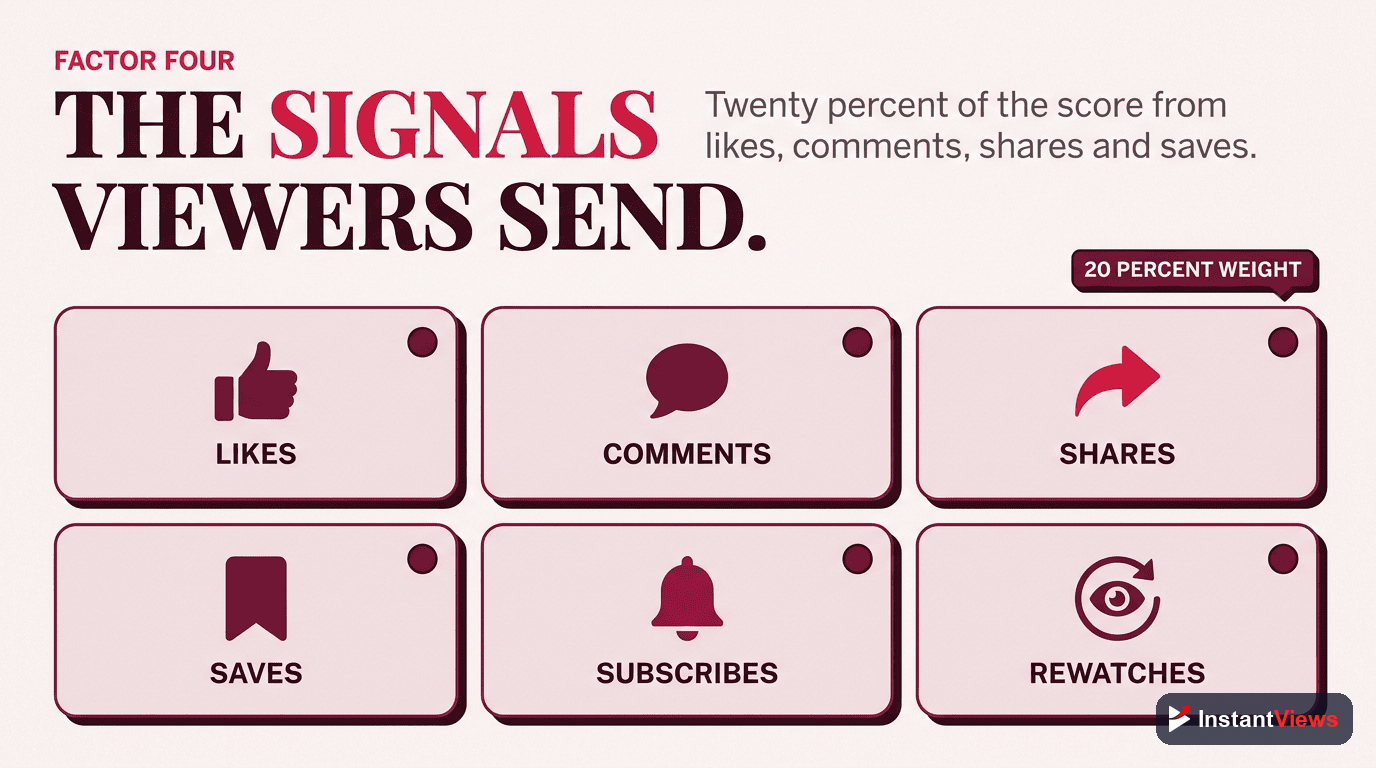
Factor #4: Engagement Signals (20% Weight)
Engagement Signals
Likes, comments, shares, and saves. These signals indicate that viewers found your content valuable enough to interact beyond just watching.
- Like rate: Target 4%+ of views (higher for small channels)
- Comment rate: 0.5%+ indicates strong community
- Share rate: 0.2%+ signals viral potential
- Playlist adds: Premium signal - viewers want to return
Why engagement matters: It's the clearest signal that your content resonated. YouTube's algorithm treats high-engagement videos as "safe bets" for recommendations.
Interestingly, negative engagement (dislikes, "not interested" clicks) has a stronger impact than positive signals. A video with 10% dislike ratio will have its reach severely limited.
Comments are weighted more heavily than likes. A video with 100 comments and 500 likes will outperform one with 50 comments and 1,000 likes.
Factor #5: Viewer Satisfaction (10% Weight)
Viewer Satisfaction
Does watching your video make viewers happy with YouTube? Measured by whether they continue browsing YouTube or leave the platform entirely.
- Session time: Do viewers watch more after your video?
- Return viewers: Do they come back to your channel?
- Survey responses: YouTube asks "Was this helpful?"
- Subscription after watching: Strong satisfaction signal
YouTube's ultimate goal is keeping people on the platform. Videos that send viewers down recommendation rabbit holes get rewarded. Videos that make people close the app get penalized.
How to improve satisfaction:
- Deliver on your title/thumbnail promise (no bait-and-switch)
- End with strong calls-to-action to watch another video
- Create series/playlists that encourage binge-watching
- Recommend other videos (even from other creators) in your content
Analyze Your Quality Score
Get an instant quality assessment with specific improvement recommendations for each factor.
Analyze Your Video →
How YouTube Calculates Your Score
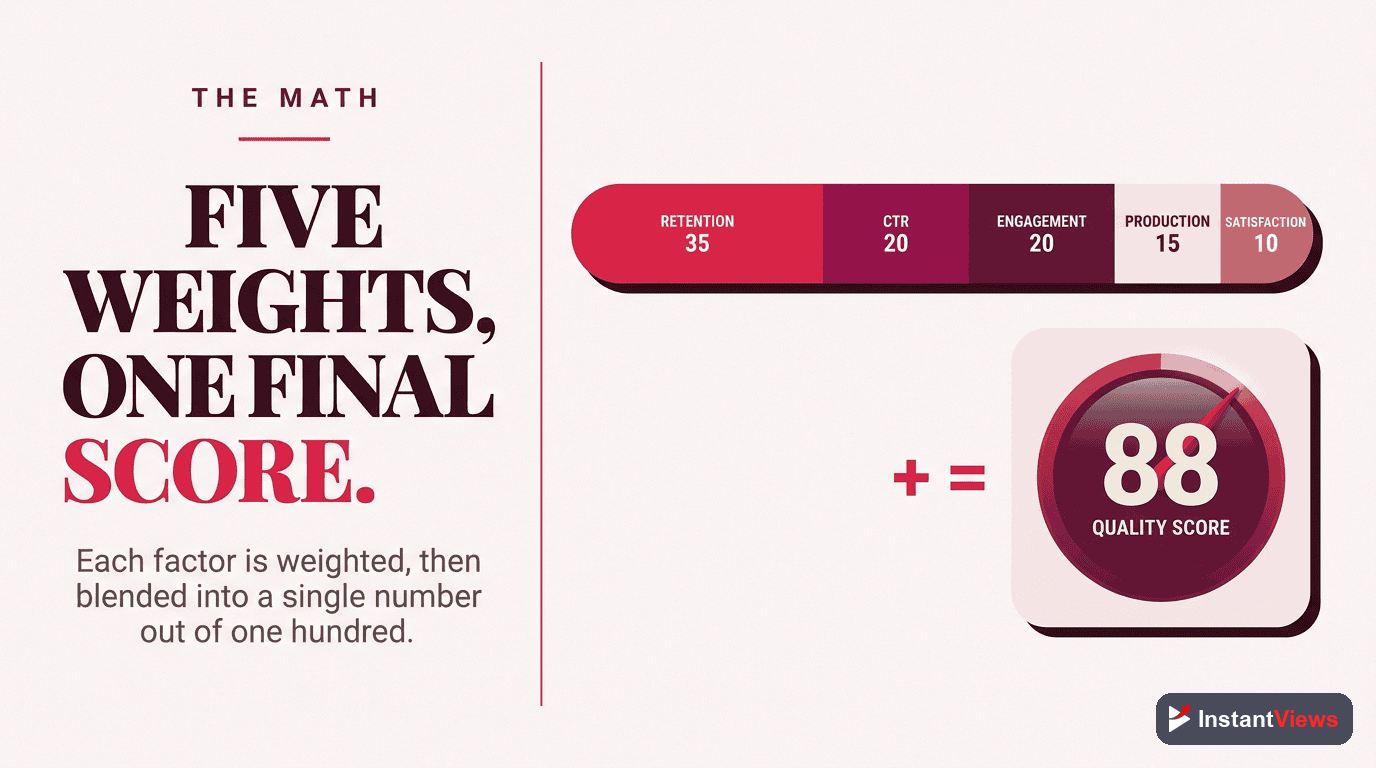
YouTube combines all these factors into a composite quality score. Here's the approximate weighting:
| Quality Factor | Weight | Minimum Target | Excellent Target |
|---|---|---|---|
| Audience Retention | 35% | 45% AVD | 65%+ AVD |
| Click-Through Rate | 20% | 5% CTR | 10%+ CTR |
| Engagement Signals | 20% | 3% like rate | 6%+ like rate |
| Production Quality | 15% | 1080p, clear audio | 4K, professional edit |
| Viewer Satisfaction | 10% | Neutral session impact | Session time increase |
Videos scoring 75+ (out of 100) enter the "high quality" tier where YouTube significantly increases promotional reach. Scores below 50 face major distribution limitations.
Improving Quality Score After Upload
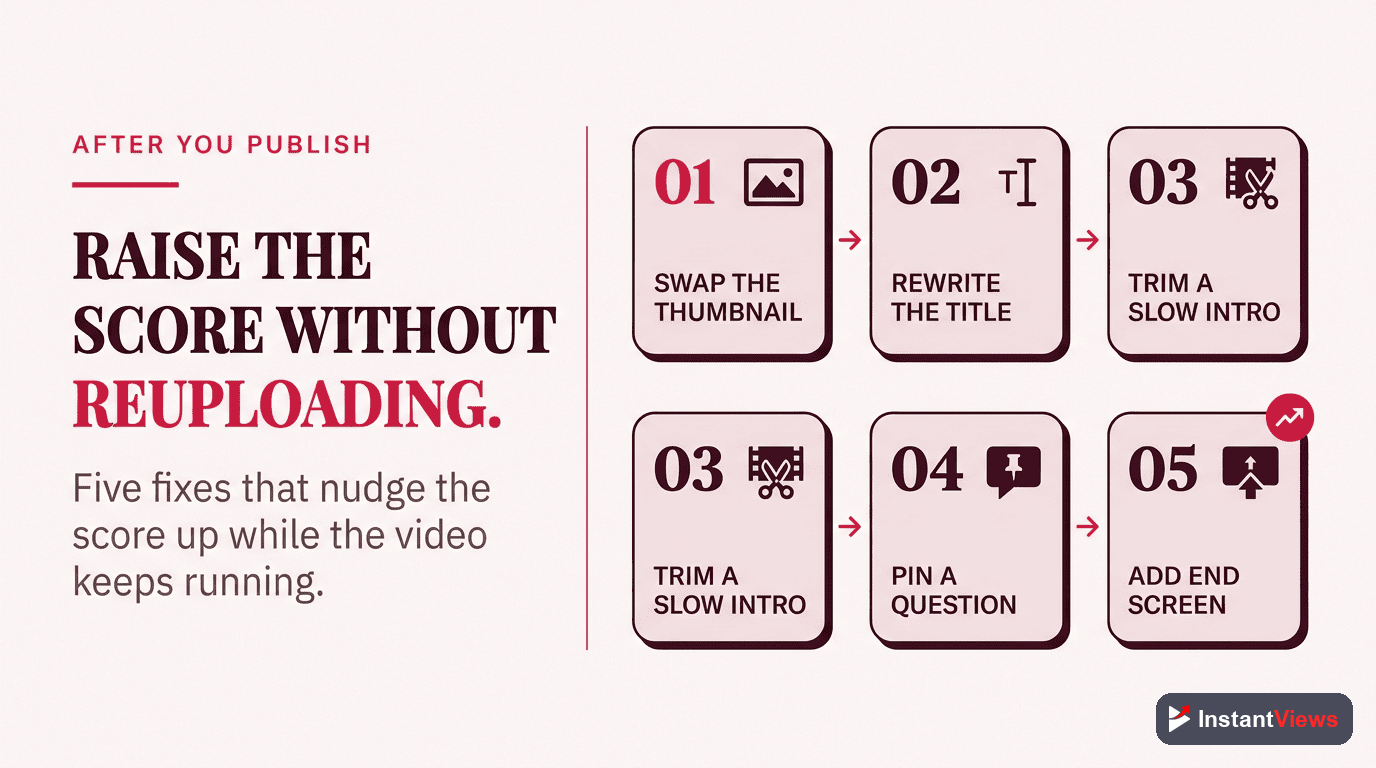
Your quality score isn't fixed at upload. You can improve it by:
Short-term improvements (within 48 hours):
- Optimize thumbnail/title if CTR is below 5%
- Add chapters to improve retention at key drop-off points
- Pin engaging comment to boost comment rate
- Share to engaged audiences first (email list, loyal followers)
Long-term improvements (ongoing):
- Create playlists featuring the video to improve session time
- Reference in newer videos to drive high-retention traffic
- Update description with timestamps and resources
- Monitor retention curve and apply learnings to future content
Quality Score vs. Channel Size
YouTube adjusts quality expectations based on channel size:
- Channels under 1K subs: Need 60+ scores to compete
- Channels 1K-10K subs: 65+ scores for significant reach
- Channels 10K-100K subs: 70+ scores expected
- Channels 100K+ subs: 75+ scores needed to maintain growth
The algorithm gives smaller channels slightly more leeway, but quality standards rise as you grow. A 55-score video might get decent reach for a 500-sub channel but would flop for a 50K-sub channel.
Frequently Asked Questions
Video quality scoring is YouTube's system for evaluating content based on production quality, engagement metrics, audience retention, and viewer satisfaction. Higher quality scores lead to better algorithm recommendations and increased visibility.
Yes, but not as much as you might think. While 4K videos do receive a slight boost, YouTube prioritizes engagement metrics over technical resolution. A well-edited 1080p video with strong retention will outperform a poorly-structured 4K video every time.
YouTube uses multiple signals including average view duration, click-through rate, audience retention curve, likes/dislikes ratio, comment engagement, share rate, and whether viewers return to the platform after watching. These combine to create an overall quality score.
While you can't change the video itself, you can improve surrounding factors like thumbnails, titles, descriptions, and chapters. More importantly, promoting the video to the right audience can improve engagement signals, which raises your quality score over time.
YouTube evaluates quality in real-time based on viewer behavior. Initial scores form within the first 24-48 hours, but they continue to evolve as more data comes in. Videos can gain momentum days or even weeks after upload if quality signals improve.
YouTube doesn't publish specific thresholds, but data shows videos need at least 50% average view duration and 8%+ CTR to enter broader recommendation cycles. The InstantViews Video Analyzer provides benchmark scores based on your niche and channel size.