
- Keyword research is the foundation of YouTube SEO - without the right keywords, even great videos struggle to get discovered
- Long-tail keywords offer better ranking opportunities for new and smaller channels with less competition
- YouTube's search algorithm prioritizes watch time, engagement, and relevance - keywords help establish relevance
- Using a YouTube keyword explorer tool saves hours of manual research and reveals hidden opportunities
- Combine keyword data with search intent analysis to create videos that truly satisfy viewer needs
YouTube is the world's second-largest search engine, processing over 3 billion searches every month. Yet most creators upload videos without understanding what their audience is actually searching for. This disconnect between content and search intent is why countless quality videos never get discovered.
A YouTube keyword explorer bridges this gap by revealing exactly what terms viewers use to find content in your niche. Armed with this data, you can create videos that not only rank higher in search results but also attract viewers who are genuinely interested in your content.
This comprehensive guide will teach you how to master YouTube keyword research, from understanding SEO basics to using advanced keyword exploration techniques that drive real results.
Understanding YouTube SEO Basics
YouTube SEO is the practice of optimizing your videos, playlists, and channel to rank higher in YouTube's organic search results and suggested video recommendations. Unlike traditional web SEO, YouTube's algorithm heavily weighs engagement signals alongside relevance factors.
The algorithm considers multiple factors when ranking videos:
- Relevance - How well your video's metadata (title, description, tags) matches the search query
- Watch time - Total minutes watched, indicating content quality
- Engagement - Likes, comments, shares, and subscriber conversions
- Click-through rate (CTR) - How often viewers click your video when it appears in results
- Session time - Whether viewers continue watching more videos after yours
Keywords are the foundation of relevance. When you use the right keywords in your video's title, description, and tags, you signal to YouTube exactly what your content is about and who should see it.

Why Keyword Research Matters
Without proper keyword research, you're essentially creating content in the dark. You might produce excellent videos, but if they don't match what people are searching for, they'll struggle to gain traction.
Keyword research helps you:
- Discover content ideas - Find topics your audience actively searches for instead of guessing
- Validate video concepts - Confirm there's actual demand before investing time in production
- Outrank competitors - Identify gaps where you can create better content than existing videos
- Optimize existing content - Improve underperforming videos with better keyword targeting
- Plan content strategy - Build a sustainable publishing calendar based on search demand
Consider this: a video ranking #1 for a keyword with 10,000 monthly searches will consistently bring new viewers to your channel month after month. That compounding effect is what turns small channels into large ones.
Don't assume popular topics in your niche have high search volume. Always verify with keyword research tools. Some trending topics have surprisingly low search demand.

How to Find YouTube Keywords
There are several methods to discover valuable YouTube keywords, ranging from free manual techniques to powerful dedicated tools.
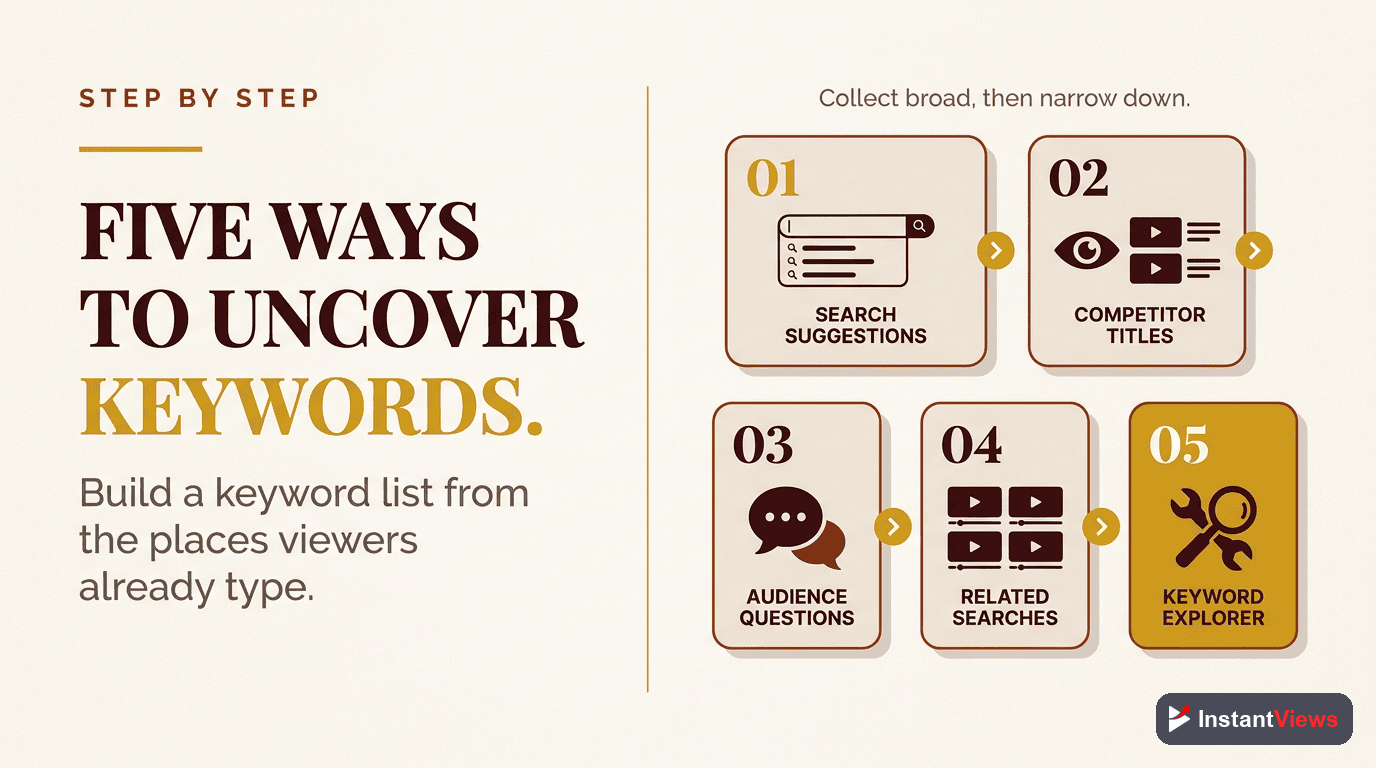
1. YouTube Autocomplete
Start typing a seed keyword in YouTube's search bar and observe the suggestions. These autocomplete predictions are based on real user searches, making them valuable keyword opportunities.
To find more variations:
- Add letters after your seed keyword (e.g., "keyword research a", "keyword research b")
- Add words before your keyword (e.g., "how to keyword research", "best keyword research")
- Use question words (e.g., "what is keyword research", "why keyword research")
2. Competitor Analysis
Study successful videos in your niche to understand what keywords they target. Look at their titles, descriptions, and tags (you can use browser extensions to reveal hidden tags).
Focus on videos that:
- Have high view counts relative to the channel's subscriber count
- Appear consistently in search results for your target topics
- Have strong engagement (likes, comments) indicating viewer satisfaction
3. YouTube Analytics
If you have existing videos, YouTube Studio's analytics reveal which search terms are already driving traffic to your content. Navigate to Analytics > Reach > Traffic source: YouTube search to see actual keywords viewers used.
4. Dedicated Keyword Tools
Professional keyword research tools like the InstantViews Keyword Explorer provide comprehensive data including search volume estimates, competition scores, and related keyword suggestions that manual methods can't match.
Using the Keyword Explorer Tool
A YouTube keyword explorer transforms hours of manual research into minutes of data-driven decision making. Here's how to maximize its potential:
Enter Your Seed Keyword
Start with a broad term related to your video topic. The tool will analyze this keyword and generate related suggestions with their metrics.
- "cooking tutorial" for a food channel
- "guitar lessons" for a music education channel
- "home workout" for a fitness channel
Analyze the Metrics
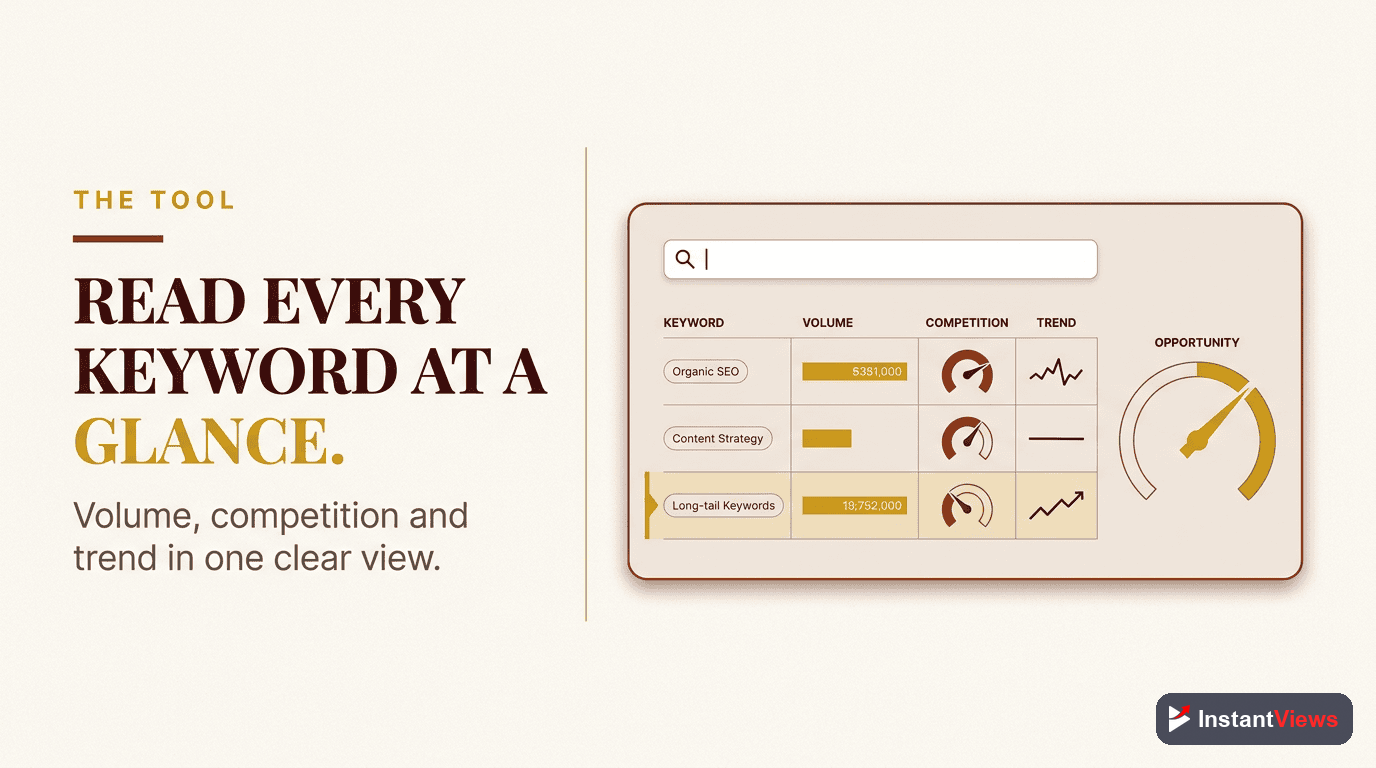
Evaluate each keyword based on search volume (monthly searches), competition level, and trend direction. Look for keywords with decent volume but manageable competition.
- Search Volume: Higher is generally better, but consider your channel size
- Competition: Lower competition means easier ranking opportunities
- Trend: Rising trends indicate growing interest
Explore Related Keywords
Review the related keyword suggestions to find long-tail variations and secondary keywords. These help you capture additional search traffic and understand the full topic landscape.
- Closely related: Direct variations of your main keyword
- Topically related: Related concepts viewers also search for
- Question-based: Specific questions about your topic
Select Your Target Keywords
Choose one primary keyword for your video's main focus and 2-4 secondary keywords that support the topic. Your primary keyword should appear in the title, while secondary keywords enhance your description and tags.
Long-Tail vs Short-Tail Keywords
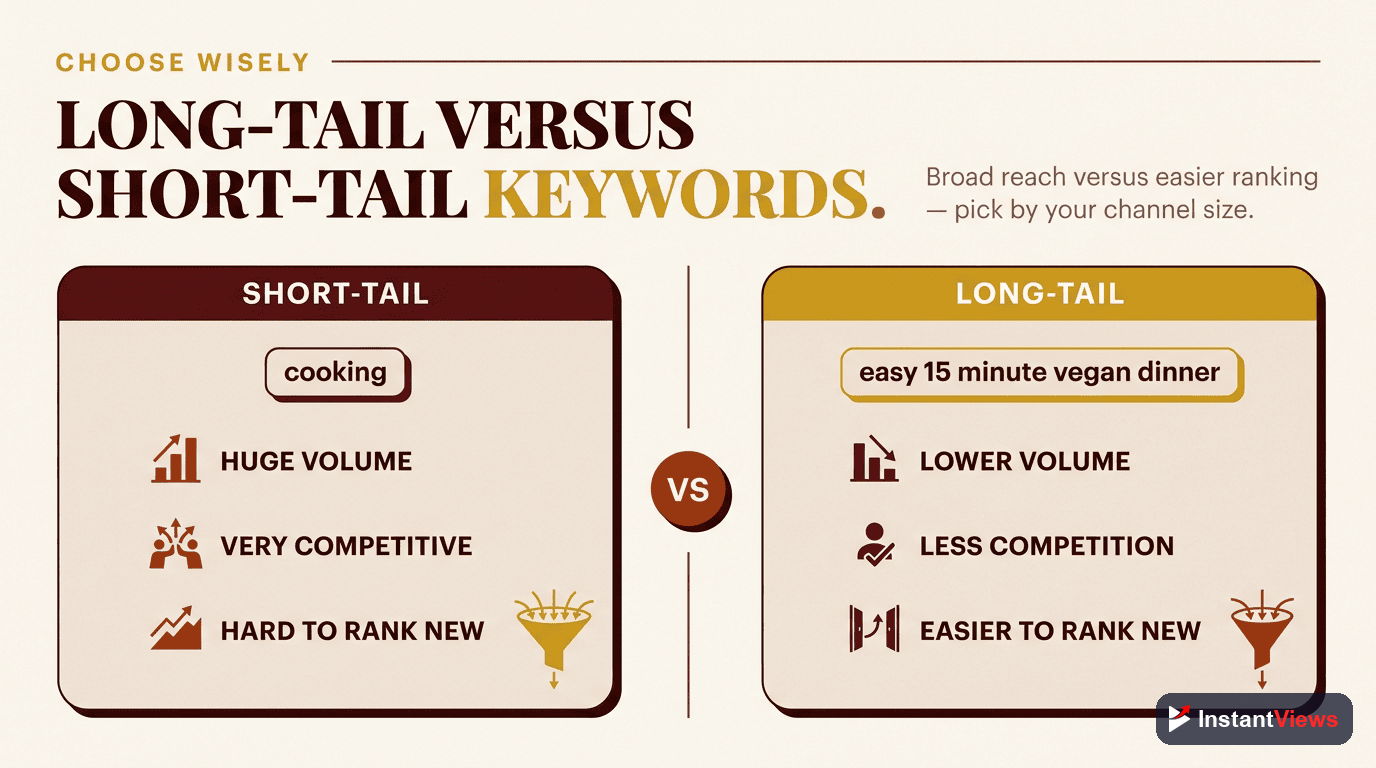
Understanding the difference between long-tail and short-tail keywords is crucial for developing an effective YouTube SEO strategy.
| Aspect | Short-Tail Keywords | Long-Tail Keywords |
|---|---|---|
| Length | 1-2 words | 3+ words |
| Example | "cooking tips" | "easy vegetarian dinner recipes for beginners" |
| Search Volume | High | Lower |
| Competition | Very high | Lower |
| Search Intent | Broad, unclear | Specific, clear |
| Conversion Rate | Lower | Higher |
| Best For | Established channels | New/growing channels |
When to Use Short-Tail Keywords
Short-tail keywords make sense when:
- Your channel has significant authority in your niche
- You have a track record of high-performing videos
- You want to establish topical authority on broad subjects
- You're creating cornerstone content for your channel
When to Use Long-Tail Keywords
Long-tail keywords are ideal when:
- You're building a new channel or entering a competitive niche
- You want to rank faster with less effort
- You're targeting viewers with specific needs or questions
- You want higher engagement from more qualified viewers
The most successful YouTube strategy combines both: use long-tail keywords to build momentum and authority, then gradually target broader short-tail terms as your channel grows.
Video Optimization Tips
Once you've identified your target keywords, proper implementation is key to ranking success.
Title Optimization
Your title is the most important place for your primary keyword. Follow these guidelines:
- Place your primary keyword as close to the beginning as possible
- Keep titles under 60 characters to avoid truncation in search results
- Make titles compelling and click-worthy while remaining accurate
- Include numbers, brackets, or power words to boost CTR
Description Optimization
YouTube's algorithm reads your description to understand video context:
- Include your primary keyword in the first 25 words
- Write at least 200-300 words of natural, keyword-rich description
- Add secondary keywords naturally throughout
- Include timestamps with keyword-relevant chapter titles
- Add relevant links to related videos and playlists
Tag Strategy
While tags have less weight than they once did, they still help:
- Use your exact primary keyword as the first tag
- Add 8-12 relevant tags including variations and related terms
- Mix broad and specific tags for coverage
- Include common misspellings if applicable
Thumbnail and CTR
While not directly keyword-related, your thumbnail dramatically affects whether viewers click your video in search results. A higher CTR signals to YouTube that your video is relevant for the keyword, boosting rankings.
Discover Your Winning Keywords
Use our free YouTube Keyword Explorer to find high-potential keywords with low competition. Start ranking your videos higher today.
Try Keyword Explorer Free →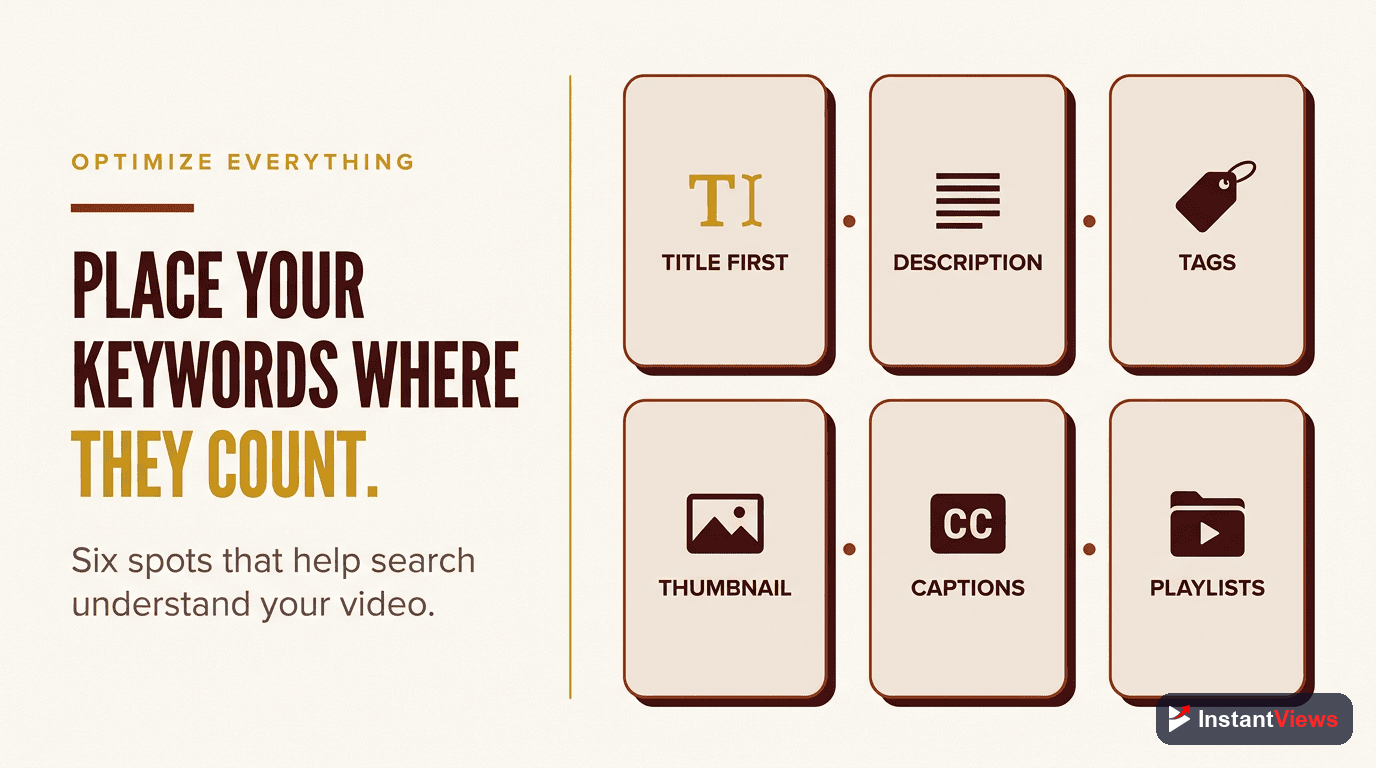
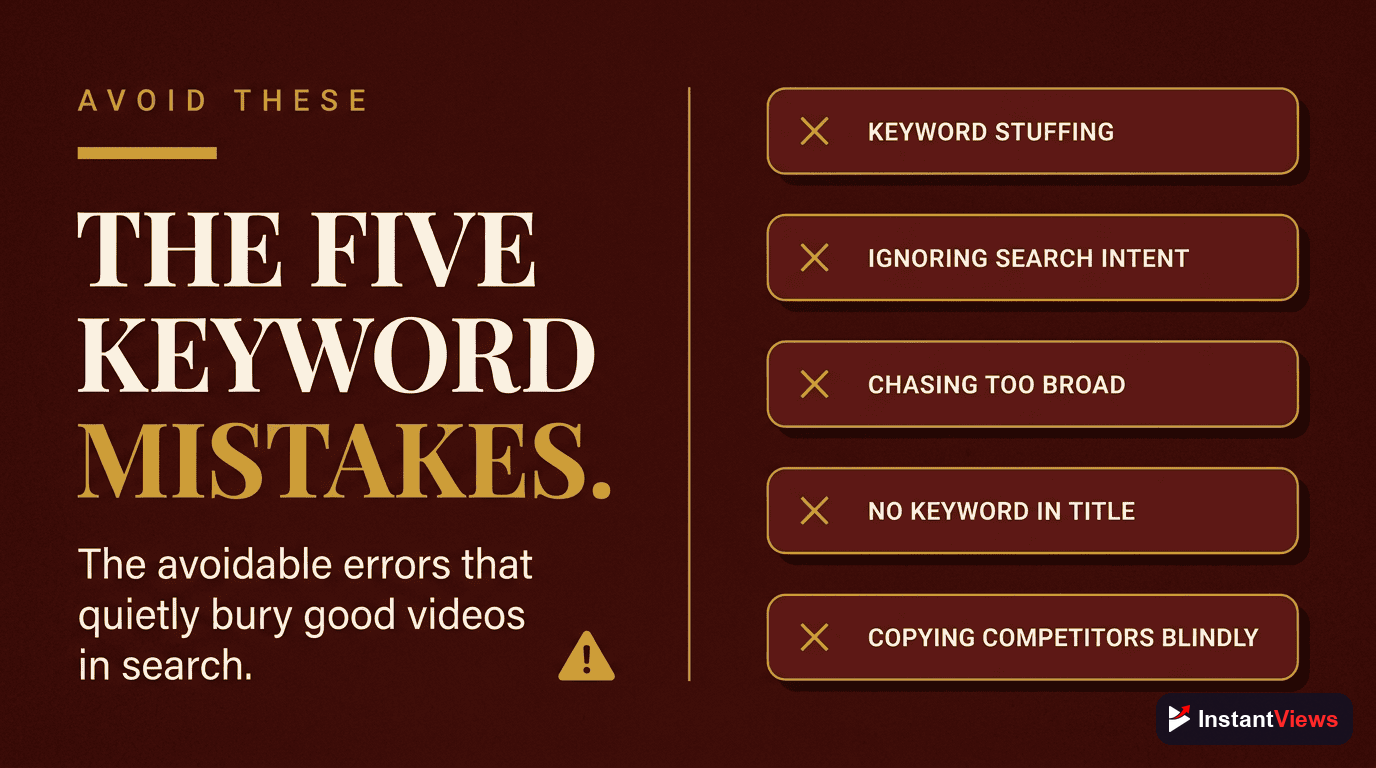
Common Keyword Mistakes to Avoid
Even experienced creators make these keyword research errors:
- Targeting only high-volume keywords - Competition for these terms is fierce. Balance volume with ranking feasibility based on your channel's current authority.
- Ignoring search intent - A keyword might have volume, but if your video doesn't match what searchers want, they'll click away quickly. Always analyze the top-ranking videos to understand intent.
- Keyword stuffing - Cramming keywords unnaturally into titles and descriptions hurts both user experience and rankings. YouTube's algorithm is sophisticated enough to detect this.
- Neglecting long-tail opportunities - Many creators chase broad keywords when specific long-tail terms would drive more qualified traffic with less effort.
- Not tracking performance - Keyword research isn't a one-time task. Monitor which keywords drive traffic and rankings, then refine your strategy accordingly.
- Using Google keywords for YouTube - Search behavior differs between platforms. Keywords that work on Google may not have the same volume or intent on YouTube.
Building a Keyword-Driven Content Strategy
Transform your keyword research into a sustainable content plan:
1. Create keyword clusters - Group related keywords around topic themes. This helps you create comprehensive video series that establish topical authority.
2. Map keywords to content types - Different keywords suit different video formats:
- "How to" keywords: Tutorial videos
- "Best" keywords: Listicles and comparison videos
- "Review" keywords: Product review content
- "vs" keywords: Comparison videos
3. Schedule based on trends - Use keyword trend data to time your uploads. Publish seasonal content before peak search periods.
4. Update and optimize - Regularly review your video analytics. Update underperforming videos with better keywords based on actual search data.
Advanced Keyword Techniques
Take your keyword research to the next level with these advanced strategies:
Gap Analysis
Identify keywords where existing videos fail to satisfy search intent. Look for videos with high views but poor engagement - this signals an opportunity to create better content.
Trend Hijacking
Monitor rising keywords in your niche and create content quickly to capture early traffic before competition increases.
Cross-Platform Research
Check related keywords on Google, TikTok, and Reddit to find emerging topics before they become popular on YouTube.
Semantic Keyword Optimization
Include semantically related terms that YouTube's AI associates with your topic. This helps your video rank for searches you haven't explicitly targeted.
Frequently Asked Questions
A YouTube keyword explorer is a tool that helps you discover and analyze keywords that people search for on YouTube. It provides data on search volume, competition, and related terms to help you optimize your video content for better visibility and rankings.
Start with YouTube autocomplete suggestions, analyze competitor videos, use dedicated keyword research tools, and focus on long-tail keywords with moderate search volume and low competition. The InstantViews Keyword Explorer helps you find high-potential keywords quickly.
Short-tail keywords are broad terms with 1-2 words (like "cooking tips") with high search volume but intense competition. Long-tail keywords are more specific phrases with 3+ words (like "easy vegetarian dinner recipes for beginners") with lower volume but higher conversion and easier ranking.
Focus on one primary keyword and 2-4 secondary keywords per video. Your primary keyword should appear in the title, description, and tags. Secondary keywords support the main topic and help you rank for related searches.
Yes. YouTube is a video platform with different search intent. Users on YouTube often search for tutorials, reviews, entertainment, and how-to content. Keywords that perform well on Google may not work the same on YouTube, so use YouTube-specific keyword tools.
Conduct keyword research before creating each video, and do a comprehensive analysis monthly or quarterly to identify trending topics and seasonal opportunities. Regularly updating your keyword strategy helps you stay competitive and discover new content ideas.