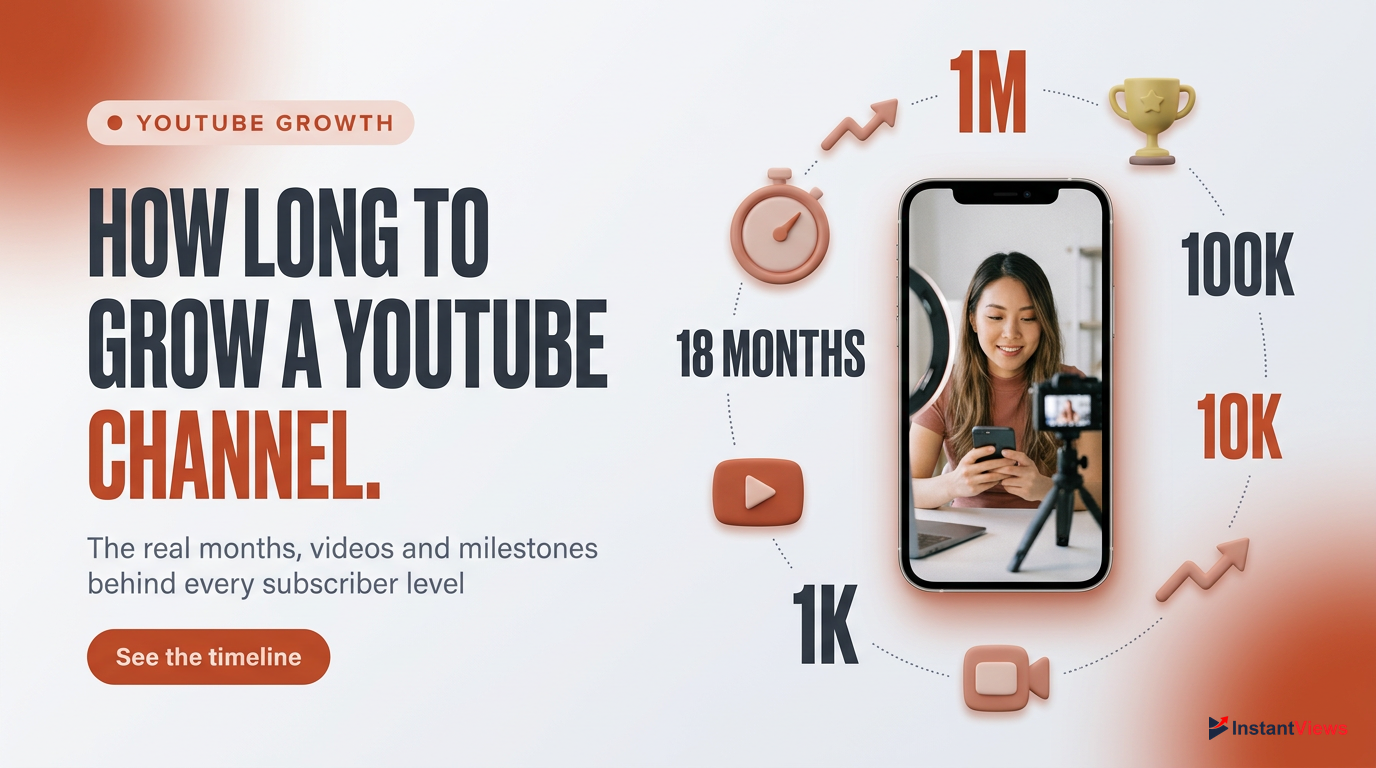
- Most consistent creators reach 1,000 subscribers in 6 to 12 months, requiring an average of 40 to 150 videos.
- Data-driven creators who analyze CTR and retention grow 2.5x faster, hitting 1K subs in just 4 to 8 months.
- Reaching the 100,000 subscriber milestone takes an average of 51 months (roughly 4 years) of sustained effort.
- Only 10% of all YouTube channels will ever successfully reach the 1,000-subscriber monetization threshold.
- Posting 12 or more times per month (about 3x a week) accelerates subscriber growth by 66%.
If you are launching a channel this year, the first question on your mind is inevitably: how long to grow a YouTube channel? The internet is filled with overnight success stories and viral anomalies, but these rare outliers severely distort the reality of content creation. To build a sustainable, monetized audience, creators need to prepare for a marathon, not a sprint.
To provide a definitive answer, we bypassed the guesswork and dove straight into verified 2026 industry data. By analyzing massive datasets from VidIQ, TubeBuddy, and leading creator agencies—encompassing over 5.3 million channels—we have mapped out the exact timelines, video counts, and upload frequencies required to hit major subscriber milestones. The numbers reveal a stark contrast between intuition-based posting and data-driven strategy.
Whether your goal is to unlock the YouTube Partner Program, earn your Silver Play Button, or simply understand the algorithm's timeline, this comprehensive study breaks down the factual reality of YouTube growth. From the grueling '18-Month Rule' to the exact hybrid posting cadence that accelerates discoverability, here is the verified data on what it truly takes to succeed on YouTube today.
- The Reality Check: How Long Does It Take to Grow a YouTube Channel?
- The 1,000 Subscriber Milestone: The Hardest Hurdle
- Scaling Up: The Timeline to 10K, 100K, and 1 Million Subscribers
- The Path to YouTube Monetization in 2026
- The '18-Month Rule' and the 10% Success Rate
- Data-Driven vs. Intuition: Why Some Channels Grow 2.5x Faster
- How Your Niche Impacts Your Growth Speed
- Upload Frequency: The 'Sweet Spot' for the Algorithm
- Shorts vs. Long-Form: The 2026 Hybrid Growth Strategy
- Real Creator Case Studies: MrBeast, Symanthah, and More
- FAQ
The Reality Check: How Long Does It Take to Grow a YouTube Channel?
When new creators ask how long to grow a YouTube channel, they are usually looking for a shortcut. However, the 2026 data paints a clear picture of the dedication required. According to a massive study by VidIQ analyzing over 5.3 million channels, the average time to reach the foundational milestone of 1,000 subscribers is between 6 and 12 months. This assumes the creator is posting consistently and optimizing their content for search and discovery.

This 6-to-12-month window is critical because it represents the algorithmic 'sandbox' phase. During this time, YouTube is testing your content against different audience cohorts to understand who your ideal viewer is. It rarely happens overnight. Creators who expect explosive growth in their first few weeks often face severe burnout when the algorithm doesn't immediately reward their efforts.
Expect to spend at least half a year to a full year grinding before you see a comma in your subscriber count. Consistency during this algorithmic testing phase is non-negotiable.
Understanding this baseline is the first step to mental resilience on the platform. If you are in month four and only have 300 subscribers, you are not failing—you are actually right on schedule according to the statistical average. The key is to survive this initial phase without abandoning your upload schedule.
The 1,000 Subscriber Milestone: The Hardest Hurdle
The journey to 1,000 subscribers is universally considered the hardest phase of a YouTube channel's lifecycle. But how much content does it actually take to get there? The 2026 VidIQ study provides concrete numbers that shatter the myth of the 'one hit wonder'.
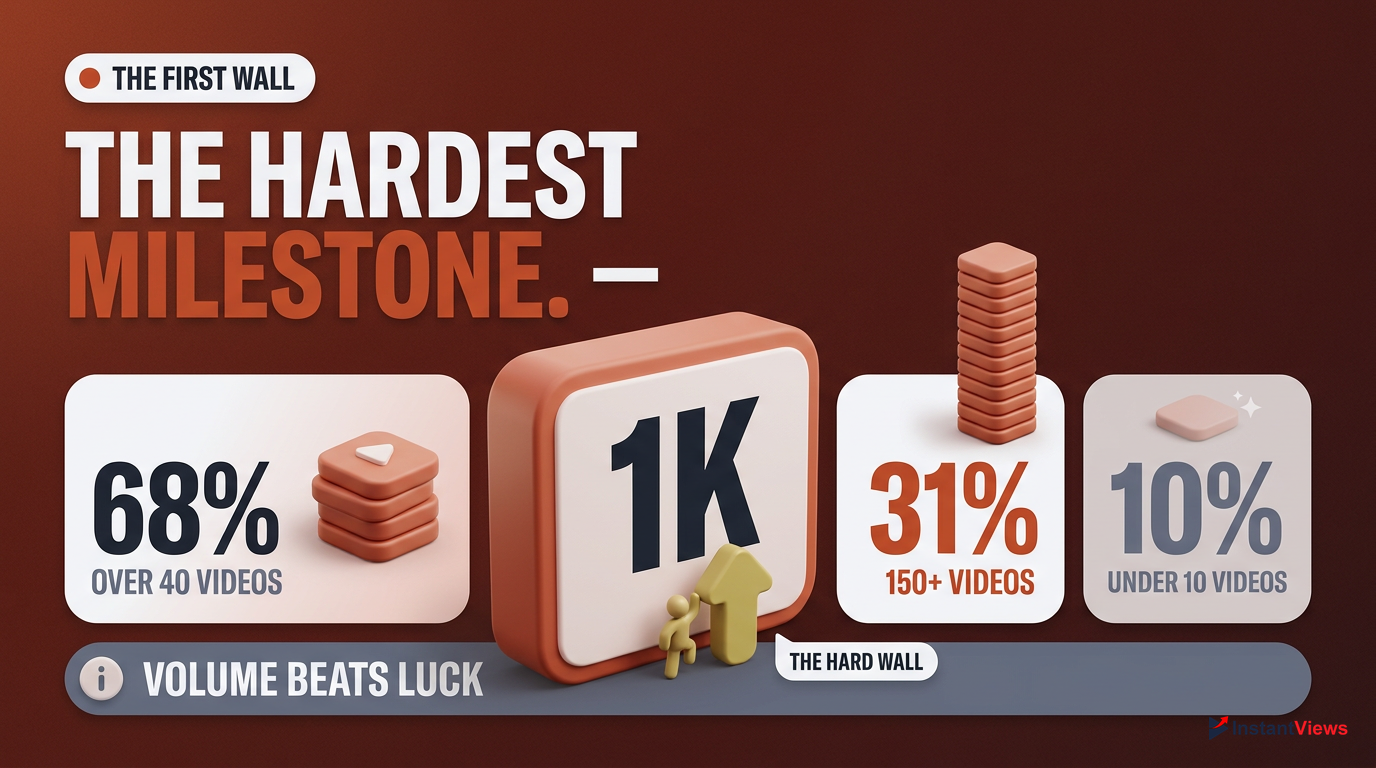
The data reveals that 68% of channels needed to publish more than 40 videos to reach the 1,000-subscriber mark. Even more telling, the most common path—accounting for nearly a third (31%) of all successful channels—required uploading 150 or more videos before crossing the threshold. This highlights the sheer volume of 'reps' required to improve video quality, thumbnail design, and audience retention.
The 10% of creators who reached 1,000 subscribers with fewer than 10 videos almost always had an unfair advantage: an existing audience on another platform (like TikTok or Instagram) or a highly orchestrated viral moment.
If you are wondering how long to grow a YouTube channel to that first major milestone, stop counting the days and start counting your uploads. The algorithm rewards a deep library of bingeable content. Every video you publish is a new hook in the water, increasing your overall surface area for discovery. If you haven't published at least 40 optimized videos, you haven't given the platform enough data to find your audience.
Scaling Up: The Timeline to 10K, 100K, and 1 Million Subscribers
Once you break through the 1,000-subscriber barrier, the compounding effect of YouTube's algorithm begins to take hold. However, the climb to the upper echelons of the platform still requires years of sustained effort. Based on 2025 data from TubeBuddy and industry consensus spanning 2023 to 2026, we can map out the realistic timelines for major channel milestones.
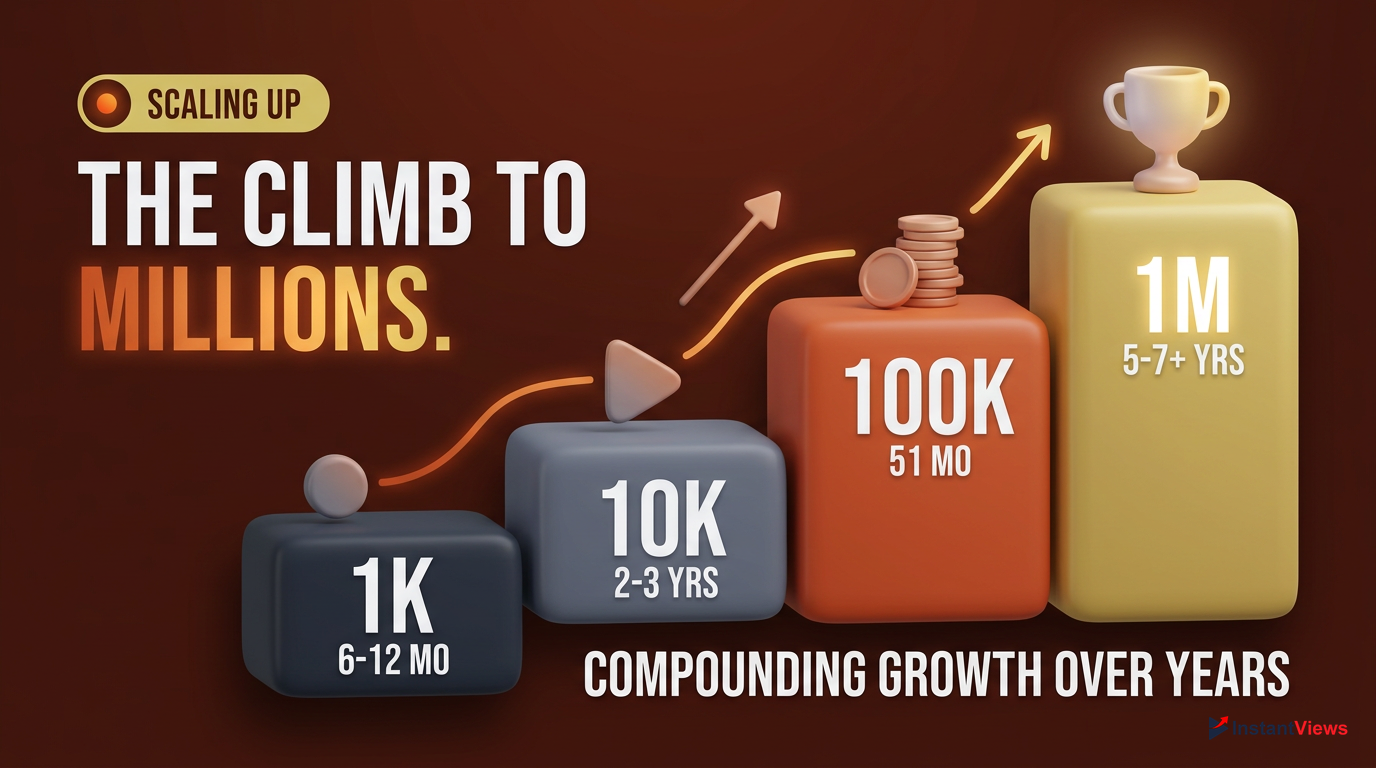
Reaching 10,000 subscribers typically takes 2 to 3 years of consistent effort. This is the phase where creators usually transition from amateur hobbyists to semi-professionals, often reinvesting early AdSense revenue into better gear and editing. The leap to 100,000 subscribers—and the coveted Silver Play Button—takes an average of 51 months (roughly four years). At this stage, channels have established a strong brand identity and a loyal core audience.
Reaching 1 million subscribers is exceptionally rare and highly variable. Data indicates it takes 5 to 7+ years of sustained, high-level performance, assuming the channel survives the inevitable shifts in platform trends and creator burnout.
These timelines prove that YouTube is a long-term business play. When mapping out how long to grow a YouTube channel, creators must plan their content strategy and financial expectations around a multi-year roadmap, rather than a few months of aggressive uploading.
The Path to YouTube Monetization in 2026
For most creators, the ultimate goal of growing a channel is monetization. In 2026, the YouTube Partner Program (YPP) offers two distinct tiers of entry, each with its own timeline and requirements. Understanding these thresholds is crucial for setting realistic financial goals.
| Monetization Tier | Requirements (2026) | Average Time to Reach |
|---|---|---|
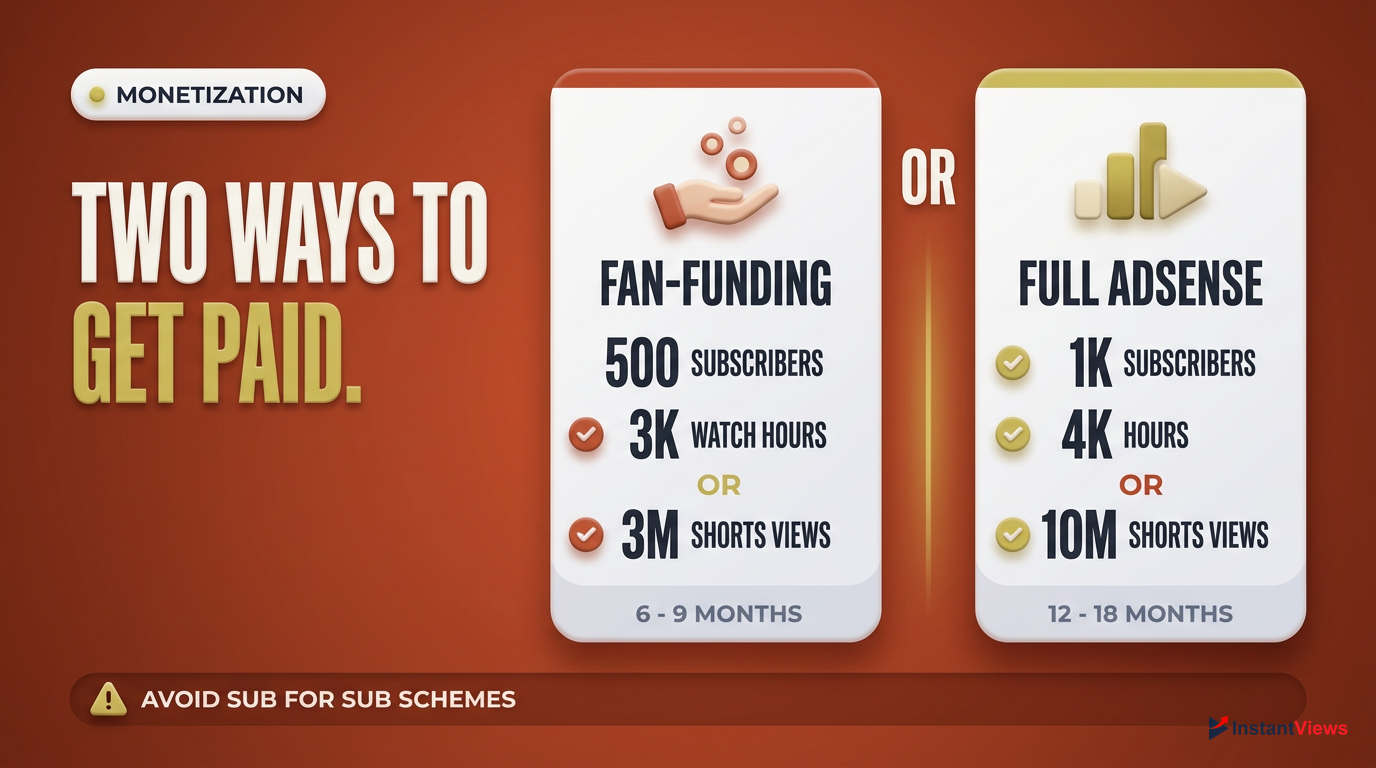
| Fan-Funding (Halfway) | 500 Subs + 3K Watch Hours OR 3M Shorts Views | 6 - 9 Months |
| Full YPP (AdSense) | 1,000 Subs + 4K Watch Hours OR 10M Shorts Views | 12 - 18 Months |
According to 2025 data from AMW Group, most serious creators reach the full YPP threshold (1,000 subscribers and 4,000 watch hours) 12 to 18 months after their first upload. This timeline aligns perfectly with the 6-to-12-month subscriber growth data, factoring in the additional time required to accumulate the massive 4,000 hours of watch time.
Do not resort to 'sub4sub' schemes or buying watch hours to speed up this timeline. YouTube's 2026 fraud detection algorithms will permanently demonetize or terminate channels with artificial engagement metrics.
Fortunately, YouTube's introduction of the 'Halfway Point' allows creators to unlock fan-funding tools like Super Chats, Super Thanks, and Channel Memberships much earlier. Requiring only 500 subscribers and 3,000 watch hours (or 3 million Shorts views), this lower barrier to entry provides vital early-stage revenue to help creators fund their content while they grind toward full AdSense monetization.
The '18-Month Rule' and the 10% Success Rate
If you want to know how long to grow a YouTube channel, you must first confront the platform's brutal attrition rate. The reality is that the vast majority of people who start a channel will never see significant growth. A 2025 study by TubeBuddy revealed a sobering statistic about creator longevity and success.

Only about 1 in 10 (10%) of all YouTube channels will ever reach the 1,000-subscriber milestone. The other 90% either quit too early or fail to adapt their content strategy.
Why do so many fail? It often comes down to the '18-Month Rule'. According to data from AMW Group, the median time from a channel's first upload to its first true 'breakout video'—the video that triggers exponential algorithmic growth—is between 18 and 36 months. The algorithm requires this extended period to gather enough behavioral data to confidently push a creator's videos to massive pools of non-subscribers.
Month 1 to 17
- Low impressions
- Testing thumbnails
- Algorithm gathering data
Month 18+
- High impression CTR
- Snowballing watch time
- Broad algorithmic push
Channels that quit before the 18-month mark almost never reach meaningful subscriber counts. They abandon the platform right before the algorithm has enough data to help them succeed. Surviving this 18-month desert is the ultimate test of a creator's dedication and willingness to improve their craft without immediate external validation.
Data-Driven vs. Intuition: Why Some Channels Grow 2.5x Faster
While the average time to reach 1,000 subscribers is 6 to 12 months, some creators manage to slash that timeline in half. The difference between the fast-trackers and the slow-burners comes down to how they make decisions. A 2026 study by NoteLM.ai and OutlierKit found a massive disparity between data-driven creators and those who rely purely on intuition.

- Analyze CTR & Retention
- Study competitor outliers
- Hit 1K subs in 4-8 months
- Post whatever feels right
- Ignore analytics dashboard
- Hit 1K subs in 12-18 months
Creators who actively analyze their Click-Through Rate (CTR), Audience Retention graphs, and competitor outliers grow 2.5x faster than those who don't. By treating their channel like a business and optimizing based on hard metrics, these creators typically hit the 1,000-subscriber mark in just 4 to 8 months.
Spend 20% of your time creating the video and 80% of your time researching the concept, title, and thumbnail. A mediocre video with a brilliant, data-backed title will always outperform a masterpiece with a weak hook.
If you are asking how long to grow a YouTube channel, the answer is highly dependent on your willingness to look at the numbers. If a video flops, a data-driven creator looks at the retention dip to see where viewers clicked off, ensuring they don't make the same pacing mistake in the next upload. Intuition alone cannot beat the algorithm in 2026.
How Your Niche Impacts Your Growth Speed
Not all YouTube channels are created equal, and the topic you choose to cover plays a massive role in your growth velocity. In 2026, the algorithm heavily favors channels with a hyper-specific focus, especially in high-demand categories. According to research by YouTube strategists Alan Spicer and Tyag Rajan, niche selection can drastically alter your timeline.
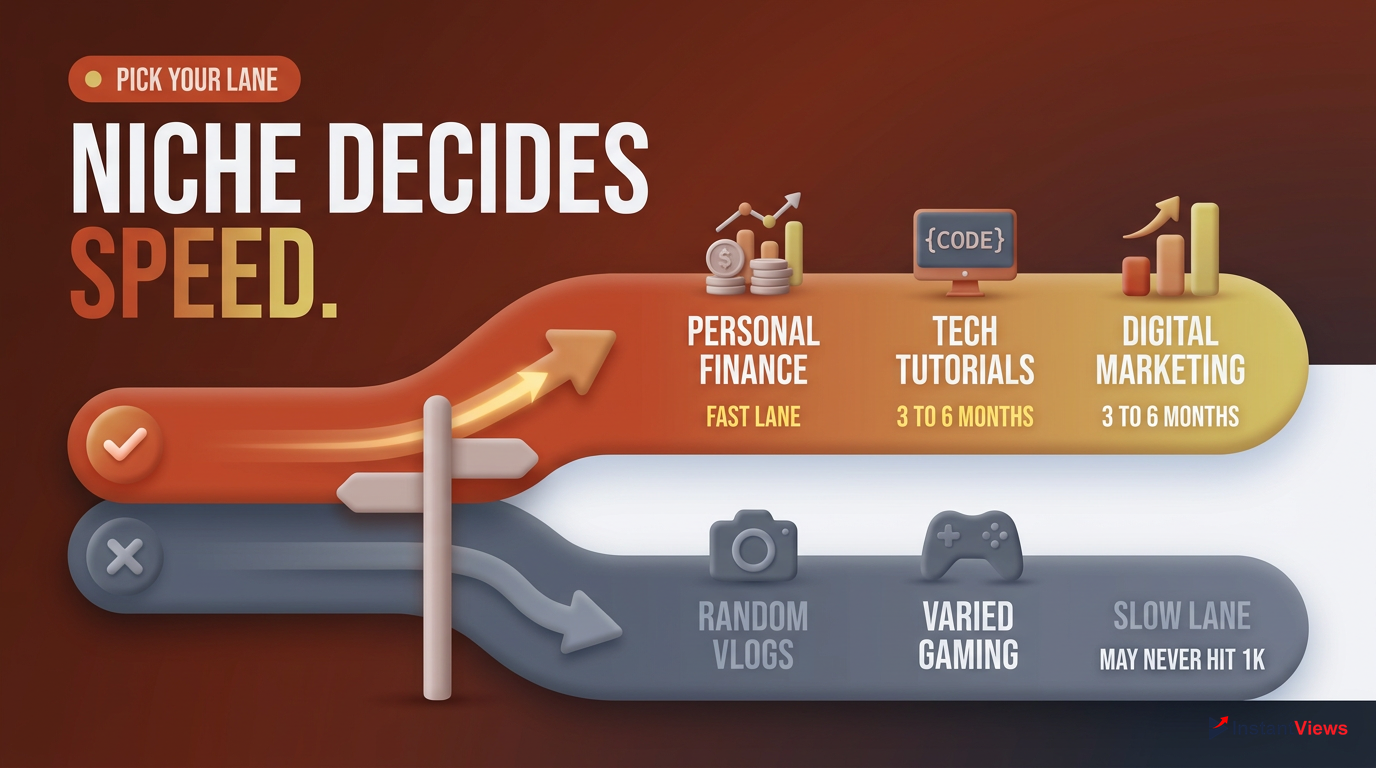
High-Demand Niches
Personal finance, tech tutorials, and digital marketing. Strong SEO here can drive a channel to 1,000 subs in just 3 to 6 months.
No Clear Niche
Vlogs without a unique angle or varied gaming content. Channels without a keyword strategy may never reach the 1K milestone.
High-CPM (Cost Per Mille) niches like finance and software tutorials benefit from massive search volume. Viewers are actively typing specific questions into the search bar, allowing new creators to rank their videos and gain subscribers without relying on the homepage recommendation algorithm. This search-driven traffic is why these niches can hit 1,000 subscribers in a rapid 3 to 6 months.
- Faster algorithmic categorization
- Higher viewer loyalty and return rate
- Easier to rank in YouTube Search
- Can feel creatively restrictive
- Risk of running out of topic ideas
Conversely, channels that post a gaming video on Monday, a cooking vlog on Wednesday, and a tech review on Friday confuse the algorithm. If YouTube doesn't know exactly who your content is for, it won't recommend it to anyone. Picking a clear niche is the fastest way to accelerate how long to grow a YouTube channel.
Upload Frequency: The 'Sweet Spot' for the Algorithm
How often should you post? It is one of the most debated topics in the creator economy. Thankfully, the 2026 VidIQ study of 5.08 million channels provides a definitive, data-backed answer regarding upload frequency and its direct impact on subscriber growth speed.
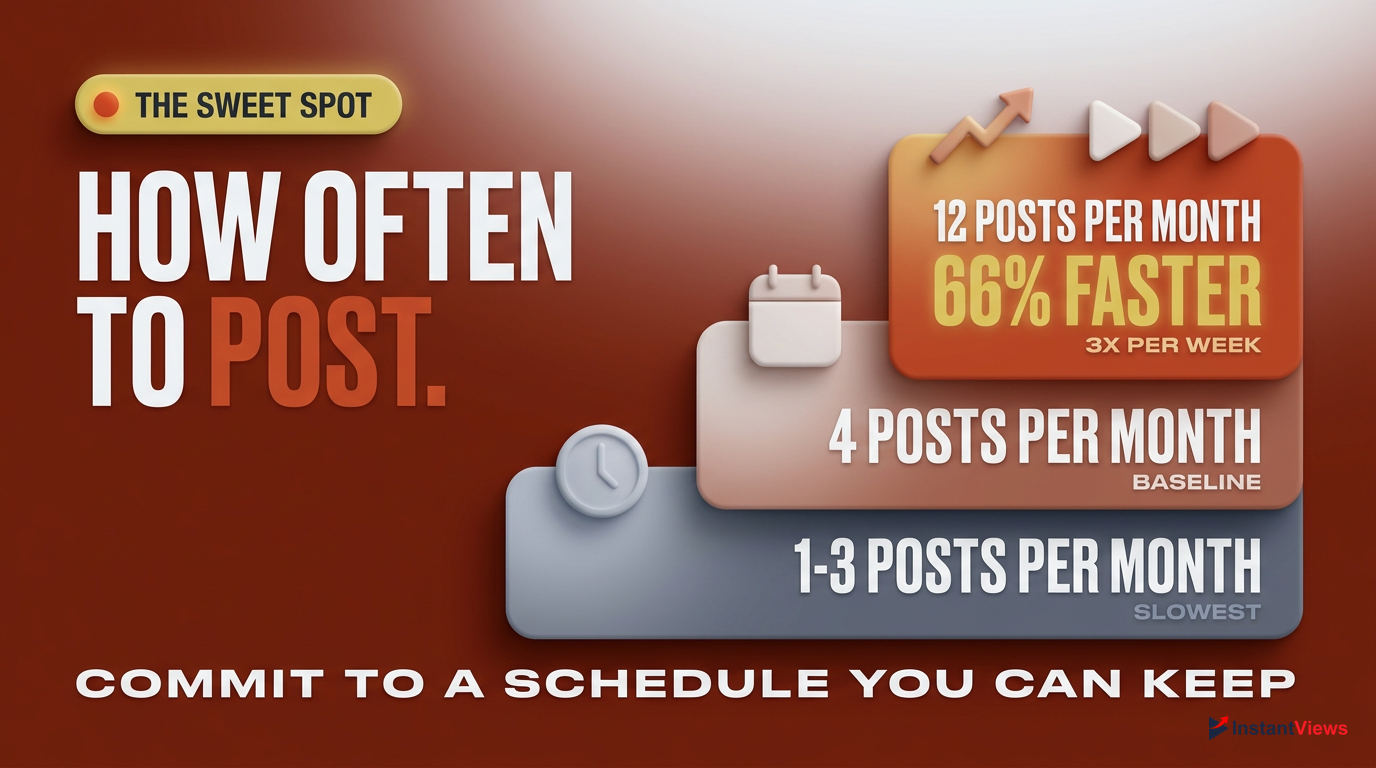
The data shows that channels posting 12 or more times per month (roughly three times a week) gained subscribers 66% faster than those posting only 1 to 3 times per month. More uploads mean more impressions, more data for the algorithm, and more opportunities for a viewer to discover your brand.
- Commit to a schedule you can maintain for 12 months.
- Never sacrifice audio or thumbnail quality just to hit a frequency goal.
- Batch film your content to avoid weekly burnout.
However, the most significant jump in growth speed doesn't come from moving from 3 to 5 videos a week; it comes from moving from sporadic, random posting to a strict schedule of at least once a week. Consistency builds trust with your audience and signals to the algorithm that your channel is an active, reliable source of content. If you want to optimize how long to grow a YouTube channel, establish a weekly baseline before attempting higher frequencies.
Shorts vs. Long-Form: The 2026 Hybrid Growth Strategy
The landscape of YouTube has fundamentally shifted with the dominance of short-form vertical video. In 2026, YouTube Shorts are considered a massive top-of-funnel discoverability engine. However, relying solely on Shorts rarely builds the deep audience connection required for long-term monetization. The solution? The Hybrid Strategy.

Growth is significantly faster for channels that use a hybrid strategy. Shorts drive massive, rapid subscriber acquisition, while long-form videos build community depth and generate high AdSense revenue.
According to 2026 data from New Zenler and Talha Marketing, the most effective cadence for rapid channel growth involves blending both formats. Here is how to execute the recommended hybrid workflow to maximize algorithmic reach:
Publish Core Long-Form
Upload 1 to 2 high-quality, search-optimized long-form videos per week. This builds your core watch hours and community.
Extract Micro-Content
Use the YouTube Studio 'Remix' tool or external editors to clip the most engaging 15-60 seconds from your long-form video.
Deploy Shorts for Discovery
Publish 3 to 5 of these Shorts throughout the week. Ensure they link back to the original long-form video using the 'Related Video' feature in Studio.
This hybrid approach answers the question of how long to grow a YouTube channel by attacking the algorithm from both sides. Shorts capture the short-attention-span scrollers and convert them into subscribers, while the long-form content satisfies the binge-watchers and secures your 4,000 watch hours.
Real Creator Case Studies: MrBeast, Symanthah, and More
To truly understand how long to grow a YouTube channel, we must look at real-world examples. Aggregate data is powerful, but case studies provide context to the grind. Let's look at three verified examples that span from the biggest creator on the platform to a hyper-niche beginner.

As a baseline for the sheer perseverance required, consider MrBeast. According to TubeBuddy's historical data, it took Jimmy Donaldson roughly 3 to 4 years of consistent, often daily, uploading to reach his first 1,000 subscribers. He survived the '18-Month Rule' multiple times over before eventually becoming the most-subscribed creator on the platform.
On the faster end of the spectrum, lifestyle vlogger Symanthah reached the massive 100,000 subscriber milestone in less than 2 years (Lemon8 Creator Case Studies, 2023), proving that high-quality aesthetics and trend-jacking can accelerate the timeline. Even faster is an anonymous tech tutorial creator (Quora Case Studies, 2023) who reached 100 subscribers in just 3 weeks with only 7 videos. By hyper-focusing on a single software niche and optimizing purely for search, they bypassed the algorithmic waiting period entirely, projecting to hit 1,000 subs in just a few months.
Frequently Asked Questions
Based on 2026 data analyzing 5.3 million channels, it takes the average consistent creator 6 to 12 months to reach 1,000 subscribers. 68% of channels need to publish more than 40 videos to hit this milestone, and 31% require over 150 uploads.
Most serious creators reach the full YouTube Partner Program threshold (1,000 subs and 4,000 watch hours) in 12 to 18 months. However, you can unlock fan-funding features (Super Chats, Memberships) earlier at 500 subscribers, which typically takes 6 to 9 months.
Slow growth is often due to a lack of a defined niche, poor click-through rates (CTR), or inconsistent uploading. The algorithm typically needs 18 to 36 months to fully understand your audience and push your first major 'breakout' video.
Data shows that channels posting 12 or more times per month (about 3 times a week) grow 66% faster than those posting sporadically. However, the most crucial step is moving from random uploads to a strict schedule of at least once per week.
Yes. In 2026, a hybrid strategy is recommended for rapid growth. Publishing 3 to 5 Shorts a week acts as a top-of-funnel discovery engine, driving massive subscriber acquisition, while 1 to 2 long-form videos build community and watch hours.
The success rate is quite low. Only about 10% of all YouTube channels will ever reach the 1,000-subscriber milestone. The other 90% typically quit before the algorithm has enough data to push their content, usually abandoning their channel before the 18-month mark.
Reaching 100,000 subscribers and earning the Silver Play Button takes an average of 51 months (roughly 4 years) of sustained, consistent effort, according to historical data from TubeBuddy.
It is highly unlikely. Channels without a clear niche confuse the algorithm, making it impossible for YouTube to recommend the content to a specific audience. High-demand niches with strong SEO can reach 1,000 subs in 3-6 months, while nicheless channels often stall completely.
Despite his massive success today, MrBeast is a prime example of the YouTube grind. It took him roughly 3 to 4 years of consistent uploading to reach his first 1,000 subscribers, proving that early slow growth is normal.
Creators who analyze metrics like Click-Through Rate (CTR), audience retention, and competitor outliers grow 2.5x faster than those relying on intuition. They typically hit 1,000 subscribers in 4 to 8 months by actively fixing what causes viewers to click away.