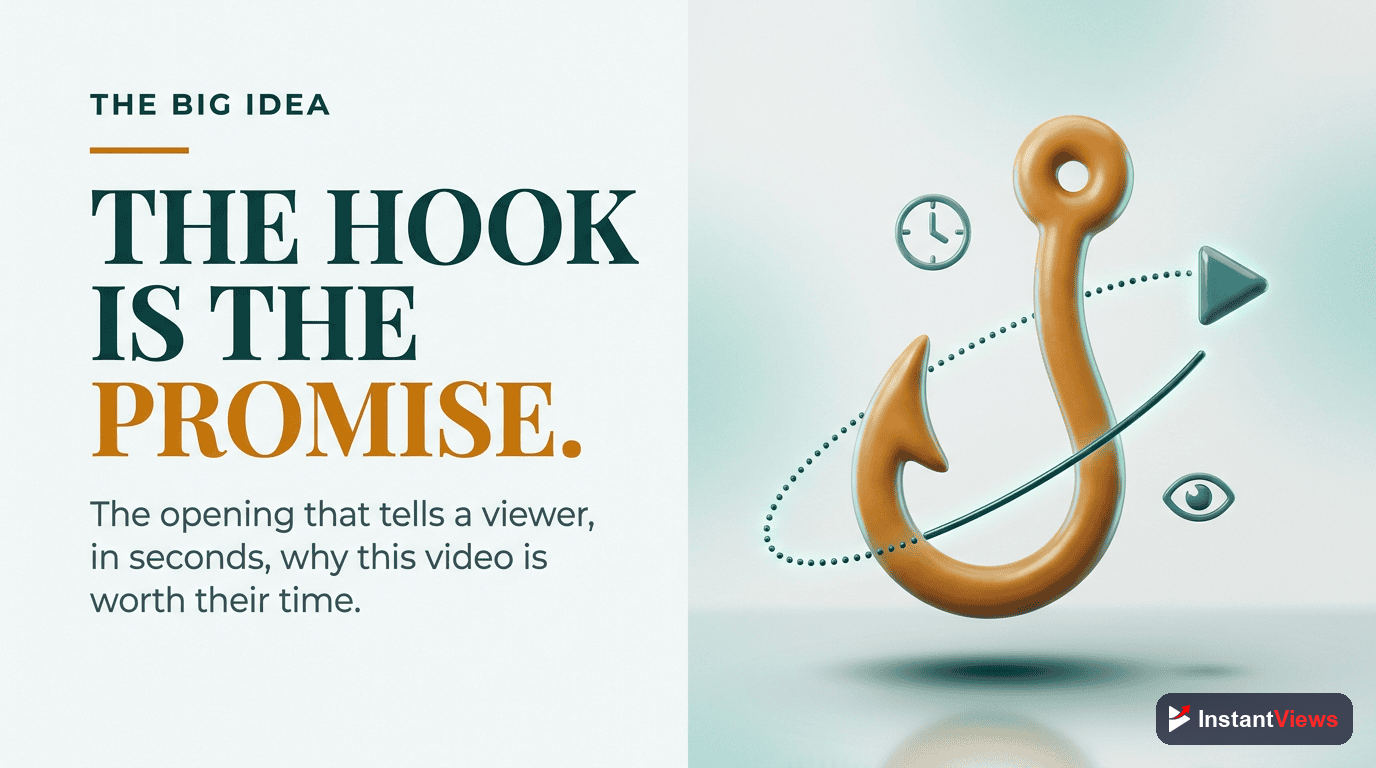
- A video hook is the first 5-30 seconds that determines whether viewers stay or leave
- YouTube's algorithm weighs the first 30 seconds heavily - strong hooks lead to more recommendations
- The hook analyzer evaluates pacing, value clarity, curiosity triggers, visuals, and audio quality
- Aim for a hook score of 75+ before publishing to maximize algorithm performance
- Testing multiple hook versions can increase retention by 20-40%
Your YouTube video's hook is the single most critical element for success. Those first few seconds determine whether a viewer becomes part of your audience or clicks away to the next video.
The difference between a viral video and one that flops often comes down to the first 30 seconds. Yet most creators spend 90% of their time on the main content and only minutes on their opening.
This guide explains everything you need to know about video hooks - what they are, why they matter, how to analyze them, and most importantly, how to write hooks that keep viewers watching until the end.
What is a Video Hook?
A video hook is the opening segment of your YouTube video - typically the first 5 to 30 seconds - designed to capture viewer attention and convince them to keep watching. Think of it as the movie trailer for your content.
An effective hook accomplishes three essential goals:
- Captures attention - Stops the viewer from scrolling or clicking away
- Creates curiosity - Opens a loop that viewers need to see closed
- Promises value - Makes clear what the viewer will gain by watching
Unlike traditional media where viewers commit to watching, YouTube viewers are one click away from leaving at any moment. Your hook must earn every second of attention.
"The hook is where you prove to viewers that you respect their time. If you can't capture attention in 10 seconds, you haven't earned the next 10 minutes."
Why the First 30 Seconds Matter
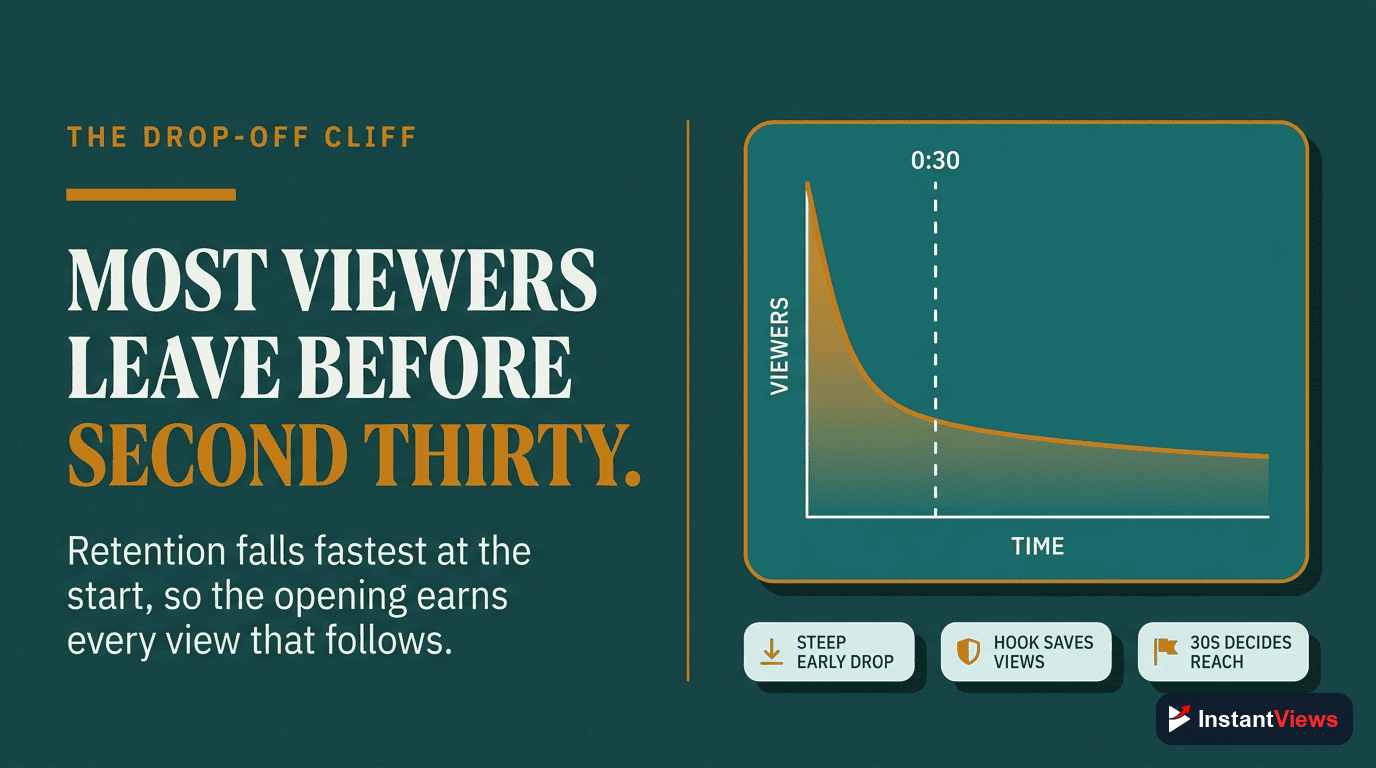
YouTube's algorithm is obsessed with retention. The platform's goal is keeping users on YouTube, so it promotes videos that people actually watch. Early retention is the strongest signal the algorithm uses.
The Retention Cliff
Data from millions of YouTube videos reveals a consistent pattern: 20-40% of viewers leave within the first 10 seconds of a video with a weak hook. This is called the "retention cliff."
Here's what happens with different hook qualities:
| Hook Quality | 30-Second Retention | Algorithm Impact |
|---|---|---|
| Exceptional (90+) | 85%+ viewers remain | Maximum promotion, viral potential |
| Very Good (80-89) | 75-85% viewers remain | Strong recommendation boost |
| Good (70-79) | 65-75% viewers remain | Moderate promotion |
| Below Average (60-69) | 50-65% viewers remain | Limited reach |
| Poor (Below 60) | Under 50% viewers remain | Algorithm suppression |
The Algorithm Connection
YouTube's recommendation system evaluates videos within the first 24-48 hours of publishing. Videos with strong early retention get pushed to more viewers, creating a positive feedback loop. Videos with weak hooks get buried almost immediately.
This is why optimizing your hook before publishing is so critical - you only get one chance at a first impression with the algorithm.
Once YouTube's algorithm labels your video as "low engagement," recovering is nearly impossible. Even fixing issues after publishing rarely reverses the damage. Optimize your hook before you hit publish.
Analyzing Successful Hooks
Before you can write great hooks, you need to understand what makes them work. Studying successful videos in your niche reveals patterns you can apply to your own content.
What to Look For
When analyzing hooks from top-performing videos, evaluate these elements:
- First words spoken - Do they create immediate interest?
- Visual opening - Is there movement, color, or something unexpected?
- Value statement timing - How quickly do they communicate what the video offers?
- Curiosity elements - What open loops or questions do they create?
- Pacing - How many cuts or visual changes occur in the first 30 seconds?
- Audio quality - Is the voice clear and the music balanced?
Pattern Recognition
Successful hooks typically share these characteristics:
- No lengthy introductions - They skip "Hey guys, welcome back" and dive straight into value
- Specific promises - "I'll show you 3 strategies" beats "I'll show you some tips"
- Pattern interrupts - Unexpected statements or visuals that demand attention
- Emotional triggers - They connect with viewer pain points or desires immediately
- Visual proof - Results, screenshots, or demonstrations within seconds

Using the Hook Analyzer Tool
Manual analysis takes time and remains subjective. The InstantViews Hook Analyzer provides objective scoring and specific recommendations in under a minute.
How the Hook Analyzer Works
The tool evaluates your video's first 30 seconds against five proven engagement factors:
- Value Clarity (30% of score) - Does the viewer immediately understand what they'll get?
- Pacing and Energy (25% of score) - Is the opening dynamic enough to compete with infinite scroll?
- Curiosity Triggers (20% of score) - Are there open loops that viewers need closed?
- Visual Engagement (15% of score) - Is there enough visual interest to prevent scrolling?
- Audio Quality (10% of score) - Is the audio clear and professionally balanced?
Step-by-Step Analysis Process
- Upload or paste URL - Add your video file or YouTube link to the analyzer
- Wait for analysis - The tool processes your first 30 seconds (takes about 45 seconds)
- Review your score - Get a 0-100 hook score with breakdown by category
- Read recommendations - See specific suggestions for improvement
- Make changes - Apply the recommendations to your video
- Re-test - Analyze again to verify improvement
Aim for a score of 75 or higher before publishing. Most viral videos score above 80.
Analyze Your Hook Now
Get your hook score and specific recommendations in under 60 seconds. Free to try.
Try Hook Analyzer →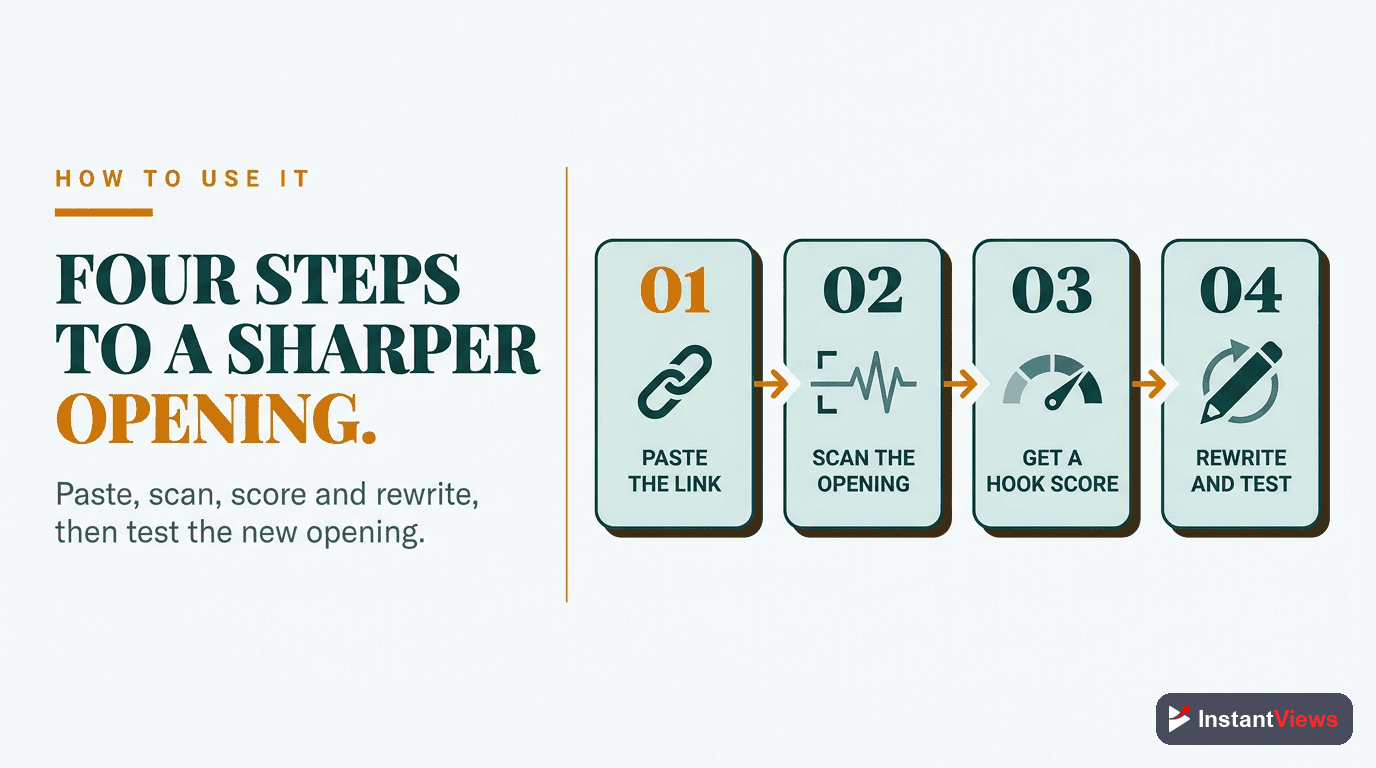
Writing Better Hooks
Understanding what makes hooks work is only half the battle. Here's how to actually write compelling openings for your videos.
The First 5 Seconds
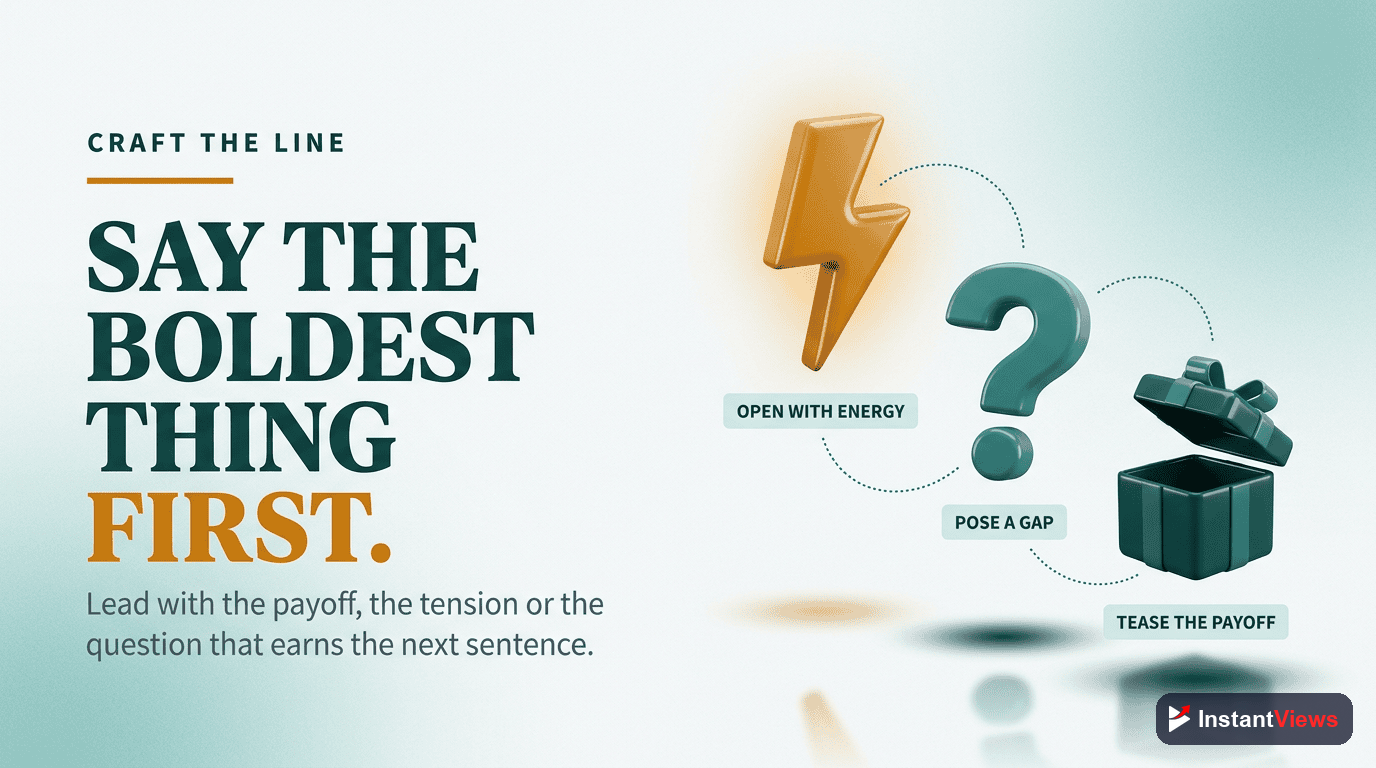
Your first sentence sets the tone for everything. The viewer is deciding whether to stay within 3-5 seconds. Make those seconds count:
- Lead with your strongest statement - Don't save the best for later
- State a specific outcome - "This strategy generated 10,000 subscribers in 30 days"
- Challenge assumptions - "Everything you've been told about X is wrong"
- Ask a compelling question - "What if you could X without Y?"
The Value Statement (5-15 Seconds)
By the 15-second mark, viewers should know exactly what they'll learn or experience. Your value statement should be:
- Specific - Numbers, timeframes, concrete outcomes
- Relevant - Addresses a problem your audience actually has
- Credible - Backed by evidence, results, or authority
- Unique - Differentiates from other videos on the topic
The Open Loop (15-30 Seconds)
Before the 30-second mark, create a reason to keep watching. Open loops work because the brain craves closure:
- Tease information - "I'll reveal the third strategy that changed everything"
- Create anticipation - "But first, you need to understand why this works"
- Promise a twist - "This seems obvious, but there's a catch most people miss"
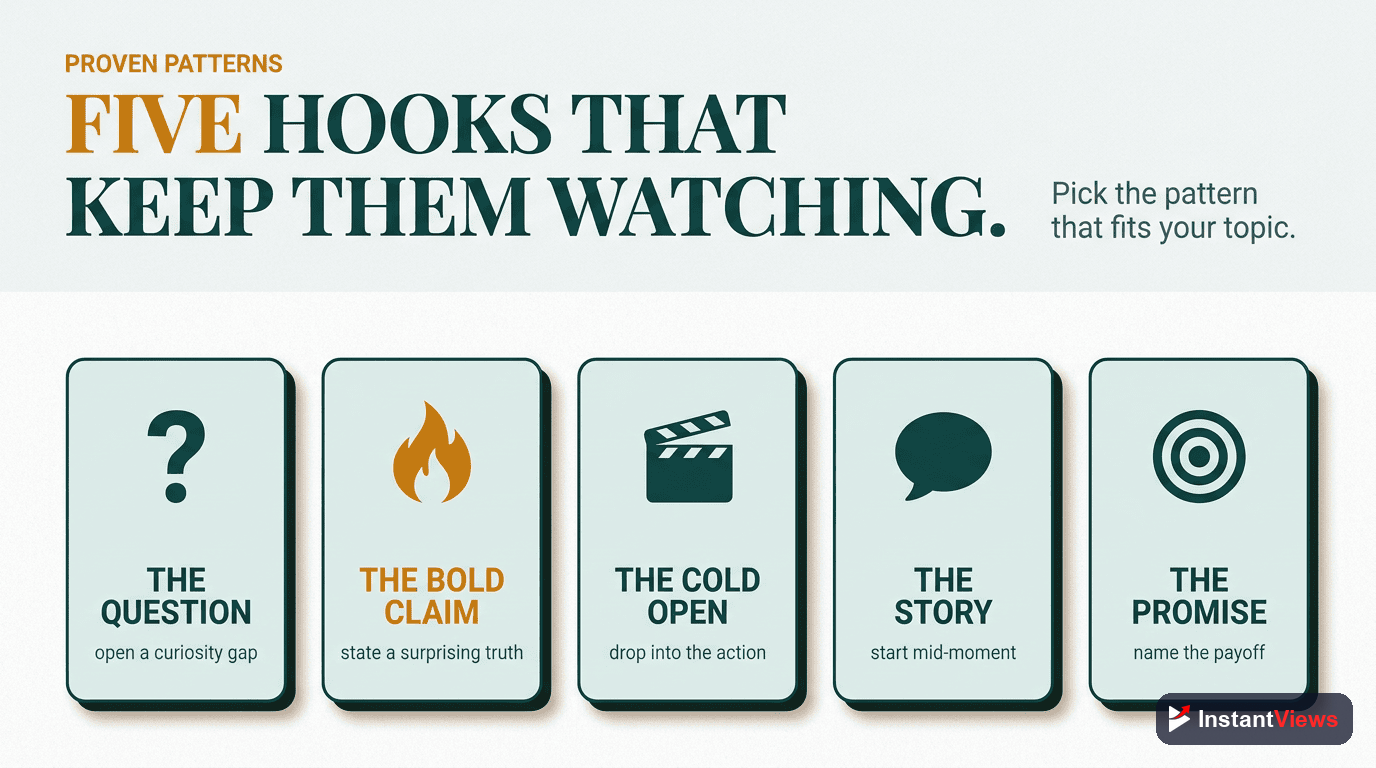
5 Proven Hook Types
Different content types call for different hook styles. Here are five proven approaches you can adapt:
The Result-First Hook
Show the outcome before explaining the process. This works exceptionally well for tutorials, transformations, and how-to content.
"This is my YouTube channel now - 100,000 subscribers, $15,000/month. Six months ago, I had 200 subscribers. Here's exactly what changed."
The Contrarian Hook
Challenge conventional wisdom or common advice. Creates immediate intrigue by promising a different perspective.
"Everyone tells you to post consistently. But that advice killed my channel. Here's what actually works instead."
The Curiosity Gap Hook
Present partial information that creates an irresistible need to know more. The brain can't resist completing the pattern.
"There's one setting in YouTube Studio that 99% of creators don't know about. It completely changed my reach."
The Story Hook
Begin mid-action in a compelling story. Humans are wired to follow narratives to completion.
"I was about to delete my channel when I discovered something that changed everything. Let me show you exactly what happened."
The Direct Value Hook
Skip the fancy techniques and directly state what the viewer will get. Works best for educational content with high search intent.
"In the next 8 minutes, you'll learn exactly how to set up YouTube chapters correctly. No fluff, just the step-by-step process."
Common Hook Mistakes to Avoid
Even experienced creators make these hook-killing mistakes. Avoid them to maximize your retention:
Mistake 1: The Long Introduction
Problem: "Hey guys, welcome back to my channel! If you're new here, make sure to subscribe..."
Solution: Save introductions for later. Start with your hook, earn attention first.
Mistake 2: Slow Build-Up
Problem: Spending 30+ seconds on context before getting to the value.
Solution: Lead with your strongest point. Provide context after you've earned attention.
Mistake 3: Vague Promises
Problem: "In this video, you'll learn some tips about YouTube."
Solution: Be specific. "I'll show you 5 title formulas that increased my CTR by 40%."
Mistake 4: Mismatched Energy
Problem: Starting with low energy that doesn't match your content's promise.
Solution: Your hook energy should slightly exceed your average. First impressions set expectations.
Mistake 5: No Visual Interest
Problem: Static talking head with no cuts, b-roll, or visual elements.
Solution: Add pattern interrupts every 3-5 seconds. Movement keeps attention.
Putting It All Together
Creating effective hooks is a skill that improves with practice. Here's your action plan:
- Study successful hooks in your niche (watch first 30 seconds of top videos)
- Write multiple hook versions for each video (at least 3)
- Test with the Hook Analyzer before publishing
- Aim for 75+ score before going live
- Track 30-second retention in YouTube Analytics after publishing
- Iterate and improve based on what works for your audience
Remember: your hook is an investment that pays dividends across your entire video. Spend 20% of your production time on the first 10% of your content. The algorithm will reward you for it.
Ready to Improve Your Hooks?
Get instant hook analysis with specific recommendations. See your score and start optimizing today.
Analyze Your Video →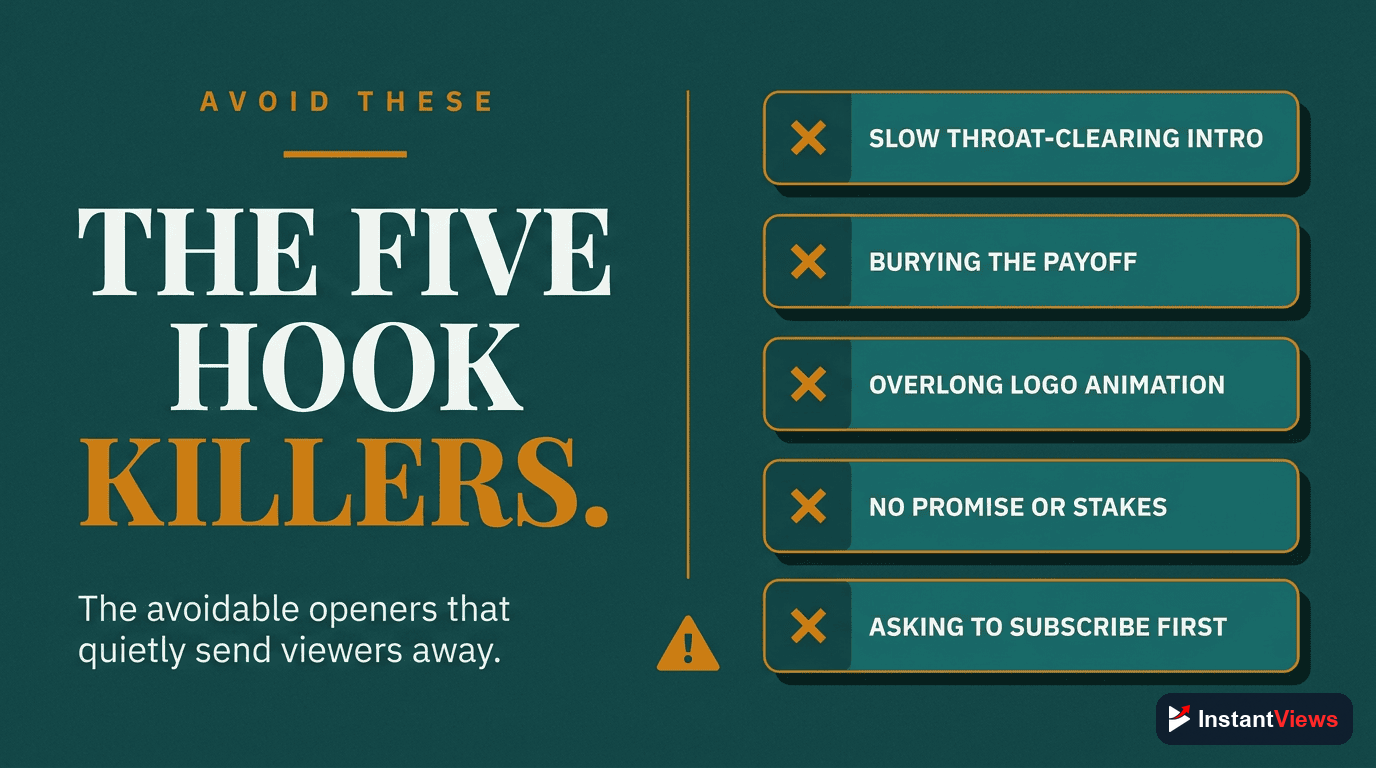
Frequently Asked Questions
A video hook is the opening segment of your YouTube video (typically the first 5-30 seconds) designed to capture viewer attention and convince them to keep watching. An effective hook immediately communicates value, creates curiosity, and sets expectations for the rest of the video.
The first 30 seconds are critical because YouTube's algorithm heavily weighs early retention rates. Videos with strong 30-second retention get promoted more in search and suggested videos. Studies show that 20-40% of viewers leave within the first 10 seconds of a video with a weak hook.
The InstantViews Hook Analyzer evaluates your video opening against proven engagement factors including pacing, value clarity, curiosity triggers, visual engagement, and audio quality. It provides a hook score from 0-100 along with specific recommendations for improvement.
A good hook score is 70-79, very good is 80-89, and excellent is 90+. Most viral YouTube videos score above 80 on hook effectiveness. Videos scoring below 60 typically struggle with retention and algorithm promotion.
Yes, and you should. Pre-upload hook analysis allows you to identify and fix problems before YouTube's algorithm starts evaluating your video. Use the InstantViews Video Analyzer to test multiple hook versions and publish with the highest-scoring one.
Common improvements include: starting with your strongest statement or visual, removing lengthy intros, stating the value proposition within 5 seconds, adding pattern interrupts, increasing pacing, and ensuring audio clarity. Test different approaches using the analyzer until you achieve 75+.