- YouTube engagement rate measures how actively viewers interact with your content
- The standard formula is: (Likes + Comments) / Views x 100
- A good engagement rate is 2-6%, with rates above 8% being excellent
- Engagement directly impacts the YouTube algorithm and video recommendations
- Smaller channels typically have higher engagement rates than large channels
YouTube engagement rate is one of the most important metrics for measuring channel health and content quality. Unlike raw view counts, engagement rate tells you how much your audience actually cares about your content.
Brands, sponsors, and the YouTube algorithm all prioritize engagement over vanity metrics. A video with 10,000 views and 8% engagement is more valuable than one with 100,000 views and 0.5% engagement.
This guide covers everything you need to know about calculating, benchmarking, and improving your YouTube engagement rate.
The YouTube Engagement Rate Formula
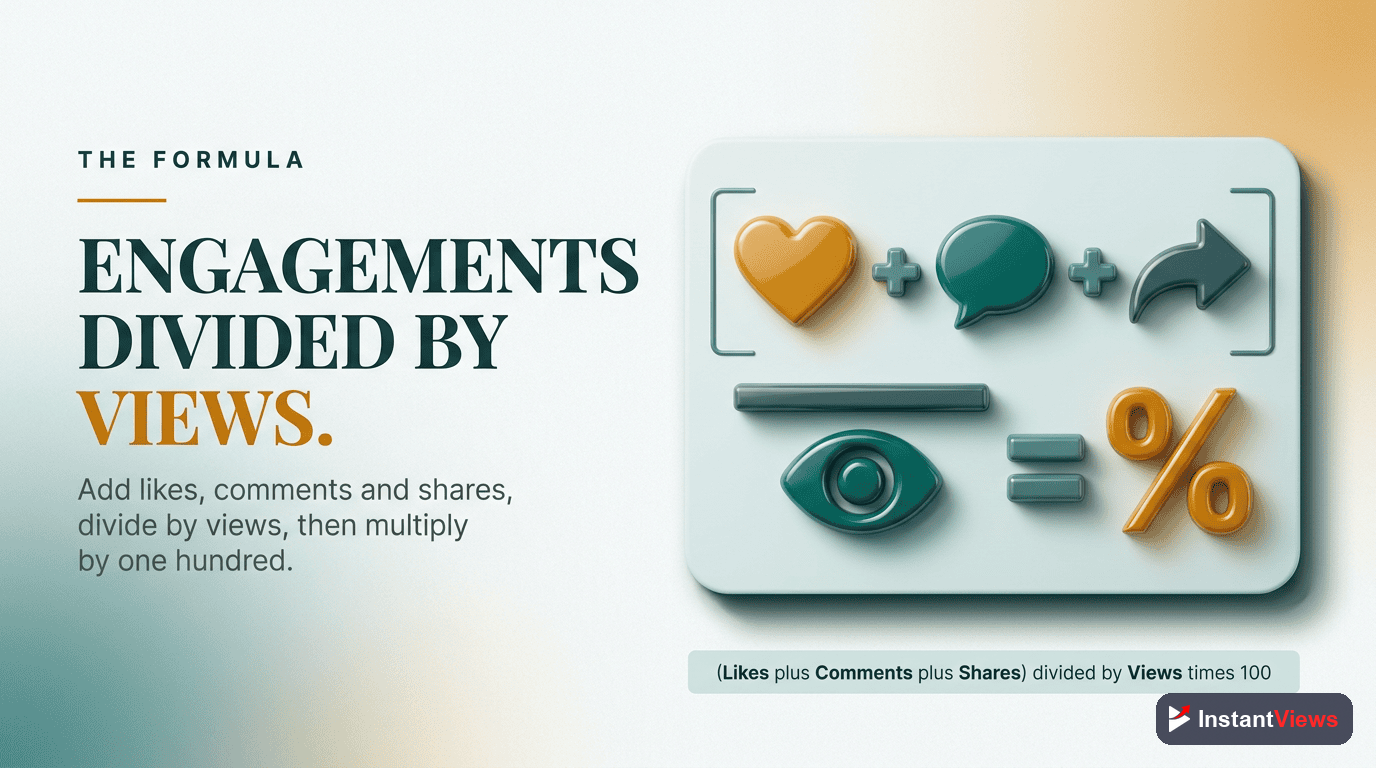
There are several ways to calculate engagement rate, depending on what metrics you include:
Alternative Formulas
| Formula Type | Calculation | Best For |
|---|---|---|
| Basic | (Likes + Comments) / Views x 100 | General performance |
| Extended | (Likes + Comments + Shares) / Views x 100 | Viral potential |
| Subscriber-Based | (Likes + Comments) / Subscribers x 100 | Audience loyalty |
| True Engagement | (Likes + Comments + Saves) / Impressions x 100 | Algorithm performance |
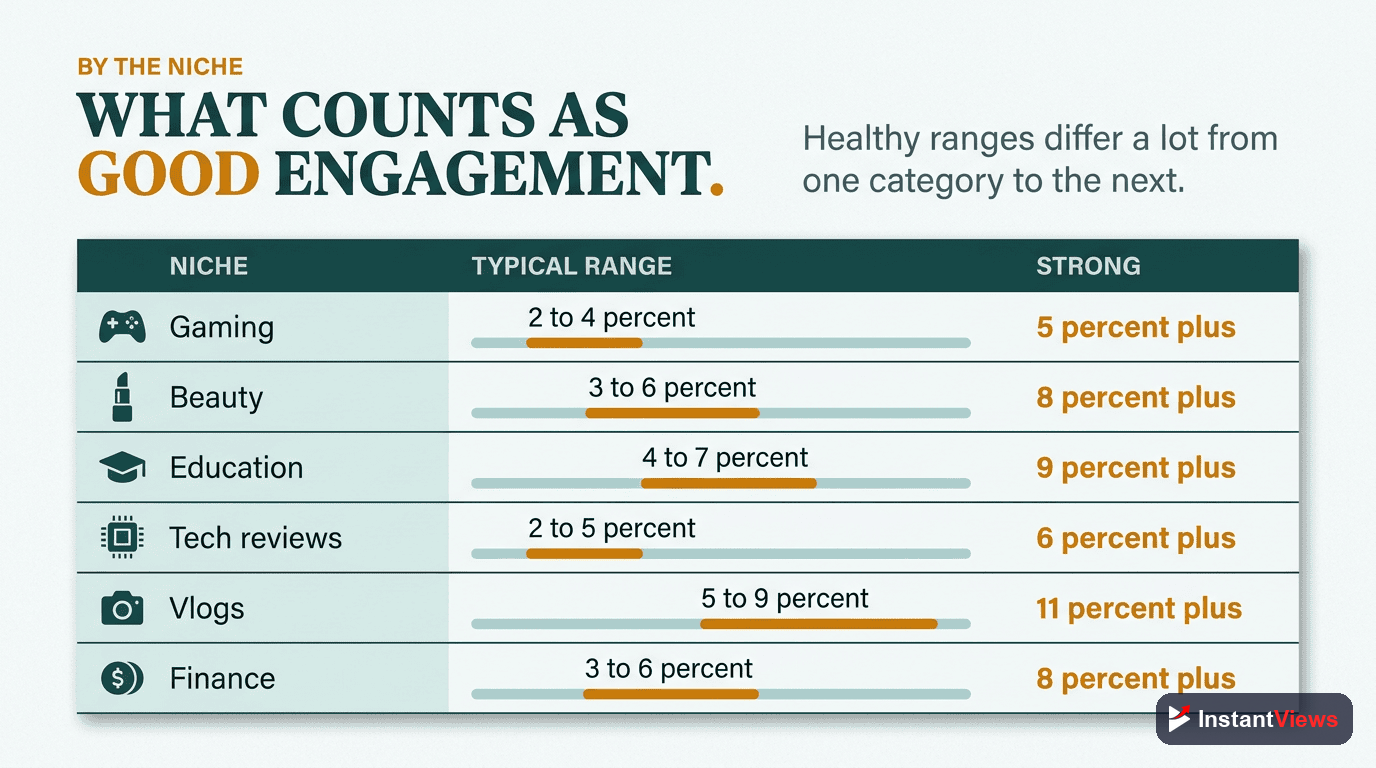
Engagement Rate Benchmarks by Niche
What counts as a "good" engagement rate varies significantly by niche. Here are 2026 benchmarks:
| Niche | Average Rate | Good Rate | Excellent Rate |
|---|---|---|---|
| Gaming | 3.5% | 5-7% | 8%+ |
| Beauty/Fashion | 2.8% | 4-6% | 7%+ |
| Tech Reviews | 2.2% | 3-5% | 6%+ |
| Education | 4.0% | 5-8% | 10%+ |
| Entertainment | 3.0% | 4-6% | 8%+ |
| Fitness | 3.2% | 5-7% | 9%+ |
| Finance | 2.5% | 4-5% | 6%+ |
Engagement by Channel Size
| Subscribers | Average Engagement | Notes |
|---|---|---|
| Under 1K | 8-15% | Highest engagement (friends/family) |
| 1K - 10K | 5-8% | Engaged niche community |
| 10K - 100K | 3-5% | Growing but diluted |
| 100K - 1M | 2-3% | Mass audience effect |
| 1M+ | 1-2% | Normal for mega channels |
Don't compare your engagement rate to channels 10x your size. Focus on channels similar to yours in your niche for realistic benchmarks.
How to Improve Your Engagement Rate
1. Ask for Engagement (But Do It Right)
The simplest way to increase engagement is to ask for it. But there's a right way:
- Ask specific questions - "What's YOUR biggest challenge with X?" beats "Leave a comment below"
- Time it right - Ask after delivering value, not at the start
- Make it easy - "Type 1 if you agree, 2 if you disagree"
- Create debate - Controversial (but respectful) topics drive comments
2. Optimize for Watch Time First
Viewers who watch longer are more likely to engage. Focus on:
- Strong hooks in the first 30 seconds
- Pattern interrupts every 60-90 seconds
- Payoff promises and delivering on them
- Removing unnecessary fluff
3. Respond to Every Comment
When you reply to comments:
- The original commenter often replies back (2x engagement)
- Other viewers see you're active and engaged
- YouTube's algorithm notices the activity spike
- You build genuine community connection
Calculate Your Engagement Rate
Use our free Engagement Calculator to instantly analyze any YouTube video or channel.
Try Calculator →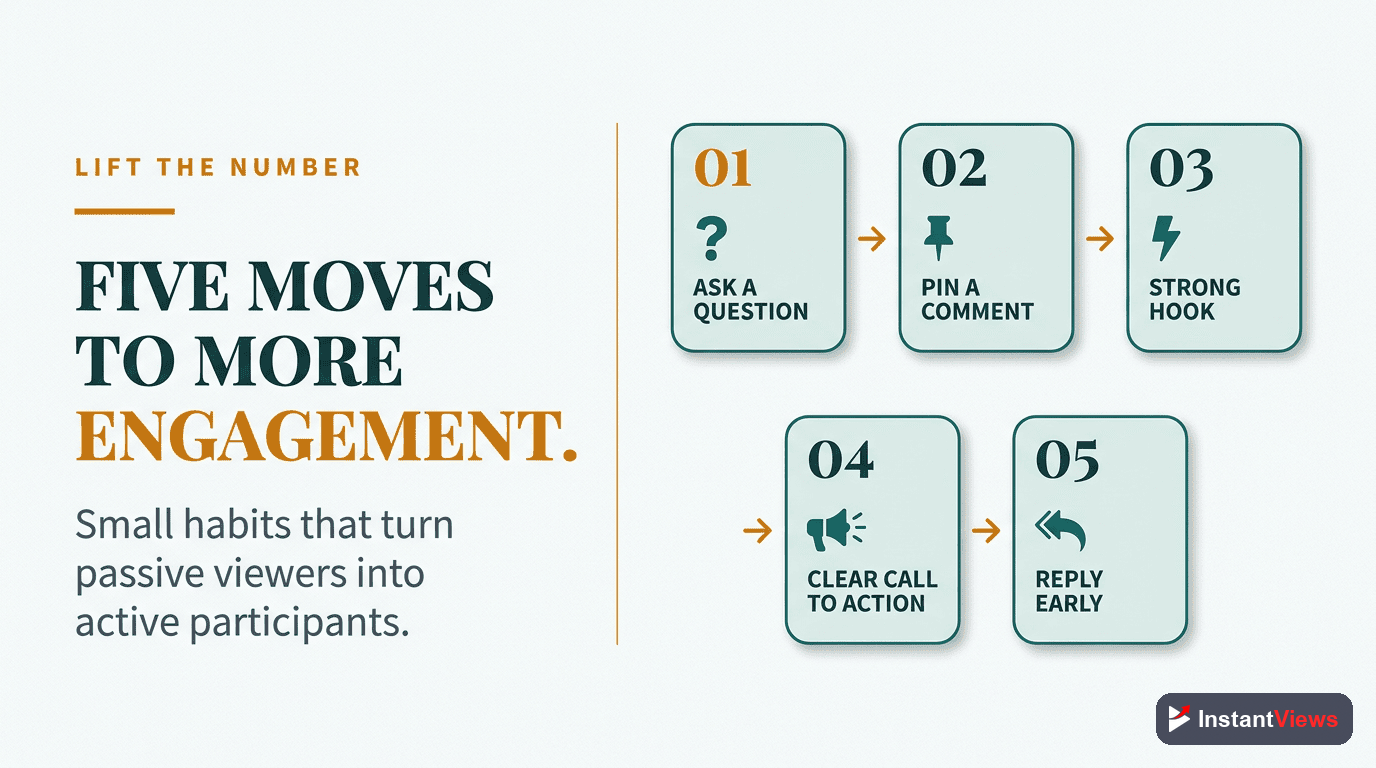
Engagement and the YouTube Algorithm
YouTube's algorithm heavily weights engagement signals when deciding which videos to recommend. Here's how:
- Likes signal content quality and viewer satisfaction
- Comments indicate the video sparked emotion or thought
- Shares show the content is worth spreading
- Saves/Playlist adds suggest long-term value
High engagement tells YouTube: "This content resonates with viewers, show it to more people like them."

Frequently Asked Questions
A good YouTube engagement rate is between 2-6% for most channels. Smaller channels (under 10K subscribers) often see higher rates of 5-8%, while larger channels typically have 1-3%. Rates above 8% are considered excellent.
The basic formula is: Engagement Rate = ((Likes + Comments + Shares) / Views) x 100. Some variations include subscribers in the calculation or exclude shares since YouTube doesn't show share counts publicly.
Low engagement often indicates content that doesn't resonate, missing calls-to-action, poor audience targeting, or a mismatch between thumbnails/titles and actual content. Focus on creating content your specific audience wants and ask for engagement.
Yes, significantly. YouTube uses engagement signals (likes, comments, shares, watch time) to determine video quality and relevance. Higher engagement leads to more recommendations in suggested videos and browse features.
Technically dislikes are engagement, but since YouTube hid public dislike counts in 2021, most creators exclude them from calculations. Focus on positive engagement metrics you can measure and optimize.
Check individual video engagement within 48 hours of publishing to identify trends. Review channel-wide engagement monthly to track progress. Avoid obsessing over daily fluctuations.