- Content quality beats production quality - great content with mediocre production outperforms the reverse
- Minimum production standards matter: clear audio, proper lighting, and 1080p video are essential
- Test your content with basic production before investing heavily in expensive gear
- The 70/30 rule: spend 70% of your effort on content, 30% on production in the beginning
- Upgrade production strategically based on analytics and audience feedback, not assumptions
There's a debate that has raged in YouTube circles for years: Does content quality or production quality matter more? The answer might surprise you - and it could save you thousands of dollars.
Here's the truth: Channels with amazing production but weak content fail every day. Meanwhile, creators shooting on smartphones with compelling content build million-subscriber audiences.
This guide breaks down exactly what matters, when it matters, and how to find the balance that actually grows your channel.
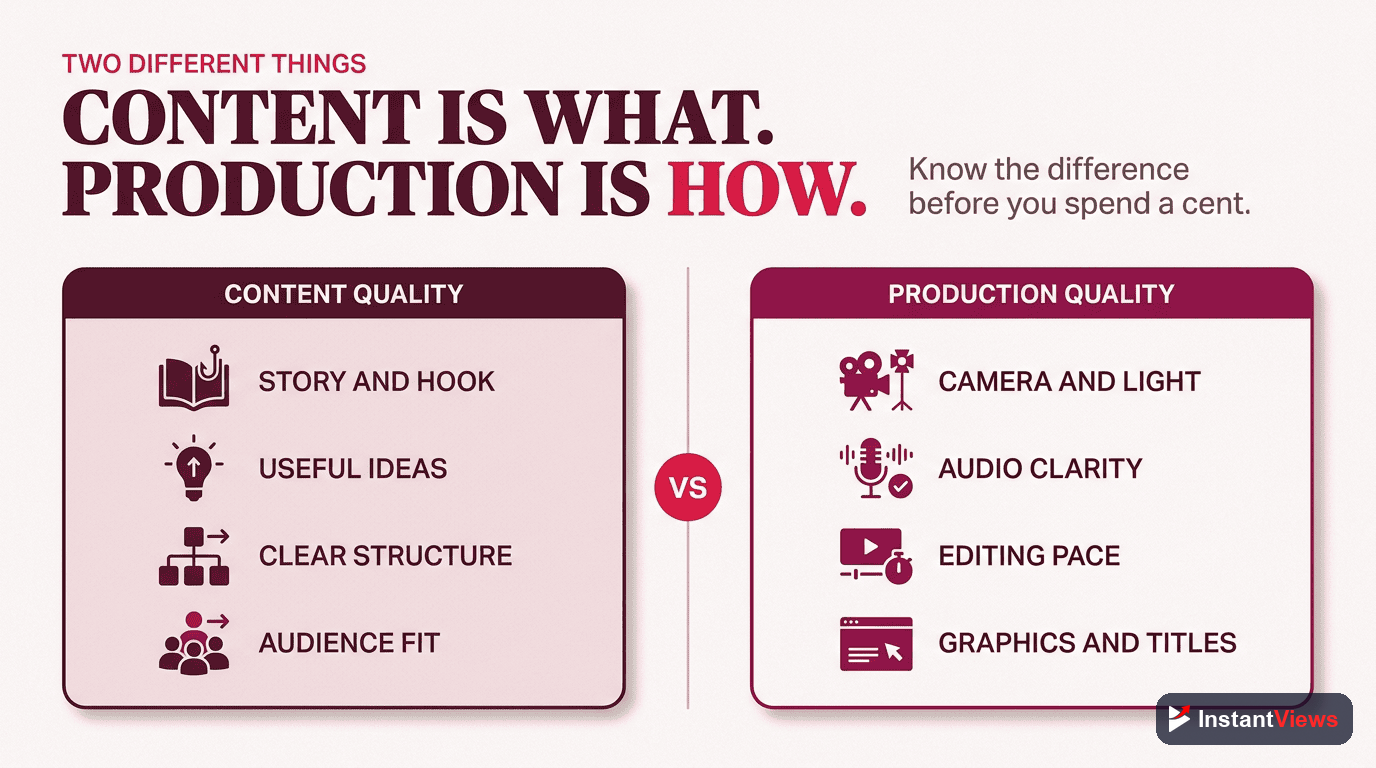
Defining Quality: Content vs Production
Before we compare them, let's define what we're actually talking about.
Content Quality
Content quality is about the value, structure, and substance of what you're communicating.
- Strength of your hook and intro
- Value delivered to your target audience
- Story structure and pacing
- Clarity of explanation or entertainment
- Originality and unique perspective
- Depth of research and preparation
Production Quality
Production quality is about the technical execution and visual/audio presentation.
- Video resolution and sharpness
- Audio clarity and quality
- Lighting and color grading
- Editing style and transitions
- Graphics and visual effects
- Set design and background
What the Data Actually Shows
YouTube's algorithm and viewer behavior reveal the truth about what matters:
| Metric | Impact of Content Quality | Impact of Production Quality |
|---|---|---|
| Click-Through Rate | High - determined by title/thumbnail | Low - only thumbnail quality matters |
| Audience Retention | Very High - content keeps viewers watching | Medium - bad production drives viewers away |
| Watch Time | Very High - engaging content = longer views | Low - production doesn't increase watch time |
| Comments/Engagement | Very High - people engage with ideas | Low - unless production is remarkably bad |
| Subscriber Conversion | Very High - value drives subscriptions | Medium - credibility factor |
| Algorithm Promotion | Very High - retention signals quality | Low - algorithm doesn't see production value |
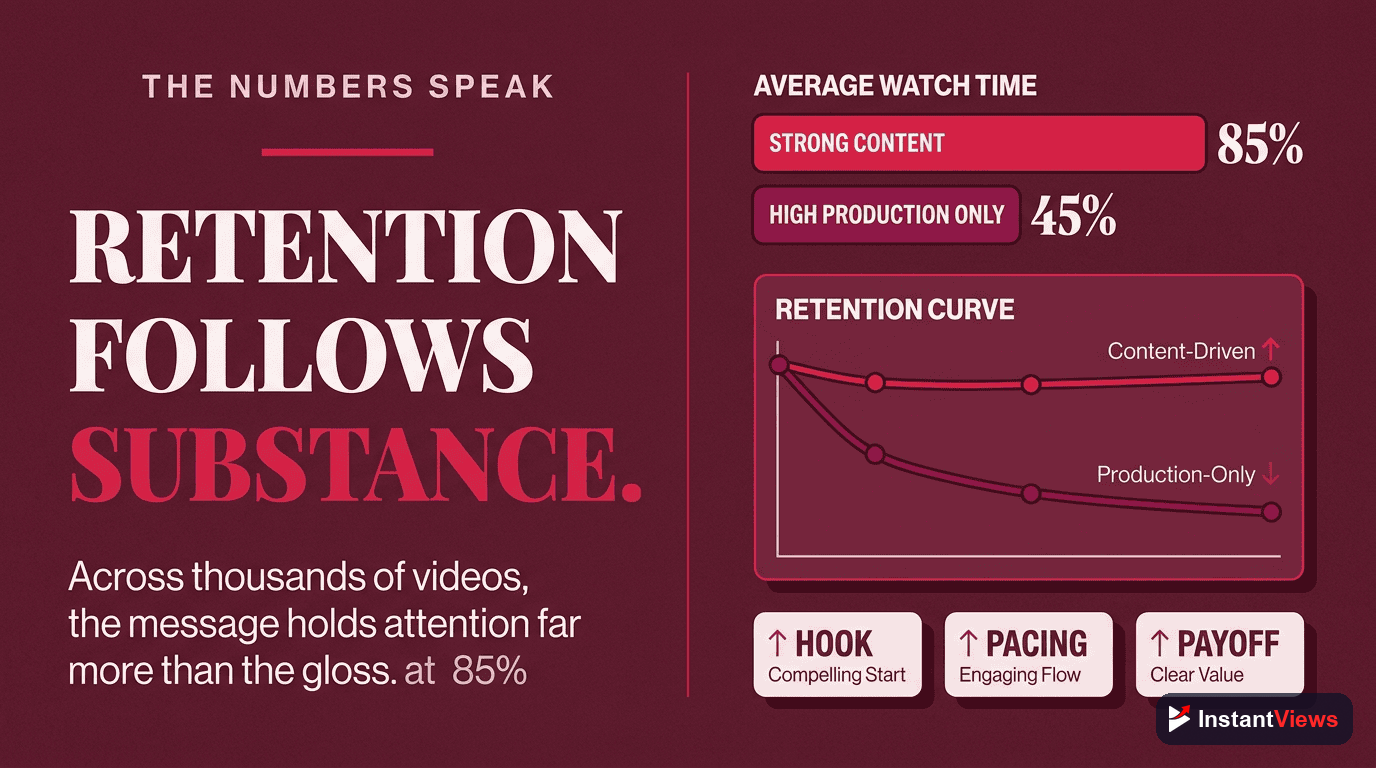
The verdict from the data: Content quality has 3-5x more impact on video performance than production quality across almost every metric that matters.
Why Content Quality Wins
The algorithm doesn't "see" your camera quality or lighting. It sees behavior:
- Do viewers click? That's your title and thumbnail (content marketing)
- Do they stay? That's your hook and value delivery (content structure)
- Do they watch to the end? That's your pacing and payoff (content quality)
- Do they subscribe? That's trust and value (content consistency)
Here's real proof: MrBeast's earliest videos were shot on cheap cameras with basic editing. His content - the ideas, hooks, and execution - carried him to 100 million subscribers. He only upgraded production after proving his content worked.
"I could shoot on a phone tomorrow and still get millions of views if the idea is good enough. The camera doesn't matter." - MrBeast

When Production Quality Matters
Production quality isn't irrelevant. It matters in specific situations:
1. When Production Issues Distract from Content
If your audio is so bad viewers can't understand you, or your video is so dark viewers can't see, production quality becomes a barrier to experiencing your content. This is the minimum threshold.
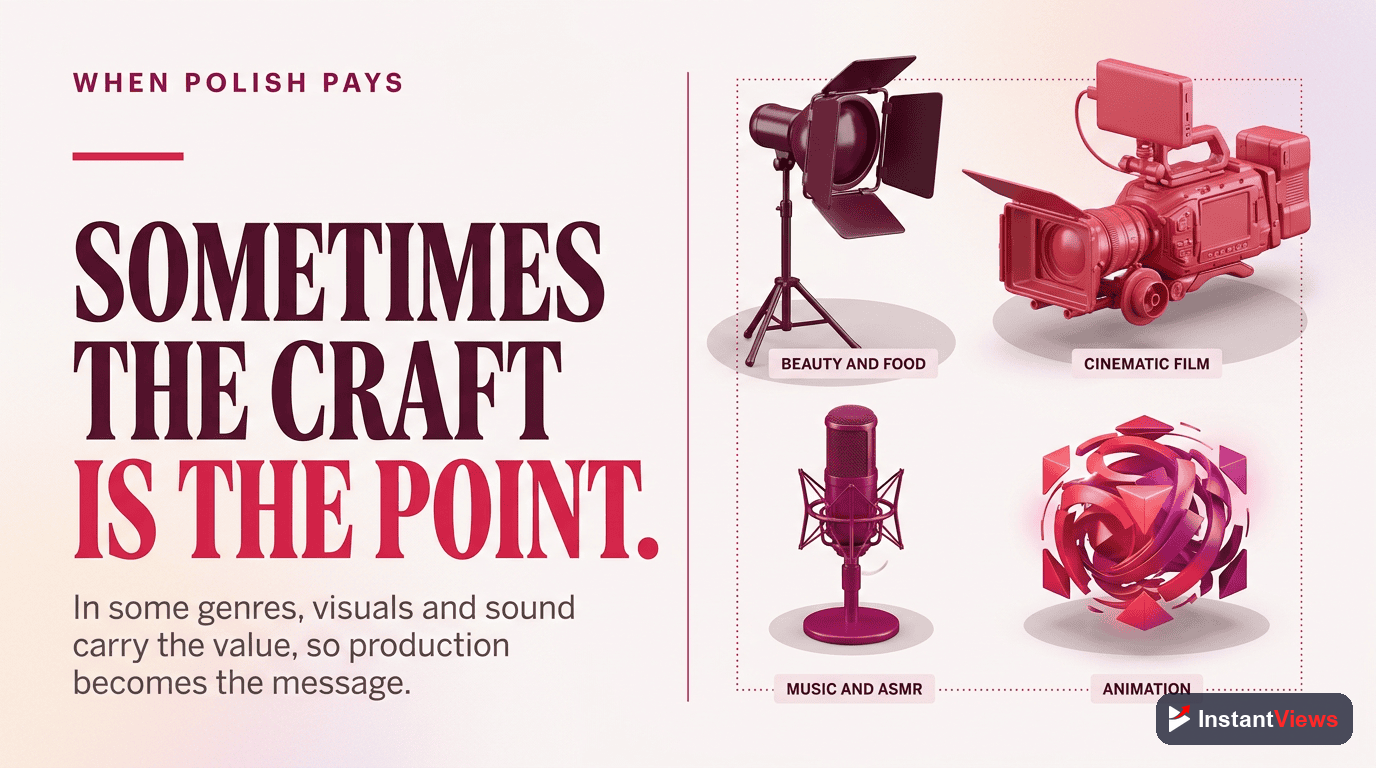
2. When Your Niche Demands It
Some niches have production expectations:
- Tech reviews: Viewers expect sharp footage to see product details
- Travel vlogs: Stunning visuals are part of the content value
- Cinematography tutorials: You must demonstrate what you teach
- Music videos: Production is the product
But even in these niches, content comes first. Casey Neistat built his audience with shaky, handheld footage because his storytelling was unmatched.
3. When It Affects Credibility
If you're teaching business strategy or offering professional advice, looking unprofessional in your production can undermine trust. But "professional" doesn't mean "expensive" - it means clean, intentional, and distraction-free.
4. When You're Past the Content-Market Fit Stage
Once your content is proven (high retention, growing subscribers, consistent views), production improvements can amplify your success. This is when strategic upgrades make sense.
Minimum Production Standards
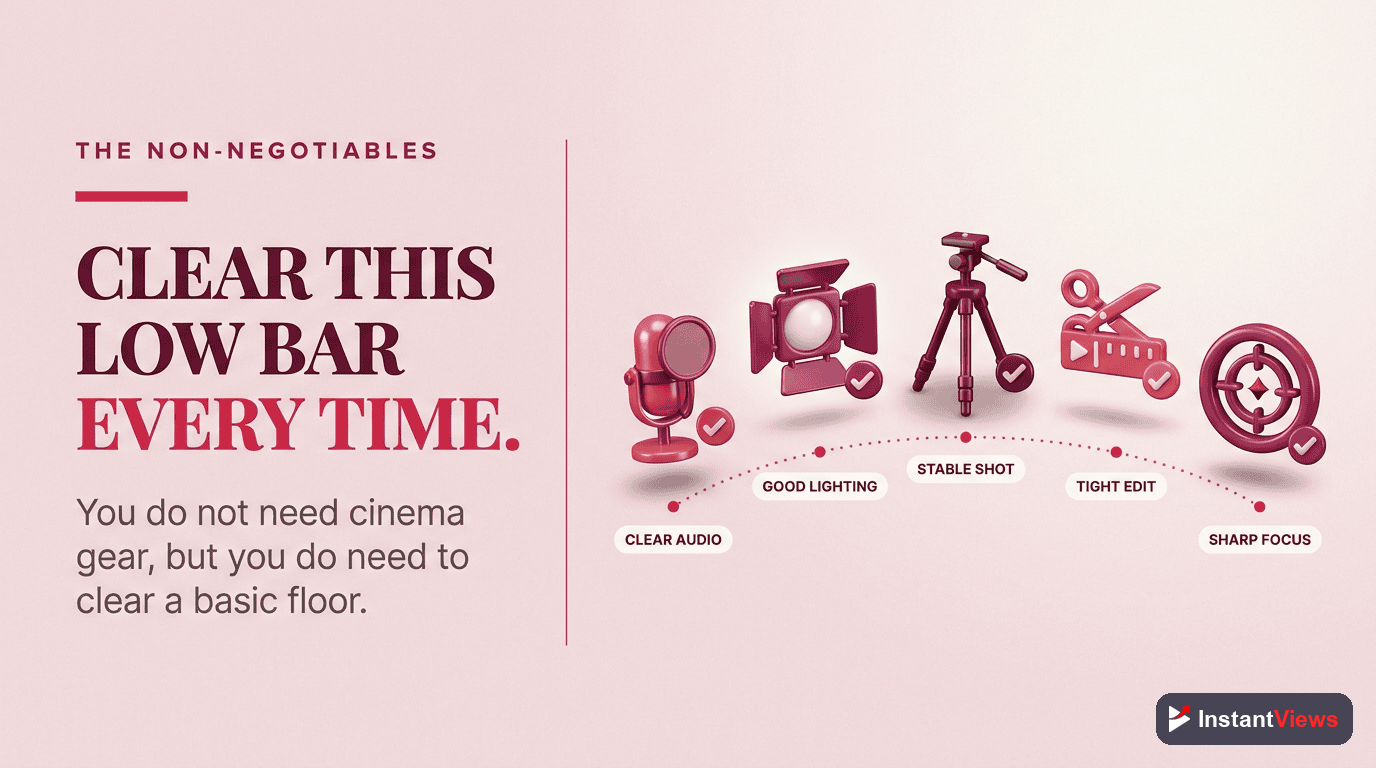
Here are the non-negotiable production baselines every YouTube video needs:
Clear Audio (Most Critical)
Viewers will tolerate mediocre video, but bad audio kills videos instantly.
- Minimum: Quiet environment, phone close to your mouth
- Better: $30-50 lavalier microphone
- Best: $100-200 USB microphone (Blue Yeti, Rode)
- No echo, no background noise, no wind
Proper Lighting
Viewers need to see you clearly without distracting shadows or darkness.
- Minimum: Film facing a window during daytime
- Better: $30-50 LED ring light or panel
- Best: Three-point lighting setup ($100-200)
- Avoid harsh overhead lights and backlighting
1080p Resolution Minimum
Modern viewers expect HD as a baseline standard.
- Minimum: 1080p at 30fps (any modern phone)
- Better: 1080p at 60fps for smoother motion
- Best: 4K at 30/60fps (future-proofing)
- Keep camera stable - use a tripod or stabilizer
Basic Editing
Remove dead space and keep pacing tight.
- Cut out long pauses, mistakes, and filler words
- Add simple text overlays for key points
- Use basic transitions (cuts are fine, no need for fancy effects)
- Free tools work: DaVinci Resolve, CapCut
Budget for minimum standards: $100-200 total if you already have a smartphone. This gets you a microphone, basic lighting, and free editing software.
Don't wait to start creating until you can afford "professional" gear. You'll waste months. Start with minimum standards, prove your content works, then upgrade strategically.
Finding the Right Balance
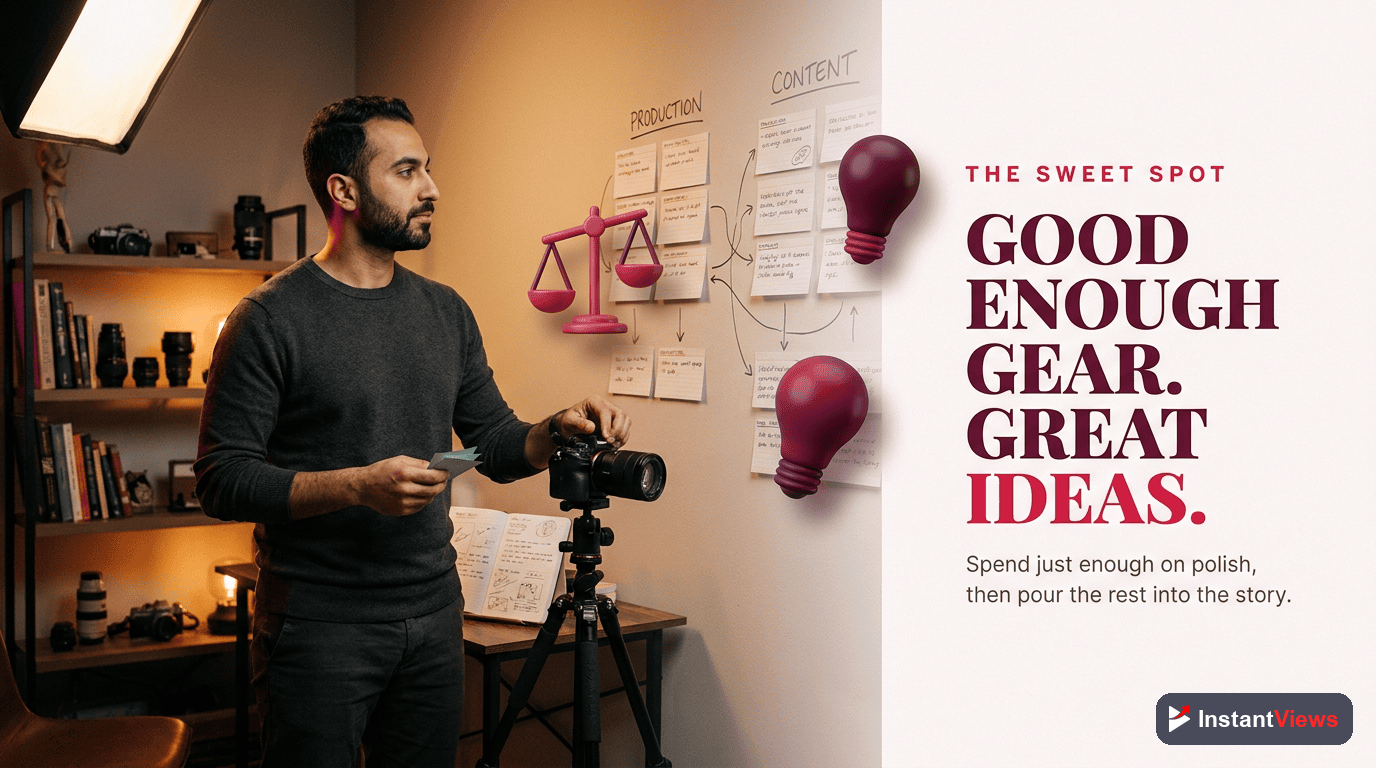
Here's the framework successful creators use:
The 70/30 Rule (Starting Out)
When you're just starting or testing new content formats:
- 70% of effort: Content - research, scripting, hooks, structure, value
- 30% of effort: Production - meeting minimum standards, basic editing
This ensures you're not polishing content that doesn't work.
The 60/40 Rule (Growing Phase)
Once you're getting consistent views and retention is strong:
- 60% of effort: Content - improving hooks, pacing, value delivery
- 40% of effort: Production - strategic upgrades, better editing
The 50/50 Rule (Established)
When your channel is established with proven content:
- 50% of effort: Content - maintaining and innovating
- 50% of effort: Production - creating a signature visual style
Even at this stage, you never prioritize production over content quality.
Where to Invest Your Budget
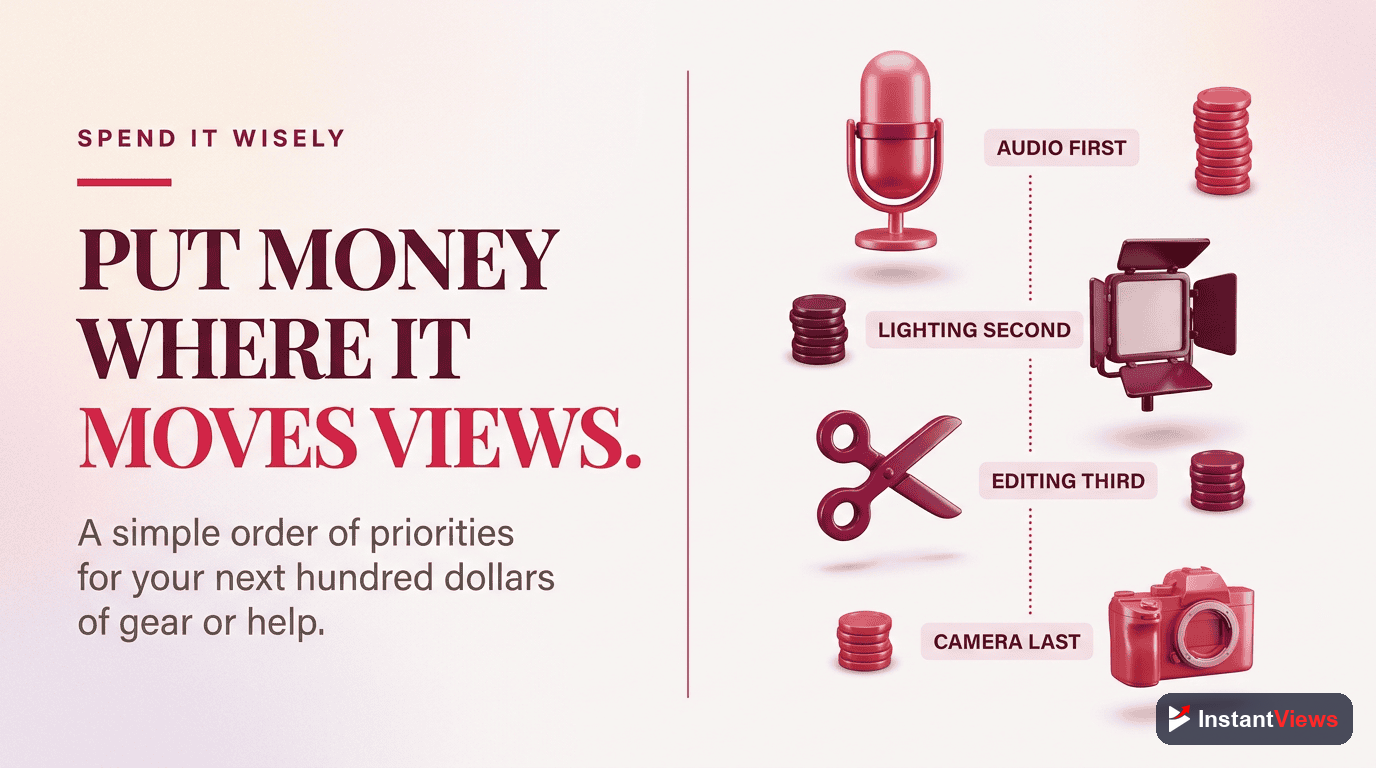
If you have limited resources, here's the priority order:
| Priority | Investment | Expected ROI |
|---|---|---|
| 1. Content Research | Time + free tools (YouTube, TubeBuddy) | Very High - determines if anyone cares |
| 2. Audio Equipment | $50-100 microphone | High - makes videos watchable |
| 3. Basic Lighting | $30-50 LED light | High - professional appearance |
| 4. Scripting/Planning Time | Time investment | Very High - determines retention |
| 5. Thumbnail Creation | Canva Pro ($13/mo) or Photoshop | Very High - determines click rate |
| 6. Camera Upgrade | $500-1000+ (only if phone insufficient) | Low to Medium - diminishing returns |
| 7. Advanced Editing Software | $20-50/month (Premiere, Final Cut) | Low - free tools are sufficient initially |
| 8. Premium Gear | $2000+ (cinema cameras, pro lights) | Very Low - only after everything else works |
Making the Right Choice for Your Channel
Here's how to decide what to focus on:
Focus on Content Quality If:
- You're just starting out
- Your retention rate is below 50%
- Viewers say your videos are too slow or lack value
- You're testing a new content format or niche
- Your budget is limited
Focus on Production Quality If:
- Your retention is strong (60%+) but clicks are low
- Comments mention audio or visual issues
- You're in a visually-driven niche (travel, photography, tech)
- You've proven your content works and want to scale
- Competitors in your niche have significantly better production
"Perfect production quality won't save bad content, but great content can thrive despite imperfect production." - YouTube Analytics Study, 2024
Analyze Your Video Quality
Get an instant quality assessment of your videos - content structure, pacing, and technical factors all in one report.
Analyze Your Video →The Bottom Line
Content quality is more important than production quality for YouTube success. But the question isn't which one matters - it's finding the right balance for your stage of growth.
Start with these principles:
- Meet minimum production standards (clear audio, proper lighting, 1080p)
- Invest 70% of your effort in content quality - hooks, value, structure, pacing
- Test your content with basic production before expensive upgrades
- Upgrade production only when it becomes a bottleneck, not before
- Remember: the algorithm rewards retention, not resolution
Your smartphone and a $50 microphone are enough to build a million-subscriber channel if your content is exceptional. Prove your ideas work first, then make them look amazing.
Frequently Asked Questions
Content quality is more important. YouTube data shows that videos with great content but mediocre production often outperform videos with amazing production but weak content. However, minimum production standards matter - viewers expect clear audio and watchable video.
At minimum, you need clear audio (most important), proper lighting so viewers can see you, and 1080p resolution. Your production doesn't need to be cinematic, but it must be professional enough that production issues don't distract from your content.
Absolutely. Many successful channels started with smartphones. Modern phones shoot in 4K with excellent quality. The key is good lighting, stable footage (use a tripod), and clear audio (consider an external microphone). Focus your budget on content research and scripting.
Invest when production quality becomes your bottleneck. If your content is strong, audience retention is high, but viewers complain about audio or video quality, it's time to upgrade. Don't invest in expensive gear before proving your content works.
Check your audience retention in YouTube Analytics. If viewers watch 50%+ of your videos, your content quality is strong. Read comments - do viewers thank you for the value? If retention is high and feedback is positive, your content quality works.
Scripting matters more. A well-scripted video with basic cuts will outperform a poorly structured video with amazing effects. Great editing enhances good content, but it can't fix weak content. Invest time in structure, hooks, and pacing before fancy editing.