- Strategic competitor analysis can accelerate your YouTube growth by 3-5x compared to trial and error
- Identify competitors by searching your target keywords and finding channels 1-2 levels ahead of you
- Track 15+ key metrics including view velocity, engagement rate, retention patterns, and content frequency
- Content gap analysis reveals untapped opportunities where you can outperform competitors
- Use InstantViews Video Analyzer to decode competitor success patterns and apply them to your channel
YouTube competitor analysis isn't just about watching what others do - it's about strategic intelligence gathering that gives you an unfair advantage in your niche.
The creators who grow fastest aren't the ones working hardest. They're the ones who study what's already working, identify patterns, and execute better than everyone else.
This comprehensive guide reveals exactly how to spy on your competition, extract their winning strategies, and use that intelligence to dominate your niche on YouTube.
Why Competitor Analysis Matters
Competitor analysis is the fastest path to YouTube success because it eliminates guesswork. Instead of spending months testing different approaches, you study what's already proven to work.
Here's what proper competitive intelligence delivers:
- Reduced learning curve - Skip months of trial and error by studying proven success
- Content strategy validation - Confirm which topics and formats work before investing time
- Opportunity identification - Find gaps where competitors are weak or absent
- Performance benchmarks - Set realistic goals based on actual niche data
- Trend prediction - Spot emerging patterns before they become saturated

How to Identify Your Competitors
Not every channel in your niche is a true competitor. The most valuable competitors to study are channels that are 1-2 levels ahead of you - successful enough to have proven strategies, but not so massive that their tactics won't work for smaller channels.
Keyword-Based Discovery
Search YouTube for your top 10 target keywords. The channels that consistently rank in positions 1-5 are your primary competitors.
If you teach "digital marketing for beginners," search that phrase plus variations like "digital marketing tutorial," "marketing tips," "online marketing course." Channels appearing multiple times are competitors worth studying.
YouTube Suggested Videos
Upload a video and check which channels appear in the suggested videos sidebar. YouTube's algorithm reveals who it considers similar to you.
Audience Overlap Analysis
Look at comments on your videos and subscriber channels. Where else do your viewers watch content? Those channels are direct competitors for attention.
Search Results Mining
Use Google to search your topics. YouTube videos that rank on Google's first page represent your strongest competitors for traffic.
Competitor Selection Criteria
When building your competitor list, prioritize channels that meet these criteria:
- Size bracket: 10x to 100x your current subscriber count (sweet spot for relevant strategies)
- Growth velocity: Growing at 20%+ per month (indicates current effectiveness)
- Consistency: Upload at least 2x per month (shows active strategy)
- Engagement: Above-average likes/comments per view (signals quality content)
- Recency: Latest video within 30 days (confirms they're active)
Don't only analyze huge channels with millions of subscribers. Their strategies often don't work for smaller creators. Focus on channels that are where you want to be in 6-12 months.

Analyzing Competitor Content Strategy
Once you've identified 5-10 competitors, deep-dive into their content strategy. Look beyond surface-level observations to identify the patterns that drive their success.
Content Mix Analysis
Study what types of content your competitors produce and which formats get the best results:
| Content Type | What to Analyze | Success Indicators |
|---|---|---|
| Tutorials/How-To | Depth, format, length, teaching style | High watch time, saves, shares |
| List Videos | Number of items, thumbnail patterns, hook structure | High CTR, engagement rate |
| Case Studies | Results shown, proof elements, storytelling approach | High retention, comments |
| Commentary | Opinion angle, controversy level, personality injection | Shares, discussion in comments |
| News/Updates | Timeliness, depth vs. speed, sourcing | View velocity, recency boost |
Topic Pattern Recognition
Analyze your competitor's last 30-50 videos to identify patterns:
- Topic clusters: What subjects do they return to repeatedly?
- Seasonal patterns: Do certain topics spike at specific times?
- Trend response time: How quickly do they jump on trending topics?
- Evergreen vs. timely: What's their ratio of timeless content to time-sensitive?
- Series strategy: Do they create multi-video series or standalone content?
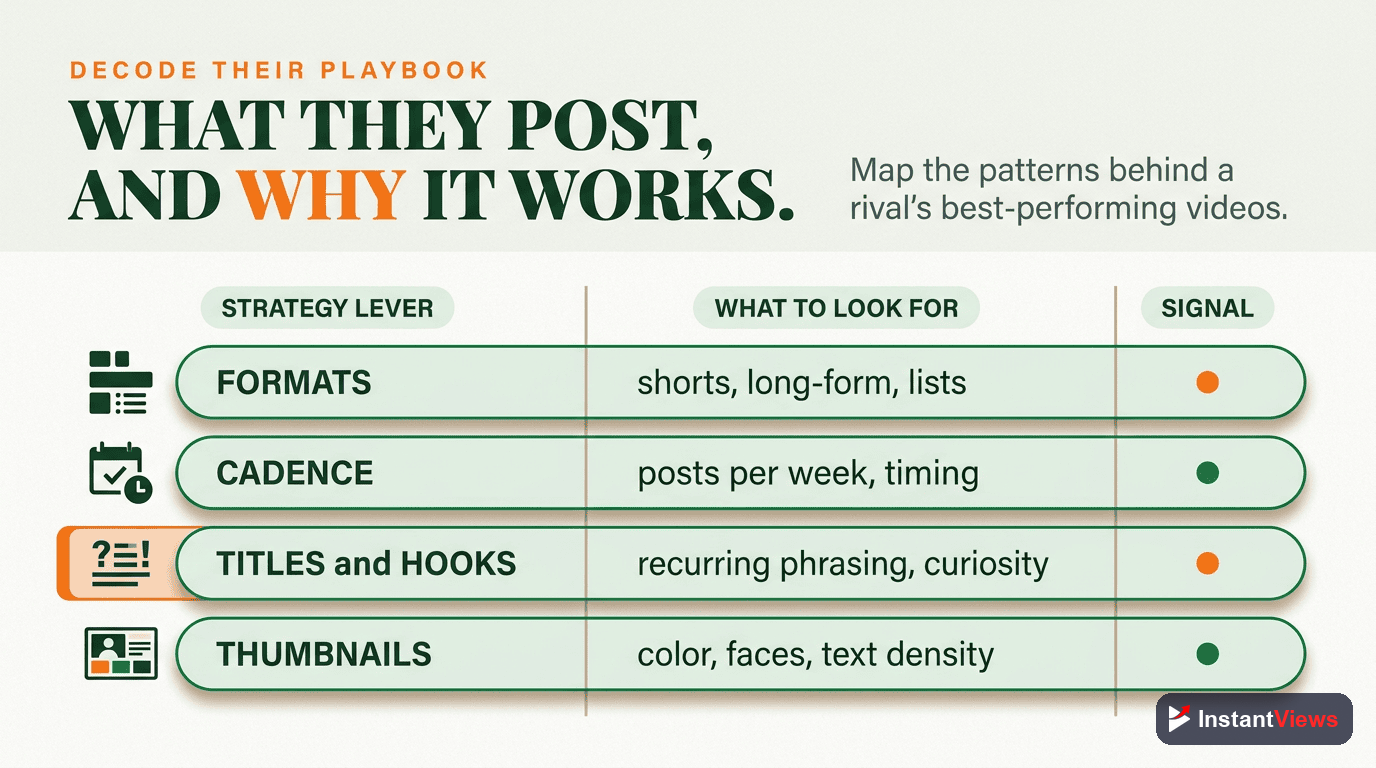
Title and Thumbnail Formulas
Your competitors' most successful videos reveal proven title and thumbnail patterns:
Deconstructing High-Performing Videos
For each competitor's top 10 most-viewed videos, document:
- Title structure (question, list, how-to, bold claim)
- Keyword placement (beginning, middle, end)
- Emotional triggers (curiosity, fear, desire, urgency)
- Thumbnail elements (face, text, contrast, composition)
- Color schemes and design patterns
- Text-to-image ratio on thumbnails
Benchmarking Performance Metrics
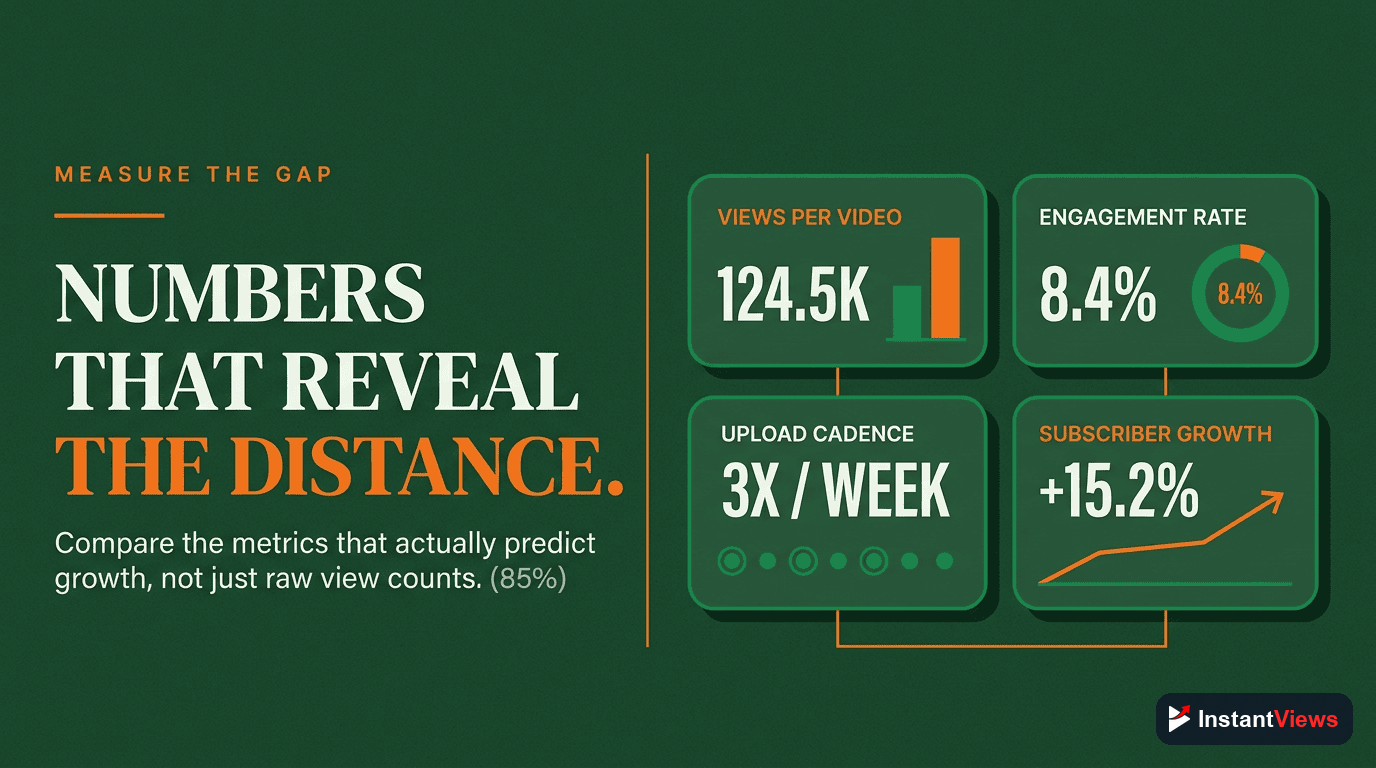
Understanding competitor performance metrics helps you set realistic goals and identify what "good" looks like in your niche.
Critical Metrics to Track
| Metric | How to Find It | What It Reveals |
|---|---|---|
| View Velocity | Views in first 24/48/72 hours | Subscriber engagement strength, notification click rate |
| Views per Subscriber | Video views ÷ subscriber count | Subscriber quality and topic-audience fit |
| Engagement Rate | (Likes + comments) ÷ views | Content resonance and community strength |
| Upload Frequency | Videos per week/month | Resource investment and audience expectations |
| Average Video Length | Duration of recent 20 videos | Niche preference and watch time optimization |
| Growth Rate | Subscriber change over 30/90 days | Strategy effectiveness and market fit |
Creating Performance Benchmarks
Once you've gathered data from 5-10 competitors, calculate averages to establish niche benchmarks:
Average Views Per Video: Sum all competitors' average views ÷ number of competitors
Engagement Rate Benchmark: Sum all engagement rates ÷ number of competitors
Expected View Velocity: (Average views in first 48 hours) ÷ subscriber count

Example:
Competitor A: 10K views, 50K subs = 20% view-to-sub ratio
Competitor B: 25K views, 100K subs = 25% view-to-sub ratio
Competitor C: 8K views, 40K subs = 20% view-to-sub ratio

Benchmark: ~22% view-to-sub ratio
Your goal with 20K subs: 4,400 views per video
Learning From Competitor Success
The most valuable insights come from studying your competitors' breakout videos - the ones that significantly outperformed their average.
Breakout Video Analysis
For each competitor, identify their top 5 videos that exceeded 3x their average views. Then analyze:
Topic Selection
What made this topic more appealing? Was it timely, controversial, solving a major pain point, or tapping into curiosity?
Hook Effectiveness
How did they grab attention in the first 10 seconds? What promise or curiosity gap did they create? Study proven hook patterns used in viral videos.
Content Structure
How did they organize information? Did they use chapters, build tension, include surprises, or maintain pacing? Analyze their video pacing strategy.
Optimization Elements
Check their video description, tags, and hashtags. Did they use chapters or key moments for better SEO?
Comment Analysis
Competitor comments reveal what viewers love, hate, and want more of:
- Top comments: What aspects get the most engagement?
- Questions asked: What didn't the video answer? (Content gap opportunity)
- Complaints: Where did competitors fall short? (Differentiation opportunity)
- Timestamps shared: Which moments do viewers highlight?
- Requests: What follow-up content do people want?
Analyze Competitor Videos in Seconds
Use our Video Analyzer to decode competitor success patterns. Get instant insights on hooks, pacing, optimization, and engagement strategies.
Try Video Analyzer Free →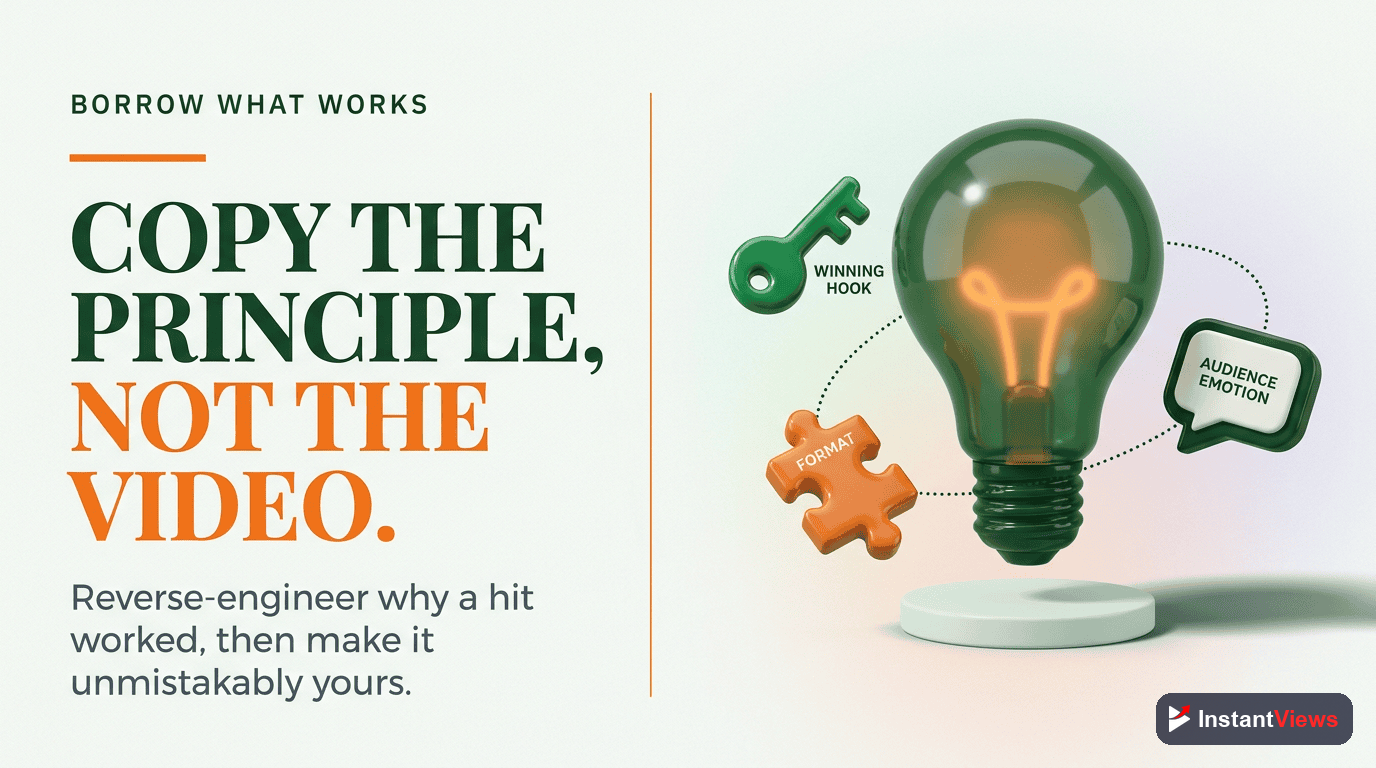
Finding Content Gaps
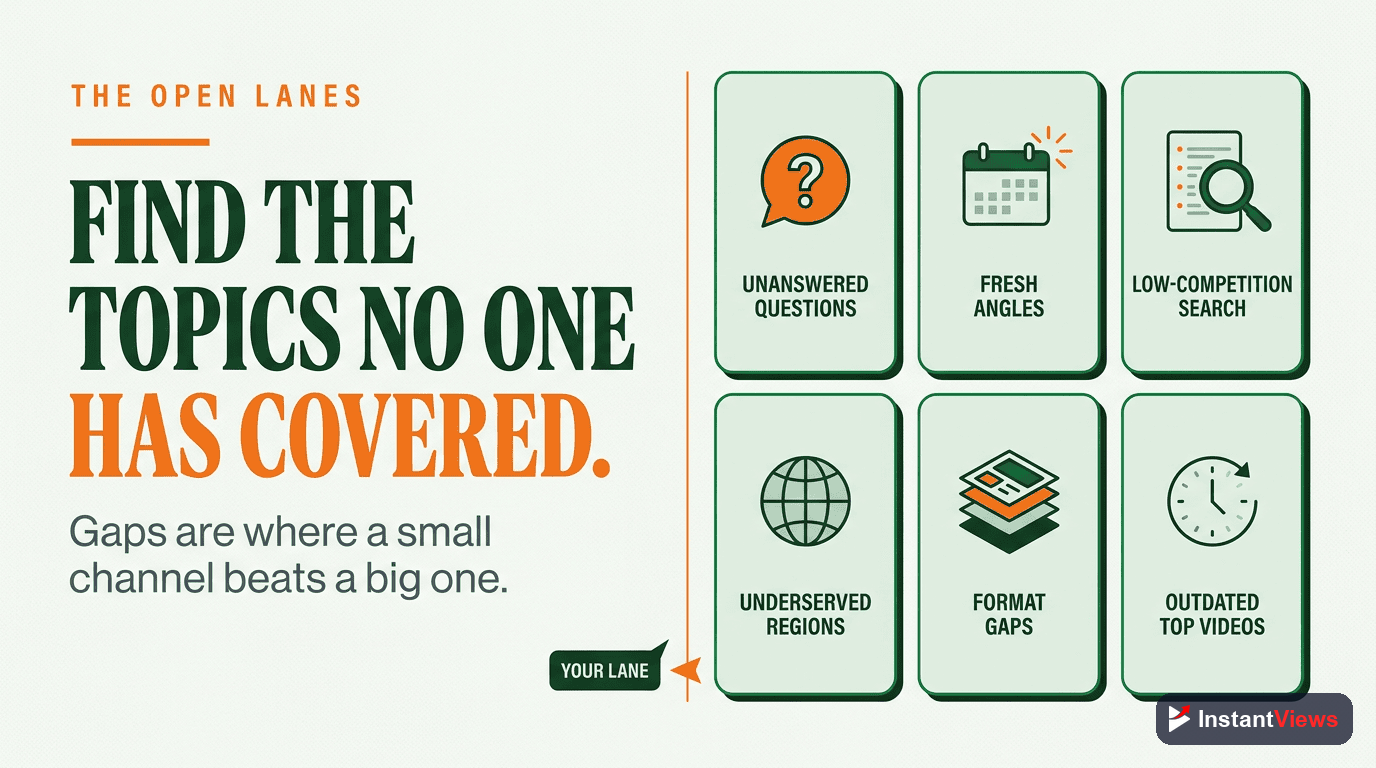
Content gaps are opportunities where demand exists but supply is limited. These represent your best chance to rank quickly and attract underserved audiences.
Gap Identification Strategies
Question Mining
Search "your niche" + "questions" on Google, Quora, and Reddit. Any question without a quality YouTube answer is a content gap.
If competitors all make "beginner SEO" videos but no one addresses "SEO for Shopify specifically," that's a gap. Create: "Complete SEO Guide for Shopify Stores (2026)"
Long-Tail Keyword Gaps
Use YouTube autocomplete and Google Keyword Planner to find searches with volume but few results. These long-tail keywords often have high intent but low competition.
Format Innovation
If competitors all make talking-head videos, try screen recordings. If everyone does quick tips, make deep dives. Different formats can make saturated topics fresh.
Update Opportunities
Find top-ranking videos from 2+ years ago. Create updated 2026 versions with current information, better production, and improved optimization.
Depth vs. Breadth Gaps
Competitors might cover topics broadly but superficially. Create comprehensive, in-depth guides that become the definitive resource.
Gap Validation
Before creating content for a perceived gap, validate that it's a real opportunity:
- Search volume: Does anyone actually search for this? (Use Google Trends, Keyword Planner)
- Competition level: Are there fewer than 10 quality results?
- Adjacent proof: Do similar topics get views on competitor channels?
- Community interest: Do people ask about this in comments, forums, or social media?
How InstantViews Video Analyzer Provides Competitive Insights
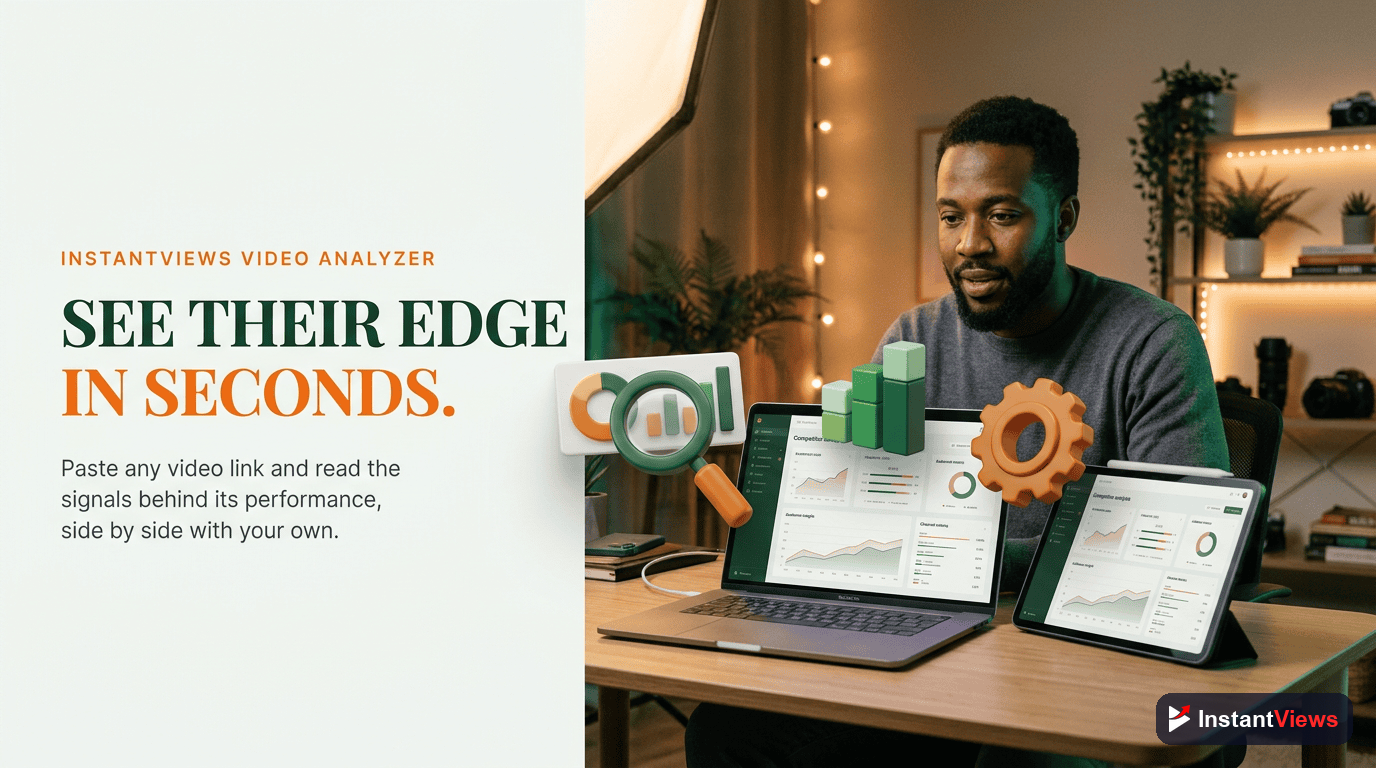
Manual competitor analysis is time-consuming. The InstantViews Video Analyzer accelerates this process by automatically analyzing competitor videos and revealing their optimization strategies.
Competitive Intelligence Features
Hook Performance Scoring
Analyzes competitor video hooks and scores their effectiveness based on proven retention patterns. See exactly how top performers structure their first 10 seconds.
Pacing Analysis
Maps out content pacing in competitor videos, showing where they speed up, slow down, or insert engagement spikes to maintain retention.
SEO Element Breakdown
Extracts and scores competitor titles, descriptions, tags, and hashtags. Shows which keywords they're targeting and how effectively.
Chapter Optimization Review
Analyzes competitor chapter structure, timestamp placement, and keyword usage in chapter titles for better SEO and user experience.
Engagement Pattern Detection
Identifies moments in competitor videos that generate high engagement (likes, comments, shares) so you can replicate similar patterns.
Using Video Analyzer for Competitive Research
Here's a systematic approach to competitor analysis with Video Analyzer:
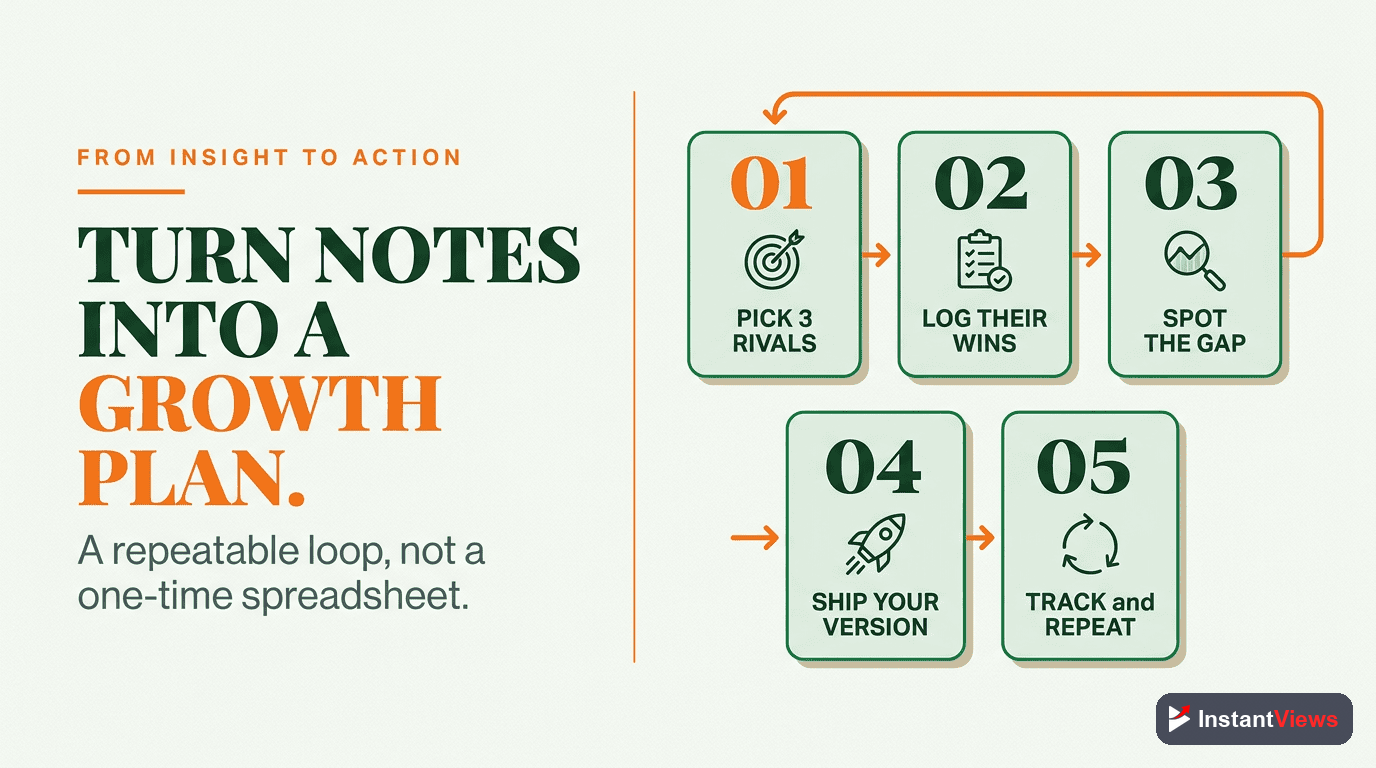
- Identify top performers: Find your competitors' 5-10 best videos
- Analyze each video: Run them through Video Analyzer to get detailed breakdowns
- Compare patterns: Look for commonalities across all high-performing videos
- Extract principles: Identify the underlying strategies (not just tactics)
- Adapt and implement: Apply these principles to your content with your unique angle
Implementing Your Findings
Analysis without action is worthless. Here's how to turn competitive intelligence into growth:
Creating Your Action Plan
Quick Wins (Week 1-2)
Implement low-effort, high-impact changes immediately:
- Update your titles using competitor-proven formulas
- Redesign thumbnails based on successful competitor patterns
- Optimize video descriptions with better keywords and structure
- Add chapters to existing videos using successful competitor formats
Content Strategy Shift (Week 3-4)
Adjust your content strategy based on competitor insights:
- Create videos targeting identified content gaps
- Adapt successful competitor formats to your style
- Test different video lengths based on niche benchmarks
- Experiment with competitor-proven hook structures
Long-Term Optimization (Month 2+)
Build sustainable competitive advantages:
- Develop signature series that competitors haven't attempted
- Improve on competitor content depth and quality
- Build community engagement that exceeds competitor standards
- Create comprehensive resources that become go-to references
Tracking Results
Monitor these metrics to measure whether your competitive intelligence is working:
| Metric | Check Frequency | Success Indicator |
|---|---|---|
| View Velocity | Per video | Approaching or exceeding competitor benchmarks |
| Click-Through Rate | Weekly | Improvement of 1-2% over baseline |
| Average View Duration | Per video | Matching or beating competitor retention rates |
| Engagement Rate | Per video | Comments and likes increasing relative to views |
| Subscriber Growth | Monthly | Growth rate approaching competitor percentages |
| Search Rankings | Monthly | Moving up in search for target keywords |
Tools and Resources
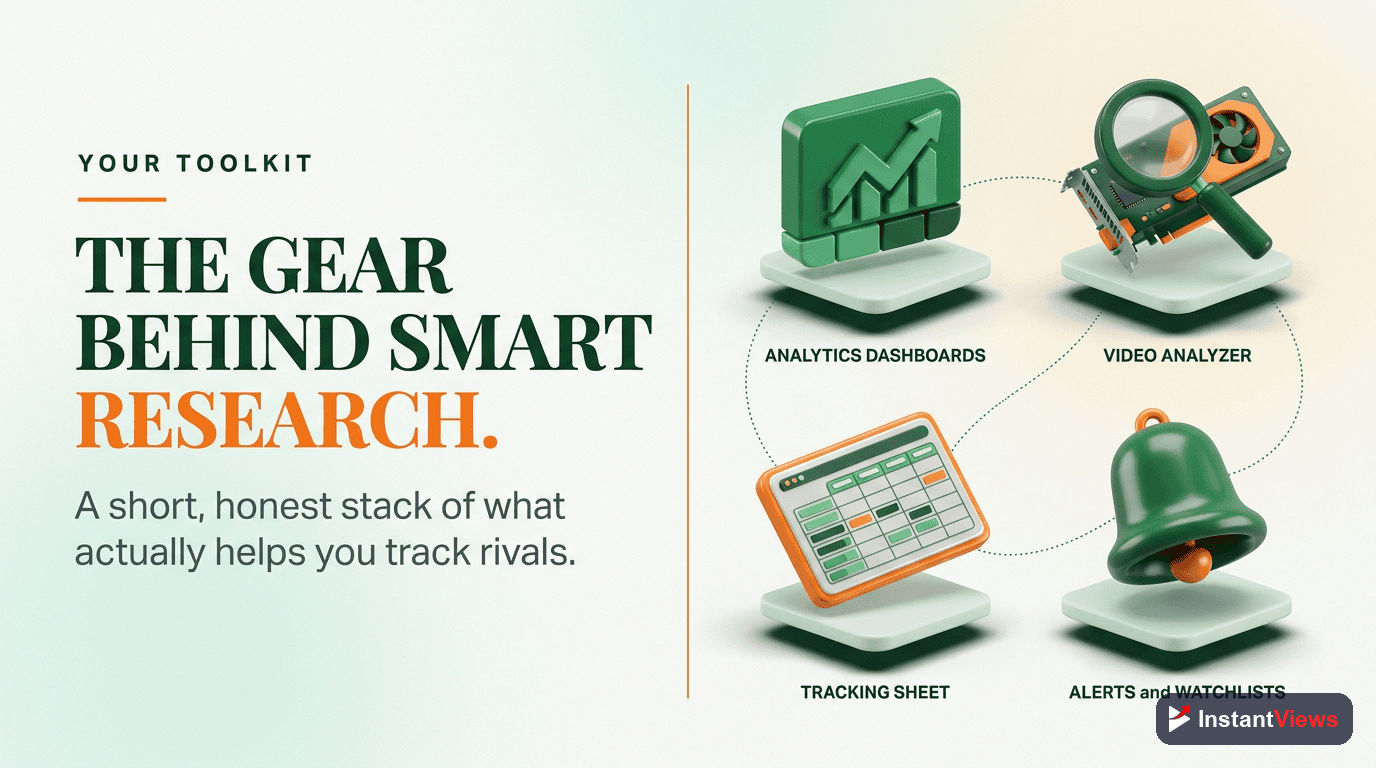
Effective competitor analysis requires the right tools. Here are the most valuable resources:
Essential Analysis Tools
- InstantViews Video Analyzer - Comprehensive video analysis, hook scoring, pacing breakdown, and SEO optimization insights
- VidIQ or TubeBuddy - Channel statistics, keyword research, and competitor tracking
- YouTube Studio Research Tab - Official YouTube data on trending topics and search terms
- Social Blade - Historical growth data and channel comparisons
- Google Trends - Topic validation and trend forecasting
- AnswerThePublic - Question-based content gap identification
Recommended Reading
Deepen your understanding with these related guides:
- How to Analyze YouTube Competitor Videos - Detailed framework for video-level analysis
- YouTube Key Moments SEO Guide - Optimize chapters for search visibility
- How to Improve YouTube Audience Retention - Retention strategies from top performers
- YouTube Hooks That Keep Viewers Watching - Hook patterns from viral videos
- Pre-Upload SEO Checklist - Complete optimization before publishing
"Competitive analysis isn't about copying - it's about understanding what works, why it works, and how you can do it better with your unique perspective." - InstantViews Team
Frequently Asked Questions
Search YouTube for your main keywords and topics. Your competitors are channels that: 1) Rank for the same keywords, 2) Target the same audience, 3) Have similar or better performance metrics, 4) Are 1-2 levels ahead of you in subscribers/views. Use the InstantViews Video Analyzer to analyze which channels consistently outperform you in search results.
Track these key metrics: Average views per video, view velocity (views in first 24-48 hours), engagement rate (likes, comments per view), upload frequency, video length, thumbnail style, title formulas, retention patterns, and topic diversity. Use YouTube Analytics and the Video Analyzer to benchmark your performance against competitors.
Perform a comprehensive competitor analysis monthly, with weekly check-ins on top performers. YouTube trends evolve quickly, so regular monitoring keeps you informed. Track your top 5-10 competitors consistently and deep-dive into any videos that significantly outperform their average.
Yes, competitive analysis is standard business practice and completely ethical. You're studying publicly available content to understand what works in your niche. The key is to learn and adapt strategies, not copy content. Add your unique perspective and improve on what you discover.
Absolutely. Competitor analysis accelerates growth by helping you avoid trial and error. Instead of spending months testing what works, you study proven success patterns and apply them to your content. Small channels benefit most because they can quickly implement winning strategies without existing brand constraints.
The most effective tools are: InstantViews Video Analyzer (for deep video performance analysis), VidIQ or TubeBuddy (for channel statistics), YouTube Studio Research Tab (for trending topics), Social Blade (for growth tracking), and Google Trends (for topic validation). The Video Analyzer provides competitive insights by scoring competitor videos and revealing their optimization strategies.