- Watch time is YouTube's #1 ranking signal - it matters more than views, likes, or subscribers
- Average View Duration (AVD) and Total Watch Time work together to boost your videos in recommendations
- Strategic pacing with pattern interrupts every 60-90 seconds can increase retention by 35%
- The first 30 seconds determine 70% of your video's performance - master your hook
- Data-driven optimization using retention graphs identifies exactly where viewers drop off
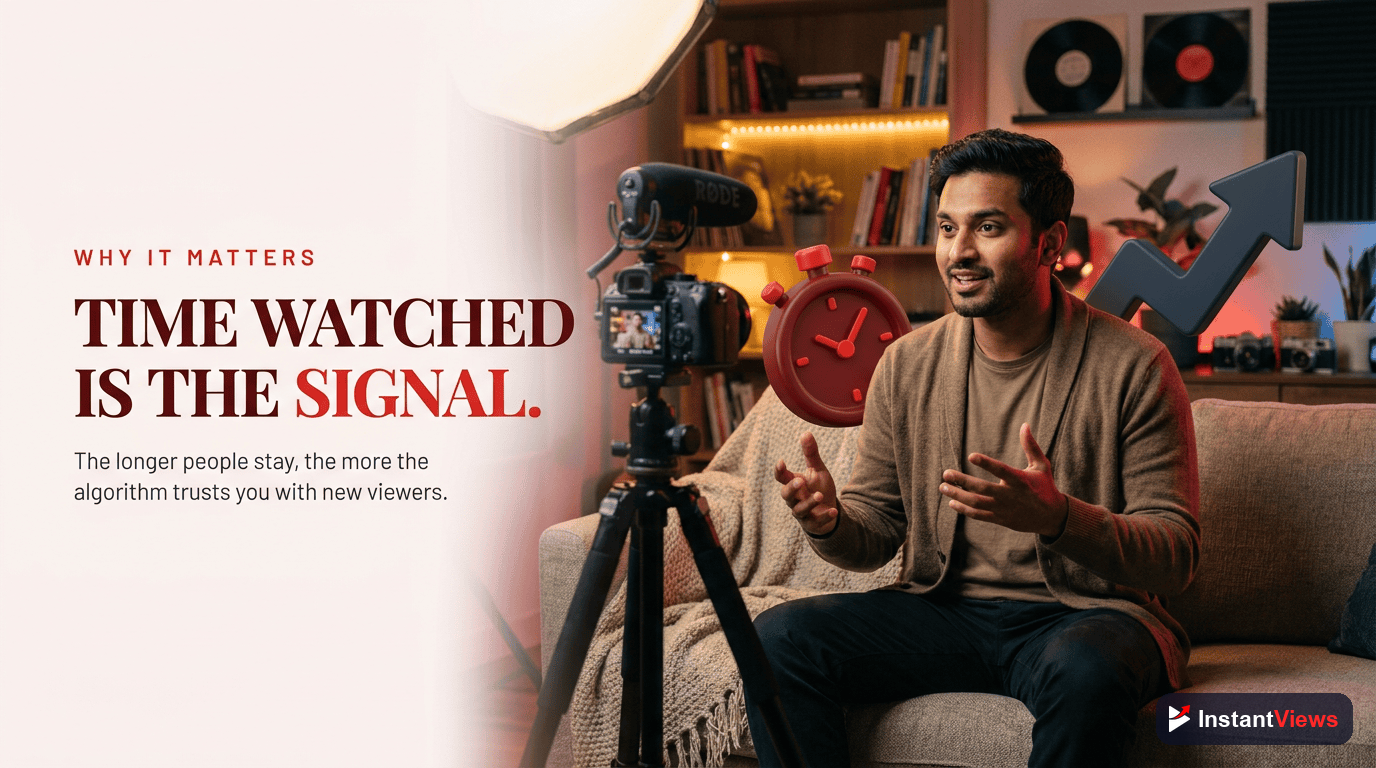
Watch time is the single most important metric on YouTube. Not views. Not likes. Not even subscribers. If you can master watch time optimization, YouTube will reward you with exponentially more reach.
Here's the reality: YouTube is a business that sells ads. The longer people watch, the more ads they see, the more money YouTube makes. That's why the algorithm aggressively promotes videos that keep people watching.
This comprehensive guide breaks down proven strategies to maximize watch time, interpret your analytics, and structure videos that keep viewers engaged from start to finish.
- Why Watch Time Matters More Than Ever
- Understanding Watch Time Metrics
- Strategy #1: Master the Critical First 30 Seconds
- Strategy #2: Optimize Video Pacing
- Strategy #3: Strategic Pattern Interrupts
- Strategy #4: The Power of Storytelling Loops
- Strategy #5: Video Length Optimization
- Strategy #6: End Screen Strategy
- Interpreting Your Analytics
- FAQ
Why Watch Time Matters More Than Ever
YouTube's algorithm has evolved significantly. In the early days, views were king. Then it shifted to engagement (likes, comments). Now, watch time is the dominant ranking signal.
Here's what YouTube's data reveals:
- 70% of video performance is determined in the first 30 seconds
- Videos with 50%+ average retention get 5x more impressions
- Channels with high watch time get priority in recommendations
- Total watch hours accumulate across your entire channel, creating a compounding effect
YouTube measures two types of watch time: absolute (total minutes) and relative (percentage watched). A 10-minute video with 5 minutes average watch time (50%) typically outperforms a 20-minute video with 6 minutes (30%), even though the second has higher absolute time.
The algorithm also considers session watch time - how long viewers stay on YouTube after watching your video. Videos that lead to longer sessions get massive algorithmic boosts.
Understanding Watch Time Metrics
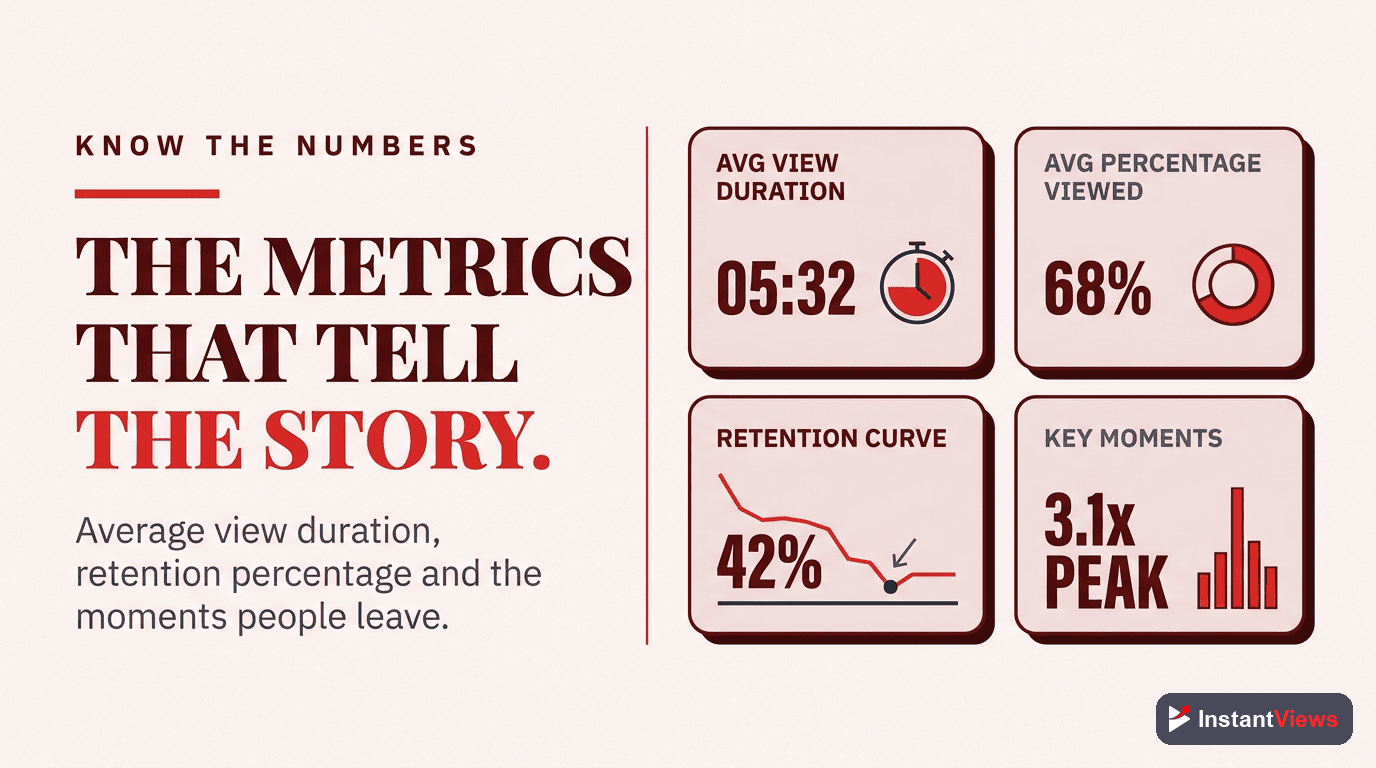
Before optimizing, you need to understand what you're measuring. Here are the critical metrics:
| Metric | What It Measures | Good Benchmark |
|---|---|---|
| Average View Duration (AVD) | Average time viewers watch your video | 40-60% of total length |
| Audience Retention | Percentage of video watched at each moment | Gradual decline, no sharp drops |
| Total Watch Time | Cumulative minutes watched across all viewers | Increases month-over-month |
| Session Time | How long viewers stay on YouTube after your video | Higher than your AVD |
| Re-watches | Views over 100% retention | 10-20% of total watch time |
Strategy #1: Master the Critical First 30 Seconds
Master the Critical First 30 Seconds
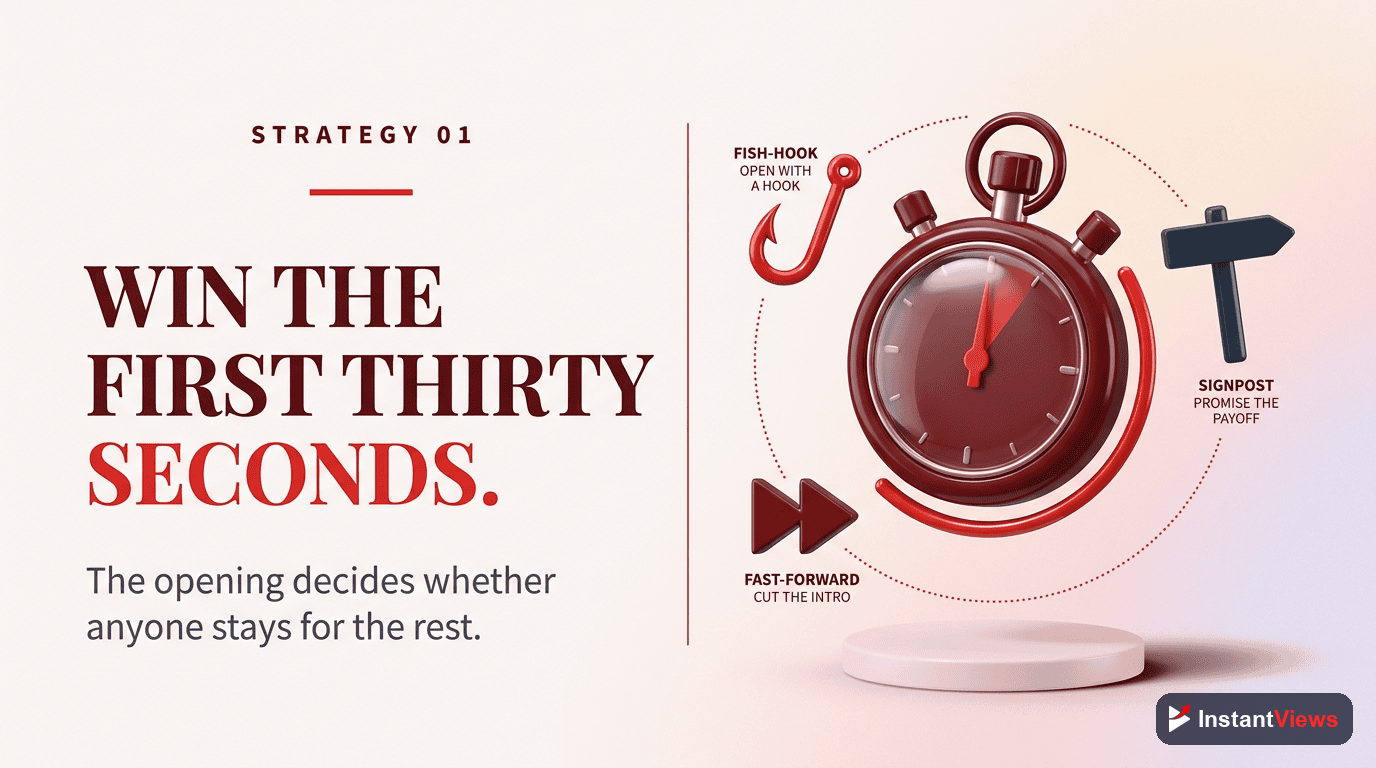
The first 30 seconds determine whether viewers stay or leave. This is where 70% of your video's success is decided. You need a hook that immediately grabs attention and promises value.
Open with your strongest point, preview the value, and eliminate any fluff. No intros, no greetings, no channel reminders. Get straight to the hook.
What makes a strong hook:
- Result preview - Show the outcome before explaining the process
- Bold statement - Challenge assumptions or share surprising data
- Compelling question - Ask something your audience desperately wants answered
- Story tease - Begin at the dramatic peak, not the chronological start
Strategy #2: Optimize Video Pacing
Optimize Video Pacing
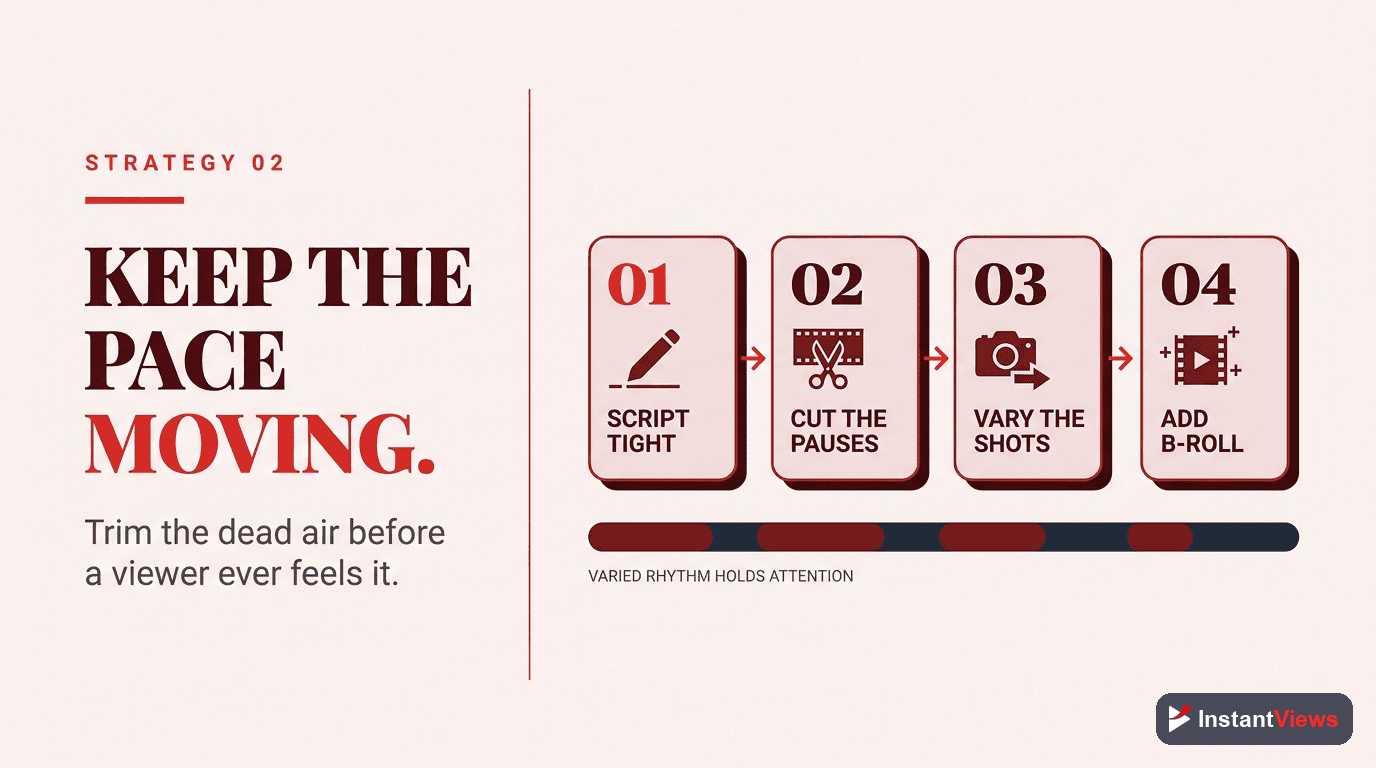
Dead time kills retention. Every second should deliver value or build toward value. Viewers have no patience for rambling, repetition, or unnecessary context.
Cut anything that doesn't directly serve the video's promise. Use jump cuts, speed ramps, and tight editing to maintain energy. A well-paced 8-minute video outperforms a rambling 15-minute video on the same topic.
Pacing techniques that work:
- Tight cuts - Edit out pauses, breaths, and filler words
- Speed variation - Speed up setup, slow down key points
- Visual pacing - Change camera angles, add B-roll, use graphics
- Momentum building - Each section should be more valuable than the last
"If it doesn't make it better, cut it. Viewers would rather have 8 minutes of pure value than 15 minutes of fluff." - Ali Abdaal
Strategy #3: Strategic Pattern Interrupts
Strategic Pattern Interrupts
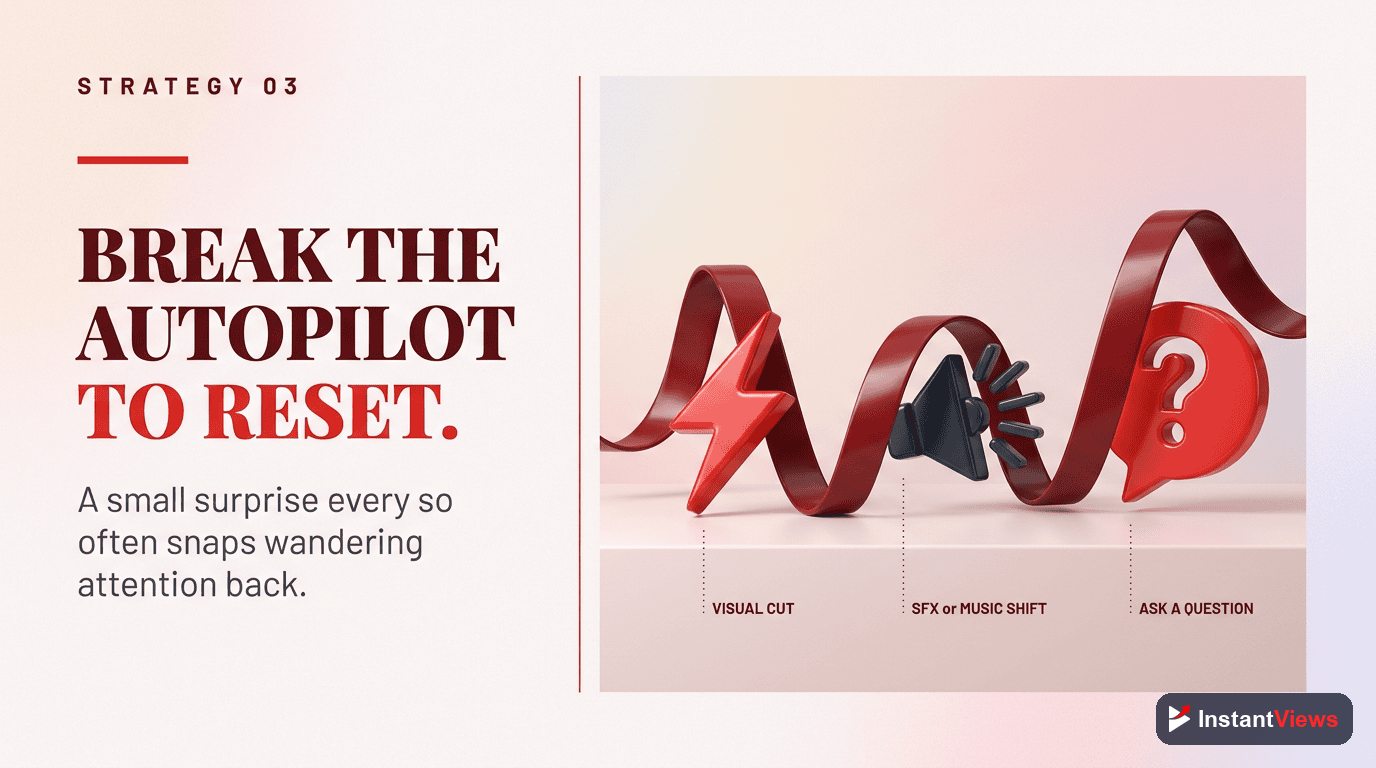
Human attention naturally wanes after 60-90 seconds. Pattern interrupts reset attention by introducing something unexpected - a change in visuals, tone, pacing, or format. Implementing well-structured chapters improve watch time by creating natural segment breaks.
Every 60-90 seconds, introduce a pattern interrupt: switch camera angles, show B-roll, display on-screen graphics, change background music, or shift to a new topic segment. This keeps the brain engaged.
Effective pattern interrupts:
- Visual changes - Camera angle switch, zoom in/out, B-roll footage
- Audio shifts - Music change, sound effects, silence
- Format changes - Switch from talking head to screen recording
- Engagement prompts - Ask a question, pose a challenge, create suspense
- Humor or surprise - Unexpected joke, meme, or visual gag
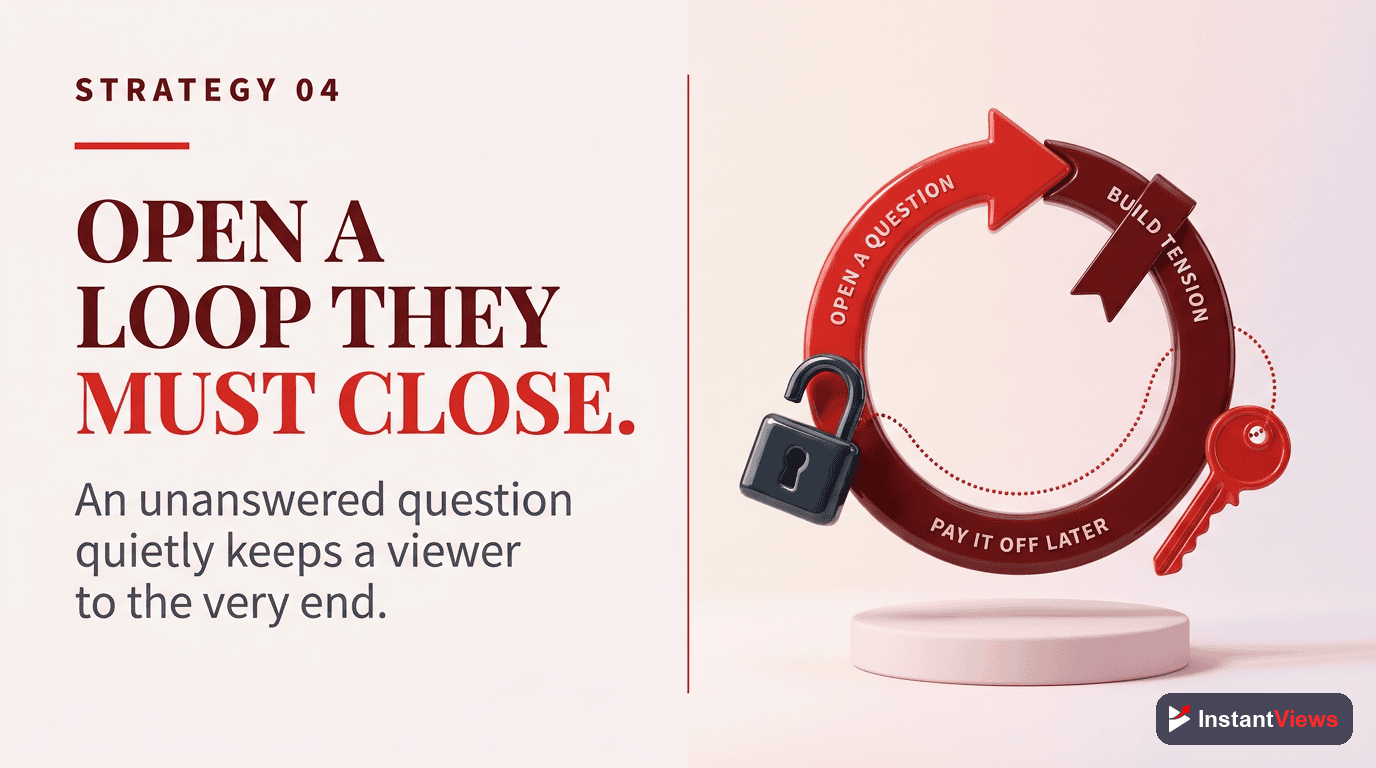
Strategy #4: The Power of Storytelling Loops
The Power of Storytelling Loops
Open loops create psychological tension. When you start a story or tease information without completing it, viewers feel compelled to stay until the loop closes. This is called the Zeigarnik Effect.
Tease your best point early, then say "I'll explain that in a minute." Reference future sections: "The strategy in step 4 made the biggest difference." Create mini-loops throughout your video, closing them strategically to maintain momentum.
How to create effective loops:
- Hook with the payoff - Mention your best insight in the intro
- Delay the resolution - "Before I explain that, you need to understand..."
- Layer multiple loops - Create several open threads, closing them throughout
- Always deliver - Never create false loops or clickbait promises
Don't delay your payoff too long. If viewers wait more than 3-4 minutes for a promised insight, frustration builds and they leave. Balance curiosity with value delivery.
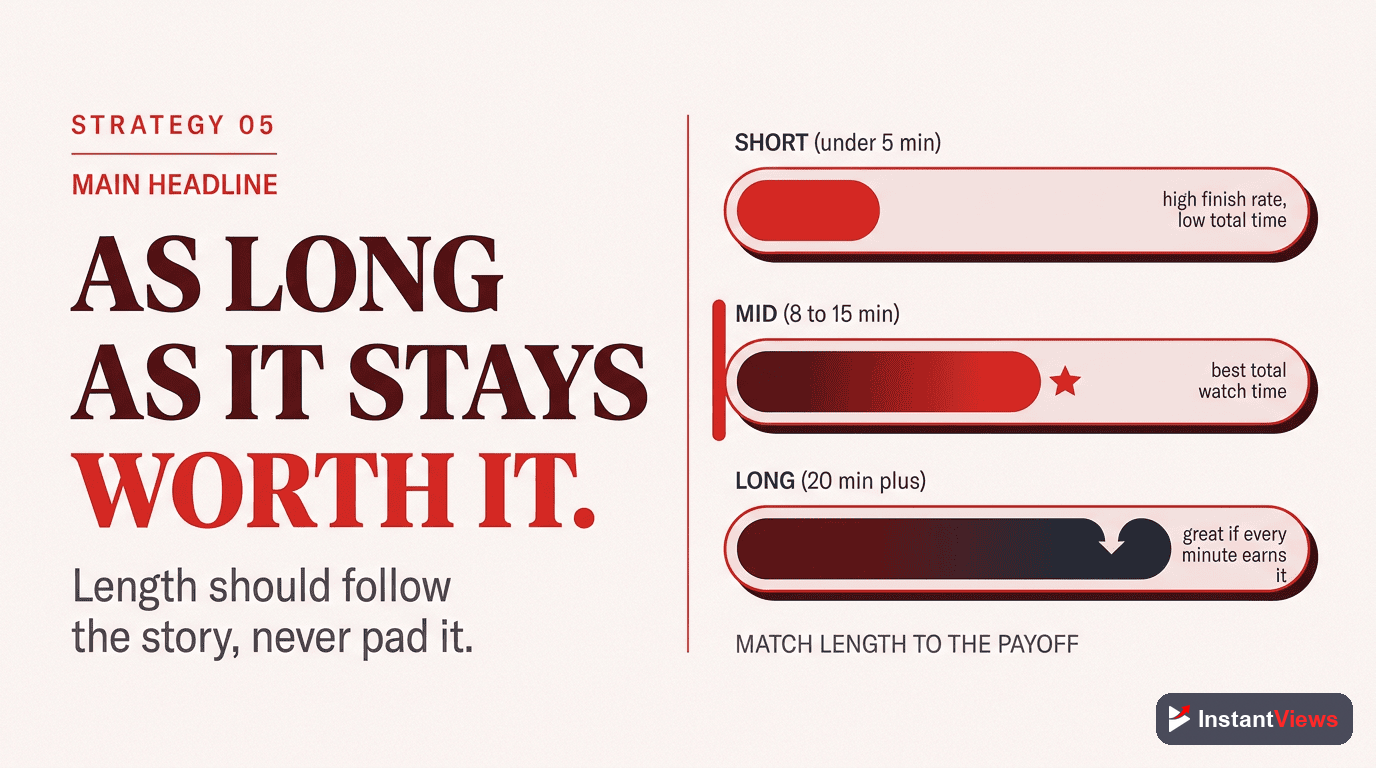
Strategy #5: Video Length Optimization
Video Length Optimization
Longer isn't always better. The goal is to maximize total watch time while maintaining high retention percentage. A 10-minute video with 60% AVD (6 minutes) beats a 20-minute video with 25% AVD (5 minutes). Check our guide on optimal video length for detailed recommendations by niche.
Start with tight, value-dense videos. Once you consistently achieve 50%+ retention, gradually increase length while monitoring retention. Find your sweet spot where total watch time is maximized without sacrificing retention percentage.
Finding your optimal length:
| Content Type | Optimal Range | Reasoning |
|---|---|---|
| Tutorials | 8-15 minutes | Long enough to teach, short enough to maintain focus |
| Commentary | 10-20 minutes | Room for deep analysis without losing momentum |
| Vlogs | 12-18 minutes | Storytelling needs space, but viewers have limits |
| Educational | 15-25 minutes | Complex topics need time, engaged audiences stay longer |
| Entertainment | 6-12 minutes | Quick satisfaction, low attention span tolerance |
Strategy #6: End Screen Strategy
End Screen Strategy
The last 20 seconds of your video are prime real estate for extending session time. Strategic end screens and cards that guide viewers to the next video can double or triple your channel's total watch time.
Don't just add end screens - strategically recommend your next best video. Verbally tell viewers what to watch next and why. Create playlists that auto-play related content. Design a smooth transition that makes clicking feel natural.
End screen best practices:
- Specific recommendation - Don't leave it to YouTube, choose the exact next video
- Verbal CTA - "If you enjoyed this, watch this video next where I..."
- Smooth transition - End your main content, then transition to the recommendation
- Create series - Link videos in a logical progression
- Use playlists - Auto-play keeps viewers watching without friction
Optimize Your Watch Time
Get instant retention analysis and specific improvement recommendations with our Video Analyzer tool.
Analyze Your Video →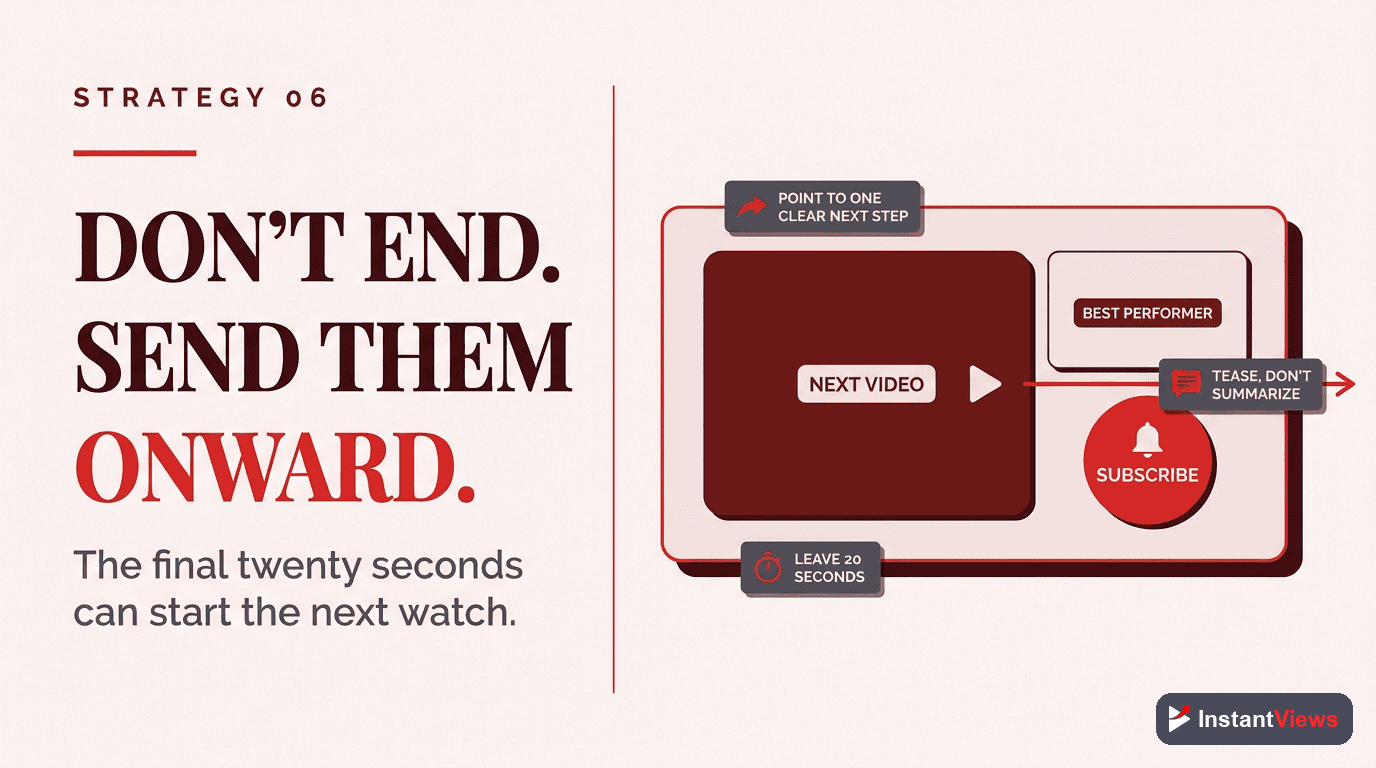
Interpreting Your Analytics
Understanding your data is crucial for improvement. Here's how to read your YouTube Analytics watch time reports:
1. Audience Retention Graph
This shows the percentage of viewers still watching at each moment. Look for:
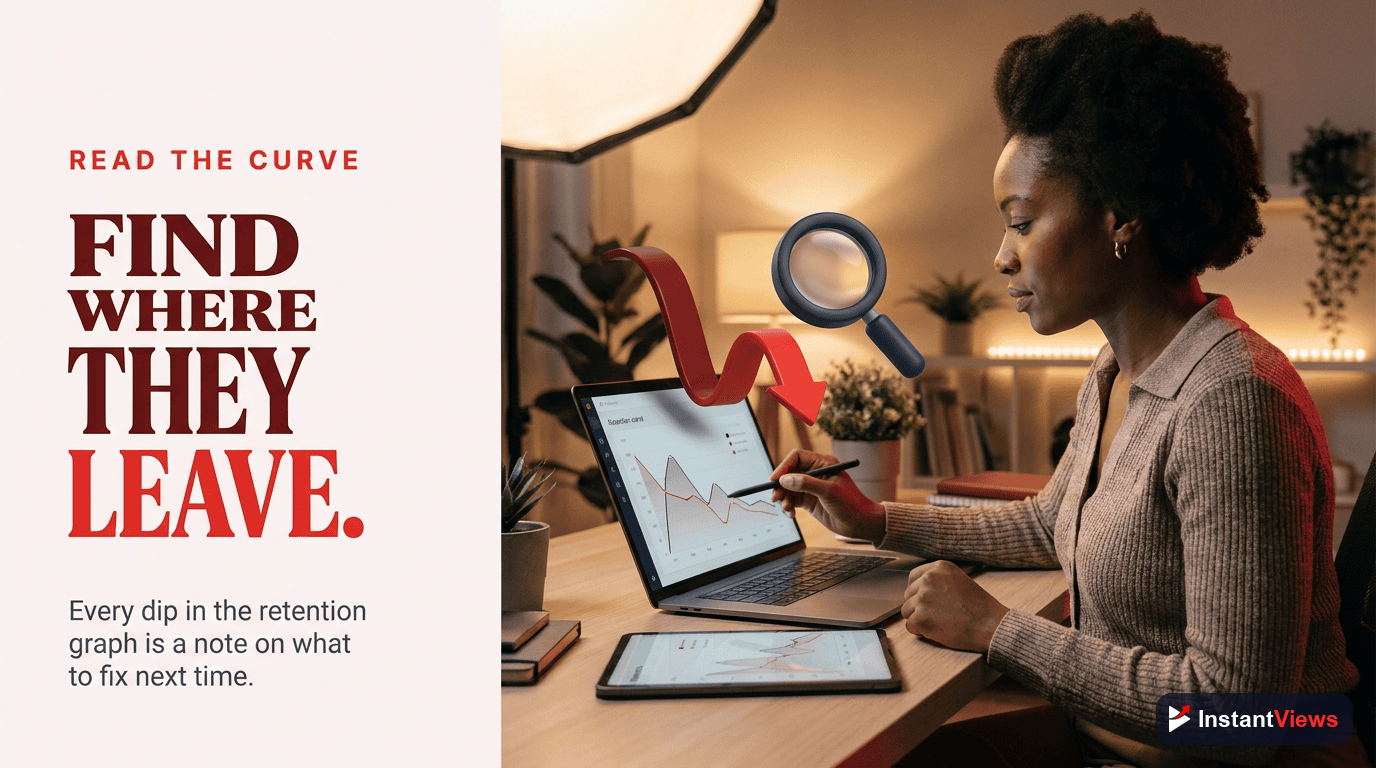
- Sharp drops - Identify the exact timestamp and fix that section
- Gradual decline - Normal, but steep slopes indicate pacing issues
- Spikes - Sections where viewers rewatch - replicate this energy
- Comparison to similar videos - YouTube shows how you compare to others
2. Key Moments for Audience Retention
YouTube highlights specific timestamps where retention changes significantly:
- Most replayed - Your best content, study what made this work
- Most rewound - Content that needed clarification or was valuable enough to revisit
- High skip rate - Sections viewers fast-forwarded, consider cutting or tightening
3. Average View Duration Trends
Track how your AVD changes over time:
- Increasing AVD - Your content quality is improving
- Decreasing AVD - Warning sign, review recent changes
- Consistent AVD - You've found your baseline, time to experiment
Common Watch Time Mistakes to Avoid
- Long intros - Every second before the hook bleeds viewers
- Overpromising - Clickbait titles that don't deliver destroy retention
- Poor audio quality - Viewers leave immediately if they can't hear clearly
- Rambling - Get to the point, then make the next point
- Ignoring analytics - Your retention graph tells you exactly what to fix
- Copying without adapting - What works for MrBeast might not work for your niche
The Compounding Effect of Watch Time
Here's what most creators miss: watch time compounds at the channel level. YouTube doesn't just evaluate individual videos - it evaluates your entire channel's ability to keep people on the platform.
When you consistently produce high-retention content:
- Your new videos get more initial impressions
- YouTube tests your content with broader audiences
- Your older videos get resurfaced in recommendations
- Your channel becomes trusted by the algorithm
This is why watch time optimization isn't just about one video - it's about building a channel-wide reputation for keeping viewers engaged.
Frequently Asked Questions
Good watch time varies by video length. For short videos (5-10 min), aim for 50%+ average view duration. For longer videos (20+ min), 40%+ is strong. However, total watch hours matter more for monetization - you need 4,000 watch hours in 12 months for YPP eligibility.
Watch time matters significantly more. YouTube prioritizes total watch time over views because it indicates engagement. A video with 1,000 views and 80% retention will rank better than one with 10,000 views and 20% retention. The algorithm rewards videos that keep people on the platform longer.
Focus on three key areas: strong hooks (first 30 seconds), strategic pacing (no dead time), and pattern interrupts every 60-90 seconds. Use the InstantViews Video Analyzer to identify drop-off points. Also, create playlists to auto-play related videos, extending session watch time.
Not necessarily. A 10-minute video with 60% retention (6 minutes watch time) beats a 20-minute video with 20% retention (4 minutes). Focus on maintaining high retention first, then gradually increase length while preserving engagement. Longer videos only help if people actually watch them.
Check these key metrics: Average View Duration (AVD), Audience Retention graph, and Real-time retention. Look for sharp drop-offs indicating problems. Compare your AVD to video length - if viewers consistently drop at 40%, that's a pattern to fix. Also track session time to see if viewers watch multiple videos.
No, Shorts views and watch time are tracked separately and don't count toward the 4,000 watch hours needed for YouTube Partner Program. However, Shorts can drive traffic to your long-form content, indirectly boosting your watch hours. Focus on long-form content (60+ seconds) for monetization.