- AI-powered retention prediction forecasts viewer drop-offs before you publish, with 75-85% accuracy
- Prediction analyzes video structure, pacing, audio patterns, and visual elements against millions of successful videos
- Pre-publishing optimization can increase average retention by 15-30% compared to reactive editing
- The technology works for creators at all levels - new channels benefit even more than established ones
- Use the InstantViews Video Analyzer to identify and fix retention issues before going live
Imagine knowing exactly where viewers will drop off before you publish your video. Not guessing. Not hoping. Actually knowing.
That's what retention prediction does. Using AI trained on millions of videos, it analyzes your content and forecasts viewer behavior with 75-85% accuracy - giving you a second chance to fix problems before they cost you views.
This guide explains how retention prediction works, what data it analyzes, and exactly how to use it to increase your watch time.
What Is Retention Prediction?
Retention prediction is an AI-powered analysis that forecasts how viewers will engage with your video before you publish it. Instead of waiting for YouTube Analytics to tell you what went wrong, you see problems in advance.
The technology works by comparing your video against a database of millions of videos, identifying patterns that historically lead to viewer drop-offs or sustained engagement.
How Traditional Analytics vs. Prediction Works
Traditional YouTube Analytics: Upload video → Wait 24-48 hours → See retention data → Realize intro is too long → Video already underperforming → Can't fix it
Retention Prediction: Upload to analyzer → Get instant retention forecast → See intro predicted to lose 40% → Re-edit intro → Re-analyze → Publish optimized version
The difference? Proactive optimization vs. reactive damage control.
How AI Predicts Viewer Drop-Offs
The prediction model uses machine learning trained on millions of videos across thousands of niches. Here's the process:
1. Video Analysis
When you upload a video, the AI extracts hundreds of data points:
- Structural elements: Intro length, segment timing, chapter breaks
- Visual patterns: Cut frequency, text overlay timing, scene changes
- Audio features: Music changes, silence gaps, speaking pace
- Content flow: Topic transitions, call-to-action placement
2. Pattern Matching
The AI compares your video structure to similar successful videos in your niche. It identifies:
- Which intro lengths keep viewers watching
- Where similar videos typically lose attention
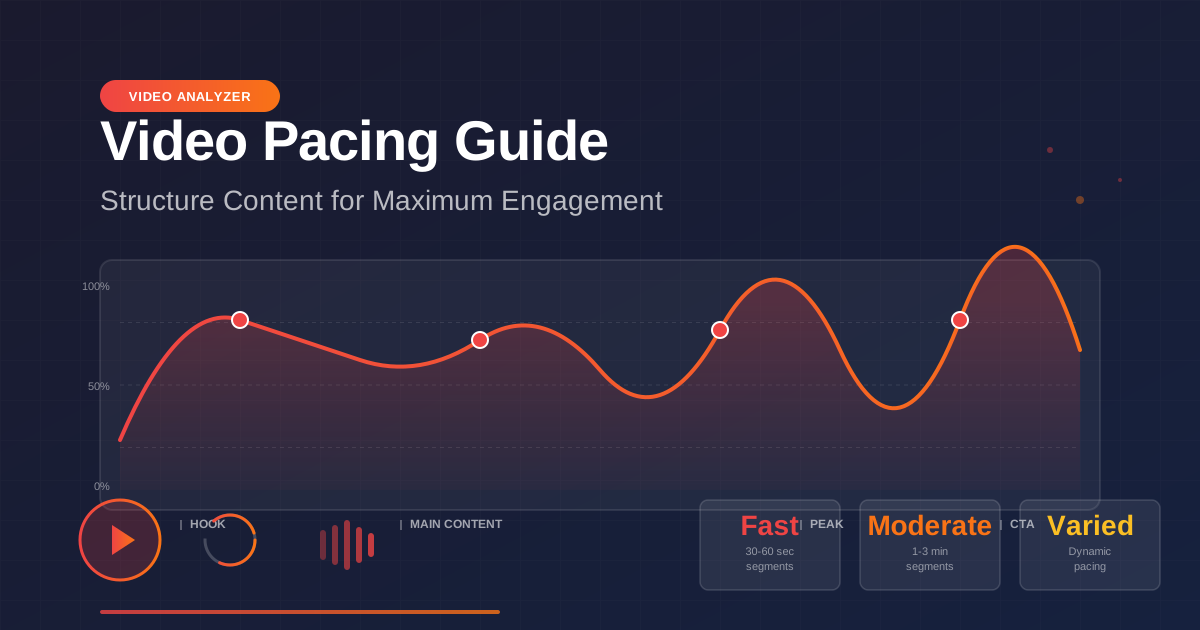
- What pacing patterns sustain engagement
- Which content structures maximize retention
3. Retention Curve Generation
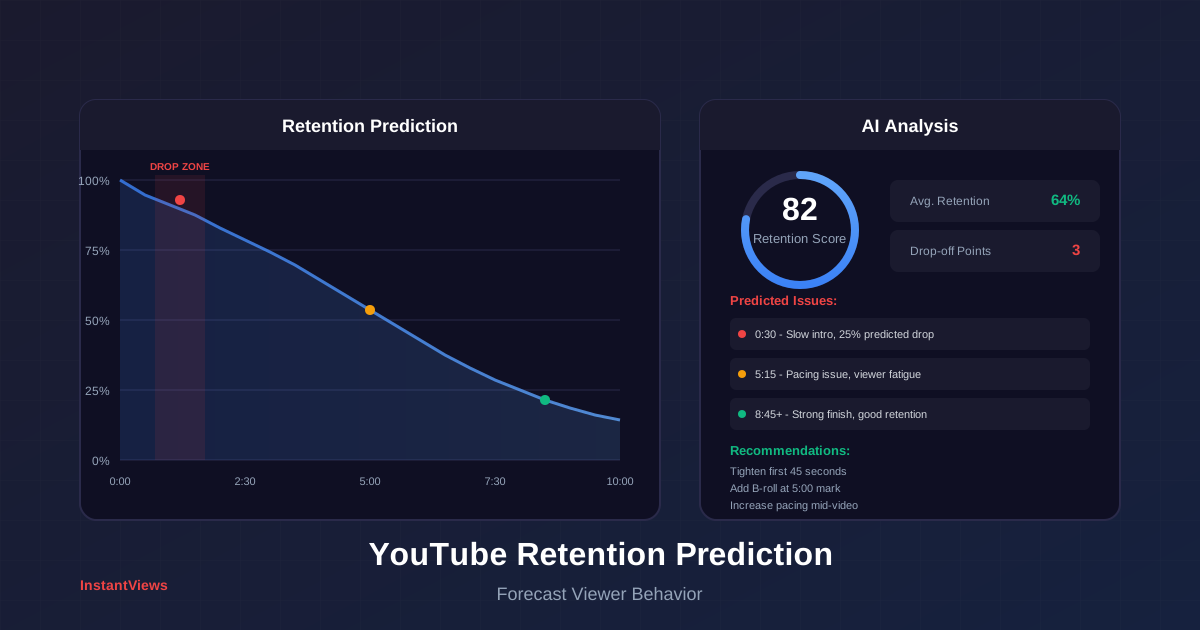
Based on this analysis, the AI generates a predicted retention curve showing the percentage of viewers expected to be watching at each timestamp.
What Data Gets Analyzed
Retention prediction doesn't just look at one factor - it analyzes your entire video as a system. Here are the key data points:
| Data Category | What's Analyzed | Impact on Retention |
|---|---|---|
| Video Structure | Intro length, segment duration, pacing | High - Poor structure causes 40% of drop-offs |
| Visual Elements | Cut frequency, text overlays, graphics | Medium - Affects engagement and clarity |
| Audio Patterns | Music, silence gaps, voice energy | Medium - Silence over 5s triggers drop-offs |
| Content Flow | Topic transitions, story arcs, payoffs | High - Broken promises kill retention |
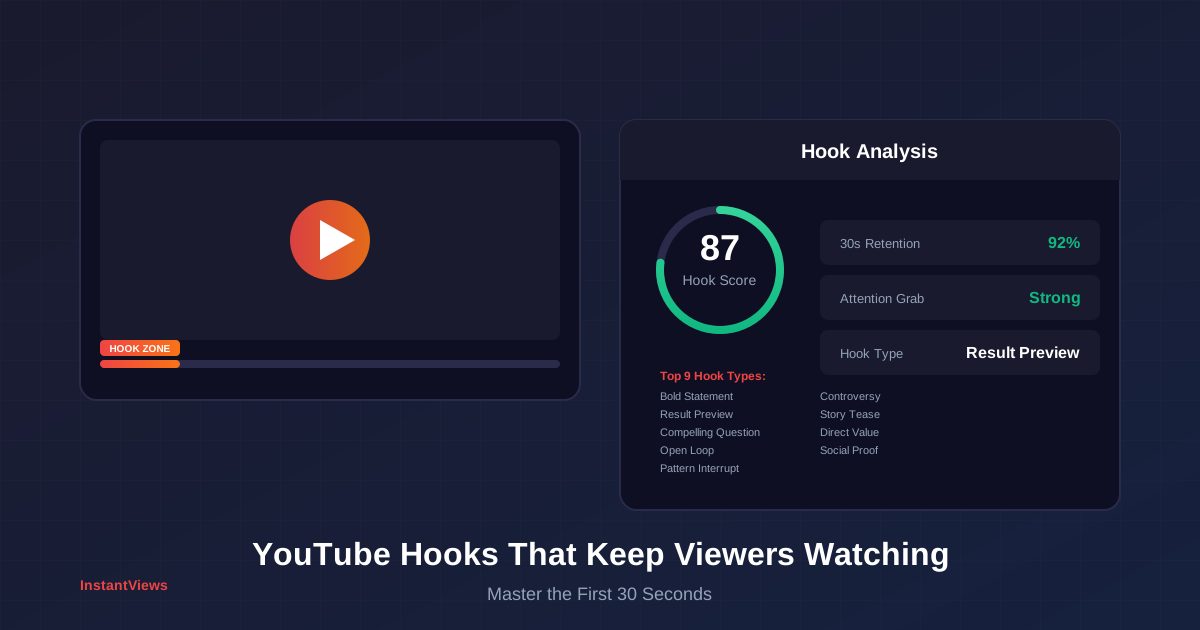
| Hook Quality | First 30 seconds engagement level | Critical - Determines initial retention |
| Call-to-Actions | Placement, frequency, intrusiveness | Low-Medium - Poor timing causes micro-drops |
Reading the Retention Curve
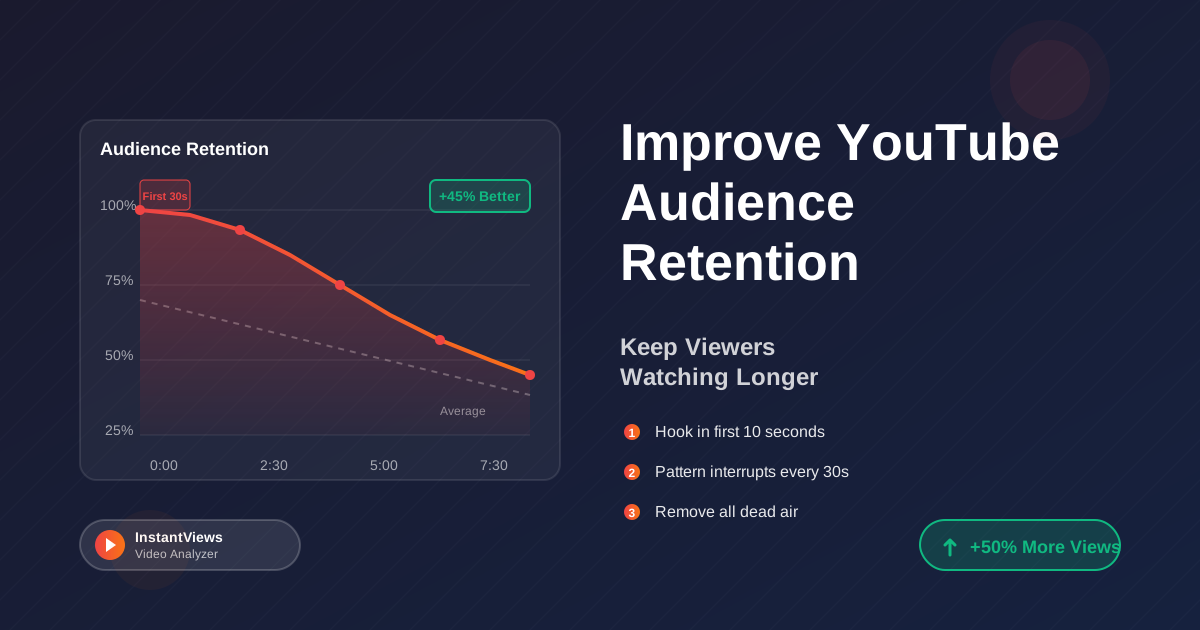
The predicted retention curve shows the percentage of viewers expected to still be watching at each point in your video. Here's how to interpret it:
Healthy Retention Curve
- First 30 seconds: 75-85% retention (gradual drop)
- Mid-video: Gentle downward slope with occasional plateaus
- End: 40-60% retention for videos under 10 minutes
Warning Signs
- Sharp drops: Sudden 15%+ loss indicates a problem (boring intro, broken promise, confusing transition)
- Steep continuous decline: Content isn't engaging enough - pacing or value issues
- Below 50% in first minute: Critical hook failure - intro needs complete redesign
Don't aim for a flat retention curve - that's unrealistic. Even MrBeast videos show a gradual decline. Focus on preventing sharp drops and maintaining a steady, gentle slope.
Using Predictions to Improve Videos
Retention prediction is only valuable if you act on it. Here's a step-by-step optimization workflow:
Step 1: Identify Problem Timestamps
Look for sharp drops in the predicted curve. The analyzer will typically highlight these automatically with timestamps.
Step 2: Diagnose the Issue
Common causes of predicted drop-offs:
- 0:00-0:30: Weak hook, slow intro, greeting instead of value
- 0:30-2:00: Failed to deliver on hook promise, too much setup
- Mid-video: Pacing too slow, monotonous delivery, confusing transition
- Near end: Content dragging, unclear conclusion, repetitive
Step 3: Re-Edit Problem Sections
Based on the diagnosis, make targeted edits:
- Tighten pacing: Cut unnecessary words, speed up slow sections
- Add visual interest: Insert B-roll, graphics, text overlays
- Improve transitions: Add music cues, visual bridges, verbal signposts
- Strengthen hooks: Move value forward, create open loops, add intrigue
Step 4: Re-Analyze and Compare
Upload the edited version and run the prediction again. Compare the two retention curves to verify improvement.
Step 5: Publish with Confidence
Once the predicted retention curve shows steady, healthy retention with no sharp drops, publish knowing you've maximized your chances of success.
Predict Your Video Retention
Upload your video and get an instant retention prediction with specific optimization suggestions.
Analyze Your Video →Understanding Prediction Accuracy
No prediction is perfect, but retention forecasting is remarkably accurate when used correctly. Here's what affects accuracy:
High Accuracy Scenarios (80-90%)
- Popular niches with large training datasets (tech, gaming, education)
- Videos following standard formats (tutorials, reviews, vlogs)
- 5-20 minute videos (most common length in training data)
- Content with clear structural patterns
Moderate Accuracy Scenarios (70-80%)
- Emerging niches with less historical data
- Highly experimental or unique formats
- Very short (under 2 min) or very long (over 40 min) videos
- Content mixing multiple formats
What Prediction Can't Account For
- Content quality: AI can't judge if your information is accurate or valuable
- Personality appeal: Charisma and authenticity aren't predictable
- External factors: Trending topics, algorithm changes, time of publishing
- Thumbnail/title performance: Prediction assumes people clicked - it doesn't forecast CTR
"Retention prediction isn't about replacing creativity with data. It's about giving creators a fighting chance to fix obvious problems before they cost thousands of views."
Limitations and Edge Cases
Retention prediction is powerful, but it's not magic. Understanding its limitations helps you use it effectively:
Limitation 1: First-Time Content Formats
If you're creating something truly novel, the AI has fewer patterns to reference. Predictions become less reliable for groundbreaking formats.
Solution: Use prediction for structure and pacing insights, but trust your creative instincts for content innovation.
Limitation 2: Audience-Specific Preferences
Your specific audience might have different retention patterns than the broader niche average.
Solution: After several videos, compare actual retention to predictions. If your audience consistently outperforms predictions in certain areas, adjust your interpretation.
Limitation 3: Viral Unpredictability
Viral videos often break conventional patterns. Retention prediction optimizes for consistent performance, not viral outliers.
Solution: Use prediction for your regular content. Take calculated risks on potential viral videos, knowing they might score lower in prediction.
Real-World Results
Creators using retention prediction report significant improvements:
- 15-30% increase in average retention percentage
- 25-40% reduction in first-30-second drop-offs
- 2-3x faster optimization compared to trial-and-error publishing
- Higher confidence in video quality before publishing
The key is consistency. Using retention prediction on every video before publishing creates a virtuous cycle: better retention → more impressions → more views → channel growth.
Frequently Asked Questions
AI-powered retention prediction is typically 75-85% accurate when analyzing similar content patterns. It works by comparing your video structure to millions of successful videos in your niche, identifying patterns that historically lead to viewer drop-offs or sustained engagement.
Absolutely. New creators benefit even more from retention prediction because they lack historical data. The AI analyzes successful videos in their niche and predicts how viewers will respond to their content structure, pacing, and hooks before publishing.
Retention prediction analyzes video structure (intro length, segment pacing), audio patterns (music changes, silence), visual elements (text overlays, cuts), and content patterns. It compares these against millions of videos to forecast where viewers typically drop off.
YouTube Analytics shows what happened after publishing. Retention prediction forecasts what will happen before you publish, allowing you to fix problems proactively. It is predictive, not reactive - giving you a second chance to optimize.
Yes. The prediction highlights specific timestamps where drop-offs are likely. You can re-edit those sections - tighten pacing, add visual interest, improve hooks, or restructure content - then re-analyze to see the predicted improvement before publishing.
Prediction accuracy is highest for videos 5-20 minutes long, as this range has the most training data. Very short (under 2 minutes) or very long (over 40 minutes) videos can still be analyzed, but predictions may be slightly less precise.