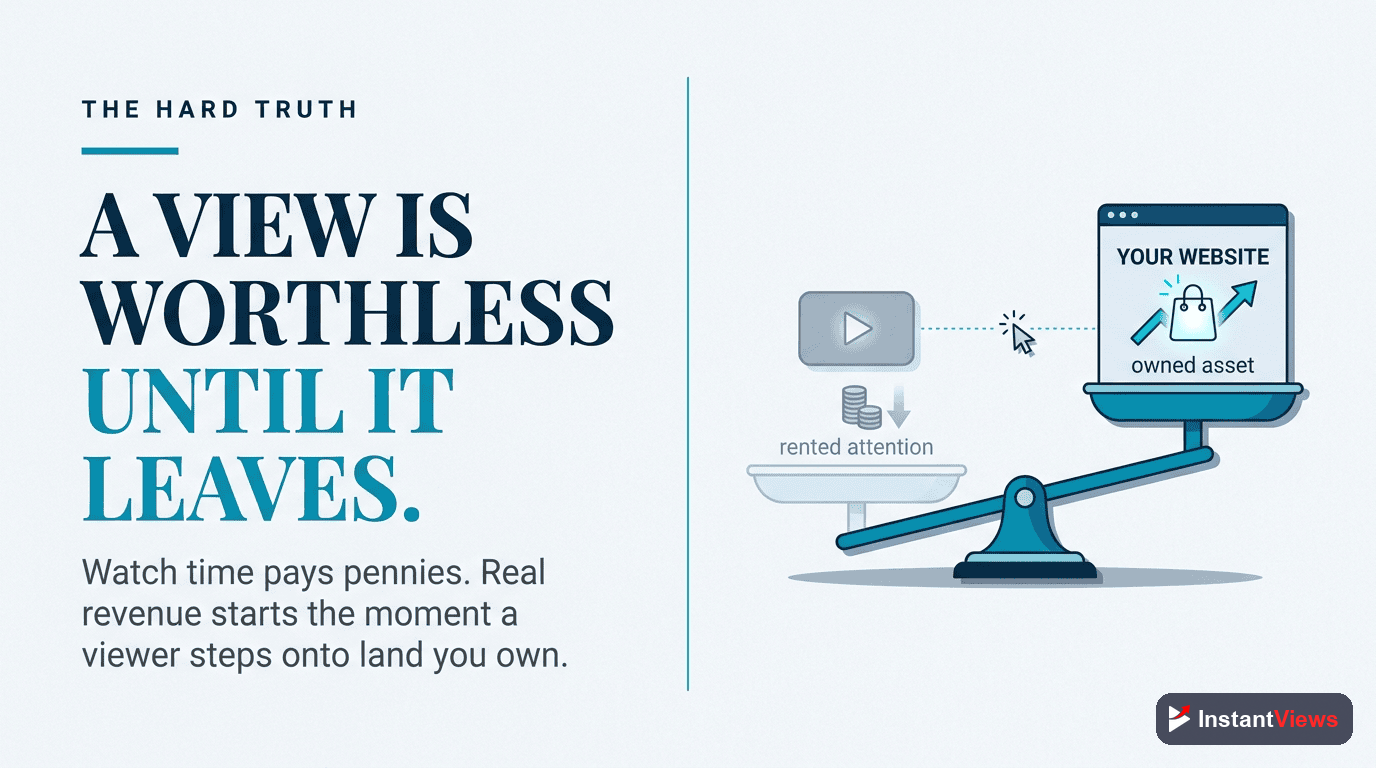
- A view is rented attention; the goal is to move viewers onto a website and an email list you actually own
- Every video needs one clear, specific reason to click — not a vague "links below"
- Place that link where viewers look: first lines of the description, a pinned comment, an end screen, and a verbal call to action
- Send clicks to a dedicated landing page that repeats your video promise, never to a cluttered homepage
- Capture the email, nurture with value, and use UTM tags plus retargeting to find and scale what actually sells
With more than 2.7 billion monthly active users and over a billion hours of video watched every day, YouTube is the largest discovery engine on the internet. Yet for most creators and businesses, all of that attention evaporates the moment the video ends. The viewer enjoyed it, maybe even hit like — and then scrolled away, gone forever.
That is the central problem with views: they are rented attention. YouTube decides who sees your content and when, and you never own the relationship. The channels that actually generate revenue treat a view as the start of a journey, not the end. Their real goal is to move that viewer onto a website and an email list they control, where a one-time watcher can become a repeat buyer.
This guide is about the bridge between watching and buying: how to drive YouTube viewers off-platform to your website or store, capture their contact details, and convert that traffic into sales you own. We will cover the call-to-action stack, description links, pinned comments, end screens, lead magnets, dedicated landing pages, email capture, retargeting, and how to measure the whole path.
None of this requires a big budget or paid ads. It requires a deliberate plan for what happens after the view — and the discipline to give every single video a clear next step.
- Why a View Is Worthless Until It Leaves YouTube
- The View-to-Sale Path in Five Steps
- The Off-Platform Touchpoints (and What Each One Is For)
- Build a Call-to-Action Stack
- The Lead Magnet: Your Reason to Click
- Why a Dedicated Landing Page Beats Your Homepage
- Email Capture, Nurture, and Retargeting
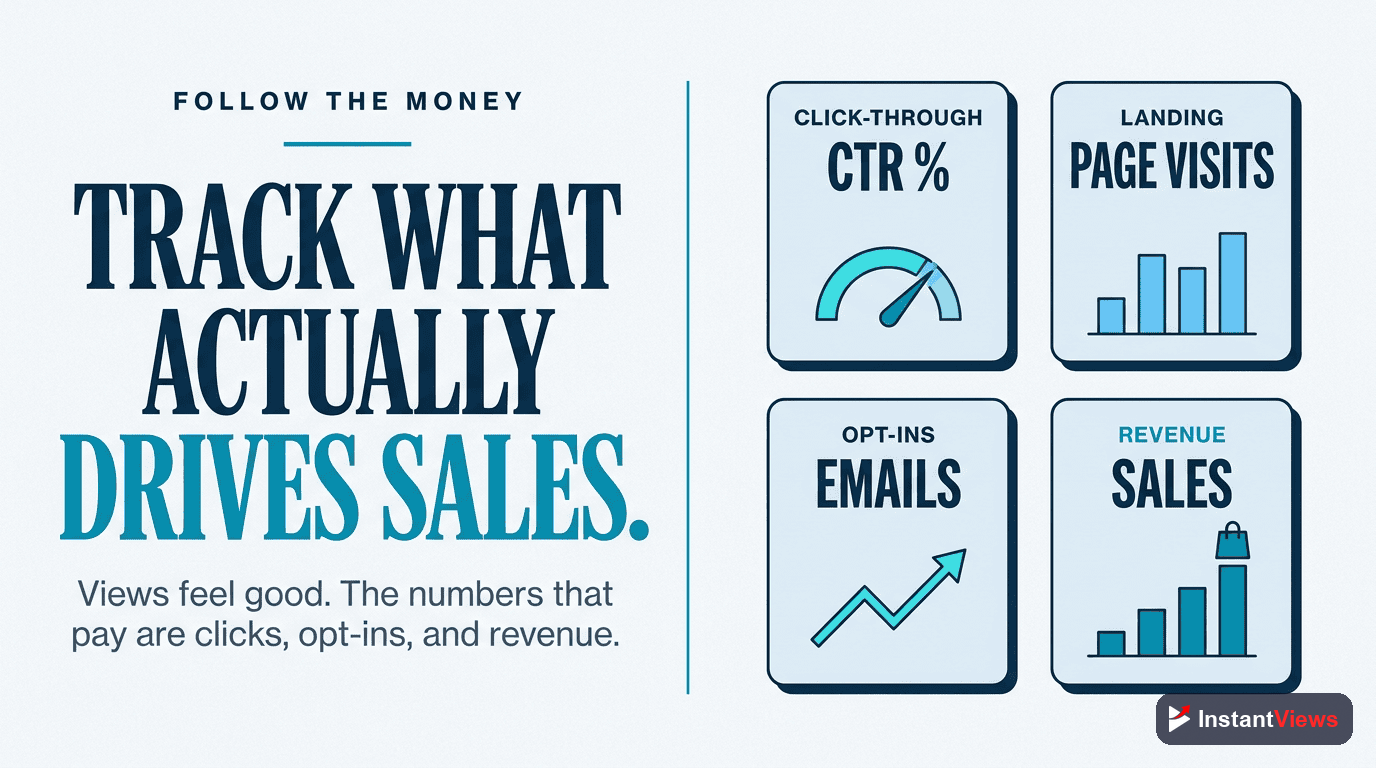
- Track What Actually Drives Sales
- Mistakes That Quietly Kill Conversions
- FAQ
Why a View Is Worthless Until It Leaves YouTube
It feels good to watch the view counter climb, but a view by itself produces nothing you can build on. The viewer is anonymous, the platform owns the connection, and tomorrow the algorithm may decide to show your next video to a completely different crowd. You are renting an audience you can lose overnight.
A click to your website changes everything. Now you have a visitor you can identify, a person you can offer something to, and — if you capture their email — a contact you can reach again and again without asking YouTube for permission. That is the difference between an audience you rent and one you own.
This is also why purely on-platform metrics can mislead you. A video with a million views and no off-platform path is a billboard nobody can act on. A video with a tenth of the views but a clear route to a landing page can quietly outperform it in revenue. The question is never just "how many views?" — it is "how many of those viewers took the next step?"
The View-to-Sale Path in Five Steps
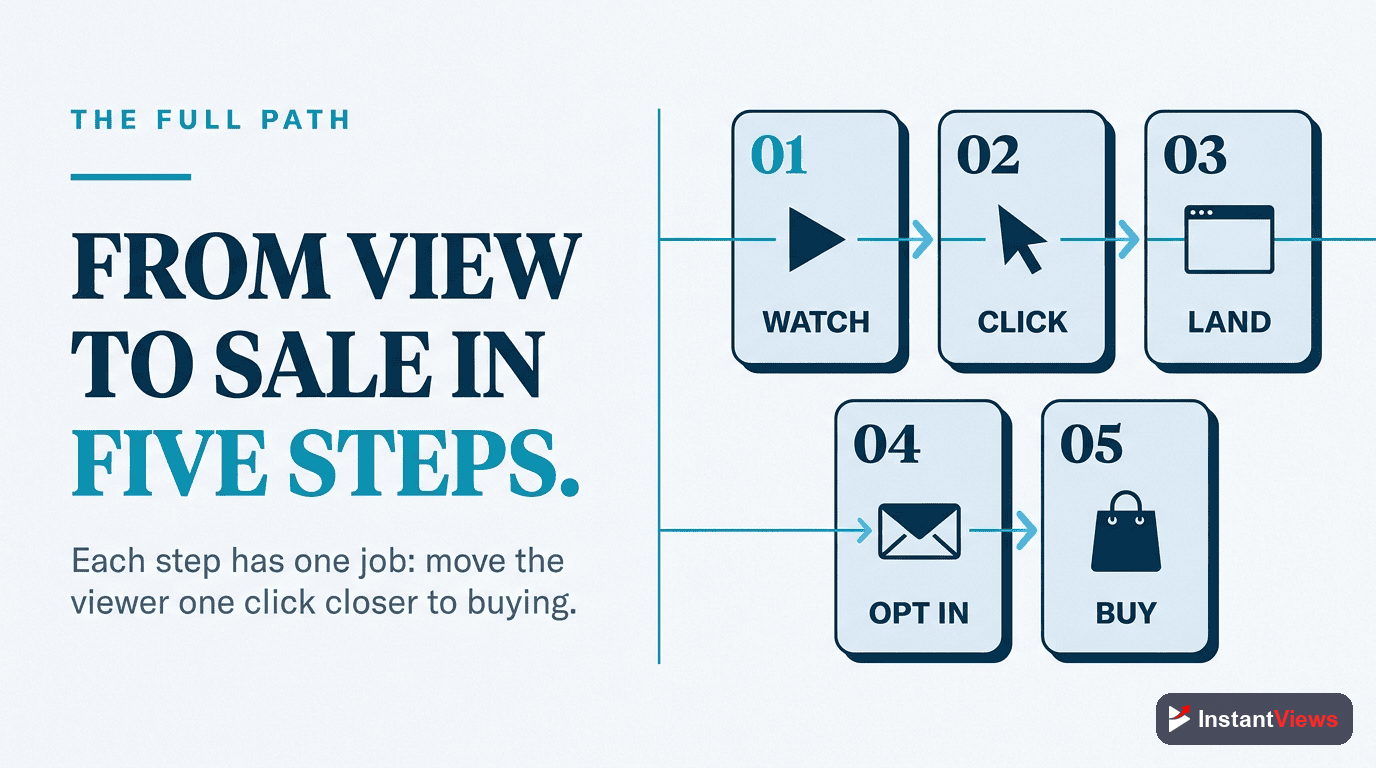
Turning a watcher into a buyer is not magic; it is a repeatable sequence. Each step has one job, and the whole thing only works when every step is in place. Here is the path you are building.
Earn the View and the Trust
Deliver real value in the video itself. Nobody clicks a link from a creator who has not first proven they are worth a few minutes of attention. Trust is the price of the click.
Give One Clear Reason to Click
Offer something specific and valuable — a free template, checklist, or guide — that extends what the video covered. The offer, not the link, is what moves people.
Make the Click Effortless
Put the link in the first lines of the description, in a pinned comment, and on an end screen, and say it out loud. Whatever device or order a viewer is on, the next step is one tap away.
Capture the Email on a Focused Page
Land them on a dedicated page that repeats your promise and asks for just an email. Deliver the freebie instantly so the first experience off YouTube is a win.
Nurture, Then Sell
Follow up with a short sequence of genuinely useful emails that build trust before any pitch, then present a clear offer. Now a free viewer can become a paying customer.
Notice that the sale sits at the very end. The mistake most channels make is trying to skip straight from step one to step five — selling to a stranger who watched thirty seconds of a video. The steps in between are what make the sale possible.
The Off-Platform Touchpoints (and What Each One Is For)
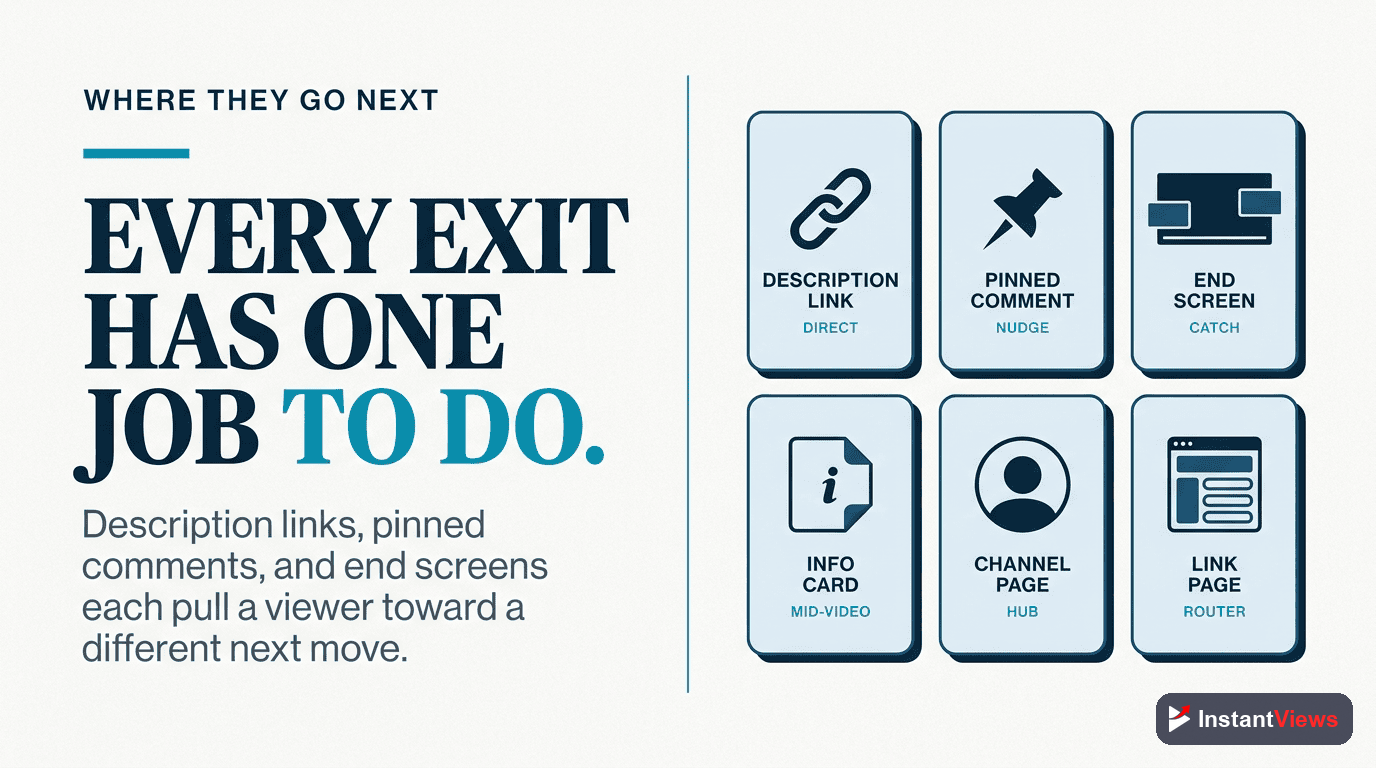
YouTube gives you several built-in places to send viewers off-platform, and each one has a distinct purpose and a distinct strength. Using them together — rather than relying on any single one — is what catches viewers wherever their attention happens to be.
| Touchpoint | Purpose |
|---|---|
| Verbal call to action | Plants the idea in the viewer's mind and tells them a link exists; the most personal nudge because it comes from you on camera. |
| First lines of description | Holds your primary link above the Show More fold, where it is visible without a click; the default destination for motivated viewers. |
| Pinned comment | Keeps your link at the top of the comments no matter how they are sorted; a second, hard-to-miss home for the same offer. |
| End screen | Captures viewers in the final seconds when they are deciding what to do next; ideal for sending them to your site or next video. |
| Info cards | Surface a relevant link or video at the exact moment in the timeline where it makes sense, without interrupting the watch. |
| Channel links & banner | Give visitors who explore your whole channel a permanent path to your website and main offer. |
One rule governs all of them: YouTube truncates your description after roughly three lines, and most viewers never tap Show More. Anything that matters has to live above that fold. The same logic applies everywhere — if a viewer has to hunt for your link, the vast majority simply will not.
Keep It to One Primary Link
It is tempting to stuff the description with every link you own — website, store, other socials, affiliate codes. Resist it. A wall of links creates decision paralysis and dilutes the one action that matters. Lead with a single primary link to your offer, and tuck secondary links lower down for the rare viewer who scrolls.
Build a Call-to-Action Stack
The single most effective tactic in 2026 is the call-to-action stack: a verbal prompt, on-screen text, and a YouTube-native click path (end screen, card, description, pinned comment) that all say the exact same thing. When every signal points to one offer and one next step, you remove friction and make action feel obvious.
Consistency is the whole point. If your video mentions a "free SEO checklist," your on-screen text should say "free SEO checklist," your pinned comment should link to the "free SEO checklist," and the landing page headline should read "free SEO checklist." Every mismatch is a tiny moment of doubt where a viewer decides not to bother.
Timing Your Call to Action
Where you place the ask matters as much as how often. A useful pattern:
- Early and soft: a brief mention near the start that a free resource is waiting in the description — just planting the seed.
- Mid-to-late and strong: your main, confident call to action delivered once you have already given real value, often around the two-thirds mark when viewers are most invested.
- At the end: a final reminder paired with the end screen, when the viewer is actively deciding what to do next.
This view-to-sale work is the natural extension of a broader content strategy. If you want to map your whole catalog to a viewer's journey from awareness to purchase, see our guide on building a YouTube marketing funnel that converts, then use the tactics here to wire each stage to your website.

The Lead Magnet: Your Reason to Click
Nobody clicks "visit my website." They click because there is something on the other side they want. That something is your lead magnet — a free, instantly useful resource that you trade for an email address. It is the engine of the entire path, because it turns a vague invitation into a concrete, valuable exchange.
The best lead magnets are tightly tied to the video. If your video teaches a process, the magnet is the checklist version of that process. If it reviews tools, the magnet is the comparison spreadsheet. The closer the magnet matches what the viewer just watched, the higher the click and sign-up rate. Strong options include:
- A one-page checklist or cheat sheet that summarizes the video
- A fill-in-the-blank template, swipe file, or spreadsheet
- A short, free email course or mini-guide on the topic
- A resource library, toolkit, or starter kit
- A free trial, sample, discount code, or quote for a product or service
Never make YouTube the only place your audience can find you. Channels get demonetized, videos get age-restricted, and algorithms change without warning. An email list is the one audience you truly own — which is exactly why a lead magnet that captures emails sits at the heart of every durable revenue plan.
Turn Your Views Into Traffic
Explore our free suite of YouTube tools to research topics, sharpen your titles, and analyze which videos are actually driving clicks off-platform.
Explore Free YouTube Tools →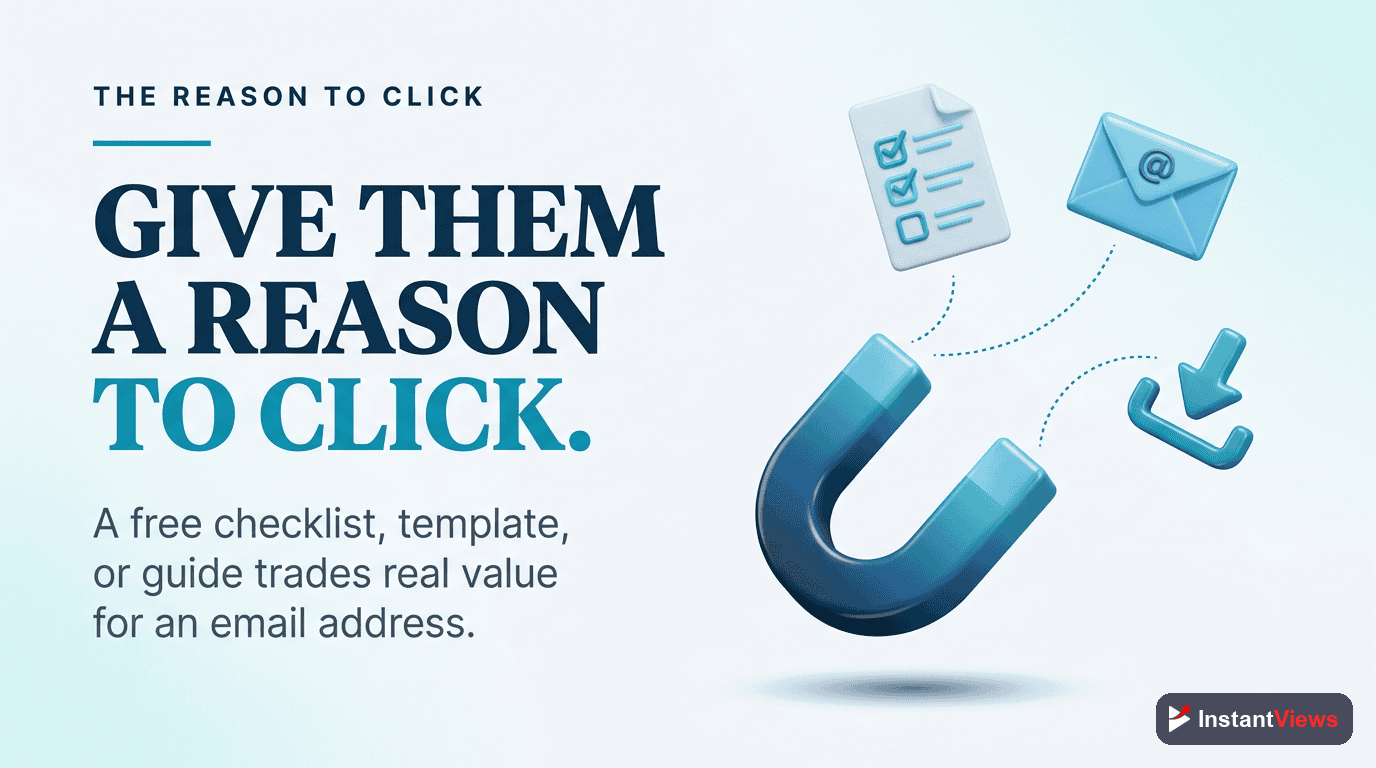
Why a Dedicated Landing Page Beats Your Homepage
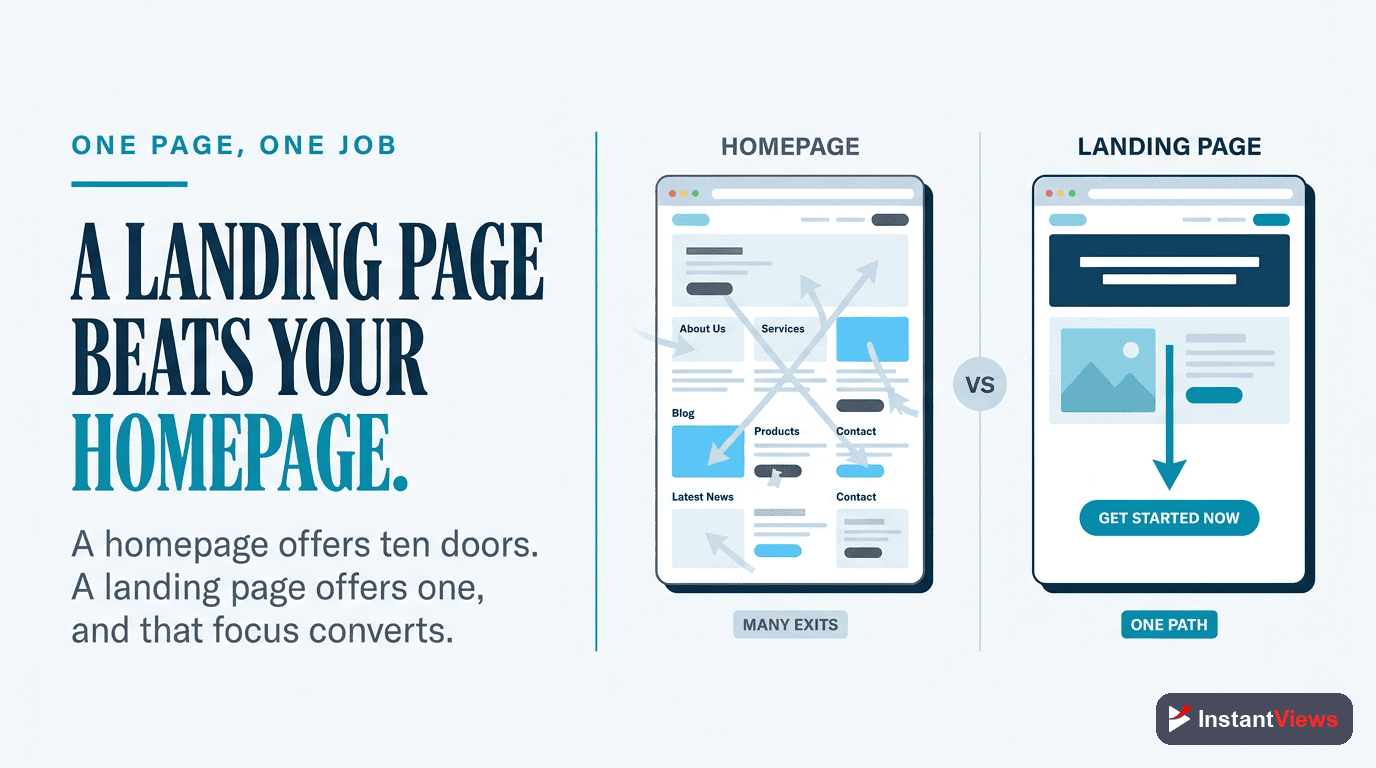
Here is where most of the leaked revenue hides. A creator does everything right — great video, clear call to action, a real reason to click — and then sends the click to their homepage. A homepage is a hub with dozens of competing links and no single focus. The visitor who arrived ready to act now has nowhere obvious to go, and they bounce.
A dedicated landing page solves this. It is a single page with one job: continue the exact promise from your video and ask for one action. There is no navigation menu pulling attention away, no competing offers, just a headline that matches the video, a short explanation, and one form. That focus is why a well-matched landing page can convert at rates many times higher than a generic page or a sidebar form.
What a High-Converting Landing Page Includes
- A headline that mirrors your video: the same words you said on camera, so the visitor instantly knows they are in the right place.
- One clear action: a single form and a single button. Every extra choice lowers conversion.
- Just enough fields: asking only for an email maximizes sign-ups; adding a field or two qualifies leads better but reduces volume — choose based on your goal.
- Proof and clarity: a sentence on what they get and when, plus any quick social proof, removes last-second hesitation.
- Instant delivery: the freebie should arrive immediately, making the first off-YouTube experience a win.
Email Capture, Nurture, and Retargeting
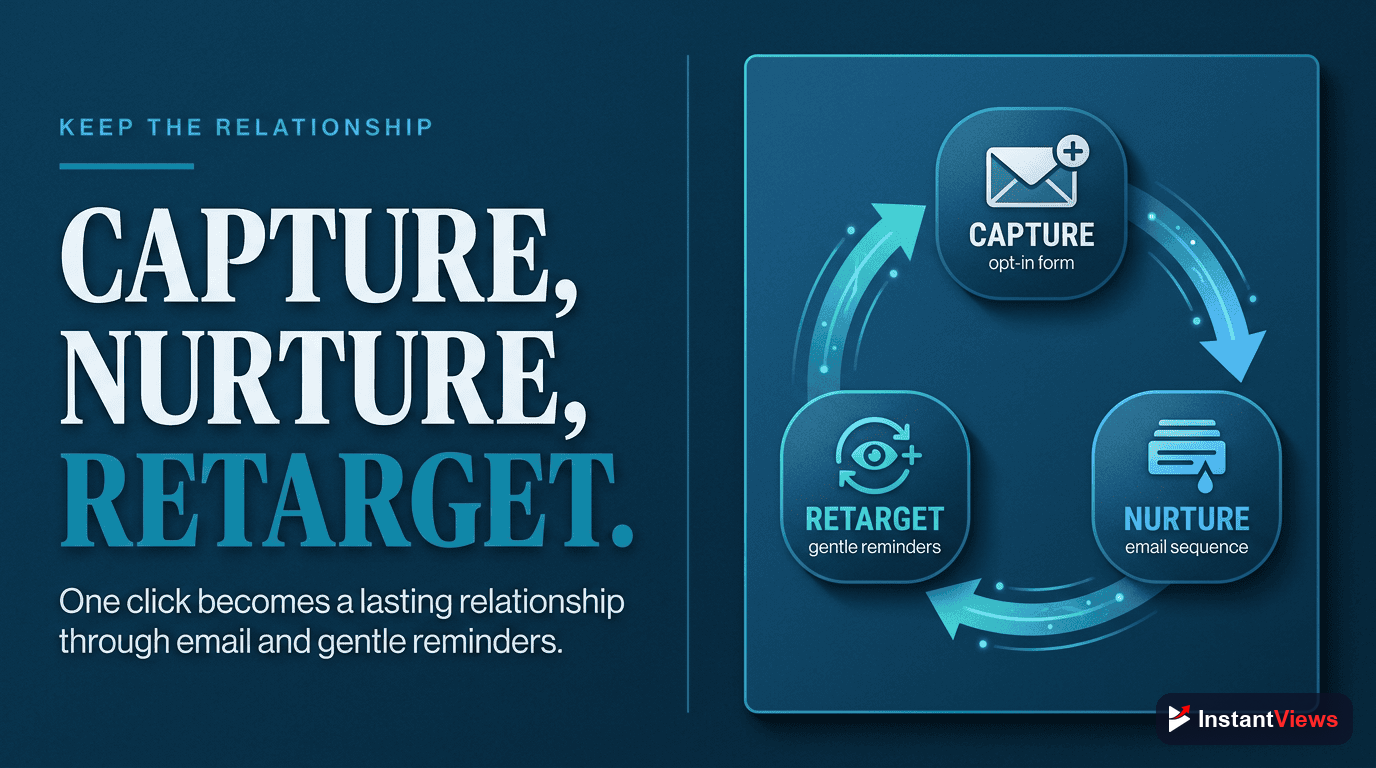
Capturing the email is the moment a rented viewer becomes an owned contact — but capture is not conversion. What you do next determines whether that email turns into a sale or sits unused in a list.
Nurture Before You Sell
Deliver the lead magnet instantly, then follow up with a short sequence of emails that each stand on their own as useful content. The pattern that works: lead with value, build trust over several messages, and only then make a clear offer. Speed matters too — following up quickly while interest is fresh dramatically outperforms a message that arrives days later, when the lead has gone cold.
Retargeting: The Optional Accelerator
Not everyone clicks, and not everyone who clicks signs up. Retargeting lets you reach those people again. You can show ads to viewers of a specific video, to people who visited your landing page but did not convert, or to your channel subscribers. Custom-intent and remarketing audiences mean your follow-up reaches warm prospects instead of strangers, which is why retargeting tends to be far more efficient than cold advertising.
Retargeting is genuinely optional. The organic path — video, link, landing page, email — works on its own. Ads simply let you pour fuel on a fire that is already burning, by re-reaching the people who showed interest but did not finish the journey.
Track What Actually Drives Sales
You cannot improve a path you cannot see. The bridge from YouTube to your website crosses two analytics systems, so you need to connect them deliberately. The tool that does this is the humble UTM tag — a few parameters added to your link that tell your website analytics exactly where a visitor came from.
- Tag every placement separately: give the description link and the pinned-comment link different UTM tags so you can see which placement earns the click.
- Tag by video: include the video name or ID so you learn which specific videos send buyers, not just clicks.
- Watch the on-platform numbers too: end-screen and card click-through rates in YouTube Analytics show whether viewers are even reaching your link.
- Follow the whole chain: connect YouTube Analytics to your website analytics, email tool, and store so you can trace a viewer from click to sign-up to sale.
When the data comes in, look for the leak. If clicks are low, your offer or call to action needs work. If clicks are high but sign-ups are low, the landing page is the problem. If sign-ups are high but sales are low, your nurture sequence or offer needs attention. Fix the weakest link first — that is where the biggest gains hide.
Mistakes That Quietly Kill Conversions
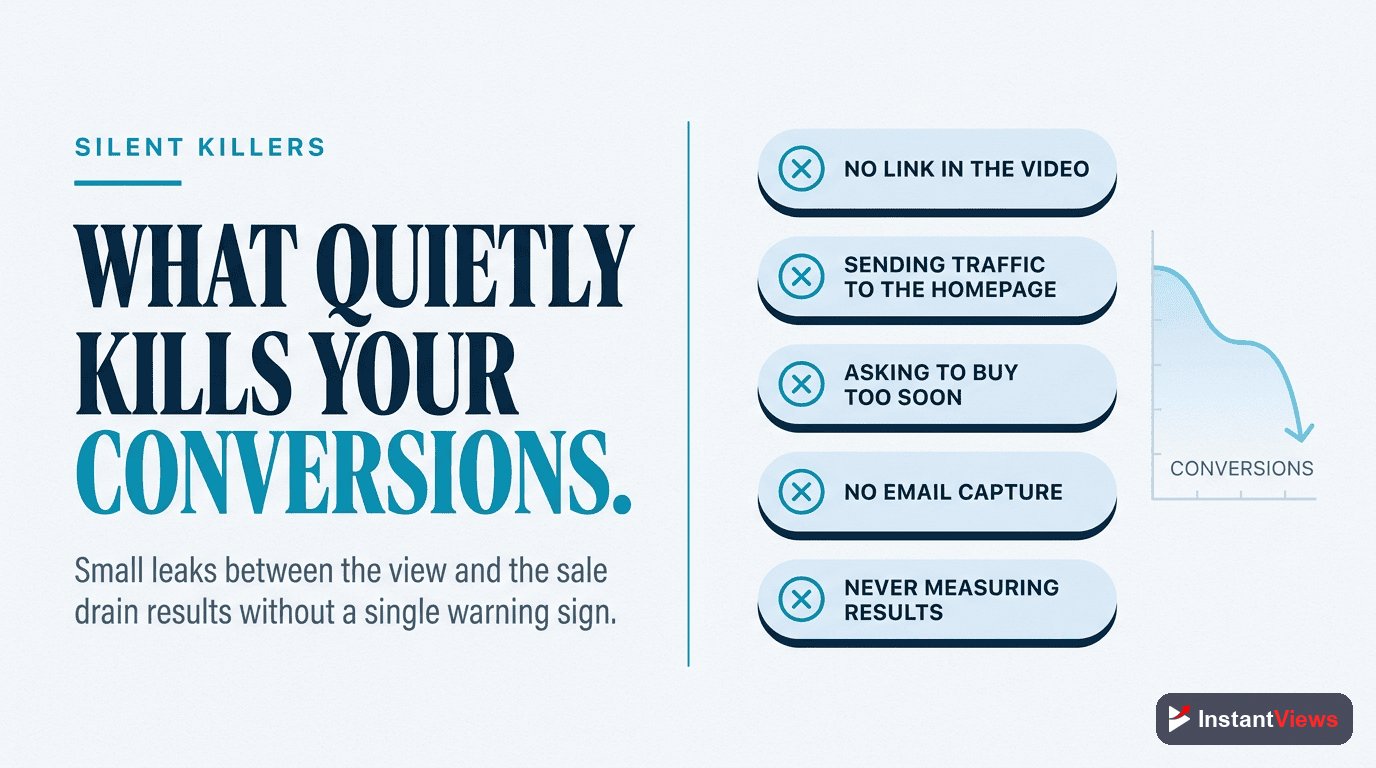
Most lost revenue does not come from a dramatic failure. It comes from small, invisible leaks repeated across every video. Watch for these:
- No clear next step: a great video that never tells the viewer what to do next leaves the most engaged people with nowhere to go.
- Selling to strangers: pitching a product to brand-new viewers before earning any trust burns your reach for nothing.
- Link below the fold: burying your primary link under Show More means most viewers never see it.
- Too many links: a description crammed with options dilutes the one action that matters and creates paralysis.
- Homepage as the destination: sending motivated clicks to an unfocused homepage wastes the hardest-won part of the journey.
- No email capture: sending all your traffic back to YouTube with no way to follow up means rebuilding your audience from zero with every upload.
- No tracking: without UTM tags you are guessing which videos work, so you cannot double down on the winners.
Each of these is small on its own. Together, they are the difference between a channel that quietly grows a business and one that racks up views while the revenue stays flat.
"A view is a hello. A click is a handshake. An email is an invitation back. The creators who win are the ones who never let the conversation end when the video does."
Frequently Asked Questions
Give viewers a clear, specific reason to click and place that link everywhere they look: the first lines of your description, a pinned comment, an end screen, and a verbal call to action in the video itself. Send them to a dedicated landing page that matches what you promised on screen, not your generic homepage.
YouTube hides your description after about three lines behind a Show More button, so your most important link belongs in those first lines. Reinforce it with a pinned comment, which stays at the top regardless of sort order, and an end-screen element in the final seconds. Keep it to one primary link so the next step is obvious.
A lead magnet is a free, genuinely useful resource — a checklist, template, mini-course, or toolkit — that you give in exchange for an email address. It matters because an email list is an audience you own and can reach any time, unlike YouTube viewers who only return when the algorithm sends them back.
Always use a dedicated landing page. A homepage offers dozens of competing links and no single focus, so it converts poorly. A landing page that continues the exact promise from your video, with one clear action, converts far better because there is nothing to distract the visitor.
Deliver value first, then place your strongest call to action when viewers are most invested, often around the two-thirds mark and again near the end. An early, soft mention can plant the idea, but a hard sell in the first seconds tends to push new viewers away before they trust you.
No. The entire path from view to sale can run on organic content, since every video, description, and pinned comment is a free touchpoint. Retargeting ads are an optional accelerator that let you re-reach people who visited your site or watched a video but did not convert the first time.
Add UTM tags to your links so each placement and video shows up separately in your analytics, and use distinct links for the description versus the pinned comment. Pair YouTube Analytics for on-platform behavior with your website analytics, email tool, and store data to follow a viewer all the way to purchase.
Because they treat the view as the finish line instead of the starting line. They publish great videos with no clear next step, send the few clicks they earn to a cluttered homepage, and never capture an email, so every upload starts the relationship over from zero.
Conclusion
Views are rented attention, but a website visitor and an email subscriber are an audience you own. The entire art of turning YouTube into revenue is the bridge between the two — giving every viewer one clear reason to click, making that click effortless, and catching them on a focused page that begins a relationship instead of ending one.
Start with a single video. Add one genuinely useful lead magnet, build one dedicated landing page that repeats its promise, place the link in your first description lines and a pinned comment, and say it out loud on camera. Capture the email, send a short sequence of value before any pitch, and tag your links so you can see what works.
Do that consistently and the math compounds. Each video stops being a billboard that scrolls by and becomes an on-ramp to a business you control — one where a curious watcher today is a paying customer tomorrow, long after the algorithm has moved on.