- In 2026, successful brands treat YouTube as a performance and customer-acquisition channel, not just a place to build awareness
- The full funnel runs discovery → education → trust → conversion, with Shorts introducing new audiences and long-form building the trust that converts
- Authentic, UGC-style reviews, try-ons, demonstrations, comparisons, and results clips out-convert polished commercials
- Organic content finds what resonates; paid amplifies the proven winners and retargets engaged viewers
- Measure conversions, cost per acquisition (CPA), and customer lifetime value (LTV) — not views — and many brands report YouTube delivers higher LTV than other paid channels
For years, marketers filed YouTube under "awareness." It was the place you ran a brand film, counted a few million impressions, and hoped some of that attention trickled down into sales you could never quite trace. That mental model is now badly out of date. With more than 2.7 billion monthly active users and roughly a billion hours of video watched every day, YouTube has quietly become one of the most powerful customer-acquisition engines on the internet — a channel that produces measurable customers, not just measurable attention.
The shift is happening because of how people buy. Before a purchase, viewers go to YouTube to validate a brand, understand a product, compare it against alternatives, and watch a real person use it. The decision that used to happen on a product page now happens inside a video. Brands that recognise this stop asking "how many views did we get?" and start asking "how many customers did we acquire, what did each one cost, and how much are they worth?"
This guide breaks down exactly how successful brands turn YouTube into an acquisition engine. You will see the full-funnel playbook, the specific content formats that convert strangers into buyers, how organic and paid reinforce each other, how first-party data unlocks efficient prospecting, and which metrics actually tell you whether the channel is working. None of it requires a Super Bowl budget — it requires a system.
By the end, you will be able to look at your own channel and see it not as a content library but as a machine with a clear job: take a person who has never heard of you and turn them into a paying, loyal customer.
- From Awareness Channel to Acquisition Engine
- The Full-Funnel Acquisition Playbook
- Mapping Each Funnel Stage to a Metric
- The Content That Actually Converts
- How Shorts and Long-Form Work Together
- Organic and Paid: Better Together
- First-Party Data and New-Prospect Targeting
- Measuring Acquisition, Not Views
- B2C vs B2B: Two Acquisition Patterns
- How Brands Acquire Customers: Step by Step
- FAQ
From Awareness Channel to Acquisition Engine
The old division of labour gave each channel one job: search captured demand, social built awareness, and email closed the sale. YouTube sat in the awareness box because it was easy to measure reach and hard to measure revenue. That tidy diagram has collapsed. Today YouTube does all four jobs at once, which is exactly why it has become a serious acquisition channel rather than a branding luxury.
Three forces drove the change. First, viewing moved to the living room: Connected TV is now the number-one viewing surface in the United States, accounting for roughly 60% of US watch time after passing mobile in late 2026. A "video ad" is now often a full-screen, lean-back experience on the biggest screen in the house. Second, the buying journey moved onto the platform — people genuinely research and decide inside YouTube. Third, the tooling caught up: brands can now connect customer data, product feeds, and conversion tracking so that a view can be tied to an actual sale.
The practical consequence is a change in scorecard. An acquisition-minded brand does not celebrate a video that got a million views and zero customers. It celebrates the unglamorous tutorial that quietly produces sign-ups every week at a cost it can predict. When you treat YouTube as an engine, every video has a job, every job has a metric, and every metric ladders up to customers acquired.
The Full-Funnel Acquisition Playbook
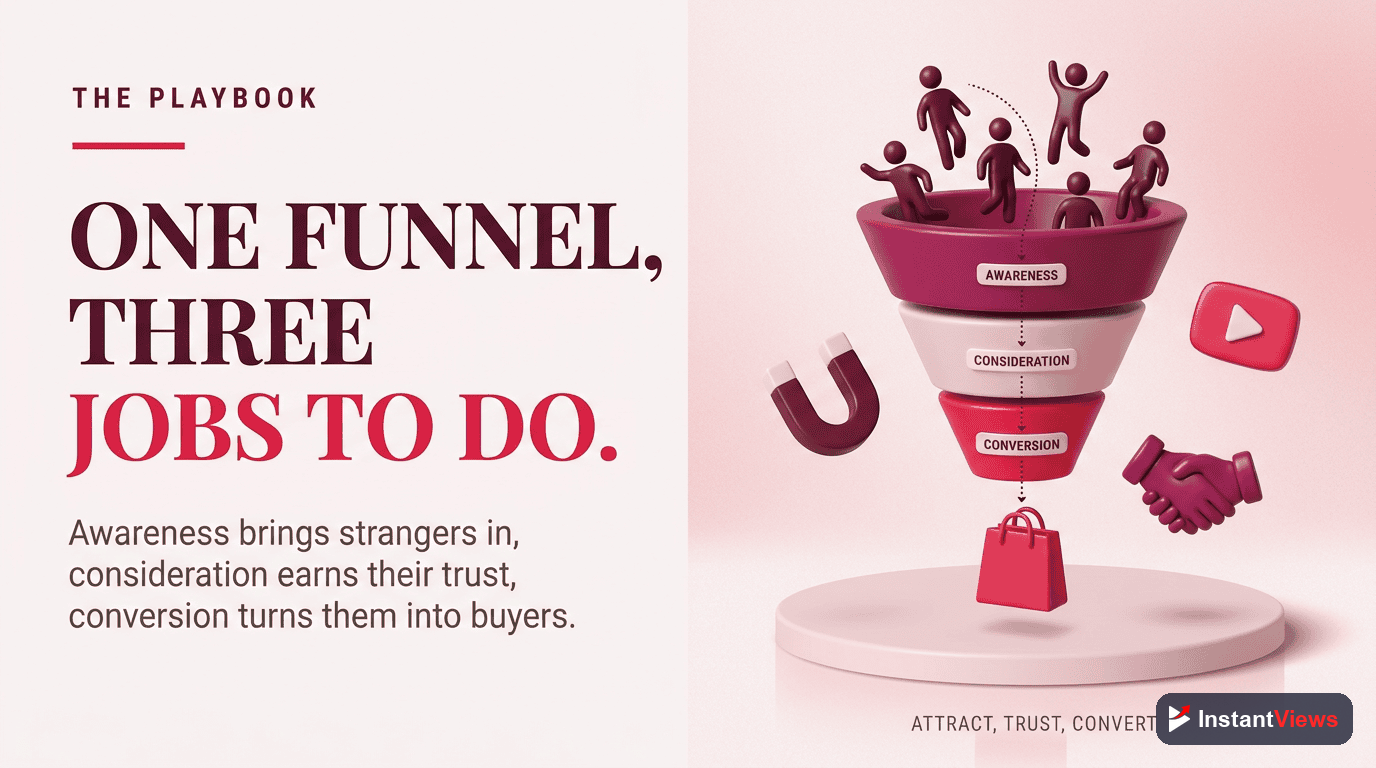
Brands that acquire customers on YouTube think in four connected stages: discovery, education, trust, and conversion. Each stage has a different goal, a different content type, and a different way to measure success. The mistake is trying to do all four in one video — or worse, only ever making discovery content and wondering why nobody buys.
Discovery — Get Found by the Right Strangers
The top of the funnel exists to reach people who have never heard of you, and to reach the right ones. Broad "how to," "best," and trend-driven topics pull in searchers and suggested-video traffic. The goal is not a sale; it is a strong first impression and a reason to watch one more video.
Education — Teach Before You Sell
Once a viewer knows you exist, education content earns the right to their consideration. Detailed tutorials, explainers, and "how it works" videos demonstrate competence and answer the real questions a buyer has. Teaching is the most reliable way to convert curiosity into respect.
Trust — Prove It With Real People
Trust is where most purchases are actually won. Reviews, demonstrations, before-and-after results, and honest comparisons let a viewer watch your product succeed for someone like them. This is the stage that polished advertising routinely under-serves and authentic content dominates.
Conversion — Make the Next Step Effortless
At the bottom, the viewer is ready; your job is to remove friction. A single, specific call to action — "start your free trial," "shop the kit," "book a demo" — plus clear links in the description, pinned comment, and end screen turns intent into action. If you want to see how these stages connect end to end, our deep dive on how to build a YouTube marketing funnel that converts walks through the mechanics in detail.
Mapping Each Funnel Stage to a Metric
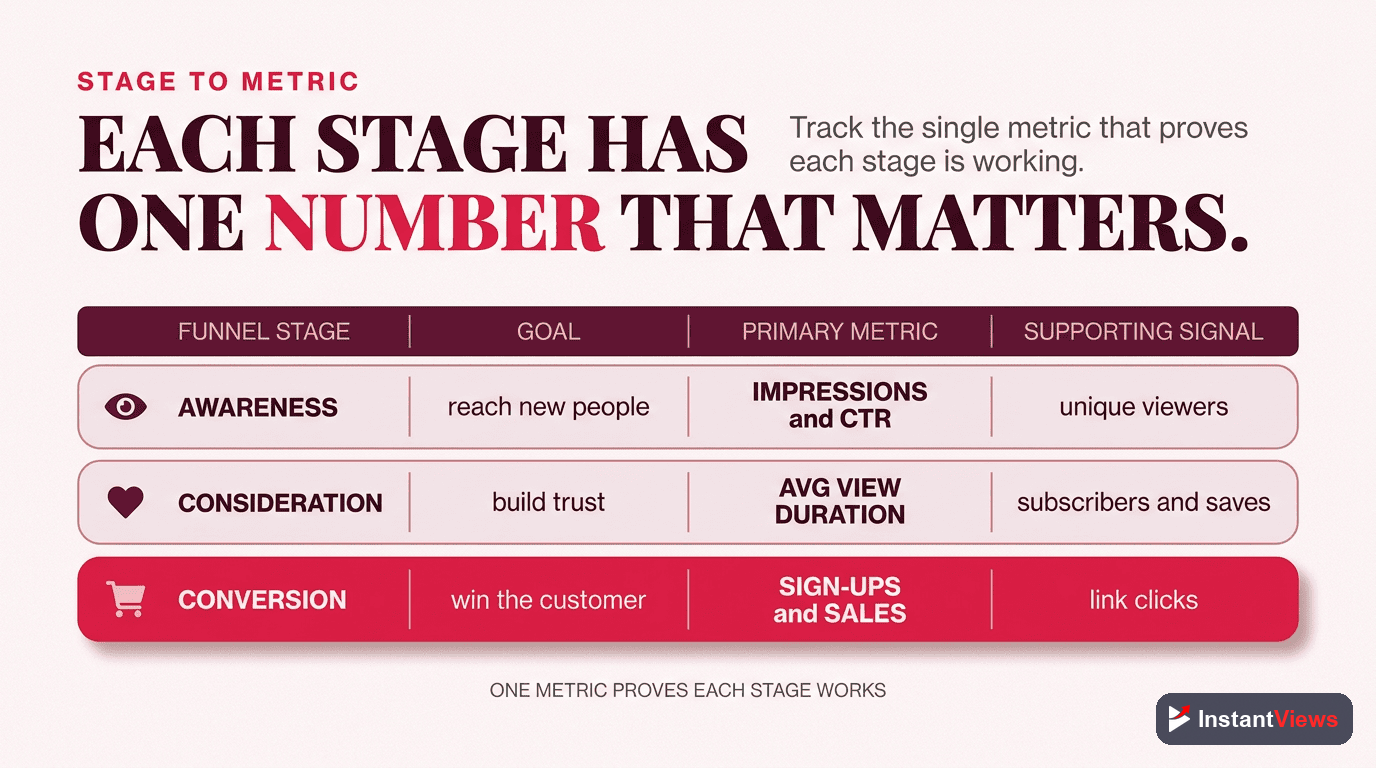
The fastest way to turn this playbook into a system is to assign each stage a goal, a content type, and a single metric. When you can name the weakest stage, you know exactly what to fix next.
| Funnel Stage | Goal | Content Type | Primary Metric |
|---|---|---|---|
| Discovery | Reach the right strangers | Shorts, trend and search videos, broad explainers | Impressions & click-through rate |
| Education | Earn consideration | Tutorials, how-tos, deep explainers | View duration & subscriber growth |
| Trust | Remove doubt | Reviews, demos, try-ons, comparisons, results clips | Returning viewers & engagement |
| Conversion | Acquire the customer | Offers, walkthroughs, retargeting ads | Conversions, CPA & LTV |
Notice that views never appear as a primary metric. Impressions and click-through rate measure whether discovery is working, but the bottom of the table — conversions, cost per acquisition, and lifetime value — is the only place acquisition is actually proven. The middle metrics are leading indicators that tell you whether viewers are progressing toward that point.
The Content That Actually Converts
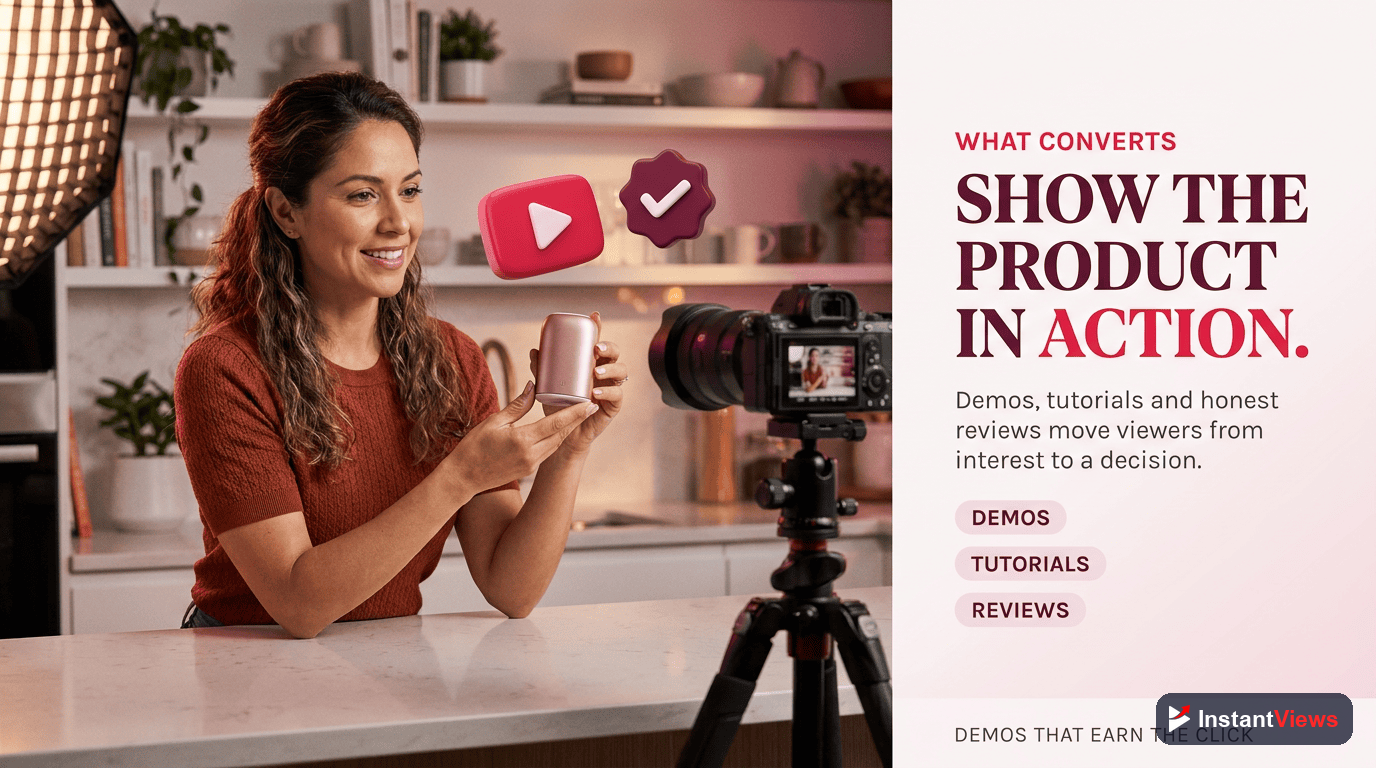
Here is the most counter-intuitive lesson in YouTube acquisition: the content that drives the most customers usually looks the least like an advertisement. The highest-performing brand assets in 2026 are authentic, user-generated-style videos — the kind that feel like a friend showing you something rather than a company selling you something.
Specifically, the formats that consistently convert are:
- Honest reviews: A real person walking through what they liked and did not, which reads as credible precisely because it is not flawless.
- Try-ons and unboxings: Seeing the product in real hands, in real light, at real scale, answers the questions a product page cannot.
- Demonstrations: Showing the product solving the exact problem the viewer has, step by step.
- Comparisons: Helping a viewer choose between you and the alternatives — honestly — which builds trust even when you do not win every point.
- Results clips: Before-and-after outcomes and transformations that make the benefit concrete instead of abstract.
Why does this work so well? Because video is the closest thing to trying a product before you own it, and a real human voice is more persuasive than a script. UGC-style content earns trust that glossy commercials struggle to match, and that trust is what converts. The lesson is not to abandon production quality entirely — it is to lead with authenticity and let polish serve the message rather than replace it.
Authentic does not mean unverified. Avoid mass-produced, low-value clips churned out at volume — YouTube is actively reducing the spread of that kind of content in 2026, and viewers see through it instantly. Authenticity is a quality of honesty and relevance, not an excuse for carelessness.
How Shorts and Long-Form Work Together
Shorts and long-form videos are not competitors; they are two halves of the same acquisition machine. Confusing their jobs is one of the most common reasons brands plateau.
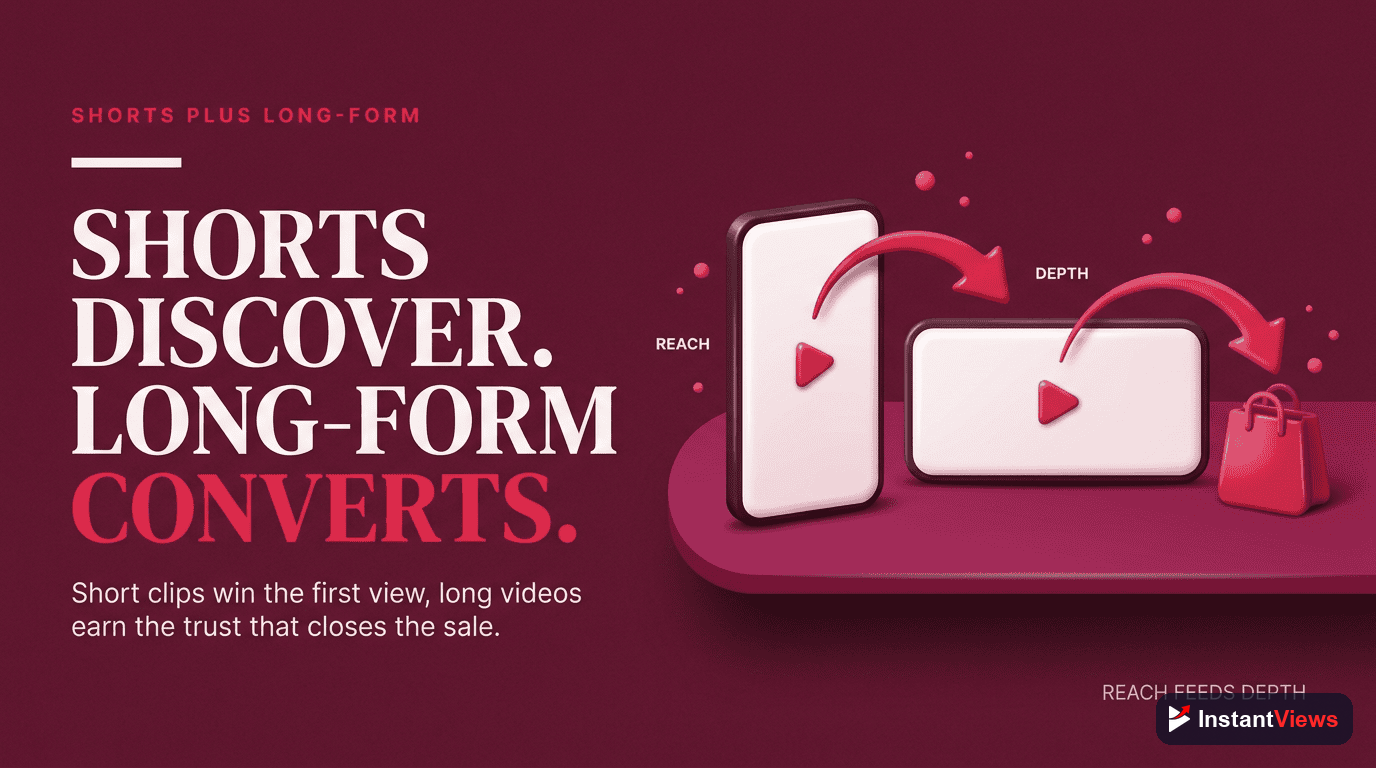
Shorts are the introduction. With more than 200 billion views a day, Shorts are the fastest way to put your brand in front of audiences who have never heard of you. They are cheap to produce, easy to test, and ruthlessly efficient at discovery. A single hook — a surprising result, a quick demo, a bold claim — can reach thousands of new people in a day.
Long-form builds the trust that converts. A 45-second Short can spark curiosity, but it cannot fully answer a buyer's questions or earn deep confidence. That work happens in longer reviews, tutorials, and demos where the viewer spends real time with you. The 2026 algorithm rewards exactly this: it optimises for viewer satisfaction and retention, so the videos that genuinely hold attention are the ones the platform keeps recommending.
The winning pattern is a relay race. A Short catches a stranger and hands them off — through a pinned comment, an end screen, or a linked video — to a long-form piece that does the convincing. Brands that produce only Shorts get reach without revenue; brands that produce only long-form get depth without discovery. You need both batons moving.
Organic and Paid: Better Together
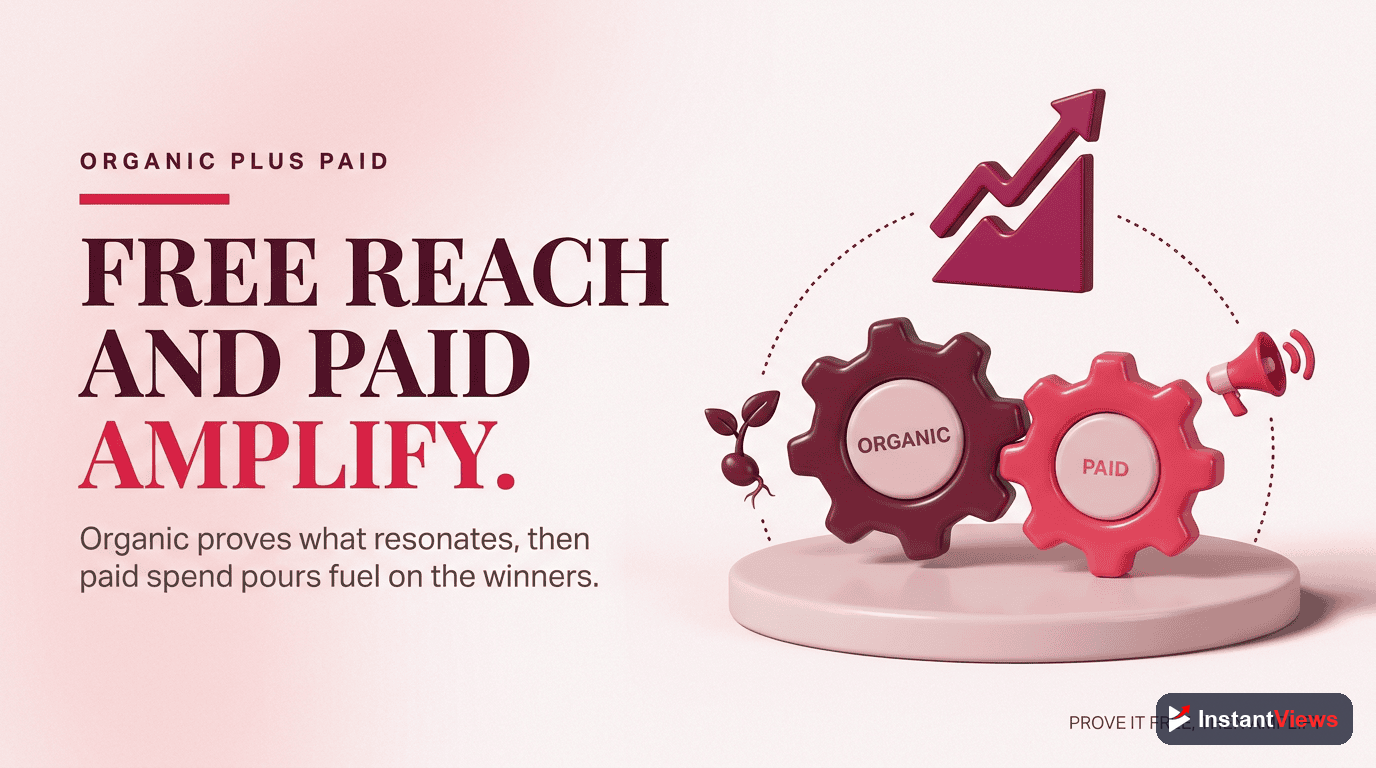
The biggest efficiency unlock in YouTube acquisition is treating organic and paid as one system instead of two budgets. Each does something the other cannot, and together they compound.
Organic Is Your Testing Ground
Organic content tells you the truth for free. When you publish a range of hooks, formats, and creators, real viewers vote with their attention. The video that over-performs organically has already proven that its message resonates — no focus group required. That is invaluable market research you would otherwise pay to learn.
Paid Amplifies the Proven Winners
Once organic reveals a winner, paid puts fuel on the fire. Instead of guessing which message to put money behind, you promote the asset that already earned engagement, pushing it to cold audiences at scale. Paid also lets you retarget viewers who watched a trust-stage video but did not convert — the warmest audience you have.
This loop — test organically, amplify what wins, retarget the engaged — is how brands keep their cost per acquisition under control while scaling. It also keeps creative fresh, because organic is constantly surfacing the next winner to promote.
First-Party Data and New-Prospect Targeting
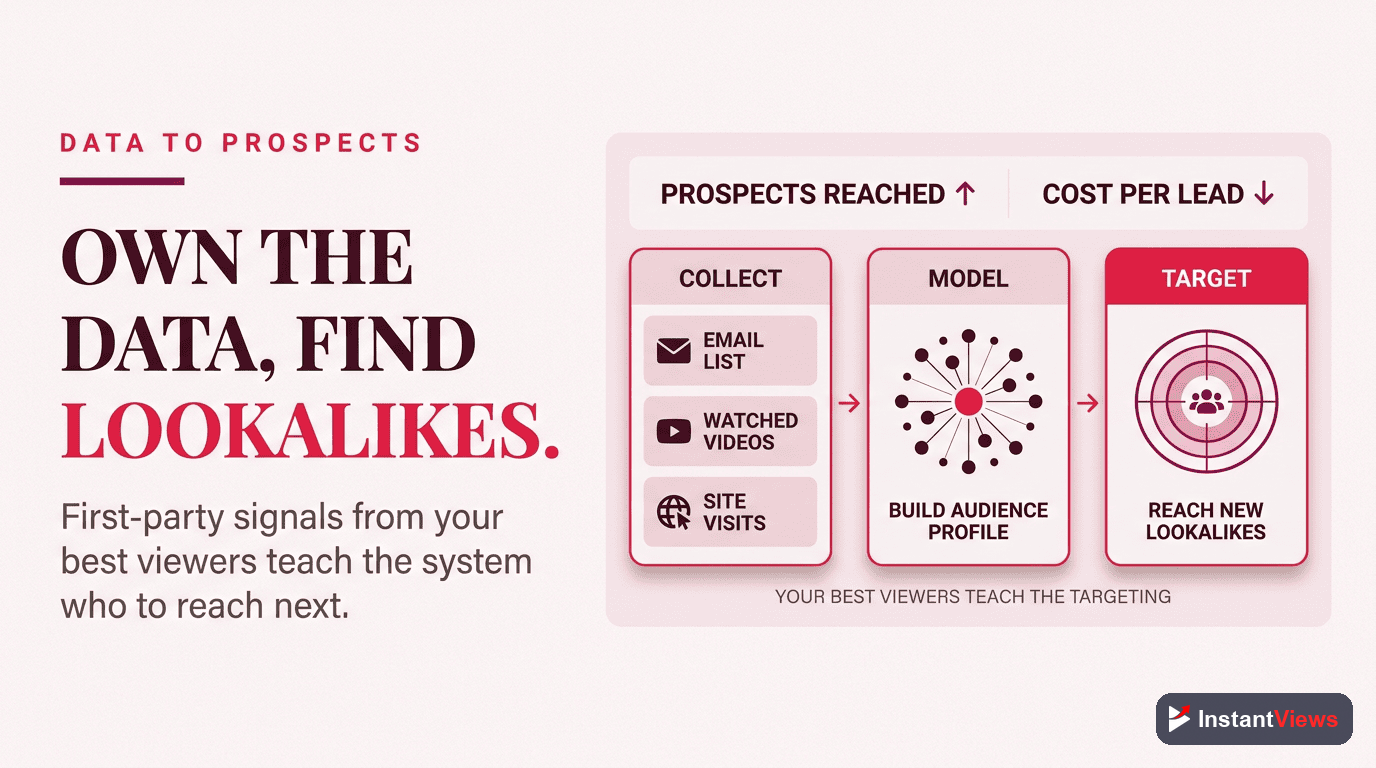
Targeting is where acquisition gets genuinely efficient, and it is built on data you already own. First-party data — your customer lists, sign-ups, and purchasers — is the raw material that lets YouTube find more people like your best buyers.
- Look-alike audiences: Upload a list of your existing customers and the platform can find new prospects who resemble them in behaviour and intent. Because you are modelling your best customers, prospecting becomes dramatically more efficient than broad targeting.
- New-customer (new-prospect) mode: A dedicated setting lets you target people who are unfamiliar with your brand while excluding existing customers, so your acquisition budget goes toward genuinely new business instead of paying to reach people who already buy from you.
- Product feeds: Connecting a product feed to your campaigns surfaces relevant products alongside your videos, turning a passive watch into a shoppable moment and lifting conversions.
The strategic point is sequencing. Use first-party data to define who your best customers are, use look-alikes to find more of them, use new-customer mode to make sure you are paying for fresh acquisition, and use product feeds to shorten the path from interest to purchase. Brands with well-organised customer data hold a real advantage here, because every campaign gets smarter as the data set grows.
There is also a retention dividend. The same first-party data that powers acquisition lets you cleanly separate prospecting from re-engagement, so you never waste acquisition spend on existing customers — and you can speak to each group with the right message.
Measuring Acquisition, Not Views
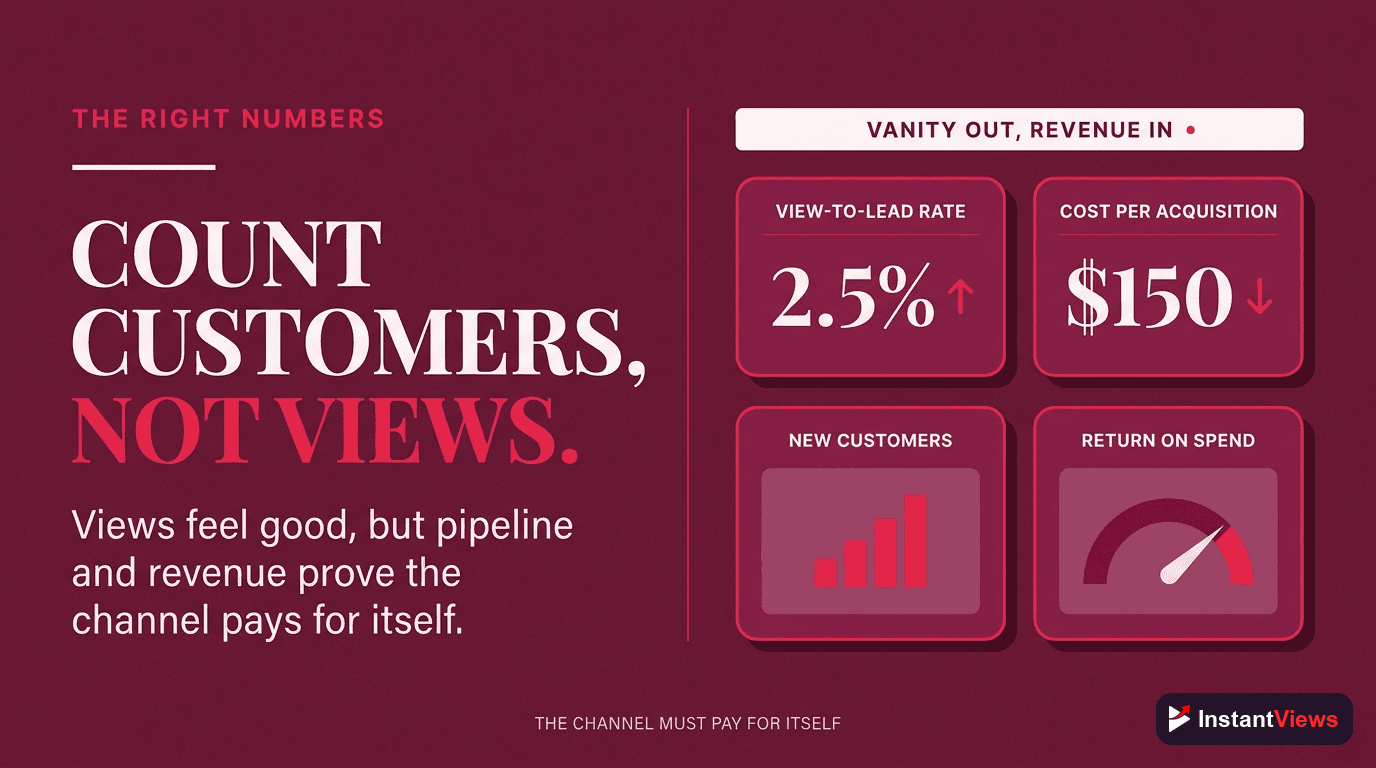
If you take one habit from this guide, make it this: stop reporting views as your headline number. Views measure attention, and attention is only the raw input. Acquisition is measured by three numbers that connect directly to the business.
- Conversions: How many people took the action that counts — a purchase, a sign-up, a booked demo. This is the true output of the channel.
- Cost per acquisition (CPA): What it cost, on average, to acquire one customer. CPA is the number that tells you whether the channel is sustainable and where to scale.
- Customer lifetime value (LTV): How much a customer is worth over the whole relationship. A higher CPA can be perfectly healthy if those customers stay longer and spend more.
The LTV point deserves emphasis, because it is where YouTube quietly shines. Many brands report that customers acquired through YouTube deliver higher lifetime value than those from other paid channels. The likely reason is that video lets a buyer understand your brand, see the product in action, and meet the people behind it before they ever purchase — so the customers who convert are better informed and better matched to what you offer.
To measure honestly, pair YouTube Analytics for on-platform behaviour with your CRM or e-commerce data for what happens after the click. Watch leading indicators — click-through rate, view duration, returning viewers — to diagnose which stage is leaking, but judge the channel itself on conversions, CPA, and LTV.
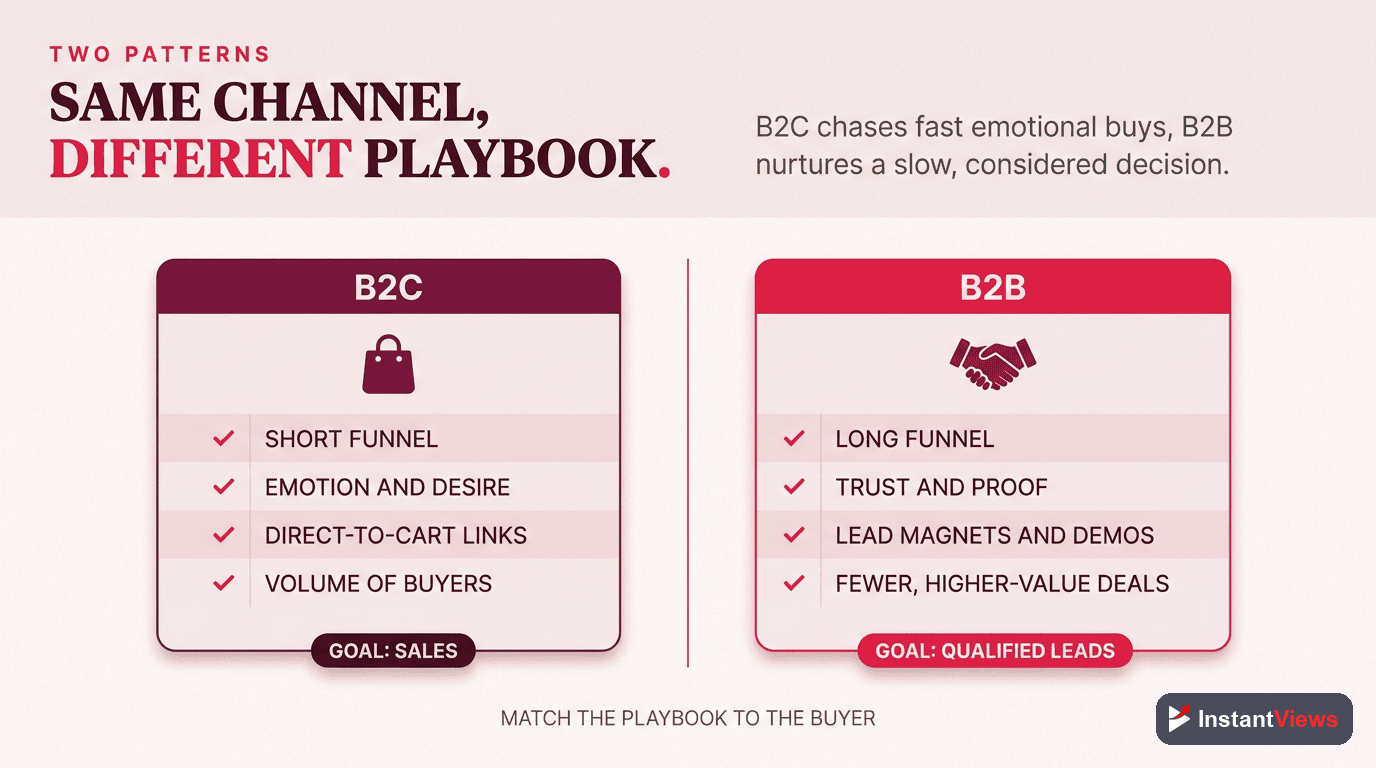
B2C vs B2B: Two Acquisition Patterns
The full-funnel logic is universal, but how it plays out depends on what you sell. Two patterns dominate, and copying the wrong one is a common, expensive mistake.
B2C and DTC: Reviews and Demos Drive Sales
Consumer and direct-to-consumer brands sell products people can decide on relatively quickly, so their acquisition content leans on reviews, try-ons, and demonstrations. The buying cycle is short: a compelling demo plus a clear offer can move a viewer from discovery to checkout in a single session. Trust-stage content — real results, real people — does the heavy lifting, and product feeds make the purchase frictionless.
B2B and SaaS: Tutorials Generate Leads and Demo Sign-Ups
Business and software buyers have longer cycles and more stakeholders, so their content leans on tutorials, how-tos, and educational explainers. The conversion is rarely an instant purchase; it is a demo sign-up, a trial, or a qualified lead that a sales team nurtures. Here, the trust stage is built by teaching deeply and consistently — proving expertise across many videos until the brand becomes the obvious choice when the buyer is ready.
The shared principle is to match the content and the conversion to your buyer's reality. A B2C brand demanding a "book a sales call" from a first-time viewer will fail, just as a B2B brand expecting an enterprise contract from a single Short will. Pick the pattern your customer actually follows, then build the funnel around it.
How Brands Acquire Customers: Step by Step
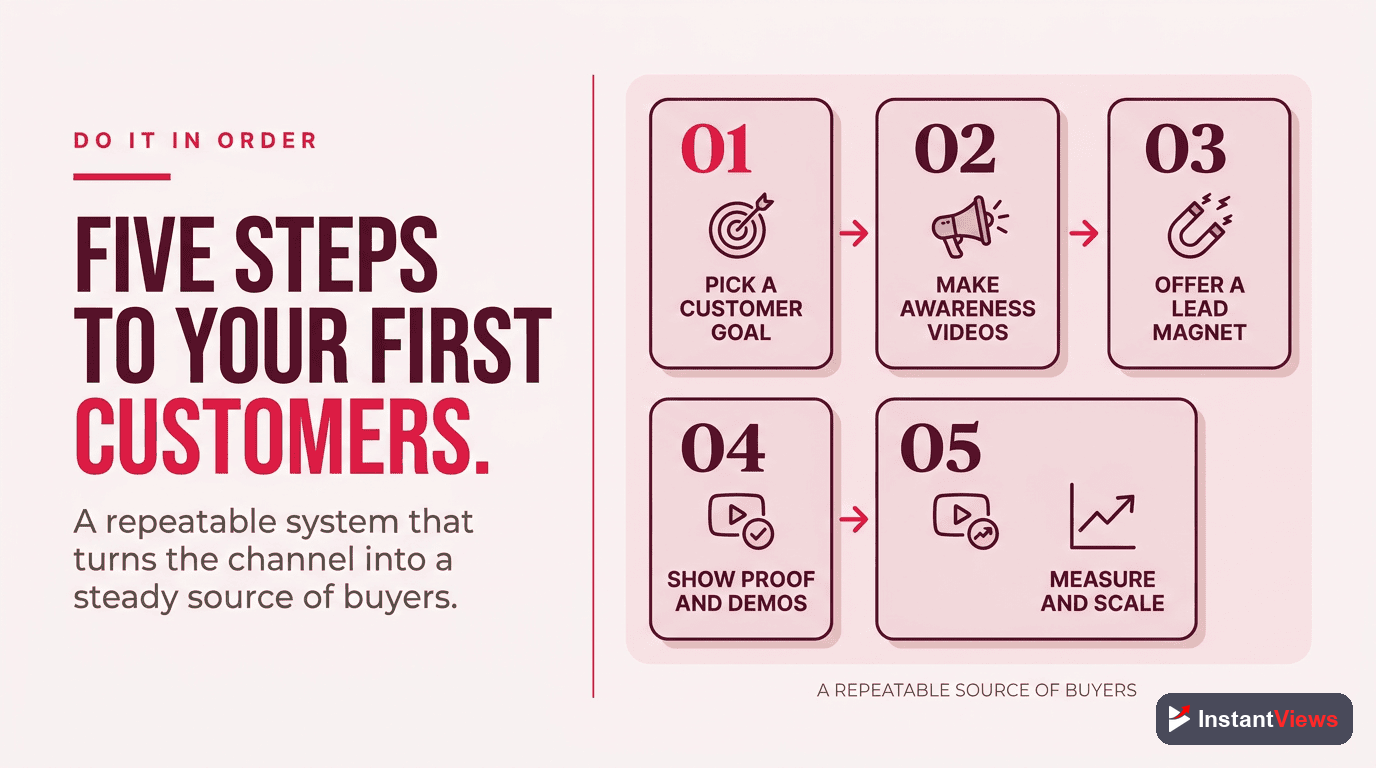
Here is the repeatable sequence successful brands follow to turn YouTube into an acquisition engine:
Define the Customer and the Conversion
Name your ideal customer and the single action that counts as acquisition — a sale, a demo sign-up, or a qualified lead. Everything else works backward from this decision.
Map Content to Every Stage
Build discovery content to get found, education content to teach, trust content like reviews and demos, and conversion content with one clear offer. Every stage needs a video; no stage can be skipped.
Test Organically, Amplify the Winners
Publish a range of organic creative, watch what real viewers reward with attention, then put paid budget behind the proven winners and retarget viewers who engaged but did not convert.
Activate First-Party Data
Upload customer lists to build look-alike audiences, switch on a new-customer mode to reach fresh prospects while excluding existing buyers, and connect a product feed to make videos shoppable.
Measure, Then Reinvest
Track conversions, CPA, and LTV across YouTube Analytics and your CRM. Find the weakest stage, fix it first, and pour budget back into the content and audiences that produce the best customers.
Build Your Acquisition Engine Faster
Explore our free suite of YouTube tools to research topics, sharpen titles, and analyze which videos are pulling their weight at every stage of your funnel.
Explore Free YouTube Tools →"The brands winning on YouTube in 2026 stopped chasing views and started counting customers. They treat every video as a worker with a job, measure the cost of each customer it brings in, and reinvest in whatever proves it can do the work."
Frequently Asked Questions
Yes. In 2026, leading brands treat YouTube as a full-funnel performance channel that produces measurable conversions, not only impressions. Audiences now use YouTube to validate brands, compare alternatives, and make purchase decisions, so the platform sits across discovery, education, trust, and conversion rather than at the top of the funnel alone.
The highest-performing brand content looks authentic rather than polished: user-generated-style reviews, try-ons, demonstrations, honest comparisons, and real results clips. This kind of content earns more trust than glossy commercials and tends to drive higher watch-through and conversion because viewers see a real person and a real outcome before they buy.
Shorts introduce your brand to brand-new audiences at scale and create cheap discovery, while long-form videos build the depth of trust that actually converts. A common pattern is to hook a stranger with a Short, then move them toward a longer review, demo, or tutorial that answers their real questions and leads to a purchase.
Organic content is your testing ground: it reveals which messages, formats, and creators genuinely resonate with real viewers. Paid then amplifies those proven winners to cold audiences and retargets people who engaged but did not convert. Running them together is far more efficient than guessing which message to put money behind.
You can upload your own customer lists to build look-alike audiences of people who resemble your best buyers, which makes prospecting more efficient. A new-customer or new-prospect mode lets you specifically target people unfamiliar with your brand while excluding existing customers, and connecting a product feed can lift conversions by showing relevant products alongside your videos.
Track conversions, cost per acquisition (CPA), and customer lifetime value (LTV) rather than views or likes. Views measure attention, but acquisition is about how many customers you gained, what each one cost, and how much they are worth over time. Many brands report that YouTube-acquired customers deliver higher lifetime value than those from other paid channels.
B2C and direct-to-consumer brands lean on reviews, try-ons, and product demonstrations that drive sales relatively quickly. B2B and SaaS companies use tutorials, how-tos, and educational content to generate demo sign-ups and qualified leads, because their buying cycle is longer and conversion usually means a sales conversation rather than an instant checkout.
Video lets a viewer experience your brand, your product, and the people behind it before they buy, so the customers who convert tend to be better informed and better matched to what you offer. Brands frequently report that this produces higher customer lifetime value than other paid channels, even when the upfront cost per acquisition is similar.
Conclusion
YouTube stopped being a billboard and became a storefront, a showroom, and a sales associate all at once. The brands that acquire customers there are not the ones with the biggest budgets — they are the ones with the clearest system: a full funnel that carries strangers from discovery to conversion, authentic content that earns trust, and organic testing that tells paid exactly where to spend.
The pieces reinforce each other. Shorts feed long-form, long-form feeds trust, trust feeds conversion, and first-party data makes every campaign smarter than the last. Wrap it all in honest measurement — conversions, cost per acquisition, and lifetime value instead of vanity views — and you have a channel you can scale with confidence rather than hope.
Start where you are. Map your existing videos to the four stages, find the gap, and fill it with the kind of authentic, useful content that real buyers actually trust. Do that consistently, measure the customers it produces, and YouTube becomes what it is for the brands that take it seriously: a dependable engine for acquiring customers, not just collecting views.