- Sponsors care far more about your consistent average views than a single viral spike or raw subscriber count
- An engaged, well-defined niche audience routinely beats a larger but unfocused one, because sponsors pay to reach buyers, not just eyeballs
- Views, engagement rate, audience fit, niche, and consistency are evaluated together — no single number wins a deal on its own
- A clean media kit and a known engagement-rate number are the first assets brands ask for
- Common deal structures — flat fee, CPM, affiliate, and hybrid — each shift the role views play in what you earn
YouTube has paid creators more than $100 billion over the past four years, but a large share of serious creator income never shows up in the ad-revenue line at all. It comes from sponsors — brands that pay you directly to mention, demonstrate, or recommend their product inside your videos. And the first question almost every creator asks is the same: how many views do I need before a sponsor will work with me?
The honest answer is more nuanced than a single number. Views absolutely matter, because a sponsor is buying access to attention. But the creators who land good deals quickly are rarely the ones with the biggest channels. They are the ones who understand exactly how a sponsor reads their metrics — and who present those metrics in a way that makes the decision easy.
This guide breaks down precisely how view count and the numbers around it affect your ability to secure sponsorship deals in 2026. You will learn what sponsors evaluate first, why an engaged niche audience beats raw views, how to pitch when your channel is still small, the deal structures you will be offered, and how to build a media kit that does the convincing for you.
One quick distinction before we begin: this article is about one-off sponsored placements — a single integrated mention or a dedicated video. That is different from an ongoing brand partnership that spans many videos or a whole season. If you are interested in the longer relationships, see our companion guide on exploring brand partnership opportunities; here we focus on winning that first paid placement and the role views play in it.
- Why Views Matter — and Where They Stop Mattering
- What Sponsors Actually Evaluate
- Why an Engaged Niche Audience Beats Raw Views
- Consistency: The Metric Sponsors Trust Most
- How Deal Structures Change the Role of Views
- Building a Media Kit That Sells Your Numbers
- How to Pitch a Sponsor (Even When You Are Small)
- Land a Sponsor: Step by Step
- Mistakes That Cost Creators Deals
- FAQ
Why Views Matter — and Where They Stop Mattering
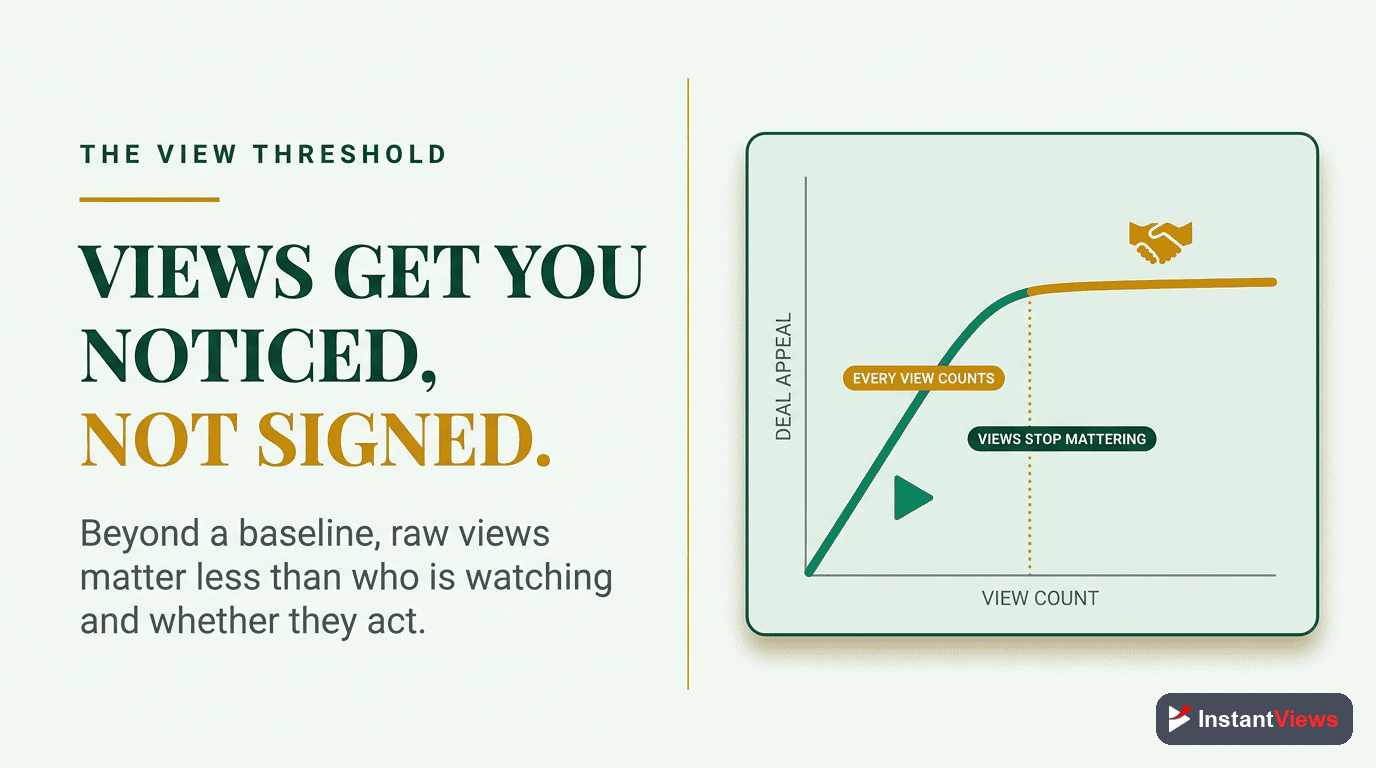
A sponsorship is, at its core, a media buy. The sponsor is paying to put a message in front of people, and views are the clearest proxy for how many people that message will reach. So yes — views are the foundation of your sponsorship value. More of the right views generally means more reach, which means a higher fee.
But raw view count quickly hits a ceiling of usefulness, for three reasons. First, a single viral video tells a sponsor almost nothing about what their integration will reach next month. Second, views without engagement suggest a passive audience that scrolls past recommendations. Third, views in markets where the sponsor does not sell are worth very little to that sponsor, no matter how large the number looks.
This is why experienced buyers rarely fixate on your biggest video or your subscriber count. They look at your average views per video over your most recent uploads — often the last ten to fifteen — because that average is the best available prediction of how a future sponsored video will perform. Your job is to make that average look reliable and relevant, not just large.
What Sponsors Actually Evaluate
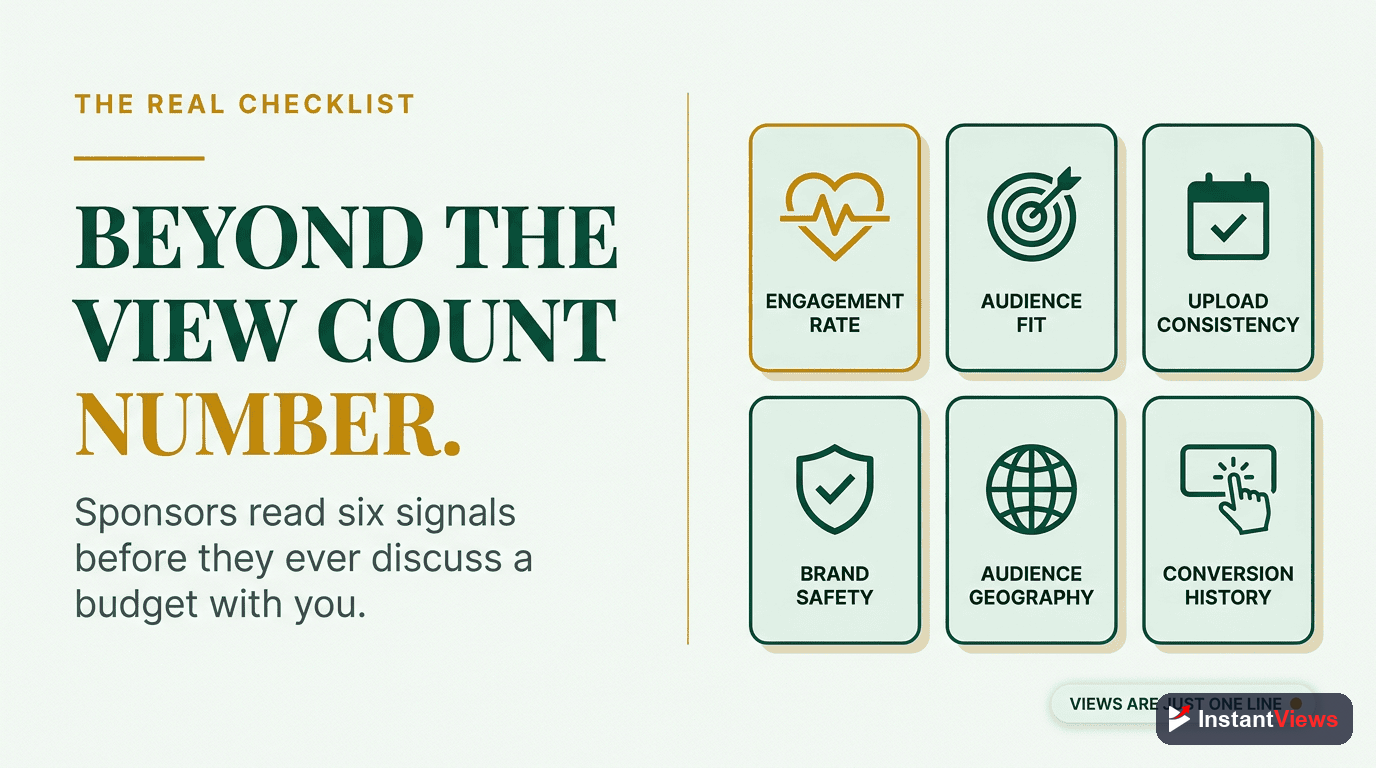
When a brand or its agency reviews your channel, they are not looking at one statistic. They are assembling a picture from several signals at once, then asking a single question: will a paid mention here reach enough of the right people to be worth the cost? Here are the signals that go into that picture.
| What sponsors look for | Why it matters to them |
|---|---|
| Average views per recent video | Predicts how many people a sponsored placement will actually reach, far better than a one-off viral hit. |
| Engagement rate (likes, comments, shares) | Signals an audience that pays attention and acts — the difference between being seen and being trusted. |
| Comment quality | Real, on-topic conversation suggests a genuine community rather than passive or inflated views. |
| Niche relevance | A channel whose topic matches the product reaches people already primed to buy it. |
| Audience demographics and location | The same view is worth far more when it reaches a market and customer the sponsor actually sells to. |
| Average watch time / retention | More time on screen means more room to deliver and land the sponsor message. |
| Upload consistency | Reassures the sponsor your numbers are repeatable and the deal will be delivered on schedule. |
| Brand safety and tone | Protects the sponsor from being associated with content that could damage their reputation. |
Notice that views appear in this list, but they share the table with seven other factors. A strong view count with a weak showing everywhere else is a much harder sell than a modest view count backed by high engagement, a tight niche, and a relevant audience. The 2026 platform reinforces this: YouTube now optimizes heavily for viewer satisfaction and retention and is actively reducing the spread of low-value, mass-produced content — so the channels that hold genuine attention are exactly the ones sponsors and the algorithm both reward.
Why an Engaged Niche Audience Beats Raw Views
Here is the single most important idea in this entire guide: a sponsor is paying to reach buyers, not eyeballs. Once you internalize that, the apparent paradox — smaller channels out-earning bigger ones — stops being a paradox at all.
Imagine two channels. One has a large, general audience that watches a bit of everything. The other is smaller but focused tightly on a single niche, with viewers who comment, ask questions, and act on recommendations. For a sponsor selling a product in that niche, the smaller channel can be the better buy — its viewers are pre-qualified, they trust the creator, and a recommendation lands as advice rather than as an ad.
Engagement Rate Often Outranks Size
Industry data in 2026 consistently shows that a smaller channel with a high engagement rate can outperform a much larger channel with weak engagement. Engagement benchmarks vary by niche — what counts as strong on a finance channel differs from a gaming one — but the principle holds across all of them: a high rate of comments, likes, and shares relative to views tells a sponsor the audience is awake and responsive. That is worth paying for.
Niche Fit Multiplies the Value of Every View
A view from someone who is exactly the sponsor target customer is worth a multiple of a view from someone who will never buy. This is why specialized niches — finance, software, business tools — command premium rates: the audience is small but unusually valuable. A clearly defined niche tells the sponsor that a large fraction of your views are the right views.
Audience Location Quietly Changes Everything
Two channels with identical view counts can be worth wildly different amounts depending on where their viewers live. A view in a market the sponsor sells into is valuable; a view in a market they do not serve is close to worthless to them. When you know your audience skews toward markets a sponsor cares about, say so early — it can matter as much as the headline view number.
"Sponsors do not buy your subscriber count. They buy the trust your audience has placed in you — and trust is measured in engagement and fit, not in raw views."

Consistency: The Metric Sponsors Trust Most
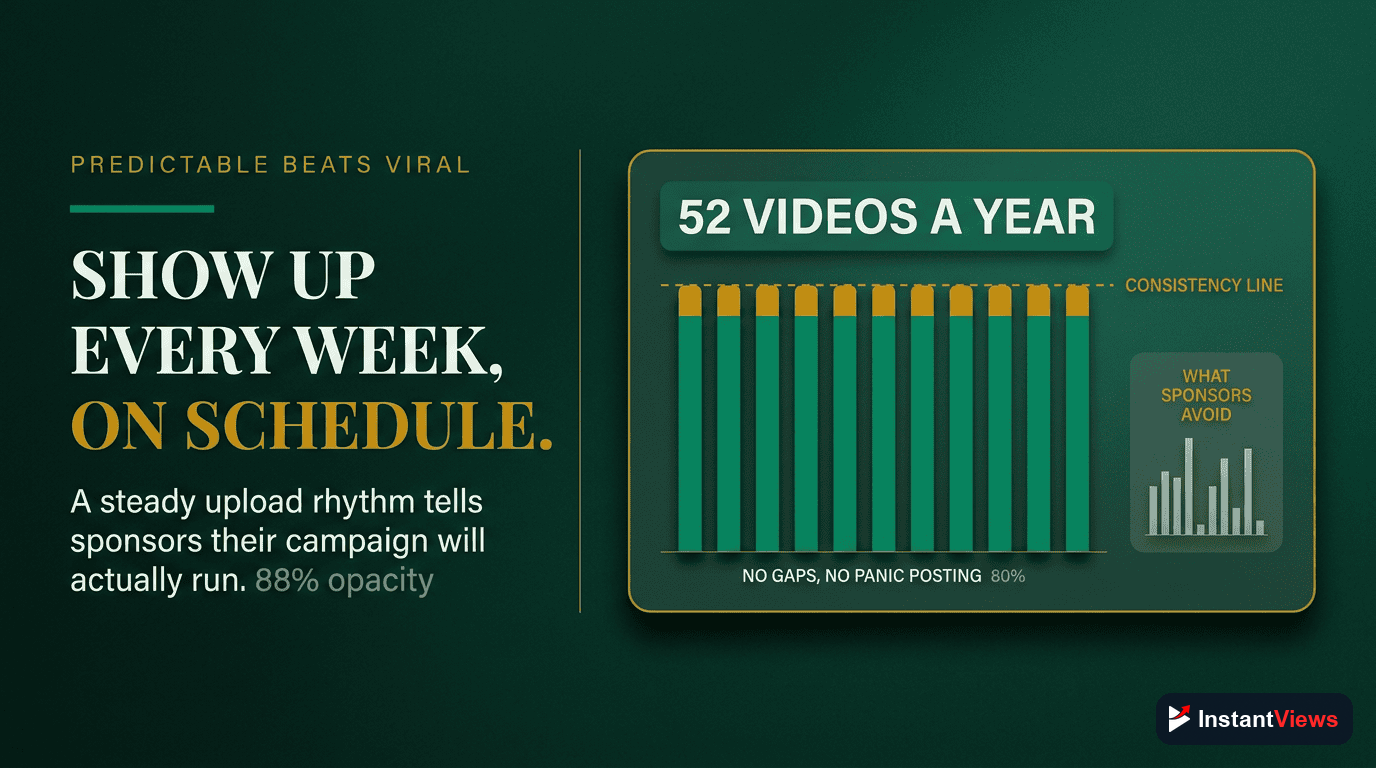
If views are the foundation, consistency is the structure built on top of it. A sponsor is making a bet on the future — on how a video that has not been published yet will perform. Nothing reassures them like a track record of steady, predictable numbers.
A channel that reliably pulls similar view counts across recent uploads is a low-risk buy. A channel with one massive video and a string of quiet ones is a gamble, because the sponsor cannot tell which outcome they are paying for. This is why consistent average views beat an erratic viral spike almost every time in a sponsor evaluation.
- Predictability: Steady numbers let a sponsor forecast reach and justify the spend internally.
- Reliability: A regular upload schedule signals you will deliver the sponsored video on time.
- Compounding trust: The longer your numbers hold, the easier each new deal — and the higher the rate you can command.
Building that consistency is its own discipline, and it starts with planning. Our guide on creating content calendars that drive consistent views walks through how to turn sporadic uploads into the steady cadence sponsors trust.
Never inflate your numbers with bought views or fake engagement. Sponsors and their agencies scrutinize comment quality, watch time, and audience authenticity precisely to catch this — and being caught does not just lose one deal, it ends your reputation with the brands that talk to each other. Honest, smaller numbers will always out-earn impressive fake ones.
How Deal Structures Change the Role of Views
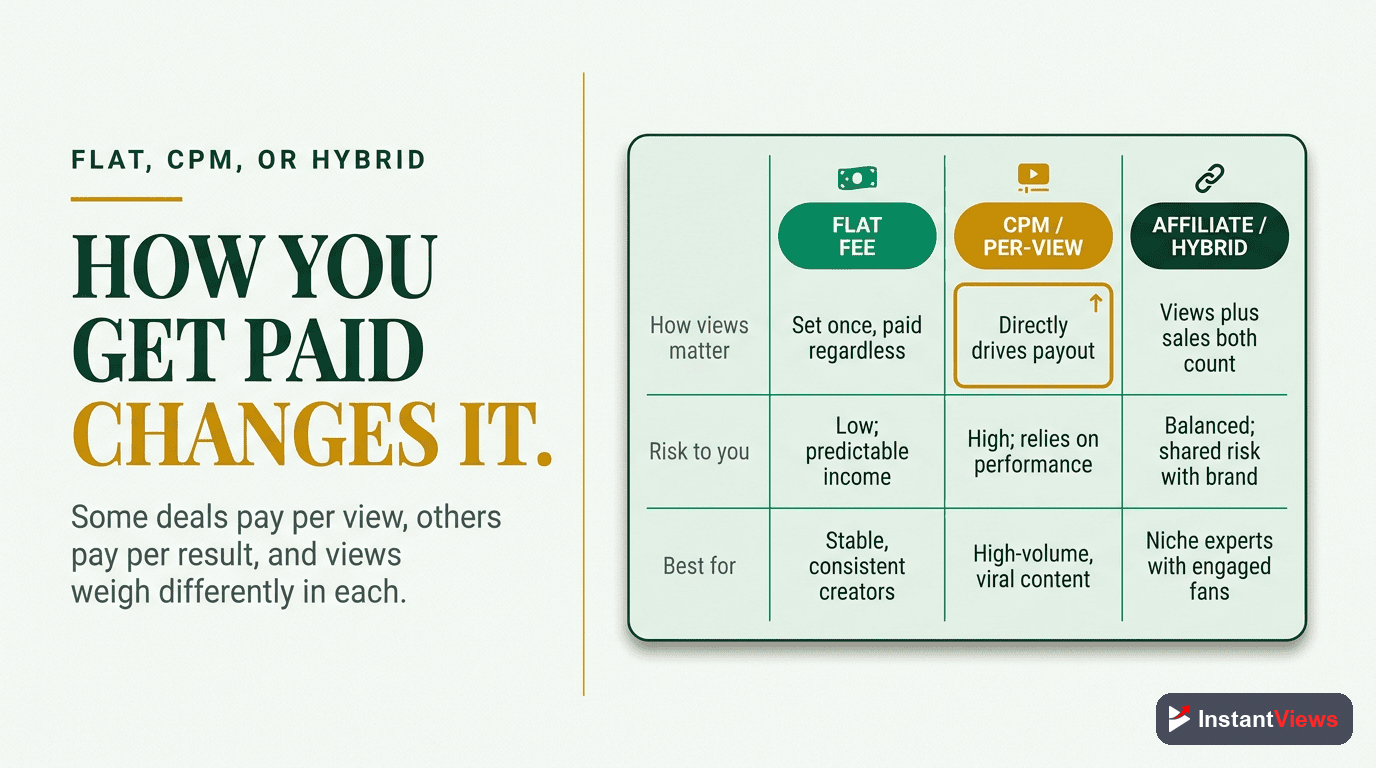
The way a deal is structured determines how directly your views translate into income. In 2026 you will encounter four common models, and it pays to understand how each one treats your view count. We will keep this qualitative — actual rates vary enormously by niche, audience, and market.
| Deal structure | How views factor in | Best for |
|---|---|---|
| Flat fee per video | You agree one price up front, usually based on your average views. Risk sits with the sponsor if the video underperforms. | Creators with steady, predictable view counts. |
| CPM (cost per 1,000 views) | You are paid per thousand views the sponsored video earns, so income scales directly with performance. | Creators whose views vary but trend strong. |
| Affiliate / performance | You earn a commission on tracked sales or sign-ups. Views matter only as far as they convert. | Creators with a highly engaged, action-taking audience. |
| Hybrid (base + commission) | A guaranteed base fee plus a per-conversion bonus — views set the floor, conversions add upside. | Mid-tier and larger creators; increasingly the 2026 standard. |
Flat fees reward consistent average views — the sponsor is essentially pre-buying your typical reach. CPM deals tie your pay straight to performance, which is great on a strong video and disappointing on a quiet one. Affiliate deals lean entirely on conversion, so a small but trusting audience can earn more than a large passive one. Hybrid arrangements, which pair a guaranteed payment with a performance bonus, have become increasingly common because they lower the sponsor risk while giving you upside — and they let smaller creators with great engagement prove their value through results.
Building a Media Kit That Sells Your Numbers
A media kit is a short document — often a single attractive page or two — that presents your channel to a sponsor at a glance. It is one of the first things a brand will ask for, so having one ready signals professionalism and keeps the conversation moving while less-prepared creators are still scrambling.
A strong media kit frames your numbers honestly but persuasively. Include the following:
- A one-line positioning statement: who you are and exactly what niche you serve.
- Average views per recent video: the headline reach number, not your single best video.
- Engagement rate: a clean, current figure — one of the first things brands ask for.
- Audience demographics and location: age, gender split, and top countries, drawn from YouTube Analytics.
- Subscriber count and upload cadence: context for your reach and proof of consistency.
- Past brand work or sample integrations: evidence you can deliver a clean sponsored placement.
- Clear contact details: an email or form a sponsor can reach you through immediately.
Keep it current. A media kit with months-old numbers undercuts the very professionalism it is meant to convey. Update it whenever your averages shift meaningfully, and tailor the lead metric to what a given sponsor cares about — engagement for a niche product, raw reach for a broad consumer brand.
Know Your Numbers Before You Pitch
Use our free suite of YouTube tools to track your average views, analyze engagement, and understand the audience data sponsors ask about — so you can pitch from a position of strength.
Explore Free YouTube Tools →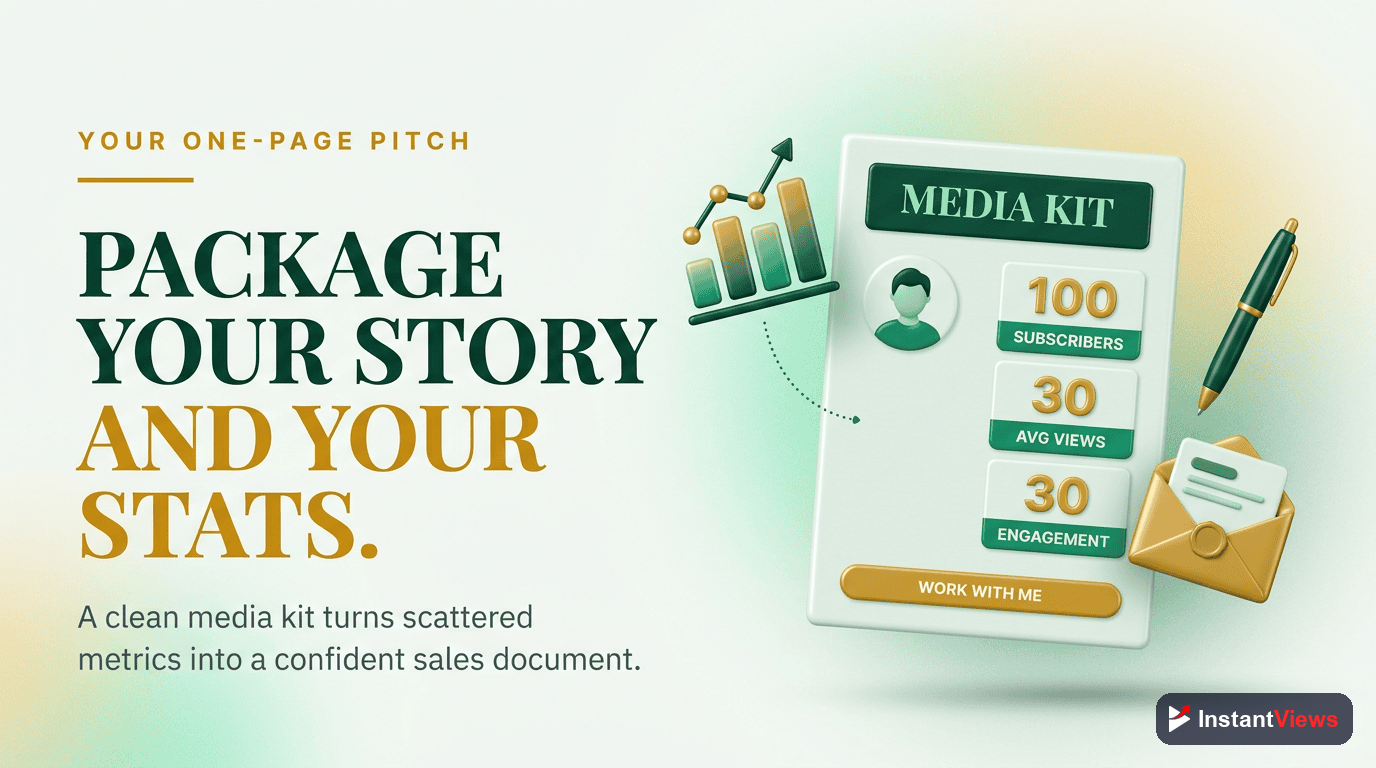
How to Pitch a Sponsor (Even When You Are Small)
The biggest mistake small creators make is assuming they need to wait until they are big. You do not. You need to pitch on fit and engagement rather than size, and frame your numbers as an advantage rather than apologizing for them.
Lead With Fit, Not Size
Open by showing that your niche and audience match the sponsor product. A brand selling to a specific audience would often rather reach 10,000 of exactly the right people than 100,000 random ones. Make that case explicitly.
Bring Proof, Not Promises
Point to a specific video where a similar mention, product, or topic performed well. Concrete evidence that your audience responds to this kind of content is far more persuasive than a vague claim that they will.
Propose a Structure That Lowers Their Risk
If your view count is modest, offer a hybrid or performance-based deal. By tying part of your pay to results, you signal confidence in your audience and remove the sponsor reason to hesitate over your size.

Land a Sponsor: Step by Step
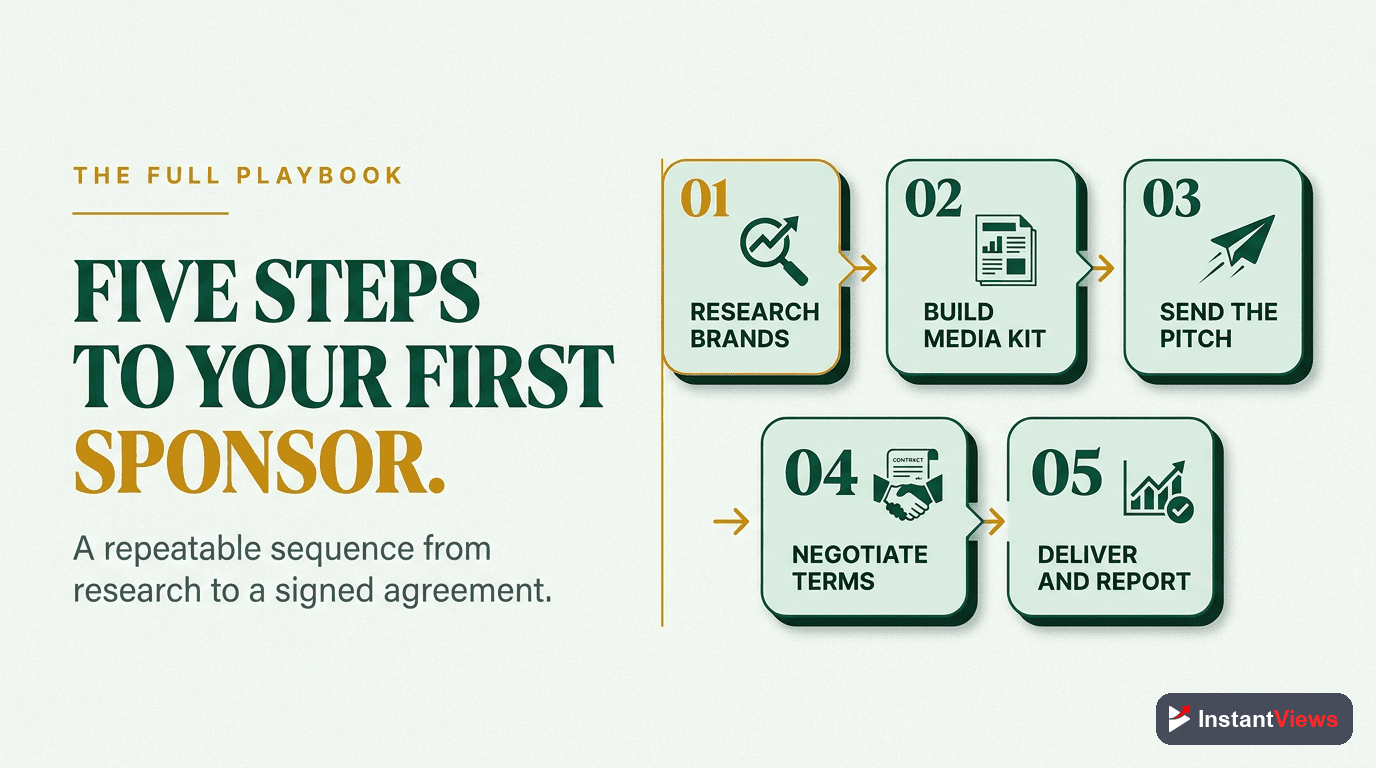
Here is a simple sequence to go from where you are now to a signed sponsored placement.
Know Your Numbers
Pull your average views across recent uploads, your engagement rate, and your audience demographics from YouTube Analytics. These are the figures every sponsor conversation will revolve around.
Build Your Media Kit
Turn those numbers into a clean one- or two-page media kit with your niche, audience data, average views, engagement rate, and any past brand work. Have it ready before anyone asks.
Target the Right Sponsors
List brands whose products genuinely fit your niche and audience and that already work with creators. A short, relevant list beats a mass email to companies that will never convert your viewers.
Pitch on Fit and Engagement
Send a concise pitch that leads with audience fit, references a relevant video, shares your engagement rate, and proposes a clear deal structure — ideally one that lowers the sponsor risk.
Agree Terms and Deliver
Pick a structure — flat, CPM, affiliate, or hybrid — confirm deliverables and required disclosure in writing, then deliver a clean integration and report the results to set up the next deal.
Mistakes That Cost Creators Deals
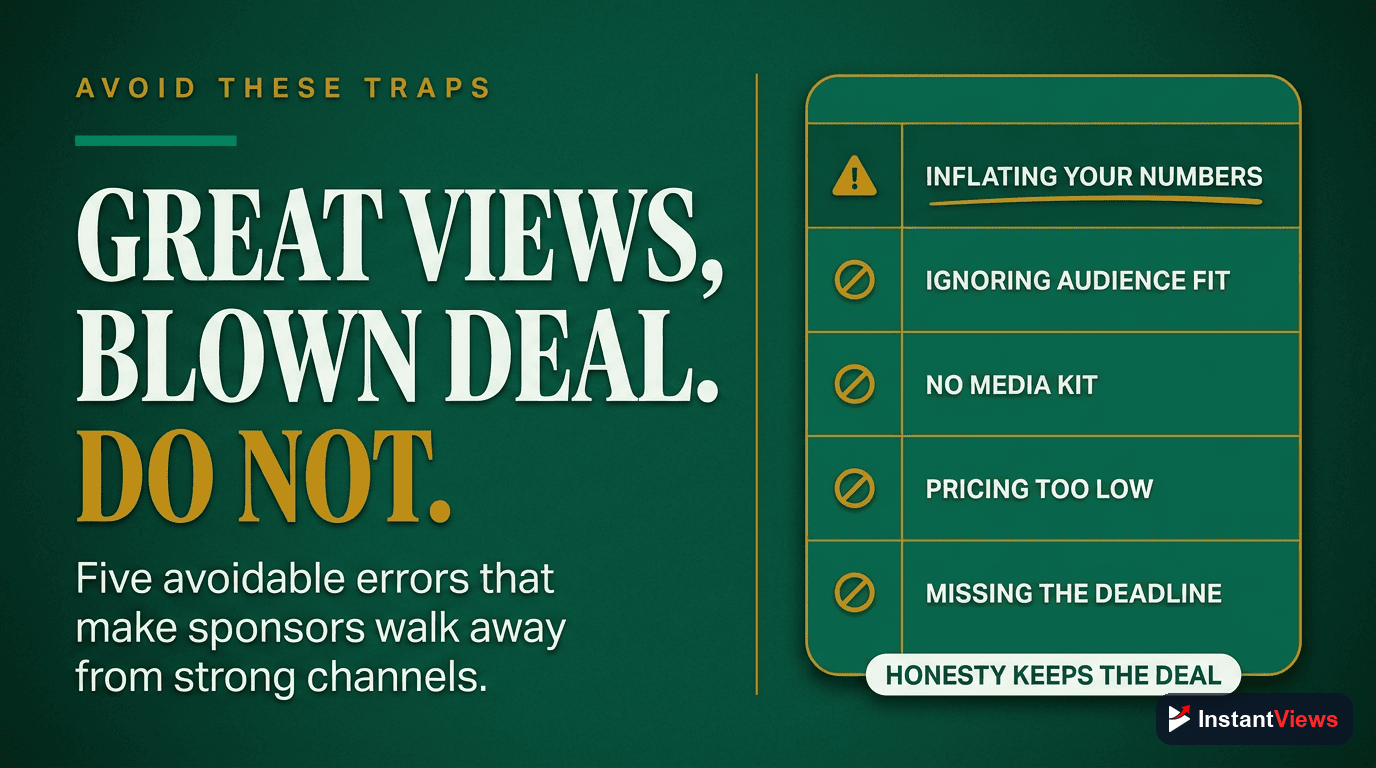
Even creators with great numbers lose sponsorships by stumbling on avoidable errors. Watch for these:
- Leading with subscriber count: Subscribers are a vanity headline. Sponsors value average views, engagement, and fit — lead with those instead.
- Quoting your best video as typical: Pitching your single viral hit as your normal reach sets an expectation you cannot meet, and sponsors notice immediately.
- Ignoring audience fit: Chasing any sponsor regardless of relevance produces placements that do not convert — and a sponsor who never returns.
- No media kit: Making a brand drag your numbers out of you signals you are not ready to work professionally.
- Inflated or bought engagement: Fake numbers are routinely caught and permanently damage your standing with the brands that talk to each other.
- Skipping disclosure: Failing to clearly mark paid content risks both platform penalties and the sponsor trust you worked to earn.
Avoid these and you will already be ahead of most creators competing for the same deals — including many with larger channels who never learned to present their numbers well.
"The creator who knows their engagement rate, their audience, and their fit will out-pitch the creator who only knows their view count — every single time."
Frequently Asked Questions
No. While views matter, most sponsors weigh consistent average views per video far more heavily than a one-off viral spike or raw subscriber count. A smaller channel with steady views, strong engagement, and a clearly defined niche is often more attractive than a large channel with erratic numbers and a vague audience.
Experienced sponsors typically review your average views across recent uploads, your engagement rate, comment quality, audience demographics and location, niche relevance, and how consistently you publish. They use these together to predict how many of the right people a sponsored mention will actually reach.
A sponsor is paying to reach buyers, not just eyeballs. An engaged niche audience trusts your recommendations and matches the sponsor product, so a smaller view count converts better than a large but unfocused audience. This is why a tightly targeted channel often out-earns a bigger general one on a per-view basis.
The common models are a flat fee per video, a CPM rate tied to expected views, an affiliate or performance commission, or a hybrid that combines a base fee with a commission. Hybrid deals that pair a guaranteed payment with a per-sale bonus have become increasingly standard for mid-tier and larger creators in 2026.
A media kit is a short document that presents your channel to sponsors: your niche, audience demographics, average views, engagement rate, past brand work, and contact details. It is one of the first assets brands ask for, so having a clean, current media kit ready makes you look professional and speeds up the conversation.
Yes. Audience geography is a major variable, because the same view is worth far more to a sponsor when it reaches a market they sell in. A channel with an audience concentrated in high-value markets can be worth many times more to a brand than one with the same view count spread across markets where the sponsor does not operate.
A sponsorship is usually a single paid placement — one integrated mention or dedicated video. A brand partnership is an ongoing relationship across many videos or a season. Securing one-off sponsorships is often the on-ramp to those longer partnerships, which we cover in our guide to exploring brand partnership opportunities.
Lead with fit and engagement rather than size. Show that your niche matches the product, share your engagement rate and audience demographics, point to a specific video where a similar mention performed well, and propose a hybrid or performance-based structure that lowers the sponsor risk. A clear, relevant pitch beats a big but generic one.
Conclusion
Views open the door to sponsorships, but they rarely close the deal on their own. Sponsors are buying access to the right people, and they read your channel the way an investor reads a business — looking at consistent average views, engagement, niche fit, audience location, and reliability all at once. The view count is the headline, but the story is everything around it.
That is genuinely good news if your channel is still small. You do not have to wait for a huge audience to start earning from sponsors. By building a clean media kit, knowing your engagement rate, targeting brands that fit your niche, and pitching on relevance rather than size, you can win deals that larger but less-focused creators miss — and you can structure those deals so your engaged audience works in your favor.
Start by pulling your real numbers today, turning them into a media kit, and reaching out to one well-matched sponsor. Land that first placement, deliver it cleanly, and report the results. That single deal becomes the proof that wins the next one — and, in time, the on-ramp to the ongoing brand partnerships that turn an audience into a durable business.