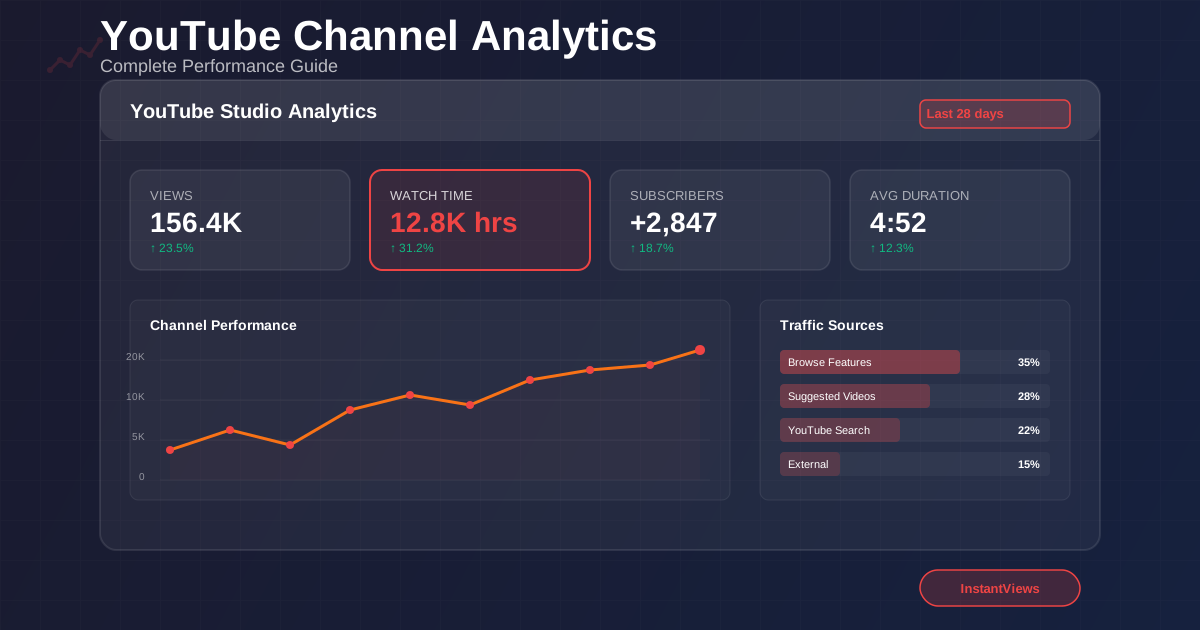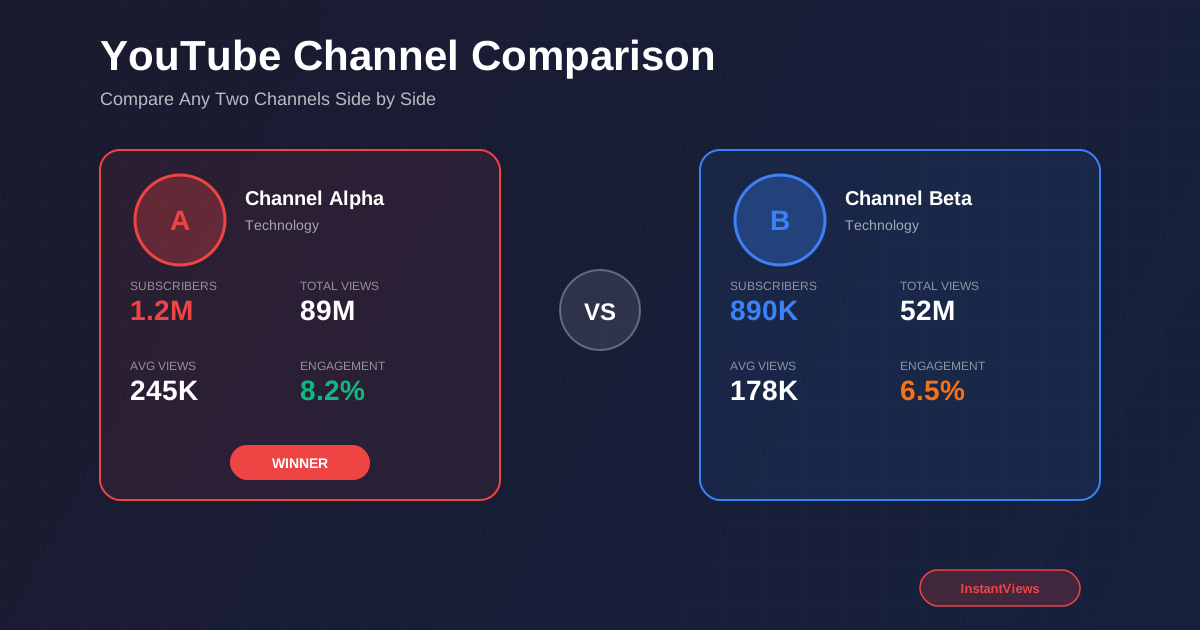
- YouTube channel comparison reveals winning strategies you can adapt to accelerate your growth
- Focus on comparing channels 10x-100x your size for the most actionable competitive insights
- Key comparison metrics include subscriber growth rate, views per video, engagement rate, and upload frequency
- Content strategy analysis uncovers successful topics, formats, and optimization patterns to replicate
- Use the InstantViews Channel Comparison tool for instant side-by-side analysis of any YouTube channels
Want to know the secret behind the fastest-growing YouTube channels? They all have one thing in common: they study their competition relentlessly.
Comparing YouTube channels is not about copying what others do. It is about understanding what works in your niche, identifying gaps you can fill, and discovering strategies that are already proven to succeed.
This comprehensive guide will teach you exactly how to compare YouTube channels effectively, which metrics matter most, and how to turn competitive insights into a growth strategy that works for your channel.
Why Compare YouTube Channels?
YouTube channel comparison is one of the most powerful yet underutilized growth strategies available to creators. When done correctly, it provides a roadmap to success based on what is already working in your niche.
Here is what strategic channel comparison delivers:
- Validated content ideas - See which topics consistently perform well before investing your time
- Benchmark performance - Understand what good looks like for channels at your level and above
- Strategy shortcuts - Learn from years of others' experimentation in days
- Gap identification - Find opportunities where competitors are weak or absent
- Trend detection - Spot emerging patterns before they become saturated
The Competitive Advantage Mindset
Top creators approach channel comparison with a specific mindset. They ask themselves:
- What is working for channels in my niche right now?
- Why are certain videos outperforming others?
- What can I do differently or better?
- Where are the opportunities others are missing?
This analytical approach transforms random content creation into strategic growth. Every video you publish becomes informed by data about what actually works.
Key Metrics to Analyze When Comparing Channels
Not all metrics are equally valuable for competitive analysis. Focus on these key indicators that reveal true channel performance and growth potential:
| Metric | What It Reveals | How to Calculate |
|---|---|---|
| Subscriber Growth Rate | How fast the channel is growing relative to its size | New subs per month / total subs |
| Views Per Video | Average video performance and audience reach | Total views / number of videos |
| View-to-Sub Ratio | Subscriber engagement and content relevance | Average views / subscriber count |
| Engagement Rate | Audience connection and content quality | (Likes + comments) / views |
| Upload Frequency | Content strategy and resource investment | Videos per week or month |
| Video Length Average | Content depth and watch time potential | Total duration / number of videos |
Understanding Metric Context
Raw numbers alone can be misleading. A channel with 1 million subscribers getting 50,000 views per video (5% view-to-sub ratio) is actually underperforming compared to a channel with 100,000 subscribers getting 30,000 views (30% ratio).
Always analyze metrics in context:
- Channel age - Newer channels often have higher engagement but lower absolute numbers
- Niche factors - Some niches naturally have higher or lower engagement rates
- Content type - Tutorials often have lower engagement but higher search traffic
- Posting consistency - Irregular uploaders may have skewed averages
Avoid comparing yourself to channels at drastically different sizes. A channel with 10 million subscribers operates under completely different algorithm dynamics than one with 10,000. Focus on channels 10x to 100x your current size for actionable insights.
Competitive Analysis Strategies
Effective channel comparison goes beyond surface-level metrics. Use these strategies to extract actionable insights from competitor channels:
Content Performance Mapping
Analyze a competitor's last 50 videos and categorize them by topic, format, and performance. Identify which content types consistently outperform and which underperform.
A tech review channel might find that comparison videos ("iPhone vs Samsung") get 3x more views than single product reviews. This reveals audience preference for comparative content - a pattern you can apply to your own strategy.
Thumbnail and Title Pattern Analysis
Study the visual and textual patterns in competitor thumbnails and titles. Look for consistent elements in their highest-performing content.
Document: color schemes, text placement, facial expressions, title length, keyword positioning, emotional triggers, and use of numbers or questions. Top performers often have consistent branding elements you can learn from.
Upload Schedule Analysis
Track when competitors publish and how their posting schedule correlates with performance. Identify optimal posting times and frequencies for your niche.
Engagement Pattern Study
Analyze competitor comments to understand audience sentiment, common questions, and content requests. This reveals gaps you can fill and topics your audience wants covered.
Building Your Competitor Database
Create a tracking system for ongoing competitive analysis:
- Primary competitors (3-5 channels) - Track weekly with detailed metrics
- Secondary competitors (5-10 channels) - Monitor monthly for trends
- Aspirational channels (2-3 channels) - Study quarterly for long-term strategy
Use a spreadsheet to track key metrics over time. This historical data reveals trends and strategy shifts you can learn from. For deeper analysis, explore our competitor analysis guide.
How to Use the Channel Comparison Tool
The InstantViews Channel Comparison tool streamlines competitive analysis by providing instant side-by-side metrics for any YouTube channels. Here is how to get the most value from it:
Select Comparison Channels
Enter the channel URLs or names you want to compare. Start with your own channel and 2-3 competitors at similar or slightly higher subscriber counts.
Review Key Metrics
The tool displays subscriber counts, view averages, engagement rates, upload frequency, and growth trends. Look for significant differences that indicate strategic advantages.
Analyze Content Performance
Drill down into individual video performance to see which content types drive the best results for each channel. Identify patterns in high-performing videos.
Export and Track
Save comparison reports to track changes over time. Monthly comparisons reveal strategy shifts and growth patterns you can learn from.
Compare YouTube Channels Instantly
Get detailed side-by-side analysis of any YouTube channels. Discover competitor strategies, benchmark your performance, and find growth opportunities.
Try Channel Comparison Free →Learning From Your Competitors
The real value of channel comparison comes from translating observations into actionable strategies. Here is how to learn effectively from competitor analysis:
Identify Winning Patterns
Look for commonalities across successful competitor videos:
- Hook structures - How do top videos grab attention in the first 10 seconds?
- Content pacing - What rhythm and flow patterns maintain viewer retention?
- Call-to-action placement - When and how do successful creators ask for engagement?
- Video length sweet spots - What durations perform best in your niche?
For detailed analysis techniques, see our guide on YouTube hooks that keep viewers watching.
Study Failure Points
Equally valuable is understanding what does not work. Analyze competitor videos that underperformed:
- What topics did the audience not respond to?
- Were there thumbnail or title issues?
- Did the video length match audience expectations?
- Was the timing or seasonality wrong?
Learning from others' mistakes saves you from making the same ones yourself.
Gap Analysis
Find opportunities where competitors are underserving the audience:
Topic Gaps
Subjects your audience searches for that competitors have not covered or covered poorly. Use YouTube search autocomplete and competitor comment sections to find these opportunities.
Quality Gaps
Areas where you can provide deeper, more comprehensive, or higher production value content than existing videos. Sometimes the best opportunity is simply doing what exists, but better.
Format Gaps
Different content formats that competitors are not using. If everyone makes talking-head videos, try screen recordings. If tutorials dominate, try case studies or interviews.
Implementing Your Competitive Insights
Analysis without action is useless. Here is how to turn competitive insights into channel growth:
Create Your Action Plan
Quick Wins (Week 1-2)
Implement immediate improvements based on competitor analysis:
- Update existing video titles using proven competitor formulas
- Redesign thumbnails based on high-performing patterns you identified
- Optimize descriptions with keywords competitors rank for
- Add chapters to existing videos following competitor best practices
Content Strategy (Week 3-4)
Adjust your content plan based on competitive intelligence:
- Create videos targeting identified content gaps
- Adapt successful competitor formats to your unique style
- Test optimal video lengths based on niche benchmarks
- Implement proven hook and pacing patterns
Long-Term Optimization (Ongoing)
Build sustainable competitive advantages:
- Develop signature content series competitors have not attempted
- Build deeper expertise in specific sub-niches
- Create community engagement strategies that exceed competitor standards
- Establish yourself as the go-to resource in your category
Measuring Success
Track these metrics to measure whether your competitive strategy is working:
| Metric | Target Improvement | Timeframe |
|---|---|---|
| Views Per Video | 20-50% increase toward competitor benchmarks | 30-60 days |
| Subscriber Growth Rate | Match or exceed competitor growth percentages | 60-90 days |
| Engagement Rate | Reach or surpass niche average | 30-45 days |
| Click-Through Rate | 1-2% improvement with new thumbnail patterns | 14-30 days |
| Average View Duration | Match competitor retention percentages | 30-60 days |
Continuous Improvement Cycle
Competitive analysis is not a one-time activity. Build it into your regular workflow:
- Weekly: Quick check on top competitor uploads and performance
- Monthly: Comprehensive metric comparison and strategy review
- Quarterly: Deep-dive analysis including new competitor discovery
- Annually: Full competitive landscape review and strategy overhaul
"The channels that grow fastest are not the ones working hardest - they are the ones learning fastest from what already works." - InstantViews Team
For additional optimization strategies, explore our channel analytics guide and video SEO audit guide.
Frequently Asked Questions
To compare YouTube channels effectively, focus on key metrics like subscriber growth rate, average views per video, engagement rate (likes + comments per view), upload frequency, and content performance patterns. Use a channel comparison tool to analyze side-by-side metrics, and study content strategy differences including topics, video length, thumbnail styles, and posting schedules. The most valuable comparisons are with channels 1-2 levels ahead of yours in subscriber count.
Compare these essential metrics: subscriber count and growth rate, average views per video, view-to-subscriber ratio, engagement rate (likes and comments), upload frequency, video length patterns, traffic sources, audience retention rates, and CTR (if available). Also analyze qualitative factors like content themes, thumbnail designs, title formulas, and community engagement strategies.
Yes, you can compare channels for free using several methods. YouTube Studio provides basic analytics for your channel. Social Blade offers free channel statistics and comparisons. The InstantViews Channel Comparison tool provides detailed side-by-side analysis. You can also manually track competitor videos and calculate metrics like engagement rate and posting frequency yourself.
Perform comprehensive channel comparisons monthly to track trends and strategy changes. Do quick weekly check-ins on top competitors to spot new content strategies or viral videos. After major algorithm updates or industry changes, conduct additional analysis. Regular comparison helps you stay competitive and identify opportunities before they become saturated.
Channel comparison reveals content gaps you can fill, successful video formats to adapt, optimal posting frequencies for your niche, thumbnail and title patterns that work, audience engagement tactics, monetization strategies, and growth patterns to emulate. You can also identify what NOT to do by studying underperforming competitor content.
Find comparison channels by searching your main keywords on YouTube and noting who ranks consistently. Check the suggested videos sidebar on your videos to see who YouTube considers similar. Look at channels your subscribers also watch (if available in Analytics). Use Social Blade to find channels in your subscriber range with similar content. Focus on channels 10x to 100x your size for the most actionable insights.