- YouTube Shorts algorithm prioritizes watch time, swipe-away rate, and engagement in the first 1-2 seconds
- Shorts between 15-30 seconds have the highest completion rates and algorithm performance
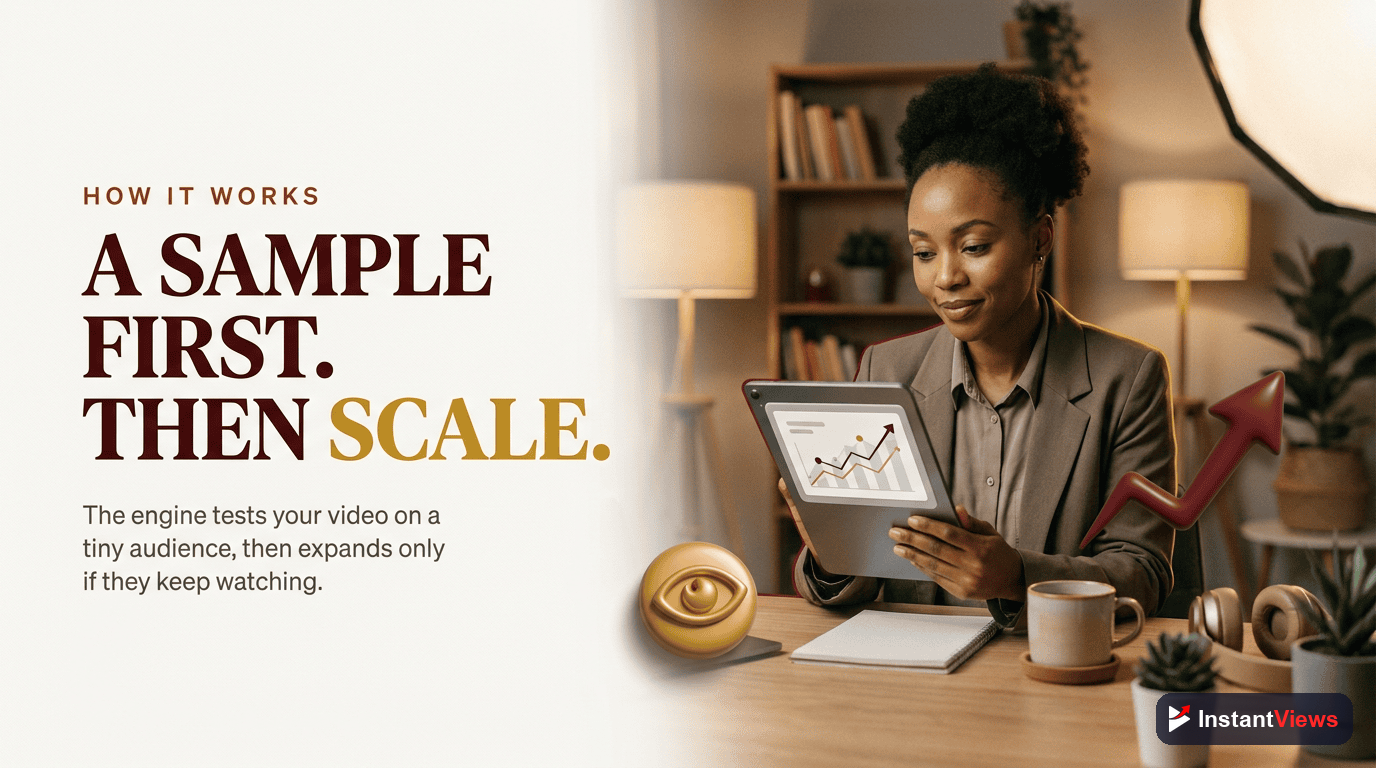
- The algorithm tests Shorts with small audiences first, then expands based on early performance
- Consistent posting (3-5 Shorts per week) trains the algorithm to understand your content
- Loop-worthy content that viewers watch multiple times gets massive distribution
YouTube Shorts has over 70 billion daily views - but most creators have no idea how the algorithm actually works. Understanding the Shorts algorithm is the difference between 200 views and 2 million views.
The Shorts algorithm is fundamentally different from regular YouTube. It's closer to TikTok's algorithm, with rapid-fire testing, instant performance feedback, and explosive reach for content that passes the early tests.
This guide breaks down exactly how the YouTube Shorts algorithm works in 2026, what signals it prioritizes, and how to optimize your Shorts for maximum reach.
How the Shorts Algorithm Works
The YouTube Shorts algorithm operates in three distinct phases:
Phase 1: Initial Testing (First 1-3 Hours)
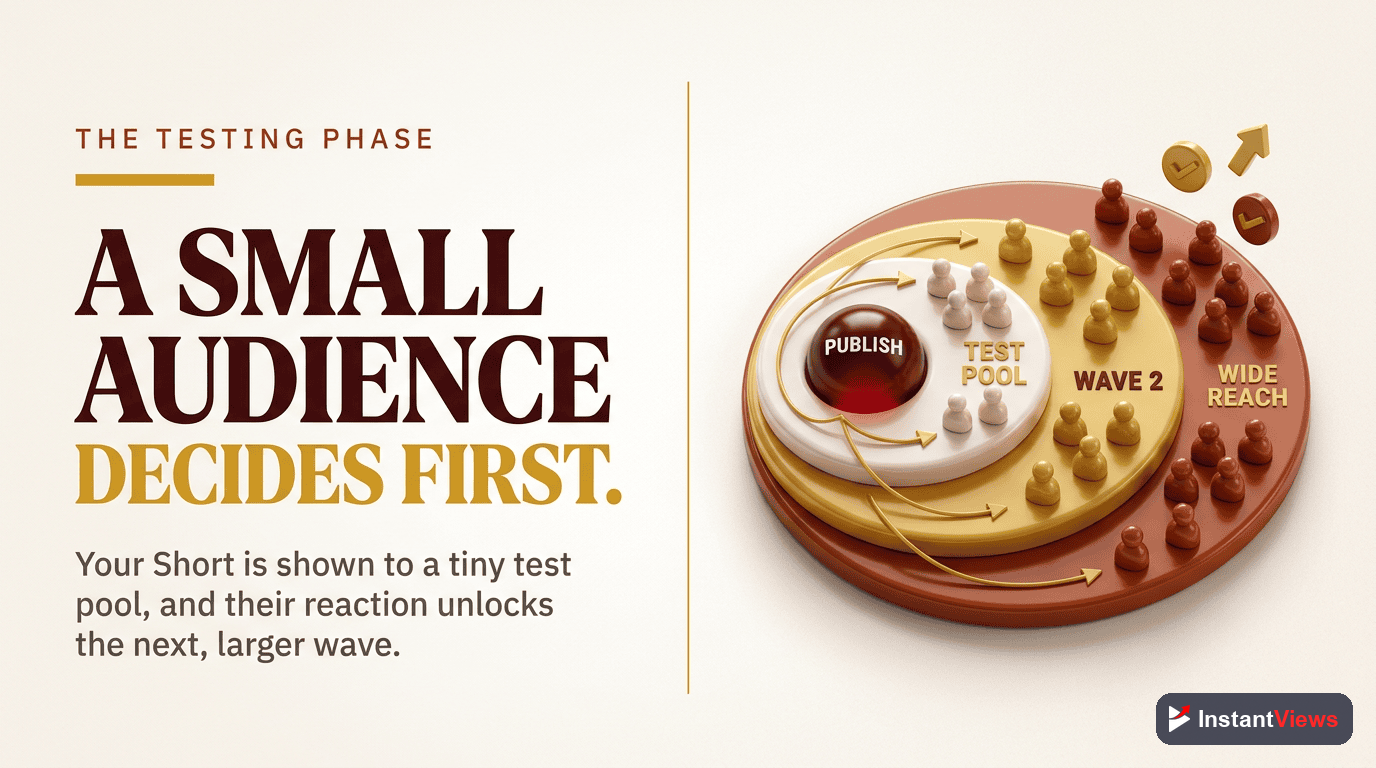
When you upload a Short, YouTube shows it to a small test audience - typically 100-500 viewers from your subscriber base and users who watch similar content. This initial test measures:
- Swipe-away rate - How quickly viewers move to the next Short
- Watch time percentage - What % of your Short viewers actually watch
- Engagement rate - Likes, comments, shares in first 100 views
- Loop rate - How many viewers watch your Short multiple times
Phase 2: Expansion (3-24 Hours)
If your Short passes the initial test (typically 60%+ watch time and low swipe-away rate), YouTube expands distribution to wider audiences. It shows your Short to users who:
- Watch similar content but don't follow you
- Are in your niche but haven't discovered you yet
- Match the demographic profile of your engaged viewers
This expansion phase is where Shorts go viral. The algorithm continues monitoring performance and expands or contracts reach based on results.
Phase 3: Long-tail Distribution (24 Hours+)
Unlike TikTok, YouTube Shorts have a longer lifespan. Shorts can continue getting views for weeks or months if they maintain strong performance metrics. The algorithm continues showing successful Shorts in:
- The Shorts feed for targeted audiences
- Search results and suggested Shorts
- Your channel's Shorts shelf
- Related content sections
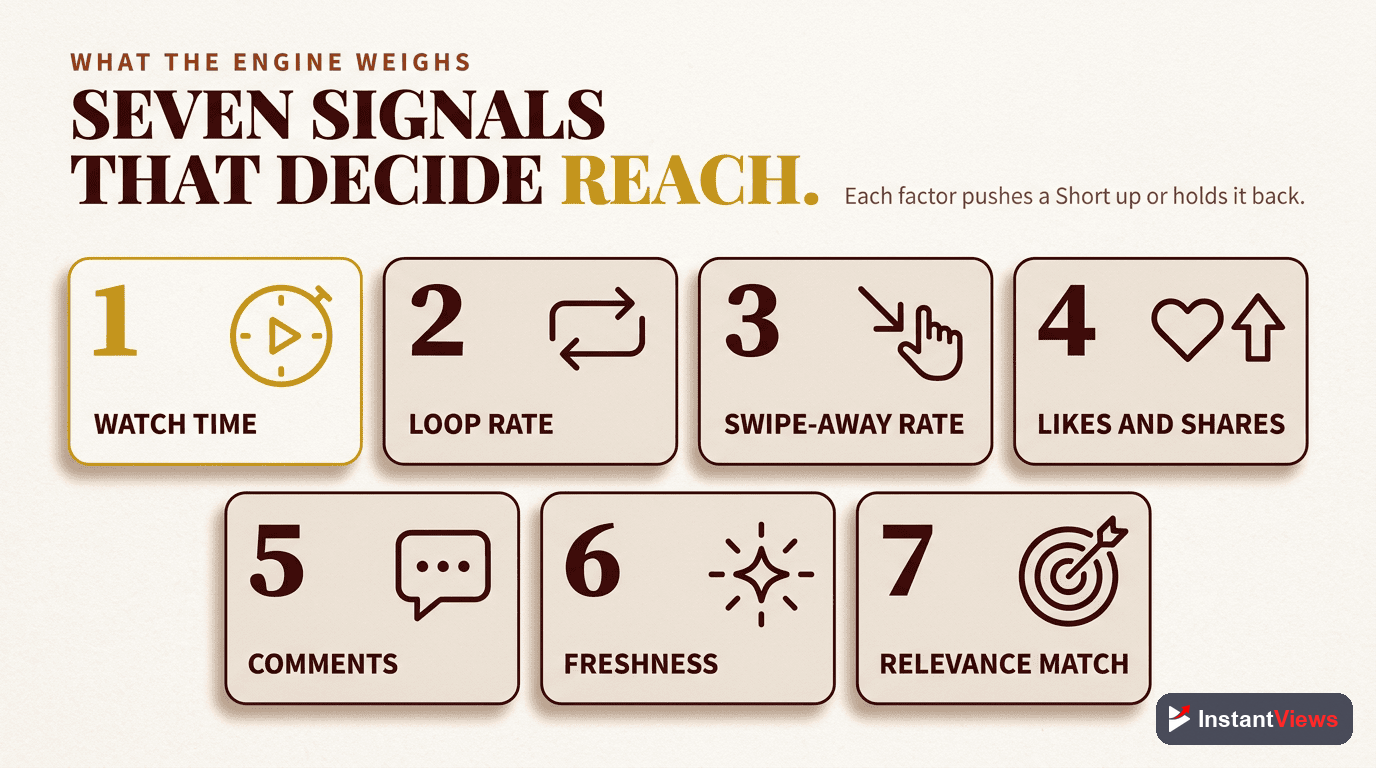
7 Key Ranking Factors
The YouTube Shorts algorithm weighs these factors when deciding which Shorts to promote:
Watch Time Percentage
The percentage of your Short that viewers actually watch. This is the single most important metric. A 30-second Short with 90% watch time will outperform a 15-second Short with 60% watch time.
Importance: CriticalHow to optimize: Keep Shorts tight and engaging. Every second must add value. Cut ruthlessly - if a second doesn't hook, educate, or entertain, remove it.
Swipe-Away Rate
How quickly viewers swipe to the next Short. If viewers swipe away in the first 1-2 seconds, it signals poor content quality. The algorithm heavily penalizes high swipe-away rates.
Importance: CriticalHow to optimize: Hook viewers immediately. The first frame and first second determine swipe rate. Use pattern interrupts, bold text, or unexpected visuals to stop the scroll.
Loop Rate
How many viewers watch your Short multiple times in a row. Loop-worthy content signals extremely high quality to the algorithm. Shorts with high loop rates get massive distribution.
Importance: Very HighHow to optimize: Create content that's better on second viewing. Use quick pacing, satisfying loops, or content that viewers want to analyze. Tutorials, satisfying visuals, and "wait, what?" moments drive loops.
Engagement Rate
Likes, comments, shares, and saves relative to views. High engagement signals that your content resonates. Comments are especially valuable - they indicate strong viewer investment.
Importance: HighHow to optimize: End with a question or call-to-action. "Which method works best for you?" or "Comment your result" drives engagement. Make it easy to engage - don't require complex responses.
Consistency & Velocity
How frequently you post Shorts and how quickly they gain traction. Channels that post 3-5 Shorts per week train the algorithm to understand their content, leading to better initial distribution.
Importance: Medium-HighHow to optimize: Batch-create Shorts and maintain a consistent schedule. The algorithm favors active creators. Even if individual Shorts underperform, consistency builds algorithmic trust.
Click-Through to Channel
Viewers who click through to your channel after watching your Short signal high interest. This tells YouTube your content has discovery potential and can convert viewers to subscribers.
Importance: MediumHow to optimize: Include your branding clearly. Tease other content at the end. Create Shorts that make viewers want to learn more about you.
Hashtags & Metadata
Title, hashtags (#Shorts is required), and description help YouTube categorize your content. The algorithm uses this for initial audience targeting and search/browse features.
Importance: Low-MediumHow to optimize: Always include #Shorts. Add 3-5 relevant niche hashtags. Write descriptive titles that include searchable keywords. Keep descriptions concise but informative.
The Testing Phase Explained
Understanding the testing phase is crucial because this is where most Shorts succeed or fail.
When you upload a Short, YouTube doesn't immediately blast it to millions of viewers. Instead, it runs a series of controlled tests:
| Test Stage | Audience Size | What YouTube Measures | What Happens Next |
|---|---|---|---|
| Initial Push | 100-300 views | Swipe rate, watch time, engagement | Expand or stop based on performance |
| First Expansion | 1,000-5,000 views | Continued strong metrics validation | Expand to broader audiences |
| Wide Distribution | 10,000-100,000+ views | Sustained performance, loop rate | Viral push or gradual decline |
| Long-tail | Ongoing trickle | Search, browse, related content | Sustained discovery over time |
Here's the critical insight: You have ~3 hours to prove your Short's value. If your Short doesn't perform in that initial window, it likely won't get a second chance.
Don't upload Shorts at random times. While the algorithm isn't time-sensitive like regular YouTube, you want your most engaged subscribers online during the testing phase. Check your Analytics for when your audience is most active.
Optimization Strategies That Work
1. The First Second Formula
The first second of your Short must accomplish three things:
- Pattern interrupt - Something visually or conceptually unexpected
- Value signal - Clear indication of what viewer will gain
- Curiosity trigger - A question or gap that demands an answer
Example: Instead of "Today I'm going to show you..." start with "This 3-second trick doubled my views" with bold on-screen text.
2. The 15-30 Second Sweet Spot
Data from successful Shorts creators shows that 15-30 second Shorts have the highest completion rates. Why?
- Short enough for viewers to watch multiple times
- Long enough to deliver actual value
- Fits viewer attention span in Shorts feed
- Easy to create consistently
Longer Shorts (30-60 seconds) can work if every second is engaging, but the completion rate typically drops significantly.
3. The Loop Technique
Structure your Shorts to be rewatchable:
- Before/after transformations - Viewers watch again to catch details
- Fast tutorials - Too fast to catch everything first time
- Satisfying loops - Content that naturally repeats seamlessly
- Hidden details - Elements viewers notice on second watch
4. The Engagement Driver
End every Short with an engagement prompt:
- "Which one worked for you?" (gets comments)
- "Save this for later" (gets saves)
- "Try this and tag me" (gets shares)
- "Part 2 is even better" (gets channel clicks)
Make it specific and easy. "Drop a comment" is weak. "Comment your result" is stronger.
5. The Batch Strategy
Create 5-10 Shorts in one session, then post them over 2-3 weeks. This:
- Maintains consistency without daily pressure
- Trains the algorithm faster
- Lets you test different styles systematically
- Builds momentum as winners get found
Analyze Your Shorts Before Posting
Get instant feedback on your Short's algorithm performance potential. Our Video Analyzer scores your hook, pacing, and engagement signals.
Analyze Your Short →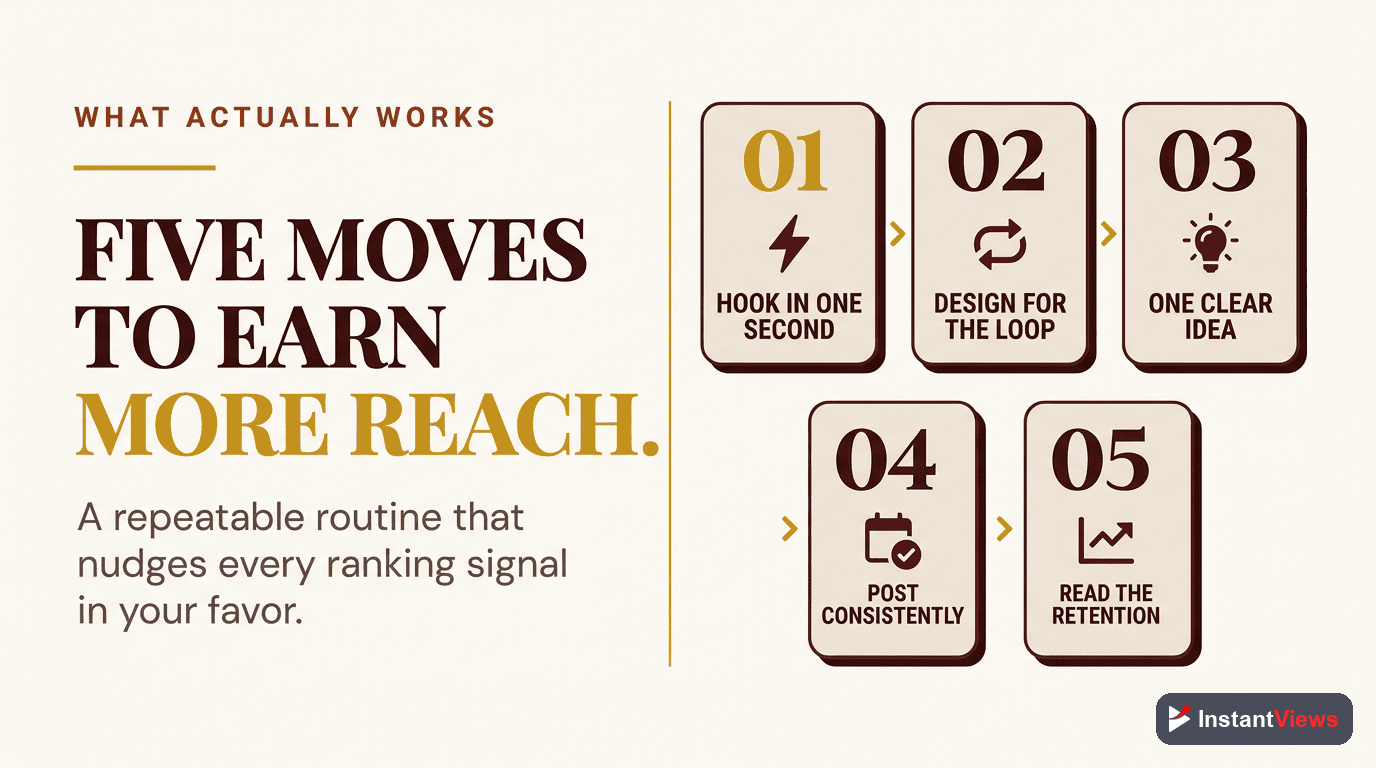
Common Mistakes That Kill Your Reach
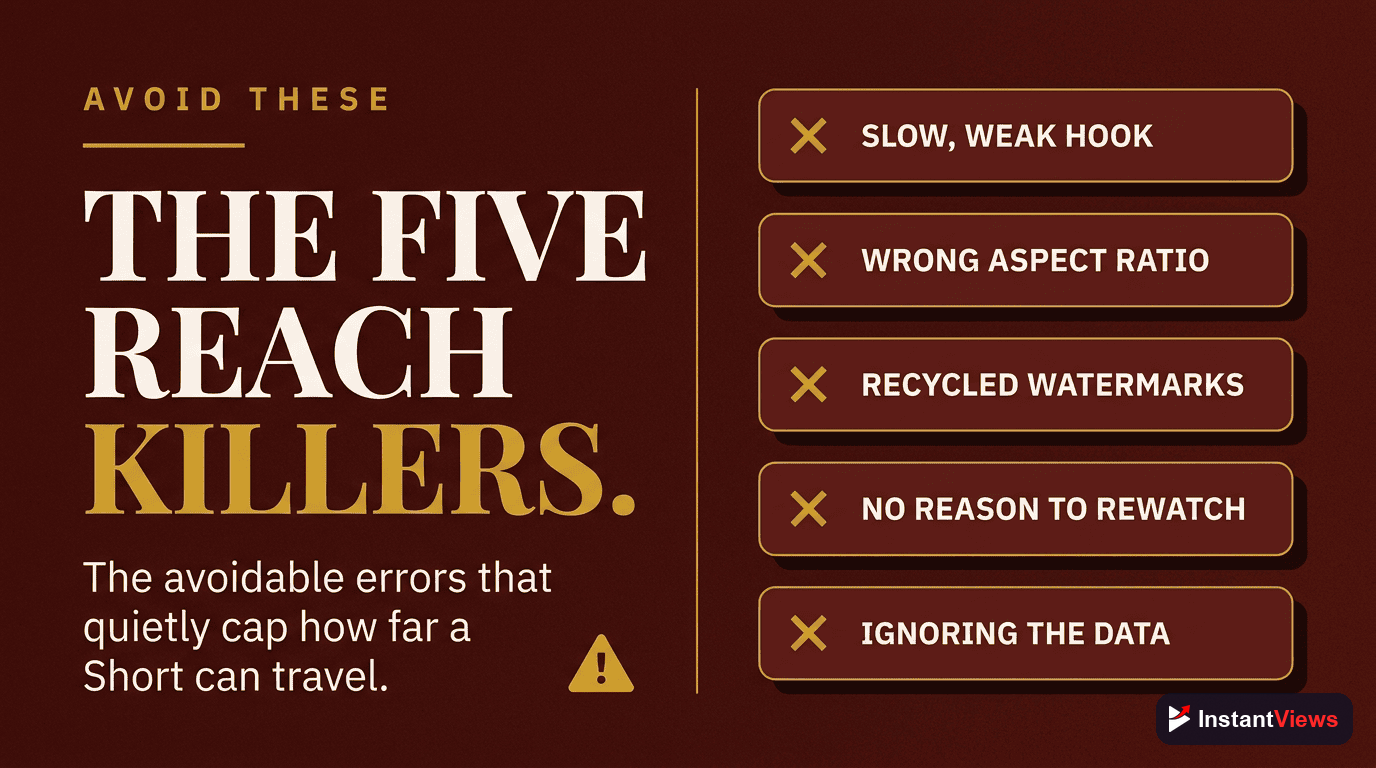
Mistake #1: Slow Starts
Starting with "Hey guys" or a slow buildup kills your swipe-away rate. Get to the value immediately. You have 1 second, not 5.
Mistake #2: Low-Quality Reposts
Reposting TikToks with watermarks signals low-effort content to the algorithm. YouTube can detect repurposed content and limits its distribution.
Mistake #3: Ignoring the Testing Phase
Posting a Short and immediately switching to another task means you miss the critical first 3 hours. Monitor performance and engage with early comments.
Mistake #4: Inconsistent Posting
Posting one Short then waiting weeks for results doesn't work. The algorithm needs consistent data to understand your content style and audience.
Mistake #5: Generic CTAs
"Like and subscribe" is ignored. Specific, value-driven CTAs ("Comment which method worked") get actual engagement.
What Success Looks Like
Here's what to expect from well-optimized Shorts:
| Metric | Poor Performance | Good Performance | Viral Performance |
|---|---|---|---|
| Watch Time % | Below 40% | 60-80% | 80%+ |
| Views in 24 Hours | Under 500 | 5,000-50,000 | 100,000+ |
| Engagement Rate | Under 2% | 5-10% | 15%+ |
| Subscriber Conversion | 0.1-0.5% | 1-3% | 5%+ |
"The Shorts algorithm rewards consistency and quality equally. One viral Short is luck. Ten Shorts with 70%+ watch time is a system." - YouTube Creator Insider Team
Your Shorts Algorithm Checklist
Before posting your next Short, verify:
- First second grabs attention - Pattern interrupt, bold text, or unexpected visual
- 15-30 second length - Optimized for completion rate
- #Shorts hashtag included - Required for Shorts feed discovery
- 3-5 niche hashtags - Help algorithm categorize content
- Tight pacing - Every second adds value, no filler
- Clear value proposition - Viewer knows what they'll gain
- Engagement prompt - Specific CTA that's easy to complete
- Loop-worthy structure - Content worth watching twice
- No watermarks - Native YouTube content performs better
- Consistent schedule - Part of regular posting rhythm
Frequently Asked Questions
The YouTube Shorts algorithm in 2026 prioritizes watch time, swipe-away rate, engagement (likes, comments, shares), and viewer satisfaction signals. It uses AI to match content with viewers most likely to engage, based on their viewing history and preferences. The first 1-2 seconds are critical for retention.
Unlike regular YouTube videos, Shorts don't have a "best time" because they're pushed to viewers globally in the Shorts feed. Focus on posting consistently (3-5 times per week) rather than timing. The algorithm tests your Short with small audiences first, then expands based on performance.
While Shorts can be up to 60 seconds, videos between 15-30 seconds perform best. Shorter videos have higher completion rates, which signals quality to the algorithm. However, the content must be engaging - a boring 15-second Short won't perform better than an engaging 45-second one.
Yes, but use them strategically. Use 3-5 relevant hashtags including #Shorts (required for discovery), plus niche-specific tags. Avoid spammy or irrelevant hashtags. The algorithm primarily relies on content analysis, but hashtags help with initial categorization and discovery.
Common reasons include: poor hook (first 1-2 seconds), low watch time, high swipe-away rate, inconsistent posting, or content that doesn't match viewer interests. Use the InstantViews Video Analyzer to identify specific issues. The algorithm tests each Short - if early performance is poor, it won't push to wider audiences.
Technically yes, but remove TikTok watermarks and optimize for YouTube's algorithm. YouTube can detect repurposed content and may limit reach. Better strategy: adapt the concept but create native content for each platform. Shorts with authentic YouTube-first creation tend to perform better.