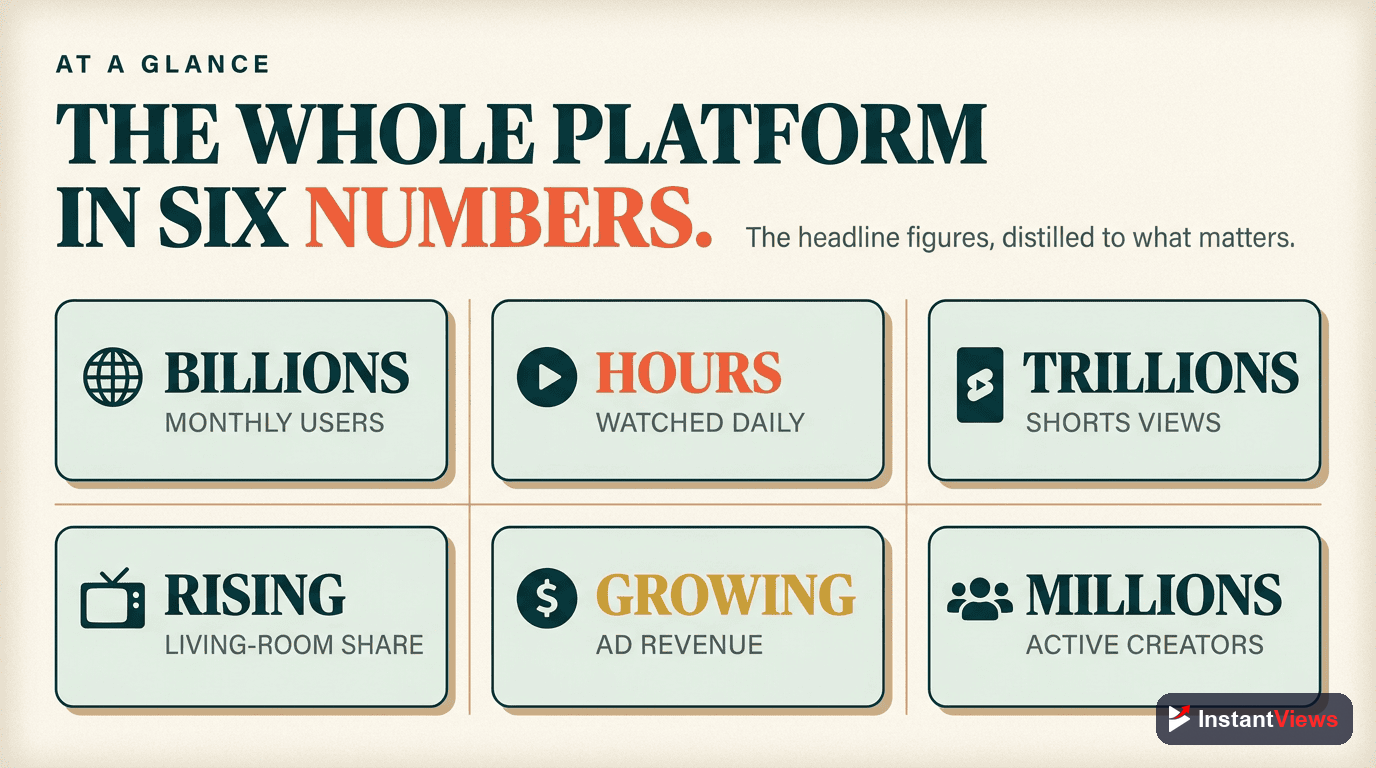
- YouTube has 2.7 billion-plus monthly users and roughly a billion watch hours a day — the audience is enormous and consistently active
- YouTube Shorts now drive over 200 billion daily views, making short vertical video a primary discovery surface
- Connected TV (the living-room screen) passed mobile to become the top US viewing surface, near 60% of US watch time
- YouTube has paid creators more than $100 billion in four years, and advertising kept growing through 2026
- The 2026 algorithm rewards viewer satisfaction and retention, and de-emphasizes low-value mass-produced AI content
Marketers love a good statistic, but a number on its own changes nothing. The value of a platform stat is in what it tells you to do differently — where to spend your time, what format to make, and which screen to design for. With more than 2.7 billion monthly active users and roughly a billion hours of video watched every day, YouTube is too large to treat as an afterthought, yet too dynamic to approach with last year’s playbook.
The platform has changed shape in ways that matter to anyone planning a 2026 strategy. Short vertical video has exploded, the living-room television has overtaken the phone in the United States, and the creator economy has matured into serious commercial infrastructure. Each of those shifts carries a clear instruction for marketers who are paying attention.
This roundup groups the most important numbers into five areas — usage and reach, Shorts, connected TV, the creator economy, and advertising — and pairs each statistic with what it actually means for your strategy. Where a number is widely reported and stable we state it plainly; where the exact figure varies by source, we describe the trend qualitatively rather than invent false precision.
- Why Platform Statistics Matter for Marketers
- The 2026 Snapshot at a Glance
- Usage and Reach: The Sheer Scale of YouTube
- YouTube Shorts: The Discovery Engine
- Connected TV: The Living Room Wins
- The Creator Economy at Scale
- Advertising and Monetization
- What the Algorithm Rewards in 2026
- Turn the Numbers Into a Strategy
- How Marketers Misread the Data
- FAQ
Why Platform Statistics Matter for Marketers
It is easy to collect statistics and hard to use them. A figure like “2.7 billion monthly users” is impressive, but it only becomes useful when it answers a question you actually have: Is my audience here? Which format should I prioritize? Which screen am I designing for? The best marketers treat each number as the start of a decision, not the end of a slide.
Platform-level data is also a guard against gut-feel mistakes. If you assume everyone watches on a phone, you will produce videos that fall apart on a living-room television. If you ignore Shorts because they feel unserious, you will miss the fastest-growing discovery surface on the platform. The numbers correct those instincts.
There is one rule worth stating up front: trust the trend more than the decimal. Different research firms count users and views slightly differently, so exact figures wobble between sources. What does not wobble is direction — reach is huge, Shorts are surging, TV is winning the living room, and the creator economy is enormous. Build your strategy on those durable directions.

The 2026 Snapshot at a Glance
Before the detail, here is the high-level picture. The table below summarizes the headline numbers this guide is built around and the single most important implication of each.
| Metric | 2026 Figure | What It Means for Marketers |
|---|---|---|
| Monthly active users | 2.7 billion-plus | Your audience is almost certainly here — treat YouTube as a core channel |
| Daily watch hours | ~1 billion hours | Attention is deep, not just wide — longer content can perform |
| Shorts views per day | 200 billion-plus | Short vertical video is a primary discovery surface |
| US watch time on TV | Near 60% | Design for the living-room screen, not just the phone |
| Paid to creators (4 yrs) | $100 billion-plus | The creator economy is mature — partnerships scale faster than scratch |
Keep this table in mind as you read. Every section below simply unpacks one row and turns it into action.
Usage and Reach: The Sheer Scale of YouTube
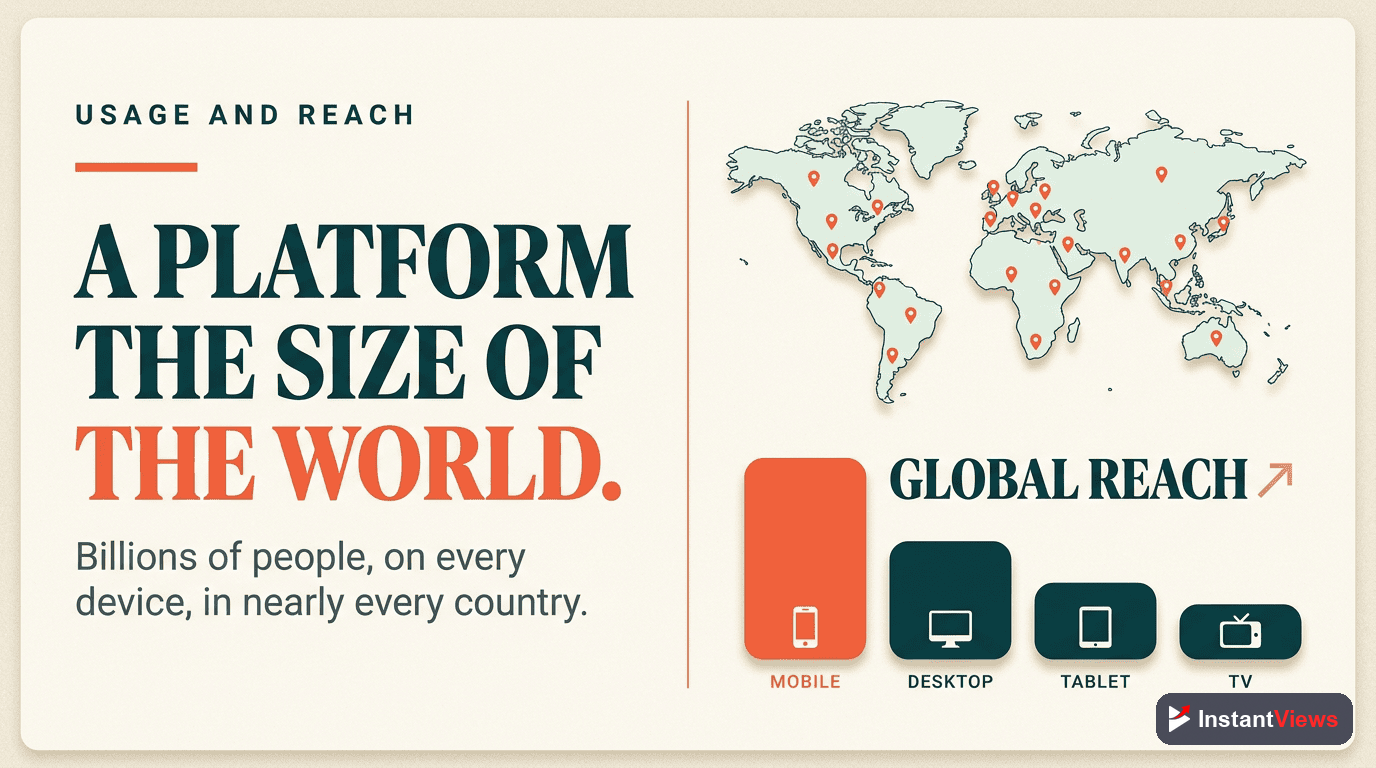
Start with the foundation. YouTube reports more than 2.7 billion monthly active users, and roughly a billion hours of video are watched on the platform every day. Those two numbers together describe both the width and the depth of the audience: not only are a huge number of people present, they are watching a great deal of content.
For marketers, the first implication is simple. With an audience that large and that diverse, the question is almost never “are my customers on YouTube?” They are. The real question is whether you are showing up with content that matches how those customers actually search and watch.
The second implication is about depth. A billion daily watch hours is a reminder that YouTube is not only a place for quick clips. People settle in for tutorials, reviews, documentaries, and long-form explainers. That gives marketers permission to make substantial content — provided it earns the attention it asks for.
What Reach Tells You to Do
- Commit, do not dabble: a channel that posts sporadically cannot tap an audience this size. Consistency is the price of entry.
- Match search intent: much of YouTube’s reach comes through search and suggestions, so build titles and topics around what your audience actually looks for.
- Do not fear length: deep watch hours mean a well-made long video can outperform a thin one. Length is fine when retention is earned.
YouTube Shorts: The Discovery Engine
The single most dramatic shift in recent years is the rise of short vertical video. YouTube Shorts now drive more than 200 billion views a day, a figure the company shared in 2026. Shorts have moved from an experiment to one of the most important discovery surfaces on the entire platform.
For marketers, Shorts solve the hardest problem in content: getting found by people who have never heard of you. The format is built for rapid reach, and it sits naturally at the top of a funnel. A strong Short can introduce an idea, a product, or a personality, and then hand interested viewers to your longer content.
Shorts are not a replacement for long-form video; they are a complement. The smart pattern is to treat Shorts as the entry point and long videos as the destination, using each to feed the other.
A Simple Shorts-to-Long Workflow
- Hook with a Short: publish a vertical clip that delivers one sharp idea in seconds.
- Point to depth: reference the full tutorial or review that expands on it.
- Convert on long-form: let the longer video build trust and carry the call to action.
| Format | Primary Job | Funnel Stage |
|---|---|---|
| Shorts | Reach new viewers fast | Awareness (top) |
| Long-form video | Build trust and depth | Consideration (middle) |
| Demos & reviews | Drive the decision | Decision (bottom) |
The lesson from the Shorts numbers is clear: if you are not producing short vertical video in 2026, you are leaving the platform’s biggest discovery surface untouched.
Connected TV: The Living Room Wins
Perhaps the most strategically important shift is where people watch. In the United States, the connected TV — the living-room television — became the single largest YouTube viewing surface, passing mobile in late 2026. By 2026, roughly 60 percent of US watch time happens on television screens.
This rewires a long-held assumption. For years, “mobile-first” was the default mindset for video. On YouTube in the US, that is no longer the dominant reality. A growing majority of viewing now happens on a big screen, often in a shared living-room setting, frequently leaned back rather than leaned in.
The marketing implications are concrete. Content needs to look and sound great on a television: legible text, clean visuals, and audio that carries. Calls to action that assume a tappable screen — “click the link below” — work less well when the viewer is across the room with a remote. Spoken, memorable calls to action travel better.
Designing for the Big Screen
- Make text readable from the sofa: larger fonts, higher contrast, fewer words on screen.
- Lead with audio: many TV viewers listen as much as they watch, so the spoken narrative must stand on its own.
- Rethink the CTA: say it out loud and make it easy to remember, since tapping a link is harder on a TV.
- Embrace longer, lean-back content: the living room rewards substance and pacing over frantic edits.
Do not assume every viewer is holding a phone. With most US watch time now on television, a strategy that relies entirely on tappable links and tiny on-screen text quietly underperforms with the majority of your audience. Build for the big screen first, then adapt down.

The Creator Economy at Scale
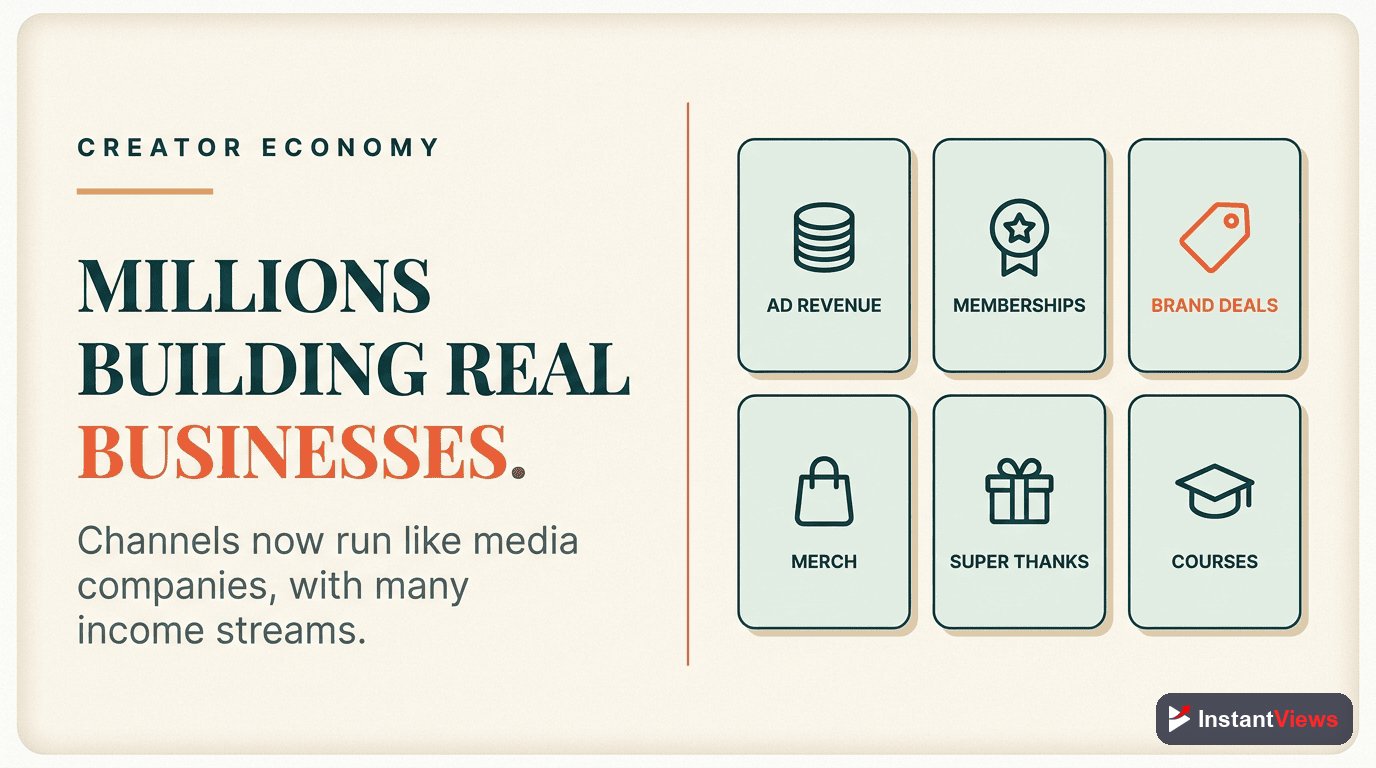
The numbers also describe a mature commercial ecosystem. YouTube has paid creators, artists, and media companies more than $100 billion over the most recent four-year period. That is not a niche side economy; it is serious infrastructure that millions of people now build careers on.
For marketers, a mature creator economy reframes the build-versus-partner question. You do not always need to grow a massive audience from zero. In many niches, an established creator already has the trust and the attention you are trying to earn, and a partnership can reach the right people far faster than years of solo uploading.
It also signals reliability. When a platform has paid out at this scale over years, creators and brands can plan around it with more confidence. That stability is itself a reason to invest in a long-term YouTube presence rather than treating it as a one-off campaign.
“A statistic only earns its place in a strategy when it changes a decision. The $100 billion paid to creators is not trivia — it is a signal that partnering can beat building.”
Build or Partner?
| Approach | Best When | Trade-off |
|---|---|---|
| Build your own channel | You want owned, compounding reach | Slow to start; demands consistency |
| Partner with creators | You need trusted reach quickly | Ongoing cost; less direct control |
| Do both | You can sustain the effort | Requires more coordination |
Advertising and Monetization
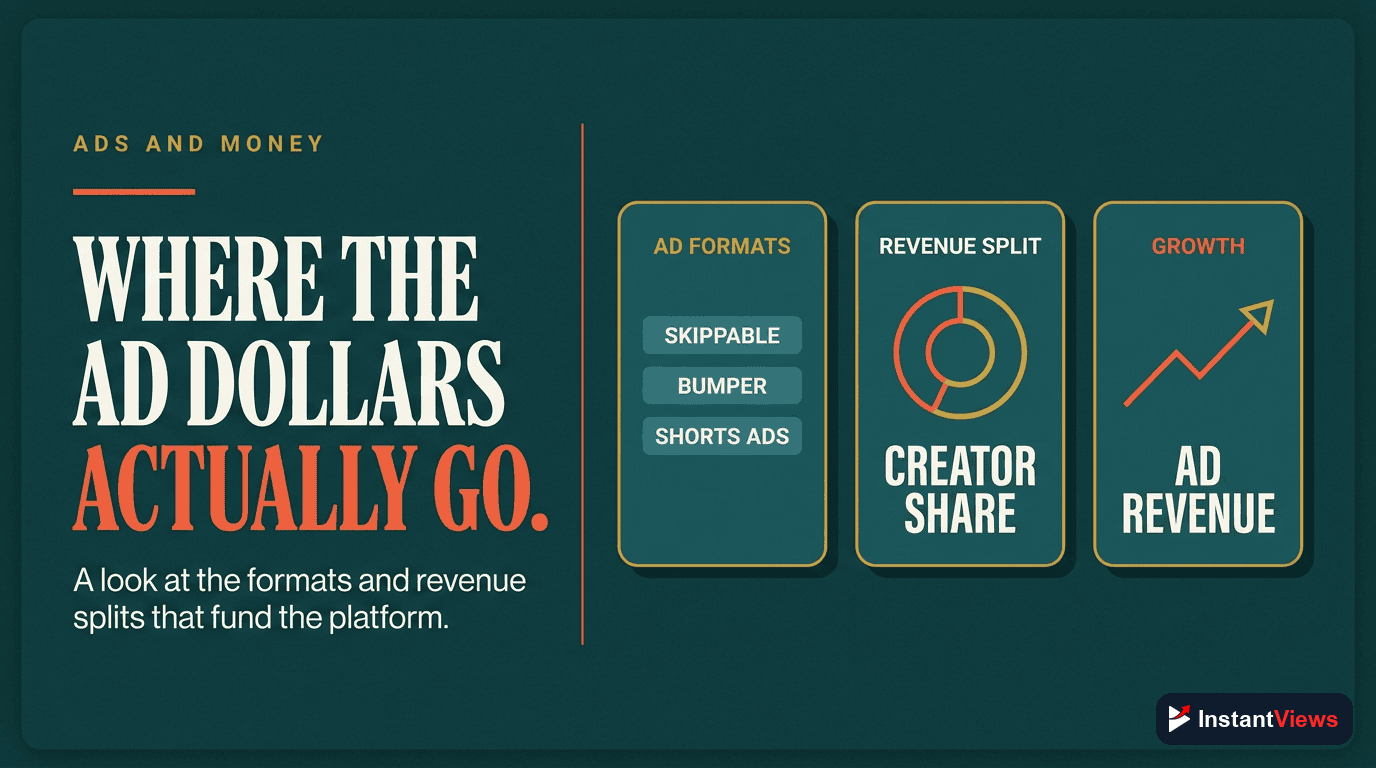
YouTube advertising remains a multi-billion-dollar business that continued to grow year over year through 2026. For long-form videos, YouTube shares the majority of advertising revenue with the creator, which is the engine that keeps the creator economy turning and makes the Partner Program central to most paid strategies.
For a marketer, the advertising scale matters in two ways. First, paid promotion on YouTube reaches an audience that is already engaged and already watching for long stretches — you are buying attention in a place where attention is abundant. Second, the revenue-share model means working with creators is not just a reach play; it aligns your campaign with people who are financially invested in keeping their audience happy.
The practical guidance is to view ads as an accelerator, not a foundation. Paid spend works best when it amplifies content that already performs organically — a Short that is taking off, a tutorial with strong retention, or a clear offer that converts. Pouring budget into weak creative simply buys faster failure.
What the Algorithm Rewards in 2026
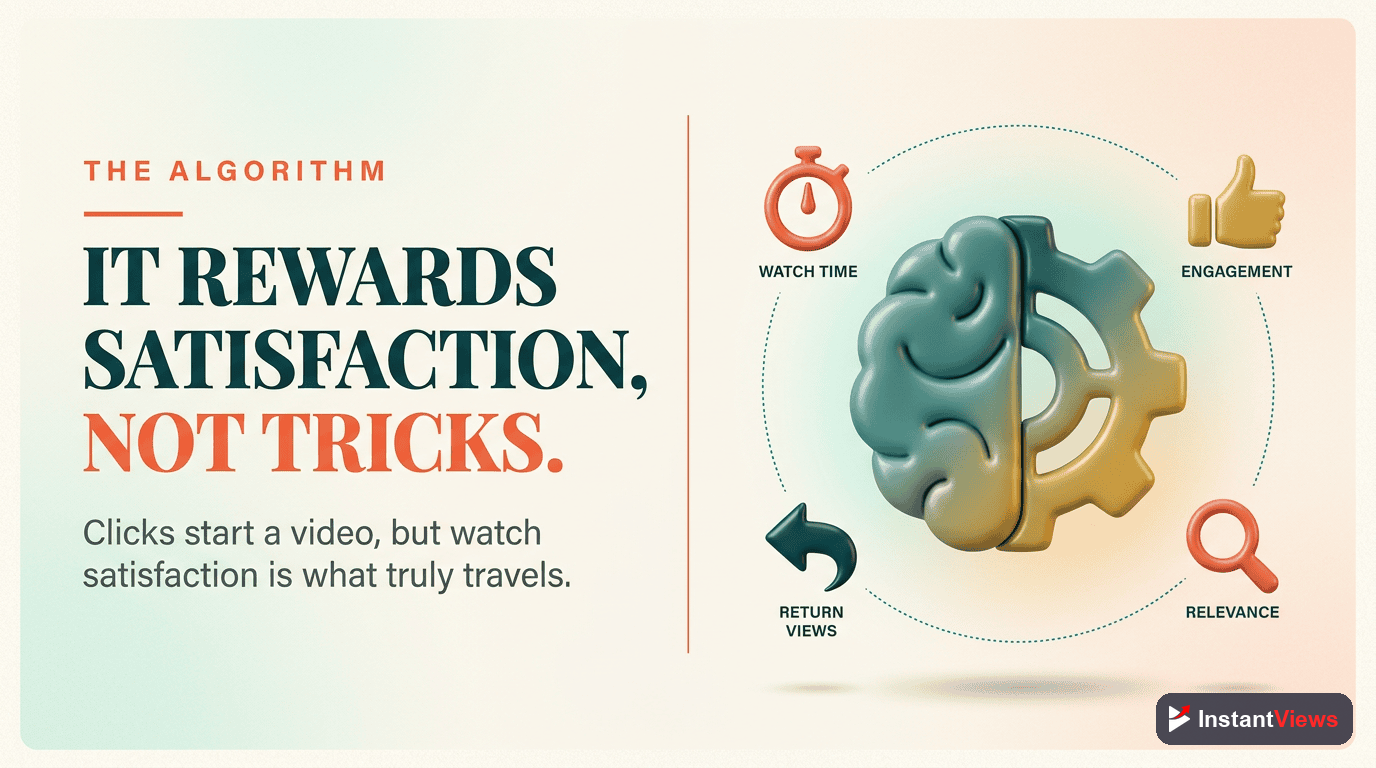
Numbers about reach mean little if the algorithm will not surface your work. The good news is that the 2026 system is more aligned with quality than ever. YouTube’s recommendation engine now optimizes for viewer satisfaction and retention — keeping people genuinely engaged matters more than raw watch time alone.
At the same time, YouTube is actively reducing the spread of low-value, mass-produced AI content. The platform wants recommendations that leave viewers satisfied, not feeds full of thin, repetitive uploads. For honest marketers, that is a tailwind: it rewards the very thing you should be doing anyway, which is making content people actually value.
The takeaway is that retention is the metric to obsess over. If viewers stay, return, and engage, the algorithm interprets that as satisfaction and rewards you with more reach. Chasing hacks or cranking out volume for its own sake works against the grain of how the system now operates.
Turn the Numbers Into a Strategy
Statistics earn their keep only when they change what you make. Here is a simple sequence for converting this roundup into a 2026 plan.
Confirm the Audience Is There
With 2.7 billion-plus users and a billion daily watch hours, assume your customers are present and commit to YouTube as a core channel rather than a side experiment.
Build a Shorts Discovery Layer
Because Shorts pass 200 billion daily views, produce a steady stream of short vertical clips to reach new viewers, then point them to your longer content.
Design for the Living Room
Since connected TV is the top US surface, make long-form videos that look and sound great on a television, with readable text and spoken calls to action.
Plan for the Creator Economy
With $100 billion-plus paid to creators, build partnerships and collaborations into your plan instead of relying only on your own channel.
Optimize for Retention
Because the algorithm rewards satisfaction and retention, prioritize genuinely useful, well-made content and watch average view duration to guide every improvement.
Put the Numbers to Work
Explore our free suite of YouTube tools to research topics, sharpen your titles, and analyze what is actually performing across every stage of your strategy.
Explore Free YouTube Tools →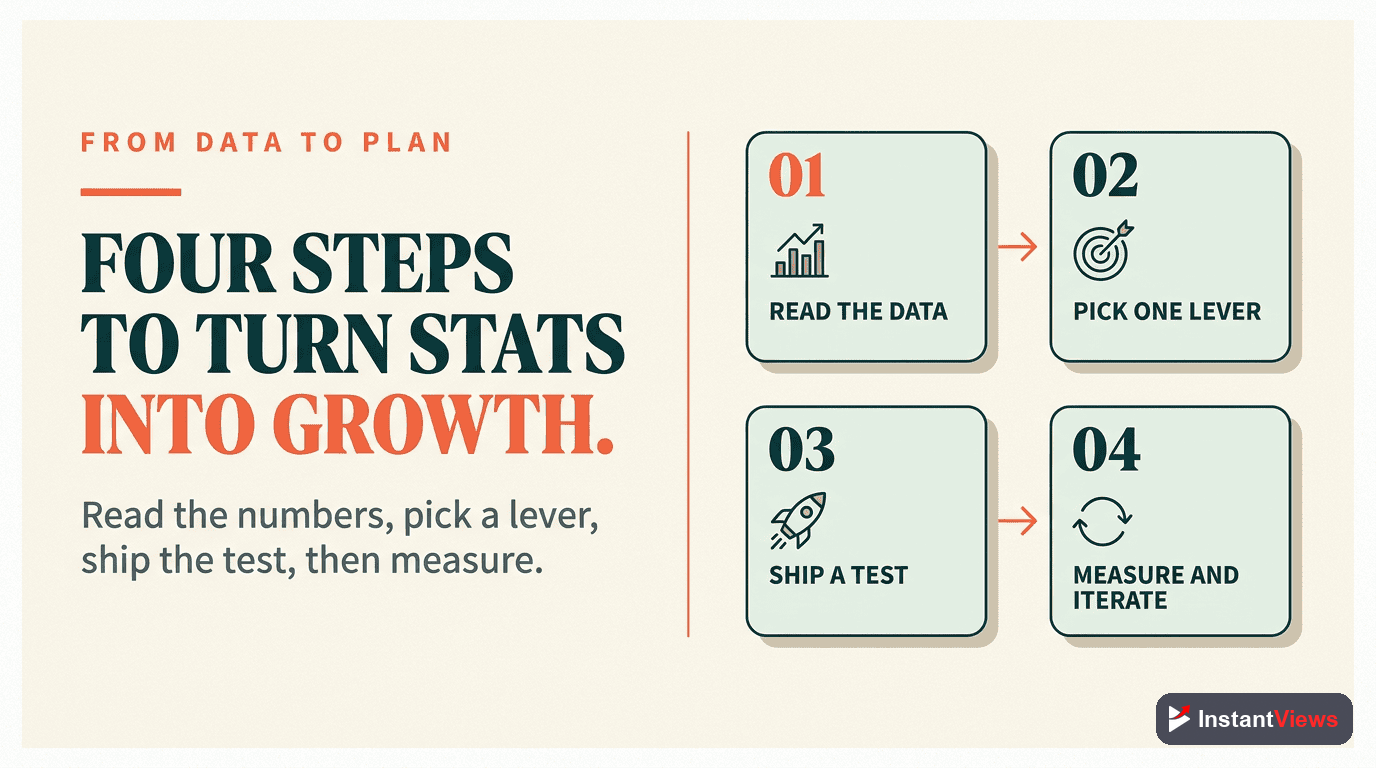
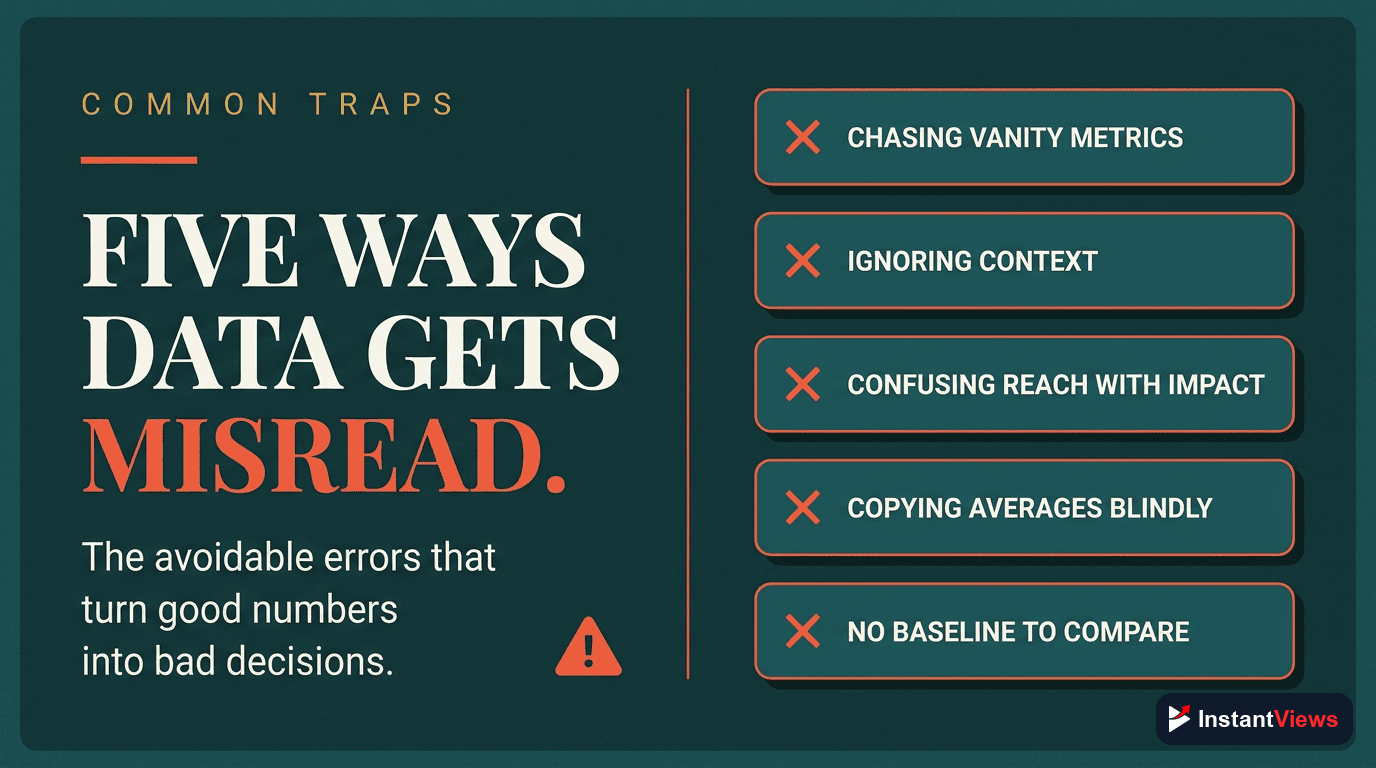
How Marketers Misread the Data
Even good statistics get used badly. These are the most common ways marketers misread the 2026 numbers — and how to avoid each one.
- Chasing reach without intent: 2.7 billion users is meaningless if none of them are your buyers. Define your slice before chasing scale.
- Treating Shorts as the whole strategy: Shorts are a discovery layer, not a destination. Without long-form to convert, big view counts rarely turn into customers.
- Designing only for mobile: with most US watch time on TV, tiny text and tap-only calls to action quietly fail the majority of viewers.
- Ignoring creators: a $100 billion ecosystem means partnerships often beat building from scratch, yet many brands still try to do everything alone.
- Confusing volume with quality: the algorithm rewards retention and satisfaction, so flooding the channel with thin uploads works against you.
- Trusting the decimal over the trend: exact figures vary by source, so anchor decisions to durable directions, not a single quoted number.
Avoid these traps and the statistics become a compass rather than a distraction. The goal is always the same: let each number push you toward a sharper, more specific decision about what to create and where to put it.
“The marketers who win on YouTube in 2026 are not the ones who memorize the most statistics — they are the ones who let the right few numbers reshape what they make.”
Frequently Asked Questions
YouTube has more than 2.7 billion monthly active users in 2026, making it one of the largest platforms on the internet. Roughly a billion hours of video are watched on the platform every single day, which gives marketers an enormous and consistently active audience to reach.
YouTube Shorts surpassed 200 billion daily views, a figure YouTube shared in 2026. Shorts have become a primary discovery surface, especially for reaching new and younger viewers, so they belong at the top of almost every marketer’s funnel in 2026.
In the United States, the connected TV (the living-room television) became the single largest viewing surface, passing mobile in late 2026. Around 60 percent of US YouTube watch time now happens on television screens, which changes how marketers should think about format, length, and on-screen calls to action.
YouTube has paid creators, artists, and media companies more than 100 billion dollars over the most recent four-year period. That scale signals a mature creator economy where partnering with established creators is often more efficient than building a large audience entirely from scratch.
YouTube advertising remains a multi-billion-dollar business that continued to grow year over year through 2026. For long-form videos, YouTube shares the majority of ad revenue with the creator, which is why the Partner Program and creator collaborations are central to most paid strategies on the platform.
The 2026 algorithm optimizes for viewer satisfaction and retention rather than raw watch time alone. In practice that means content that genuinely holds attention and earns positive engagement is rewarded, while low-value, mass-produced AI content is being de-emphasized in recommendations.
The most actionable numbers are reach (monthly users and daily watch hours), the rise of Shorts, the shift to connected TV, the size of the creator economy, and the scale of advertising. Together they tell you where attention is, how people consume content, and where to invest your budget and effort.
Use Shorts for discovery, design long-form videos to look and sound great on a television, plan creator partnerships because the creator economy is mature, and lean into genuine quality because the algorithm rewards retention and satisfaction. Let each statistic map to a concrete decision rather than sitting in a report.
Conclusion
The 2026 numbers tell a consistent story. YouTube is bigger than ever, with more than 2.7 billion monthly users and around a billion watch hours a day, but the way people watch has shifted decisively — Shorts now drive over 200 billion daily views, and the living-room television has become the single largest viewing surface in the United States. At the same time, a $100 billion-plus creator economy and a still-growing advertising business have turned the platform into serious commercial infrastructure.
What matters is not memorizing these figures but acting on them. Use Shorts as your discovery layer, design long-form videos to shine on a television, plan creator partnerships because the ecosystem is mature, and lean into genuine quality because the algorithm now rewards retention and satisfaction over raw watch time. Each statistic should map to a decision, not just a slide.
Treat this roundup as a strategic checklist rather than trivia. Revisit it each quarter, compare your own analytics against the platform-wide trends, and keep adjusting where you invest your time and budget. The marketers who win on YouTube in 2026 are the ones who read the numbers and let them reshape what they create.