- Views are the signal that starts a conversation with brands, but engagement, audience fit, and trust are what turn that signal into a real partnership
- The most valuable deals are ongoing — ambassadorships, retainers, and affiliate partnerships — not one-off placements
- YouTube leads every major platform in partnership durability, with collaborations lasting around 13.5 months on average and the highest repeat-collaboration rate
- Affiliate-based deals make up the majority of YouTube brand partnerships because they give both sides a reason to keep working together
- Position yourself as a marketing partner who cares about the brand’s outcomes, not a placement to be rented for one video
Every YouTube creator watches their view count climb and wonders the same thing: when do these numbers start paying real money? For most channels, the answer is not the ad-revenue split — it is brand partnerships. With YouTube reaching more than 2.7 billion monthly active users and paying creators over $100 billion across the past four years, brands have never been hungrier to reach engaged audiences through the creators those audiences already trust.
But here is the part most creators miss. The goal is not to land a single sponsored video and move on. The real prize is an ongoing relationship — the kind of deal that renews month after month, where a brand treats you as a long-term partner rather than a one-time billboard. That shift, from one-off placement to lasting partnership, is where predictable creator income actually lives.
This guide is specifically about building those long-term partnerships: how your views and engagement attract brands in the first place, the partnership models that produce recurring revenue, and how to nurture a first deal into a retainer. If you want the mechanics of securing individual one-off sponsorship placements and how view counts affect that negotiation, that is a separate topic — here we focus on the durable relationships that compound over time.
Let us walk through exactly how your audience becomes an asset that brands want to keep coming back to.
- Why Views Open the Door (But Do Not Close the Deal)
- What Brands Actually Want in 2026
- The Partnership Types That Build Recurring Income
- One-Off Placements vs. Ongoing Partnerships
- Why Affiliate Deals Are the Long-Term Engine
- Positioning Yourself as a Partner, Not a Placement
- Nurturing Relationships From One Deal to a Retainer
- Your Partnership Growth Roadmap
- Mistakes That Kill Long-Term Deals
- FAQ
Why Views Open the Door (But Do Not Close the Deal)
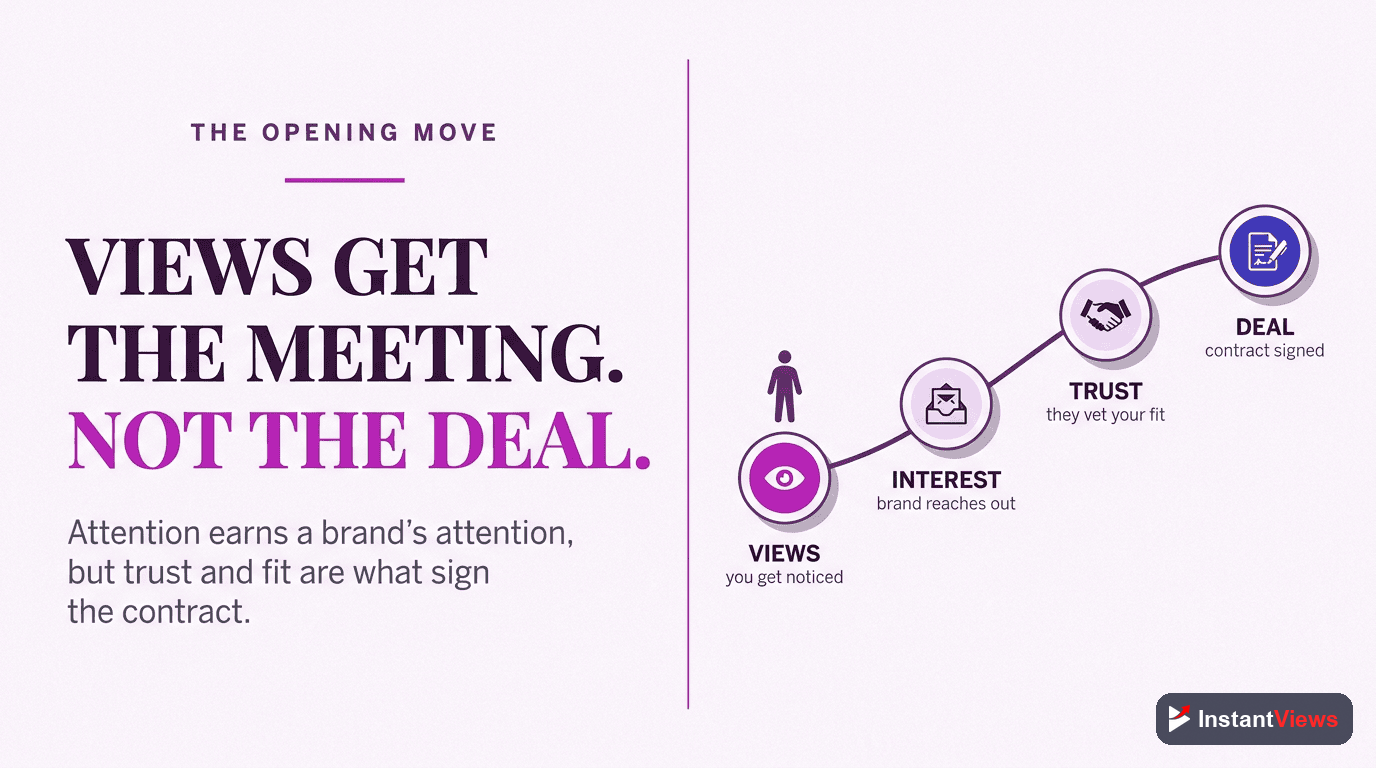
Views are the first thing a brand notices, and for good reason: they prove you can command attention. A channel that consistently pulls thousands of views per video has something every marketer wants — reach the brand does not have to buy from scratch. Your views are the headline that gets you in the room.
But a headline is not a contract. Once a brand is interested, the conversation immediately moves past the view count to harder questions. Who exactly is watching? Do they trust the creator’s recommendations? Do they take action, or just scroll past? This is why the era of judging creators purely on raw reach is fading. In 2026, mid-size creators in roughly the 25,000 to 100,000 view range are the fastest-growing segment for sponsored content, and creators with audiences between 1,000 and 100,000 followers often outperform celebrities on click-through and conversion.
The lesson is liberating for smaller channels: you do not need a million subscribers to attract serious partners. You need an audience that is well-matched to a brand and genuinely responsive. A tightly engaged community of 30,000 is worth more to the right brand than a passive crowd of 300,000.
What Views Signal to a Brand
- Reach: the ceiling of how many people a campaign could touch.
- Consistency: steady views show you can deliver predictable exposure, not a one-time spike.
- Momentum: a growth trend tells a brand the partnership will be worth more tomorrow than today.
- Relevance: the topics that earn your views reveal whether your audience overlaps with the brand’s customers.
What Brands Actually Want in 2026
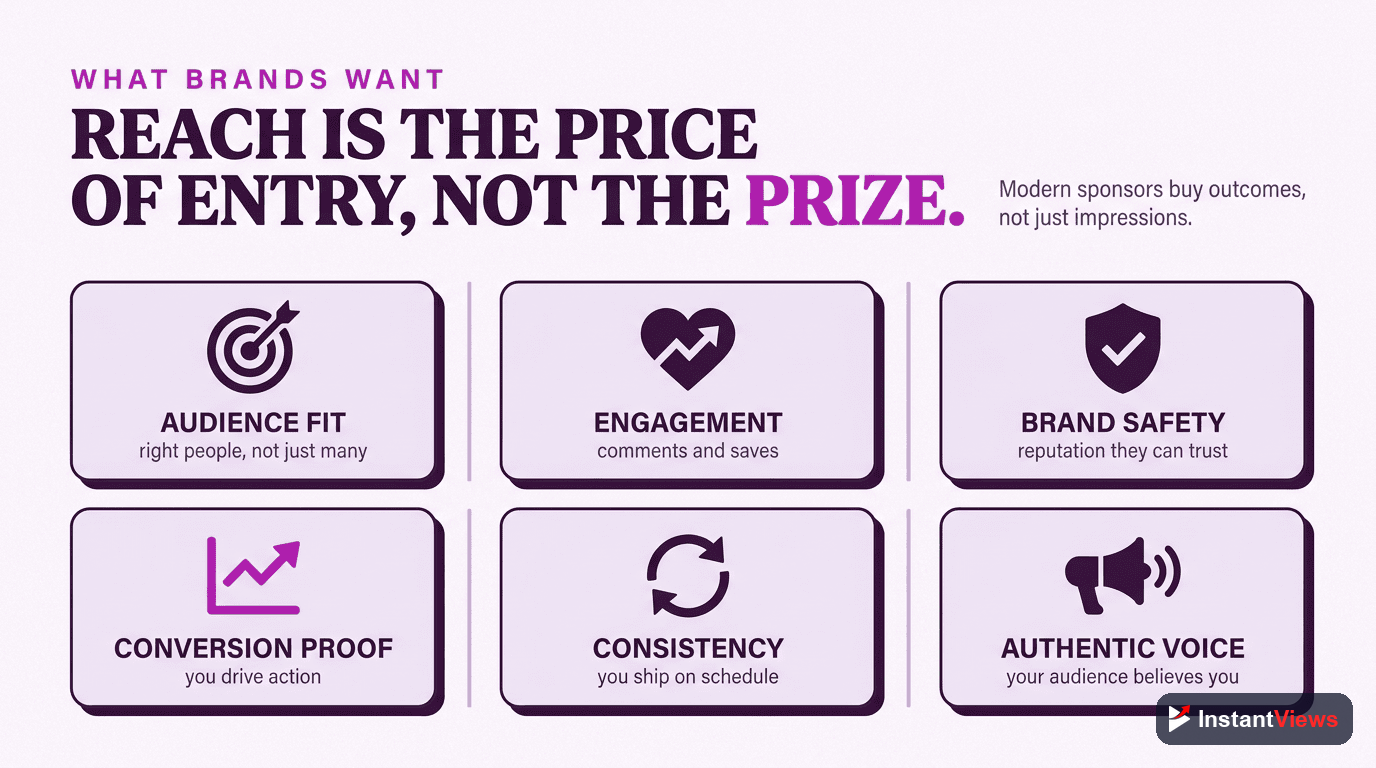
To turn views into partnerships, you have to understand what a brand is buying. It is not really video space — it is trust and outcomes. A brand partners with a creator because the creator has earned credibility that the brand cannot manufacture on its own. When you recommend something, your audience listens in a way they never would to a banner ad.
That trust is the entire reason the creator economy exists, and it is why brands increasingly think beyond a single post. A one-off mention borrows your credibility for thirty seconds. A sustained presence — where your audience sees you using a product across many videos and months — builds the kind of familiarity that actually changes buying behavior.
The Three Things Brands Evaluate
- Audience alignment: does your viewer profile match their target customer?
- Engagement and trust: do your viewers comment, click, and act on what you say?
- Reliability: will you deliver quality content on time, again and again?
YouTube itself has leaned into this shift. The platform is consolidating its brand-deal tools into YouTube Creator Partnerships (the evolution of its earlier BrandConnect program), built directly into YouTube Studio for creators and Google Ads for advertisers, and it uses AI to match brands with eligible creators based on audience similarity, organic brand mentions, and growth data. The infrastructure is now explicitly designed to help brands find creators they can work with repeatedly.
The Partnership Types That Build Recurring Income
“Brand partnership” is an umbrella term. Underneath it sit several distinct models, each with a different level of commitment and a different value to you. Understanding them lets you pitch the right structure at the right time — and gradually move toward the ones that pay reliably.
| Partnership Type | Commitment | Value to the Creator |
|---|---|---|
| One-off sponsorship | Single video or mention | Quick, transactional income; a foot in the door but no continuity once the video ends |
| Affiliate partnership | Ongoing, performance-based | Commission on every sale your link drives; scales with your results and renews itself naturally |
| Brand ambassadorship | Weeks to months of representation | Recurring income and deeper brand association; you become a recognizable face for the brand |
| Retainer agreement | Fixed monthly, ongoing | Predictable monthly fee for an agreed cadence of content; the most stable income of all |
| Hybrid deal | Flat fee plus ongoing commission | Guaranteed pay for the content plus upside on sales; balances security and performance reward |
| Co-creation | Collaborative, often multi-video | You and the brand build content or products together, producing highly authentic, deeply embedded partnerships |
The pattern is clear: the further down this list you go, the more durable and predictable the income becomes. Most creators begin at the top with a one-off sponsorship, but the creators who build sustainable businesses spend their energy moving relationships toward ambassadorships, retainers, and affiliate arrangements. In fact, surveys in 2026 show that the strong majority of creators now prefer long-term campaigns over any other type of collaboration — and many brands feel the same way.
One-Off Placements vs. Ongoing Partnerships
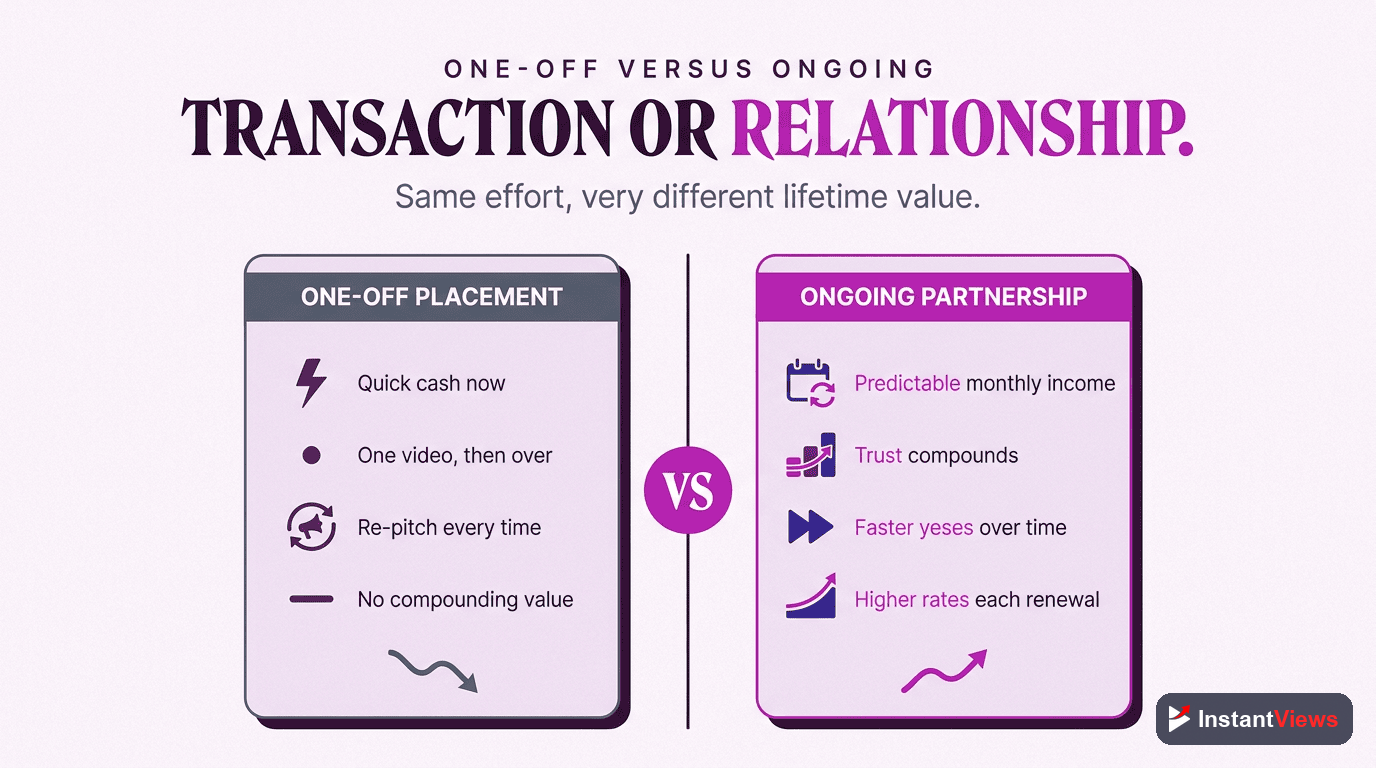
It is worth being precise about the difference, because it shapes how you negotiate and where you put your effort. A one-off placement is transactional: a brand pays for a defined deliverable in a single video, and when the video publishes, the relationship is essentially over. Landing those individual placements — and how your view count influences the rate you can charge — is its own discipline, and we cover that in depth in our companion guide on securing YouTube sponsorship deals.
An ongoing partnership, by contrast, is relational. The brand is not buying a single video; it is investing in a continued presence with your audience. This matters because the data is striking. Reports in 2026 found that a large share of influencer brand deals still end after a single post — a missed opportunity for both sides. Yet the deals that continue deliver far more: a single sponsored video might generate a bump in sign-ups, but consistent brand presence over three, six, or twelve months is what genuinely moves brand awareness.
YouTube is uniquely strong here. Brand collaborations on YouTube last an average of 13.5 months — nearly three times longer than on TikTok, where partnerships average under five months — and YouTube posts the highest repeat-collaboration rate of any major platform, at roughly half of all deals. The platform’s long-form, trust-building format is simply better suited to relationships that last.
“A one-off video rents your audience for a day. A real partnership invites the brand to grow alongside it — and that is where both the trust and the money compound.”
Why Affiliate Deals Are the Long-Term Engine
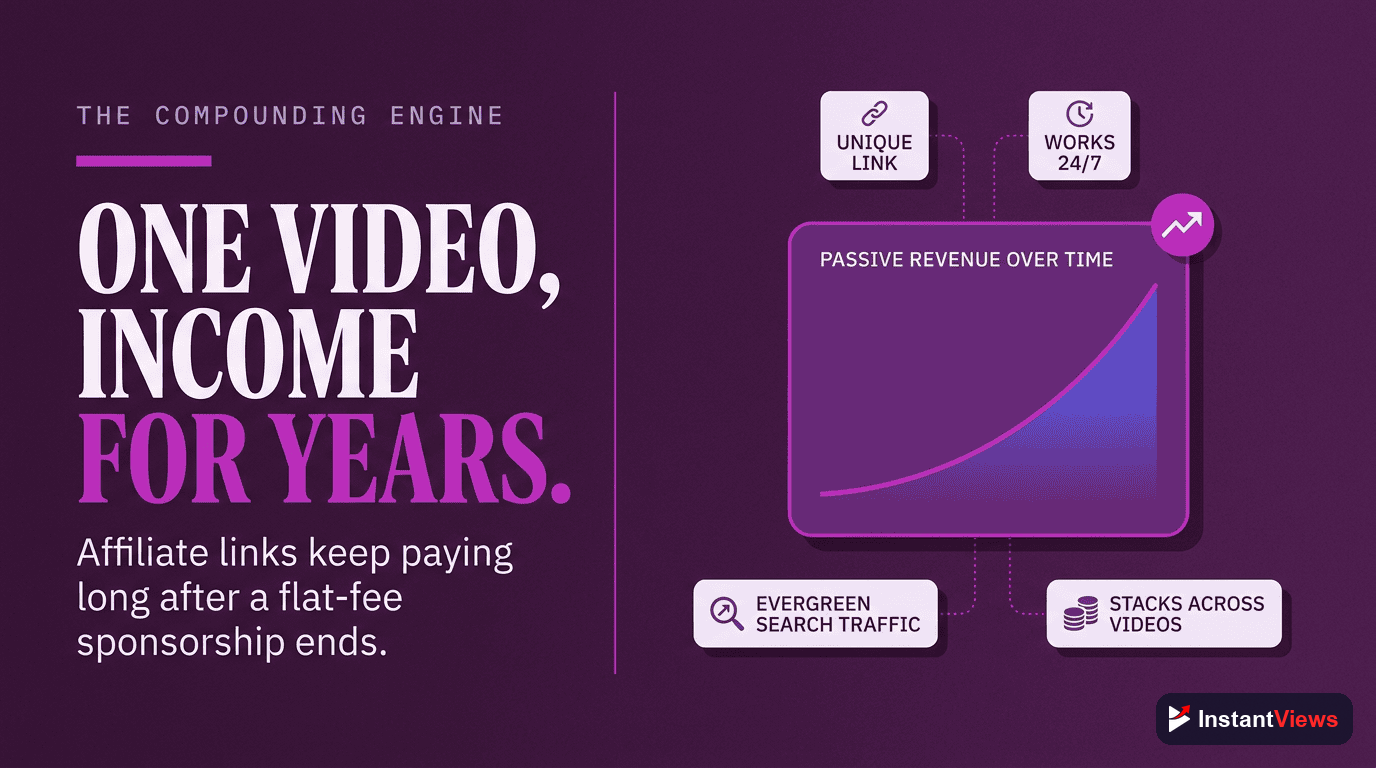
If you want one mechanism that quietly turns short deals into long ones, it is affiliate partnerships. On YouTube, affiliate-based arrangements make up the majority of brand partnerships — more than half — outpacing straight paid deals. The reason is structural: an affiliate model gives both the brand and the creator a built-in incentive to extend the relationship beyond a single post.
Think about the dynamics. When you earn a commission on every sale your link drives, you are motivated to keep promoting a product that actually converts for your audience — because each promotion pays you again. And when a brand sees a steady stream of sales coming through your link, it has every reason to keep the relationship alive, deepen it, and offer you better terms. Neither side wants to walk away from something that is working.
How to Use Affiliate Deals Strategically
- Start with products you already use: authenticity is what makes affiliate links convert, and your audience can sense the difference.
- Build them into evergreen content: tutorials and reviews keep earning long after upload, unlike a one-time sponsored mention.
- Track and report your numbers: the sales data you generate is your strongest argument for upgrading to a retainer or ambassadorship.
- Layer them into hybrid deals: combine a flat content fee with affiliate commission so you are paid for the work and rewarded for the results.
Always disclose paid and affiliate relationships clearly, both in your video and using YouTube’s paid-promotion tools. Beyond being a legal requirement in most regions, transparent disclosure protects the exact thing that makes you valuable to brands in the first place: your audience’s trust.
Positioning Yourself as a Partner, Not a Placement
Here is the mindset shift that separates creators who get rented for one video from creators who get retained for a year: think like the brand’s marketing partner, not like a billboard for hire. A placement waits to be told what to post. A partner brings ideas, understands the brand’s goals, and treats the brand’s results as a shared responsibility.
Brands notice this immediately, and it changes how they treat you. When you show up with a proposal tied to their objectives — rather than a rate card and a list of deliverables — you signal that you are someone worth investing in long term.
Habits That Make Brands Want to Keep You
- Lead with their goals: ask what success looks like for them, then shape your idea around it.
- Pitch proactively: bring concepts that fit your audience instead of waiting for a brief.
- Deliver reliably: hit every deadline and every brief; reliability is rarer than talent.
- Report on results: send a short recap of views, clicks, and sales so the brand can justify renewing.
- Protect the relationship: only promote products you believe in, so your recommendations stay credible.
A clean, simple media kit reinforces all of this. One page that summarizes your audience demographics, average views and engagement, your content style, past results, and the partnership formats you offer makes it effortless for a brand to say yes — and signals that you take the relationship as seriously as they do.
Know Your Numbers Before You Pitch
Use our free suite of YouTube tools to analyze your views, engagement, and best-performing topics — the exact data brands ask for before signing a long-term deal.
Explore Free YouTube Tools →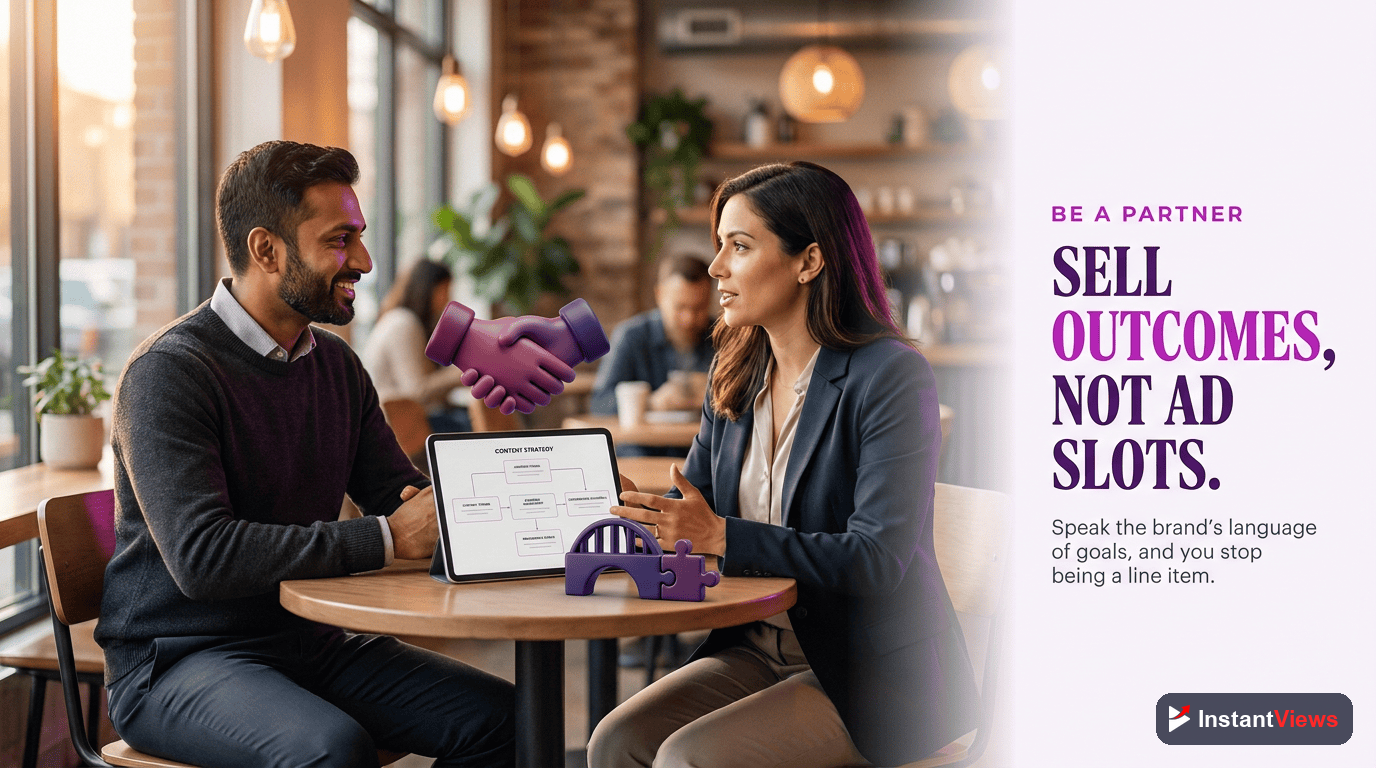
Nurturing Relationships From One Deal to a Retainer
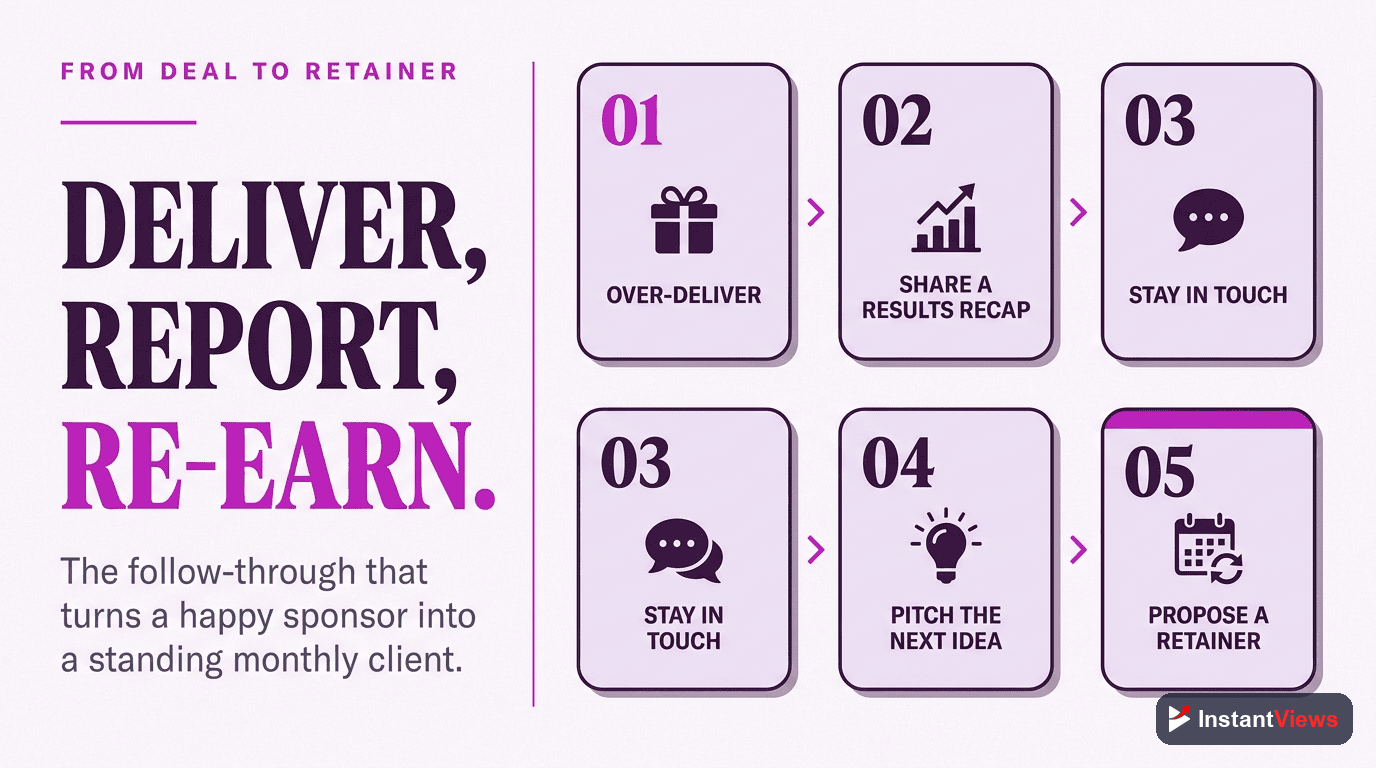
Almost no creator starts with a retainer. The path runs the other way: you land a one-off placement, you over-deliver, and you turn that single success into the foundation of an ongoing relationship. Nurturing is the work that happens between deals, and it is what quietly converts a transaction into a partnership.
The key is to treat the first deal as the beginning of a conversation, not the end of a transaction. After the video performs, you report the results, you stay in touch, and when the moment is right you propose the next step — an ambassadorship, an affiliate arrangement, or a monthly retainer. Brands are far more likely to expand a relationship that is already working than to start a new one from scratch.
Know Your Audience Data
Before you reach out, pull your demographics, average views, watch time, and engagement rate. You cannot sell a partnership without being able to describe exactly who you reach and how they respond.
Build a Simple Media Kit
Put your audience profile, results, content style, and the partnership formats you offer on one clean page. It makes saying yes easy and frames you as a professional, not a hobbyist.
Land the First Deal and Over-Deliver
Start with a single placement, hit every deadline, and treat the brand’s goal as your own. The first deal exists to earn the second; quality and reliability are what create the reason for it.
Report Results and Propose the Next Step
Send a short recap of the numbers the brand cares about, then pitch the upgrade: an affiliate arrangement, an ambassadorship, or a retainer that turns one win into an ongoing one.
Nurture the Relationship Over Time
Stay in contact between campaigns, keep delivering, and let the partnership compound. Predictable, recurring income comes from relationships you tend, not deals you chase.
Your Partnership Growth Roadmap
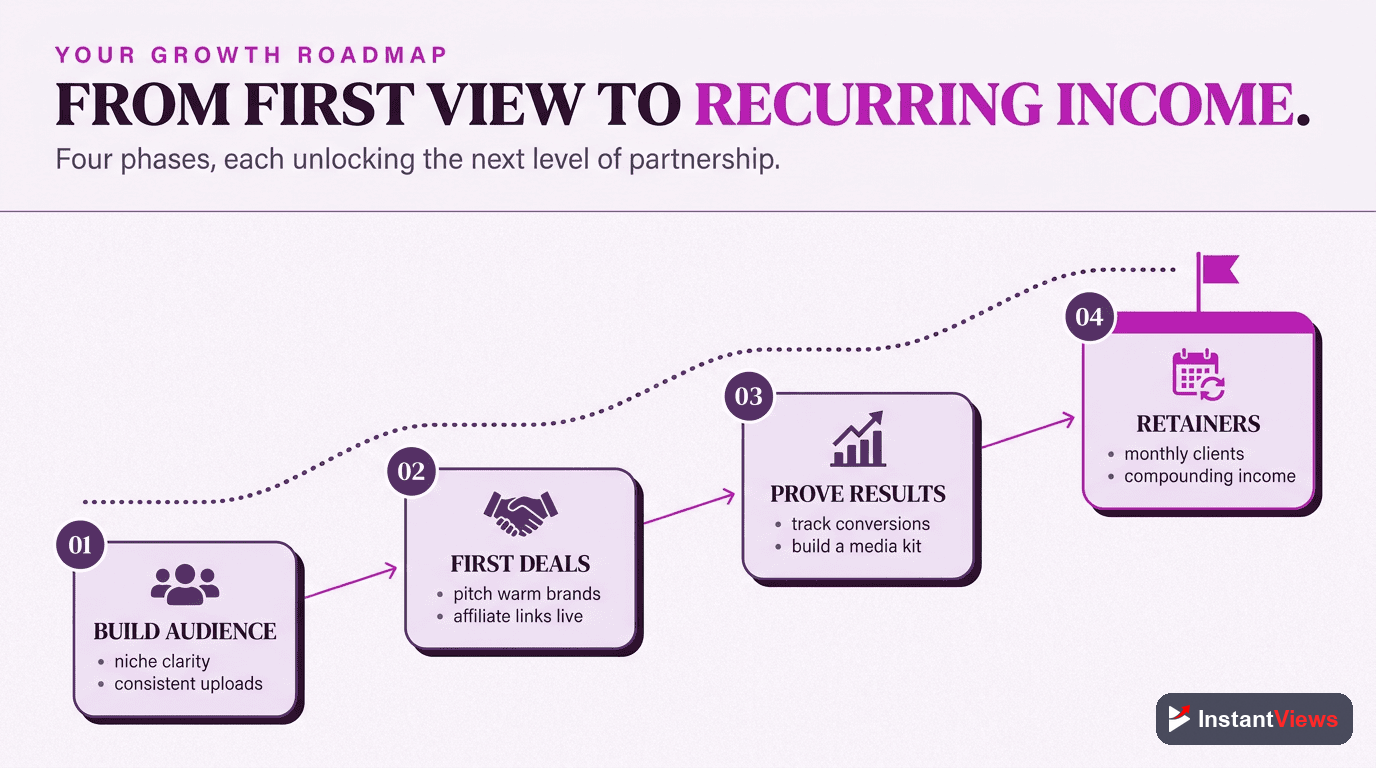
It helps to see the whole journey laid out, because the move from views to a retainer is gradual and predictable. Most creators progress through roughly the same stages, and knowing where you are tells you what to focus on next.
Stage 1 — Build the Asset
Grow a clearly defined, engaged audience and learn exactly who they are. This is the foundation; without a well-understood audience, there is nothing for a brand to buy. Focus on consistency and engagement, not vanity metrics.
Stage 2 — Land the First Deals
Take one-off placements and affiliate offers to prove you can deliver. Treat each as an audition. The goal here is not maximum income; it is building a track record and a set of results you can point to.
Stage 3 — Convert to Ongoing
Use your results to upgrade successful one-offs into ambassadorships, retainers, and standing affiliate partnerships. This is where income becomes predictable and you stop starting from zero with every campaign.
Stage 4 — Build a Portfolio
Maintain several complementary long-term partners rather than depending on one. A portfolio of recurring relationships gives you stability, negotiating leverage, and protection if any single deal ends.
Mistakes That Kill Long-Term Deals
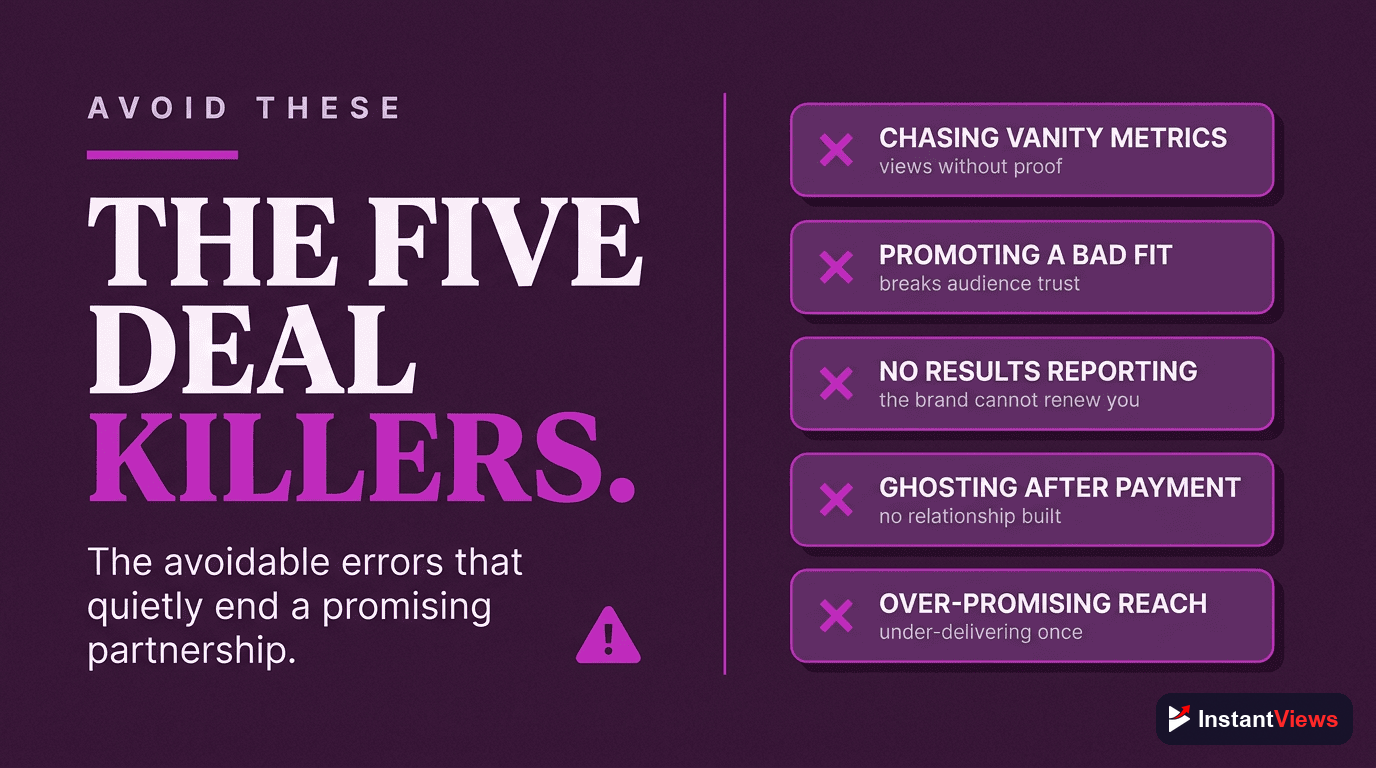
Plenty of creators land partnerships and then quietly sabotage the chance of a renewal. Avoid these common errors and you will keep relationships alive far longer than most.
- Treating every deal as a one-off: if you never follow up or report results, you train brands to treat you as disposable too.
- Promoting anything for a paycheck: a poor product recommendation spends the trust that makes you valuable, and trust does not come back cheaply.
- Leading with your rate instead of their goals: brands invest in partners who care about outcomes, not vendors who only quote prices.
- Going silent between campaigns: relationships fade without contact; a brief, value-led check-in keeps you top of mind.
- Ignoring your own data: if you cannot show what a campaign achieved, you give the brand no reason to renew or upgrade.
- Missing deadlines: reliability is the single trait that most separates retained partners from one-time placements.
“Brands do not renew the creator with the most views. They renew the one who made the relationship feel like a partnership — reliable, transparent, and invested in their success.”
Frequently Asked Questions
There is no fixed view threshold. Brands increasingly value engagement, audience fit, and trust over raw view counts, and mid-size creators in the roughly 25,000 to 100,000 view range are now the fastest-growing segment for sponsored content. A smaller channel with a tightly engaged, well-matched audience can attract better partners than a large channel with passive viewers.
A sponsorship is usually a one-off placement: a brand pays for a mention or segment in a single video. A brand partnership is an ongoing relationship that can span months, including ambassadorships, retainers, and affiliate arrangements. Partnerships compound trust and revenue over time, while sponsorships are transactional and end when the video does.
The main long-term models are brand ambassadorships (representing a brand over weeks or months), retainer agreements (a fixed monthly fee for ongoing content), affiliate partnerships (commission on sales through your link), and hybrid deals that combine a flat content fee with ongoing affiliate commission. Affiliate-based deals make up the majority of brand partnerships on YouTube.
A single sponsored video creates a short bump, but consistent brand presence over several months actually moves brand awareness and sales. YouTube leads other platforms here: collaborations on YouTube last around 13.5 months on average, and the platform has the highest repeat-collaboration rate of any major platform at roughly half of all deals.
Affiliate deals give both sides a built-in incentive to keep working together. Because you earn a commission on every sale your link drives, a brand that sees steady results has every reason to extend the relationship, and you have every reason to keep promoting a product that converts for your audience. This shared interest naturally turns one post into an ongoing partnership.
Lead with your audience, not your rate card. Show brands the data that matters to them, propose ideas tied to their goals rather than waiting to be told what to post, deliver reliably, and report on results. When a brand sees you think like a marketing partner who cares about their outcomes, you become someone they retain rather than rent.
A simple media kit helps. It should summarize your audience demographics, average views and engagement, the kind of content you make, past results, and the partnership formats you offer. It signals professionalism and makes it easy for a brand to say yes, but the data and audience fit behind it matter far more than the design.
Yes. Most creators start with one-off placements, prove they can deliver results, and then nurture those relationships into recurring work. As you accumulate case studies, repeat collaborations, and trust, you can move from per-video pricing to monthly retainers and ambassadorships that provide predictable income regardless of channel size.
Conclusion
Your views are the spark, but they are not the prize. The real value of a YouTube audience shows up when views become the basis of long-term brand partnerships — ambassadorships, retainers, and affiliate relationships that pay you month after month instead of once and never again. Brands have made it clear what they want: trust, audience fit, and a partner who delivers, and YouTube has built the longest-lasting, most repeatable partnerships of any major platform precisely because its format earns that trust.
So treat every deal as the start of a relationship rather than the end of a transaction. Know your audience cold, position yourself as a partner who cares about the brand’s outcomes, and use each success to nurture the next, bigger step. Affiliate arrangements give both sides a reason to keep going; reliability and honest reporting give brands a reason to stay.
Build the asset, land the first deals, convert them into ongoing ones, and grow a portfolio of partners you can count on. Do that consistently, and your channel stops trading views for one-time checks — and starts generating the kind of durable, compounding income that turns a creator into a business.