- A YouTube marketing funnel guides viewers from first discovery to becoming customers and loyal fans
- Map every video to one of three stages: awareness (TOFU), consideration (MOFU), or decision (BOFU)
- Capture leads with a free resource linked in your description, pinned comment, and end screen
- Most viewers need several touchpoints before they convert, so consistency beats any single video
- Measure one clear metric per stage and fix the weakest point in the funnel first
With more than 2.7 billion monthly active users and over a billion hours of video watched every day, YouTube is the largest discovery engine on the internet. But views alone do not grow a business. The creators and brands who win treat YouTube as a marketing funnel: a deliberate path that turns a curious first-time viewer into a subscriber, a lead, and finally a customer.
The problem is that most channels publish videos with no plan for what happens after the view. A viewer watches, enjoys it, and leaves — never to return. A funnel fixes that by giving every viewer a logical next step at each stage of their journey, so the attention you work so hard to earn does not simply evaporate.
This matters even more in 2026. With Connected TV now the number-one viewing surface in the United States and Shorts driving more than 200 billion views a day, your audience can meet you on a phone, a laptop, or a living-room screen. A funnel is what holds that fragmented attention together into a single, repeatable journey toward a sale.
In this guide you will learn exactly how a YouTube marketing funnel works, the content that belongs at each stage, which native YouTube features connect those stages, how to capture and nurture leads, a complete worked example, and how to measure whether your funnel is actually converting.
- What Is a YouTube Marketing Funnel?
- The Three Funnel Stages: TOFU, MOFU, BOFU
- Top of Funnel: Attract New Viewers
- Middle of Funnel: Build Trust and Capture Leads
- Bottom of Funnel: Convert Viewers Into Customers
- Map YouTube Features to Funnel Stages
- A Worked Example: One Funnel End to End
- Build Your Funnel: Step by Step
- Measuring and Optimizing Your Funnel
- Common Funnel Mistakes to Avoid
- FAQ
What Is a YouTube Marketing Funnel?
A YouTube marketing funnel is the path a viewer travels from the moment they first find your content to the moment they take a meaningful action — joining your email list, booking a call, or buying a product. The word "funnel" describes the shape: a large audience discovers you at the top, a smaller group engages more deeply in the middle, and a focused few convert at the bottom.
Unlike a website funnel, a YouTube funnel runs on video and attention. Each video is a touchpoint, and YouTube's own features — the description, pinned comments, end screens, cards, playlists, and channel layout — become the links that carry viewers to the next stage.
The goal is not to push every viewer to buy immediately. Only a small fraction of people are ready to purchase the first time they meet a brand, while the vast majority need several touchpoints first. A funnel respects that reality by meeting viewers where they are and offering the right next step instead of the same hard sell to everyone.
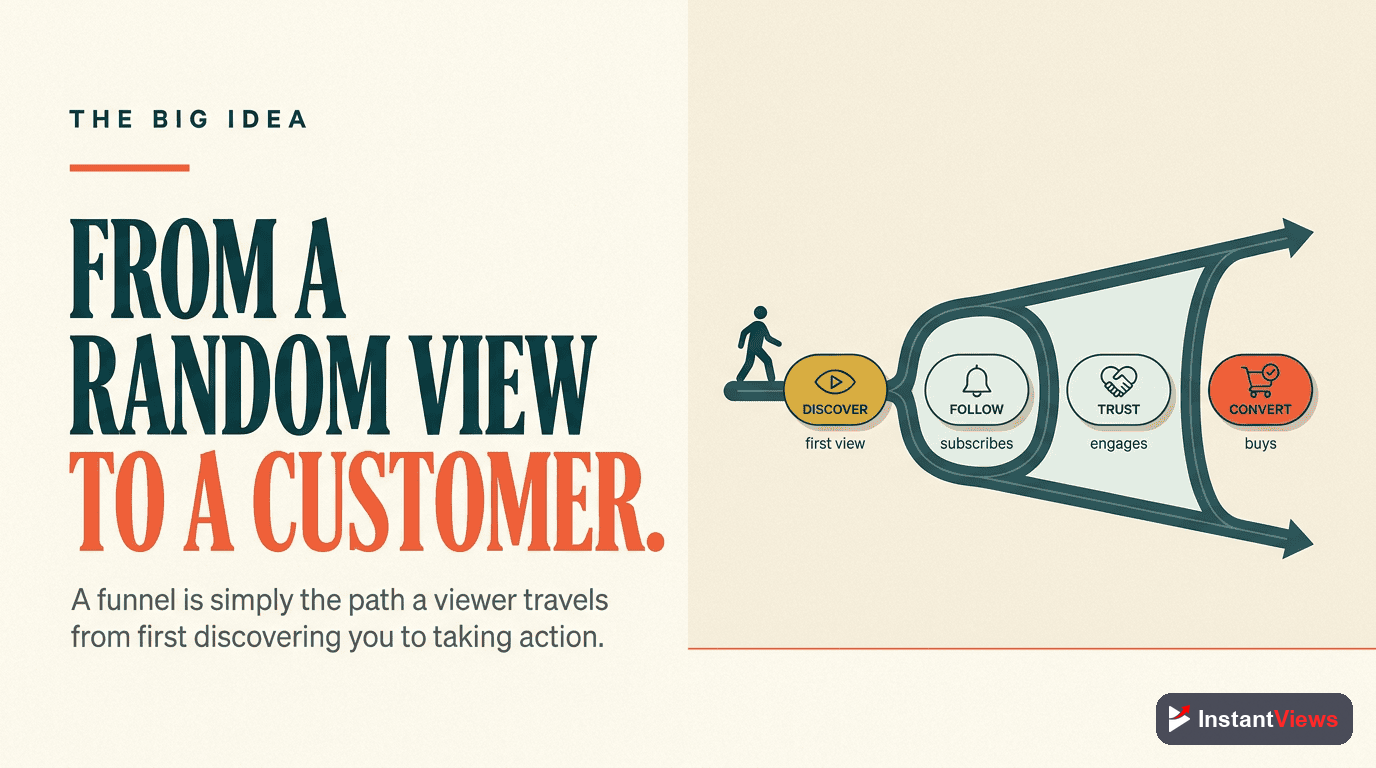
The Three Funnel Stages: TOFU, MOFU, BOFU
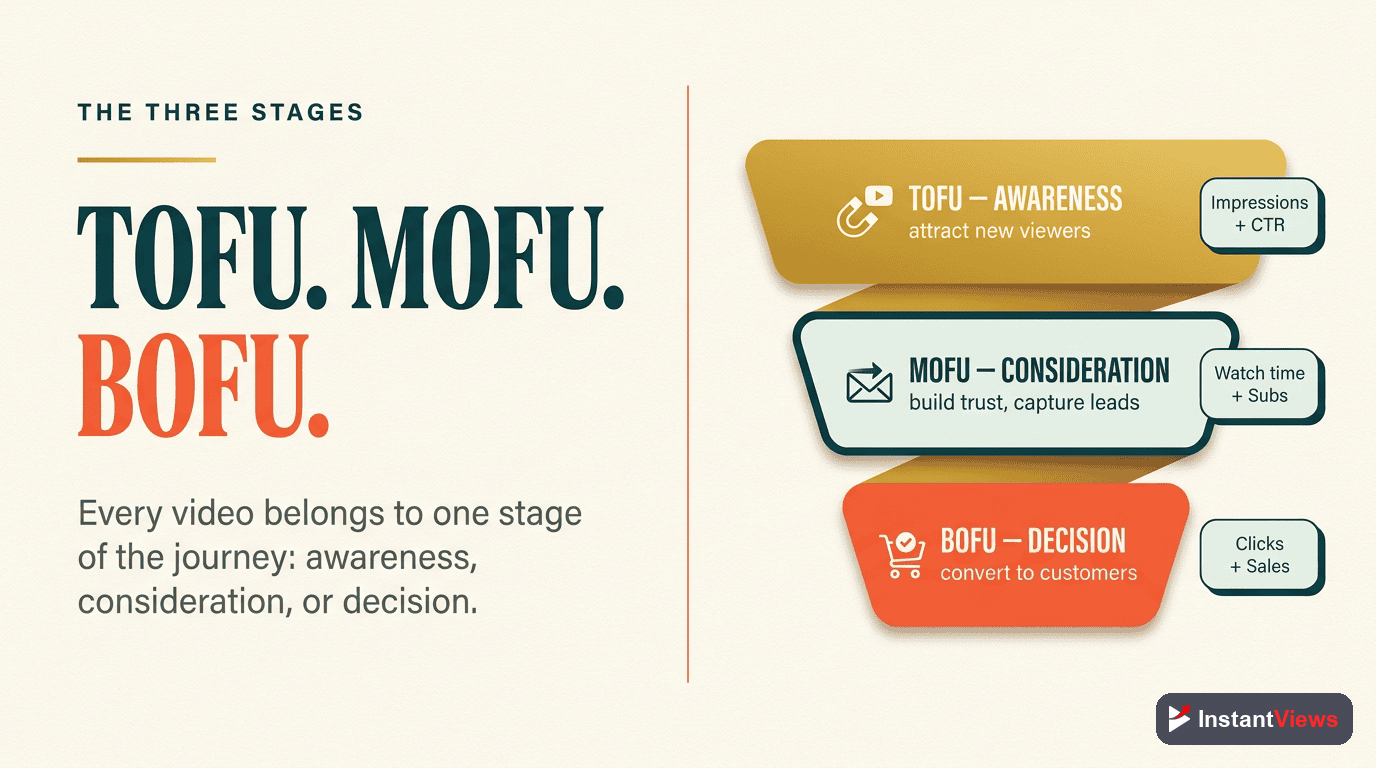
Marketers describe the funnel in three layers. Understanding each one tells you exactly what kind of video to make and what to ask the viewer to do next. The table below summarizes the goal, content types, key metric, and call-to-action for each stage so you can plan at a glance.
| Stage | Goal | Content Types | Key Metric | Call-to-Action |
|---|---|---|---|---|
| TOFU – Awareness | Reach new viewers and make a strong first impression | Shorts, "how-to" and "best" videos, trend reactions, listicles | Impressions & click-through rate | Watch the next video / subscribe |
| MOFU – Consideration | Build trust and capture the email address | In-depth tutorials, comparisons, case studies, Q&A | Average view duration & subscriber growth | Download the free lead magnet |
| BOFU – Decision | Remove doubt and drive the purchase | Demos, walkthroughs, testimonials, offers, FAQs | Link clicks, sign-ups & sales | Start the trial / buy / book |
TOFU – Top of Funnel (Awareness)
This is where strangers discover you. TOFU content answers broad questions, taps into trends, and is built to be found through search and suggested videos. The goal is reach and a strong first impression — not a sale.
MOFU – Middle of Funnel (Consideration)
Here, viewers already know you exist and are weighing whether you are worth their trust. MOFU content goes deeper: detailed tutorials, comparisons, and case studies that solve real problems and earn the subscribe and the email address.
BOFU – Bottom of Funnel (Decision)
At the bottom, viewers are close to a decision. BOFU content removes doubt with demos, reviews, testimonials, and clear offers, then gives a direct call to action to buy, sign up, or book.
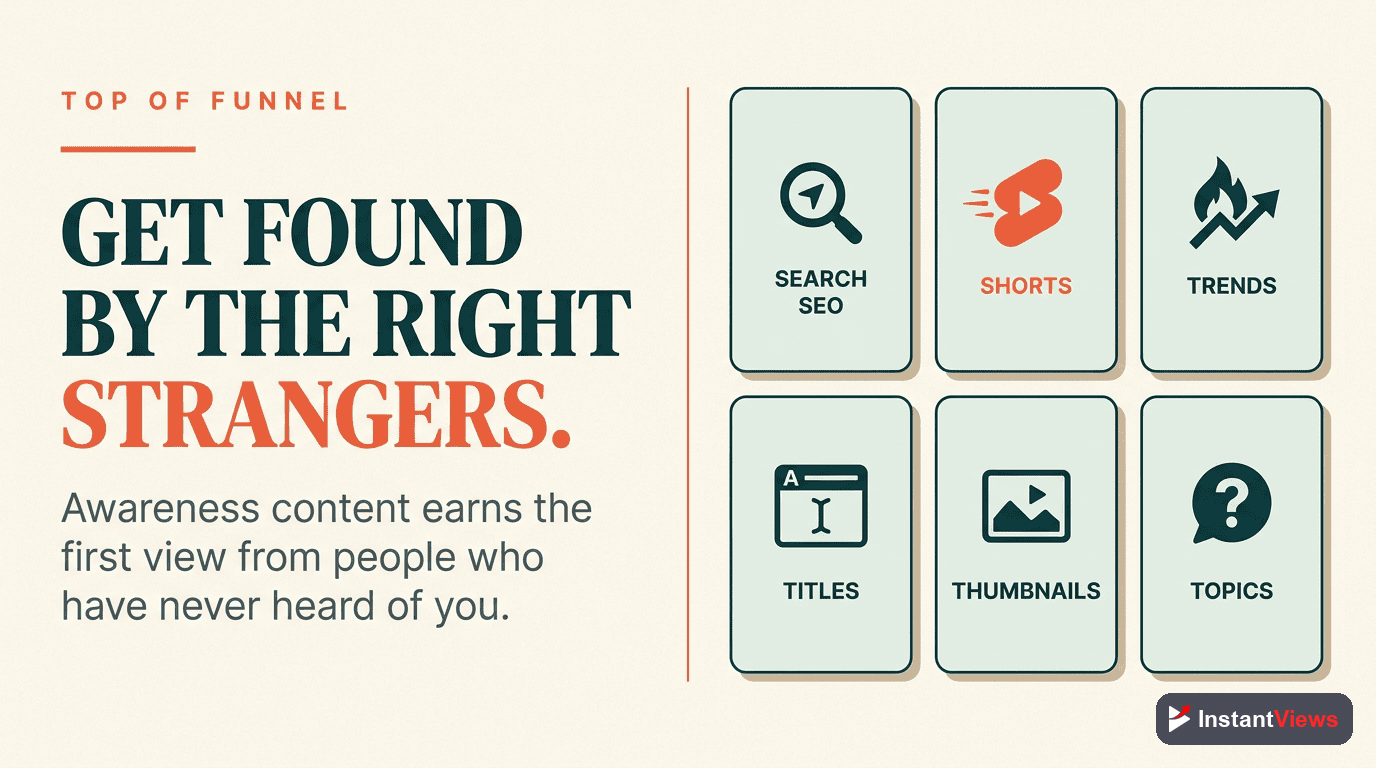
Top of Funnel: Attract New Viewers
Top-of-funnel videos exist to be discovered by people who have never heard of you. The best TOFU content is searchable, timely, and easy to share, and it speaks to the viewer's problem rather than your product.
- Answer search questions: "How to," "best," and "why" videos capture viewers who are actively looking for help in your niche.
- Use YouTube Shorts: Shorts now drive over 200 billion views a day and are one of the fastest ways to reach new audiences in 2026. Use them to introduce ideas that your longer videos expand on.
- Ride trends carefully: Timely topics attract spikes of new viewers — just keep them relevant to your core offer so the audience you gain is the audience you want.
- Optimize titles and thumbnails: Discovery starts with the click. A strong title and thumbnail decide whether your reach turns into views.
The mistake to avoid here is selling too hard. A viewer who has known you for thirty seconds is not ready to buy. At this stage, your only job is to earn the next view — a subscribe, or better yet, a click to a second video that pulls them deeper into your world.
Middle of Funnel: Build Trust and Capture Leads
Once viewers know you, the middle of the funnel turns attention into a relationship. This is where you earn the subscribe and, ideally, the email address.
Create Depth, Not Just Reach
MOFU videos are longer and more thorough: step-by-step tutorials, honest comparisons, and case studies that prove you can solve the viewer's problem. This content builds the trust that makes a future sale possible. It rewards the viewer for sticking around, which in turn signals quality to the 2026 algorithm that now rewards genuine viewer satisfaction and retention.
Capture Leads With a Lead Magnet
The single biggest upgrade most channels can make is to move viewers off YouTube and onto an email list you own. Offer something genuinely useful in exchange for an email:
- A free checklist, template, or cheat sheet that complements the video
- A short email course or mini-guide delivered over a few days
- A resource library or toolkit that grows with your channel
Link to a dedicated landing page — not your homepage — in the first line of your description and in a pinned comment, then mention it clearly in the video. A dedicated page focused on one offer always converts better than a general homepage that gives the visitor a dozen things to do.
Never rely on YouTube as your only connection to your audience. Algorithms change and channels can be lost overnight. An email list is an audience you truly own — rather than reach you merely rent — which is why lead capture sits at the heart of every durable funnel.
Grow Your Channel Faster
Explore our free suite of YouTube tools to research topics, optimize titles, and analyze what is working at every stage of your funnel.
Explore Free YouTube Tools →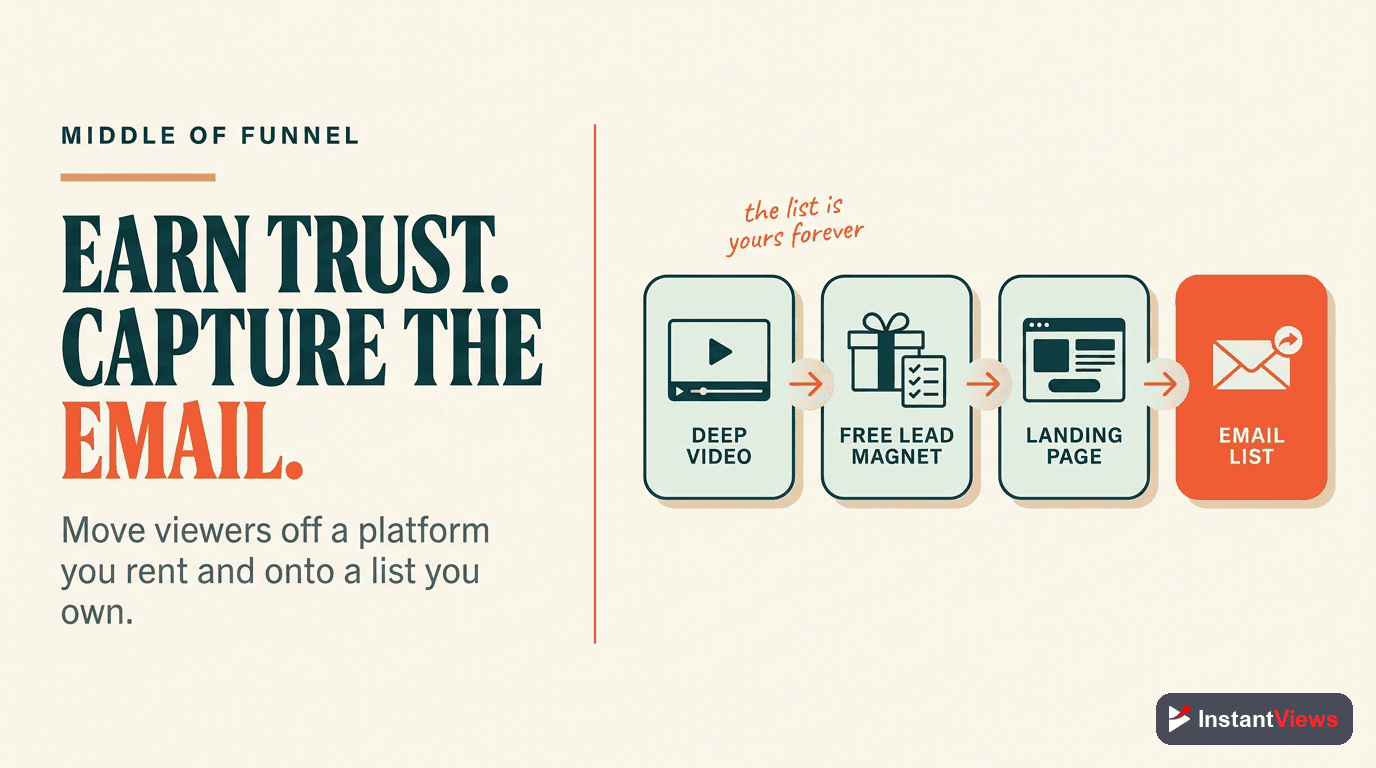
Bottom of Funnel: Convert Viewers Into Customers
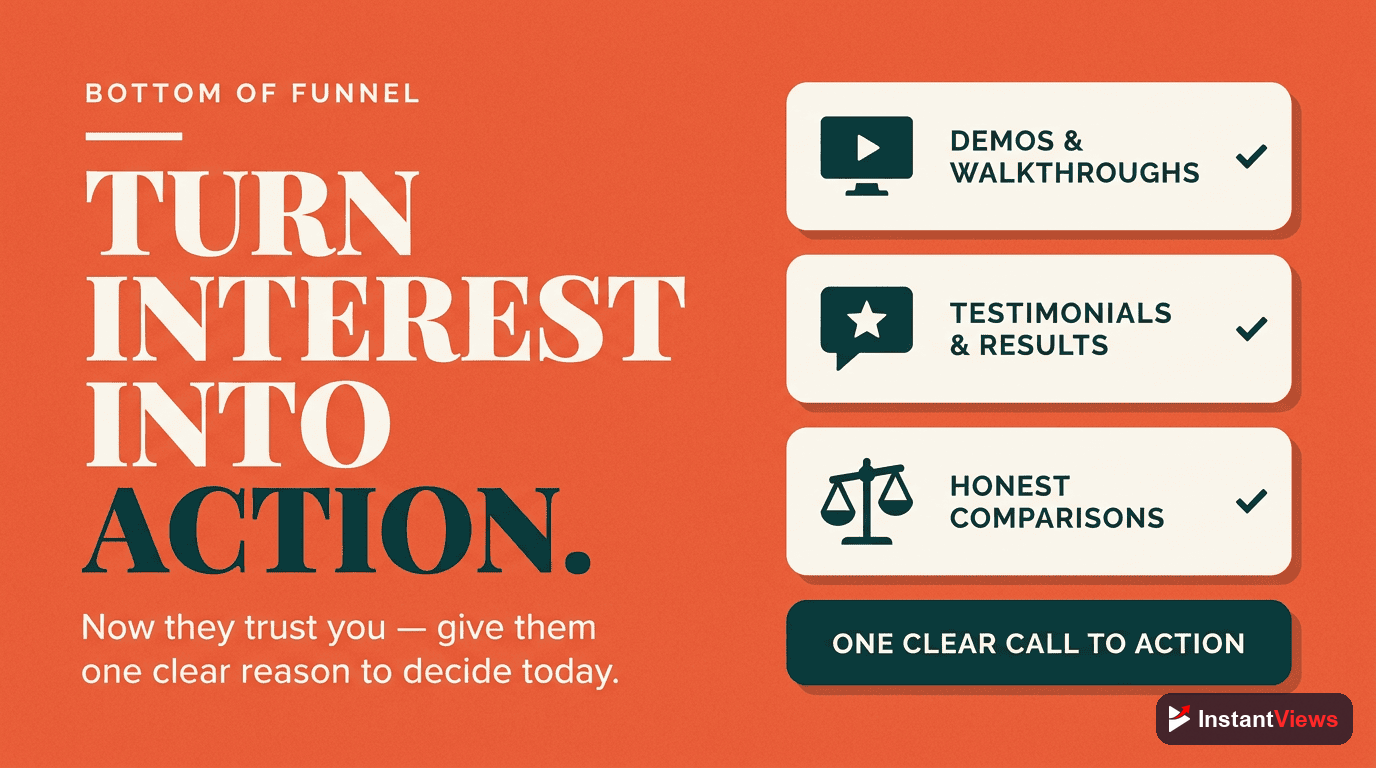
Bottom-of-funnel content speaks to viewers who are almost ready to act. They trust you; now they need a reason to decide today rather than someday.
- Product demos and walkthroughs: Show exactly how your product or service solves the problem, step by step.
- Case studies and testimonials: Real results and real voices remove the last bit of doubt.
- Comparisons: Help viewers choose between you and the alternatives — honestly, which builds more trust than pretending you have no competition.
- Clear calls to action: Use end screens, cards, pinned comments, and the description to send viewers to one clear next step.
Keep BOFU calls to action specific and singular. "Start your free trial" or "Download the template" converts far better than a vague "check out my links." When a viewer is ready to decide, the easiest possible next step is what gets the click.
Map YouTube Features to Funnel Stages
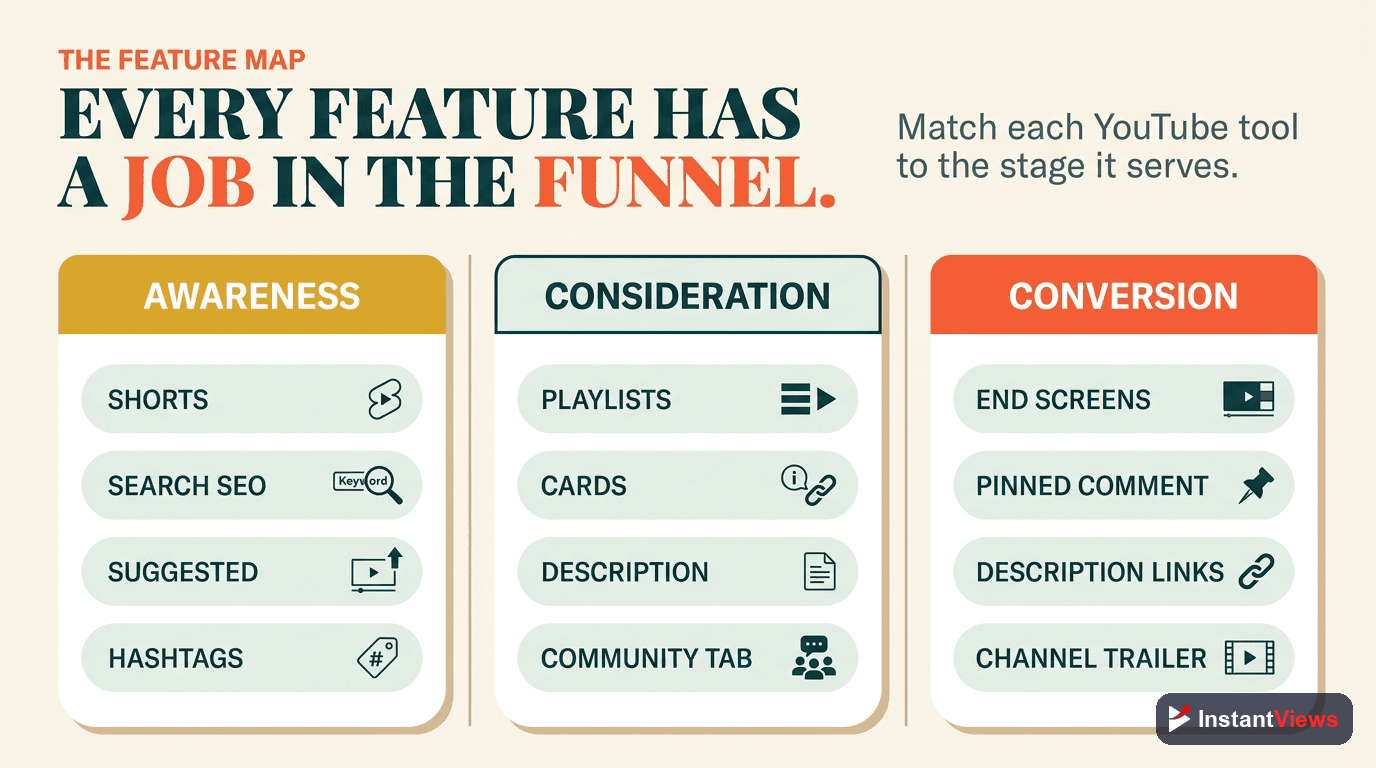
One reason a YouTube funnel works without any external tools is that the platform already ships with everything you need to connect stages. The skill is knowing which feature does which job. Used well, these native features turn a scattered library of videos into a guided path.
Awareness features
- Shorts: the fastest top-of-funnel reach engine; use them to surface ideas that your long-form videos expand on.
- Search-optimized titles and tags: help broad "how-to" content get found by strangers.
- Community posts: keep your channel active between uploads and re-surface awareness content to existing subscribers.
Consideration features
- Playlists: bundle related videos so one view becomes a binge, deepening trust automatically.
- Channel sections: organize your homepage so a curious visitor immediately sees your best consideration content.
- Info cards: point viewers from one relevant video to the next at the exact moment their interest peaks.
Conversion features
- End screens: the prime real estate for a final call to action on every video.
- Pinned comments and description links: the two most reliable places to drop your lead-magnet or offer link.
- Cards on demo videos: link directly to a landing page when a viewer is most convinced.
Think of these features as the plumbing between your videos. A viewer who finishes a Short can be carried to a tutorial, then to a playlist, then to a demo with an end-screen link — all without ever leaving YouTube until they are ready to convert.
A Worked Example: One Funnel End to End
To make this concrete, imagine a creator named Maya who sells a paid course on personal budgeting. Here is how a single, well-built funnel carries a complete stranger all the way to a sale.
Awareness (TOFU). Maya posts a 45-second Short titled "3 budgeting mistakes that keep you broke." It rides a familiar pain point, ends with a hook, and uses an info card and end screen to point viewers to a longer video. A stranger scrolling Shorts watches it, nods along, and taps through.
Consideration (MOFU). That longer video is a 12-minute tutorial: "The simple budgeting system I use every month." It delivers real value and earns the subscribe. Midway through, Maya mentions a free budgeting template and points to the first line of the description and a pinned comment. The viewer clicks through to a dedicated landing page — not Maya's homepage — and trades an email address for the template. The stranger is now a lead Maya owns.
Nurture. Over the next week, a short automated email sequence delivers the template, shares two more tips, and links back to a couple of Maya's best videos. Each email is another touchpoint, and each video deepens trust a little more.
Decision (BOFU). Now warmed up, the lead watches Maya's demo video: "A full walkthrough of my budgeting course." It shows exactly what is inside, features a short testimonial, and ends with one clear call to action on the end screen and in the description: "Enroll today." Because the viewer has had many touchpoints — a Short, a tutorial, several emails, and a demo — the decision now feels easy. They enroll.
Notice that no single video did all the work. The Short earned attention, the tutorial earned trust and the email, the nurture sequence kept the relationship warm, and the demo closed the sale. That is the entire point of a funnel: each piece does one job and hands off cleanly to the next.

Build Your Funnel: Step by Step
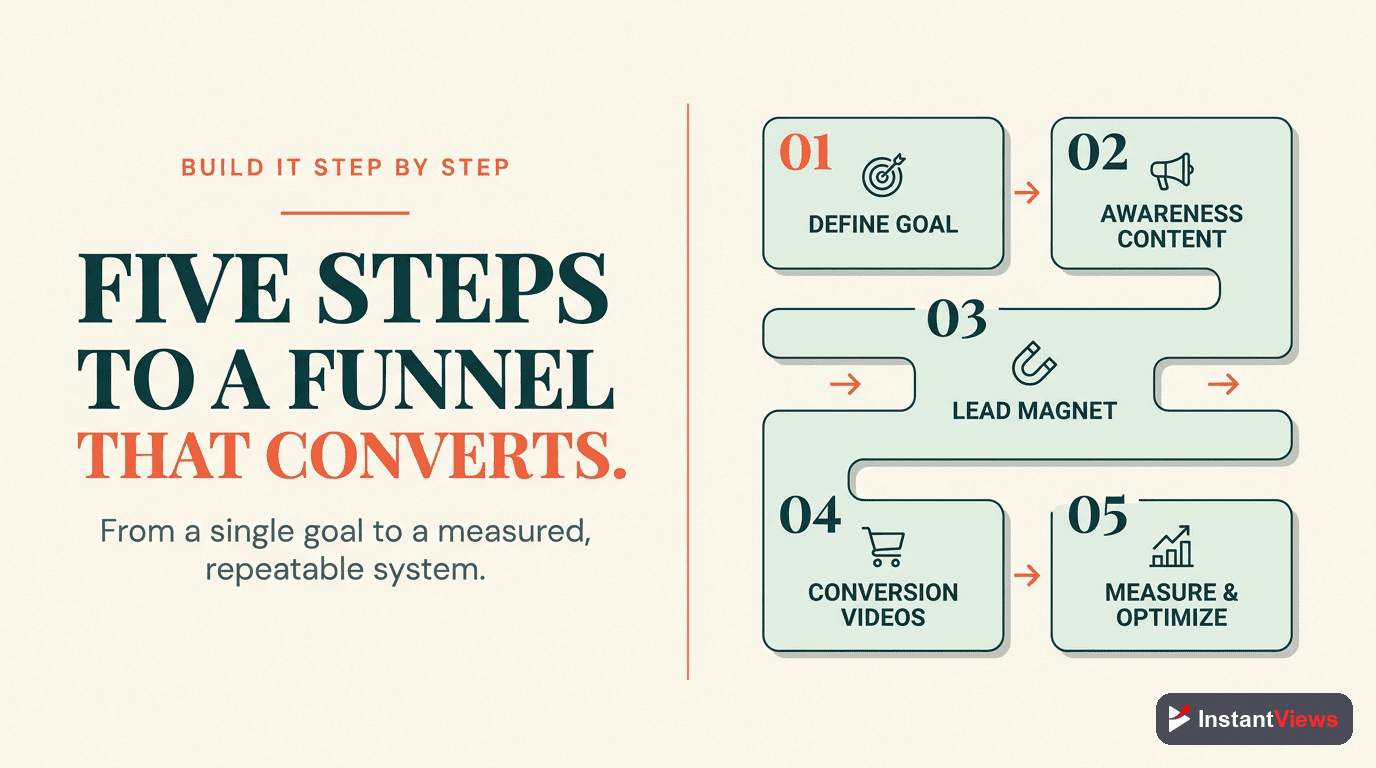
Here is a simple sequence to build your YouTube marketing funnel from scratch:
Define Your Goal and Audience
Pick the single conversion that matters most — an email signup, a sale, or a booking. Then map the questions your ideal viewer asks at the awareness, consideration, and decision stages.
Plan Content for Each Stage
Assign every planned video to TOFU, MOFU, or BOFU. Most channels need plenty of awareness content at the top and a few high-quality decision videos at the bottom.
Set Up Lead Capture
Create a lead magnet and a dedicated landing page. Add the link to your descriptions, pinned comments, and end screens so every video can capture leads.
Connect the Steps
Use end screens, cards, and playlists to point each video toward the next logical one, and guide subscribers from free content toward your offer.
Publish Consistently and Review
A funnel compounds over time. Upload on a steady schedule, then review your analytics regularly to see where viewers drop off.
Measuring and Optimizing Your Funnel
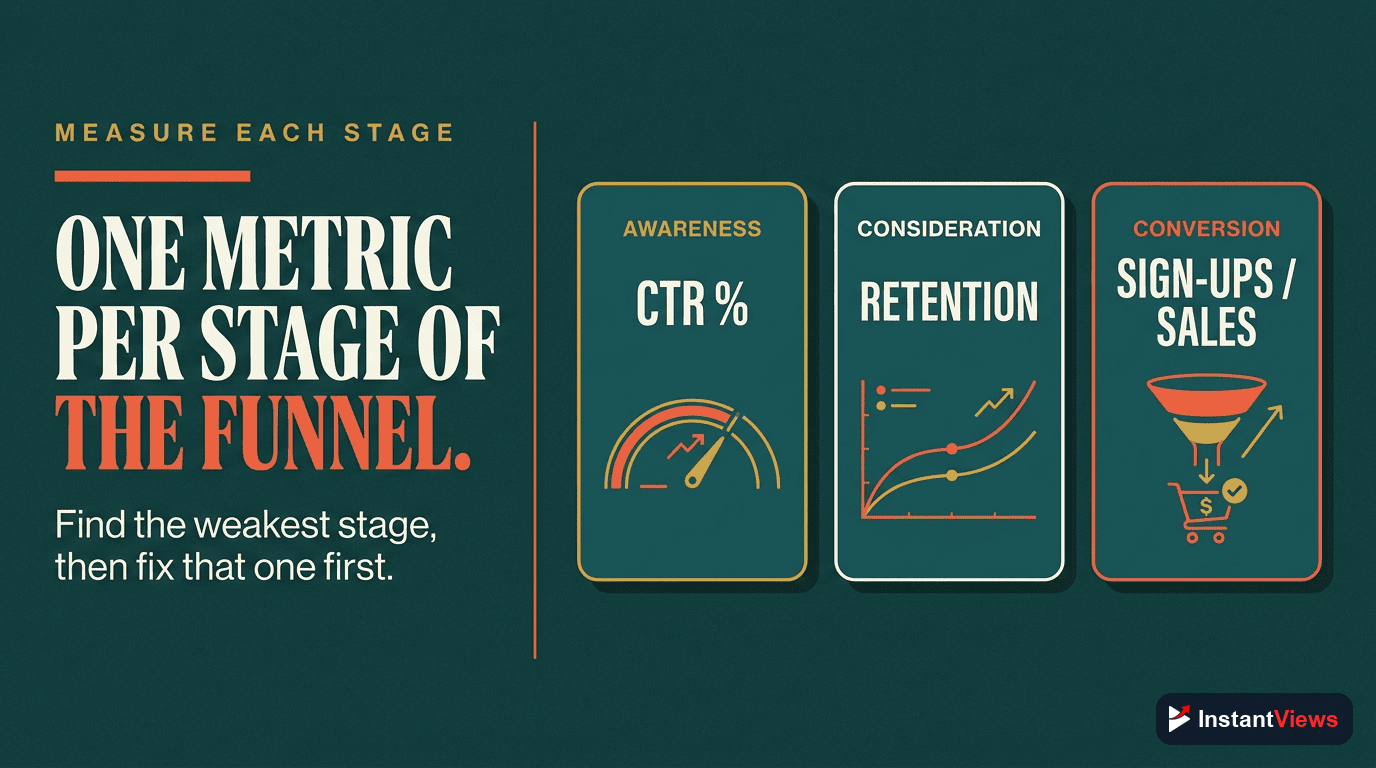
You cannot improve what you do not measure. Track one clear metric for each stage so you know where the funnel leaks, then concentrate your effort on the single weakest point.
- Awareness (TOFU): impressions, click-through rate, and new viewers. A low CTR means your titles and thumbnails need work.
- Consideration (MOFU): average view duration, subscriber growth, and returning viewers. Weak retention means your content is not yet earning trust.
- Decision (BOFU): link clicks, email signups, and sales. Few conversions despite good views means your offer or calls to action need attention.
Use YouTube Analytics for on-platform behavior and your website or CRM data to follow what happens after the click. When you find the weakest stage, fix that one first — it is where a small improvement returns the most. A funnel with great awareness but no lead capture, for example, is leaking far more value than one that simply needs better thumbnails.
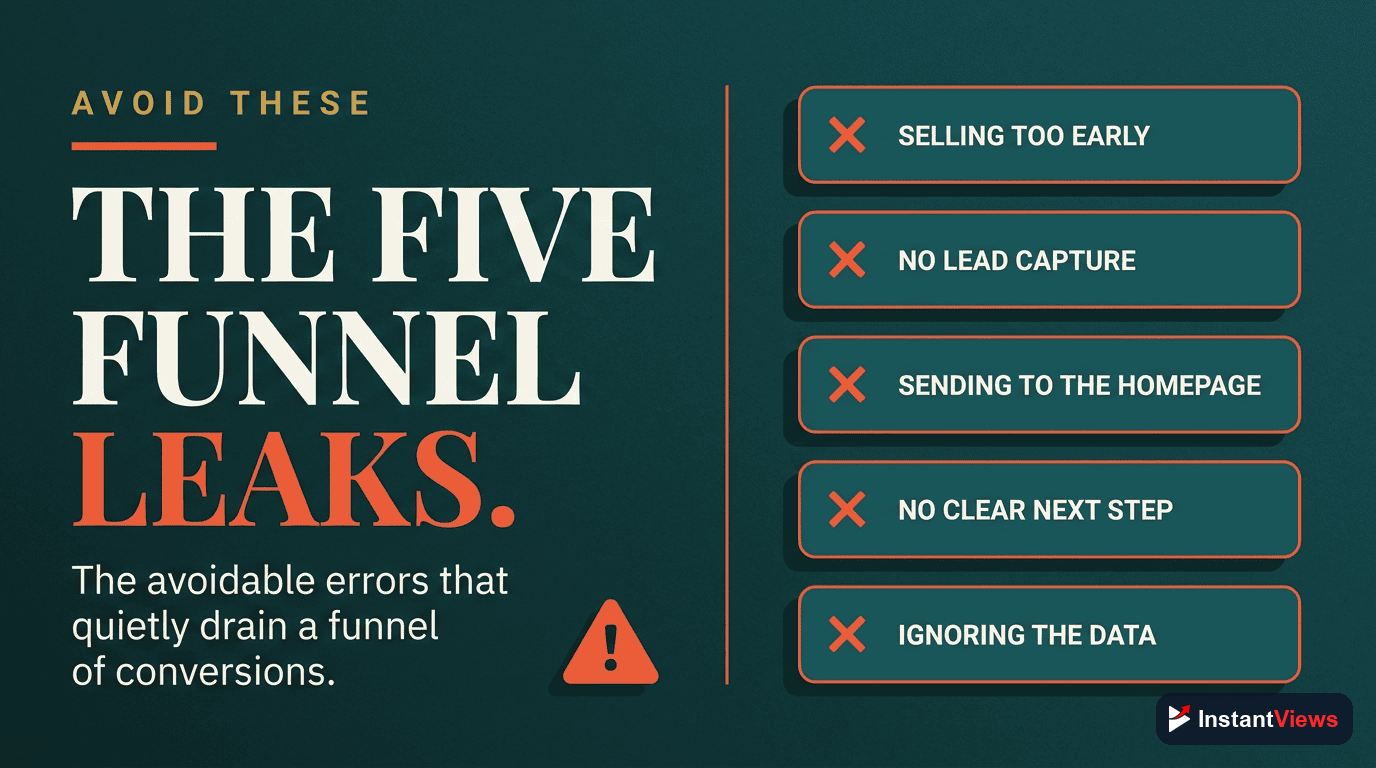
Common Funnel Mistakes to Avoid
Even experienced creators trip over the same issues. Watch out for these:
- Selling too early: Pushing offers to brand-new viewers wastes your reach and pushes people away.
- No lead capture: Sending all your traffic back to YouTube with no way to follow up means you rebuild your audience from zero with every upload.
- Sending traffic to the homepage: A generic homepage converts poorly. Always send viewers to a focused landing page.
- No clear next step: If a video does not tell the viewer what to do next, most will simply leave.
- Ignoring the data: Without tracking each stage, you cannot tell whether your funnel is working or where it breaks.
- Inconsistency: Funnels compound through repetition. Sporadic uploads never build enough momentum to convert.
"Views are vanity, but a funnel is strategy. The creators who win on YouTube are the ones who know exactly what they want a viewer to do next — and make that step effortless."
Frequently Asked Questions
A YouTube marketing funnel is the journey a viewer takes from first discovering your channel to becoming a paying customer or loyal subscriber. It maps your content to each stage of that journey: awareness at the top, consideration in the middle, and conversion at the bottom.
TOFU (top of funnel) is awareness content that attracts new viewers. MOFU (middle of funnel) builds trust and captures leads through deeper, more useful content. BOFU (bottom of funnel) drives the decision to buy with demos, case studies, and clear offers.
Offer a free lead magnet such as a checklist, template, or short email course, and link to it in the first line of your description and a pinned comment. Send viewers to a dedicated landing page rather than your homepage, and reinforce the offer with end screens and cards.
End screens, info cards, pinned comments, description links, channel sections, playlists, Shorts, and community posts all move viewers between stages. Shorts work well for awareness at the top, while longer tutorials and reviews support the consideration and decision stages.
Most channels need several months of consistent uploads before a funnel produces steady conversions, because only a small fraction of viewers are ready to buy on first contact. The majority need multiple touchpoints across awareness, consideration, and decision content before they convert.
Track one metric per stage: impressions and click-through rate for awareness, average view duration and subscriber growth for consideration, and link clicks, sign-ups, and sales for conversion. Use YouTube Analytics alongside your website or CRM data to follow the full journey.
No. A funnel works entirely on organic content, since each video is a free touchpoint. Paid ads simply let you accelerate a stage that is already working — for example, amplifying a high-converting awareness video or retargeting viewers who watched but did not sign up.
A website funnel relies on pages and ads; a YouTube funnel runs on video and attention. The stages are the same, but the touchpoints are videos, and the links between them are YouTube features like end screens, cards, descriptions, and pinned comments rather than buttons on a page.
Conclusion
A YouTube marketing funnel turns the platform from a place where people watch and leave into a system that quietly converts strangers into customers. The formula is simple: attract new viewers with awareness content, build trust and capture leads in the middle, and remove doubt with clear, focused offers at the bottom.
The single highest-leverage move is lead capture. The moment you trade a free resource for an email address, you stop renting your audience from the algorithm and start owning it — which means you can nurture viewers toward a sale on your own terms, no matter how YouTube changes.
Start by mapping the videos you already have to the three stages, find the gap, and fill it. Add a lead magnet and a dedicated landing page, connect your videos with end screens and playlists, then publish consistently and watch where viewers drop off. Fix the weakest stage first, repeat, and your funnel will compound into a dependable source of views, leads, and sales.