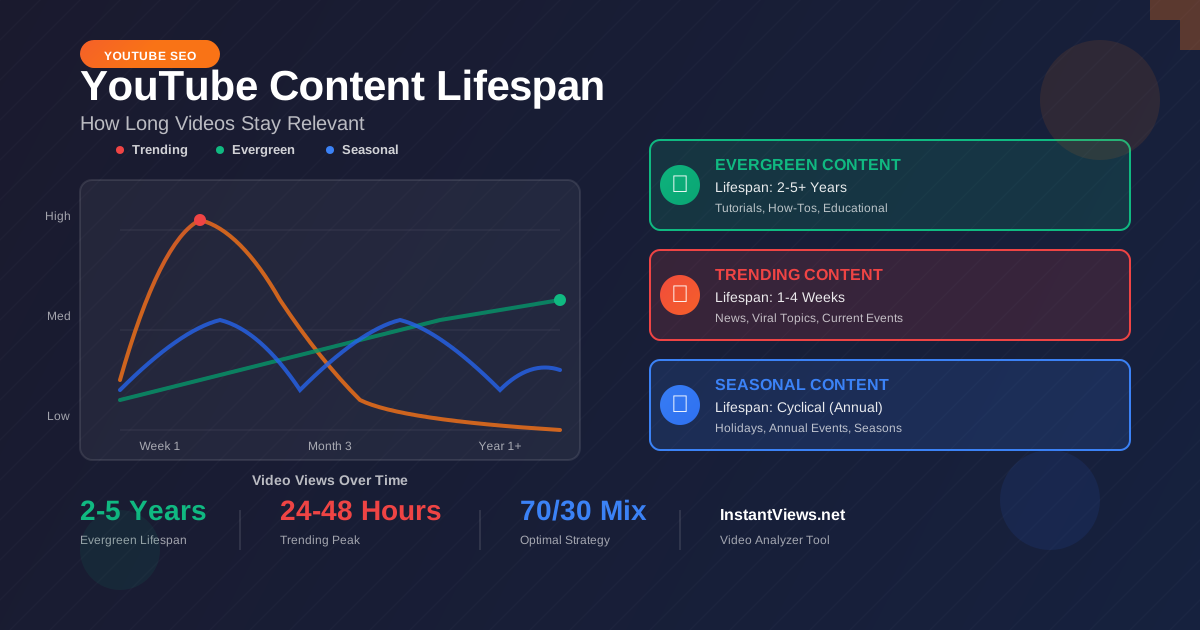
- Evergreen content can generate views for 2-5+ years, while trending content peaks within 24-48 hours
- Proper SEO optimization can extend video lifespan by 300-500% compared to unoptimized videos
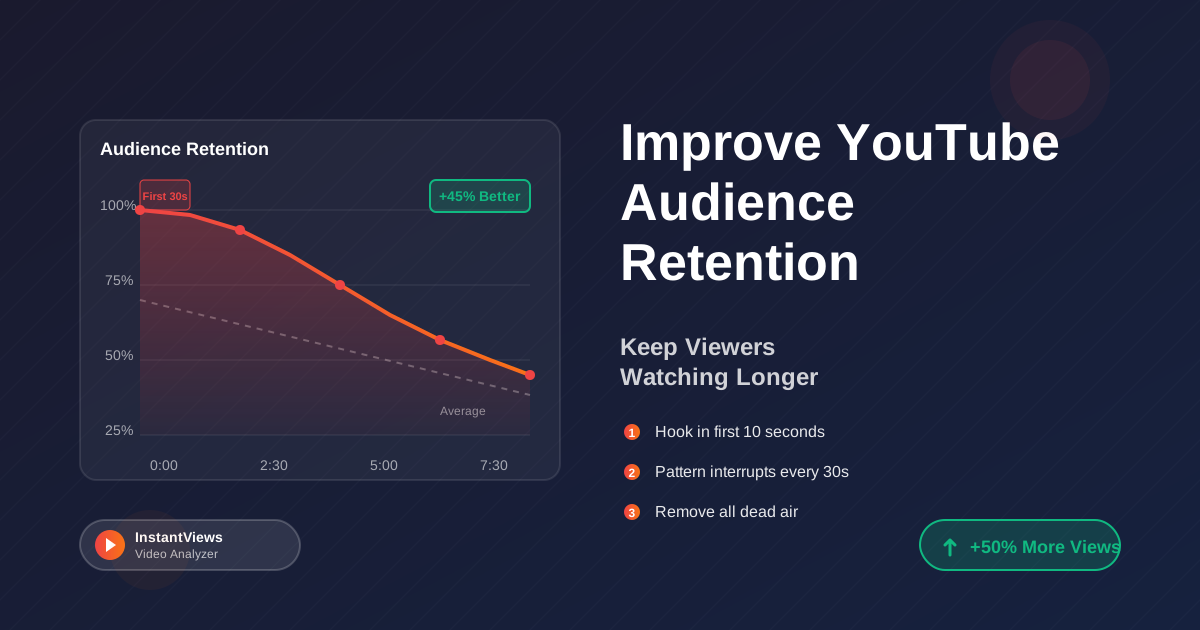
- Videos with chapters and timestamps maintain audience retention 40% longer than those without
- Strategic content updates and republishing can revive old videos and generate new traffic
- InstantViews Video Analyzer predicts content lifespan and provides actionable optimization recommendations
Understanding content lifespan is the difference between building a sustainable YouTube channel and constantly chasing viral moments. Most creators focus solely on upload frequency, but content longevity is what separates successful channels from struggling ones.
The truth is, a single well-optimized evergreen video can generate more total views over its lifetime than a dozen trending videos combined. Yet most creators never think about how long their videos will stay relevant.
This comprehensive guide reveals everything you need to know about YouTube content lifespan, from understanding what determines video longevity to implementing proven strategies that keep your content generating views for years.
What Determines Video Lifespan?
Video lifespan is determined by how long content remains relevant, searchable, and valuable to viewers. Several key factors influence this:
1. Topic Timelessness
The most critical factor is whether your topic has an expiration date. "How to tie a tie" will be relevant in 2030. "iPhone 15 Review" becomes obsolete when iPhone 16 launches.
2. Search Volume Stability
Topics with consistent search volume year-round have longer lifespans than those with declining or seasonal search patterns. Use Google Trends to analyze search stability before creating content.
3. Algorithm Freshness Preference
YouTube's algorithm favors newer content for trending topics but gives evergreen content sustained visibility in search results. Understanding this distinction is crucial for optimization.
4. Engagement Quality
Videos that maintain high watch time, CTR, and engagement signals continue to get promoted. Declining engagement metrics signal to YouTube that content is becoming stale.
Evergreen vs Trending Content
The fundamental choice every creator faces: should you create evergreen content that lasts years or trending content that spikes quickly?
| Aspect | Evergreen Content | Trending Content |
|---|---|---|
| Lifespan | 2-5+ years | 1-4 weeks |
| Peak Views | Gradual climb over months | 24-48 hours after upload |
| Total Views Potential | Very High (cumulative) | Medium to High (concentrated) |
| SEO Value | Extremely high, compounds over time | Low, traffic drops quickly |
| Subscriber Conversion | Moderate but sustained | High initially, then drops |
| Revenue Stability | Predictable, long-term income | Unpredictable spikes |
| Production Pressure | Can take time to research/produce | Must publish quickly or miss opportunity |
| Update Requirements | Minimal, maybe 1-2x per year | Content becomes outdated quickly |
The Optimal Strategy: 70/30 Mix
The most successful channels use a 70% evergreen, 30% trending content strategy:
- 70% evergreen - Builds sustainable traffic foundation and compound growth
- 30% trending - Captures audience spikes and discovery opportunities
Trending content brings new viewers, while evergreen content keeps them engaged and converts them to subscribers. Learn more about this in our guide on YouTube algorithm optimization.
Content Lifespan by Category
Different content categories have dramatically different lifespans. Here's what to expect:
Educational Tutorials (2-5 Years)
How-to videos, skill tutorials, and educational content have the longest lifespans because the information remains valuable indefinitely.
"How to play guitar for beginners", "Excel tutorial for beginners", "Basic photography tips"
Product Reviews (6-18 Months)
Reviews remain relevant until newer product versions release. Tech reviews have shorter lifespans (6-12 months), while evergreen products (books, tools) last longer (12-24 months).
"Best budget headphones 2025", "MacBook Pro review", "Kitchen knife comparison"
Entertainment/Vlogs (1-4 Weeks)
Entertainment content typically peaks quickly and declines rapidly unless it goes viral or has strong evergreen elements.
"Day in my life", "Challenge videos", "Reaction content"
News/Commentary (1-7 Days)
Current events and news commentary have the shortest lifespan because they become outdated as soon as the news cycle moves on.
"Breaking news analysis", "Weekly news recap", "Political commentary"
Seasonal Content (Recurrent, 1-3 Months Active)
Seasonal content has a cyclical lifespan - it peaks during its season each year, then goes dormant until the next cycle.
"Halloween costume ideas", "Tax filing guide", "Summer vacation planning"
How to Extend Video Lifespan
These proven strategies can extend your video's lifespan by 300-500%:
1. Optimize for Search Intent
Videos that perfectly match search intent continue to rank year after year. Focus on:
- Keyword research - Target keywords with stable search volume
- Title optimization - Use the exact phrases people search for
- Comprehensive coverage - Answer all related questions in one video
- Clear thumbnails - Communicate value instantly
Check out our guide on YouTube description optimization for detailed SEO strategies.
2. Add Chapters and Timestamps
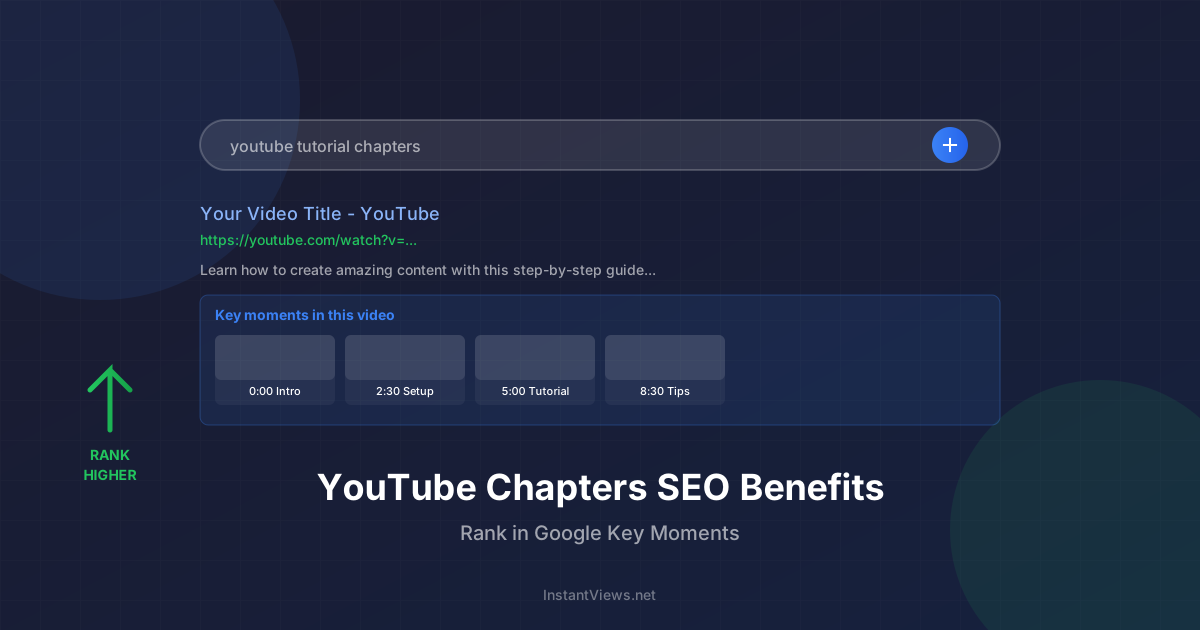
Videos with chapters maintain viewer retention 40% longer because viewers can navigate to exactly what they need. This signals quality to YouTube's algorithm and extends discoverability.
The InstantViews Video Analyzer automatically generates optimized chapters based on your video content, maximizing both user experience and SEO value.
3. Create Evergreen Titles
Avoid date-specific titles that immediately expire your content:
Instead of: "Best Laptops 2025"
Use: "Best Budget Laptops for Students" (update description yearly)
Instead of: "My 2025 Predictions"
Use: "Future of [Industry]: What's Coming Next"
4. Build Playlist Integration
Playlists extend individual video lifespan by creating discovery pathways. When one video in a playlist performs well, it drives traffic to related videos, including older content.
5. Maintain Active Engagement
Continue responding to comments on older videos. Active engagement signals to YouTube that content is still valuable, triggering algorithm promotion even for videos published months or years ago.
Predict Your Content Lifespan
The InstantViews Video Analyzer uses AI to predict how long your content will stay relevant and provides specific optimization recommendations to maximize longevity.
Analyze Your Video →Republishing and Updating Strategies
Smart creators don't just let old videos die - they systematically revive and update them for continued performance.
When to Update vs. Republish
| Situation | Strategy | Action |
|---|---|---|
| Content is still accurate | Update metadata only | Refresh thumbnail, optimize title/description, add chapters |
| Minor information updates needed | Pin comment or add description note | Add update in pinned comment with timestamp to corrected info |
| Content is 50%+ outdated | Create updated version | New video, link to original, add "UPDATED" to original title |
| Format is outdated (low quality, poor audio) | Recreate completely | Remake video with current production standards |
| Topic is evergreen but underperforming | A/B test thumbnails and titles | Change thumbnail/title, wait 2 weeks, measure results |
The Content Refresh Schedule
Set up a systematic refresh schedule for your content library:
- Every 6 months - Review top 20 performing videos, optimize any declining content
- Every 12 months - Audit entire library, update outdated information, refresh thumbnails
- Every 24 months - Consider remaking high-performing but outdated videos
Republishing Best Practices
When creating updated versions of old content:
- Keep the original video live - It has SEO value and backlinks
- Add "[UPDATED]" or "(2025 Version)" to original title - Clarifies which is current
- Link between versions - Pinned comment on original pointing to new version
- Add both to a playlist - Maintains discovery pathway for both
- Update original description - Point viewers to updated version at the top
Never delete old videos unless absolutely necessary (legal issues, harmful content). Deletion removes all accumulated SEO value, backlinks, and embedded views. Update instead of delete whenever possible.
Seasonal Content Planning
Seasonal content requires strategic planning to maximize its recurrent value. While it has a limited active window each year, properly planned seasonal content can generate views for decades.
The Seasonal Content Calendar
Plan seasonal content 6-8 weeks before peak season:
6-8 Weeks Before Season
Research trending searches from previous years, plan content calendar, begin production. This gives you time to create quality content without rushing.
3-4 Weeks Before Peak
Publish your seasonal content. Early publishing allows the algorithm to test and promote your video before peak demand hits.
During Peak Season
Actively promote through community posts, shorts, social media. Respond to all comments to maximize engagement signals.
After Season Ends
Document performance metrics, note what worked, plan improvements for next year. Set calendar reminder to update content 6-8 weeks before next season.
Making Seasonal Content Evergreen
Increase seasonal content lifespan with these title strategies:
- Avoid specific years - "Holiday Gift Ideas" not "Holiday Gift Ideas 2025"
- Update thumbnails yearly - Keep visual style current without changing core content
- Create year-neutral content - Tips and strategies that work every year
- Bundle into playlists - "Complete Holiday Guide" playlist with multiple seasonal videos
Seasonal Content Categories
| Season/Event | Planning Start | Publish Date | Peak Traffic |
|---|---|---|---|
| New Year/Resolutions | Early November | Early December | Dec 26 - Jan 15 |
| Valentine's Day | Early December | Mid January | Jan 25 - Feb 14 |
| Summer Content | Early April | Early May | May 15 - July 15 |
| Back to School | Mid June | Mid July | July 25 - Sep 5 |
| Halloween | Early August | Early September | Sep 15 - Oct 31 |
| Holiday/Christmas | Early September | Early November | Nov 15 - Dec 25 |
How Video Analyzer Predicts Lifespan
The InstantViews Video Analyzer uses advanced AI to predict content lifespan and provide actionable recommendations. Here's how it works:
1. Topic Categorization
The analyzer examines your video title, description, and content to categorize it as:
- Evergreen - Timeless content with long-term value
- Trending - Current events or viral topics with short lifespan
- Seasonal - Cyclical content that peaks during specific times
- Hybrid - Mix of evergreen and trending elements
2. Keyword Trend Analysis
The tool analyzes search volume trends for your target keywords over the past 24 months to predict future trajectory:
- Stable search volume = Long lifespan prediction
- Declining search volume = Short lifespan warning
- Seasonal patterns = Cyclical lifespan with peak dates
- Growing search volume = Opportunity for extended relevance
3. Competitive Benchmark Analysis
The analyzer studies similar videos in your niche to understand typical lifespan patterns:
- How long do similar videos maintain view velocity?
- When do competing videos typically update content?
- What optimization strategies extend competitor lifespan?
4. Content Freshness Indicators
The tool identifies time-sensitive elements that might limit lifespan:
- Specific years, dates, or version numbers in title/description
- Current event references that will become outdated
- Technology or software versions that will be superseded
- Trend-dependent content that relies on temporary popularity
5. Optimization Recommendations
Based on the analysis, the Video Analyzer provides specific actions to extend lifespan:
- Title adjustments - Remove date-specific language
- Chapter additions - Improve navigation and retention
- Description enhancements - Add evergreen keywords
- Thumbnail updates - Maintain visual currency
- Playlist integration - Create discovery pathways
- Update schedule - When to refresh content for maximum impact
Building a Balanced Content Calendar
A sustainable YouTube strategy balances evergreen foundation building with strategic trending and seasonal content opportunities.
The Ideal Monthly Content Mix
For a channel publishing 8-12 videos per month:
- 6-8 evergreen videos (60-70%) - Foundation content that compounds over time
- 2-3 trending videos (20-25%) - Capture current interest and discovery
- 1-2 seasonal videos (10-15%) - Capitalize on predictable demand cycles
Quarterly Planning Framework
Plan content in 90-day cycles for optimal balance:
- Research phase (Weeks 1-2) - Keyword research, competitor analysis, trend identification
- Evergreen production (Weeks 3-8) - Create 18-24 evergreen videos in batches
- Seasonal preparation (Weeks 4-6) - Plan and produce next quarter's seasonal content
- Trending flexibility (Ongoing) - Reserve 20% of production time for trending opportunities
- Review and optimization (Weeks 11-12) - Analyze performance, optimize underperforming content
Content Pillar Strategy
Build your channel around 3-5 evergreen content pillars that you can return to repeatedly:
Photography Channel Content Pillars
A photography channel might have these evergreen pillars:
1. Camera Basics & Tutorials (evergreen)
2. Photo Editing Techniques (evergreen)
3. Gear Reviews (medium lifespan, update yearly)
4. Photography Challenges (trending, seasonal)
5. Portfolio Reviews (trending, engagement-focused)
Each pillar supports the others, creating a comprehensive content ecosystem that appeals to viewers at different stages of their journey.
Advanced Optimization Tactics
These advanced tactics can significantly extend video lifespan beyond standard optimization:
1. Create "Hub" Videos
Hub videos are comprehensive guides that link to multiple related videos. They maintain relevance because:
- You can update descriptions with links to new related content
- They rank for broad, evergreen keywords
- They drive traffic to your entire content ecosystem
- They establish topical authority with YouTube's algorithm
2. Implement Cross-Video Promotion
Older videos gain new life when mentioned in newer content:
- Reference older videos in new content with on-screen links
- Add cards and end screens pointing to relevant older content
- Update older video descriptions with links to newer related content
- Create "updated" or "Part 2" content that references originals
Learn more about retention strategies in our guide on improving YouTube audience retention.
3. Leverage YouTube Shorts for Older Content
Create Shorts that tease or highlight key moments from your long-form evergreen content:
- Extract the most valuable 60-second segment
- Add text overlay with clear context
- Link to full video in description and pinned comment
- This can revive videos published months or years ago
4. Build External Traffic Sources
Don't rely solely on YouTube's algorithm for traffic:
- Pinterest pins - Evergreen content performs exceptionally well on Pinterest
- Blog posts - Embed videos in related blog content
- Email newsletters - Share older content with new subscribers
- Reddit - Participate in relevant subreddits and share when appropriate
- Forum participation - Answer questions with links to relevant videos
Check out our comprehensive guide on YouTube SEO optimization for more traffic strategies.
5. Monitor and Respond to Search Trends
Set up Google Alerts and trend monitoring for your niche keywords. When search interest spikes, refresh related older content:
- Update thumbnail to current visual standards
- Add a pinned comment with current relevance
- Promote through community posts and social media
- This capitalizes on trend momentum without creating new content
"The most successful YouTube channels aren't the ones that upload most frequently - they're the ones that create content libraries that continue generating value years after publication. That's the difference between a content treadmill and a content asset." - InstantViews Team
Maximize Your Content Lifespan
Get AI-powered predictions, optimization recommendations, and lifespan tracking for all your videos with InstantViews Video Analyzer.
Start Analyzing →Frequently Asked Questions
The average YouTube video's lifespan varies by content type. Trending content peaks within 24-48 hours and declines after 1-2 weeks. Evergreen content maintains steady viewership for 6-24 months or longer. Educational tutorials and how-to videos have the longest lifespan (2-5 years), while news and trending topics last days to weeks. The InstantViews Video Analyzer predicts content lifespan based on topic analysis and historical data.
Evergreen content addresses timeless topics that remain relevant indefinitely (e.g., "How to tie a tie", "Basic guitar chords"). It generates consistent long-term views with gradual growth. Trending content focuses on current events, viral topics, or seasonal themes that spike quickly but decline rapidly. Evergreen content builds sustainable channels, while trending content can deliver short-term view boosts and audience discovery opportunities.
To extend video lifespan: 1) Optimize for SEO with keyword-rich titles, descriptions, and tags, 2) Add chapters for better navigation and retention, 3) Update descriptions and thumbnails periodically, 4) Create playlists to boost discoverability, 5) Promote videos consistently across platforms, 6) Respond to comments to maintain engagement signals, 7) Use the InstantViews Video Analyzer to identify optimization opportunities that keep content relevant longer.
Never delete old videos unless they contain outdated or harmful information. Instead, republish them by: 1) Updating thumbnails and titles to current standards, 2) Adding timestamps and chapters, 3) Refreshing descriptions with current keywords, 4) Creating updated versions and linking to originals, 5) Adding them to playlists with newer content. Old videos retain SEO value and backlinks, and can still drive traffic years later.
Plan seasonal content 1-2 months in advance for maximum impact. Create content that can be re-promoted annually (e.g., "Holiday Gift Guide 2025" becomes "2026", "2027"). Publish 2-4 weeks before peak season to build momentum and allow algorithm promotion. Use evergreen titles when possible ("Best Summer Activities" vs. "Summer 2025 Activities"). Track performance to refine timing for next year. The Video Analyzer helps identify optimal publishing windows.
InstantViews Video Analyzer uses AI to analyze: 1) Topic categorization (evergreen vs. trending), 2) Keyword search volume trends over time, 3) Similar video performance patterns, 4) Seasonal fluctuations in your niche, 5) Content freshness indicators. It provides a predicted lifespan curve showing expected view trajectory and recommends optimal republishing dates, content updates, and promotion timing to maximize long-term performance.