- The YouTube algorithm is not one system but several — Home, Suggested, Search, Shorts, and more — each ranking videos for a single viewer
- In 2026 the system optimizes for predicted viewer satisfaction, so retention and survey signals now outweigh raw watch time
- Click-through rate and average view duration gate nearly every surface, but session contribution increasingly decides how far a video travels
- Browse and Suggested drive the majority of views on established channels, so optimizing only for Search leaves most traffic untapped
- You cannot trick the algorithm for long; the durable strategy is to genuinely deliver on what your title and thumbnail promise
Every creator eventually asks the same question: why does the algorithm push one video to millions and bury the next? It can feel random, even unfair. But the YouTube recommendation system is not a slot machine. It is a remarkably consistent matchmaker, and once you understand the signals it reads, optimization stops being guesswork and becomes a craft you can repeat.
This guide is about the algorithm itself — the ranking mechanics, the surfaces, and the signals — not the metadata-and-keywords side of video SEO. Both matter, but they are different jobs. Here we look under the hood: how YouTube decides who sees your video, what it measures to make that call, and exactly how to align your content with each signal in 2026.
YouTube is the largest discovery engine on the internet, with more than 2.7 billion monthly active users and over a billion hours watched every day. Connected TV is now the number one US viewing surface, having passed mobile in late 2026. That scale means the recommendation system, not your subscriber count, is what decides whether a video lives or dies.
The good news: the rules are knowable and they reward the same thing — viewer satisfaction. Let us break down how the machine actually works.
- The Algorithm Is Not One Thing
- The Real Mission: Predicted Satisfaction
- The Signals That Actually Rank Your Video
- Why Retention Beats Raw Watch Time
- Browse vs Suggested vs Search
- Session Time and the Returning Viewer
- How YouTube Tests a New Upload
- How to Optimize for Each Signal
- Algorithm Myths and Mistakes
- FAQ
The Algorithm Is Not One Thing
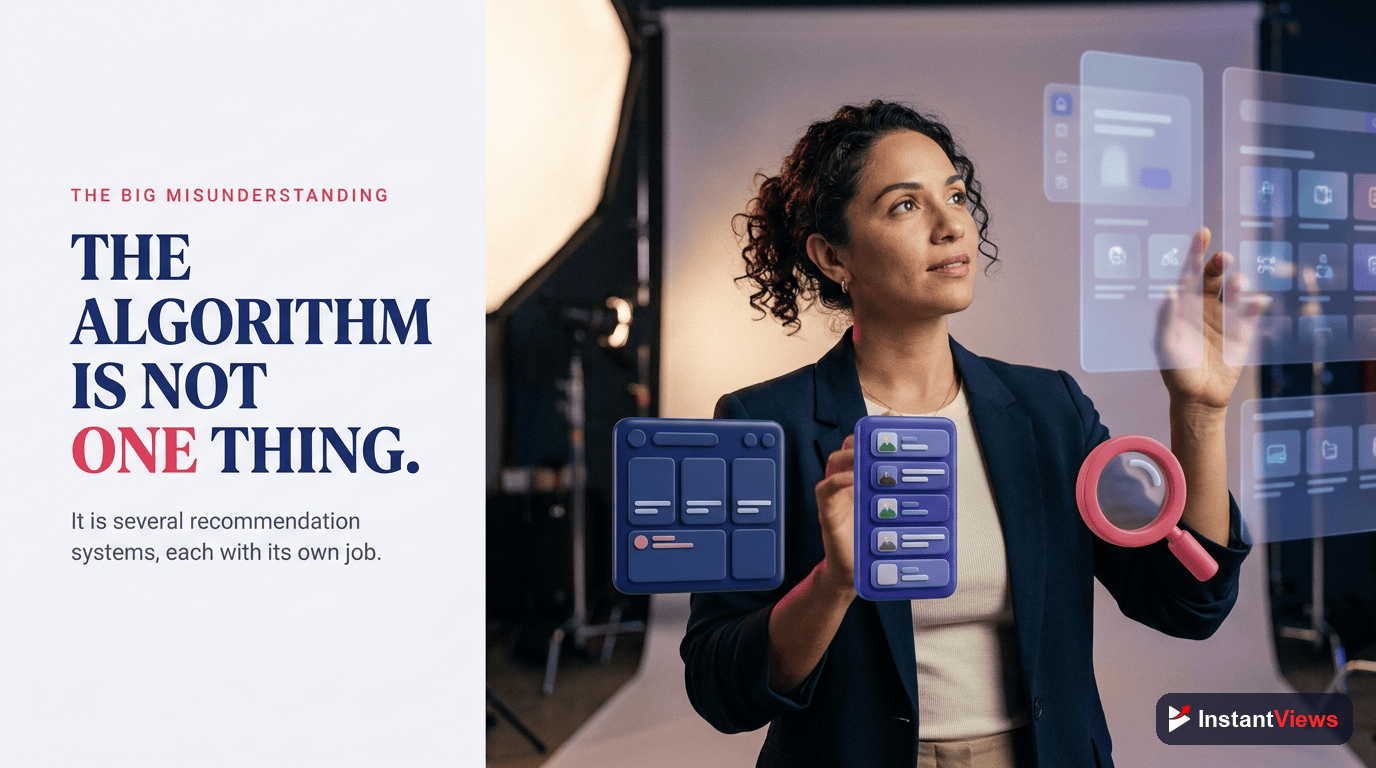
The single most useful shift in thinking is this: there is no one "YouTube algorithm." There is a collection of recommendation systems, each governing a different surface where viewers discover content. The system that fills your Home feed is not the same one that ranks Search results, and neither behaves like the one powering the Shorts feed.
In 2026, YouTube effectively runs distinct recommendation engines for each major surface. They share the same underlying goal but weigh signals differently:
- Home (Browse): predicts what a returning viewer wants to watch next based on their history and habits.
- Suggested: the sidebar and post-video recommendations, driven by topical relevance to the current video and the shape of the session.
- Search: matches a query to the most relevant and satisfying result, behaving the most like a traditional search engine.
- Shorts feed: a fast swipe-based system that judges very early retention and replays.
- Subscriptions and Notifications: surface new uploads to people who already opted in.
Why does this matter for optimization? Because a video that thrives in Search may never appear in Browse, and a strategy tuned for one surface can be invisible on another. When you understand which engine is serving your video, you know which lever to pull.
The Real Mission: Predicted Satisfaction
Underneath every one of those systems is a single objective. For each viewer, in each moment, the algorithm is trying to answer one question: which video will this specific person find most satisfying right now?
That phrasing is deliberate. Years ago the system optimized heavily for what kept people watching the longest. In 2026 the emphasis has shifted from "what holds attention" to "what leaves the viewer satisfied." Those two things usually overlap — but not always, and the gap is where many creators go wrong.
YouTube measures predicted satisfaction from a blend of behavioral and stated signals: how often a video is clicked when shown, how much of it people watch, whether they like, comment, and share, how they answer post-video satisfaction surveys, and whether they keep watching YouTube afterward. No single number controls your fate; the system blends them into a prediction.
The Signals That Actually Rank Your Video
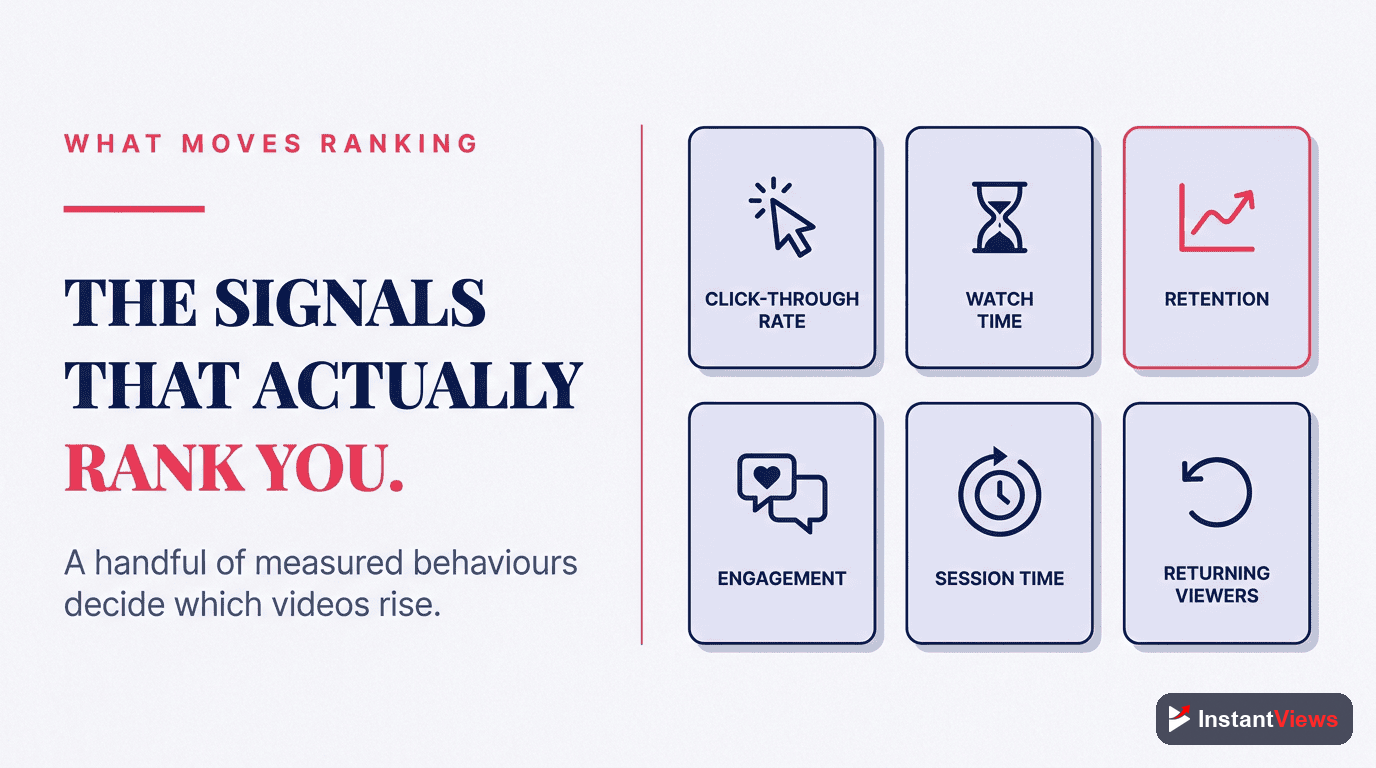
Let us get concrete. The recommendation systems read dozens of inputs, but a handful do most of the heavy lifting. The table below lists the signals that matter most, what each one really measures, and how to move it in the right direction.
| Signal | What It Measures | How to Optimize |
|---|---|---|
| Click-through rate (CTR) | How often viewers click when your video is shown an impression | Pair a curiosity-driven, honest title with a clear, high-contrast thumbnail; test variations |
| Average view duration / % viewed | How long and what share of the video people actually watch | Hook fast, cut dead air, and structure the video so each moment earns the next |
| Retention curve shape | Where viewers stay, re-watch, or drop off | Study the graph; remove the dips, and study the spikes to repeat what worked |
| Engagement (likes, comments, shares) | How strongly viewers react and pass the video along | Ask a genuine question, reply to comments early, and earn shares with real value |
| Satisfaction surveys | Direct viewer ratings of whether a video was worth their time | Deliver fully on the title and thumbnail promise; avoid bait-and-switch |
| Session contribution | Whether your video keeps the viewer on YouTube afterward | Use end screens, playlists, and a clear next step to extend the session |
| Returning viewers | How many people come back to watch you again | Build a recognizable format and consistent value so viewers expect more |
Notice the pattern. The early signals — CTR and view duration — act as gates: they decide whether a video gets shown to more people at all. The deeper signals — satisfaction, session contribution, returning viewers — decide how far it ultimately travels. You need both. A high CTR with poor retention tells the algorithm your thumbnail wrote a check the video could not cash.
Why Retention Beats Raw Watch Time
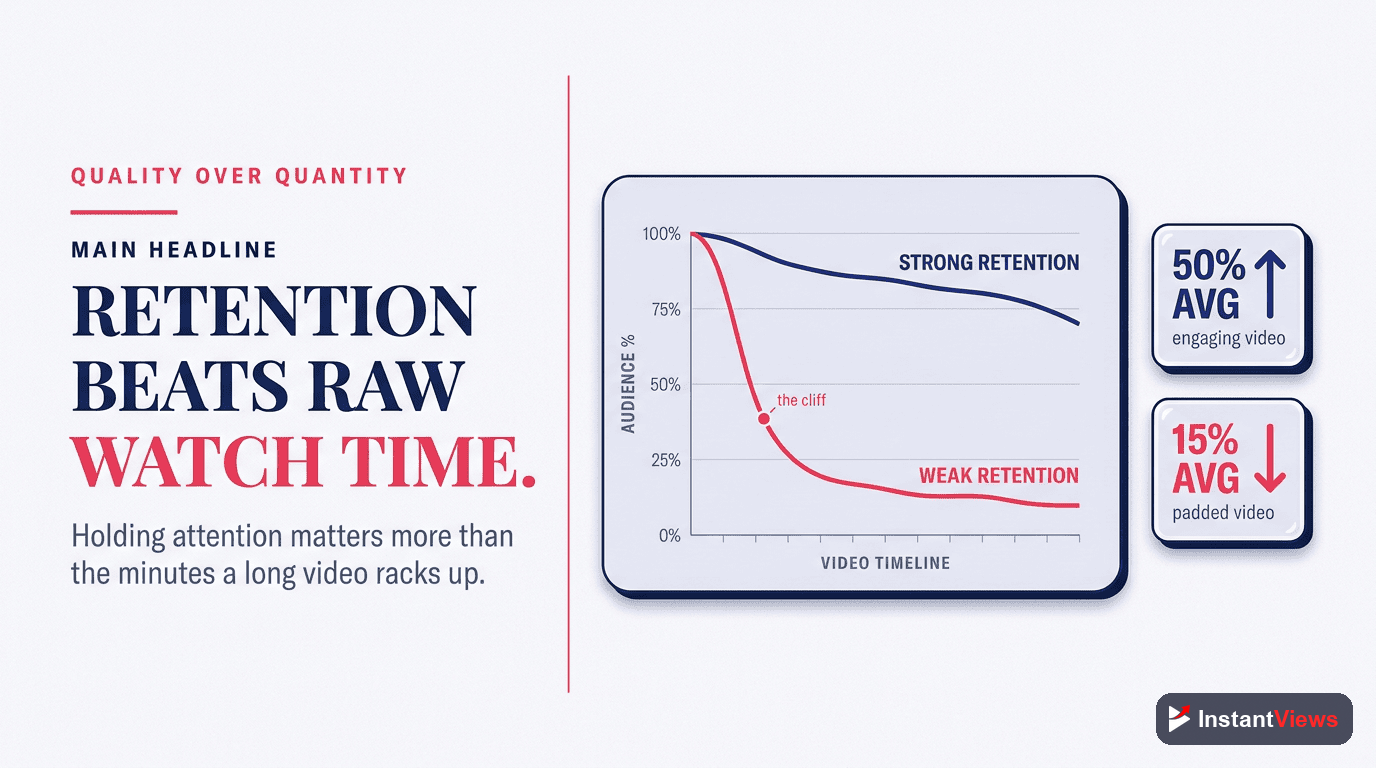
For a long time, "watch time" was treated as the holy grail, and creators padded videos to inflate total minutes. That era is over. In 2026 the algorithm leans far more on retention and satisfaction than on raw watch time. The reason is simple: total minutes can be gamed by length, but the percentage of a video people actually watch cannot be faked.
Consider two videos. One is twenty minutes long and viewers abandon it at the six-minute mark. Another is six minutes long and most people watch to the very end. The longer video may show more total watch-time minutes, yet the shorter one sends a far stronger signal: it held its audience and left them satisfied. The recommendation system increasingly rewards the second video.
Read Your Retention Curve Like a Map
Your audience-retention graph is the single most honest piece of feedback YouTube gives you. Learn to read its shape:
- A steep early drop means your intro is not delivering on the thumbnail. Tighten the first 30 seconds.
- A gentle, gradual slope is healthy — some drop-off is normal and expected.
- A sudden mid-video cliff points to a specific dull stretch, a tangent, or an unwanted ad break feel. Cut it next time.
- A spike or re-watch bump shows a moment viewers loved or rewound. Make more of those.
Do not chase retention by removing all substance and turning every video into a breathless highlight reel. Viewers can sense filler and emptiness alike, and both hurt the satisfaction signal. The goal is density of value, not just speed. Keep what serves the viewer; cut only what wastes their time.
Browse vs Suggested vs Search
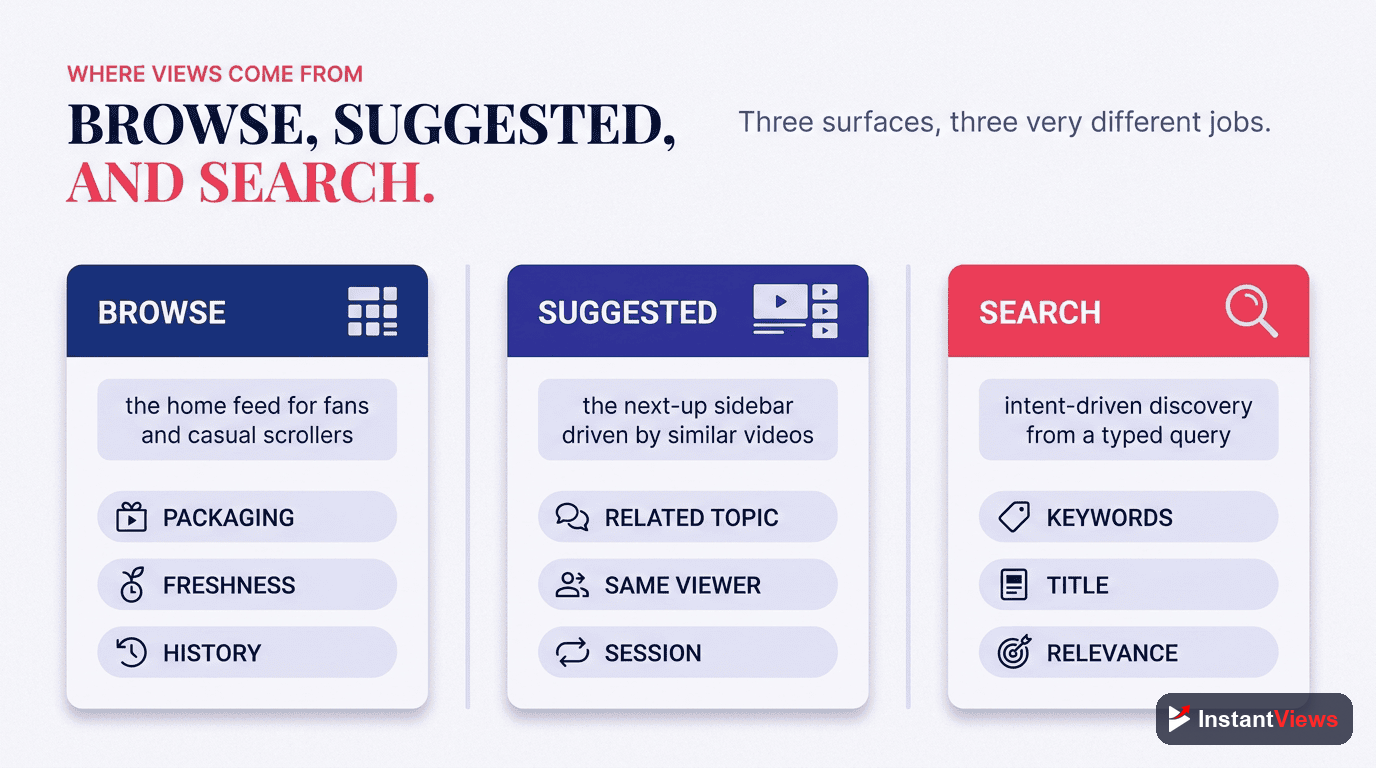
Where your views come from tells you which recommendation engine is serving you — and therefore how to optimize. The three surfaces that matter most for long-form video are Browse, Suggested, and Search, and they behave very differently.
Browse (the Home Feed)
Browse is YouTube guessing what a returning viewer wants when they open the app with no specific intent. It leans heavily on their watch history and habits. Strong thumbnails and a track record of satisfying that audience earn Browse impressions. This is where breakout reach usually happens, and on established channels Browse and Suggested together drive the majority of views.
Suggested (Sidebar and Post-Video)
Suggested recommendations are chosen from three main factors: topical relevance to the video currently playing, the individual viewer's watch history, and how well your video contributes to the depth of the session. This is why making content that naturally follows popular videos in your niche — and that keeps people watching afterward — can unlock a steady stream of suggested traffic.
Search
Search behaves the most like a traditional search engine: it matches a query to the most relevant, most satisfying result. It rewards clear titles and content that genuinely answers the question. Search traffic tends to be evergreen and predictable, but on its own it represents only a portion of a channel's potential reach.
Session Time and the Returning Viewer
The biggest shift in how the algorithm weighs videos in 2026 is the rise of session contribution. The system no longer asks only "how long did people watch this video?" It asks "did this video help keep the viewer on YouTube afterward?"
A video that ends a viewing session — the viewer watches and then closes the app — sends a weaker signal than one that leads naturally into the next video, whether that next video is yours or someone else's. Videos that extend the session earn more suggested placements; videos that tend to end sessions receive fewer impressions over time.
Closely related is the value of the returning viewer. People who come back to watch you again are worth far more to the algorithm than one-time visitors, because they signal durable satisfaction. This is why "session value" has quietly overtaken "view count" as the metric that matters. A channel that turns first-time viewers into regulars compounds in a way that a channel chasing one-off virality never does.
- End screens: point to a specific next video, not a generic grid, so the session continues.
- Playlists: queue related videos to autoplay, extending watch sessions effortlessly.
- A recognizable format: gives returning viewers a reason to expect value and subscribe.
- Cliffhangers and series: connect videos so finishing one creates a reason to start the next.

How YouTube Tests a New Upload
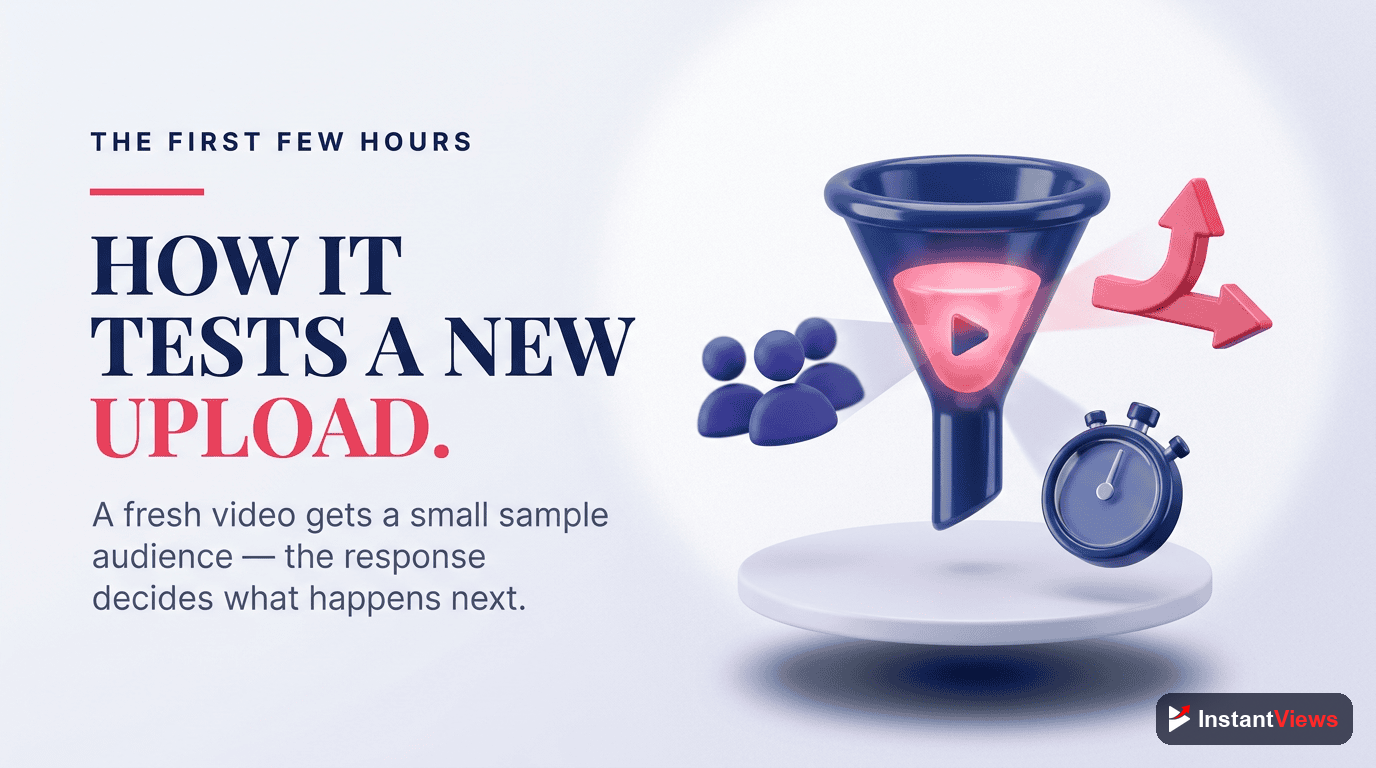
Understanding the launch process explains why some videos seem to "wake up" days later and why the early hours matter so much. When you publish, YouTube does not blast your video to everyone. It runs a staged test.
First, the video is shown to a small audience that closely matches your niche — people the system predicts are most likely to be satisfied. The algorithm watches the early signals: click-through rate, retention, and satisfaction. If those signals are strong, the video graduates to a broader slice of the niche, then to topic-adjacent viewers, and finally to general recommendations across the platform. Weak early signals quietly cap how far it travels.
This is why the period right after upload is so decisive, and why a video can still break out weeks later: the algorithm keeps re-testing, resurfacing content whenever it finds a new viewer it predicts will enjoy it. Evergreen videos can be recommended for years because the matchmaking never truly stops.
"You do not beat the YouTube algorithm. You feed it. Give the recommendation system a video that genuinely satisfies the viewer it was shown to, and it will hand you the reach — because satisfying viewers is the only thing it was ever built to do."
How to Optimize for Each Signal
Theory is useless without execution. Here is a repeatable sequence that aligns a single video with the signals the algorithm rewards, in the order the algorithm reads them.
Win the Click
Nothing happens until the video is clicked. Pair a curiosity-driven but honest title with a clear, high-contrast thumbnail that reads instantly even at small sizes. This is what turns an impression into the first all-important signal: click-through rate.
Hook the First 30 Seconds
Deliver on the thumbnail's promise immediately. Skip the long intro, state the payoff, and give viewers a reason to stay. A strong opening protects your retention curve from the steep early drop that caps so many videos.
Earn the Satisfaction Signal
Make the body of the video genuinely worth the viewer's time. Keep the value dense, answer the question fully, and avoid bait-and-switch. Satisfied viewers engage, rate you well in surveys, and tell the algorithm to keep recommending you.
Extend the Session
End by pointing to one specific next video through an end screen or a playlist, not a vague "check out my channel." This boosts your session-contribution score, which increasingly decides how many suggested impressions you receive.
Measure and Iterate
In YouTube Studio, check impressions, CTR, average percentage viewed, and your traffic-source mix. Find the one signal that is leaking — a weak CTR, an early drop, or a session that ends — and fix that single thing on your next upload.
Optimize Every Signal With Free Tools
Research topics, test titles, and analyze what is working at every stage of the algorithm with our free suite of YouTube tools — built to help you earn the click and keep viewers watching.
Explore Free YouTube Tools →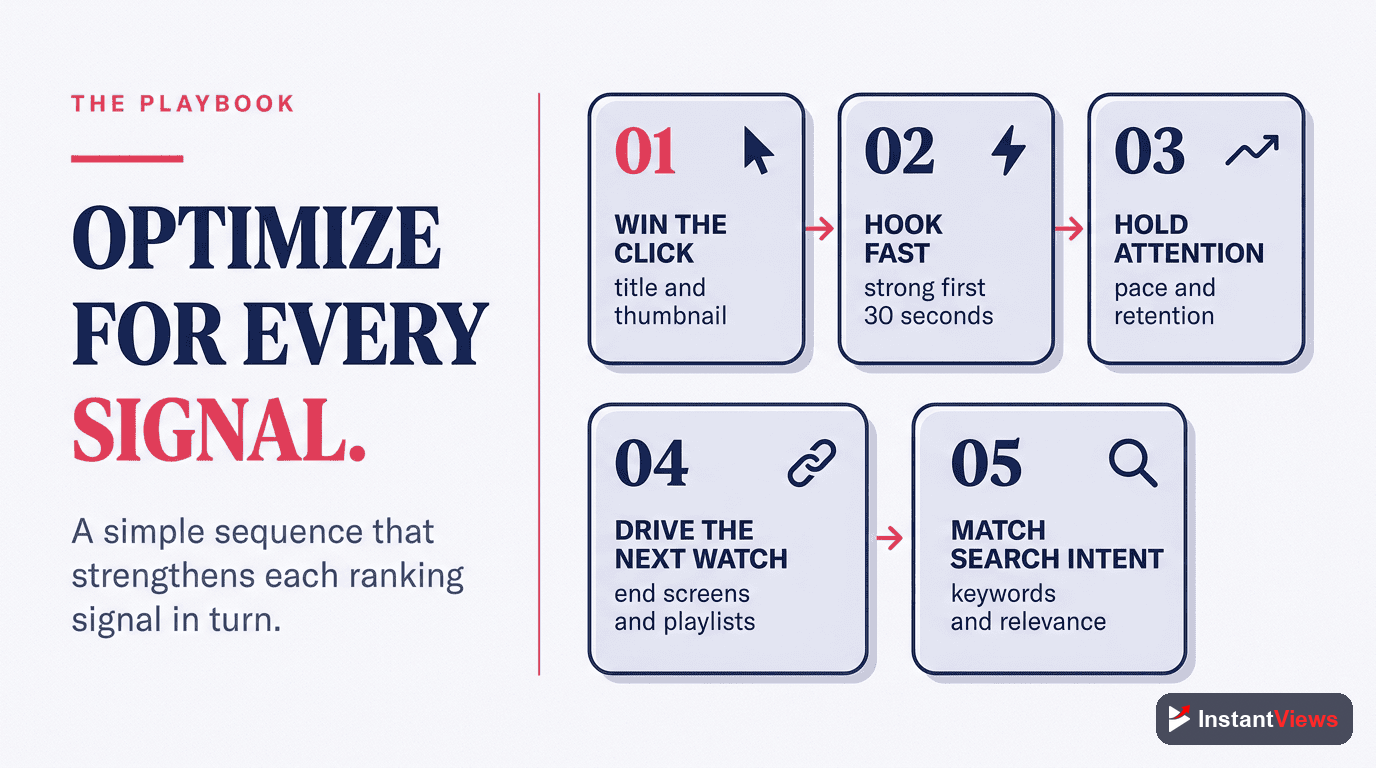
Algorithm Myths and Mistakes
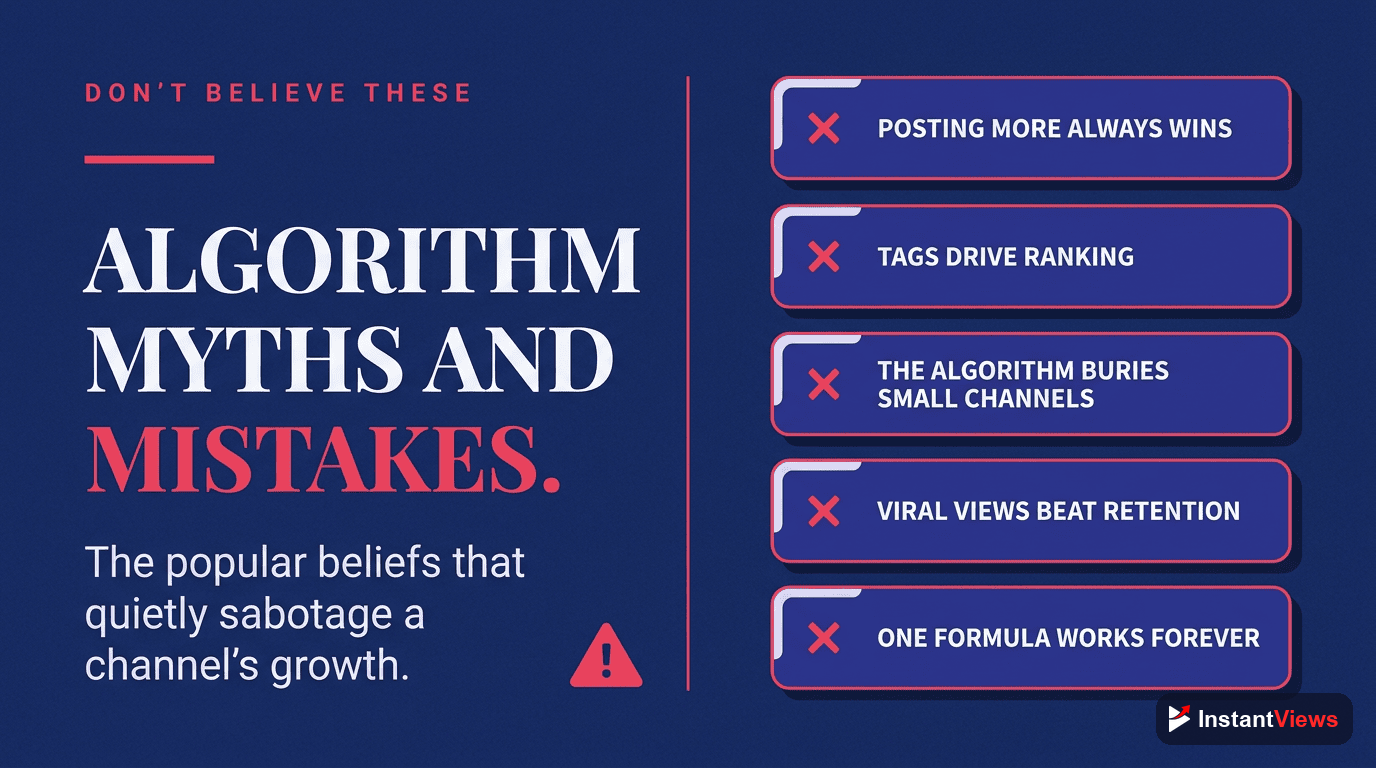
Few topics attract more misinformation than the YouTube algorithm. Clearing up the most common myths will save you from chasing the wrong things.
- "The algorithm suppresses small channels." It does not punish you for being new; it simply tests cautiously until it learns who your audience is. Strong signals expand your reach regardless of subscriber count.
- "More uploads always means more reach." There is no hidden volume bonus. Consistency helps the system learn your audience, but a flood of weak videos drags down your signals.
- "Watch time is everything." Outdated. Retention and satisfaction now carry more weight, and padding videos for minutes backfires.
- "Clickbait is a cheat code." A misleading thumbnail may lift CTR for a day, but the resulting poor retention and low satisfaction tell the algorithm to stop showing the video.
- "You can trick it with engagement bait." Begging for likes does little; the system reads genuine engagement, and forced reactions do not move the deeper signals.
- "AI-spun mass content scales fast." YouTube is actively reducing the spread of low-value, mass-produced content, so quantity without quality is a dead end.
The thread running through every myth is the same: there is no shortcut around viewer satisfaction. Tactics that ignore it work for a moment and fail in the long run, while everything that genuinely serves the viewer compounds. Optimize for the human, and the algorithm follows.
Frequently Asked Questions
The YouTube algorithm is not one system but a collection of recommendation systems, one for each surface such as Home, Suggested, Search, Shorts, and Subscriptions. Each one tries to answer a single question for every viewer: which video will this specific person find most satisfying right now? It predicts that satisfaction from signals like click-through rate, how long people watch, engagement, survey responses, and whether viewers keep watching afterward.
Watch time still matters, but in 2026 the algorithm leans more on retention and viewer satisfaction than on raw watch time. A short video that holds attention to the end and leaves viewers happy can outperform a long video that people abandon halfway. The system increasingly rewards how much of a video people actually watch and how satisfied they are, not just total minutes.
Browse is the Home feed, where YouTube shows videos it predicts a viewer will want based on their history. Suggested is the sidebar and post-video recommendations driven by what relates to the current video and the viewer session. Search serves videos that match a query. Each surface has its own logic, so optimizing for only one leaves a large share of potential traffic untapped.
Session time, or session contribution, is how much a video helps keep a viewer on YouTube afterward, whether they watch your next video or someone else. The algorithm rewards videos that extend the session and shows fewer impressions to videos that tend to end it. This is why ending screens, playlists, and a clear next step matter so much in 2026.
When you publish, YouTube first shows the video to a small audience that matches your niche. If the click-through rate, retention, and satisfaction signals are strong, it expands the test to broader and broader audiences in stages. Weak early signals limit how far a video travels, which is why the first hours and days after upload are so important.
No durable strategy is built on tricks. Tactics like misleading thumbnails or clickbait may lift click-through rate briefly, but they hurt retention and satisfaction, which the algorithm weighs more heavily. YouTube is also reducing the spread of low-value, mass-produced content. The reliable path is to genuinely satisfy the viewer the title and thumbnail promised.
There is no fixed timeline. Some videos gain traction within hours if early signals are strong, while others build slowly through search and suggested over weeks or months. Evergreen content can be recommended long after upload because the algorithm keeps re-testing videos when it finds a new viewer it predicts will be satisfied.
There is no hidden bonus for posting more often, but consistency helps indirectly. A steady schedule gives the algorithm more chances to learn who your audience is, builds the returning-viewer signal that the system values highly, and keeps your channel active in subscriber feeds and notifications. Quality and satisfaction still outrank raw volume.
Conclusion
The YouTube algorithm is not a gatekeeper to be tricked — it is a matchmaker trying to connect each video with the viewers most likely to be satisfied by it. Once you internalize that, optimization stops feeling like a guessing game. Every signal the system watches, from click-through rate to retention to session contribution, is really a proxy for one thing: did this video make the viewer glad they watched?
So work with the algorithm, not against it. Earn the click with an honest title and thumbnail, hold attention by delivering on the promise fast, satisfy the viewer so the deeper signals turn green, and give them a reason to keep watching afterward. Then read your analytics, find the one signal that is leaking, and fix it on your next upload.
Do that consistently and the recommendation system becomes your largest, most reliable source of growth — quietly resurfacing your best work to new viewers long after you hit publish. You do not need to beat the algorithm. You only need to give it something worth recommending.