- A binge-worthy series gives viewers a reason to watch the next episode immediately, turning one view into a long session
- The 2026 algorithm rewards viewer satisfaction and retention, and session time is now one of its leading signals
- Open loops and cliffhangers leave a question unresolved so the audience keeps clicking through to the payoff
- Playlists, consistent branding, and next-episode end screens remove every bit of friction between episodes
- Returning viewers are far more valuable than one-time visitors, and a series is the most reliable way to earn them
Most channels are built one video at a time. A creator films something, publishes it, hopes it does well, and then starts again from scratch with the next idea. The viewer who shows up, enjoys it, and disappears is treated as a win — but it is actually a missed opportunity. With more than 2.7 billion monthly active users and over a billion hours of video watched every day, the scarce resource on YouTube is not content. It is attention that lasts.
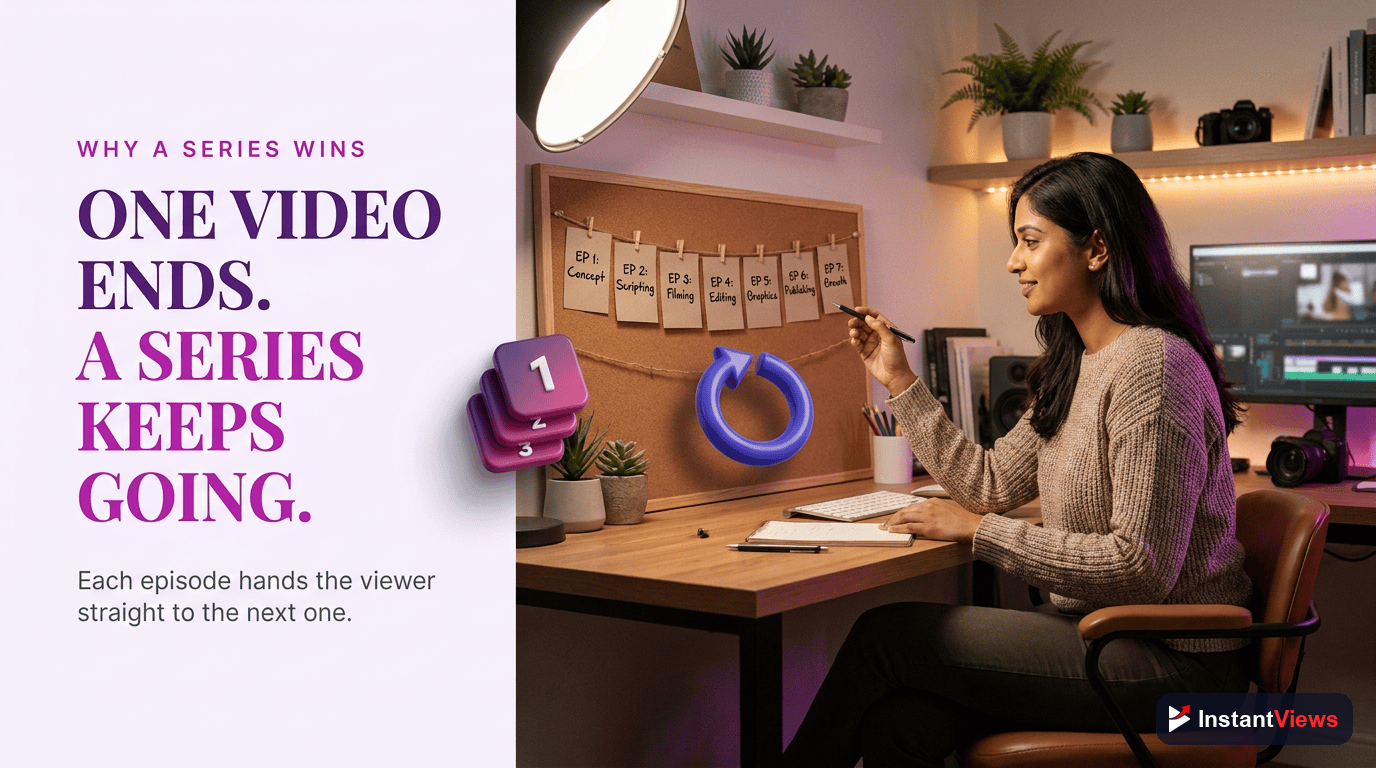
That is exactly what a binge-worthy content series is built to capture. Instead of asking a viewer to make a fresh decision after every video, a series gives them a clear, low-friction path to the next episode — and the one after that. One discovery becomes a chain of views, a single sitting becomes a long session, and a stranger becomes a returning subscriber who treats your channel like a show they follow.
This matters more in 2026 than ever, because YouTube’s recommendation system has shifted decisively toward viewer satisfaction and retention rather than raw watch time, with how long a viewer stays on the platform — their session time — emerging as one of the strongest signals the algorithm acts on. A series that keeps people watching does not just please your audience; it tells YouTube your channel is worth recommending.
In this guide you will learn how to design a series viewers cannot stop watching: how to pick a concept with a real arc, how to structure episodes, how to use open loops and cliffhangers ethically, how to wire up playlists and end screens, and how binge-watching feeds the algorithm so your reach compounds over time.
- Why a Series Beats Standalone Videos
- How Binge-Watching Feeds the Algorithm
- Choosing a Binge-Worthy Series Concept
- Episodic Structure That Pulls Viewers Forward
- Cliffhangers and Open Loops
- The Anatomy of a Binge-Worthy Series
- Consistent Format and Branding
- Playlists and Next-Episode End Screens
- Plan Your Series: Step by Step
- Measuring and Improving Your Series
- FAQ
Why a Series Beats Standalone Videos
A standalone video has to win the viewer’s attention from zero every single time. It competes against the entire platform for the click, holds attention for a few minutes, and then — at the very moment the viewer is most engaged — sends them back out into a sea of suggested videos that may have nothing to do with you. A series flips that dynamic. Each episode inherits the goodwill of the last and hands the viewer a next step that already feels relevant.
For a small or growing channel, this is one of the highest-leverage strategies available. A series concentrates your effort around a single theme, which makes your channel instantly easier to understand. A new viewer who lands on episode three does not just watch one video; they see there are more, and the most natural thing in the world is to go back and start from the beginning.
There is also a psychological pull at work. People are wired to finish what they start. A clearly numbered, clearly arced series taps into that completion instinct — the same force that keeps people watching one more episode of a streaming show at midnight. The benefits stack up quickly:
- More views per viewer: One discovery can turn into three, five, or ten views instead of one.
- Longer sessions: Back-to-back episodes keep viewers on YouTube longer, which the platform rewards.
- Stronger identity: A signature series makes your channel memorable and easy to describe.
- Easier planning: Instead of brainstorming every video from scratch, you produce episodes against a plan.
- Built-in return visits: A scheduled series gives viewers a reason to come back, and returning viewers are the foundation of durable growth.
How Binge-Watching Feeds the Algorithm
To design a binge-worthy series on purpose, it helps to understand what YouTube is actually trying to do. The platform’s job is to keep each individual viewer happy and watching, because a satisfied viewer comes back tomorrow. In 2026, the recommendation system optimizes for viewer satisfaction and retention — retention now matters more than raw watch time, and post-watch behavior and satisfaction signals weigh heavily in how content is ranked.
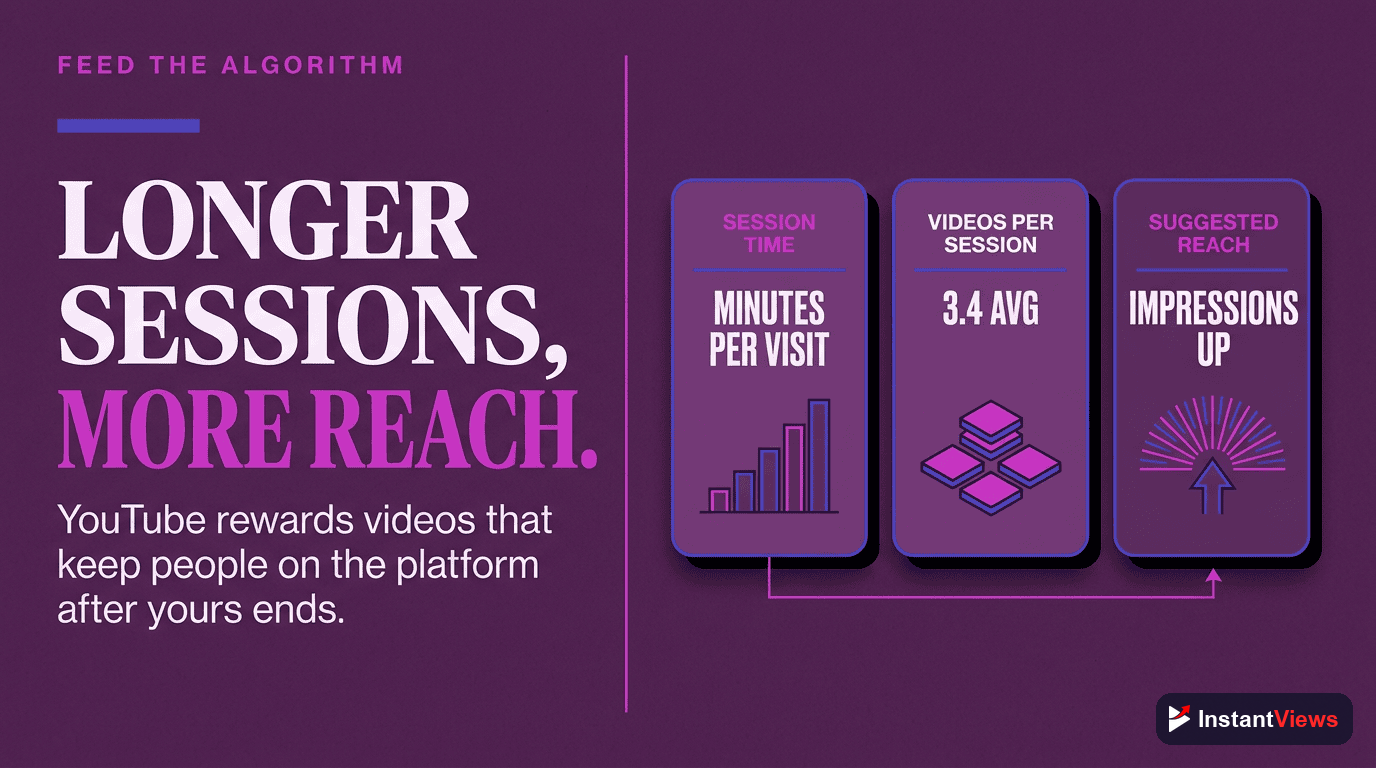
One of the most important of those signals is session time: the total time a viewer spends on YouTube in a single visit. When someone watches one of your videos and then keeps watching — whether it is more of your content or anything else — your video gets credit for extending that session. A series is essentially a session-time machine, because every episode is engineered to lead directly into the next.
This is why binge-watching is so powerful for the algorithm. When viewers move through several of your videos in a row, YouTube learns that your channel reliably produces long, satisfying sessions, and it becomes more likely to surface your videos as the recommended "next up." You are effectively training the recommendation system to send you more of the right viewers.
Why Returning Viewers Are the Real Prize
Not all views are equal. A returning viewer — someone who comes back across multiple days — is worth far more to your channel’s long-term health than a one-time visitor who never returns. Returning viewers watch longer, engage more, and signal to YouTube that your content is something people deliberately seek out, not just something they stumbled into. A series, especially one on a predictable release schedule, is the single most reliable way to manufacture return visits.
Choosing a Binge-Worthy Series Concept
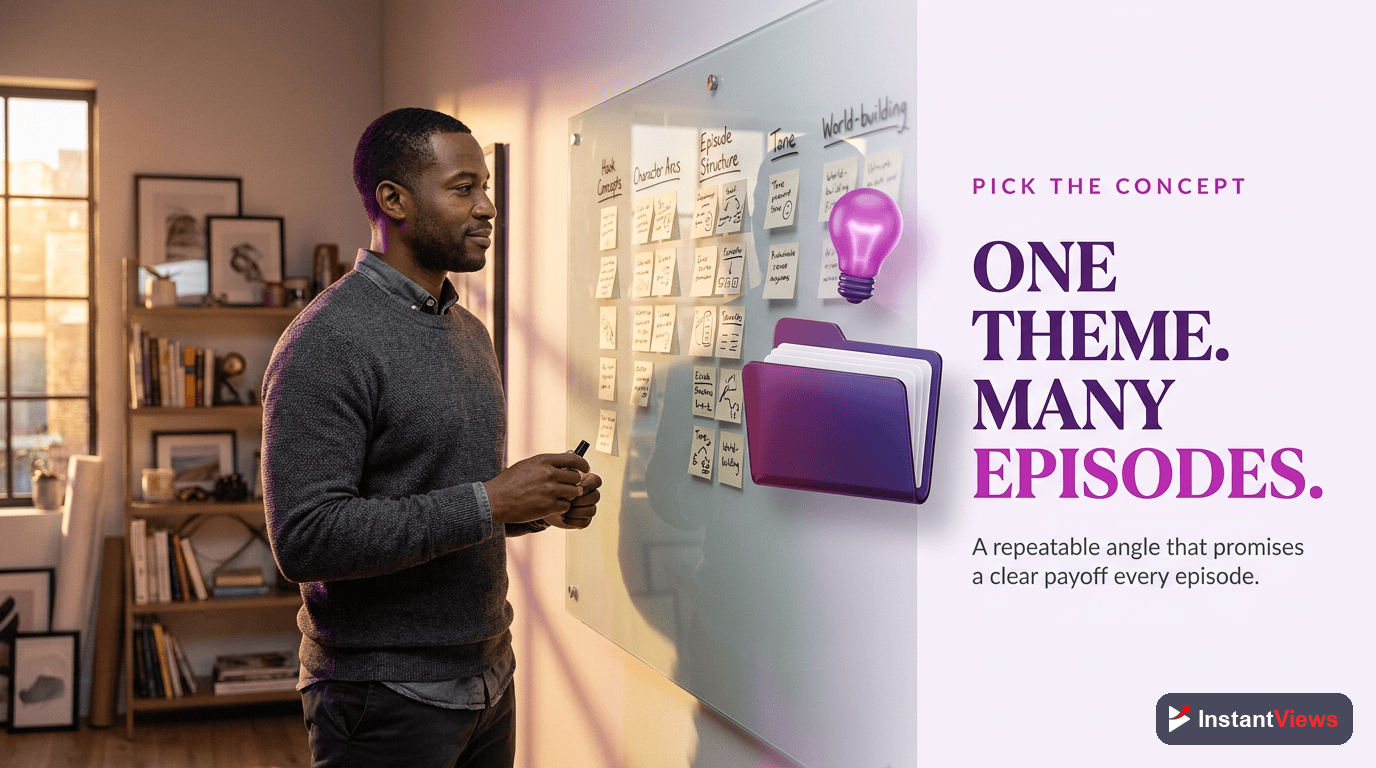
Everything starts with the concept. A great series idea sits in a narrow sweet spot: big enough to support many episodes, but focused enough to feel like one coherent journey. Too narrow and you run out of road after two videos; too broad and the episodes feel unrelated, which defeats the entire point.
The strongest concepts also have a built-in sense of progression — a reason the episodes belong in a specific order. That progression is what makes a viewer want to start at the beginning and follow through to the end. A few formats that lend themselves naturally to binge-watching:
- The journey or challenge: "30 days of," "building X from scratch," or "zero to result" series where viewers want to see how it ends.
- The progressive curriculum: A course-style series where each episode teaches the next skill in a logical sequence.
- The ongoing narrative: A documentary or story told across episodes, where each one advances the plot.
- The recurring format: A repeatable segment ("we react to," "we test," "case study #") that viewers binge for the format itself.
- The countdown or tier list: Ranked content where curiosity about the top spot pulls viewers through every episode.
Whatever you choose, write down the promise of the series in one sentence before you film anything: by the end of this series, the viewer will know, see, or feel a specific thing. That single sentence is the master open loop your whole series exists to close.
Episodic Structure That Pulls Viewers Forward
A binge-worthy episode does two jobs at once: it delivers a complete, satisfying chunk of value on its own, and it leaves the viewer wanting the next one. Get the balance wrong in either direction and the binge breaks. Resolve everything too cleanly and the viewer has no reason to continue; resolve nothing and the episode feels frustrating and incomplete.
A Reliable Episode Template
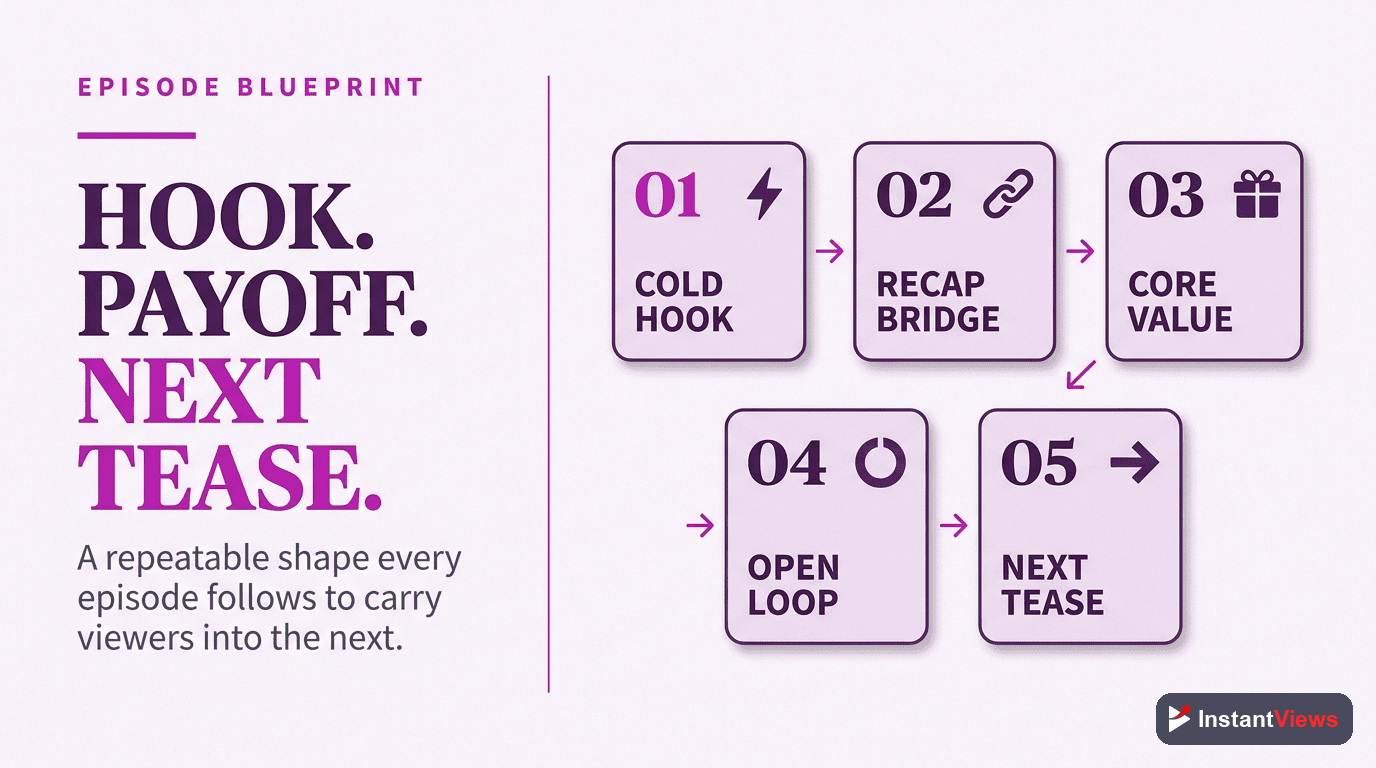
Most binge-worthy episodes follow a rhythm you can reuse every time:
- The recap and hook (first seconds): Briefly remind returning viewers where they are, then state what this episode delivers and why it matters.
- The open loop: Plant the question this episode — and the series — is building toward.
- The body: Deliver the value, story, or steps, ideally in clear segments so the episode feels well-paced.
- The payoff: Close the loop you opened so the episode feels complete and satisfying on its own.
- The bridge: Open a new loop that points directly at the next episode, then send the viewer there with an explicit prompt.
That final bridge is the most overlooked and most important part. The moment your payoff lands, the viewer is at peak satisfaction — and peak risk of leaving. A strong bridge converts that satisfaction into momentum by giving them somewhere specific to go before the feeling fades.
Cliffhangers and Open Loops
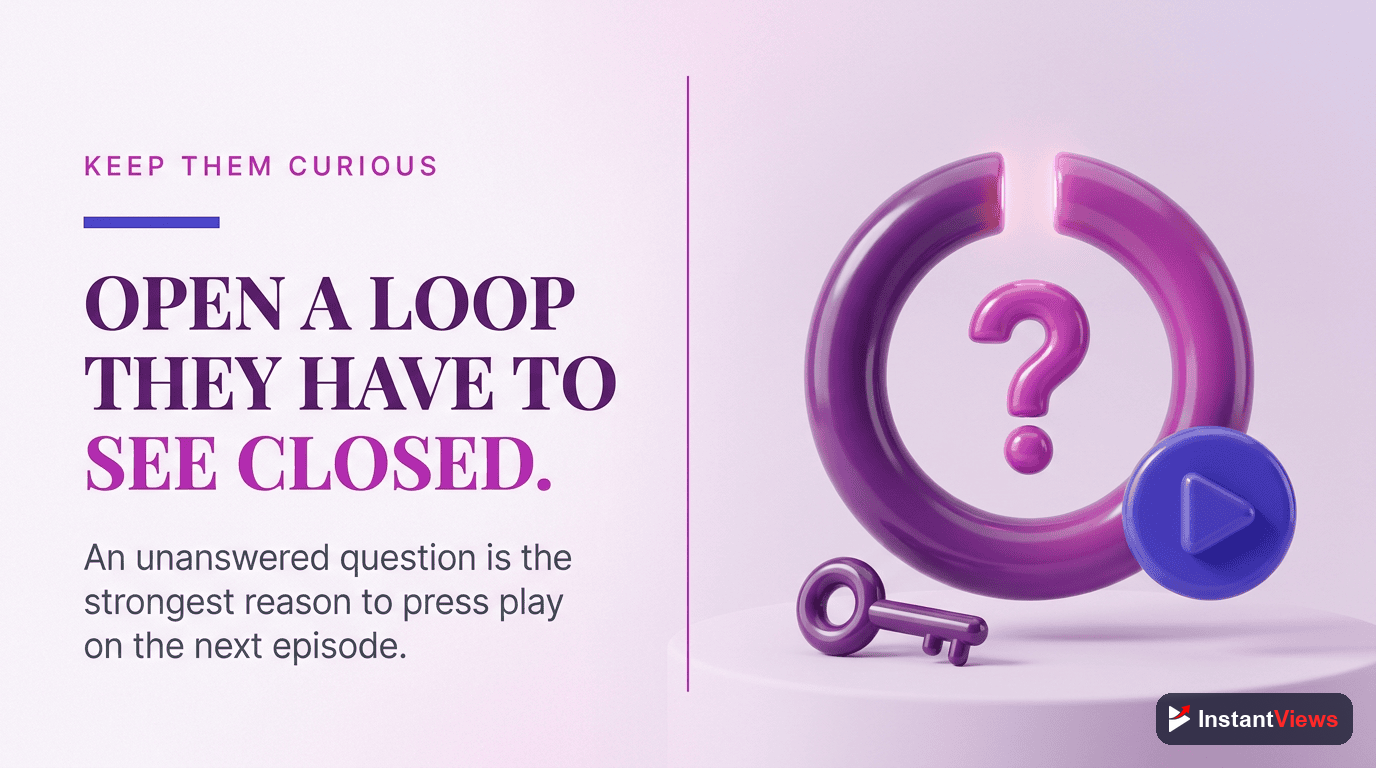
An open loop is a question, tension, or promise you deliberately leave unresolved so the viewer keeps watching to find the answer. A cliffhanger is an open loop placed right at the end of an episode — a moment of structured incompleteness that the audience can only resolve by clicking to the next episode. These are the engines of binge-watching, and they have powered episodic storytelling long before YouTube existed.
The skill is in layering loops at different scales so there is always at least one open at any given moment:
- The series loop: The big promise that only closes in the final episode ("will the experiment actually work?").
- The episode loop: A question opened and closed within a single episode so each one feels complete.
- The bridge loop: A new question opened at the very end, pointing straight at the next episode.
Used well, loops feel like generosity — you are promising the viewer something worth their time and then delivering it. Used badly, they feel like a trick. The difference comes down to whether you actually pay off what you promised.
Never open a loop you do not intend to close. Clickbait cliffhangers that lead nowhere may earn one extra click, but they destroy the trust a series depends on — and in 2026, with the algorithm weighting viewer satisfaction so heavily, disappointed viewers actively work against your reach. Every promise you make must be paid off.
The Anatomy of a Binge-Worthy Series
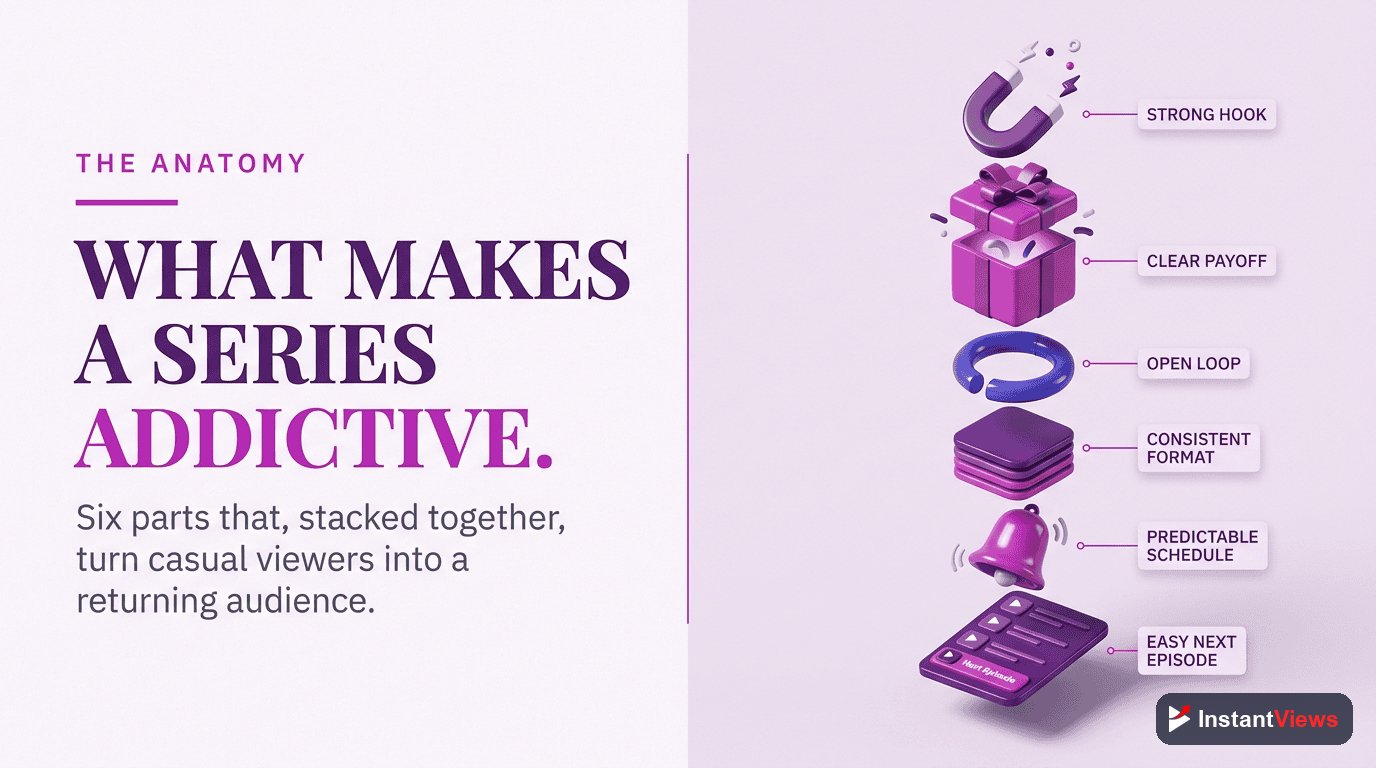
It helps to see the moving parts laid out together. A binge-worthy series is not one trick; it is a set of elements, each doing a specific job to keep the viewer moving from one episode to the next. The table below breaks down the core elements and the purpose each one serves.
| Series Element | Purpose |
|---|---|
| Series concept with an arc | Gives the whole series a beginning, middle, and payoff so viewers want to see how it ends |
| Consistent intro and branding | Signals "this is a series" and trains viewers to instantly recognize and trust each episode |
| Episode numbering | Creates a visible finish line and clarifies the intended viewing order |
| Open loops | Keep an unresolved question alive so the viewer is motivated to keep watching |
| End-of-episode cliffhanger | Converts peak satisfaction into momentum toward the very next episode |
| Playlist in episode order | Powers autoplay so viewers move to the next episode without a new decision |
| Next-episode end screen | Removes friction at the exact moment a viewer decides whether to continue |
| Consistent release schedule | Manufactures return visits and trains viewers to expect the next episode |
You do not need every element to be elaborate. A series with a clear concept, numbered episodes, real cliffhangers, and a well-ordered playlist already outperforms a pile of unconnected uploads. The goal is simply that every element points the same direction: forward, to the next episode.
Consistent Format and Branding
Consistency is what turns a group of videos into a recognizable show. When viewers can identify your series at a glance — from the thumbnail, the title pattern, the opening seconds — they do not have to decide whether to trust it. They already know what they are getting, and that familiarity lowers the barrier to clicking the next episode.
Keep the Form Constant, Vary the Substance
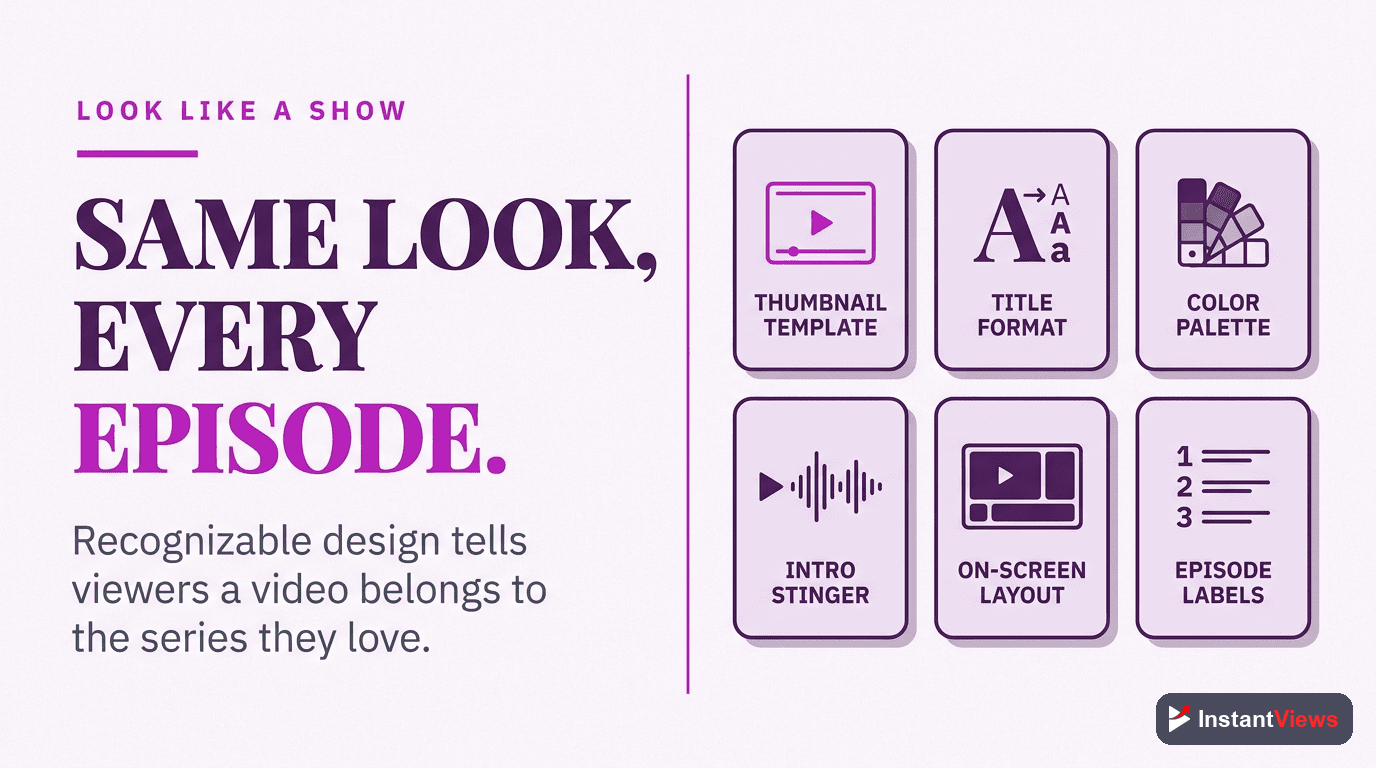
The trick to staying consistent without becoming repetitive is to hold the structure fixed while keeping the content fresh. The recurring shell is what brands the series; the new material inside is what keeps people coming back. Lock these elements across every episode:
- Thumbnail template: A shared layout, color scheme, and a visible episode number so the series reads as a set.
- Title pattern: A repeatable format such as "Series Name — Episode 3: The Specific Topic."
- Intro and outro: A short, recognizable opening and a consistent closing that sets up the next episode.
- Recurring segments: Familiar beats viewers come to anticipate within each episode.
- Tone and pacing: A consistent voice so the whole series feels like one continuous experience.
Meanwhile, every episode should bring a genuinely fresh angle, chapter, or problem. Consistency in form is the signal; freshness in substance is the reward. Together they make a series feel both dependable and worth continuing.
Playlists and Next-Episode End Screens
You can write the best cliffhanger in the world, but if the viewer has to hunt for the next episode, many will simply leave. The job of playlists and end screens is to make continuing the path of least resistance — ideally something that happens automatically.
Playlists: The Backbone of a Binge
A playlist arranges your episodes in the intended order and powers autoplay, so when one episode ends the next begins without the viewer lifting a finger. Playlists also tell YouTube that your videos are related and meant to be watched together, which keeps viewers on your channel longer. Put your series playlist front and center on your channel page, and make sure every episode lives inside it.
End Screens: Point to the Next Episode
For a series, the highest-value use of an end screen is to point at the very next episode — and the most powerful way to do that is with a playlist end-screen element. Because autoplay then carries viewers through episode after episode without forcing a new decision, playlist end screens are among the strongest drivers of additional watch time you can add. Save generic "watch my best video" or subscribe prompts for standalone uploads; inside a series, the next episode is almost always the better call to action.
Reinforce the same path everywhere else, too: mention the next episode out loud in your bridge, link it in a pinned comment, and use cards at the relevant moment. The more consistently every surface points forward, the more of your audience will keep going.
Plan Your Next Series Smarter
Use our free suite of YouTube tools to research series topics, refine your titles, and analyze which episodes hold attention the longest.
Explore Free YouTube Tools →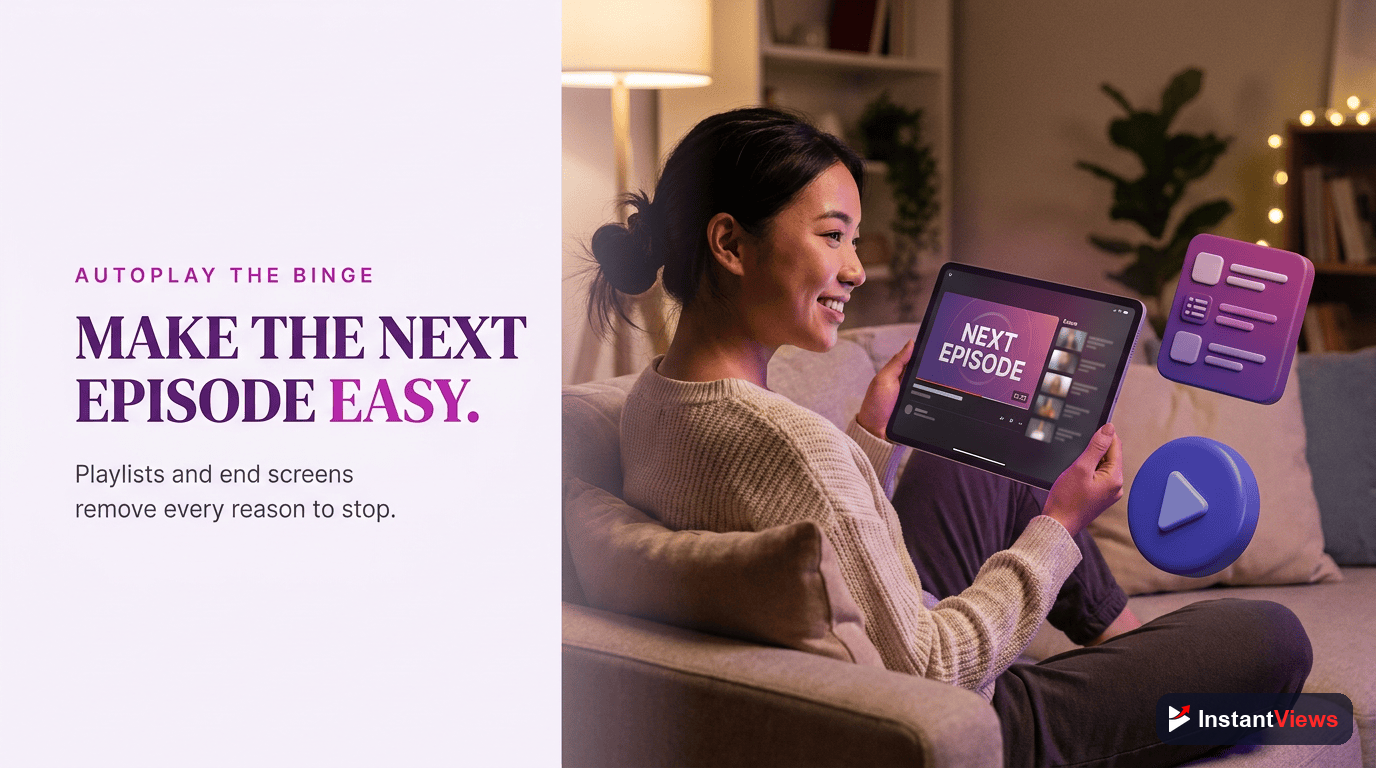
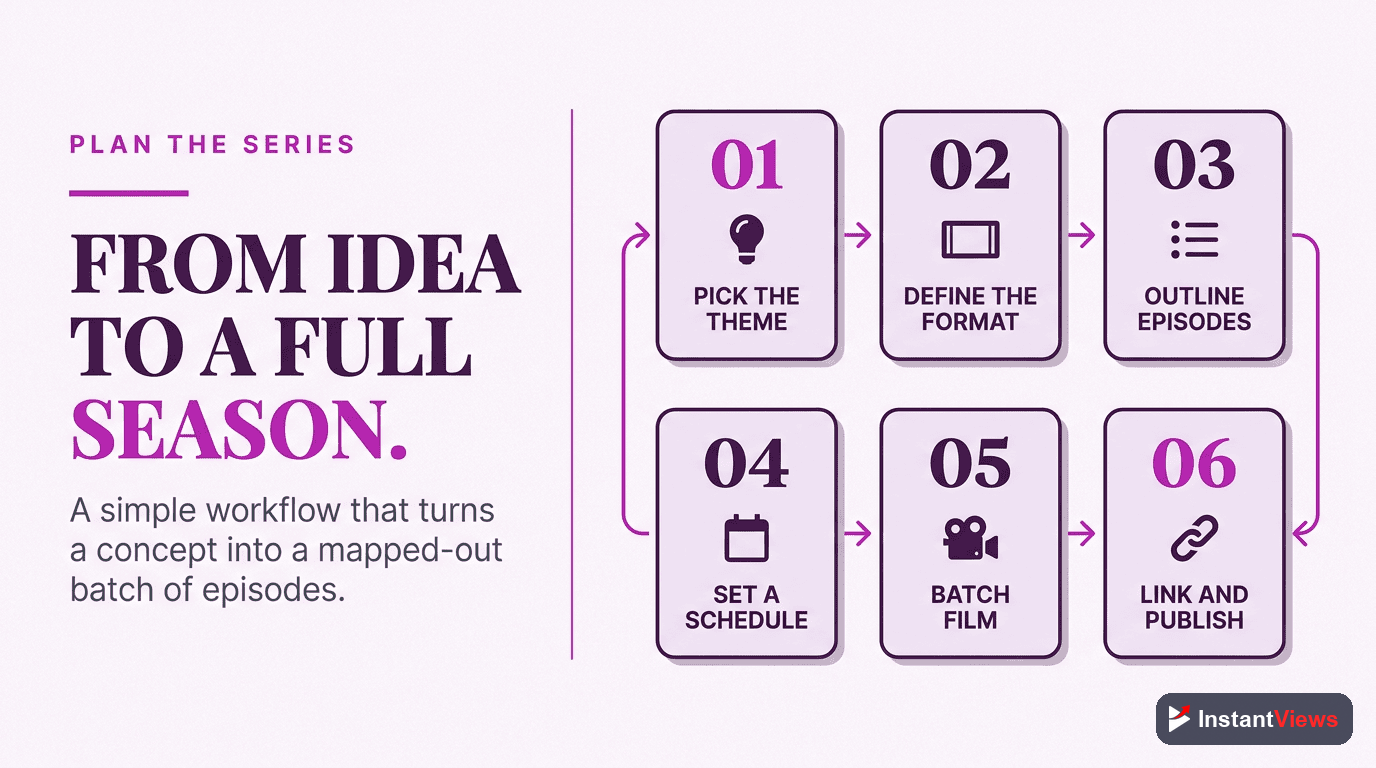
Plan Your Series: Step by Step
Here is a simple sequence for turning a rough idea into a binge-worthy series your audience will actually finish.
Choose a Concept With a Clear Arc
Pick one theme big enough for several episodes but focused enough to feel like a single journey. Write the series promise in one sentence — the master open loop your final episode will close.
Map the Episodes and Their Loops
Outline every episode in order. For each one, decide what question it opens, what it closes, and how it bridges into the next episode so the chain never breaks.
Lock the Format and Branding
Standardize the intro, title and thumbnail template, episode numbering, and recurring segments so every episode is instantly recognizable as part of the series.
Build the Playlist and End-Screen Path
Create a playlist in episode order, feature it on your channel page, and set each end screen to point to the next episode so autoplay carries viewers forward.
Release Consistently and Review
Publish on a steady, predictable schedule to manufacture return visits, then study retention and playlist data to refine the episodes still to come.
Measuring and Improving Your Series
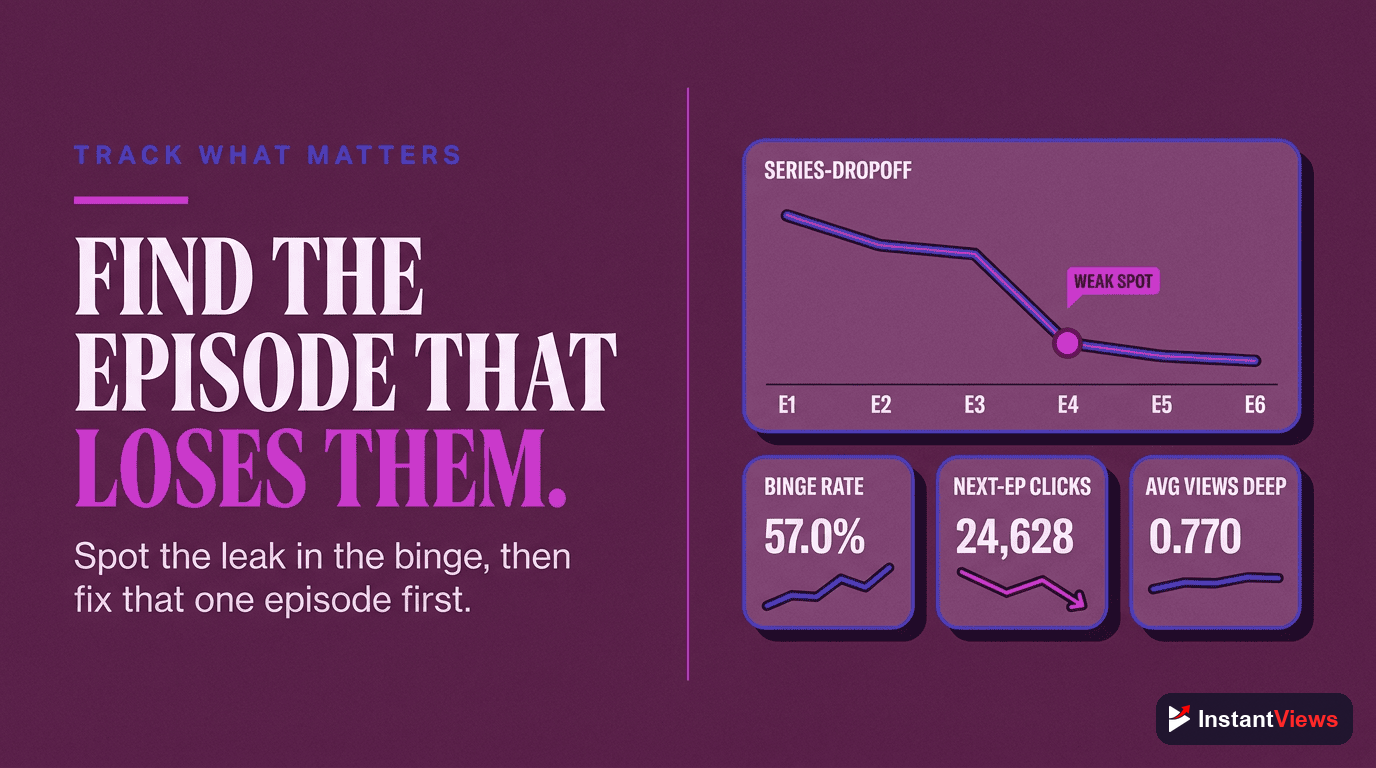
A series gives you something a pile of standalone videos never will: a clear picture of where attention flows and where it leaks. Because the episodes are connected, you can follow viewers across the whole arc and fix the exact points where they drop off. Focus on a handful of signals:
- Audience retention curves: Look for the moment viewers leave within each episode. A consistent cliff at the same point usually means the pacing sags or the hook fades there.
- Playlist analytics: See how far into the series viewers travel. If most people stop after episode one, your bridge or your second episode needs work.
- Returning viewers: Track whether the series is bringing the same people back across episodes — that is the clearest sign it is becoming a habit.
- Click-through to the next episode: If end-screen and card clicks are low, make your cliffhangers sharper and your next-episode prompts clearer.
Treat the early episodes as a chance to learn. The first few will teach you which formats, hooks, and cliffhangers resonate, and you can pour those lessons into the rest of the series while it is still running. The compounding nature of a series means small improvements stack up fast.
"A great video earns a view. A great series earns a habit — and habits, not views, are what build a channel that grows while you sleep."
Frequently Asked Questions
A binge-worthy series gives viewers a clear reason to watch the next episode immediately. That comes from a consistent format and theme, episodes that build on each other, and open loops or cliffhangers that leave a question unresolved. When each episode ends by promising a payoff in the next one, viewers keep clicking through, which extends their session on the platform.
The 2026 algorithm optimizes for viewer satisfaction and retention, and session time has become one of the leading signals it uses. When viewers watch several of your videos in a row, YouTube learns that your channel produces long, satisfying sessions and becomes more likely to recommend your content as the next video. Returning viewers are especially valuable, so a series that brings people back compounds over time.
An open loop is a deliberately unresolved question or promise that the viewer can only answer by watching more. You open a loop early ("by the end of this series you will know exactly how to do X"), keep smaller loops running through each episode, and close them on a satisfying schedule. The key is to always leave at least one loop open at the end of an episode so the viewer has a reason to continue.
They work together. A playlist sequences your episodes in the intended order and powers autoplay, so viewers move from one episode to the next without making a new decision. Putting that playlist on your channel page and linking it from playlist end screens reinforces the path. The goal is to remove every bit of friction between finishing one episode and starting the next.
There is no single right number, but a series works best when it is long enough to build momentum and short enough to finish. Many creators start with three to six episodes so they can complete a full arc, learn what resonates, and decide whether to extend it. Consistency of format and release schedule matters far more than the exact episode count.
Within a series, link the end screen to the very next episode in the sequence, ideally as a playlist element so autoplay carries the viewer forward. Playlist end screens tend to drive strong watch-time gains because autoplay moves people through several episodes without another decision. Save best-video or subscribe prompts for standalone uploads rather than mid-series episodes.
Keep the structural elements constant: the intro, the title and thumbnail template, the episode-numbering, and the recurring segments. Vary the substance: each episode should tackle a fresh angle, problem, or chapter of the story. Consistency in form is what signals "this is a series" and trains viewers to expect quality, while fresh substance is what keeps them coming back.
Yes. A series is one of the most effective strategies for a small channel because it concentrates your effort around a single theme, makes your channel easier to understand, and encourages each new viewer to watch more than one video. You do not need a big budget; you need a clear concept, a consistent format, and a reason for viewers to keep watching.
Conclusion
A binge-worthy series is the difference between a channel people watch and a channel people follow. By packaging your ideas into a connected arc — with a clear concept, consistent branding, real open loops, and a frictionless path from one episode to the next — you turn a single discovery into a long session and a one-time viewer into someone who keeps coming back.
That is also exactly what the 2026 algorithm is built to reward. When your content reliably produces long, satisfying sessions and brings viewers back, YouTube learns to recommend you more often. You are not gaming the system; you are giving viewers a genuinely better experience and letting the platform reward it.
Start with one series. Choose a concept with a real payoff, map the episodes and their loops, lock a format you can repeat, and wire up a playlist that carries viewers forward automatically. Release it consistently, watch where attention flows, and refine as you go. Do that, and your channel stops being a stream of disconnected uploads and becomes a show your audience cannot stop watching.