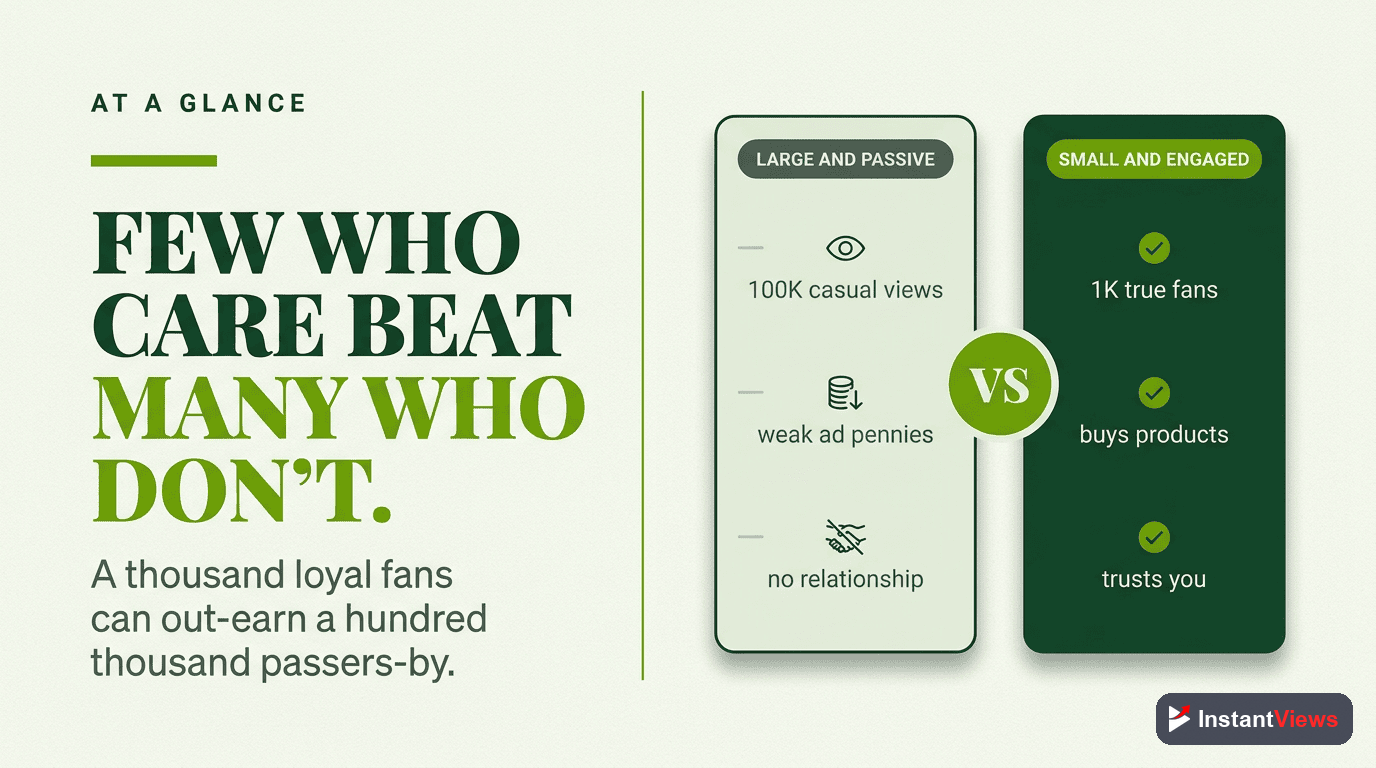
- Ad revenue scales with views, but most other income streams scale with trust — so a small, engaged channel can out-earn a large, passive one
- Affiliate marketing, your own products and services, sponsorships, and lead generation do not require huge view counts or even the YouTube Partner Program
- High-CPM niches like finance, business, and software make every single view worth far more than entertainment views
- The goal is revenue per viewer, not raw reach — a few hundred buyers beat a million passive watchers
- Build one income stream at a time, capture leads you own, and measure what each video actually earns
There is a myth that haunts every new creator: that you cannot make money on YouTube until you have millions of views. It is a comforting story when growth is slow, but it is simply not true. The myth comes from confusing one income stream — advertising — with the whole of YouTube monetization. Ad revenue genuinely does depend on volume. Almost nothing else does.
YouTube has paid creators more than $100 billion over the past four years, and a growing share of that money flows to creators who would never call themselves big. They earn through affiliate commissions, their own products, sponsorships, and the clients they win from a small but highly relevant audience. For these creators, a video that reaches a few hundred of the right people is more valuable than one that reaches a million of the wrong ones.
This guide is about that strategic approach. You will learn why a small engaged audience can out-earn a large passive one, which income streams work at low view counts, how to choose a niche where every view is worth more, and the exact steps to turn a modest channel into a real source of income — without waiting for a viral moment that may never come.
If you have been discouraged by your view count, this is the reframe you need: stop measuring your channel by how many people watch, and start measuring it by how much value you create for the right people. That single shift changes everything about how you monetize.
- Why Views Are the Wrong Scoreboard
- Why a Small Engaged Audience Out-Earns a Large One
- Monetization Methods That Work at Low Views
- Affiliate Marketing: Earn Per Action, Not Per View
- Your Own Products and Services
- Lead Generation: Capture Viewers You Own
- Targeting High-CPM, High-Intent Niches
- Build Your Low-View Monetization Plan
- A Worked Example: 800 Views, Real Income
- Mistakes That Keep Small Channels Broke
- FAQ
Why Views Are the Wrong Scoreboard
Views feel like the natural way to keep score because YouTube puts them front and center. But views are a vanity metric for monetization. What pays your bills is not how many people watched — it is how many people acted. Did they click your affiliate link? Buy your product? Join your email list? Book a call? Those actions are where money lives, and they have only a loose relationship with raw view count.
Ad revenue is the one stream that genuinely scales with views, and even it is more nuanced than people think. YouTube pays based on advertiser demand for your audience, measured roughly as CPM — the amount advertisers pay per thousand ad impressions. A finance channel and a gaming channel with identical view counts can earn wildly different amounts, because advertisers value their audiences differently. So even within ads, who watches matters more than how many.
The strategic creator flips the scoreboard. Instead of asking "how do I get more views," they ask "how do I earn more from the views I already have." That question opens up every income stream that does not care about volume at all.

Why a Small Engaged Audience Out-Earns a Large One
Imagine two channels. The first has a million views a month on broad, entertaining content; viewers watch, smile, and move on. The second has eight thousand views a month on focused content for a specific professional audience; viewers take notes, trust the creator, and come back. Which one earns more? Surprisingly often, it is the second.
The reason is relevance and trust. A passive viewer is worth a fraction of a cent in ad revenue and nothing else. An engaged viewer who believes you can solve their problem might click your affiliate link, buy your course, or hire you for thousands. The value of an audience is not its size — it is its intent multiplied by trust.
This is why the 2026 algorithm's focus on viewer satisfaction and retention works in a small creator's favor. YouTube increasingly rewards content that genuinely serves a clear audience and is reducing the spread of low-value, mass-produced content. Deep, useful videos for a specific audience are exactly what both the algorithm and your wallet reward.
- Higher conversion: Relevant viewers act on offers; passive viewers scroll past them.
- Higher value per action: In a buyer niche, a single sale can dwarf months of ad income.
- Repeat revenue: Trusted creators sell again and again to the same loyal viewers.
- Word of mouth: Engaged fans recommend you, bringing more of exactly the right people.
Monetization Methods That Work at Low Views
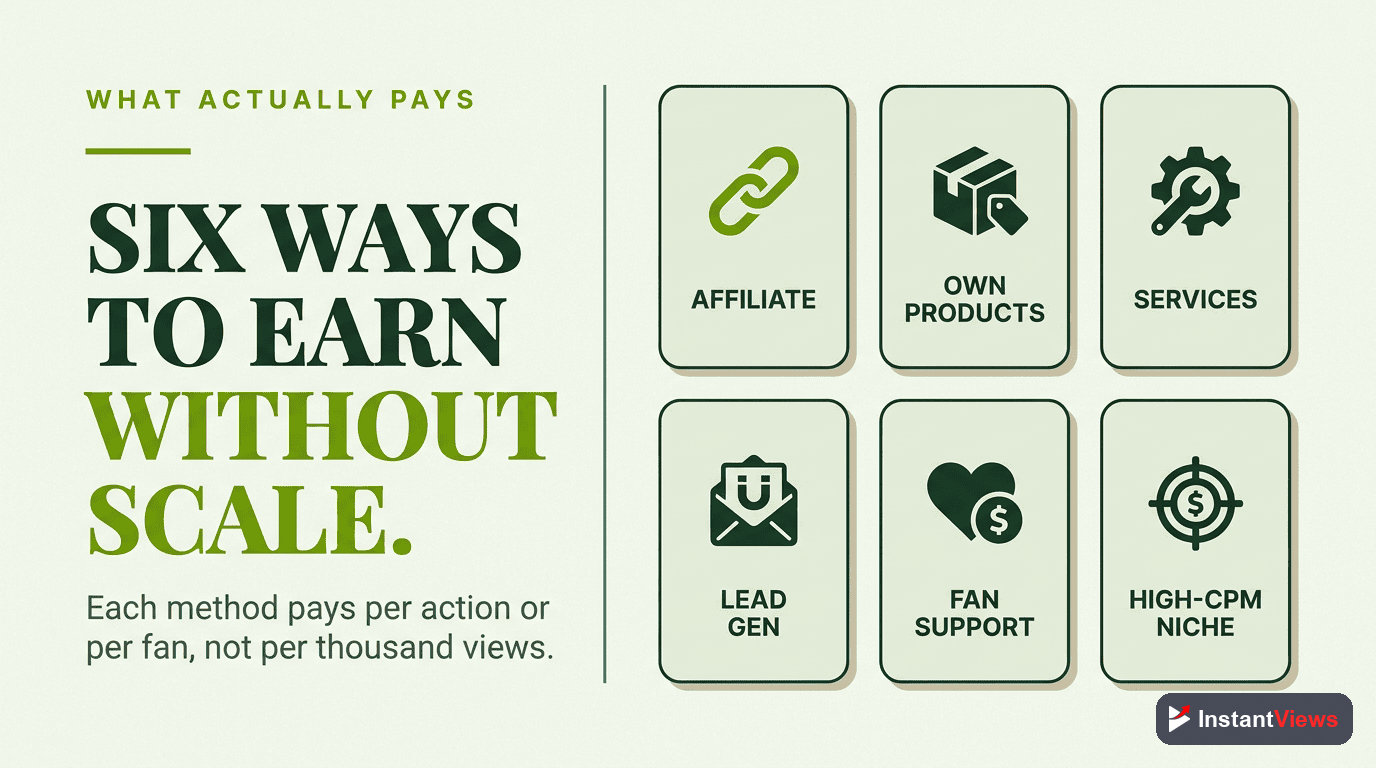
Here is the heart of the strategy. Several proven income streams pay based on actions or relationships rather than view volume, which is exactly why they thrive on small channels. The table below shows each method and why it works even when your view count is modest.
| Method | Why It Works at Low Views |
|---|---|
| Affiliate marketing | You earn a commission per sale, not per view. One viewer who buys a recommended tool can be worth more than thousands of passive views. |
| Your own digital products | Templates, presets, and courses have near-zero per-unit cost, so a handful of sales to an engaged audience is pure margin — no ad threshold required. |
| Services and coaching | A single client can be worth thousands. You only need a few of the right viewers to inquire, not a crowd. |
| Sponsorships | Brands increasingly pay niche creators for a tight, relevant audience rather than raw reach, so engagement and fit matter more than size. |
| Lead generation | You capture emails you own and sell over time, so the value of a viewer is not capped by a single view or YouTube's payout. |
| Memberships and community | A small percentage of loyal fans paying monthly creates recurring income that compounds, independent of how many casual viewers you reach. |
| High-CPM niche ads | Even ad revenue becomes viable at low views when advertisers pay premium rates for a valuable audience like finance or business. |
Notice the pattern: every method above is tied to value per person, not headcount. You do not need a bigger audience to use them — you need a clearer one. Let us look at the most accessible streams in detail.
Affiliate Marketing: Earn Per Action, Not Per View
Affiliate marketing is usually the fastest income stream for a small channel because it requires no inventory, no Partner Program approval, and no minimum subscriber count. You recommend a product you genuinely use, the viewer buys through your tracked link, and you earn a commission. The math rewards relevance: a video seen by 800 people that drives 20 buyers can easily out-earn a video seen by 80,000 that drives none.
What Makes Affiliate Work at Low Views
- Buyer-intent formats: Tutorials, reviews, comparisons, and "best tools for X" videos reach viewers who are already deciding what to buy.
- Genuine recommendations: Only promote what you actually use. Trust is the entire engine, and one betrayed viewer is expensive.
- Clear placement: Put your tracked link in the first line of the description and a pinned comment, and mention it naturally in the video.
- Honest disclosure: Always disclose affiliate relationships. It is required, and it actually builds trust rather than eroding it.
Software, courses, and professional tools tend to offer the strongest commissions because the products are valuable and recurring. A creator teaching video editing, for example, can earn from the editing software, the stock-asset library, and the gear — all from one honest tutorial that a small but motivated audience watches.
Your Own Products and Services
Affiliate income is great, but the highest-margin path is selling something that is yours. When you own the product, you keep all the revenue and you control the offer. This is where small channels frequently overtake far larger ones, because a creator with 3,000 trusting subscribers and a $200 course can out-earn a creator with 300,000 passive subscribers living on ad pennies.
Digital Products
Digital products are ideal for low-view channels because they cost almost nothing to deliver and scale infinitely. Think templates, presets, notion systems, ebooks, sound packs, and online courses. You create them once and sell them again and again to whoever finds your videos.
Services
Services often produce the most money per viewer of any method. Coaching, consulting, freelancing, and done-for-you work can be worth hundreds or thousands per client. You do not need a crowd — you need a few of the right people to see that you clearly know what you are talking about. A handful of demonstrative videos can fill a calendar.
Do not wait until you are "big enough" to sell. The creators who monetize early build the habit, the trust, and the offers while their audience is small — so that growth multiplies real revenue instead of just inflating a view count that never paid them anything.

Lead Generation: Capture Viewers You Own
YouTube is rented land. The algorithm can change, reach can dry up, and a channel can stall overnight. The single most durable move a small creator can make is to turn viewers into subscribers on a list they own — usually email. A view is fleeting; an email subscriber is an asset you can reach again and again, for free, on your own terms.
The mechanism is simple. You offer something genuinely useful — a checklist, template, mini-course, or resource library — in exchange for an email address, and you send viewers to a dedicated landing page to claim it. From there you nurture the relationship and present offers over time.
- The lead magnet: A free resource so useful it feels unfair, tightly matched to your video's topic.
- The landing page: A single focused page, never your busy homepage, with one clear action.
- The placement: First line of the description, a pinned comment, and a clear verbal mention.
- The follow-up: A short welcome sequence that delivers value and introduces what you sell.
For a low-view channel this is transformative, because the value of a viewer is no longer capped by a single watch. One engaged email subscriber in a buyer niche can be worth many times a passive YouTube view — and you reach them whenever you want, regardless of the algorithm.
Find Topics That Attract Buyers
Use our free suite of YouTube tools to research high-intent topics, sharpen your titles, and see what is working so every video reaches the right viewers.
Explore Free YouTube Tools →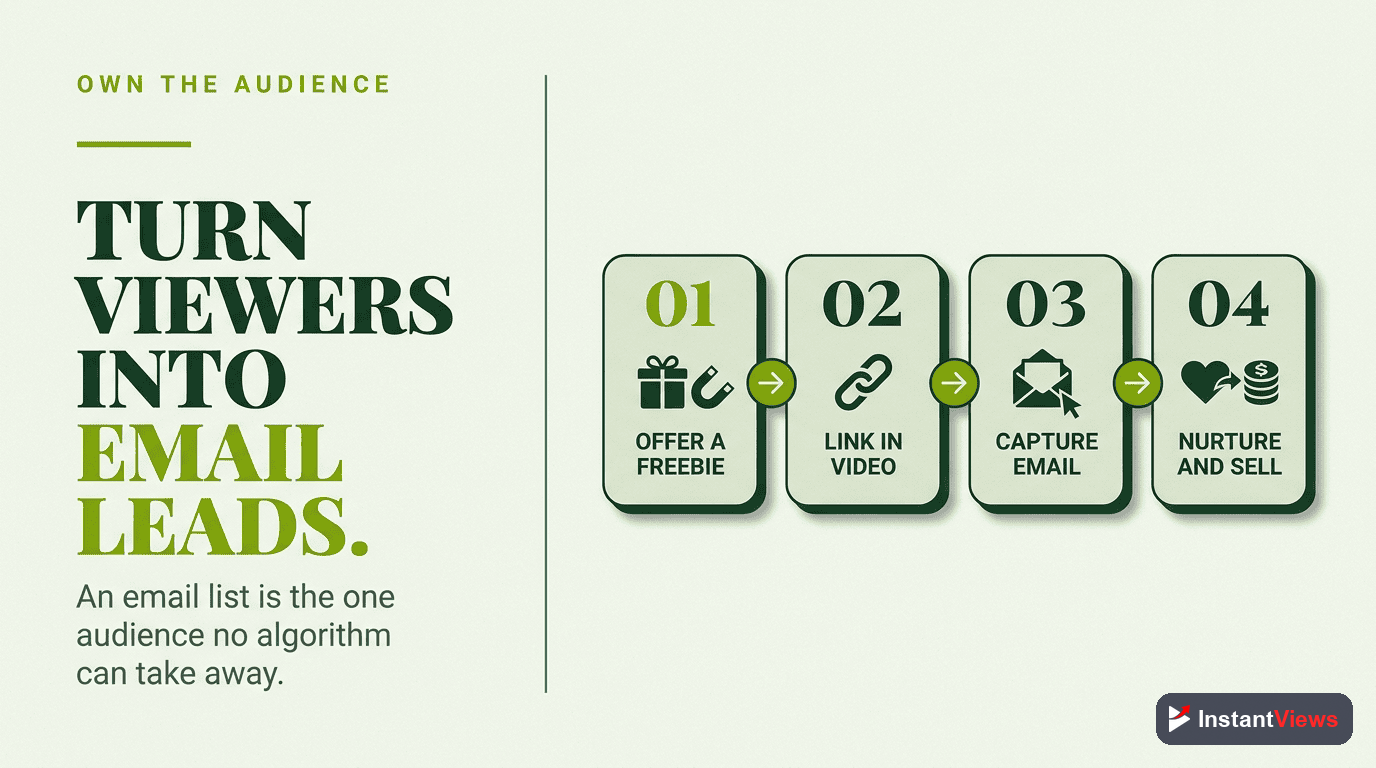
Targeting High-CPM, High-Intent Niches
If you do want ad revenue to count, the lever is not more views — it is a more valuable audience. CPM, the rate advertisers pay per thousand ad impressions, swings dramatically by topic. Advertisers pay a premium to reach audiences who make expensive decisions, which is why some niches earn many times more per view than others.
Topics consistently associated with higher advertiser rates include personal finance and investing, business and entrepreneurship, software and SaaS, legal and tax education, and real estate. These audiences are buyers, which is exactly why they are valuable for ads, affiliates, and your own offers alike. The same viewer worth premium ad rates is also the viewer most likely to purchase a course or click an affiliate link.
High Intent Beats High Volume
The deeper principle is buyer intent. A video titled around a purchase decision — "best accounting software for freelancers" — reaches viewers in a buying mindset, even if only a few hundred watch. Compare that to a viral clip watched by a million people who will never spend a cent in your niche. For monetization, the targeted video wins, every time.
"You are not paid for attention. You are paid for relevance. A hundred of the right viewers will out-earn a million of the wrong ones — so build for the buyer, not for the view count."

Build Your Low-View Monetization Plan
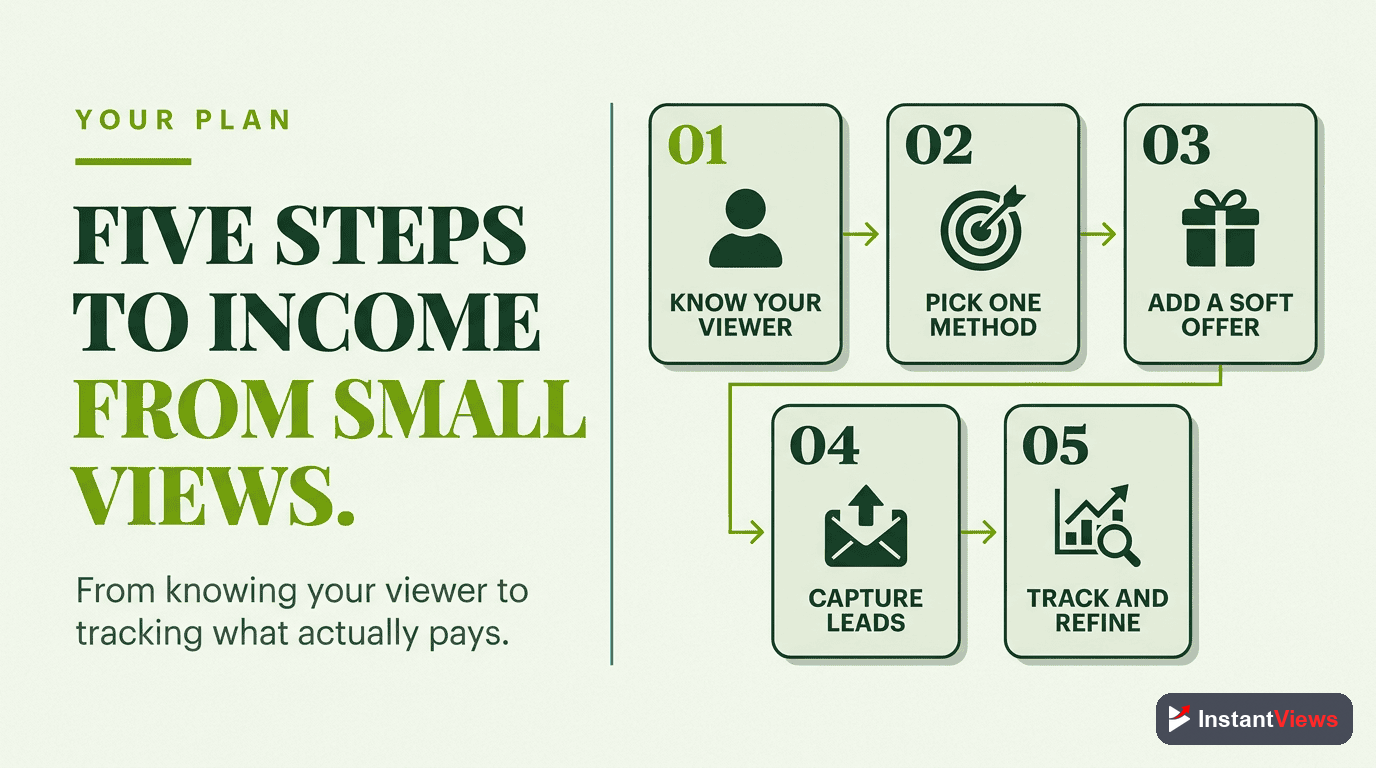
Here is a simple sequence to turn these ideas into income. Do not try every stream at once — build one, make it work, then layer the next.
Choose a Buyer-Focused Niche
Pick a topic where viewers are trying to solve a problem worth paying for. Clarity beats breadth: a smaller, well-defined audience converts better than a vague, massive one.
Add One Income Stream First
Start with affiliate links to tools you already use. It requires no approval, no inventory, and no subscriber minimum, so you can earn from your very next video.
Capture Leads You Own
Create a free lead magnet and a dedicated landing page. Add the link to your descriptions and pinned comments so every video grows a list you control.
Create Your Own Offer
Package your expertise into a digital product or service. This is the highest-margin stream and the one that lets a small channel out-earn a far larger one.
Measure Revenue Per Viewer
Track clicks, sign-ups, and sales rather than just views. Double down on the videos and offers that actually earn, and quietly retire the ones that do not.
A Worked Example: 800 Views, Real Income
Let us make this concrete with a realistic walkthrough. Imagine a creator teaching small-business bookkeeping. A typical video earns around 800 views — tiny by YouTube standards. Under the views-only myth, this channel is a failure. Under the strategic approach, it is a quiet earner.
Here is how those 800 views can work harder than 80,000 passive ones:
- Affiliate: The video reviews accounting software. A modest slice of those 800 viewers are exactly the people deciding which tool to buy, and some sign up through the tracked link — each a recurring commission.
- Lead magnet: A free "month-end close checklist" in the description captures emails. A small percentage of 800 engaged viewers join the list, becoming long-term assets.
- Own product: The welcome email introduces a $79 bookkeeping template pack. A few buyers from each video add up to steady, high-margin sales.
- Service: One viewer with a messy business books a paid consulting call — worth more than the entire month of ad revenue a 100,000-view entertainment video would earn.
None of this required going viral. It required choosing a buyer audience, giving every video a clear next step, and owning the relationship. The same 800 views, treated strategically, turn into multiple income streams that compound month after month as the back catalog keeps working.

Mistakes That Keep Small Channels Broke
Most small channels are not failing because of their size. They are failing because of avoidable strategic errors. Watch out for these:
- Waiting for the Partner Program: Treating ad revenue as the only door means ignoring affiliates, products, and services that need no approval at all.
- Chasing views over buyers: Broad, viral-bait content brings the wrong audience — lots of watching, zero buying.
- No clear next step: If a video does not tell viewers what to do next, even the most relevant audience simply leaves.
- Renting instead of owning: Sending all traffic back to YouTube with no lead capture means rebuilding your audience from scratch with every upload.
- Selling to strangers too soon: Pushing a big offer to a brand-new viewer fails; relevance and trust must come first.
- Never measuring revenue: Tracking views but not clicks, sign-ups, and sales means you never learn which videos actually pay.
"A small channel is not a small business. With the right offers and the right audience, a few hundred views a video can fund a full-time income — long before the subscriber count ever looks impressive."
Frequently Asked Questions
Yes. Ad revenue depends on view volume, but most other income streams do not. Affiliate marketing, your own products and services, sponsorships, and lead generation can all earn well from a small, engaged audience because they pay per action or per relationship rather than per thousand views.
A small audience that trusts you and matches a buyer profile converts far better than a large, passive audience that watches for entertainment. A few hundred highly relevant viewers in a high-value niche can generate more affiliate sales, product purchases, and client inquiries than tens of thousands of casual views.
No. The Partner Program unlocks ad revenue and requires 1,000 subscribers with 4,000 valid public watch hours in 12 months, or 10 million Shorts views in 90 days. Affiliate links, selling your own products, sponsorships, and lead generation work with no subscriber minimum and no YouTube approval at all.
CPM is what advertisers pay per thousand ad views, and it varies enormously by topic. Niches like personal finance, business, software, and legal education command far higher rates than entertainment because the viewers are valuable buyers. In these niches, even modest view counts can produce meaningful revenue.
Recommend tools and products you genuinely use, join their affiliate or partner programs, and place tracked links in your description and pinned comment. Disclose the relationship clearly. Tutorials, reviews, and comparison videos convert best because the viewer is already in a buying mindset.
Digital products such as templates, presets, ebooks, courses, and memberships have almost no per-unit cost and scale well. Services like coaching, consulting, freelancing, and done-for-you work often earn the most per viewer, since a single client can be worth far more than thousands of ad impressions.
For monetization, the right viewers win. A targeted video that reaches a few hundred people who need your solution will out-earn a viral video watched by millions who will never buy. Optimize your topics for buyer intent, not just reach, and your revenue per view climbs sharply.
Instead of monetizing the view directly, you capture the viewer's email with a free resource, then build a relationship that leads to a sale later. This is powerful for low-view channels because one engaged subscriber on your own email list can be worth many times a single passive YouTube view.
Conclusion
The view-count myth keeps thousands of capable creators from ever earning a cent, because they are waiting for a number that does not actually control their income. Ad revenue scales with views — but affiliate commissions, your own products and services, sponsorships, and lead generation scale with trust and relevance. Those streams are wide open to a small channel today.
Start where the friction is lowest. Choose a buyer-focused niche, add affiliate links to tools you already use, capture leads on a list you own, and then build a product or service of your own. Measure revenue per viewer instead of raw reach, and let the videos that genuinely earn guide what you make next.
A small, engaged audience can absolutely out-earn a large, passive one. The creators who understand this stop apologizing for their view count and start building real income from the audience they have — right now, exactly as small as it is.