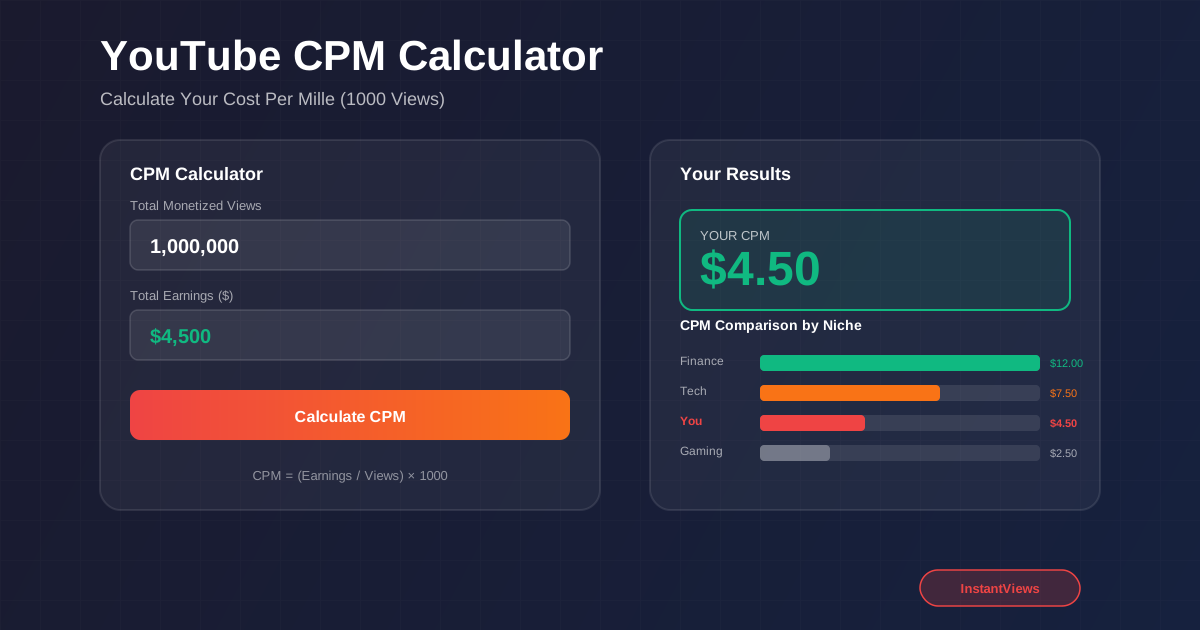
- CPM (Cost Per Mille) is what advertisers pay per 1,000 ad impressions - ranging from $1 to $50+ depending on niche
- RPM is your actual earnings after YouTube's 45% cut - the metric that matters for your bank account
- Finance and business niches earn 5-10x more per view than entertainment and gaming
- US, UK, and Australian viewers generate the highest CPM rates globally
- Videos over 8 minutes can show mid-roll ads, potentially doubling your revenue per view
Understanding YouTube CPM is essential for any creator serious about monetization. CPM - Cost Per Mille - determines how much money you earn for every thousand ad impressions on your videos. But the difference between a $2 CPM and a $20 CPM can mean the difference between earning $200 or $2,000 from the same 100,000 views.
This complete guide explains everything you need to know about YouTube CPM: what it is, how it differs from RPM, the factors that affect your rates, how to calculate your earnings, and proven strategies to increase your CPM. Plus, we'll show you how to use our free YouTube CPM Calculator to estimate your potential earnings.
What is YouTube CPM?
CPM stands for "Cost Per Mille" (mille meaning thousand in Latin). It represents the amount advertisers pay YouTube for every 1,000 ad impressions shown on your videos. This is the gross revenue before YouTube takes its cut.
When an advertiser runs a campaign on YouTube, they bid for ad placements. The amount they're willing to pay depends on how valuable your audience is to them. A finance company selling investment products will pay significantly more to reach potential investors than a mobile game company targeting casual gamers.
Key things to understand about CPM:
- CPM is advertiser cost - what they pay YouTube, not what you receive
- Only monetized views count - views with ad blockers or in non-ad regions don't generate CPM
- CPM varies dramatically - from $1 in some niches to $50+ in premium categories
- It's not constant - your CPM changes based on season, content, and advertiser demand
CPM vs RPM: Understanding the Difference
One of the most common confusions for YouTube creators is the difference between CPM and RPM. They're related but measure different things:
Cost Per Mille (Advertiser Metric)
What advertisers pay YouTube for 1,000 ad impressions. This is the gross revenue before YouTube's 45% cut. CPM only counts monetized playbacks - views where an ad was actually shown.
If advertisers pay $20 CPM, YouTube receives $20 for every 1,000 ad impressions on your videos.
Revenue Per Mille (Creator Metric)
What YOU actually earn per 1,000 total views. This is your net revenue after YouTube takes its 45% cut. RPM counts ALL views, including those without ads shown.
With a $20 CPM, your RPM might be $8-11 after YouTube's cut and accounting for non-monetized views.
The formula: RPM = CPM x 55% (your share) x Monetization Rate (typically 40-60%)
RPM is always lower than CPM because:
- YouTube keeps 45% of all ad revenue
- Not all views show ads (ad blockers, YouTube Premium, limited ads content)
- Some countries have low advertiser inventory
Factors That Affect Your YouTube CPM
Your CPM isn't random - it's determined by specific factors that affect how much advertisers are willing to pay to reach your audience:
1. Content Niche
The single biggest factor affecting CPM. Finance channels can earn $20-45 CPM while gaming channels might see $3-10. Why? Advertisers calculate customer lifetime value - a banking customer is worth thousands of dollars, so they'll pay premium rates to acquire them.
2. Audience Location
A view from the United States earns 10-25x more than a view from India. This reflects advertiser budgets in each market. Australia actually has the highest CPM globally due to high purchasing power and limited inventory.
3. Audience Demographics
Viewers aged 25-45 with higher disposable income command premium rates. Advertisers pay more for audiences likely to make purchasing decisions.
4. Video Length
Videos over 8 minutes can include mid-roll ads, potentially showing 3-5 ads instead of just 1-2. This doesn't change CPM but dramatically increases earnings per view.
5. Seasonality
CPM fluctuates throughout the year:
- Q4 (Oct-Dec): Highest CPM - holiday advertising drives rates up 50-100%
- Q1 (Jan-Mar): Lowest CPM - advertisers reset budgets after holidays
- Q2-Q3: Moderate CPM with gradual recovery
6. Content Advertiser-Friendliness
Videos flagged as "limited ads" due to controversial topics, profanity, or sensitive content receive fewer ad placements and lower CPM. Clean, advertiser-friendly content maximizes revenue.
CPM Rates by Content Niche (2025)
Here's what you can expect to earn based on your content category:
| Content Niche | Low CPM | Average CPM | High CPM |
|---|---|---|---|
| Finance & Investing | $20 | $36 | $45+ |
| Digital Marketing | $18 | $30 | $40 |
| Technology & Software | $15 | $25 | $35 |
| Health & Fitness | $12 | $20 | $30 |
| Education & How-To | $10 | $18 | $25 |
| Lifestyle & Vlogs | $6 | $12 | $18 |
| Entertainment | $3 | $7 | $12 |
| Gaming | $3 | $6 | $10 |
| Music | $1 | $2 | $4 |
These are averages for US-based audiences. Your actual CPM will vary based on specific topics within your niche and your audience's geographic distribution.
CPM Rates by Audience Location
Where your viewers are located dramatically affects your earnings. Here's how different countries compare:
| Country | CPM Range | Relative to US |
|---|---|---|
| Australia | $30-$45 | 120% (Highest) |
| United States | $25-$40 | 100% (Baseline) |
| United Kingdom | $18-$28 | 75% |
| Canada | $17-$26 | 70% |
| Germany | $17-$26 | 70% |
| France | $14-$22 | 60% |
| Japan | $12-$20 | 55% |
| Brazil | $4-$8 | 20% |
| India | $1-$3 | 8% |
| Indonesia | $0.50-$2 | 6% |
This means a view from Australia can be worth 25 times more than a view from India. If your audience is primarily from lower-CPM countries, you'll need significantly more views to match earnings from premium markets.
How to Calculate Your YouTube Earnings
Here's the formula to estimate your YouTube ad revenue:
YouTube Earnings Calculation
Follow these steps to calculate your potential earnings:
- Identify your niche CPM from the table above
- Apply country multiplier based on audience location
- Calculate RPM: Adjusted CPM x 55% (your share)
- Calculate earnings: (Monthly Views / 1,000) x RPM
Lifestyle channel with 100,000 monthly views, mixed global audience:
Base CPM: $12 (lifestyle average)
Country multiplier: 35% (mixed/global)
Adjusted CPM: $12 x 0.35 = $4.20
Your RPM: $4.20 x 55% = $2.31
Monthly earnings: 100 x $2.31 = $231
Using the InstantViews CPM Calculator
Instead of doing manual calculations, use our free YouTube CPM Calculator for instant, accurate estimates.
How to use the calculator:
- Select your content niche - Choose from 10 categories including finance, technology, gaming, and more
- Choose primary audience location - Select where most of your viewers are located
- Enter monthly views - Input your average or target monthly view count
- Click Calculate - Get instant CPM, RPM, and earnings estimates
The calculator provides:
- Estimated CPM range (low, average, high)
- Your actual RPM after YouTube's cut
- Monthly earnings estimate
- Detailed breakdown of the calculation
- Tips to increase your CPM
Calculate Your YouTube Earnings Now
Use our free CPM Calculator to see exactly how much you can earn based on your niche, audience location, and view count.
Try CPM Calculator →8 Proven Tips to Increase Your YouTube CPM
While you can't directly control CPM rates, you can optimize your content and audience to attract higher-paying advertisers:
Target Premium Countries
Create content that appeals to viewers in high-CPM countries. Use English, reference US/UK culture, and post at times when Western audiences are active. Even a small shift in audience demographics can significantly boost earnings.
Create 8+ Minute Videos
Videos over 8 minutes can include mid-roll ads, potentially showing 3-5 ads instead of just 1-2. A 12-minute video can earn 2-3x more than a 5-minute video with the same CPM.
Choose High-CPM Topics Within Your Niche
Even within lower-paying niches, some topics attract premium advertisers. A gaming channel reviewing expensive gaming PCs will have higher CPM than a channel doing let's plays. Find the intersection of your expertise and advertiser demand.
Stay Advertiser-Friendly
Avoid profanity, controversial topics, and sensitive content. Videos flagged as "limited ads" receive fewer placements and lower CPM. Clean content = maximum ad revenue.
Upload More During Q4
CPM spikes 50-100% during October-December due to holiday advertising. Save your best content for Q4, upload more frequently, and maximize earnings during peak season.
Improve Audience Retention
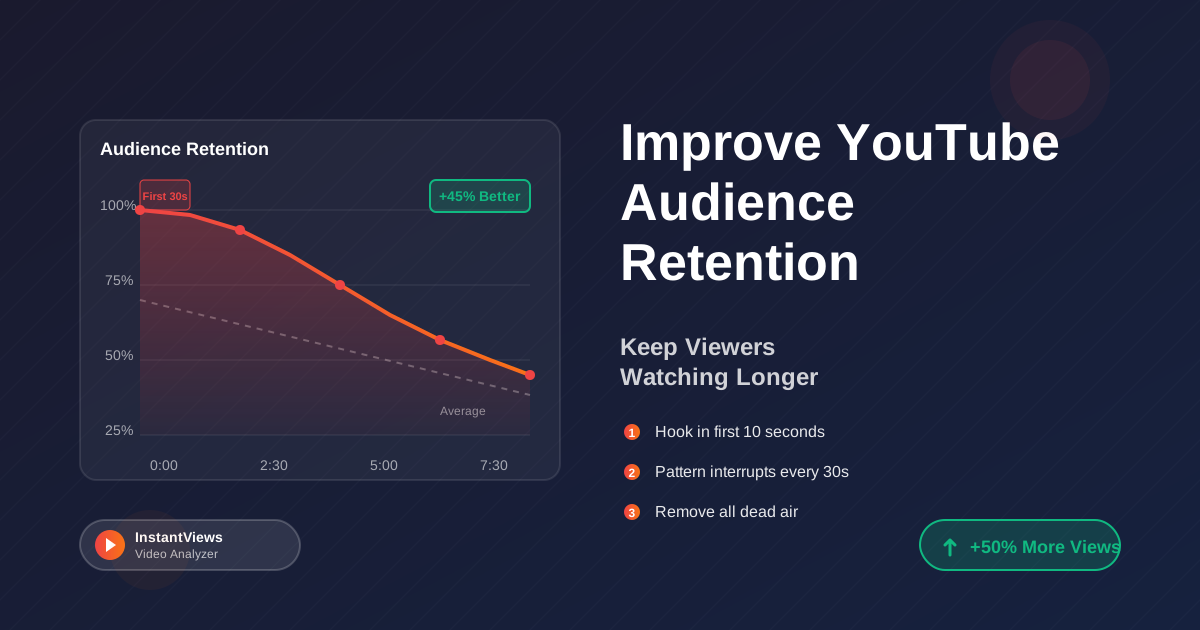
Higher watch time means more ads shown per viewer. Use our Video Analyzer to identify drop-off points and keep viewers engaged throughout your videos.
Place Mid-Roll Ads Strategically
Don't let YouTube auto-place mid-roll ads randomly. Insert them at natural transition points in your content to minimize viewer frustration while maximizing ad completion rates.
Optimize for Multiple Revenue Streams
Don't rely solely on ad revenue. Combine CPM earnings with sponsorships, affiliate marketing, and digital products. Check our complete monetization guide for strategies.
"The creators earning $100,000+ monthly aren't just chasing views - they're strategically building audiences that command premium advertising rates. CPM optimization is about quality, not just quantity."
Start Maximizing Your YouTube Revenue Today
Understanding CPM is the first step to maximizing your YouTube earnings. Now that you know how CPM works, use these resources to take action:
- CPM Calculator - Calculate your potential earnings instantly
- Money Calculator - Estimate earnings from any YouTube video or channel
- Niche CPM Finder - Discover the highest-paying niches for your content
- Country CPM Comparison - Compare CPM rates across different countries
- Video Analyzer - Improve retention to show more ads per viewer
Frequently Asked Questions
A good CPM depends on your niche and audience location. For US-based audiences, $4-8 is average, $10-15 is good, and $15+ is excellent. Finance and business channels can see CPMs of $20-45, while entertainment and gaming typically range from $2-8. Compare your CPM within your specific niche rather than across all of YouTube.
CPM (Cost Per Mille) is what advertisers pay YouTube for 1,000 ad impressions - the gross revenue. RPM (Revenue Per Mille) is what you actually earn per 1,000 views after YouTube takes its 45% cut. RPM is always lower than CPM and includes all your views, not just monetized ones. RPM is the metric that matters for your actual earnings.
Low CPM is usually caused by: 1) Audience from low-CPM countries like India or Southeast Asia, 2) Content in a low-paying niche like gaming or music, 3) Seasonal drops (January-March has lowest CPM), 4) Videos under 8 minutes (no mid-roll ads), or 5) Content flagged as limited ads or age-restricted. Focus on targeting premium countries and creating advertiser-friendly content to improve CPM.
Use this formula: Earnings = (Views / 1000) x RPM. Since RPM equals CPM x 55% (your share after YouTube's cut), the full formula is: Earnings = (Views / 1000) x (CPM x 0.55). For example, 100,000 views with a $10 CPM = 100 x ($10 x 0.55) = $550 earnings. Use our free CPM Calculator for instant calculations with niche and country adjustments.
Video length doesn't directly change your CPM rate, but it dramatically affects your earnings per view. Videos over 8 minutes can include mid-roll ads (ads placed during the video), potentially showing 3-5 ads instead of just 1-2. A 12-minute video can earn 2-3x more than a 5-minute video with the same CPM because viewers see more ads.
The highest CPM niches are: Finance and Investing ($20-45), Digital Marketing ($18-40), Technology and Software ($15-35), Real Estate ($20-38), Legal and Insurance ($25-50), and Health/Medical ($12-30). These niches attract advertisers with high customer lifetime values who are willing to pay premium rates to reach potential customers.
CPM drops significantly in January because advertisers work on annual budgets. They spend heavily during Q4 (October-December) for holiday shopping, then reset budgets in January. New yearly budgets are distributed conservatively at first. CPM typically recovers by March-April and peaks again in November-December. Plan your content strategy accordingly.
To increase CPM: 1) Target English-speaking audiences in US, UK, Canada, and Australia, 2) Create videos 8+ minutes to enable mid-roll ads, 3) Choose topics in high-CPM niches like finance or technology, 4) Upload more content during Q4 when CPM peaks, 5) Keep content advertiser-friendly (avoid profanity and controversial topics), and 6) Improve audience retention to show more ads per viewer.