- YouTube and TikTok are not rivals to pick between — they are different tools for different jobs
- TikTok wins on speed of discovery; YouTube wins on content longevity, depth, and monetization
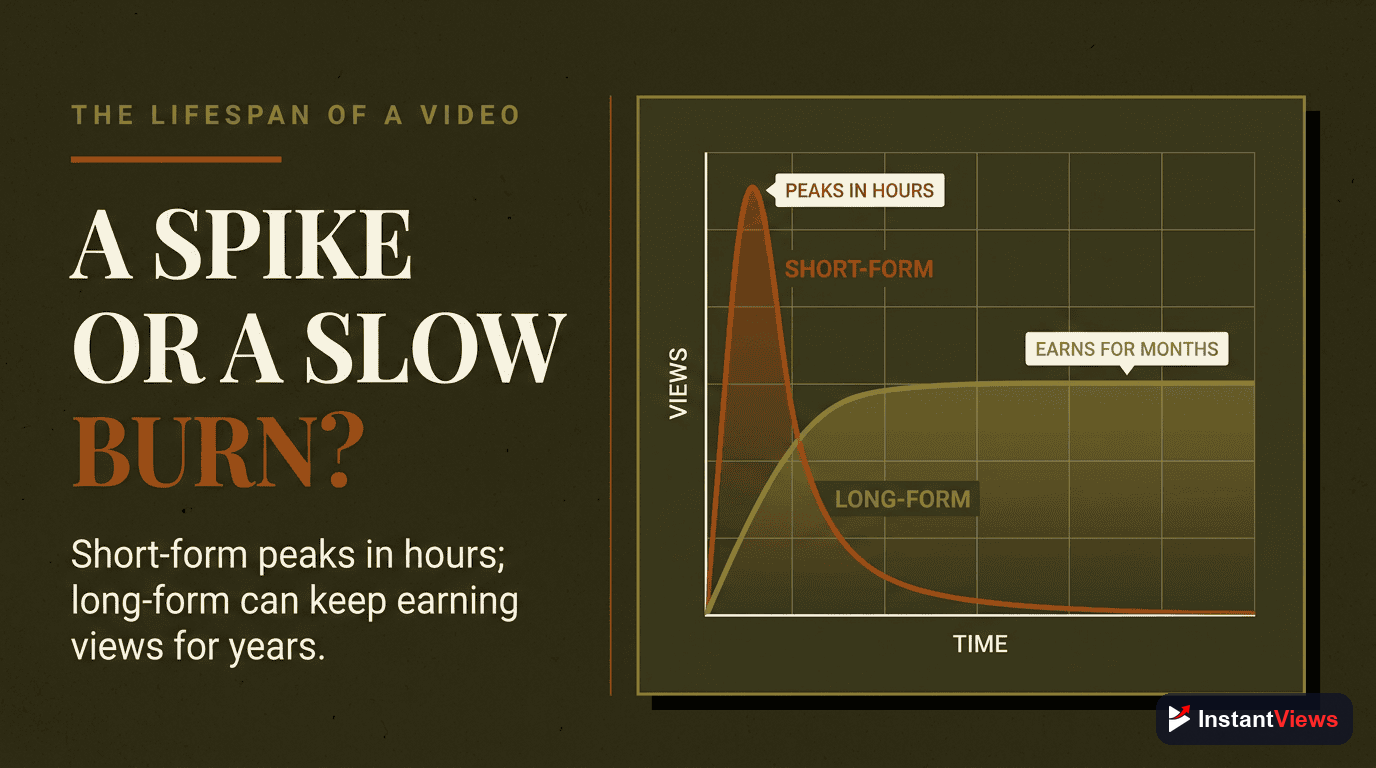
- YouTube content is evergreen and keeps earning views for months; TikTok content spikes fast and decays quickly
- Connected TV has made YouTube a living-room, lean-back platform, while TikTok stays mobile and lean-forward
- The smart 2026 play is to use both: short-form for reach, YouTube for depth, trust, and durable revenue
Every creator and marketer eventually asks the same question: where should I actually spend my limited time — YouTube or TikTok? Both are enormous. Both can launch a brand overnight. And both have loud advocates who insist the other is dying. The honest answer is more useful and less dramatic: they are different platforms built for different jobs, and the right choice depends entirely on your goals.
YouTube reaches more than 2.7 billion monthly active users and serves over a billion hours of video every day. TikTok, meanwhile, has reshaped how a single clip can reach millions of strangers in hours, with short-form video now a daily habit for a huge global audience. These are not small differences in scale — they are differences in behavior, and behavior is what should drive your decision.
This guide compares the two platforms fairly across the dimensions that matter most: discovery, content longevity, monetization, audience, and watch context. We will not bash either one. Instead, you will walk away with a clear framework for where to invest your time — and why the best answer for most people in 2026 is not "one or the other" at all.
- Two Platforms, Two Different Jobs
- YouTube vs TikTok: Head-to-Head
- Discovery: How New Viewers Find You
- Content Longevity: Evergreen vs Fast-Decay
- Monetization: How Each Platform Pays
- Audience and Watch Context
- A Framework for Choosing
- Why the Best Answer Is Often Both
- A Worked Example: One Idea, Two Platforms
- Common Mistakes to Avoid
- FAQ
Two Platforms, Two Different Jobs
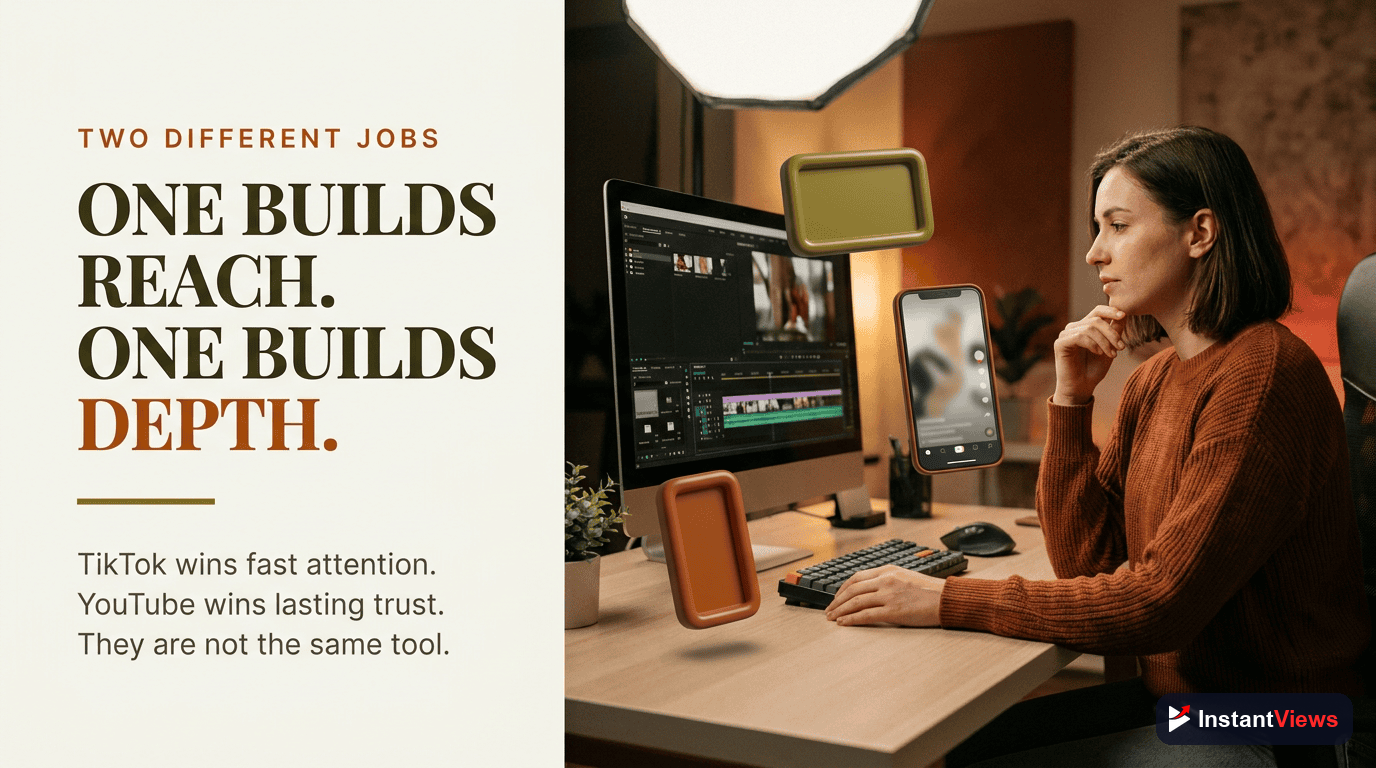
The most common mistake in this debate is treating YouTube and TikTok as interchangeable. They are not. TikTok is a discovery machine: an algorithm that pushes any clip to strangers based on how people respond to it, not on how many followers you have. That is why an account with zero subscribers can still land a video in front of millions.
YouTube is a library and a relationship engine. Its strength is not just the initial push but the long tail — the way a single video can be discovered through search and suggested videos for years, and the way viewers return to a channel they trust. On TikTok you mostly chase the feed; on YouTube you also build a destination.
Once you frame it this way, the question changes. It is no longer "which platform is better" but "which job do I need done right now?" If you need to be found fast, that points one way. If you need to be remembered, monetized, and searchable, that points another.
YouTube vs TikTok: Head-to-Head
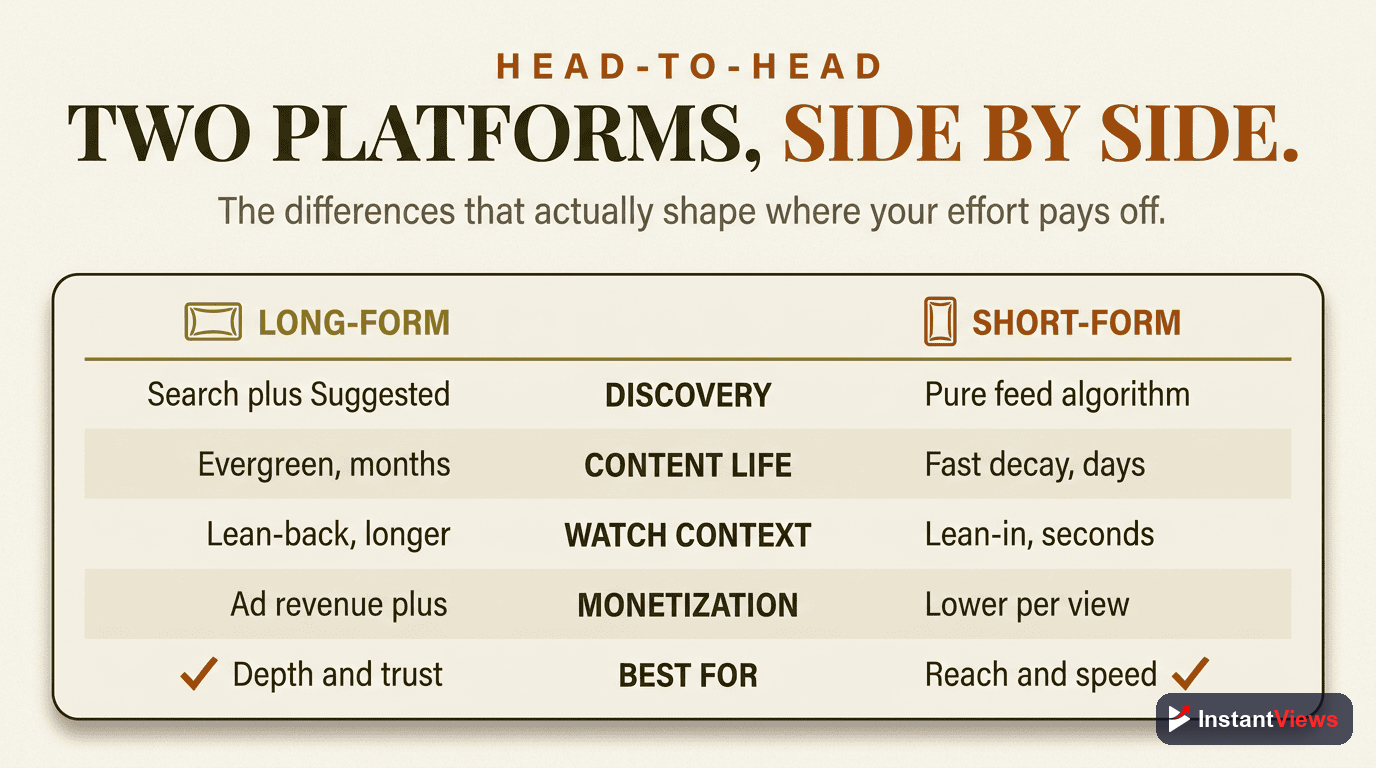
Before we go deep on each dimension, here is the comparison at a glance. Notice that almost no row has a clear "loser" — each platform simply wins on different terms.
| Dimension | YouTube | TikTok |
|---|---|---|
| Primary strength | Depth, search, and long-term trust | Fast, follower-independent discovery |
| Content lifespan | Evergreen — earns views for months or years | Fast-decay — most views arrive in hours or days |
| Best format | Long-form video plus Shorts | Short vertical clips |
| Discovery driver | Search, suggested, and subscriptions | The For You algorithm |
| Audience | Broad across ages and professions | Skews younger and trend-driven |
| Watch context | Increasingly TV / lean-back | Mobile / lean-forward |
| Monetization | Broad stack: ads, memberships, sponsors | Often brand deals and off-platform traffic |
| Time to first traction | Slower to build, compounds over time | Can be near-instant |
The table makes the central trade-off obvious. TikTok gives you speed and a low barrier to reach. YouTube gives you durability, depth, and a richer set of ways to earn. The rest of this guide unpacks each row so you can weigh it against your own goals.
Discovery: How New Viewers Find You
If your single biggest problem is that nobody knows you exist yet, discovery is the dimension that matters most — and this is where TikTok shines. Its recommendation system is famously willing to show a brand-new account to a large audience purely on the merits of the video. A strong hook, good pacing, and a relevant topic can outweigh a complete lack of followers.
YouTube discovery works differently and on a longer clock. New viewers find you through three main paths:
- Search: People type a question, and your video answers it — often long after you published it.
- Suggested videos: YouTube recommends your content next to related videos, compounding reach over time.
- Shorts: YouTube’s short-form surface now drives over 200 billion views a day, giving creators a fast-discovery channel that lives inside the same platform as their long-form library.
That last point is important. The "YouTube is slow, TikTok is fast" framing is increasingly outdated, because Shorts brings TikTok-style discovery onto YouTube. The real difference is that a TikTok view tends to stay on TikTok, while a YouTube Shorts view can funnel a new viewer toward your deeper content and subscription.

Content Longevity: Evergreen vs Fast-Decay
This is the dimension creators most often underestimate — and it may be the single biggest reason to take YouTube seriously. The two platforms treat the lifespan of a video very differently.
TikTok: Fast Spike, Fast Decay
TikTok content is built for the now. A clip typically gets the bulk of its views within hours or a few days, then the algorithm moves on. This is great for momentum and trend-riding, but it means your library rarely keeps working for you. Stop posting for a few weeks and the views can dry up quickly, because little of your back catalogue is still in active circulation.
YouTube: Evergreen and Compounding
A YouTube video is far more likely to be evergreen. Because search and suggested videos keep surfacing older content, a tutorial you publish today can still be earning views, subscribers, and revenue years from now. This compounding is why a modest YouTube library can quietly out-earn a much larger TikTok following over time.
"TikTok views are a wave — thrilling, fast, and gone. YouTube views are a reservoir — slower to fill, but they keep working long after you stop pouring."
The practical takeaway: if you are building an asset you want to keep earning, longevity favors YouTube. If you are riding cultural momentum or testing ideas quickly, TikTok’s fast cycle is a feature, not a flaw.
Monetization: How Each Platform Pays
Money is where the platforms diverge most clearly. YouTube has paid creators more than $100 billion over the past four years, and that figure reflects a deliberately broad monetization stack rather than a single revenue stream.
YouTube’s Broader Stack
YouTube tends to support more ways to earn around the same body of work:
- Ad revenue across both long-form videos and Shorts
- Channel memberships and recurring fan support
- Sponsorships and brand integrations in longer videos where trust is higher
- Long-tail product and service discovery, since old videos keep sending warm traffic to your offers
TikTok’s Path to Revenue
TikTok monetization is real but tends to lean in a different direction. Many TikTok creators rely more on brand deals, affiliate links, and driving traffic to external platforms than on direct platform payouts, and program terms have shifted more than once. The platform is excellent at building an audience quickly; turning that audience into durable income often means routing them somewhere you control.
If your goal is a diversified, compounding income base, YouTube’s stack is hard to beat. If your goal is fast brand-deal leverage off a large, engaged following, TikTok can get you there quickly.
Whichever platform you lead with, never treat it as your only asset. Algorithms and payout programs change, and any single account can be lost. Use your reach to capture an audience you own — an email list or community — so your business does not depend on one platform’s rules.

Audience and Watch Context
Who is watching — and where — should weigh heavily in your decision, because a platform is only valuable if your people actually live there.
Who Watches
YouTube reaches a broad cross-section of ages and is widely used by professionals, parents, homeowners, and decision-makers. TikTok skews younger, with its strongest audiences among Gen Z and younger millennials who reward speed, authenticity, and cultural relevance. If you sell to a younger, trend-driven crowd, TikTok meets them naturally. If you serve a wide or older demographic, or buyers who research before they purchase, YouTube reaches them better.
Where They Watch
This is the quietly seismic shift of the last year. Connected TV (CTV) has become the leading surface for US YouTube watch time, overtaking mobile. A growing share of YouTube viewing now happens on the living-room television — a lean-back experience that favors longer, more substantial content. TikTok, by contrast, remains a predominantly mobile, lean-forward experience built for thumbs and quick swipes.

A Framework for Choosing
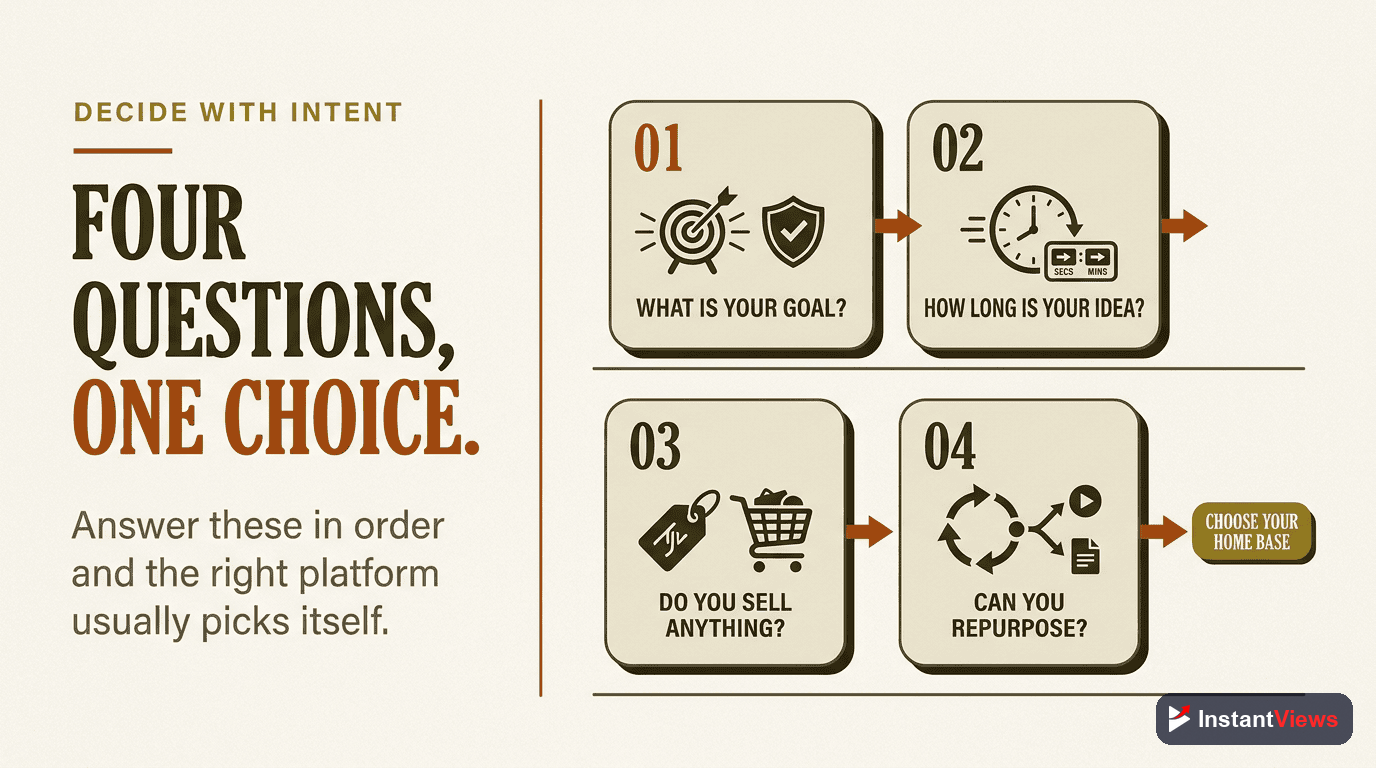
Instead of asking "which platform is better," answer four questions about your own situation. Each one nudges you toward the platform that fits.
What Is Your Primary Goal?
If you need raw awareness and reach right now, lean TikTok and Shorts. If you want durable search traffic, deep trust, and a stronger long-term revenue base, lean YouTube.
Where Does Your Audience Live?
Map the age and intent of your ideal viewer. Younger and trend-driven points to TikTok; broad, professional, or research-minded points to YouTube and connected TV.
What Can You Realistically Produce?
Short vertical clips are quick to make and ideal for TikTok and Shorts. In-depth long-form video takes more effort but compounds for years on YouTube. Be honest about your capacity.
How Do You Plan to Earn?
If you want a diversified, compounding income base, YouTube’s broad stack favors you. If you want fast brand-deal leverage off a large following, TikTok can move quicker.
Run your honest answers through these four questions and a clear lead platform almost always emerges. But for most creators, the answers also reveal something else: the two platforms complement each other rather than compete.
Why the Best Answer Is Often Both
For most creators and marketers in 2026, the strongest strategy is not choosing one platform but combining them with intent. Each does a job the other does poorly, so together they form a complete system.
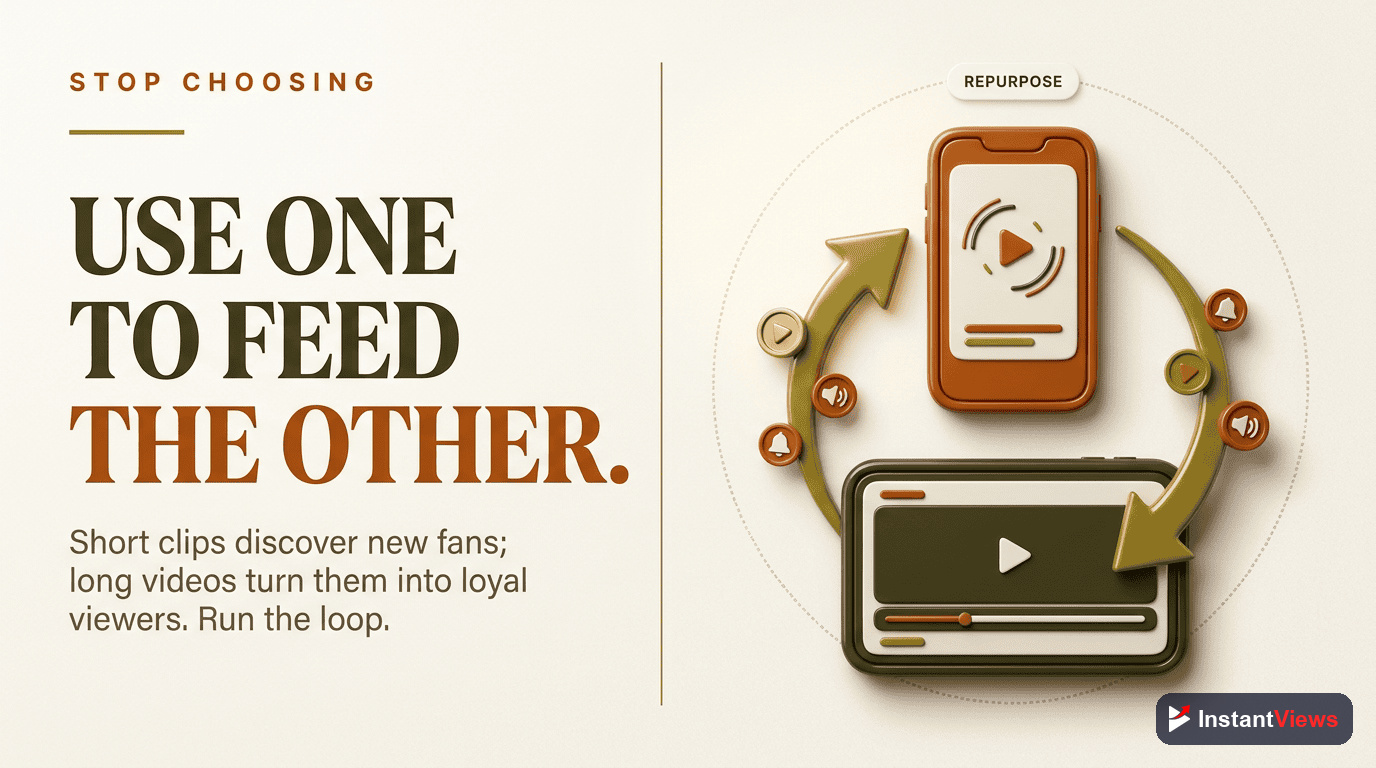
- TikTok and Shorts for discovery: Use fast, follower-independent reach to introduce your ideas to people who have never heard of you.
- YouTube for depth and longevity: Convert that attention into trust with longer videos that keep earning views and revenue for years.
- YouTube for monetization: Let your broader revenue stack do the earning while short-form keeps the top of the funnel full.
The point is not to spread yourself thin across every app. It is to recognize that short-form is your awareness layer and YouTube is your depth-and-revenue layer — and to build a deliberate bridge between them rather than treating them as separate, competing chores.
It is also worth knowing that as low-value, mass-produced AI content has flooded feeds, YouTube has moved to reduce its spread and reward genuine viewer satisfaction and retention. That favors creators who invest in substance — another reason depth-focused work tends to pay off over time.
A Worked Example: One Idea, Two Platforms
Imagine you are a creator in the home-coffee niche, and your idea is "the three mistakes ruining your morning espresso." Here is how a single idea flows across both platforms instead of forcing a choice.
- Spark it on short-form. You post a 30-second vertical clip on TikTok and YouTube Shorts: a punchy hook ("you are wasting good beans"), one surprising mistake, and a tease that there are two more. The goal is reach, and the algorithm pushes it to strangers.
- Deepen it on YouTube. The full eight-minute video lives on your YouTube channel: all three mistakes, the science, and a demonstration. This is the evergreen asset that will keep ranking in search for "espresso mistakes" long after the clip has faded.
- Bridge the two. The Shorts description and your channel point new viewers toward the full video, where trust deepens, the subscribe happens, and your gear recommendations or course can earn.
- Let longevity compound. Six months later, the TikTok clip is forgotten, but the YouTube video is still pulling in viewers from search every single day — and those viewers are discovering your back catalogue too.
One idea, two platforms, two jobs. The short-form clip bought you reach you could never have gotten as fast on YouTube alone; the long-form video turned that reach into something durable. Neither replaced the other.
Make Every Video Count
Explore our free suite of YouTube tools to research topics, sharpen your titles, and analyze what is working — so the time you invest pays off on whichever platform you choose.
Explore Free YouTube Tools →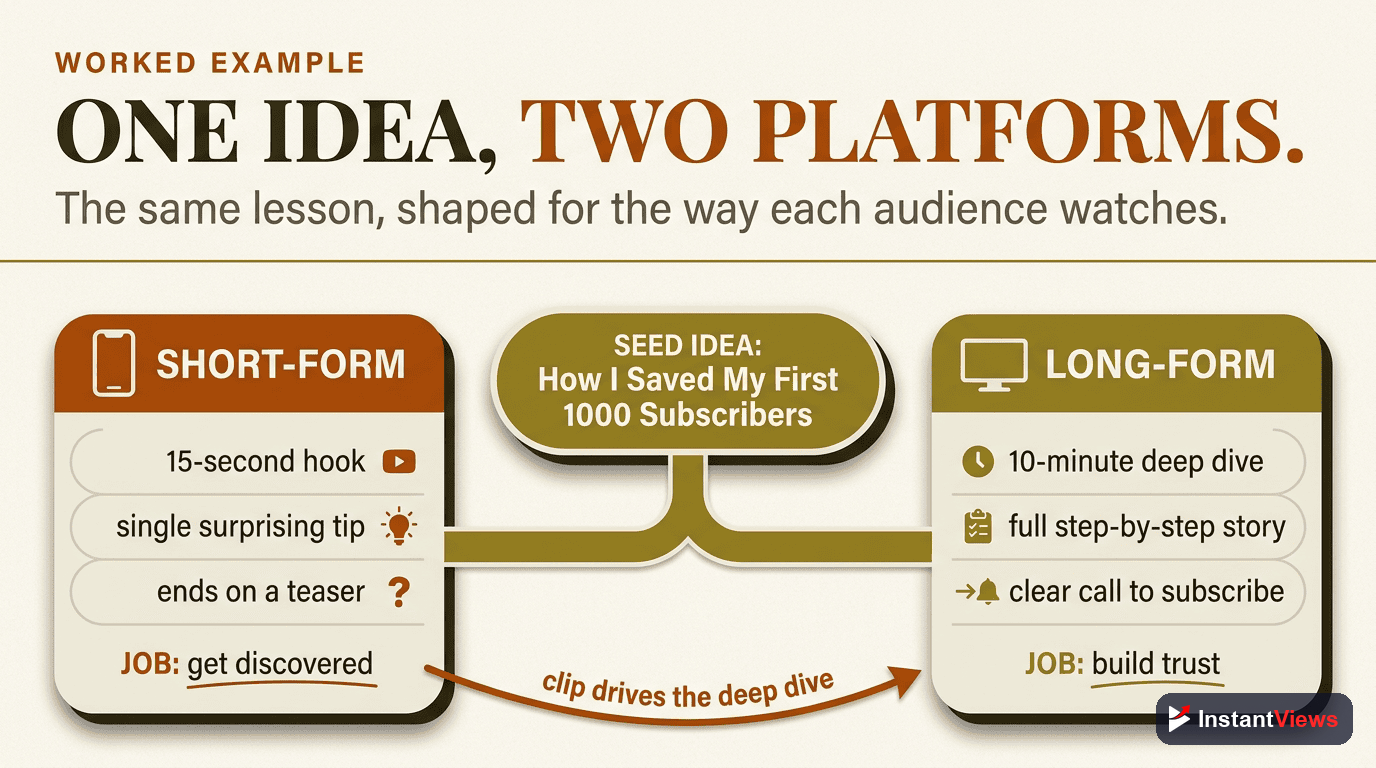
Common Mistakes to Avoid
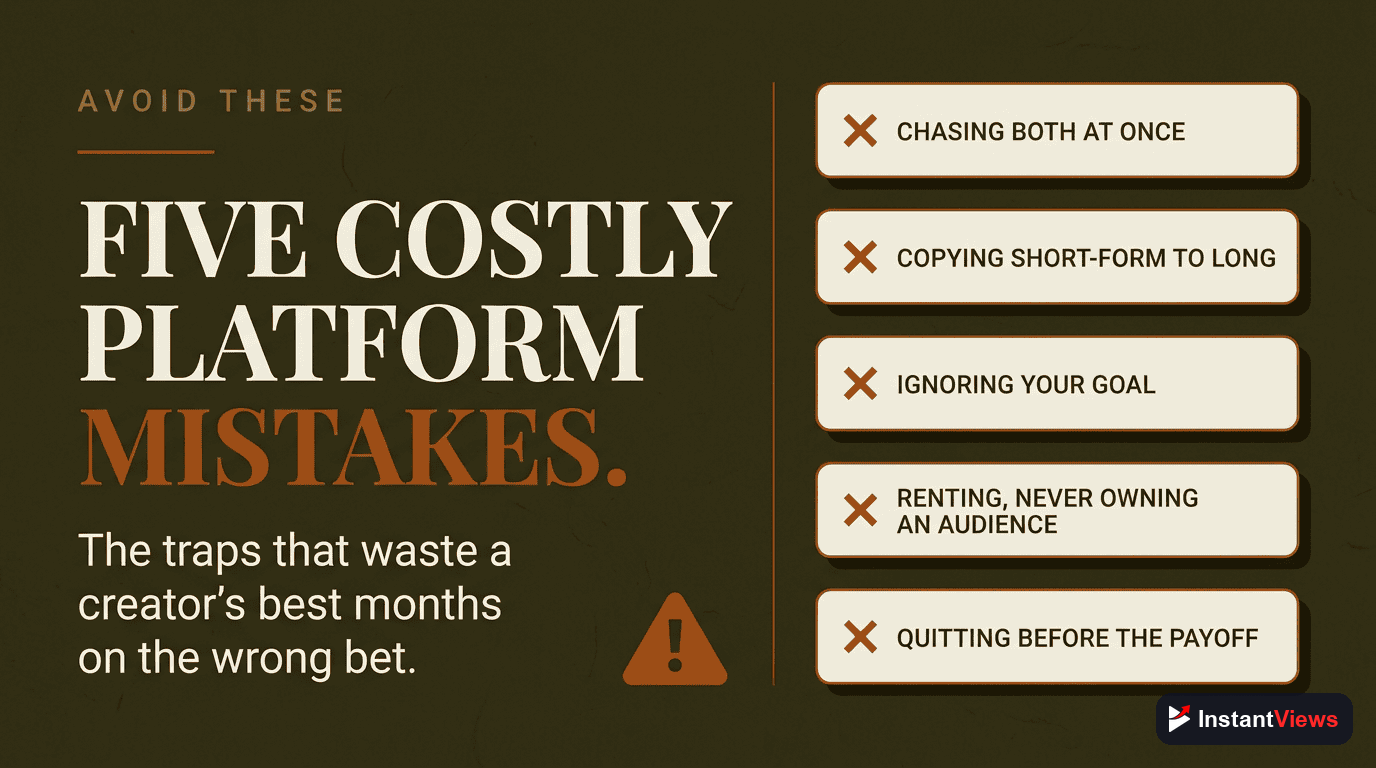
However you split your time, a few avoidable errors quietly waste effort on both platforms:
- Treating it as a war: Picking a "side" and ignoring the other usually means leaving either reach or longevity on the table.
- Cross-posting identical files: Uploading the same watermarked clip everywhere tends to get suppressed. Adapt the hook, captions, and pacing to each platform.
- Chasing only short-form virality: Going viral on TikTok feels great, but without a durable home and a way to capture the audience, the spike fades and leaves little behind.
- Ignoring YouTube’s TV shift: Making everything for a tiny phone screen overlooks that much YouTube viewing now happens on the living-room television.
- No bridge between platforms: Running TikTok and YouTube as unrelated accounts wastes the funnel. Always point discovery toward depth.
- Owning nothing: Building a huge following on rented land with no email list or community leaves your business exposed to any rule change.
Frequently Asked Questions
Neither is universally better — they serve different goals. TikTok excels at fast discovery and reaching new audiences quickly, while YouTube excels at content longevity, deeper engagement, and a broader monetization stack. Most successful creators in 2026 use both: TikTok and Shorts for reach, and YouTube for depth and durable revenue.
YouTube generally supports a wider monetization mix, combining ad revenue across Shorts and long-form, memberships, and sponsorships in one place. YouTube has paid creators more than $100 billion over the past four years. TikTok creators often lean more on brand deals, affiliate links, and driving traffic off-platform than on direct platform payouts.
Yes. YouTube videos are evergreen and can keep earning views and search traffic for months or years through search and suggested videos. TikTok content tends to spike fast and decay quickly, with most of its views arriving in the first hours or days. That difference is central to deciding where to invest your time.
YouTube reaches a broad cross-section of ages and is widely used by professionals, parents, and decision-makers across mobile, desktop, and connected TV. TikTok skews younger, with its strongest audiences among Gen Z and younger millennials who value speed, authenticity, and cultural relevance.
Connected TV (CTV) has become the leading surface for US YouTube watch time, meaning a growing share of YouTube viewing now happens on the living-room television rather than a phone. That favors longer, lean-back content and reframes YouTube as a TV-scale platform, while TikTok remains predominantly a mobile, lean-forward experience.
You can repurpose, but you should adapt. A vertical clip that performs on TikTok can become a YouTube Short, while the full idea can live as a long-form YouTube video. Tailor the hook, captions, and pacing to each platform rather than cross-posting identical files with watermarks, which both algorithms tend to suppress.
Choose based on your goal. If you need rapid awareness and your audience is young and trend-driven, start with TikTok. If you want durable search traffic, deeper trust, and a stronger long-term revenue base, start with YouTube. When in doubt, YouTube’s longevity and broader reach make it the safer long-term home.
It can. Short-form clips on Shorts or TikTok act as low-cost awareness that introduces new viewers to your ideas, and the strongest ones can pull people toward your longer videos where trust and monetization deepen. Treat short-form as the top of your funnel, not a replacement for depth.
Conclusion
The YouTube versus TikTok debate has a frustrating answer for anyone hoping for a single winner: it depends on the job you need done. TikTok is the fastest discovery engine ever built for video, putting you in front of strangers with nothing but a good hook. YouTube is the durability and depth play — evergreen content, a broad audience that increasingly watches on TV, and the widest, most reliable way to earn.
So do not frame it as a fight. Use the four-question framework to find your lead platform, then build a bridge so short-form discovery feeds your long-form depth. Let TikTok and Shorts win you reach, and let YouTube turn that reach into trust, search traffic, and durable revenue that keeps compounding.
Invest your time where your goals point — but in 2026, the creators who win rarely choose just one. They let each platform do what it does best, and they make sure every minute of attention they earn has somewhere meaningful to go next.