- View-to-subscriber conversion is the moment a viewer decides to follow you — distinct from the loyalty work of community building
- People subscribe to a promise of more, so a clear channel theme and consistent value matter more than any single clever trick
- Ask for the subscribe right after a peak moment of value, and reinforce it with an end screen and the subscribe watermark
- A short, focused channel trailer and binge-ready playlists turn one satisfied watch into multiple chances to convert
- Track subscribers gained per video and subscribers per thousand views by source, then double down on what converts best
You can rack up impressive view counts and still watch your subscriber number crawl. That gap — between the people who watch and the people who decide to follow — is one of the most important and most overlooked numbers on YouTube. With more than 2.7 billion monthly active users and over a billion hours of video watched every day, attention is abundant. The hard part is converting that attention into a lasting relationship.
That conversion is the subscribe decision: the single click that turns a one-time viewer into someone who will see your next upload. Get it right and every video compounds, feeding an audience that returns on its own. Get it wrong and you start from zero with each upload, forever renting reach from the algorithm instead of building something you own.
This guide is about that exact moment — the conversion. It is deliberately not a guide to community building. Keeping subscribers engaged, replying to comments, and nurturing loyalty all matter enormously, but they happen after someone subscribes. Here we focus on the decision itself: what drives it, how to engineer it into your videos and channel, and how to measure and improve it in 2026.
By the end you will know the handful of levers that actually move the subscribe needle, how to place them at the right moments, and which numbers in YouTube Studio tell you whether it is working.
- What View-to-Subscriber Conversion Really Means
- Why Conversion Beats Raw Views
- What Actually Drives the Subscribe Decision
- The Conversion Levers (and How to Use Them)
- The Channel Trailer: Your Conversion Pitch
- Timing Your Calls to Action
- Playlists, Series, and the Binge Effect
- Measuring Your Conversion
- Optimizing: A Repeatable Loop
- Conversion Mistakes to Avoid
- FAQ
What View-to-Subscriber Conversion Really Means
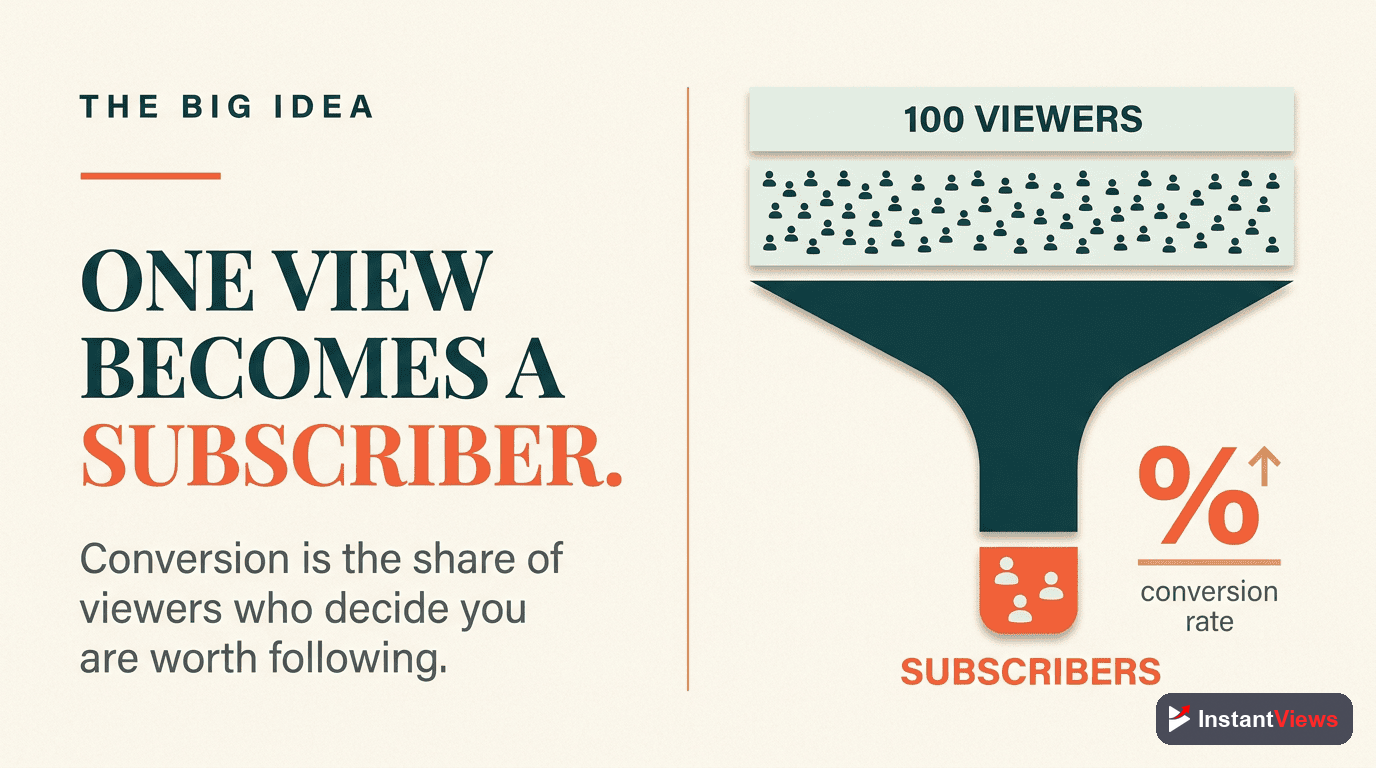
View-to-subscriber conversion is simply the rate at which the people watching your videos choose to subscribe. It is usually expressed as subscribers gained relative to views — subscribers per video, or subscribers per thousand views. If a video earns 10,000 views and gains 100 subscribers, that is a one percent conversion rate.
It helps to separate three things that often get blurred together. Reach is how many people the algorithm shows you to. Views is how many of them actually watch. Conversion is how many of those watchers commit to seeing more. You can have huge reach and views with terrible conversion, which is why a channel can feel busy yet never seem to grow its base.
Crucially, conversion is the handoff between attraction and retention. Everything before it — your title, thumbnail, hook, and pacing — exists to earn the watch. Everything after it — community, consistency, replies — exists to keep the subscriber. The subscribe click sits in the middle, and it is the single point where a fleeting view becomes a durable asset.
Why Conversion Beats Raw Views
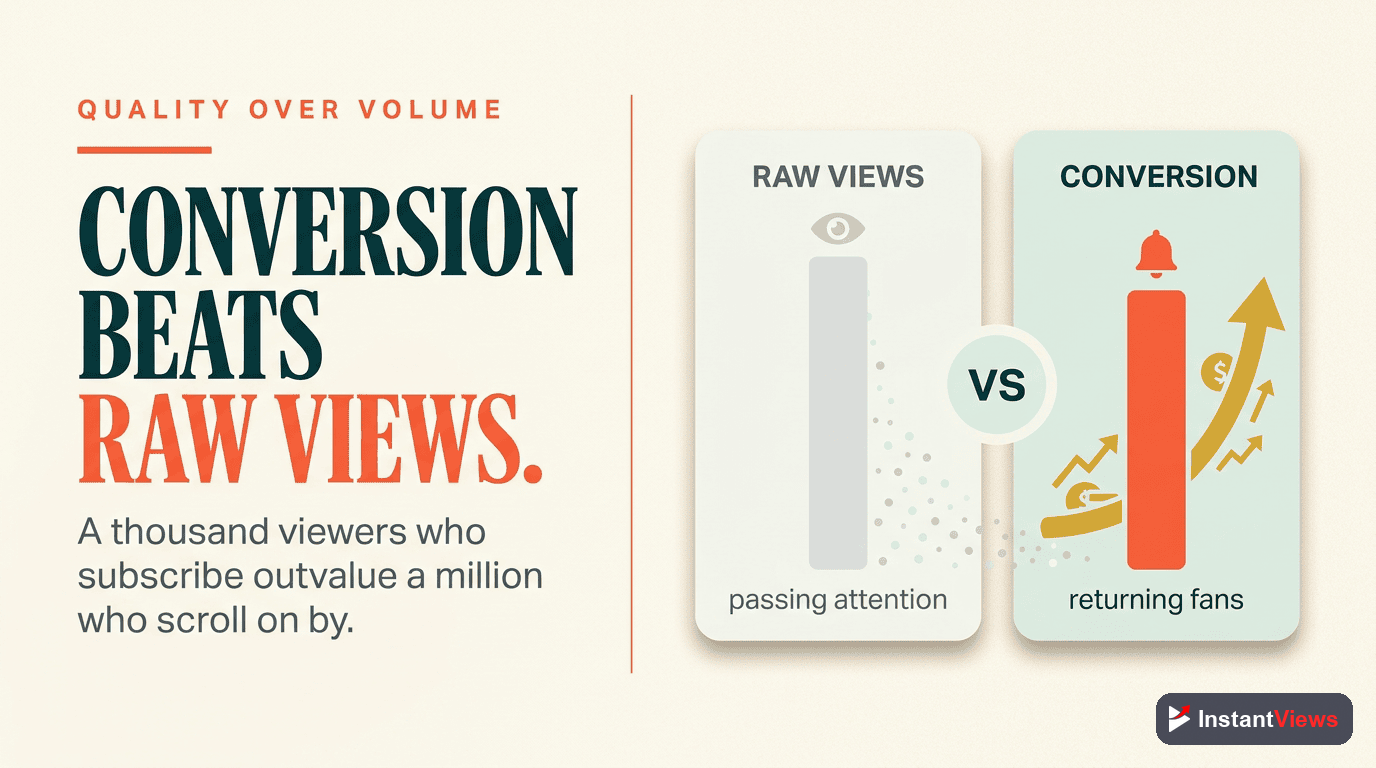
Views are a flow; subscribers are a stock. A viral video gives you a spike of attention that fades within days. Subscribers, by contrast, accumulate and keep returning, which is why the 2026 algorithm — tuned for viewer satisfaction and retention rather than raw watch time — rewards channels that bring people back. A returning, satisfied audience is exactly the signal the system is looking for.
There is a compounding effect, too. Every subscriber you convert today makes your next video start stronger, because subscribers are more likely to click, watch longer, and engage early. That early momentum — especially in the critical first hours after publishing — influences how widely a video gets recommended. In other words, good conversion does not just grow a number; it improves the launch of everything you publish afterward.
This is why a creator with a smaller but well-converted audience often outperforms one with bigger but shallower view counts. The first creator has built a flywheel. The second is still pushing the same boulder up the same hill every single upload.
What Actually Drives the Subscribe Decision
Before we talk tactics, it helps to understand the psychology. A viewer subscribes when two things line up: they got value from this video, and they believe they will get more of that value in the future. Subscribing is a bet on your next upload, not a thank-you for this one. That single idea explains almost every effective conversion tactic.
Three forces drive that bet:
- Delivered value: The viewer has to feel that watching was worth it. No amount of clever asking will convert someone who was disappointed by the content itself.
- A clear promise: The viewer must be able to predict what subscribing gives them. A channel with a sharp, repeatable theme makes that promise obvious; a scattered one leaves the viewer unsure what they are signing up for.
- A nudge at the right time: Even satisfied viewers forget to act. A well-placed, well-worded reminder converts people who already wanted to subscribe but needed the prompt.
Notice that repetition underlies all of this. Many viewers need several exposures — often three to five — before they commit. That is why consistency and a binge-able catalog matter so much: they manufacture the repeat exposure that makes the subscribe feel safe rather than premature.

The Conversion Levers (and How to Use Them)
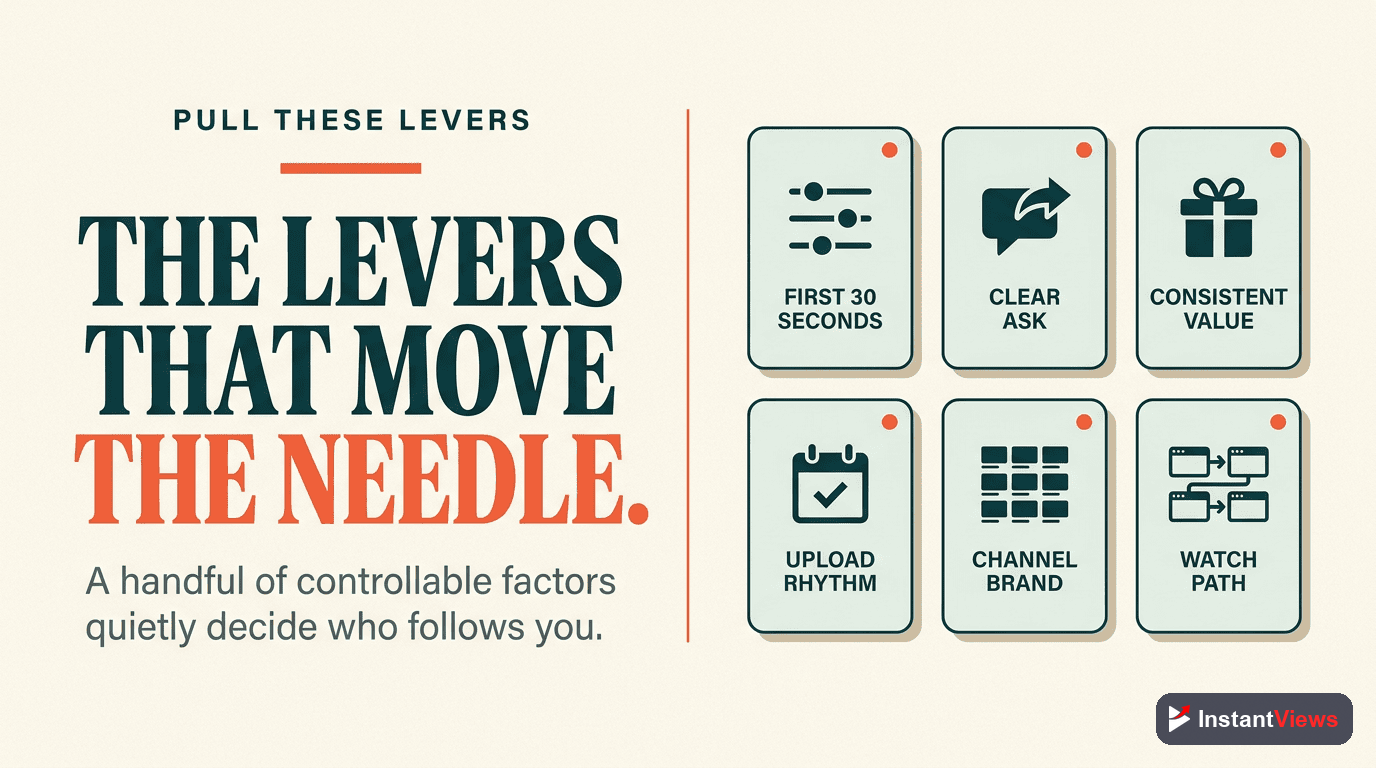
Conversion is not one lever; it is a set of them working together. Here are the levers that reliably move the subscribe rate, and how to use each one.
| Conversion Lever | How to Use It |
|---|---|
| Consistent value | Deliver on the promise your title and thumbnail made, every time, so viewers learn to trust the next upload. |
| Clear channel promise | State who the channel is for and what you publish in one sentence; repeat that theme across titles, intros, and branding. |
| Channel trailer | Use a short, focused trailer on your home page to pitch first-time visitors on subscribing in under a minute. |
| Verbal CTA at the value peak | Ask for the subscribe right after your strongest moment, and say specifically what the viewer gains by doing it. |
| Visual CTA (end screen & watermark) | Add an end screen subscribe element and keep the subscribe watermark on for the whole video as a passive reminder. |
| Content consistency | Keep topics, format, and upload cadence predictable so subscribing feels like a safe, repeatable choice. |
| Playlists & series (binge) | Chain related videos so one satisfied watch leads to several, multiplying the chances to convert. |
No single lever wins on its own. A perfect CTA on a disappointing video converts nobody; a brilliant video with no clear promise and no prompt leaves subscribers on the table. The channels that convert well are the ones that pull several of these levers at once, consistently.
Start With the Two That Cost Nothing
If you do only two things, make them consistent value and a clear promise. They are free, they compound, and they make every other lever work harder. A sharp promise turns a one-line subscribe ask into something the viewer already wanted to hear.
The Channel Trailer: Your Conversion Pitch
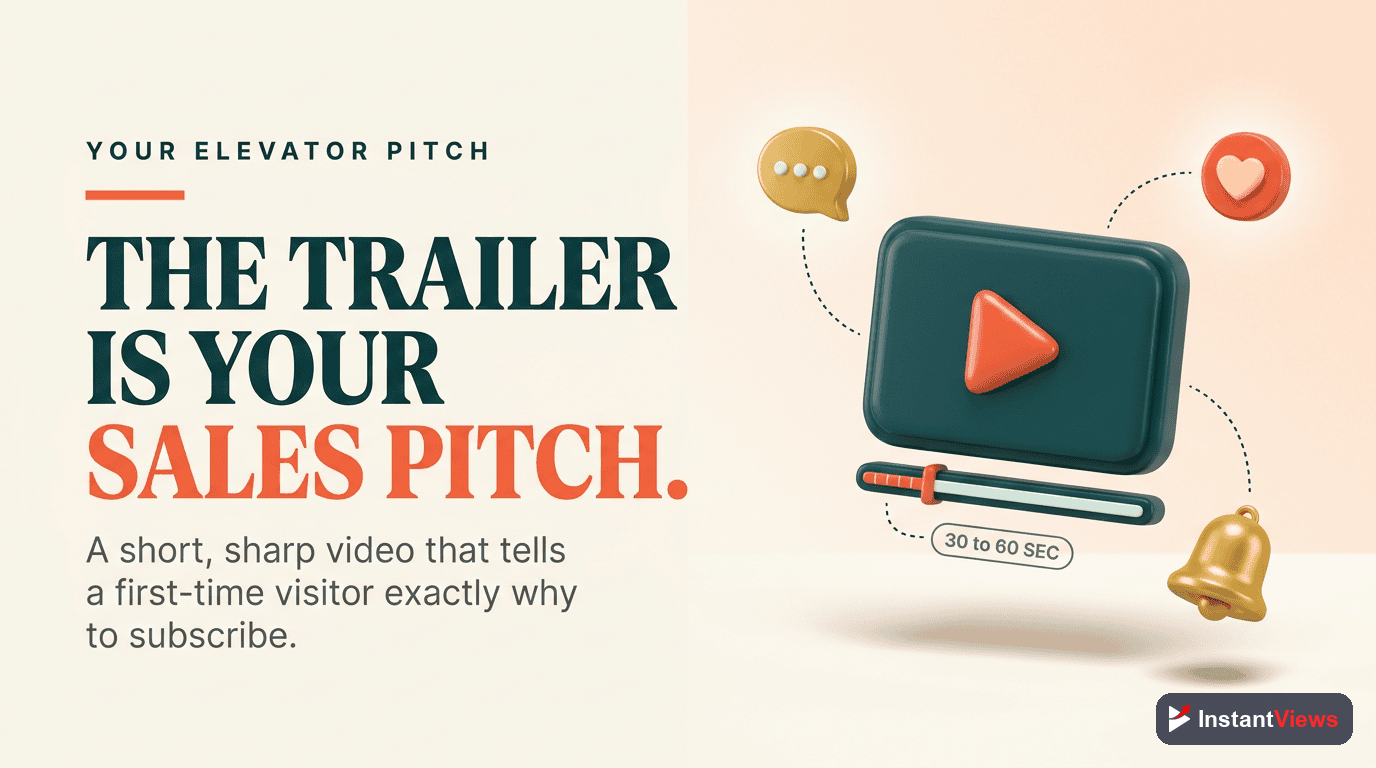
When a viewer enjoys a video, many of them do one telling thing: they tap your channel name to see who you are. That click lands them on your channel home page, and for non-subscribers, your channel trailer can autoplay. This is the single highest-intent conversion surface you have — a curious viewer, actively deciding whether to follow.
A strong trailer is short and answers three questions fast:
- Who is this channel for? Name the viewer in the first few seconds so the right person feels seen.
- What will I get? Show the kind of value and the format you deliver, ideally with quick clips of your best work.
- How often and why subscribe? State your cadence and give a direct, specific reason to hit subscribe now.
Keep it tight — well under a minute is plenty. The trailer is a pitch, not a documentary. End it with an explicit subscribe ask, because the viewer is already on the page where one click does the job.
Timing Your Calls to Action
The most common CTA mistake is asking too early. A subscribe request in the first ten seconds — before you have delivered anything — asks the viewer to bet on a promise you have not yet proven. It usually gets ignored, and it can even feel pushy enough to cost you the watch.
Instead, place your primary verbal CTA at the peak moment of value: right after you reveal the key insight, solve the problem, or deliver the payoff the title promised. At that instant the viewer is most satisfied and most receptive, and a short, specific ask lands naturally.
Verbal and Visual, Working Together
Use both channels of attention:
- Verbal CTA: One clear, spoken ask tied to a benefit — for example, telling viewers exactly what your next videos in the series will help them do if they subscribe.
- Subscribe watermark: The small persistent button in the corner of every video; a passive, always-available nudge that costs the viewer nothing to notice.
- End screen: In the final seconds, point viewers to subscribe and to the next video at the same time, capturing both the follow and the next watch.
Say why, not just what. "Subscribe" is a command; "Subscribe so you do not miss next week's breakdown of exactly how to do this" is a reason. The reason is what converts.
More CTAs are not always better. Stacking subscribe begs every thirty seconds annoys viewers and can suppress retention, which the 2026 algorithm weighs heavily. One well-timed verbal ask plus the passive watermark and an end screen usually outperforms constant interruption.
Turn More Views Into Subscribers
Explore our free suite of YouTube tools to sharpen the titles, thumbnails, and topics that earn the watch — the first step in every subscribe decision.
Explore Free YouTube Tools →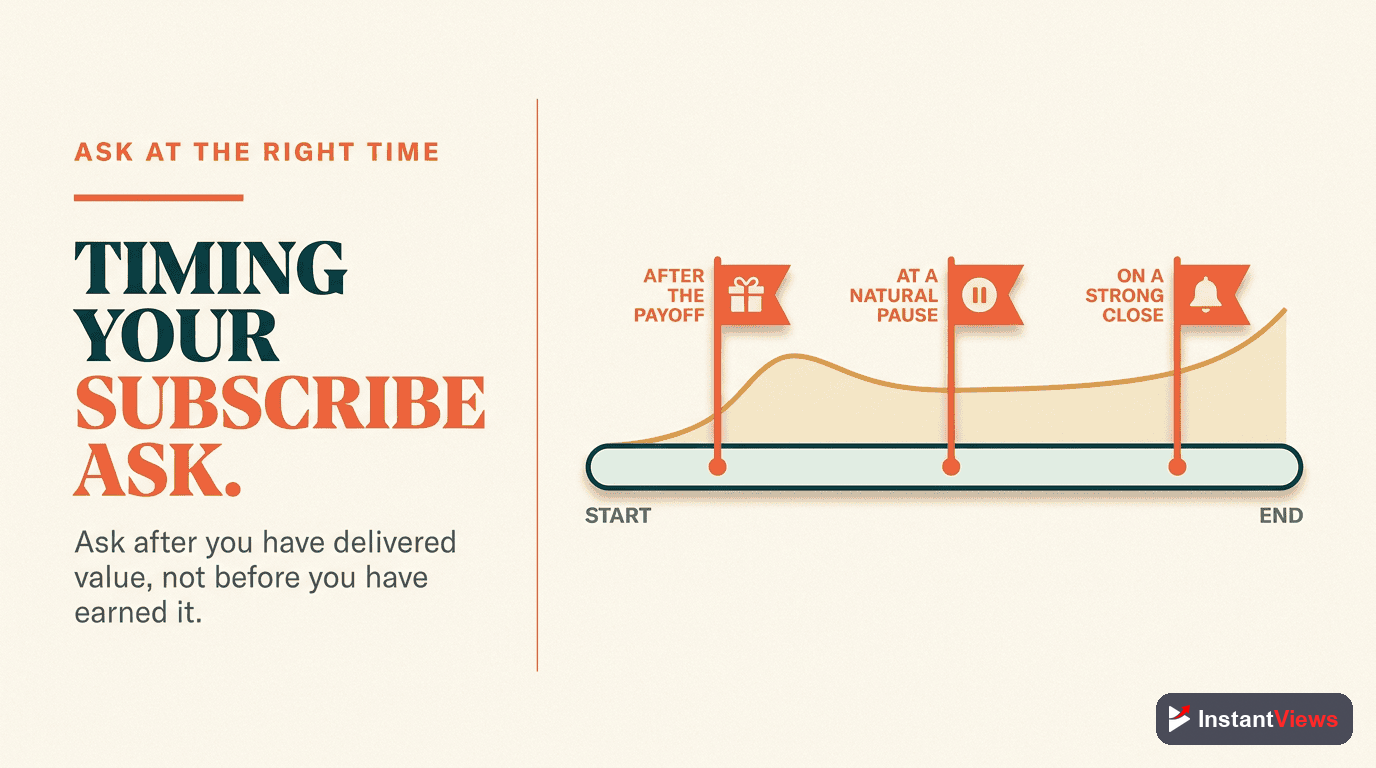
Playlists, Series, and the Binge Effect
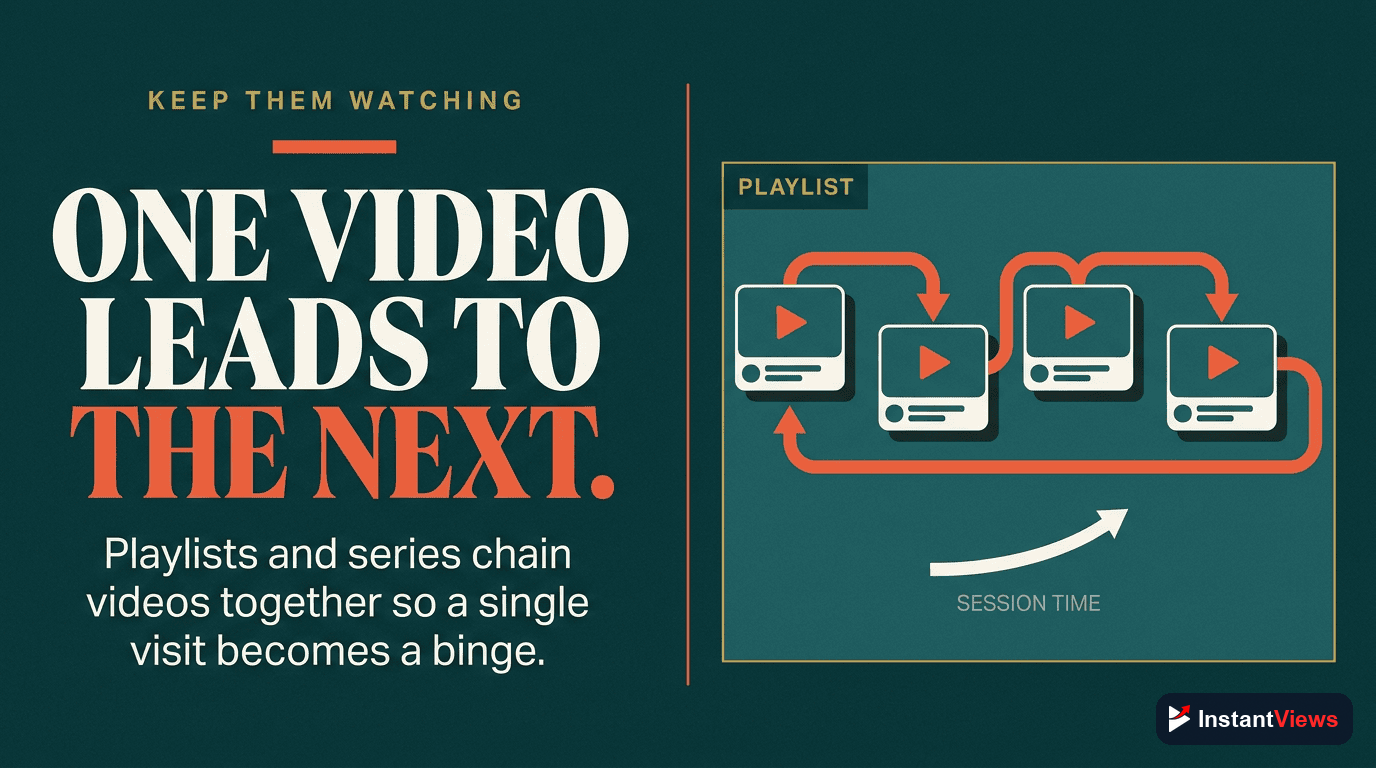
Remember that viewers often need several exposures before they subscribe. Playlists and series are how you deliver those exposures inside a single sitting. When a satisfied viewer finishes one video and immediately starts a related one, you are not just earning more watch time — you are stacking the repeat exposure that makes subscribing feel obvious by the third or fourth video.
There are a few practical ways to engineer this:
- Group by intent: Build playlists around a viewer goal ("get started," "go deeper," "fix this problem") so one watch naturally leads to the next.
- Use series framing: Number or theme videos as a series. Series content sets an explicit expectation of what comes next, which makes subscribing the logical way to keep up.
- End-screen the next episode: Always point the end screen at the next logical video in addition to the subscribe element.
The mechanism is simple: more relevant watches per visit means more value delivered, more proof of your promise, and more moments where the subscribe ask makes sense. Binge-friendly structure quietly raises conversion without a single extra "please subscribe."
Measuring Your Conversion
You cannot optimize what you do not measure, and conversion has clear, accessible metrics. Two matter most.
Subscribers Per Video
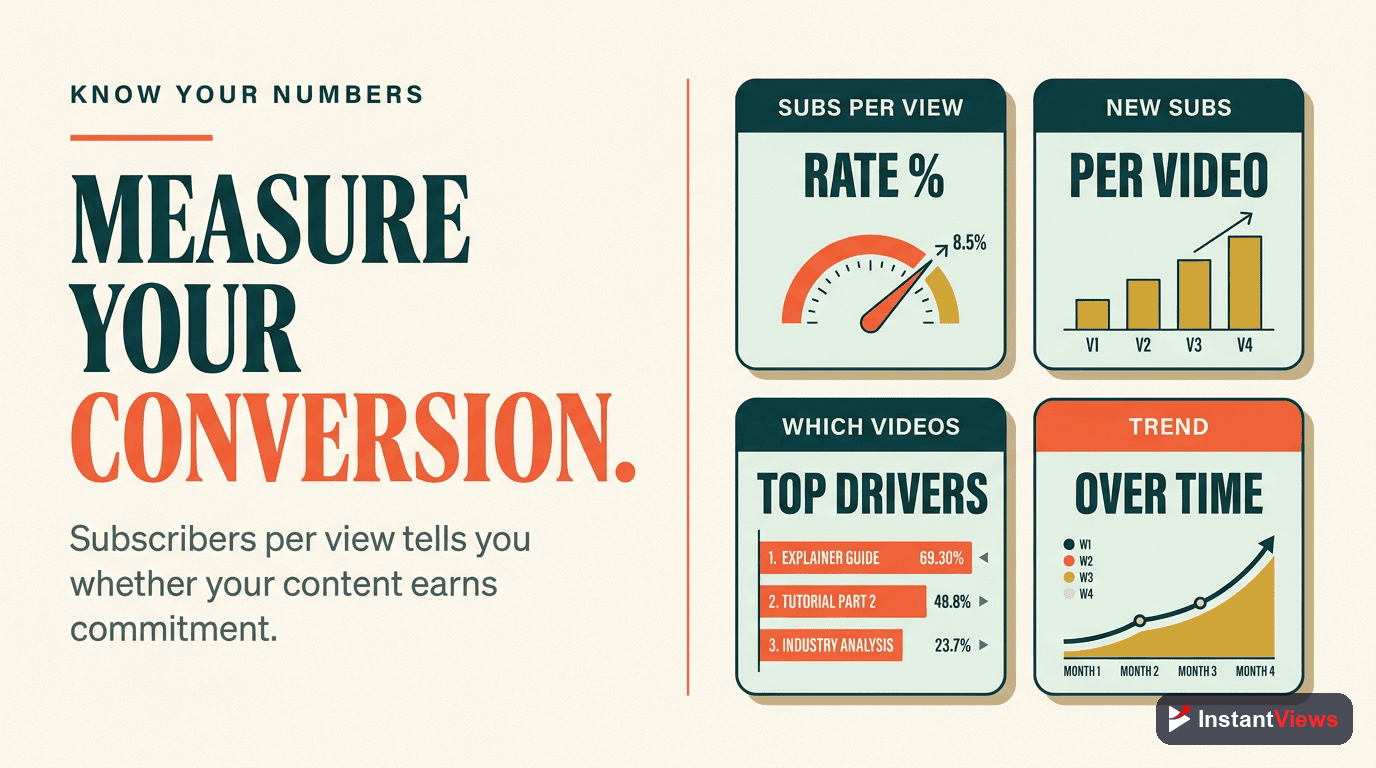
In YouTube Studio, open Content, pick a video, then open its Analytics and the Overview tab. You will see the subscribers that video gained. Compare this across your catalog and a pattern emerges: certain topics or formats convert far better than others, sometimes despite getting fewer total views. Those high-converting videos are a map of what to make more of.
Subscribers From Impressions and By Source
Zoom out to the channel level and think in terms of efficiency: how many subscribers you earn per thousand views, and how that differs by traffic source. Subscribers arriving from search behave differently from those arriving from suggested videos, Shorts, or external links. Calculating subscribers per thousand views for each source shows you which discovery paths produce durable followers and which produce drive-by views that never convert.
Use these two views together. Subscribers per video tells you what content converts; subscribers per thousand views by source tells you which audiences and paths convert. Optimizing one without the other leaves money on the table.
Optimizing: A Repeatable Loop
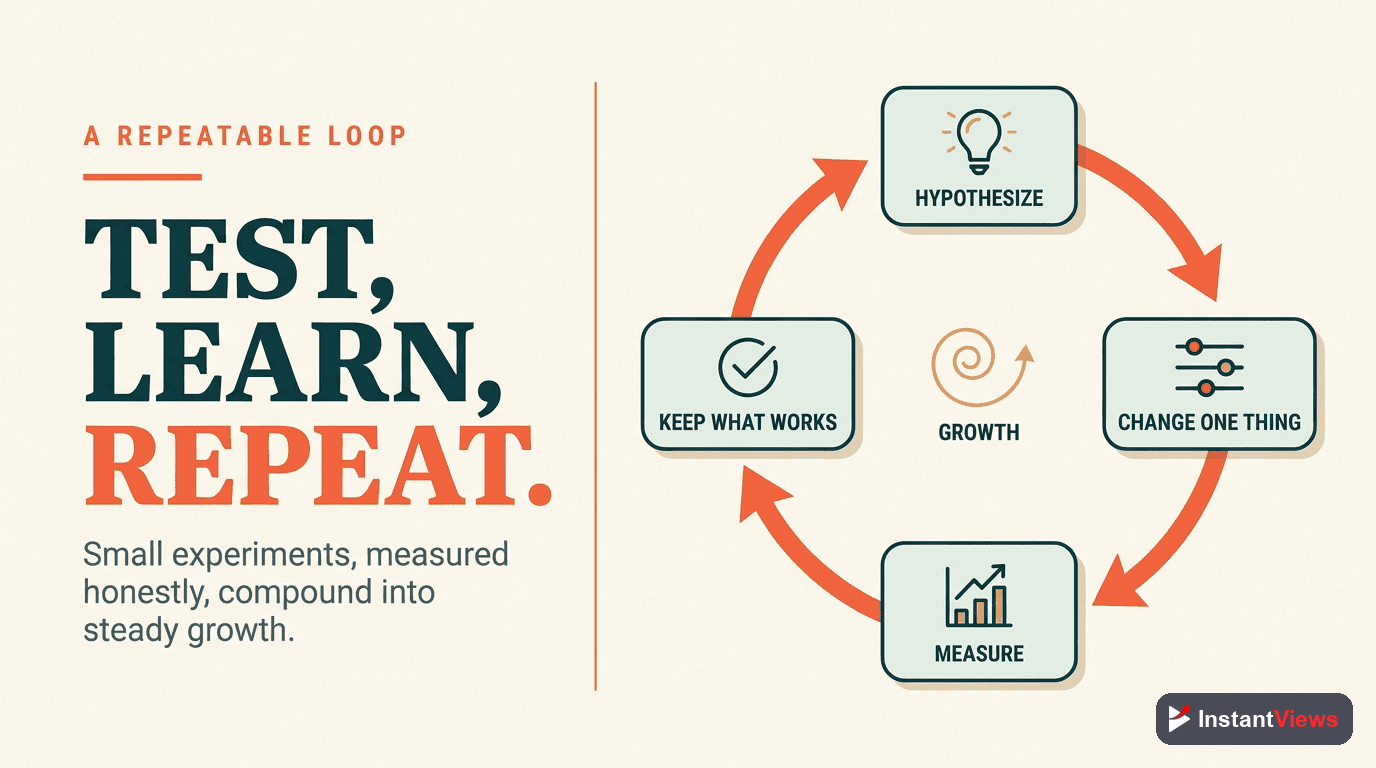
Improving conversion is not a one-time fix; it is a loop you run continuously. Here is a simple, repeatable sequence to follow.
Establish Your Baseline
Record your current subscribers per video and your overall view-to-subscriber ratio. Without a baseline you cannot tell whether a change helped, so write the numbers down before you touch anything.
Find Your Best and Worst Converters
Sort recent videos by subscribers gained relative to views. Study what your top converters have in common — topic, format, structure — and what your weakest ones lack.
Sharpen the Promise and the Ask
Tighten your channel theme, update your trailer if it has drifted, and rewrite your verbal CTA so it names a specific benefit at the value peak rather than a generic "subscribe."
Build Binge Paths
Turn your best converters into playlists and series, and point end screens at the next logical video so each visit delivers more exposures and more chances to convert.
Review by Source and Repeat
After a few uploads, compare subscribers per thousand views across sources. Double down on the content and paths that convert, drop what does not, and run the loop again.
Conversion Mistakes to Avoid
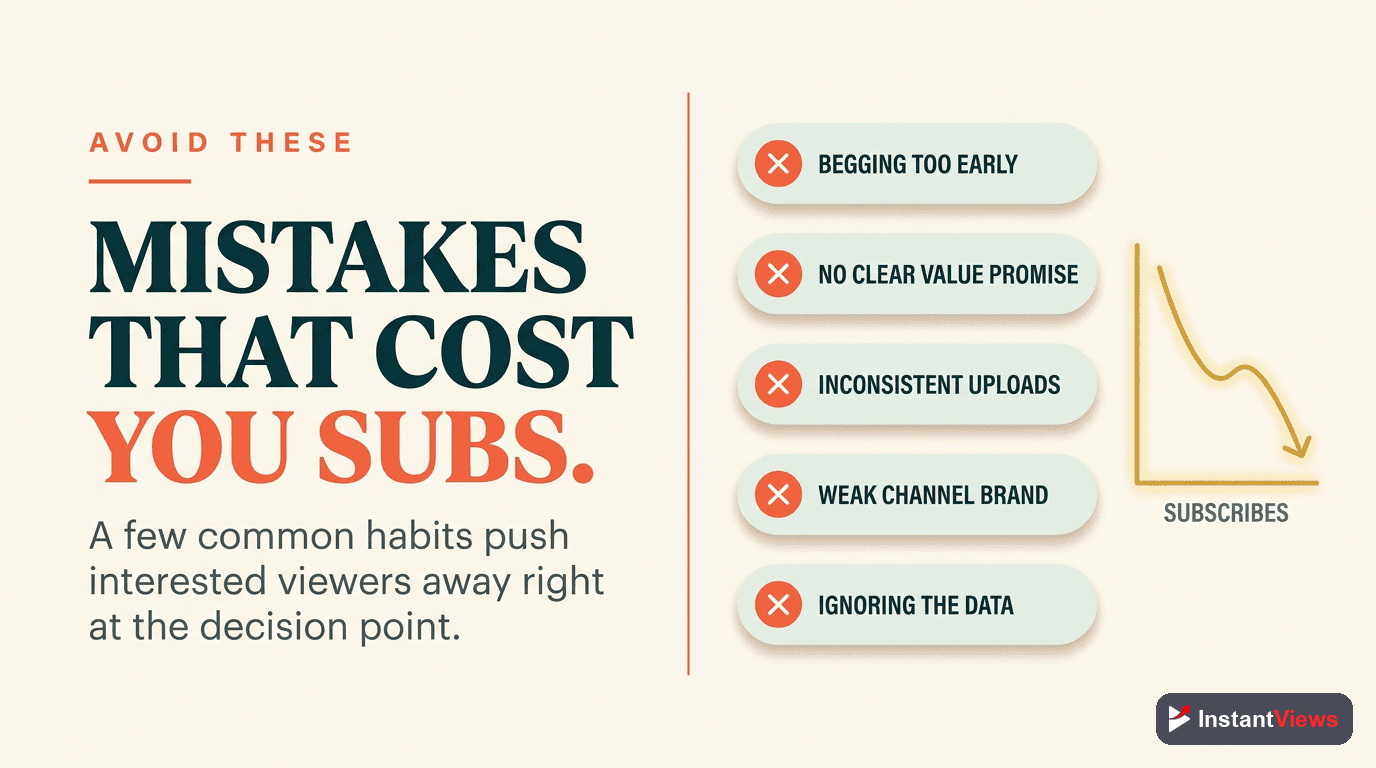
Most low conversion comes down to a short list of recurring errors. Watch for these:
- No clear promise: If a viewer cannot tell what subscribing gets them, they hesitate even after a great video. Vagueness is the silent conversion killer.
- Asking too early: Begging for the subscribe before delivering value asks for a bet on an unproven promise, and it rarely lands.
- Over-asking: Repeating the subscribe plea constantly irritates viewers and can drag down the retention the algorithm rewards.
- Generic CTAs: "Subscribe" with no reason converts far worse than a specific, benefit-led ask tied to what comes next.
- Inconsistency: Wandering topics and an erratic schedule break the predictability that makes subscribing feel safe.
- Ignoring the data: Without checking subscribers per video and per source, you are guessing about what converts instead of letting your own channel tell you.
- Chasing irrelevant reach: Viral spikes from unrelated audiences inflate views while flatlining subscribers, and can mislead the algorithm about who to show you to.
Fix the promise and the timing first — they are free and they unlock the value of every other lever. Then let your analytics guide where to invest next.
"Views prove you can earn attention. Subscribers prove you can keep it. The subscribe click is the exact moment one becomes the other — so make that moment easy, earned, and obvious."
Frequently Asked Questions
View-to-subscriber conversion is the rate at which the people who watch your videos decide to subscribe to your channel. It is usually expressed as subscribers gained per number of views, and it tells you how persuasive your channel is at turning a casual watch into an ongoing relationship.
A common benchmark is that roughly 0.5–2 percent of unique viewers subscribe per video, though it varies by niche. Educational content tends to convert higher, often in the 1–3 percent range, while broad entertainment usually sits lower. The right target is your own past average — aim to beat it.
Open YouTube Studio, go to Content, pick a video, then open its Analytics and the Overview tab. You will see subscribers gained from that specific video. Comparing this number across videos shows which topics and formats turn viewers into subscribers most efficiently.
Place your verbal subscribe ask right after you deliver a peak moment of value — the point where the viewer is most satisfied — rather than at the very start. Reinforce it visually with an end screen and a subscribe watermark, and always explain what the viewer gains by subscribing.
Yes. A short, focused channel trailer that states who the channel is for, what you publish, and how often gives a first-time visitor a clear reason to subscribe in under a minute. It works hardest on your channel home page, where curious viewers land after enjoying one of your videos.
They can. Binge-friendly playlists and series keep a satisfied viewer watching more of your content, and each additional video is another chance to earn the subscribe. Series-style content also sets a clear expectation of what comes next, which makes subscribing feel like the natural decision.
Conversion is the moment a viewer decides to subscribe — the single click that turns a watcher into a follower. Community building is what happens afterward: nurturing loyalty, replies, and belonging so subscribers stay active. This guide focuses on the conversion moment itself.
Viewers often need several exposures before they subscribe, and they subscribe to a promise of more. If your topics, style, and schedule are consistent, a new viewer can predict what subscribing will give them. Inconsistent channels make that promise unclear, so viewers hesitate even after a great video.
Conclusion
View-to-subscriber conversion is where casual attention becomes a lasting audience. It is the handoff between attracting viewers and keeping them — and on a 2026 platform tuned for satisfaction and return visits, it is one of the highest-leverage numbers you can improve. Every subscriber you convert today gives your next upload a stronger start, turning your channel from a series of one-off views into a compounding flywheel.
The levers are not complicated: deliver consistent value, make a clear promise, pitch first-time visitors with a sharp channel trailer, ask for the subscribe at the peak moment with a specific reason, reinforce it visually, and build binge-ready playlists that manufacture the repeat exposure people need before they commit. None of these wins alone, but pulled together and applied consistently, they reliably lift conversion.
Start by measuring your baseline, study your best and worst converters, fix the promise and the timing first because they cost nothing, then let subscribers per video and per source guide where you invest next. Run that loop on every upload and you will stop renting reach from the algorithm and start owning an audience that returns on its own.