- The click is a split-second decision driven by curiosity and emotion, not by logic or quality
- The curiosity gap — the space between what a viewer knows and wants to know — is the single strongest click trigger
- High-arousal emotions like awe, surprise, and excitement release dopamine and fuel both watching and viral spread
- A pattern interrupt stops the scroll by breaking what the brain expects to see in the feed
- Clicking and sharing are different psychological acts, so a video can win the click yet still fail to spread
Every second, the human brain makes thousands of tiny decisions about what deserves attention and what does not. On YouTube, the most consequential of those decisions happens in a fraction of a moment: the choice to click. With more than 2.7 billion monthly active users and over a billion hours of video watched every day, the platform is the largest attention marketplace ever built — and every creator is competing for the same scarce, split-second yes.
Here is the uncomfortable truth most creators miss: the click is not a rational decision. Nobody studies a thumbnail, weighs the production value, and calmly concludes the video is worth their time. The click happens far faster than conscious thought, driven by ancient cognitive shortcuts that decide before the viewer even knows they have decided. Understanding those shortcuts is the difference between a video that gets buried and one that breaks out.
This guide is about the psychology of the click and the spread — why some videos compel people to tap, and why a handful of those go on to travel across the internet. It is a companion to our piece on creating content that demands to be shared, which focuses on the psychology of sharing after the watch. Here, we start one step earlier: what makes the finger move in the first place, and why some videos become contagious.
By the end you will understand the curiosity gap, the role of emotion and dopamine, pattern interrupts, the cognition behind thumbnails and titles, and how to apply all of it honestly — in a way that earns the click and keeps the trust.
- The Click Is a Decision Made Before You Think
- The Curiosity Gap: The Engine of the Click
- Emotion and the Dopamine of the Click
- Novelty: Why the Brain Chases the New
- Pattern Interrupts: Breaking the Scroll
- How Thumbnails and Titles Exploit Cognition
- The Click Triggers at a Glance
- From Click to Viral: Why Some Videos Spread
- A Worked Example: Engineering the Click
- The Ethics of the Click
- FAQ
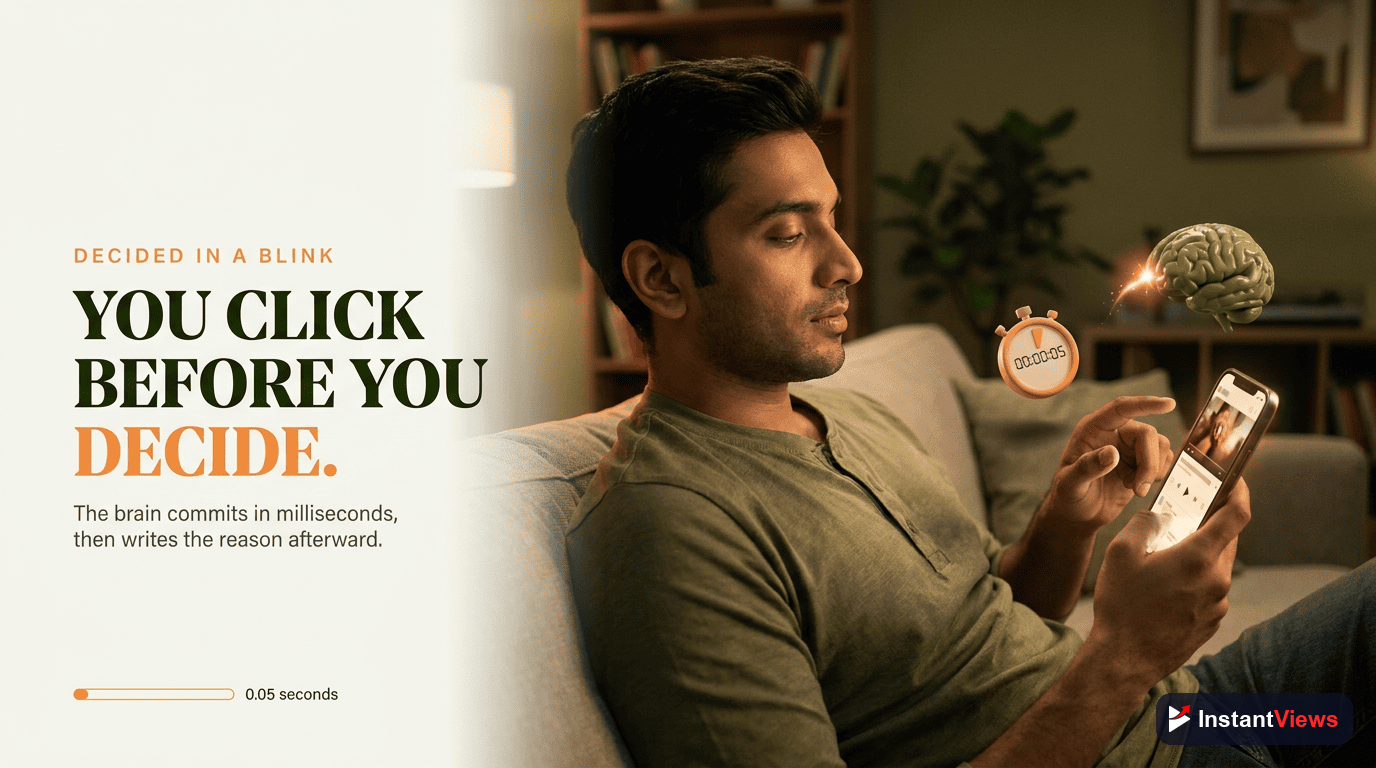
The Click Is a Decision Made Before You Think
Psychologists describe two modes of thinking. One is fast, automatic, and emotional; the other is slow, deliberate, and logical. The click belongs almost entirely to the first mode. When a viewer scrolls a feed, their fast brain scans dozens of thumbnails per minute, assigning each one a snap verdict — interesting or ignore — long before the slow, reasoning brain has a chance to weigh in.
This is why beautifully produced videos can flatline while rougher ones explode. Quality is processed by the slow brain, but the click is granted by the fast one. If your thumbnail and title do not trip a fast-brain trigger in the first glance, the production value inside the video is irrelevant — nobody will ever see it.
What does the fast brain respond to? A small, consistent set of cues that evolution wired in long before screens existed:
- Faces and emotion: The brain is hardwired to lock onto human faces and read their expressions instantly.
- The unexpected: Anything that violates a prediction grabs attention because it might matter.
- Open loops: Unanswered questions create a low-grade tension the brain wants to resolve.
- Personal relevance: Cues that seem to be about the viewer's own life or identity cut through the noise.
Every effective click trigger is really just a way of pulling one of these levers. The rest of this guide unpacks the most powerful ones, starting with the strongest of all.
The Curiosity Gap: The Engine of the Click
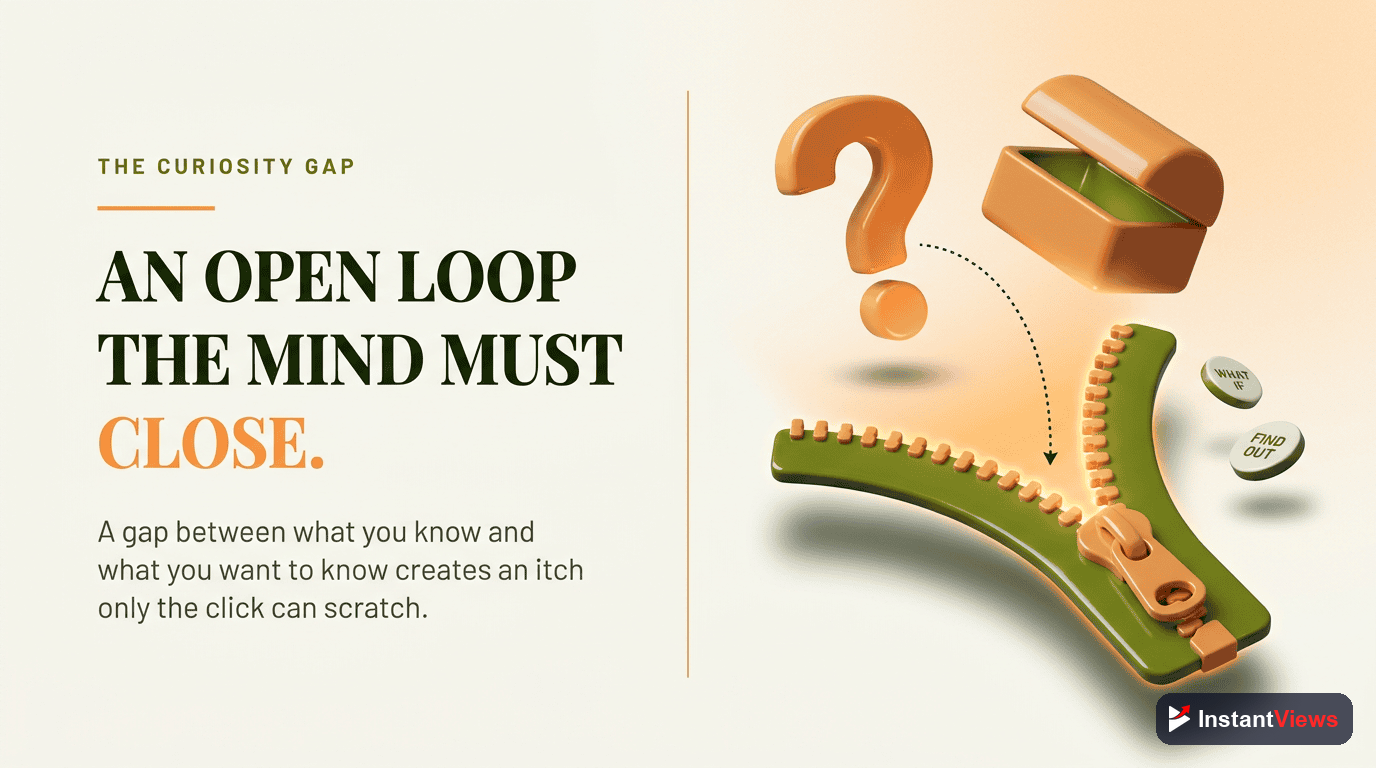
The curiosity gap is the psychological space between what a viewer already knows and what they want to know. When a thumbnail and title open that gap — pointing clearly at an answer without revealing it — the brain experiences the gap almost as an itch. Clicking is how the viewer scratches it.
This is the closest thing to a universal law of clicking. Current 2026 analyses of high-performing videos find that curiosity-gap thumbnails paired with relatable, call-out titles dramatically increase a video's odds of breaking out, and that this specific combination shows up in the large majority of high click-through-rate videos. The gap works because the brain treats unresolved information as an open loop it is compelled to close.
How to Open a Gap Without Lying
The art of the curiosity gap is hinting at the destination while withholding the route. A few reliable shapes:
- The implied result: Show the outcome but not how it happened, so the viewer must watch to learn the method.
- The unexpected pairing: Combine two things that do not normally go together, raising the question of how they connect.
- The unfinished statement: A title that stops just short of the payoff — the brain wants the ending.
- The mild contradiction: A claim that gently challenges what the viewer assumes is true.
Crucially, the gap must be closable by the video. A gap the content never resolves is just clickbait, and the brain that felt cheated will not come back. The goal is a question worth asking that your video genuinely answers.
Emotion and the Dopamine of the Click
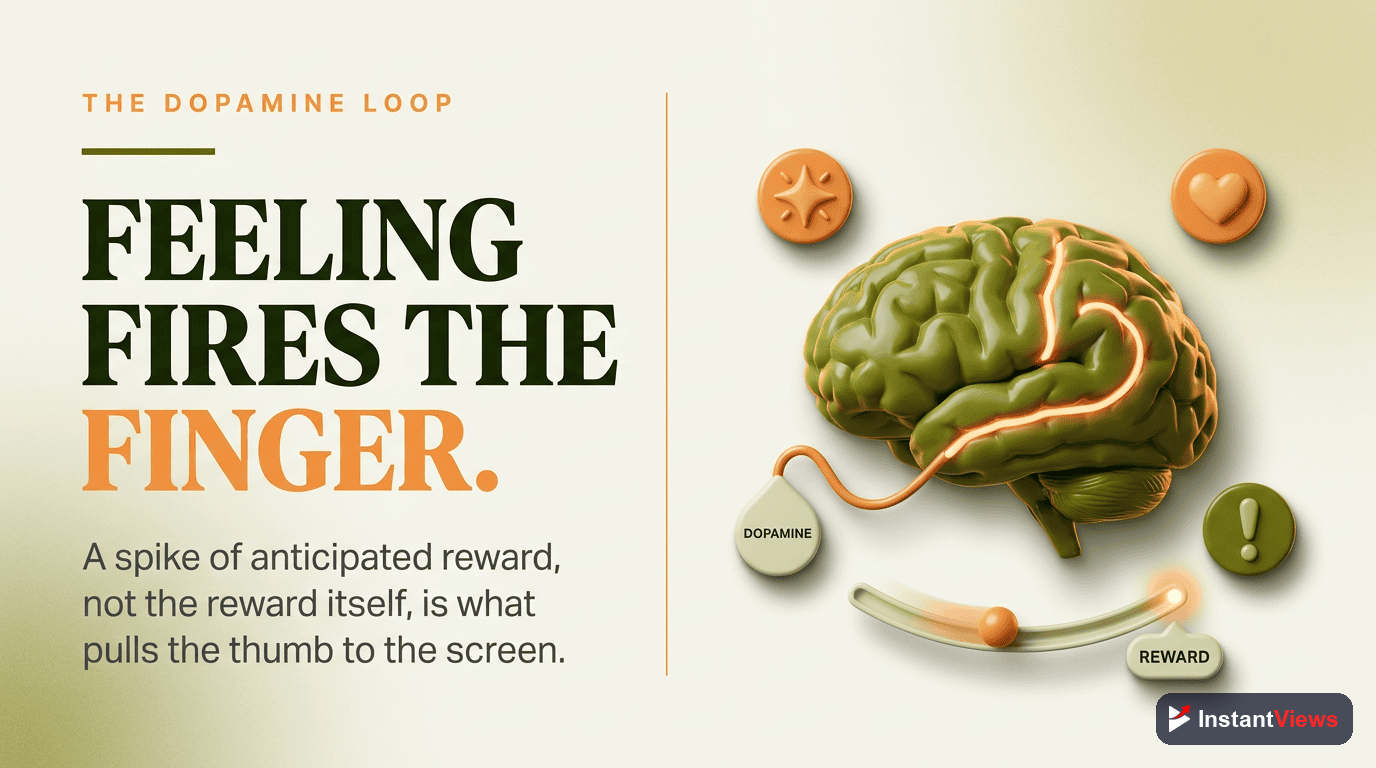
Curiosity gets the finger moving, but emotion decides how hard. Research on viral content, notably the work of marketing professor Jonah Berger, shows that high-arousal emotions — awe, excitement, surprise, amusement, even anger — significantly increase the chance that content travels. Low-arousal feelings like contentment or sadness, by contrast, tend to dampen spread.
The mechanism is chemical. When a thumbnail promises a powerful feeling and the brain anticipates the reward, it releases a small hit of dopamine — the neurotransmitter of anticipation and seeking. That dopamine is what actually moves the finger. The click is your brain reaching for an expected reward, and emotion is the size of the reward on offer.
Match the Emotion to the Click
Not every emotion clicks equally well. The high-arousal feelings that drive YouTube clicks tend to cluster around:
- Awe: Something bigger, more impressive, or more beautiful than expected.
- Surprise: A result or fact that violates what the viewer assumed.
- Excitement and anticipation: The promise of a payoff worth waiting for.
- Amusement: The expectation of being entertained or delighted.
- Indignation: A sense that something is unfair or wrong — powerful, but easy to overuse.
A thumbnail that signals a clear, strong emotion will out-click a neutral one almost every time. This is why expressive human faces remain among the highest-performing thumbnail elements: a face mid-emotion transmits the feeling instantly, before a single word is read.
Novelty: Why the Brain Chases the New
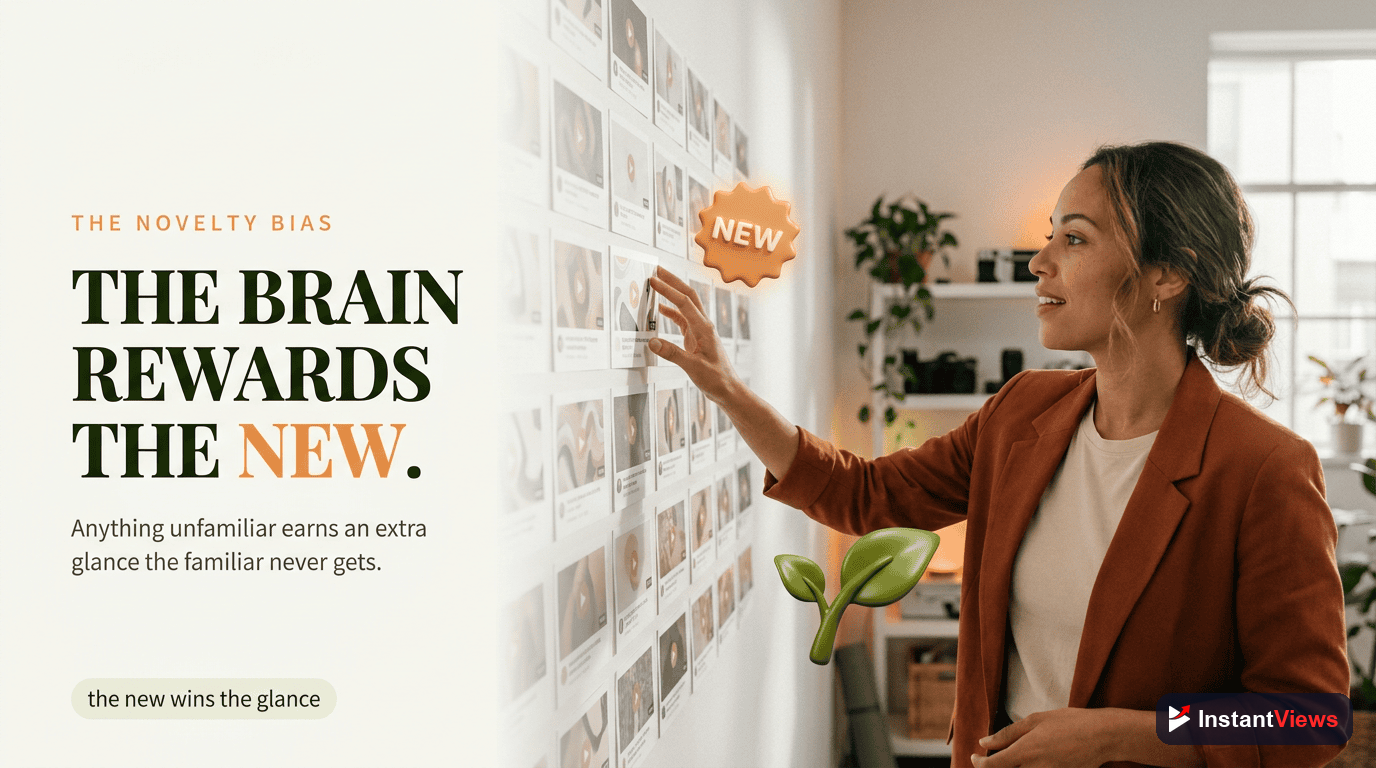
Closely tied to emotion is novelty. The brain is wired to notice anything new or unexpected, because in our evolutionary past, novelty signaled either opportunity or danger — both worth paying attention to. New information triggers its own dopamine release, sharpening focus and locking the thing into memory.
On YouTube this has a direct consequence: a fresh angle beats a familiar one almost every time, even on the same topic. A viewer who has seen a hundred videos on a subject will scroll past the hundred-and-first — unless it frames the idea in a way they have not encountered before. Novelty is why the contrarian take, the surprising experiment, and the unusual format consistently over-perform.
Importantly, the platform's direction in 2026 reinforces this. As YouTube works to reduce the spread of low-value, mass-produced AI content, genuinely fresh and human perspectives stand out more, not less. Novelty that comes from a real point of view is harder to mass-produce — and the brain, and increasingly the algorithm, reward it.
Novelty is a tool for framing substance, not a substitute for it. A shocking thumbnail can win the click, but if the video has nothing genuinely new inside, viewers bail within seconds. Because the 2026 algorithm optimizes for viewer satisfaction and retention rather than raw clicks, a clever hook with an empty payoff actively damages your channel over time.
Pattern Interrupts: Breaking the Scroll
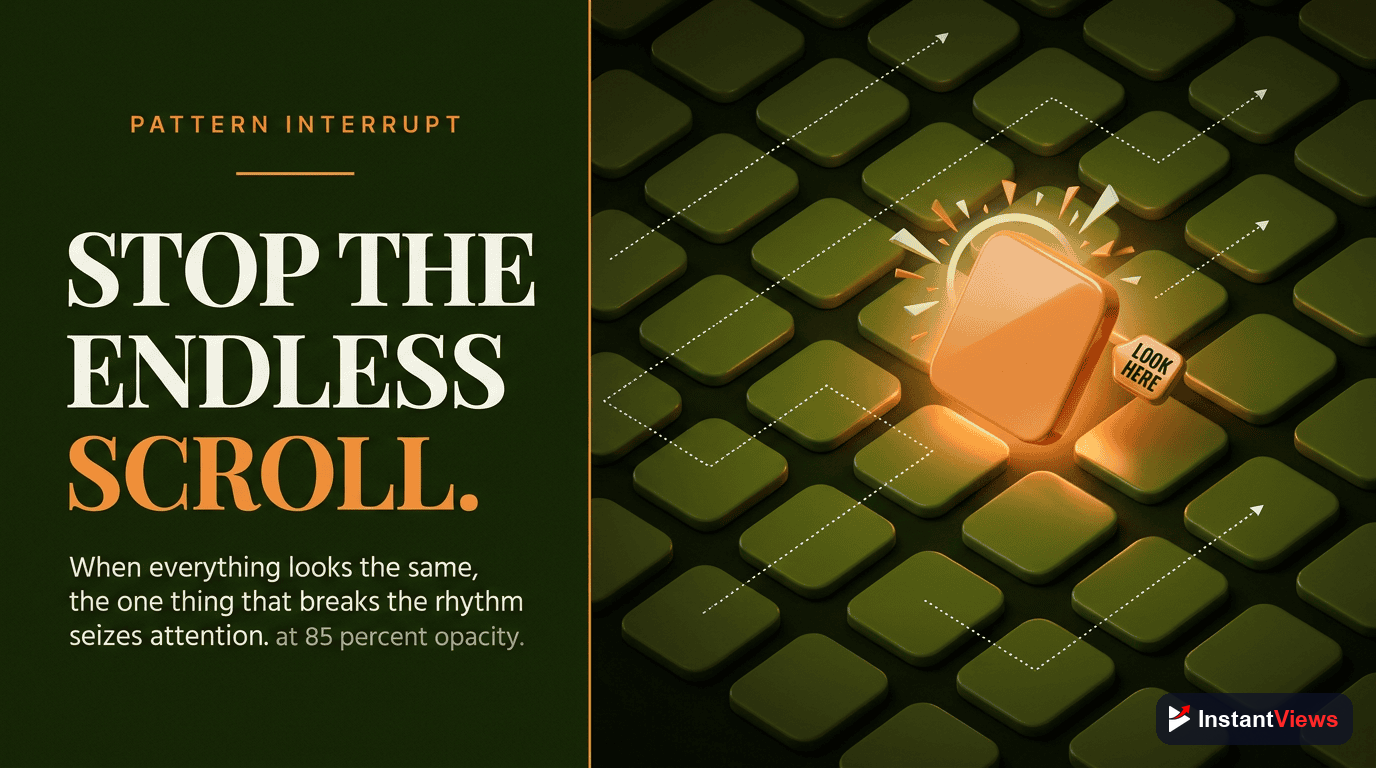
The third pillar of the click is the pattern interrupt. As a viewer scrolls, their brain falls into a rhythm, predicting what the next thumbnail will look like and filtering out anything that matches the expected pattern. A pattern interrupt is anything that violates that prediction and forces the brain to stop and look.
Think about how a feed actually appears: row after row of similar thumbnails, often on the same topic, using the same colors, the same poses, the same fonts. To the fast brain, they blur into one. The video that breaks the visual rhythm — through an unexpected color, an unusual composition, a contrarian claim, or a jarring juxtaposition — is the one that snaps attention back into focus.
Ways to Interrupt the Pattern
- Color contrast: If every thumbnail in your niche is dark, go bright — and the reverse.
- The contrarian frame: State the opposite of the conventional wisdom everyone else is repeating.
- Unexpected scale: Something far bigger, smaller, or more extreme than the feed leads the eye to expect.
- Visual incongruity: Two elements that do not belong together, which also opens a curiosity gap.
Notice how the triggers reinforce each other. A good pattern interrupt is often also a curiosity gap and an emotional cue at the same time. The strongest thumbnails stack all three: they break the pattern, open a question, and signal a feeling in a single image.
How Thumbnails and Titles Exploit Cognition
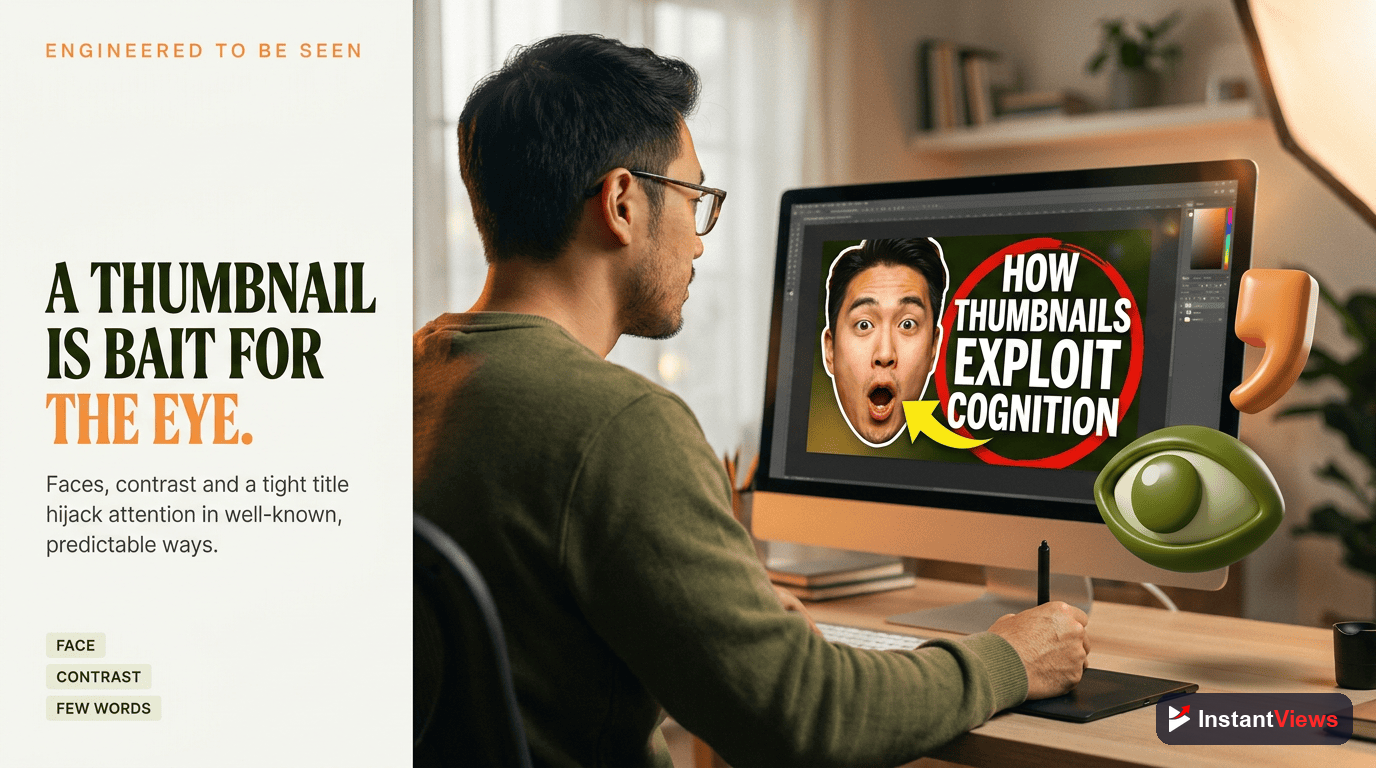
Thumbnails and titles are where click psychology becomes concrete. They are not decoration; they are the instruments that pull the cognitive levers. Industry analyses in 2026 consistently find that the thumbnail carries most of the click-driving weight, while the title supplies the context and the curiosity gap. They work as a team, not as rivals.
The Thumbnail: The Fast Brain's First Read
Because the thumbnail is processed almost instantly, it must do its job at a glance and at a small size. The principles that follow from cognition:
- One focal point: The fast brain cannot parse clutter, so a single dominant subject beats a busy collage.
- A clear emotion: An expressive face or a vivid scene transmits feeling before any text is read.
- Readable at thumbnail size: If text needs more than a couple of words, it is too much.
- Authenticity signals: In 2026, thumbnails that read as genuinely human — real expressions, real texture — tend to earn more durable, satisfied clicks than ones that look artificial.
The Title: The Slow Brain's Justification
If the thumbnail wins the fast brain, the title gives the slow brain a reason to act on the impulse. Strong titles lead with the keyword or the stakes, then leave a gap. They use concrete, specific language over vague abstraction, and they frame the value or the question clearly. The title's job is to confirm the feeling the thumbnail created and point it at a payoff.
The Click Triggers at a Glance
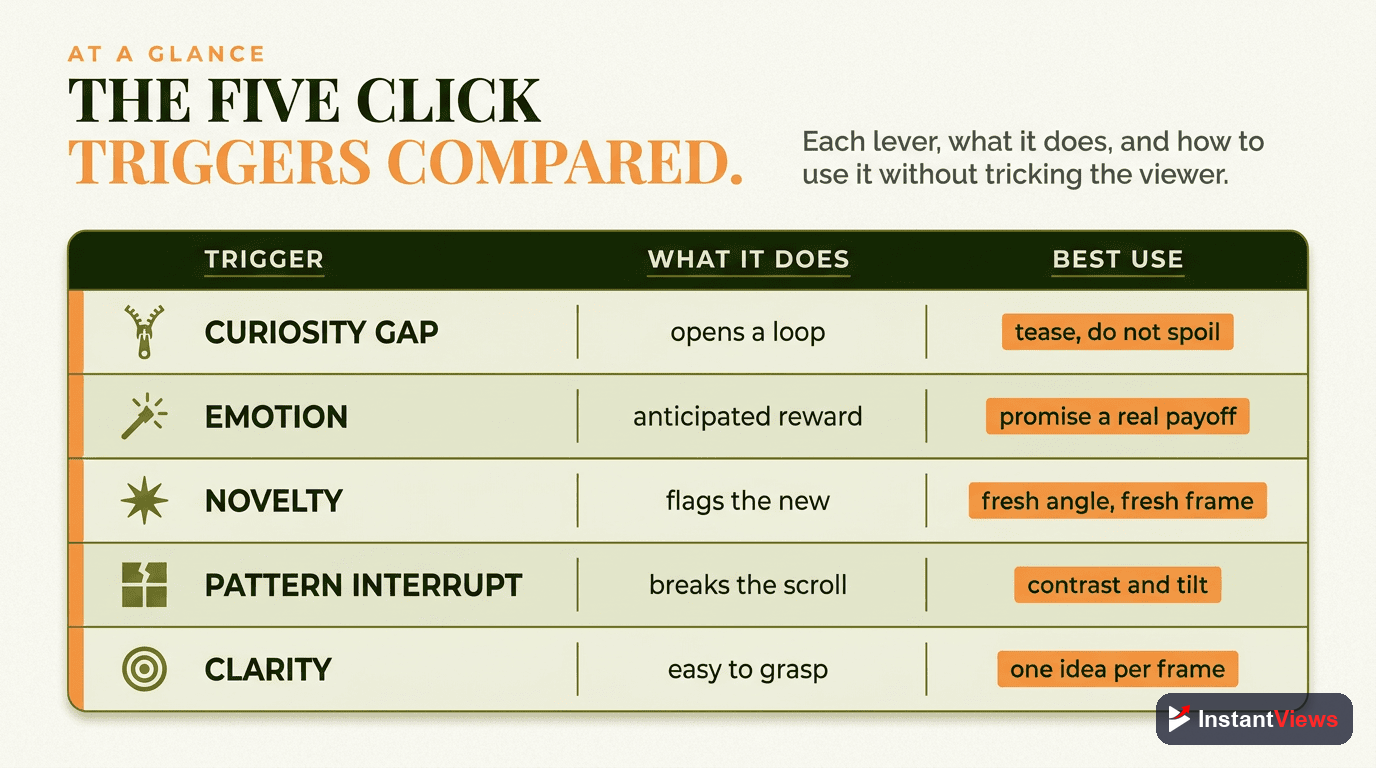
Each trigger pulls a specific cognitive lever, and each has a practical way to apply it. Use this table as a checklist when you design your next thumbnail and title.
| Trigger | Why It Works | How to Apply It |
|---|---|---|
| Curiosity Gap | The brain treats an unanswered question as an open loop it is compelled to close | Hint at the answer in the thumbnail or title without revealing it; make the video close the gap |
| High-Arousal Emotion | Awe, surprise, and excitement release dopamine, which physically drives the click and the share | Pick one dominant feeling and signal it through an expressive face and matching language |
| Novelty | New and unexpected information sharpens attention and is rewarded with a dopamine hit | Frame a familiar topic from a fresh angle, or show a surprising result or format |
| Pattern Interrupt | Anything that violates the brain's prediction breaks the scroll and forces a second look | Break the feed with contrasting color, scale, or a contrarian claim others avoid |
| Faces and Expression | The brain is hardwired to lock onto faces and read emotion instantly | Use a single clear human face mid-emotion as the thumbnail's focal point |
| Personal Relevance | Cues about the viewer's own life or identity cut through competing attention | Use call-out language that names the exact viewer or situation the video is for |
From Click to Viral: Why Some Videos Spread
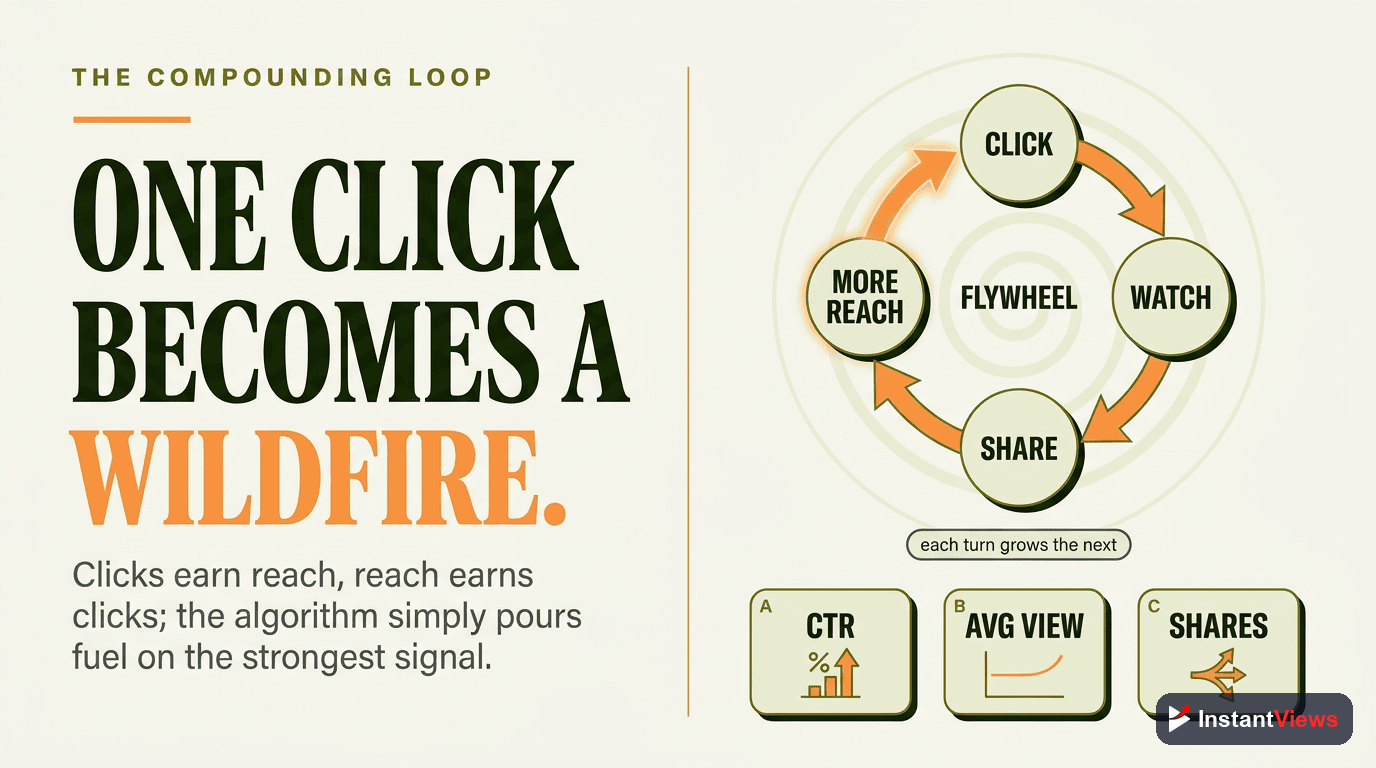
Winning the click is necessary but not sufficient for virality. A video goes viral when a large number of people not only click but also watch, feel something, and pass it on. The click is the entry; the spread is what happens after.
The bridge between the two is, again, emotion and novelty — but now acting on a population instead of an individual. A video that triggers a high-arousal feeling in one viewer triggers it in many, and high-arousal emotions are the ones people are most driven to share. Add the platform's machinery: YouTube Shorts alone now drives over 200 billion views a day, and short, fast-reward formats let an emotional hook reach an enormous audience in hours rather than weeks.
There is also a satisfaction loop at work. The 2026 algorithm optimizes for retention and viewer satisfaction, so a video that earns the click and keeps people watching gets shown to more people, which produces more clicks and more shares. Virality is this loop running at speed: a strong hook brings viewers in, genuine payoff keeps them, emotion makes them share, and the algorithm amplifies the whole cycle.
This is precisely where clicking and sharing diverge. Clicking is a private, low-cost, curiosity-driven act. Sharing is a public, identity-driven act — people share what says something about who they are. For the full psychology of that second decision, see our companion guide on content that demands to be shared. The short version: design the click for curiosity and emotion; design the share for identity and meaning.
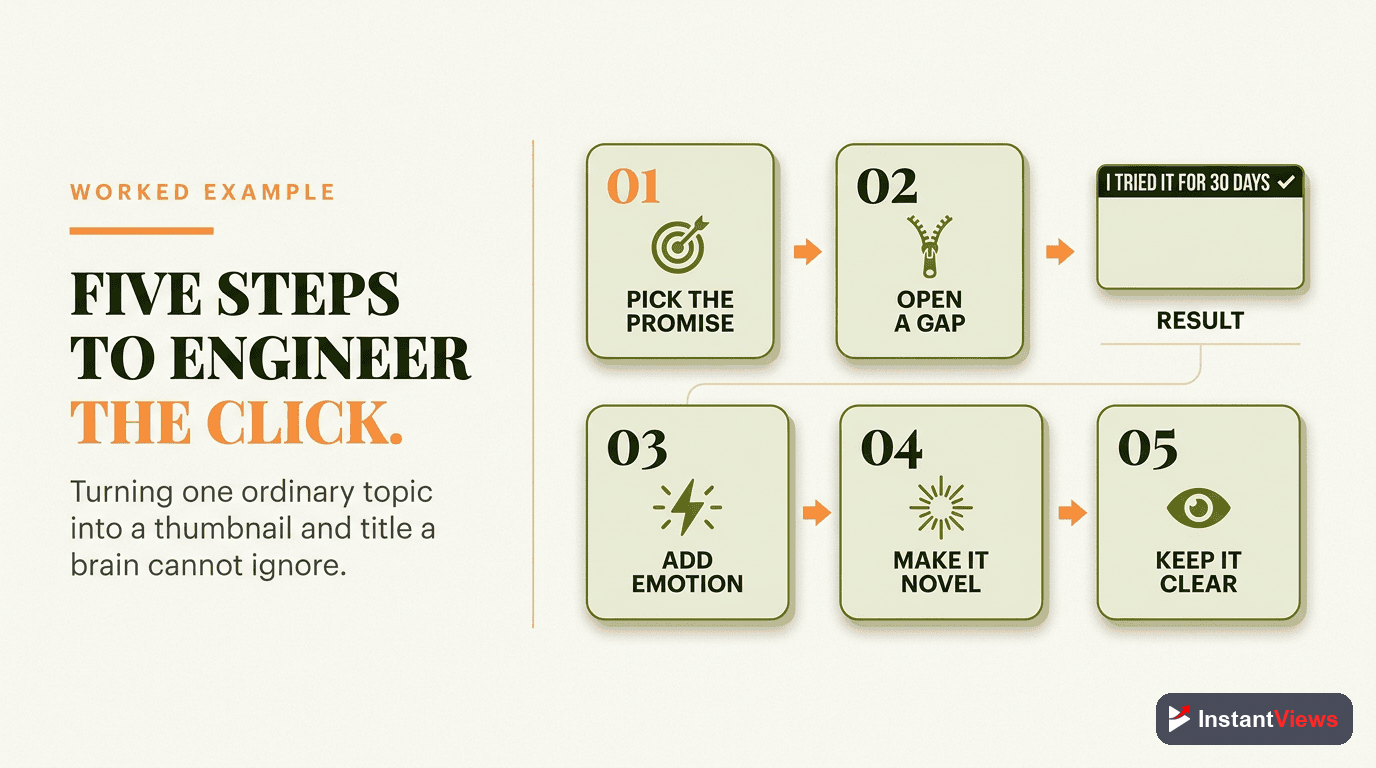
A Worked Example: Engineering the Click
Imagine a creator in the personal-finance niche making a video about a simple budgeting method. The lazy approach is a thumbnail of a spreadsheet and a title like "My Budgeting Tips." It is clear, honest, and completely invisible — it trips no trigger at all. Here is how to engineer the same video for the click, step by step.
Find the Real Curiosity Gap
The interesting truth is that the method helped save a surprising amount fast. Frame the title around the result without the method: the outcome is visible, the how is hidden. The viewer now has a question only the video can answer.
Pick One Dominant Emotion
Choose surprise. The thumbnail shows the creator with a genuinely astonished expression beside a clear, bold number. The face transmits the feeling in a glance, before any word is read.
Add a Pattern Interrupt
Every thumbnail in the niche is green and full of charts. Go the other way: a clean, high-contrast background and a single large element. Breaking the feed's rhythm is what stops the scroll.
Pay Off the Promise Immediately
Open the video by addressing the exact gap the thumbnail created within the first few seconds. Confirming the viewer made the right choice protects retention — the metric the algorithm actually rewards.
Test Click Against Retention
Watch click-through rate and average view duration together. A thumbnail that lifts clicks but tanks retention is a warning, not a win. Keep the angles that earn the click and hold the viewer.
The same video, same content — but now every element pulls a cognitive lever, and crucially, the promise is one the content keeps. That is the entire game: engineer the click honestly, then earn the watch.
"You do not win attention by being the best. You win it by being the one the brain cannot scroll past — and then you keep it by being worth the click you earned."
The Ethics of the Click
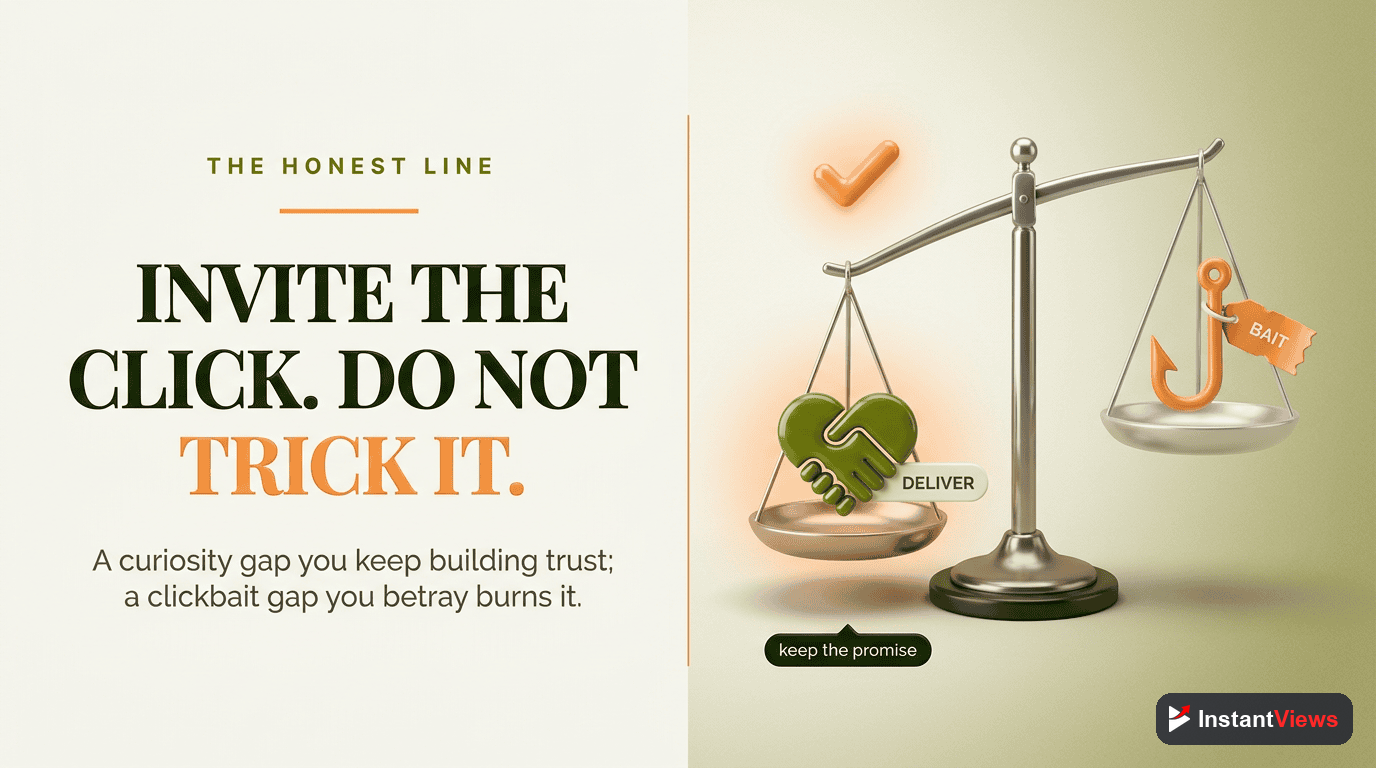
Every trigger in this guide can be used to inform or to deceive. A curiosity gap can frame a genuine answer or promise one that never arrives. Emotion can match the content or be manufactured to mislead. The triggers are neutral; the intent is not.
The practical case for honesty is also the strategic one. Because the 2026 algorithm rewards satisfaction and retention over raw clicks, deceptive hooks now carry a measurable cost: viewers who feel tricked leave fast, retention collapses, and the algorithm stops promoting the video and, over time, the channel. Clickbait that does not pay off is no longer just unethical — it is ineffective.
The durable approach is to use these triggers to make true, valuable things impossible to ignore. Open a real gap your video closes. Spark an emotion the content earns. Use novelty to frame genuine substance. Do that consistently and you build the rarest asset on the platform: an audience that trusts your click and keeps coming back for the next one.
Frequently Asked Questions
The curiosity gap is the mental space between what a viewer already knows and what they want to know. When a thumbnail and title open that gap — hinting at an answer without revealing it — the brain feels an almost compulsive urge to close it by clicking. It is one of the most reliable psychological triggers behind a high click-through rate.
Virality is driven less by the topic and more by emotion and novelty. Content that sparks high-arousal feelings such as awe, surprise, joy, or even anger triggers a dopamine response that makes people watch, finish, and share. Videos that feel familiar or low-energy rarely spread, even when the production quality is high.
A pattern interrupt is anything that breaks the brain's autopilot as a viewer scrolls. An unexpected visual, a contrarian claim, or a sudden change in pace forces the brain to stop and pay attention. On a feed full of similar videos, the one that breaks the pattern is the one that gets noticed and clicked.
Both matter, but they work as a team. The thumbnail captures attention first and carries most of the click-driving weight, while the title supplies the context and the curiosity gap. The strongest results come when the thumbnail and title say two different things that together open a question the viewer needs answered.
A strong curiosity gap earns the click, but if the video fails to deliver on the promise, viewers leave quickly and retention collapses. Because the 2026 algorithm rewards viewer satisfaction and retention over raw clicks, misleading thumbnails hurt a channel over time. The goal is an honest hook that the video genuinely pays off.
Clicking is a private, low-cost decision driven mostly by curiosity and emotion in the first split second. Sharing is a public, identity-based decision a viewer makes after watching, because the content says something about who they are. A video can win the click and still fail to spread, which is why the two require different psychological triggers.
The brain is wired to notice anything new or unexpected because novelty once signaled opportunity or danger. New information triggers a small dopamine release that sharpens attention and memory. On YouTube, a fresh angle, a surprising visual, or an idea framed in an unfamiliar way will out-perform a topic the viewer has already seen many times.
Yes. Ethical use means opening a real curiosity gap that the video closes, sparking genuine emotion that matches the content, and using novelty to frame substance rather than to hide its absence. Triggers that earn the click and then deliver value build trust and a loyal audience; triggers used to deceive burn both.
Conclusion
The click is the smallest decision a viewer makes and the most important one a creator can influence. It happens before conscious thought, granted by a fast brain that responds to a handful of ancient cues: an open question it must close, a strong emotion it wants to feel, something new it cannot ignore, and a break in the pattern that snaps it to attention. Master those levers and you stop competing on luck and start competing on psychology.
But the click is only the door. Virality lives on the other side of it, in the watch and the share — and that only happens when the video keeps the promise the thumbnail made. In 2026, with the algorithm rewarding satisfaction and retention, the honest hook is also the high-performing one. Engineer the click with curiosity and emotion; earn the watch with genuine payoff; design the share for identity and meaning.
Start with your next upload. Find the real curiosity gap, choose one dominant emotion, break the pattern your niche has settled into, and make sure the first seconds deliver on the click. Do it honestly and repeatedly, and you will not just get more clicks — you will build the kind of trust that turns a single tap into a loyal audience.