- Storytelling holds attention because the brain craves resolution — tension keeps viewers watching to the payoff
- The 2026 algorithm rewards retention and viewer satisfaction, and a strong narrative is the most reliable way to earn both
- Match the structure to the goal: problem-solution, before-after-bridge, the hero journey, or three-act
- Open loops and rising tension carry viewers through the mid-video drop-off zone
- Story works for every format — tutorials and reviews become far more engaging when framed as a journey
With more than 2.7 billion monthly active users and over a billion hours of video watched every day, YouTube is the most crowded attention market on earth. In that flood of content, the videos that win are rarely the ones with the best camera or the most editing tricks. They are the ones that make you feel something and keep you wondering what happens next. That is the power of storytelling.
A story is not decoration you add at the end. It is the underlying shape that turns scattered information into an experience. When a video has a narrative arc, the viewer is not just receiving facts — they are following a journey with a beginning, a tension, and a resolution. That arc is what holds attention through the parts where most videos lose people, and it is what builds the emotional connection that turns a stranger into a subscriber.
This matters more than ever in 2026, because the algorithm now optimizes for viewer satisfaction and retention rather than raw watch time. In other words, YouTube is asking a simple question about every video: did people keep watching, and did they feel it was worth their time? A well-told story answers yes to both.
This guide is about narrative craft within a single video — not just the opening hook, and not a multi-video series, but the story you tell from the first second to the last. You will learn why stories work on the brain, the core structures you can borrow, how to build and hold tension with open loops, how to make any topic relatable, and how to apply all of it even to tutorials and reviews.
- Why Stories Hold Attention
- Story Is Not the Same as a Hook
- Five Narrative Structures for Video
- Which Structure Should You Use?
- Open Loops and the Art of Tension
- Relatability: The Heart of Connection
- Storytelling in Tutorials and Reviews
- A Worked Example: Rewriting a Flat Video
- Build Your Story: Step by Step
- Storytelling Mistakes to Avoid
- FAQ
Why Stories Hold Attention
The human brain is not wired to remember bullet points. It is wired for narrative. For most of human history, knowledge passed from one generation to the next as stories, because a story is easy to follow, easy to recall, and emotionally sticky. When you watch a story unfold, your brain does not sit back as a neutral observer — it leans in, predicting what comes next and reacting to each turn.
That leaning-in is exactly what YouTube measures as retention. A story creates an open question in the viewer's mind, and the brain dislikes leaving questions unanswered. That mild discomfort — the need to know how it ends — is what keeps a thumb off the back button. Research consistently shows that narrative-driven content keeps audiences engaged longer than content that simply lists information, because tension and resolution give the brain a reason to stay.
There is also a connection layer. A story invites the viewer to feel something: curiosity, surprise, recognition, relief. Emotion is what makes a video memorable long after the facts fade, and it is what makes someone hit subscribe. People do not subscribe to information; they subscribe to a person or a perspective they feel something toward. Story is how that feeling gets created.
Three things happen inside the viewer when a video is built as a story:
- Anticipation: an unresolved question pulls attention forward through the whole video.
- Investment: once a viewer cares about an outcome, leaving feels like abandoning something unfinished.
- Reward: a satisfying resolution makes the viewer feel their time was well spent — the core of the satisfaction signal YouTube now prizes.

Story Is Not the Same as a Hook
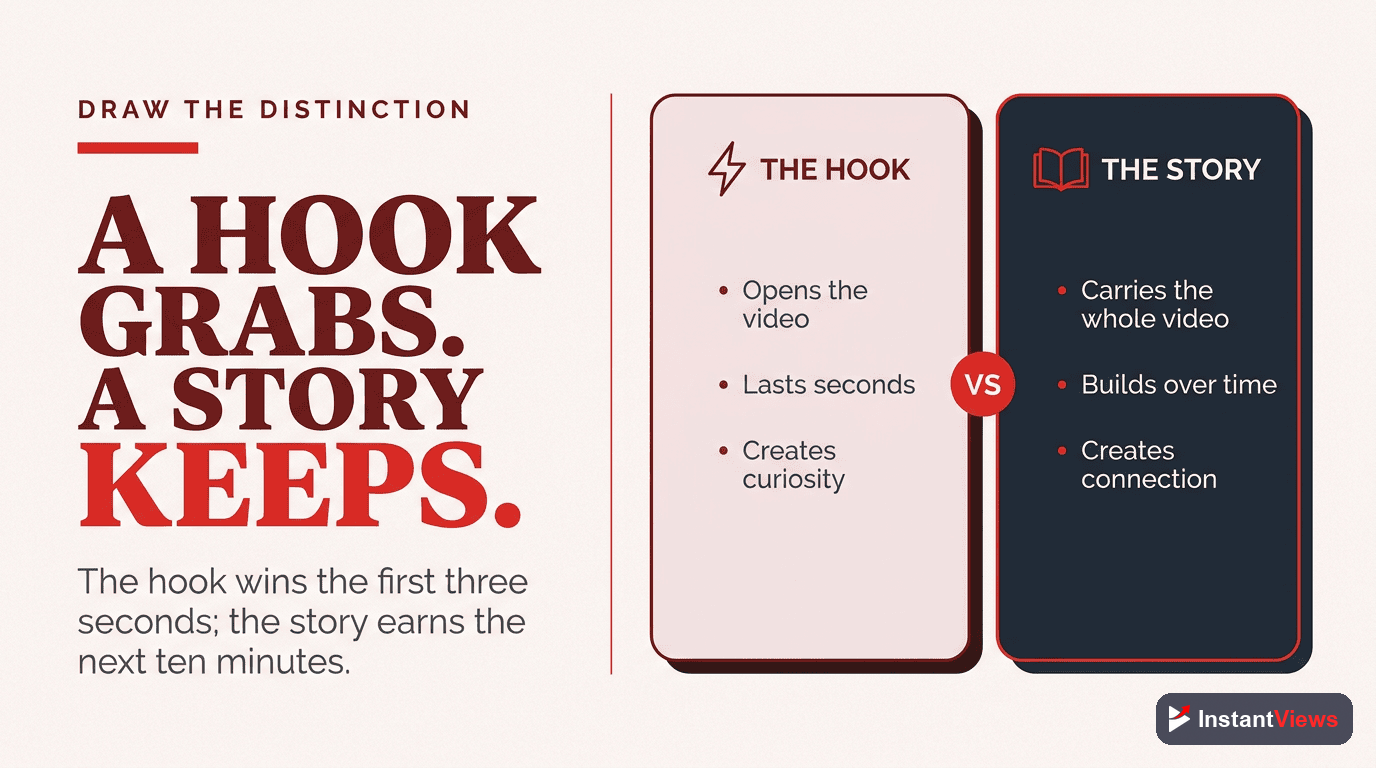
It is easy to confuse storytelling with the hook, but they are different jobs. The hook is the opening — the first few seconds whose only task is to earn the next few seconds. The story is the entire arc that carries the viewer from that opening all the way to the payoff. A hook without a story is a promise with nothing behind it; viewers feel the bait-and-switch and leave.
Think of the hook as the door and the story as the room behind it. A brilliant door that opens onto an empty room disappoints. The strongest videos use the hook to crack open a narrative loop, then spend the rest of the runtime honoring that promise. This is also what separates this discipline from planning a multi-video series: here we are concerned only with the single video and its self-contained arc, the way one film tells one complete story.
In practice, the hook and the story should be designed together. The opening line should hint at the tension the whole video will resolve, so that the moment you grab attention, you are also setting the narrative in motion. When the two are aligned, retention does not collapse the instant the hook ends — the story takes the baton and keeps running.
Five Narrative Structures for Video
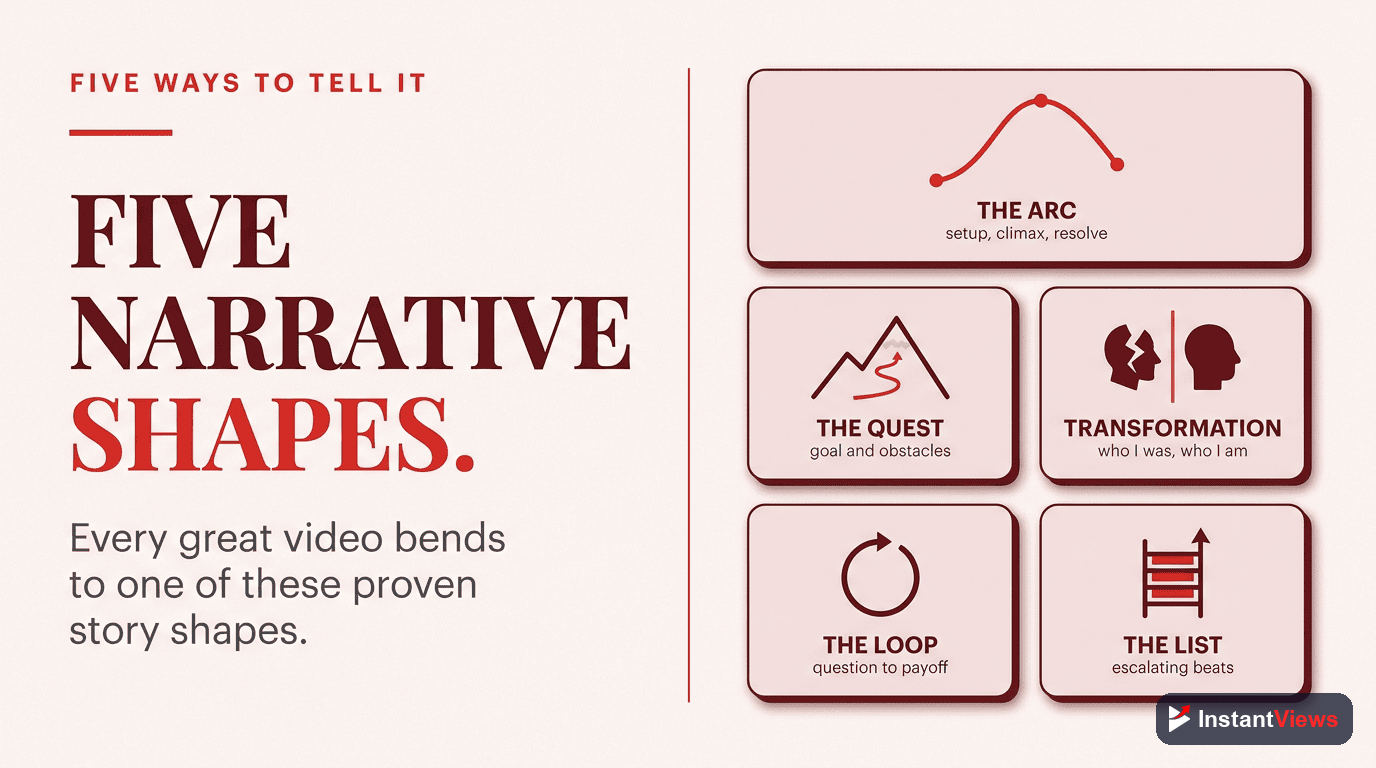
You do not have to invent narrative from scratch. Storytellers have refined a handful of structures over thousands of years, and each one is a reliable skeleton you can hang your content on. Here are five that work especially well for video.
1. Problem-Solution
The simplest and most versatile structure. You open with a problem the viewer recognizes, build a little frustration around it, then walk through the solution. The tension is the problem; the payoff is the fix. This is the backbone of almost every great tutorial and how-to video.
2. Before-After-Bridge
Show the painful "before" state, paint a vivid picture of the desirable "after," then reveal the "bridge" that gets from one to the other. The contrast between before and after creates the emotional pull, and your method becomes the bridge. This works beautifully for transformations, case studies, and results-driven content.
3. The Hero Journey
The oldest structure in the world, compressed for video: an ordinary person faces a challenge, struggles through obstacles, and returns changed. On YouTube, the hero is often you or your viewer. It is ideal for personal stories, documentary-style videos, and any content where transformation is the point. Modern creators compress the classic stages, skipping slow setup to keep pace fast.
4. Three-Act Structure
Setup, confrontation, resolution. Act one establishes the situation and the central question, act two raises stakes and complications, and act three delivers the climax and payoff. The hero journey actually maps onto these three acts, so the two combine naturally. Three-act is the go-to for longer narrative videos that need sustained momentum.
5. The Question Story
Rather than a single climactic moment, the question story is an exploration: you pose an intriguing question and take the viewer along as you investigate it, holding their hand through the journey. The unanswered question is the engine. This suits explainer, investigation, and curiosity-driven content where the discovery itself is the reward.
Which Structure Should You Use?
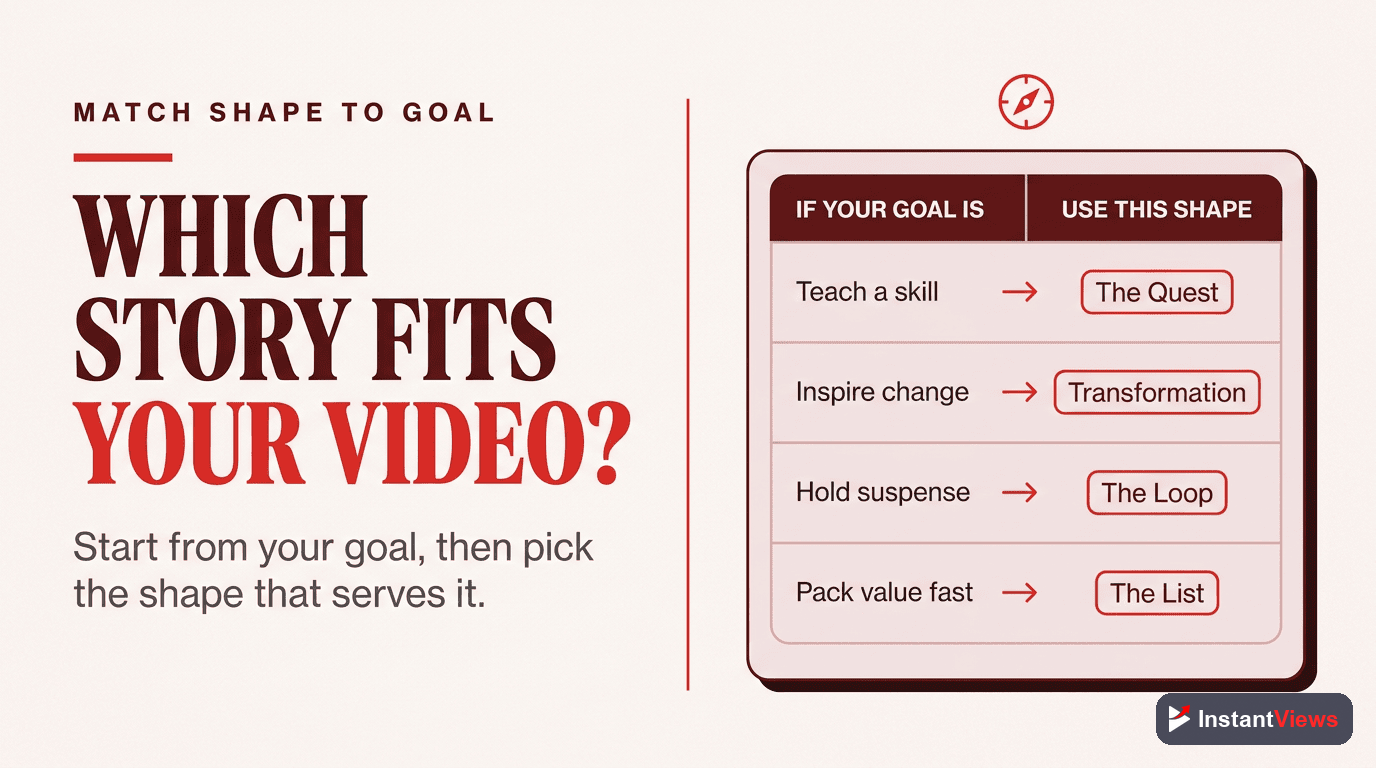
No structure is universally best — the right choice depends on your video's goal and format. Use the table below as a quick reference for matching a structure to the job it does best.
| Story Structure | When to Use It |
|---|---|
| Problem-Solution | Tutorials, how-to videos, and any content that fixes a specific pain point the viewer already feels |
| Before-After-Bridge | Transformations, case studies, results reveals, and product or service content where the change is the selling point |
| Hero Journey | Personal stories, channel-origin videos, documentary pieces, and journeys where the creator or viewer is transformed |
| Three-Act Structure | Longer narrative videos (10 minutes and up) that need sustained tension and a clear climax |
| Question Story | Explainers, investigations, and curiosity-led topics where exploring the answer is the whole point |
Notice that these structures overlap and nest inside one another. A before-after-bridge video is really a focused problem-solution story; a hero journey unfolds across three acts. You do not need to follow any of them rigidly. Treat them as a backbone that guarantees your video has tension, movement, and a payoff — not a cage that flattens your voice.
Open Loops and the Art of Tension
If story is the engine of retention, the open loop is the fuel. An open loop is an unresolved question or promise you plant early and deliberately leave hanging until later. The brain treats an open loop like an itch it cannot ignore, and that gentle pressure is what pulls a viewer across the middle of a video — the exact stretch where most channels lose their audience.
Open loops are simple to create. A line like "I tried this for thirty days, and the result genuinely surprised me — I will show you exactly what happened" opens a loop you can close minutes later. The key is to make a promise specific enough that the viewer wants the answer, then actually deliver it. Loops you open but never close feel like betrayal and train viewers not to trust you.
How to keep tension alive
- Stack loops: close one loop while opening the next, so there is always a reason to keep watching.
- Raise the stakes: remind the viewer what is at risk or what they stand to gain as the video builds.
- Add small surprises: an unexpected twist or honest setback re-engages attention right when it might wander.
- Pace deliberately: vary your rhythm — a slower beat before a reveal makes the payoff land harder.
An open loop is a promise, not a trick. If your reveal does not live up to the tension you built, viewers feel cheated and your satisfaction signal drops. Never tease a payoff you cannot deliver — in 2026 the algorithm is actively reducing the spread of low-value content, and broken promises are a fast way to be read as exactly that.
Relatability: The Heart of Connection
Tension keeps people watching, but relatability is what makes them care. A story only grips you if you can see yourself somewhere inside it. That is why the most connective videos are built around a problem, fear, or hope the viewer recognizes from their own life. When a viewer thinks "that is exactly my situation," they stop watching a stranger and start following a guide.
Relatability is built from two ingredients: specificity and honesty. Specificity means concrete details instead of vague generalities — a real moment, a real number, a real mistake. Honesty means showing the struggle, not just the polished result. When you admit what went wrong, the viewer trusts what went right.
- Speak to one person: address the viewer as "you," as if talking to a single friend rather than a faceless crowd.
- Share real stakes: let viewers feel what the outcome means to you, so they care about the result too.
- Show the mess: the failed attempt, the doubt, the surprise — these are what make a story feel true.
- Use yourself or your viewer as the hero: the most relatable protagonist is the person watching.
Connection compounds. The more a viewer recognizes themselves in your stories, the more they return, and the relationship that builds across videos is what converts a passing view into a loyal subscriber.
Sharpen Every Video You Publish
Explore our free suite of YouTube tools to research story-worthy topics, test titles, and analyze the retention curve of your videos.
Explore Free YouTube Tools →
Storytelling in Tutorials and Reviews
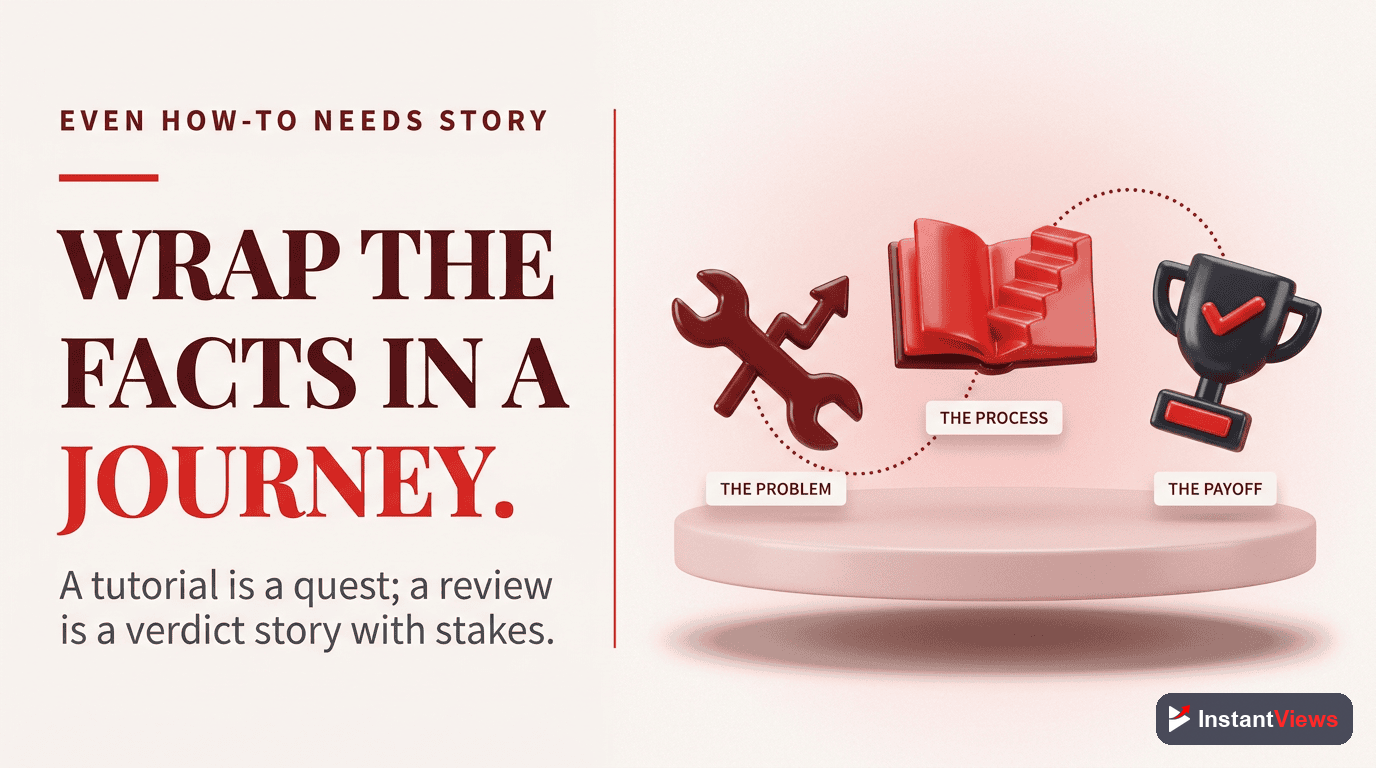
A common myth is that storytelling only belongs in personal vlogs or documentaries. In reality, the formats that benefit most are the ones creators usually deliver as flat lists: tutorials and reviews. A story gives information an emotional shape, and that shape is what separates a forgettable how-to from one people finish and share.
Turning a tutorial into a story
A typical tutorial reads like a recipe: do this, then this, then this. Reframe it as a problem-solution story instead. Open on the real frustration the technique solves, show the wrong way and why it fails, then walk through the fix as a journey toward relief. The steps are identical — but now there is tension pulling the viewer from one to the next.
Turning a review into a story
A spec-by-spec review is a chore to watch. A story-driven review takes viewers on the journey of actually living with the product: the hopes you had, the moment it surprised you, the flaw you did not expect, and the honest verdict you reached. Before-after-bridge fits perfectly — life before the product, life after, and whether the product is the bridge worth crossing.
The principle is the same for every format. Find the change at the center of your video, frame it as a journey from one state to another, and let tension carry the viewer from the first second to the last.
A Worked Example: Rewriting a Flat Video
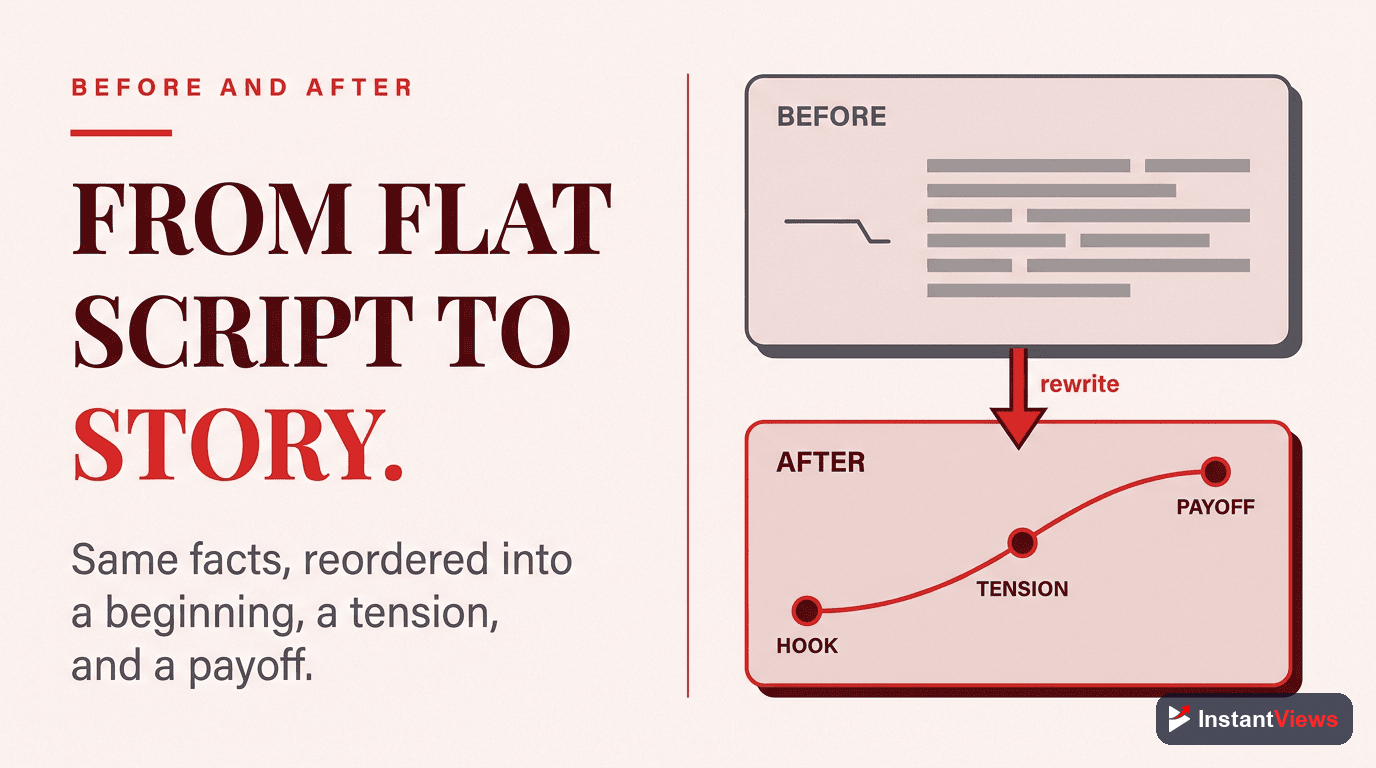
Imagine a video titled "5 Tips to Edit Faster." The flat version opens with "Hey everyone, today I have five editing tips," then lists them. It is useful, but there is no reason to keep watching past the tip you wanted — retention falls off a cliff.
Now rewrite it as a story using problem-solution with an open loop:
- Open the loop: "I used to spend eight hours editing a single video — until one weekend I cut that to two. Here is the exact shift that changed everything."
- Establish the problem: show the painful late nights, the missed upload dates, the burnout. The viewer who edits slowly sees themselves immediately.
- Build through the middle: reveal the tips not as a list but as the steps of your turnaround, each one closing a small loop and opening the next.
- Raise the stakes: admit the tip that almost did not work, and the surprise that made it click.
- Deliver the payoff: show the finished two-hour edit and what that reclaimed time made possible.
Same five tips, same information — but the rewrite has a beginning, a tension, and a resolution. The viewer is no longer collecting tips; they are following a transformation, and they stay to see how it ends. That is the entire difference between a flat video and a story-driven one.
"Information tells the viewer what to think. A story makes them feel why it matters — and feeling is what they remember, share, and subscribe for."
Build Your Story: Step by Step
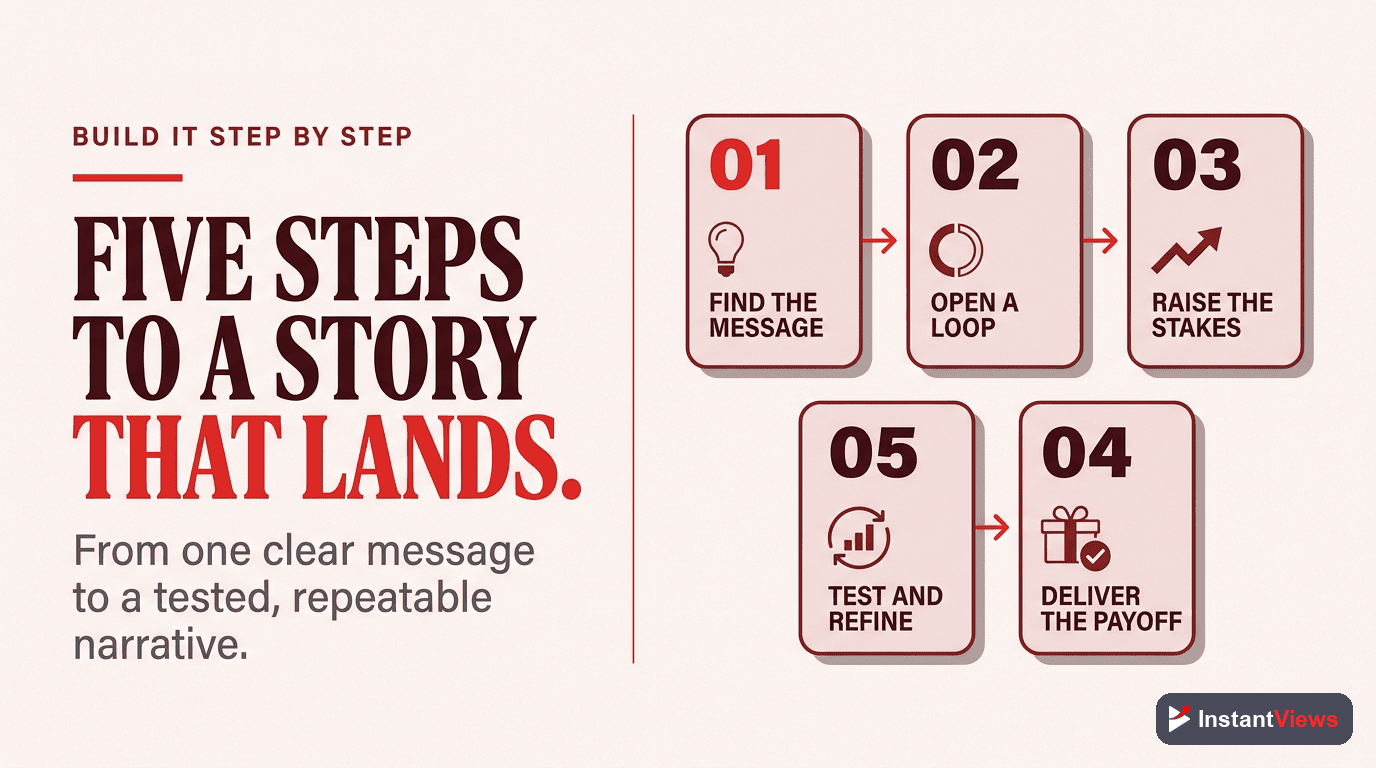
Here is a repeatable sequence for adding narrative craft to any video you plan, no matter the topic.
Find the Core Change
Every story is a change from one state to another. Before scripting, write one sentence describing the transformation or question at the center of your video. If you cannot, you have a list, not a story.
Pick a Structure
Choose the structure that fits the goal — problem-solution, before-after-bridge, hero journey, three-act, or question story. Let it be a backbone, not a cage.
Open a Loop
In the first thirty seconds, plant a specific unresolved question or promise that the rest of the video will answer. Make sure your hook sets this story in motion.
Build and Sustain Tension
Through the middle, stack loops, raise stakes, and add honest surprises so momentum never sags. This is where most videos lose viewers, so guard it hardest.
Pay It Off
Resolve every loop you opened with a clear, rewarding ending. A satisfying payoff is what makes viewers feel their time was well spent — and that is the signal YouTube rewards.
Storytelling Mistakes to Avoid
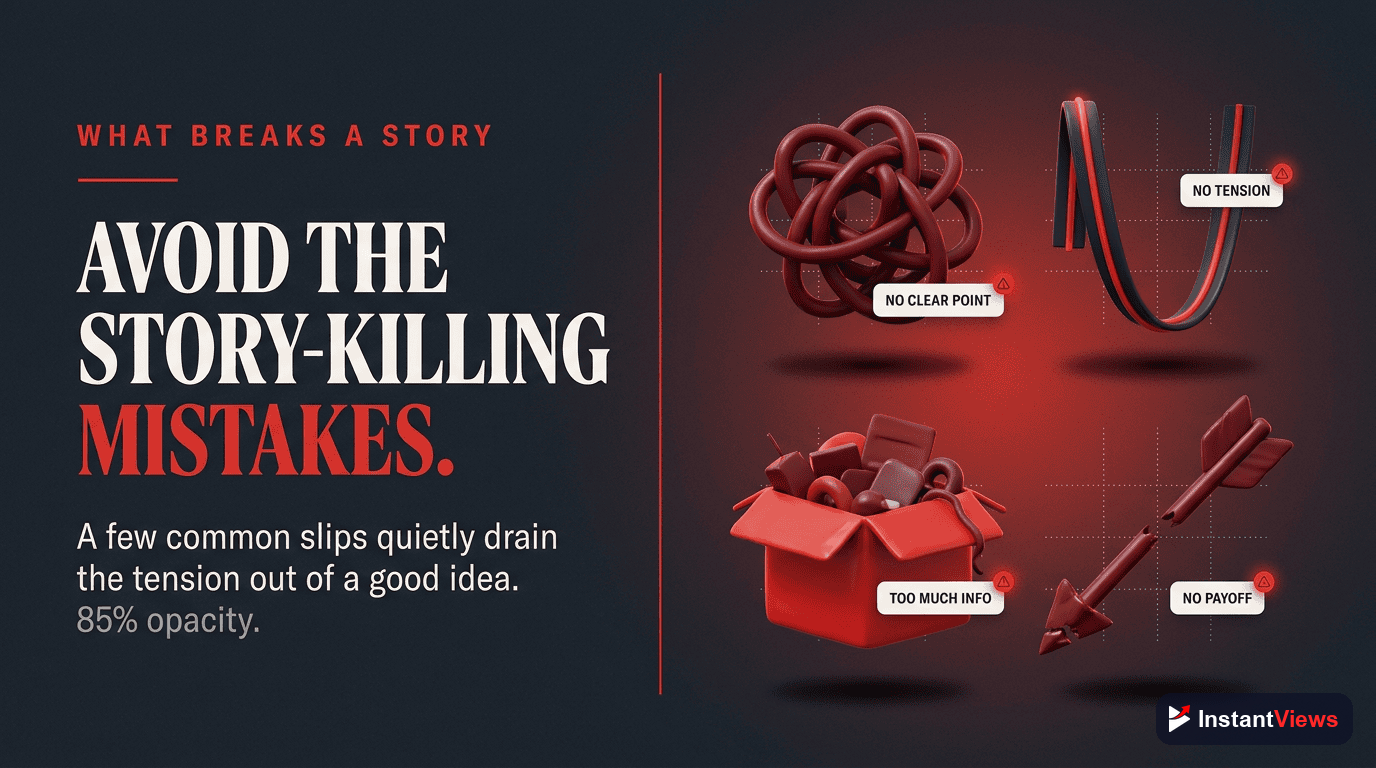
Even creators who understand story trip over the same recurring errors. Watch for these:
- Slow setup: long introductions kill momentum. Open with tension, not throat-clearing — the first 30 seconds decide whether most viewers stay.
- Opening loops you never close: teasing a payoff and never delivering it erodes trust and tanks your satisfaction signal.
- Structure for its own sake: forcing a rigid framework onto a simple idea makes the video feel mechanical. Use structure to serve the story, never the reverse.
- No stakes: if nothing is at risk and nothing changes, there is no tension and no reason to keep watching.
- Story with no substance: narrative shape cannot rescue an empty video. Pair the arc with genuine value.
- Forgetting the viewer is the hero: when the story is only about you, viewers disengage. Frame the journey around what it means for them.
Avoid these and you protect the two things the 2026 algorithm cares about most: people keep watching, and they leave satisfied.
Frequently Asked Questions
Storytelling matters because the 2026 algorithm rewards retention and viewer satisfaction more than raw watch time. A story creates tension and emotional investment that keeps viewers watching to the resolution, which signals to YouTube that your video is worth recommending. It also builds the human connection that turns one-time viewers into loyal subscribers.
A hook is the opening that earns the first few seconds of attention. A story is the narrative arc that carries the viewer through the entire video. The hook is one moment; the story is the structure that turns curiosity into sustained attention by setting up tension and paying it off. The best videos use a strong hook to open a story, not as a standalone trick.
Yes. A tutorial becomes a story when you frame it around a real problem, show the struggle of solving it, and deliver a satisfying result. A review becomes a story when you take viewers on the journey of testing a product, sharing doubts and surprises along the way. Story structure works for any format because it gives information an emotional shape.
An open loop is an unresolved question or promise you plant early and resolve later. It works because the human brain dislikes incompleteness and will keep watching to close the gap. Phrases like "but the result surprised me, and I will show you why in a moment" create a small tension that holds attention across the middle of a video where viewers often drop off.
Match the structure to your goal. Use problem-solution for tutorials, before-after-bridge for transformations and case studies, the hero journey for personal or documentary-style stories, and three-act structure for longer narrative videos. Most creators do not need to follow any framework rigidly; they use it as a backbone to ensure tension, momentum, and a satisfying payoff.
There is no fixed length. A short can tell a complete micro-story in under a minute, while a documentary-style video can sustain a narrative for twenty minutes or more. What matters is that the story stays tight, every scene earns its place, and the pacing keeps tension alive. Longer videos can build deeper emotional connection, but only if the narrative never sags.
Relatability comes from specificity and honesty. Show real stakes, admit your mistakes, and frame the journey around a problem your viewer recognizes in their own life. When viewers see themselves in the character or situation, they invest emotionally. Speaking directly to one person rather than a faceless audience also makes the story feel personal and true.
No. Storytelling is the structure that carries your information and production, not a substitute for them. A story with no substance feels empty, and great information with no narrative shape feels like a lecture. The most successful videos combine genuine value with a narrative arc so the information lands with emotional weight and stays memorable.
Conclusion
Storytelling is not a flourish you sprinkle on top of a YouTube video — it is the structure that decides whether anyone keeps watching. In a feed of 2.7 billion users and a billion hours of daily viewing, a clear narrative arc is the most dependable way to hold attention and build the connection that turns viewers into subscribers.
Start with the core change at the heart of your video, pick a structure that fits the goal, open a loop early, sustain tension through the middle, and pay it off with a resolution that feels earned. Do this even for tutorials and reviews, and watch your retention curve flatten where it used to drop.
The creators who win in 2026 are not the ones with the fanciest gear — they are the ones who make viewers feel something and need to know how it ends. Master the story, and you master the one signal that matters most: people stay, and they leave satisfied.