- Collaborations grow views by borrowing an audience that already trusts your partner, so new viewers arrive warm rather than cold
- The best partners are in an adjacent niche with a similar subscriber count and an audience that overlaps yours by roughly 10 to 30 percent
- Choose the format that fits the relationship: joint upload, guest appearance, shoutout swap, or podcast swap
- Outreach that gets a yes is short, personal, and leads with what your partner gains — not what you want
- Measure subscribers, referral traffic, and the retention of new viewers to know whether a collaboration truly worked
YouTube is the largest discovery engine on the internet, with more than 2.7 billion monthly active users and over a billion hours of video watched every day. Yet for a growing channel, the hardest part is rarely making good videos — it is getting them in front of the right strangers in the first place. The algorithm rewards channels that already have momentum, which can leave smaller creators stuck waiting for a break.
Collaboration is the fastest way to break that stalemate without spending a dollar on ads. When another creator features you, you do not have to earn a new audience's attention from scratch. You borrow an audience that already exists, already watches videos like yours, and already trusts the person introducing you. That borrowed trust is what turns a one-time view into a subscriber.
This is why partnerships have become a deliberate growth strategy rather than a happy accident. Cross-channel collaborations are predictable, repeatable, and often more efficient per subscriber gained than almost any other organic lever you can pull.
In this guide you will learn exactly why borrowed audiences convert so well, how to find partners whose viewers will actually stick, which collaboration formats fit which goals, how to write outreach that earns a reply, and how to measure whether the whole thing worked.
Why Borrowed Audiences Convert So Well
Most growth tactics try to win attention from people who have never heard of you. Search optimization, thumbnails, and trending topics all fight for the click of a complete stranger. A collaboration works differently: it hands you an audience that is already pre-qualified and pre-warmed by someone they trust.
Think about how you discover new channels yourself. When a creator you watch every week says, "You have to check out this person," you do not approach that recommendation as a skeptic. You arrive curious and open, because the trust you have in the host transfers to the guest. Marketers call this borrowed credibility, and on YouTube it is the difference between a cold impression and a warm introduction.
That warmth shows up in the numbers. Viewers who find you through a trusted collaboration tend to watch longer, subscribe at higher rates, and return more often than viewers who land on you through a random suggested video. Industry analysis in 2026 points to collaborations driving meaningfully higher engagement than solo content, precisely because the audience is primed before they ever press play.
There is a second, quieter benefit that creators often overlook. YouTube watches what your audience does, and when viewers from a closely related channel engage with your video, you send the algorithm a strong signal about who your content is for. That sharper audience definition can improve how your future videos are recommended — so a single good collaboration keeps paying off long after launch day.
The Three Things a Collaboration Buys You
- Reach: Instant exposure to an audience you could not have reached alone, often many times the size of a single suggested-video placement.
- Trust: An implied endorsement from someone your new viewers already follow, which shortcuts the months of consistency it normally takes to earn credibility.
- Relevance: Because a good partner shares your topic, the borrowed audience is already interested in what you make — so they are far more likely to stay.
How to Find the Right Partners
The single biggest factor in a collaboration's success is choosing the right partner. Get this wrong and even a perfectly produced video sends you viewers who never come back. Get it right and a modest joint project can outperform months of solo uploads.
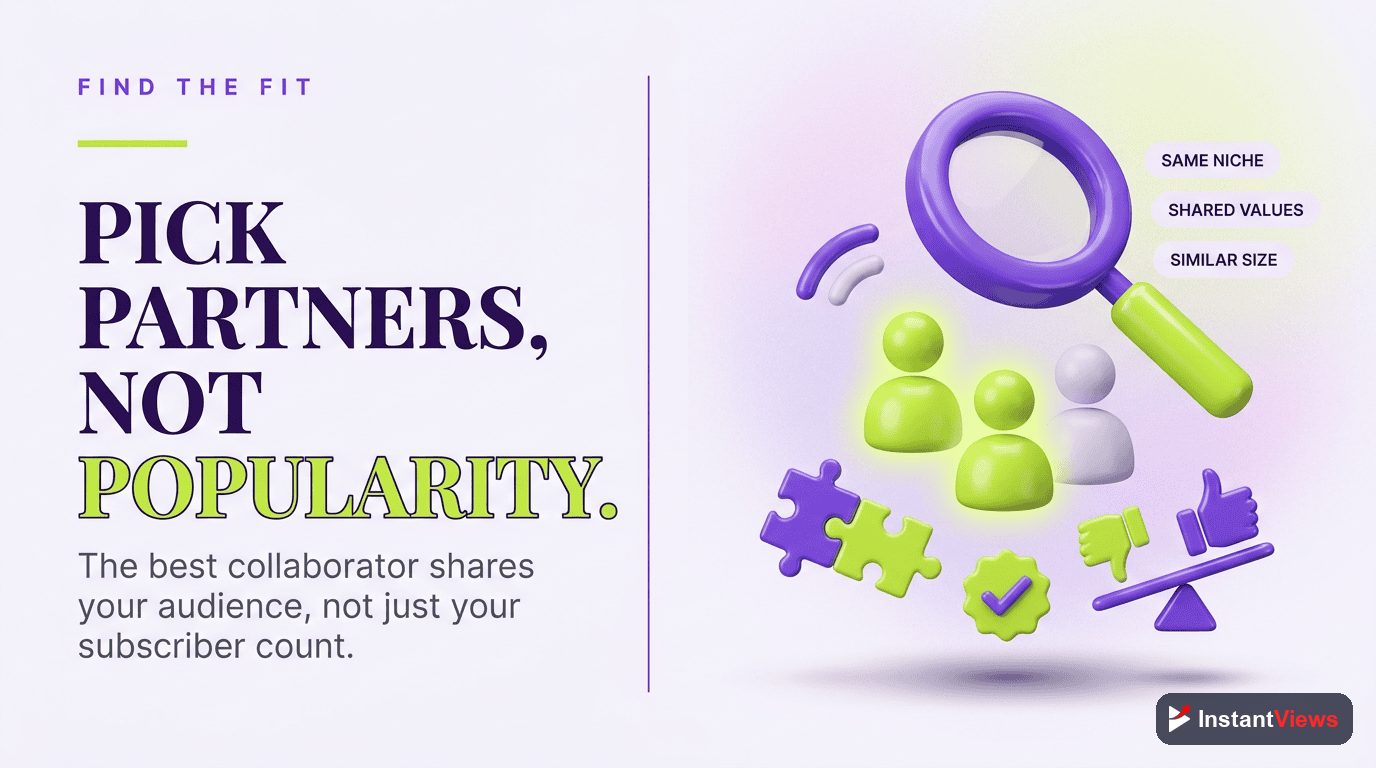
Look for Adjacent, Not Identical
The ideal partner sits in an adjacent niche — close enough that your audiences care about the same things, but different enough that you are not direct competitors. A home-cooking channel and a kitchen-gear reviewer share viewers without cannibalizing each other. A budget-travel creator and a language-learning channel speak to overlapping curiosity. When you complement rather than compete, both sides have a genuine reason to send viewers across.
Match Size, At Least at First
For your early collaborations, aim for creators close to your own subscriber count. A partnership has to feel fair to both sides. A creator with ten times your audience has little incentive to promote you equally, while a much smaller partner brings less reach to the table. Similar-size pairings keep the exchange balanced and make the yes far easier to win.
Check Alignment Before You Pitch
Subscriber count is only the surface. Before you reach out, do the homework:
- Watch their recent videos. Are the tone, pacing, and values a fit with yours? An awkward mismatch is obvious to viewers.
- Read their comments. The comment section tells you who actually watches and whether that audience would care about you.
- Check their upload rhythm. An active, consistent creator is a reliable partner; a dormant channel will not move the needle.
- Look for shared values. The chemistry between two creators is visible on screen, and audiences reward it.
The Audience Overlap Sweet Spot
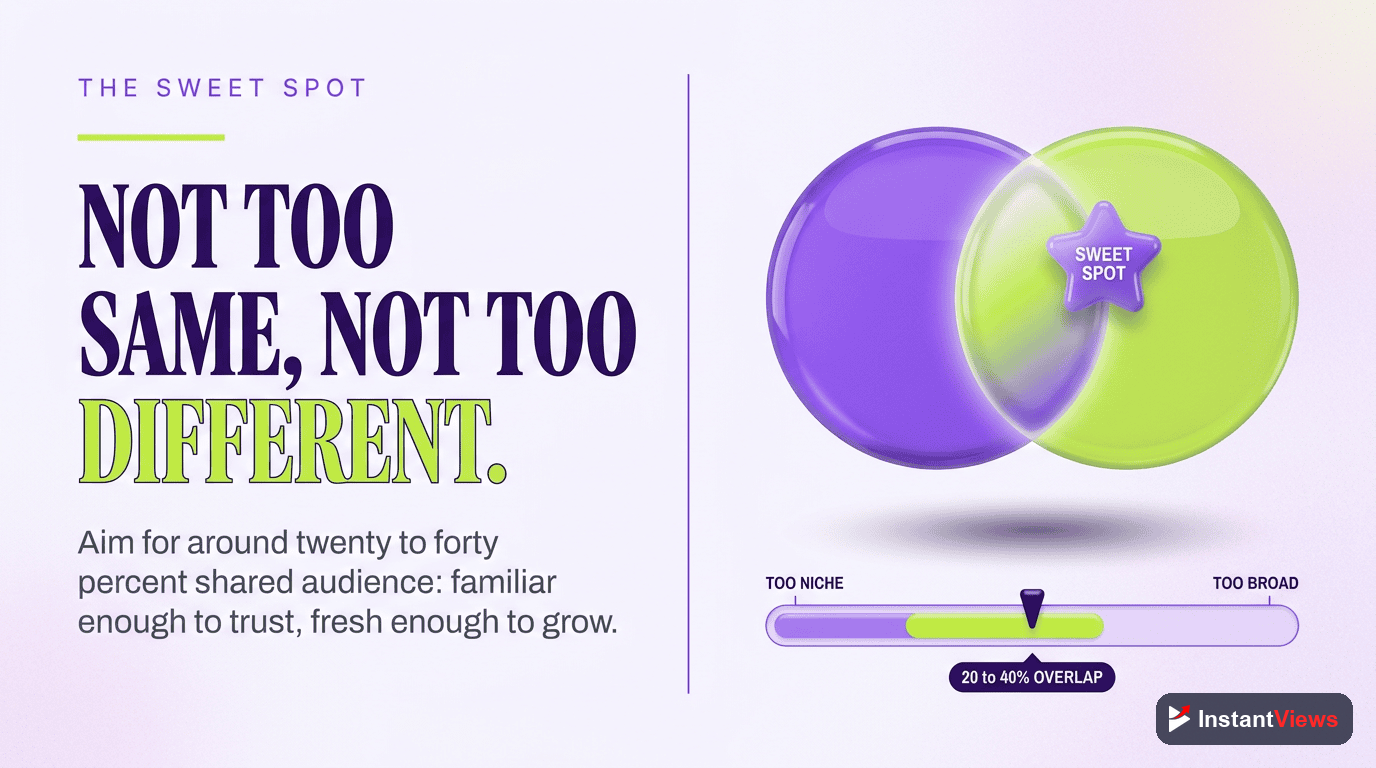
It is tempting to assume the more your audiences overlap, the better. In reality, there is a sweet spot. If two channels share almost their entire audience, a collaboration mostly reaches people who already follow you both, so few new viewers gain. If the audiences share almost nothing, the borrowed viewers have no real interest in your topic and bounce immediately.
The most productive pairings tend to land in the middle — roughly 10 to 30 percent audience overlap. That range is large enough that the borrowed audience already cares about your subject, yet small enough that most of your partner's viewers have never seen you. That untapped majority is exactly where your new subscribers come from.
You will not have a precise overlap percentage before you start, and that is fine. Use it as a mental model rather than a spreadsheet requirement. If you watch a potential partner's videos and think, "Their viewers would obviously enjoy mine, but most of them have probably never run into me," you are almost certainly inside the sweet spot.
Collaboration Formats Compared
Not every collaboration requires filming together. The right format depends on how well you know the partner, how much effort each side can invest, and what you are trying to achieve. Lighter formats build relationships and trickle in steady growth; heavier formats demand more coordination but can deliver a much larger spike. The table below compares the main options used by creators in 2026.
| Format | What It Is | Effort | Best For |
|---|---|---|---|
| Joint Upload | Both channels publish the same video, or two halves of one project, and cross-link them | High | Maximum reach with a trusted, similar-size partner |
| Guest Appearance | You appear inside their video, or they appear in yours, as an interview or feature | Medium | Borrowing authority with low production overhead on the guest side |
| Shoutout Swap | You mention and recommend each other’s channels, with no joint footage | Low | Quick, repeatable cross-promotion between aligned creators |
| Podcast / Interview Swap | You each guest on the other’s podcast or long-form show | Medium | Deep storytelling and building trust with engaged listeners |
| Shorts Duet / Response | You respond to or build on each other’s Shorts in a chain | Low | Fast, lightweight reach using the Shorts surface |
| Featured Channel Exchange | You list each other in your channel’s featured section | Very Low | Slow, passive, ongoing cross-pollination |
How to Choose Between Them
A practical approach is to start light and earn your way up. Open with a shoutout swap or a Featured Channel exchange to build the relationship and see how each audience responds. When the early signals are good, propose a guest appearance or a podcast swap. Reserve the full joint upload — the highest-effort, highest-reward format — for partners you trust and whose audience has already shown it likes you.

Outreach That Actually Works
The reason most collaboration requests get ignored is simple: they are about the sender. "I love your channel, can we collab?" tells the recipient nothing about what is in it for them and gives them no concrete idea to react to. Creators who clearly communicate their value — and make the yes easy — get far more replies.
The Anatomy of a Pitch That Gets a Reply
- Prove you watched. Reference a specific recent video and what you genuinely liked about it. This single line separates you from every copy-paste message in their inbox.
- Lead with their gain. Frame the collaboration around what their audience and channel get, not what you want from them.
- Propose one concrete idea. A specific, ready-to-run concept is far easier to say yes to than an open-ended "let's do something."
- Make it low-effort to accept. Suggest a format that does not bury them in work, and offer to handle the heavy lifting where you can.
- Keep it short. A few tight sentences respect their time. Long pitches rarely get read to the end.
Send your message where the creator is most likely to see it — often a business email rather than a flooded direct-message inbox. And remember that warming the relationship first, through thoughtful comments and an early shoutout, dramatically raises your odds before you ever ask for anything.
Never blast the same generic pitch to dozens of creators. Mass outreach is obvious, damages your reputation in a tight-knit niche, and gets ignored. One personalized message to the right partner beats fifty copy-paste requests to the wrong ones.
Find the Right Partners Faster
Use our free suite of YouTube tools to research niches, compare channels, and analyze which topics resonate with the audiences you want to borrow.
Explore Free YouTube Tools →
The Collaboration Process, Step by Step
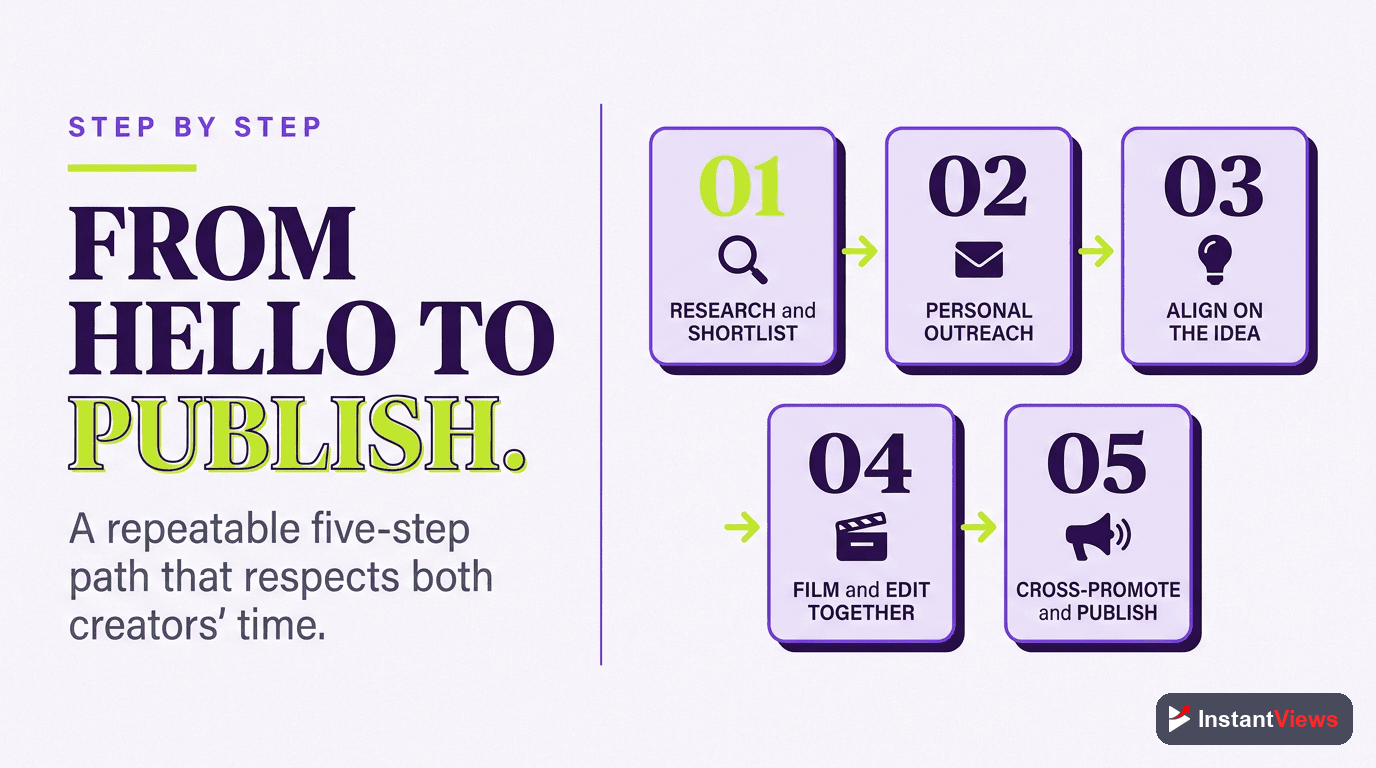
Once a partner says yes, a little structure keeps the project on track and the results measurable. Here is a simple sequence that works for almost any format.
Agree on the Format and Goal
Decide together what you are making and why — a joint upload, guest spot, or swap — and what each side wants out of it, whether that is subscribers, views, or simply a stronger relationship.
Lock the Topic and Talking Points
Choose a subject both audiences care about and outline the key points in advance. A loose plan keeps the conversation focused without making it feel scripted.
Set Dates and Promotion
Agree on a publish date and exactly how each of you will promote the collaboration — cross-links, community posts, Shorts teasers — so the launch lands with momentum on both channels.
Record and Cross-Link
Produce the content, then connect the videos with end screens, cards, pinned comments, and clear calls to action that point each audience toward the other channel.
Review and Repeat
After launch, measure the results, thank your partner, and decide whether to run it again. The best partnerships compound, growing more valuable with each round.
Measuring Whether It Worked
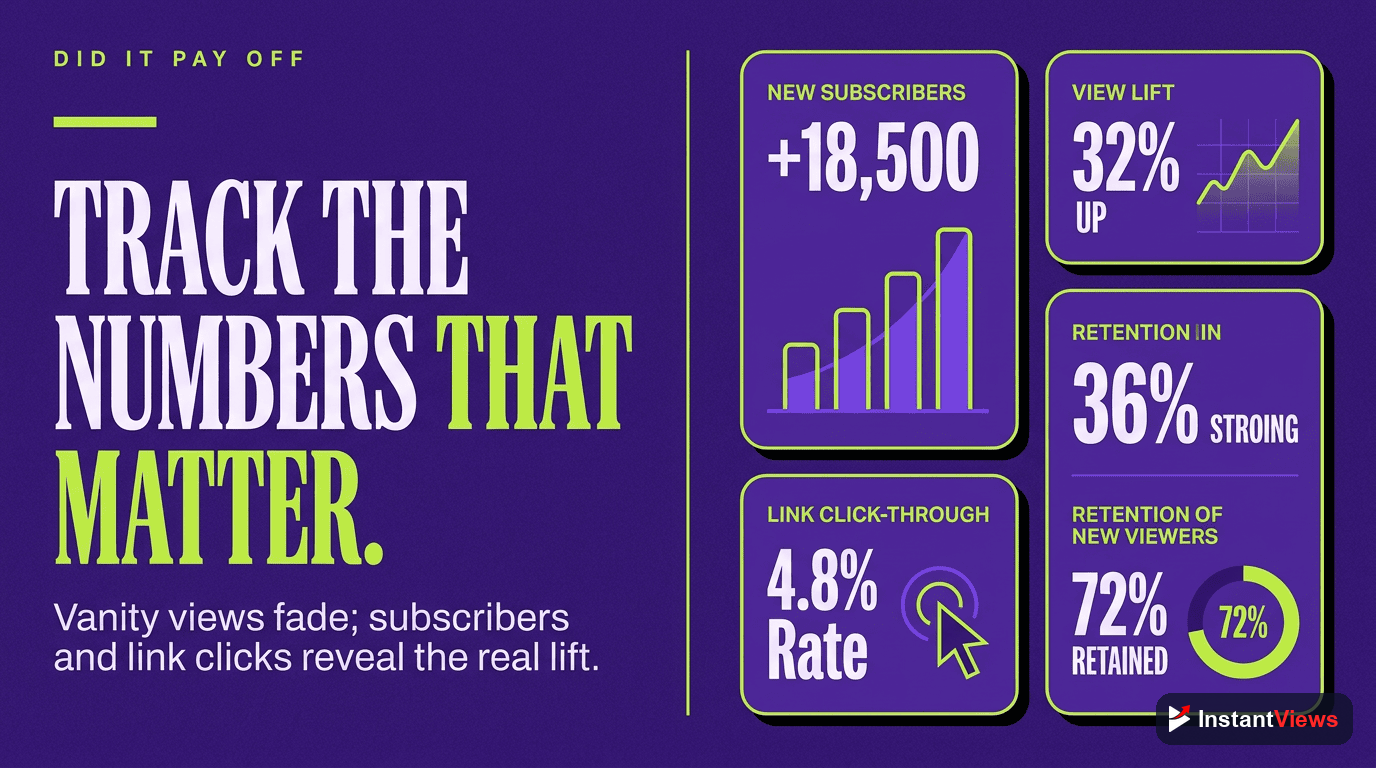
A spike in views feels good, but it does not tell you whether a collaboration actually grew your channel. To know that, you need to look past the launch-day numbers and ask whether the borrowed audience stayed.
What to Track
- Subscribers gained: Compare your subscriber growth in the days around the collaboration against a normal week to isolate the lift.
- Referral traffic: In YouTube Analytics, the traffic-source report shows views arriving from your partner’s channel and videos — the clearest signal the cross-promotion worked.
- Retention of new viewers: Check whether the new arrivals watched as long as your typical audience. Strong retention means the partner fit was right.
- Return visits: The real prize is whether those new viewers come back for your next uploads. A view that never returns is just a number.
YouTube’s 2026 algorithm rewards genuine viewer satisfaction and retention over raw watch time, which makes the quality of your borrowed audience matter more than its size. A smaller collaboration that sends you highly engaged viewers will do more for your long-term growth than a larger one that sends a wave of people who immediately click away.
Keep a simple log of every collaboration, the partner, the format, and these four numbers. Over a few rounds, patterns emerge: you learn which niches, which formats, and which kinds of partners reliably send you viewers who stay — and you can double down on what works.
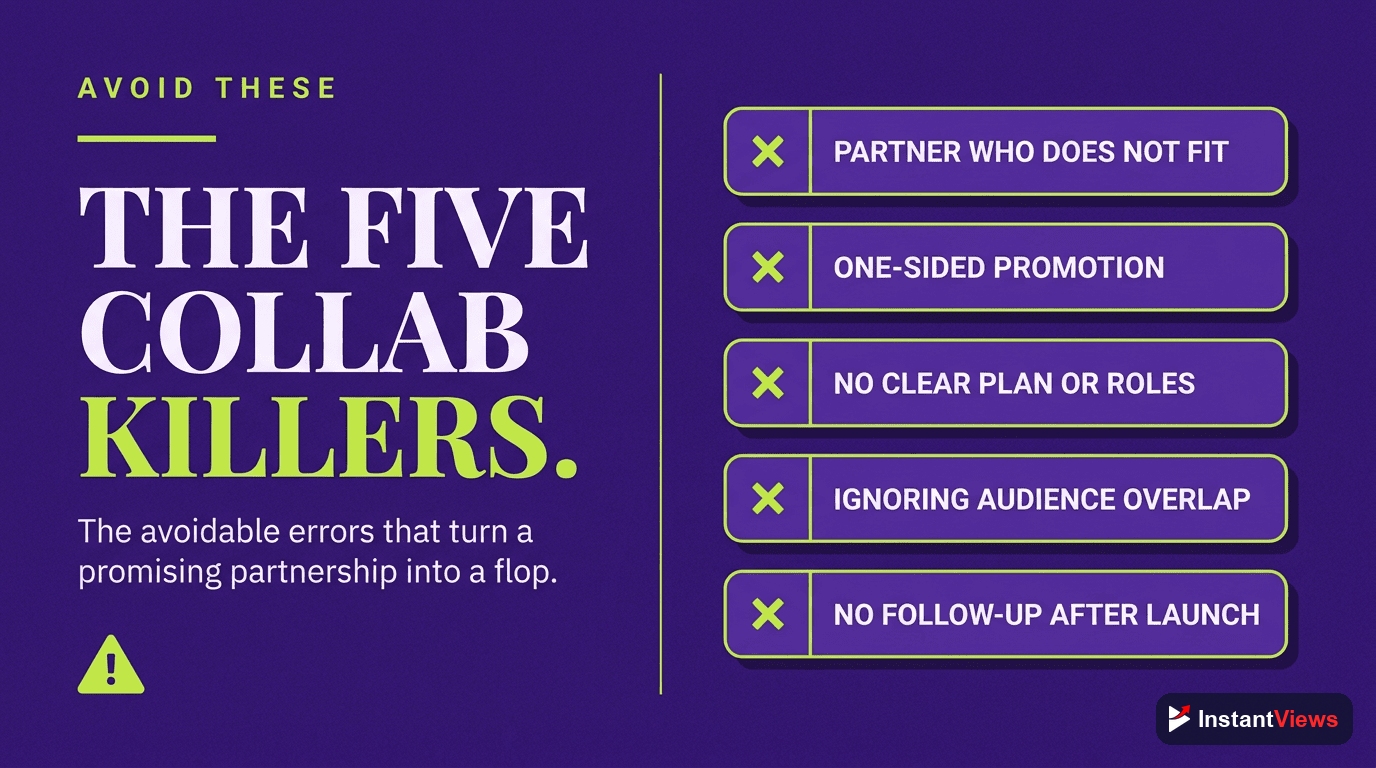
Common Collaboration Mistakes
Most failed collaborations fail for predictable reasons. Avoid these and you are already ahead of the majority of creators.
- Chasing size over fit: A huge partner with the wrong audience sends views that never convert. Alignment beats reach every time.
- Pitching cold and generic: Mass, impersonal outreach gets ignored and can sour your name in a small niche.
- Making it one-sided: If only one channel really benefits, the partner has no reason to promote it — and may not do it again.
- Skipping the cross-links: Forgetting end screens, cards, and pinned comments leaves the whole point of the collaboration on the table.
- No follow-through: If your regular videos do not give new viewers a reason to stay, the borrowed audience leaves as fast as it arrived.
- Never measuring: Without tracking subscribers, referrals, and retention, you cannot tell a real win from a vanity spike.
"You cannot buy trust, but you can borrow it. A collaboration is a trusted creator handing their audience a reason to give you a chance — your only job is to be worth that introduction."
Frequently Asked Questions
A collaboration lets you borrow an audience that already trusts your partner. When a creator your viewers respect introduces you, that endorsement carries the same trust, so new viewers arrive warm and pre-qualified rather than cold. This is why collaborators tend to subscribe and watch at higher rates than viewers who find you through random suggested videos.
For your first collaborations, partner with creators close to your own subscriber count so the exchange feels fair and both sides gain. A wildly larger creator has little reason to promote a much smaller one, and a much smaller creator brings less reach. Once you have a track record, you can reach for partners one tier above you with a strong, specific pitch.
Look for creators in an adjacent niche rather than direct competitors, with an audience that overlaps yours by roughly 10 to 30 percent. Watch their recent videos, read their comments, and confirm your styles and values align. The best partners share your audience but not your exact content, so you complement each other instead of competing.
The most common are the joint upload, where both channels publish the same video; the guest appearance, where you appear in each other content; the shoutout swap, where you mention each other channels; and the podcast or interview swap, where you trade guest spots. Lighter options include Shorts duets, comment shoutouts, and Featured Channel exchanges.
Keep it short, personal, and specific. Show you have watched their work, lead with what they gain rather than what you want, propose one concrete idea, and make saying yes easy. Generic copy-paste pitches are ignored; a message that proves you understand their channel and offers a fair, low-effort win gets answered.
Track new subscribers and views in the days around the collaboration, watch your traffic sources in YouTube Analytics for referrals from the partner, and compare the retention of new viewers against your channel average. Beyond the spike, the real test is whether those new viewers come back to watch your next videos.
Yes. Featured Channel exchanges, comment shoutouts, and Shorts response chains take very little time and produce slow, steady cross-pollination. They are low risk, easy to repeat, and a natural way to build relationships with creators before proposing a bigger joint project later.
No. Collaborations accelerate a channel that is already publishing strong content consistently; they do not fix a weak one. Treat them as one repeatable lever inside your wider plan rather than a shortcut. The new viewers a collaboration sends only stay if your regular videos give them a reason to.
Conclusion
Influencer collaborations are one of the few growth levers that cost nothing but effort and yet consistently outperform paid reach. By borrowing an audience that already trusts your partner, you skip the hardest part of growth — earning a cold stranger’s attention — and start the relationship warm.
The formula is straightforward: find aligned partners in an adjacent niche with the right audience overlap, choose a format that fits the relationship, pitch with a short and specific message that leads with their gain, and then measure whether the new viewers actually stay. Start light with shoutouts and guest spots, prove the fit, and work your way up to bigger joint projects.
Treat collaborations as a repeatable habit rather than a one-off experiment. Build relationships before you need them, keep every partnership genuinely fair, and back it all with content worth subscribing to. Do that consistently and borrowed audiences become your own — turning other creators’ trust into lasting growth for your channel.