- You cannot guarantee a viral hit, but a repeatable system stacks the odds on every single upload
- Validate the idea first, then engineer the packaging — the title and thumbnail — before you ever film
- A strong hook plus high retention matters more than raw watch time in the 2026 algorithm
- Design one deliberate shareable moment into the video instead of hoping a share happens by accident
- The first 48 hours decide how far a video spreads, so plan the launch as carefully as the content
Every creator wants the same thing: a video that takes off. But most people treat virality as a lottery — they upload, cross their fingers, and wait to see what the algorithm does. With more than 2.7 billion monthly active users and roughly a billion hours of video watched every day, YouTube is the biggest stage in the world, and the temptation to chase one lucky hit is enormous.
Here is the uncomfortable truth: you cannot guarantee that any single video goes viral. Too much is outside your control — timing, the mood of the audience, what else is trending that week, and how the algorithm chooses to test your upload. What you can control is the process you run before you hit publish. And that process is everything.
The creators who seem to go viral again and again are not luckier than you. They are running a repeatable system on every video — the same checklist, applied with discipline, upload after upload. They stack so many small advantages on each video that, eventually, one catches fire. And because the system is consistent, when it catches, it spreads further and faster than it ever would by chance.
This guide gives you that system: a pre-publish checklist you run on every video to validate the idea, engineer the packaging, write the hook, maximize retention, build in shareability, optimize metadata, and nail the launch. Treat it as a process, not a trick, and your odds improve on every upload.
- Why a System Beats Luck
- The Every-Video System at a Glance
- Step 1: Validate the Idea
- Step 2: Package First, Film Second
- Step 3: Write a Hook That Earns the Watch
- Step 4: Engineer for Retention
- Step 5: Build a Shareable Moment
- Step 6: Optimize Metadata and SEO
- Step 7: Run a Strong Launch
- Step 8: Measure and Iterate
- FAQ
Why a System Beats Luck
If virality were purely random, the same channels would not keep producing hit after hit. They do, and that tells you something important: while you cannot control the outcome of any one video, you can absolutely control the inputs. A system is simply the disciplined management of those inputs.
Think of each video as a coin you flip. A single flip is luck. But if you can quietly weight the coin — a sharper idea here, a stronger thumbnail there, a tighter hook, a better launch window — you change the long-run odds. No individual flip is guaranteed, yet across dozens of uploads the weighted coin lands your way far more often. That is what a repeatable process does.
A system gives you three things a one-off trick never can:
- Consistency: Every video gets the same baseline quality, so you never publish a weak upload that drags your channel down.
- Learning: Because you change one variable at a time, every video becomes an experiment that teaches you what works for your audience.
- Compounding: Lessons stack. The thumbnail that worked last month informs the next one, and small gains accumulate into a channel that grows on its own momentum.
The 2026 algorithm rewards this approach. YouTube now optimizes for viewer satisfaction and retention rather than simply chasing raw watch time, and it is actively reducing the spread of low-value, mass-produced content. A thoughtful, repeatable process is exactly what that environment rewards. Chasing tricks is exactly what it punishes.

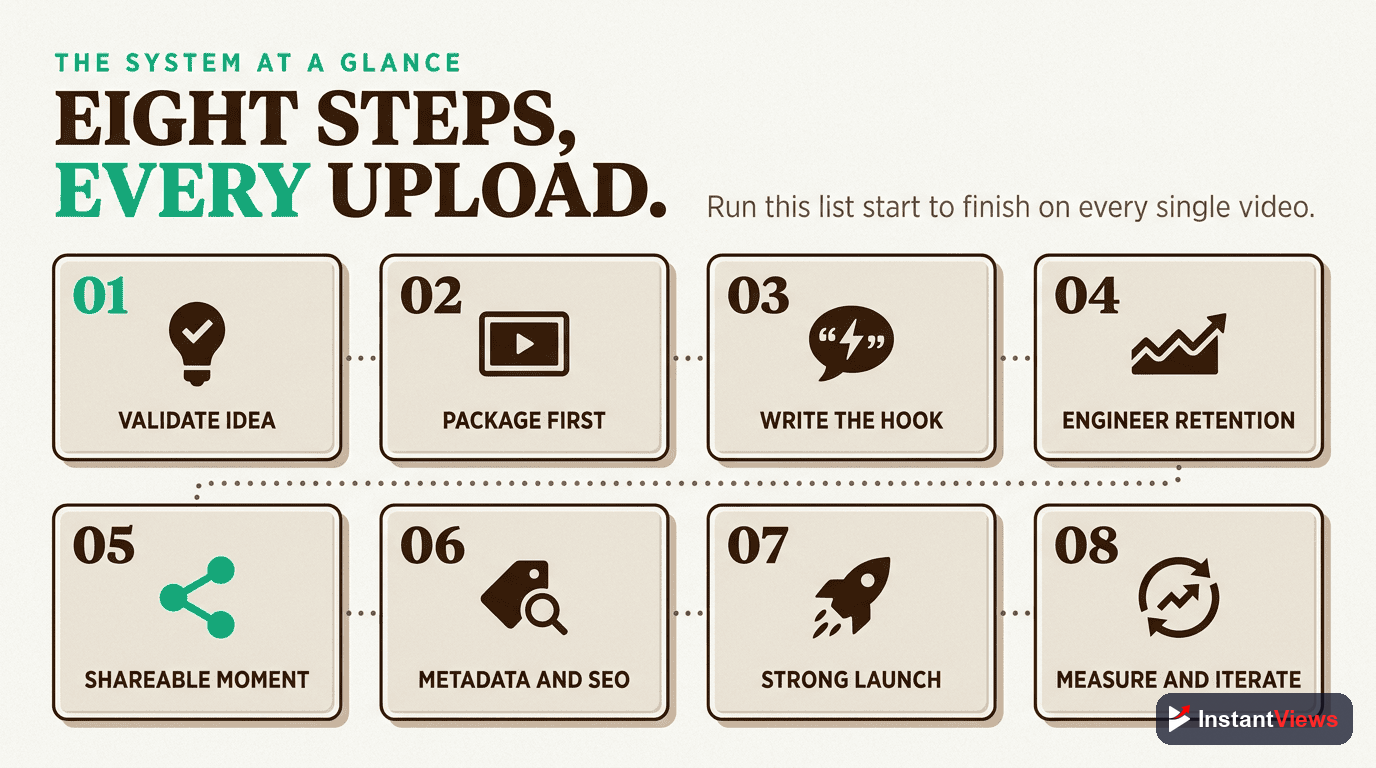
The Every-Video System at a Glance
Before we go deep on each stage, here is the whole checklist in one place. Print it, pin it above your desk, and run it on every upload. Each row is a stage, what you do, and — just as important — why it moves the needle.
| Stage | What to Do | Why It Matters |
|---|---|---|
| 1. Validate | Confirm the idea is both searchable and interesting | No packaging can save a topic nobody wants to watch |
| 2. Package | Write the title and sketch the thumbnail before filming | The click happens before the watch; weak packaging caps reach |
| 3. Hook | Deliver on the promise in the first few seconds | Many viewers decide whether to stay within the first 15 seconds |
| 4. Retain | Structure the video so each segment earns the next | Retention is the strongest quality signal in 2026 |
| 5. Share | Design one deliberate moment worth sending to a friend | Shares expand reach beyond your existing audience |
| 6. Metadata | Optimize title, description, tags, and chapters | Helps the right viewers find and get matched to the video |
| 7. Launch | Publish at a strong time and seed early engagement | The first 48 hours decide how far the video spreads |
| 8. Iterate | Review the data and feed the lesson into the next video | Compounding small wins is what beats luck over time |
The rest of this guide unpacks each stage. None of them is complicated on its own. The power comes from doing all of them, every time, without skipping the boring parts.
Step 1: Validate the Idea
Everything downstream depends on the idea. You can have a flawless thumbnail, a perfect hook, and surgical editing, but if the topic does not interest anyone, the video will not travel. Validation is the cheapest insurance you can buy, because it costs nothing but a little honesty before you commit hours of work.
A strong idea lives at the intersection of two things: something people are actively searching for or interested in, and something you can make genuinely interesting. Hit only the first and you get a dry, dutiful tutorial nobody finishes. Hit only the second and you make something clever that nobody is looking for. You need both.
Quick Validation Questions
- Who clicks this, and why? If you cannot picture the specific person, the idea is too vague.
- Is there proven demand? Check search suggestions, related videos, and whether the topic recurs across your niche.
- What is the curiosity gap? A great idea promises something the viewer cannot resist finding out.
- Can I make it better than what already exists? If the top results are weak or dated, that is your opening.
One useful test: try to say the idea out loud in a single sentence that makes someone lean in. "I tried every budget microphone so you do not have to" lands instantly. "My thoughts on audio gear" does not. If the one-sentence pitch is flat, keep refining before you move on.
Step 2: Package First, Film Second
This is the habit that separates amateurs from professionals: design the packaging before you film. Your title and thumbnail are the two elements with the most direct impact on click-through rate, and the click has to happen before any of your hard work on the video itself even gets a chance to matter.
Designing packaging first does something subtle and powerful: it forces you to define the promise of the video before you make it. If you cannot write a title that makes people curious and sketch a thumbnail that is clear at a glance, the idea is not ready — and it is far cheaper to discover that now than after a day of filming and editing.
Titles That Earn the Click
Specific beats generic every time. A title like "5 Editing Tricks That Doubled My Retention" promises a concrete outcome, while "Editing Tips" promises nothing. Both contain the keyword, but only one creates a reason to click. Keep titles tight, lead with the most interesting word, and make a promise the video actually keeps.
Thumbnails That Are Clear at a Glance
A thumbnail has to read in under a second on a small screen. Use a single clear focal point, high contrast, and minimal text. The most effective thumbnails accurately represent the video while still generating curiosity. Resist the urge to mislead — a clickbait thumbnail might lift the initial click rate, but it triggers rapid drop-off that sends a negative retention signal and cancels out the gain.
Title and thumbnail must work as a team, not repeat each other. If the thumbnail already shows a result, the title should add the missing context or stakes. Saying the same thing twice wastes your two most valuable pieces of real estate.
Step 3: Write a Hook That Earns the Watch
The click gets the viewer in the door; the hook decides whether they stay. A large share of viewers drop off within the first 15 seconds, often not because the video is bad but because the opening fails to connect. Your hook is the most important sentence you will write.
The job of the hook is simple: pay off the promise of the title and thumbnail immediately, then open a new loop that pulls the viewer forward. Skip the long animated intro, the "hey guys, welcome back" ritual, and the throat-clearing. Get to the value, or the tension, in the first few seconds.
- Confirm they are in the right place: Restate the promise so the viewer knows the payoff is coming.
- Open a curiosity loop: Hint at a surprising result, a mistake, or a reveal later in the video.
- Show, do not tell: If you can flash the end result or the transformation, do it — proof beats description.
- Keep it short: A tight opening promise of a couple dozen words holds attention far better than a rambling setup.
A practical exercise: write your hook, then cut it in half. Then read it aloud and remove any word that does not build curiosity or confirm the promise. The leaner the opening, the higher your early retention — and early retention is what convinces the algorithm to keep showing the video.
Step 4: Engineer for Retention
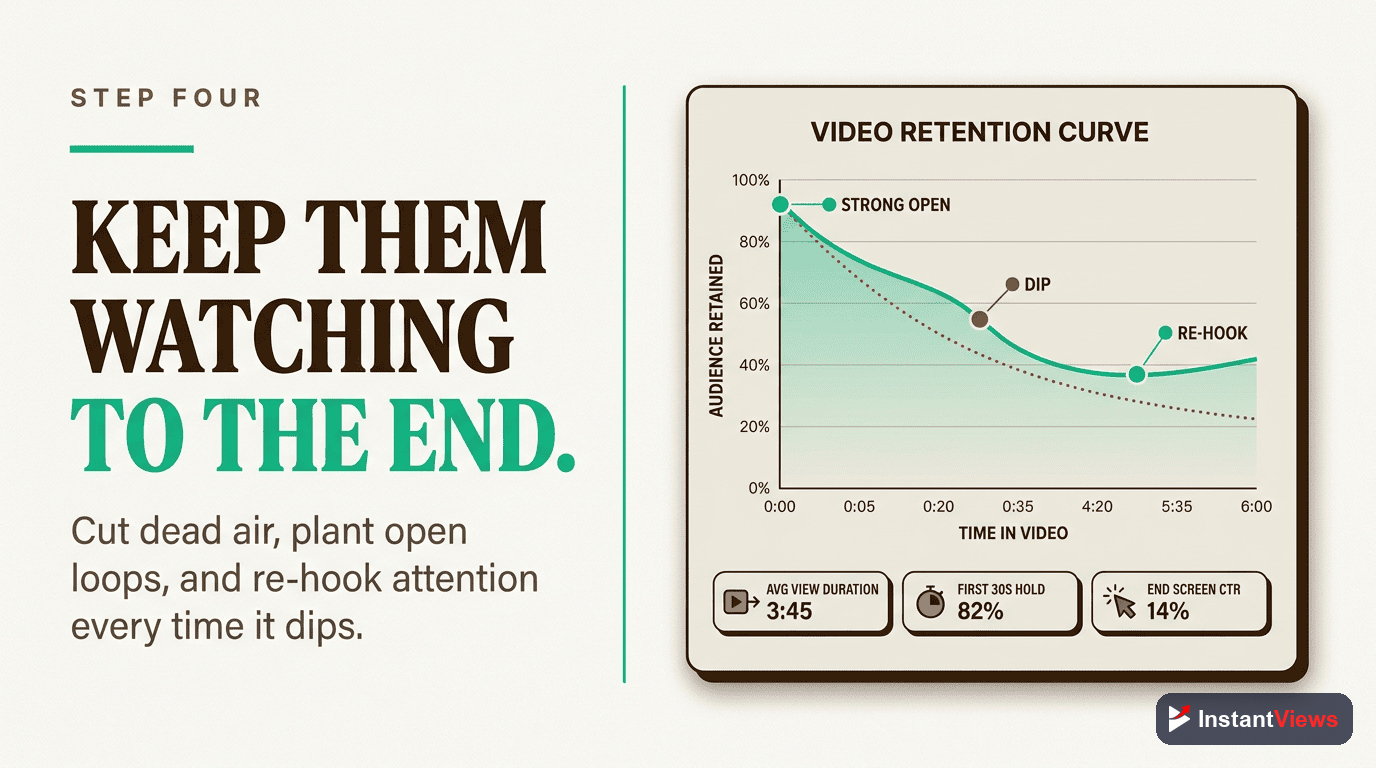
If there is one metric to obsess over in 2026, it is retention. The algorithm treats how well you hold an audience as the strongest signal of quality. A six-minute video that keeps 80% of its viewers can outperform a twenty-minute video that keeps only 30%, even though the longer video has more raw watch time. When retention falls too low, the system quietly stops recommending the video regardless of how good the click rate was.
This reframes the whole goal. You are not trying to make videos longer; you are trying to make every second earn the next. The right length is exactly as long as you can stay genuinely interesting and not one second more.
Tactics That Keep Viewers Watching
- Tight pacing: Cut dead air, restarts, and tangents in the edit. If a moment drags, it goes.
- Open loops: Tease what is coming later so viewers have a reason to stay through the middle.
- Pattern interrupts: Change the visual, angle, or energy every so often to reset attention.
- Front-load value: Deliver something useful early so viewers trust that staying is worth it.
- Clean structure: Signpost the sections so viewers always know where they are and where they are going.
After publishing, study the audience retention graph. Sharp dips show you exactly where people leave — usually a slow intro, a tangent, or a broken promise. The flat, gentle decline you want comes from cutting those moments out next time. Retention is the one metric you can directly engineer, edit by edit.
Step 5: Build a Shareable Moment
Retention keeps the audience you already reached. Shares are how you reach the audience you do not have yet. Every time someone sends your video to a friend or posts it in a group chat, you gain a viewer that no algorithm handed you — and that kind of organic spread is a hallmark of videos that break out.
The mistake most creators make is hoping a share happens by accident. The system flips that: you design one specific shareable moment into the video on purpose. Before you film, ask yourself, "What is the one part of this video someone would screenshot, clip, or send to a friend?" If you do not have an answer, build one in.
What Makes People Share
- Surprise: A counterintuitive result or a fact that makes people say "wait, what?"
- Emotion: Something funny, moving, or satisfying enough to pass along.
- Utility: A tip or resource so useful that sharing it makes the sender look helpful.
- Identity: A moment that says something about the person who shares it — their taste, values, or sense of humor.
Shorts deserve a special mention here. With over 200 billion views a day, Shorts are one of the fastest ways to reach brand-new audiences in 2026. A well-built shareable moment can live as a standalone Short that introduces the idea, then points interested viewers to the deeper long-form video you ran this whole checklist on. The short reaches strangers; the long video earns the subscribe.
Step 6: Optimize Metadata and SEO
Packaging earns the click and the hook earns the watch, but metadata helps the right people find the video in the first place. This stage is quick, but skipping it leaves reach on the table — especially for searchable, evergreen topics that can quietly pull views for years.
The Metadata Checklist
- Title: Include your main keyword naturally, near the front, without sacrificing the click.
- Description: Use the first one or two lines to reinforce the promise and the keyword; use the rest for context, links, and timestamps.
- Chapters: Add timestamped chapters so viewers can navigate and so YouTube understands your structure.
- Tags and topics: Add a handful of relevant tags; they are a minor signal, but they cost nothing.
- Captions: Upload accurate captions for accessibility and to give the platform clean text to understand.
Remember the goal of metadata in 2026: it helps the platform match your video to the right viewers, where strong satisfaction and retention then take over. Metadata opens the door; the content has to walk through it. Do not over-optimize at the expense of a clear, honest promise.
Run the Checklist Faster
Use our free suite of YouTube tools to research validated topics, test titles, and analyze the retention and packaging of any video before you publish.
Explore Free YouTube Tools →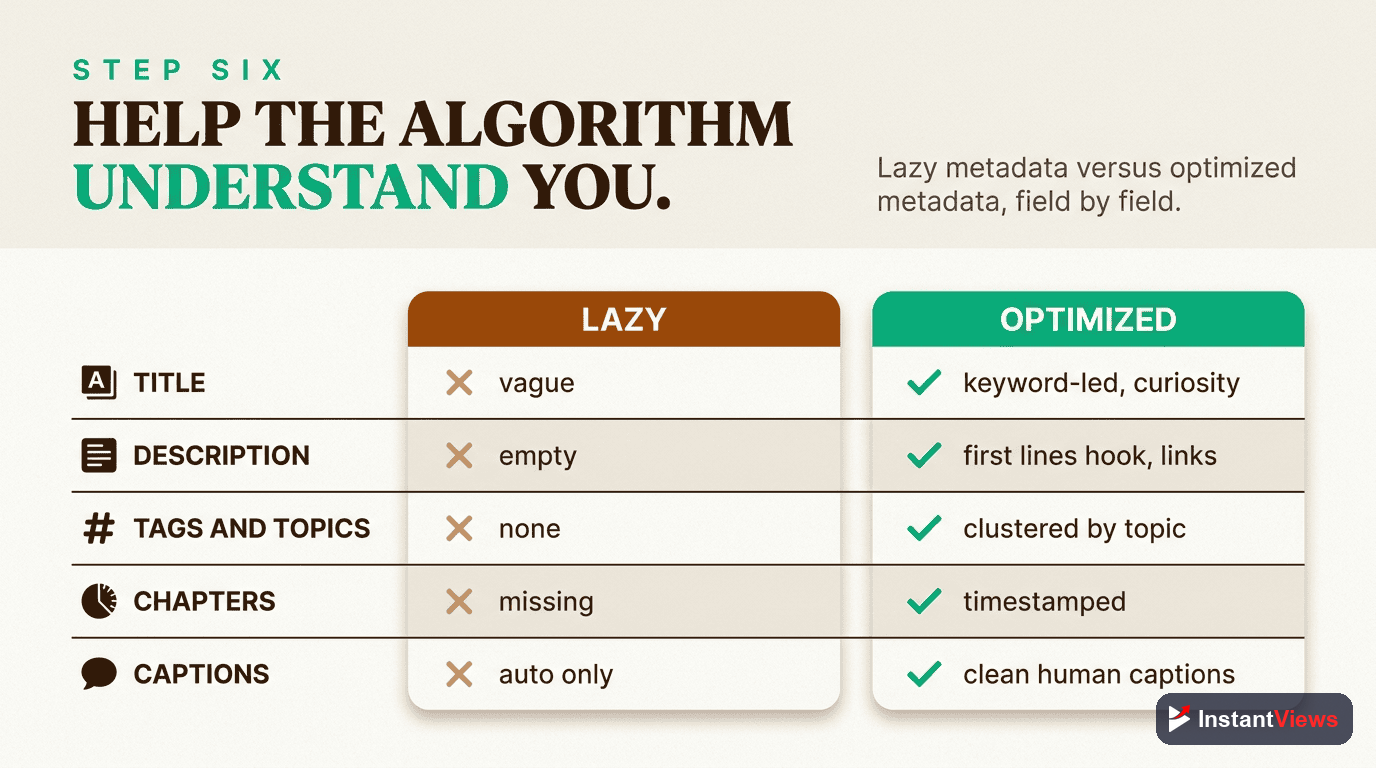
Step 7: Run a Strong Launch
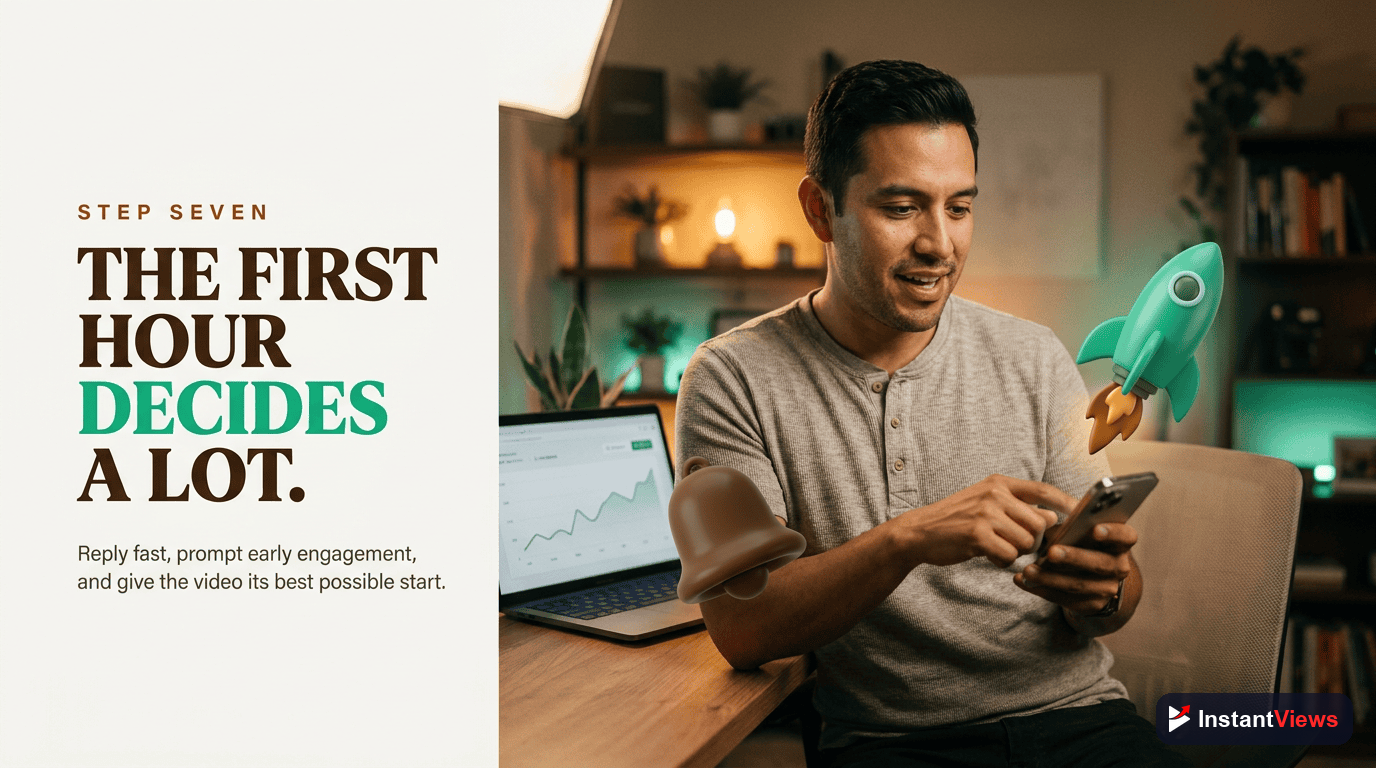
You have validated, packaged, hooked, edited, and optimized. Now comes the stage most creators ignore entirely: the launch. YouTube tests every new video by showing it to a small slice of your audience and watching how they respond. If click-through rate, retention, and satisfaction signals are strong in the first 24 to 48 hours, the system expands reach to broader audiences over the following one to two weeks. That early window is decisive.
This is why launch is a deliberate step, not an afterthought. Here is the sequence to run on every upload:
Publish at a Strong Time
Post when your audience is most active, based on your analytics, so the early test audience is as engaged as possible right from the start.
Seed Early Engagement
Pin a comment that invites discussion, reply quickly to early comments, and notify your most engaged fans so the first signals are strong.
Promote Beyond YouTube
Share to your email list and other platforms to drive an early burst of motivated viewers who are likely to watch and engage.
Watch the First 48 Hours
Check click-through rate and retention closely. If CTR is weak after a day or two, the packaging is the likely problem, not the content.
Make One Focused Fix
If early signals lag, swap the thumbnail or title, change one thing at a time, then give it another day or two to respond before judging.
Note that small fixes during launch only work because the rest of the system is solid. You cannot rescue a weak idea with a launch tactic — but a strong video with a sharp launch can travel much further than the same video left to fend for itself.
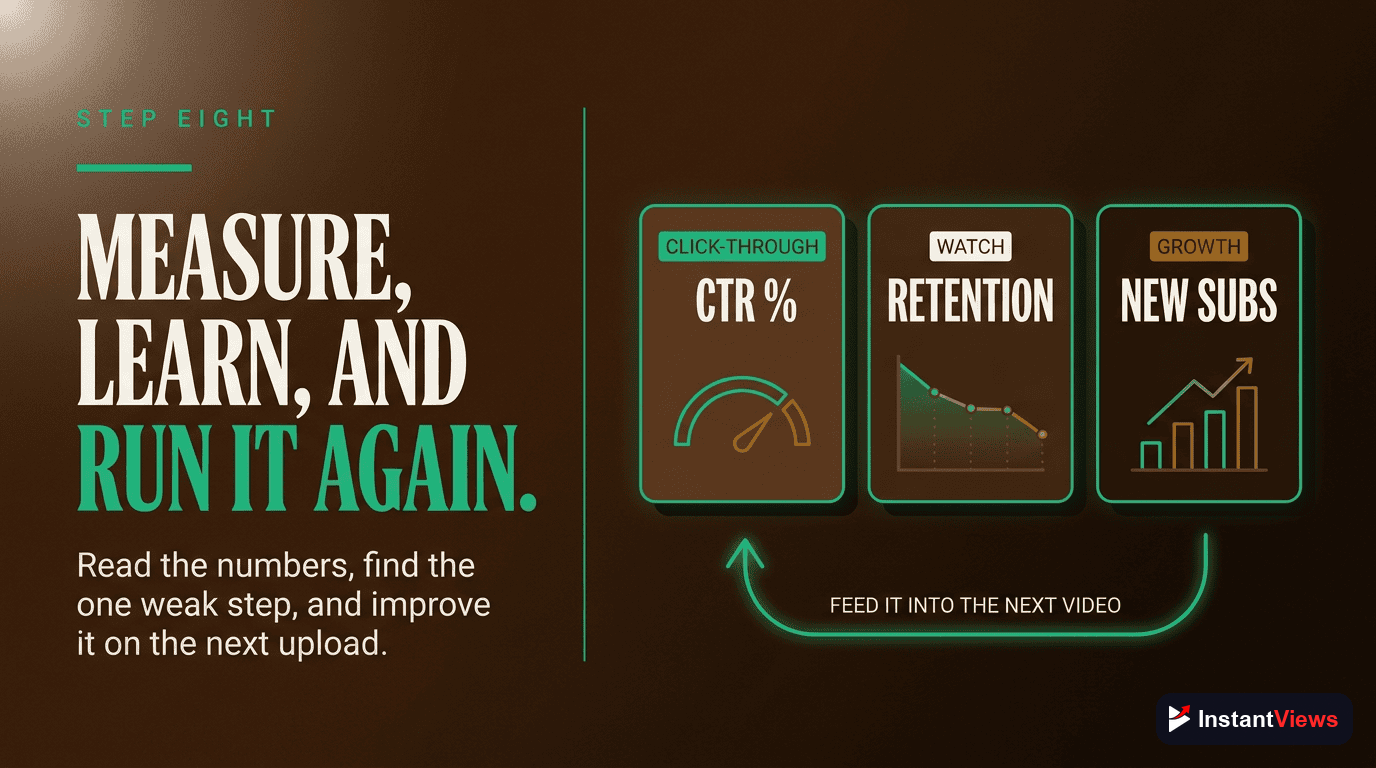
Step 8: Measure and Iterate
The final stage is what turns a checklist into a flywheel. Every video you publish generates data, and that data is the raw material for your next hit. The creators who improve fastest are simply the ones who close the loop most rigorously, treating each upload as an experiment that informs the next.
Focus on one diagnostic question per stage of the system:
| If This Is Weak… | The Likely Problem Is… | Fix It By… |
|---|---|---|
| Low impressions | Idea has little demand or the topic is too narrow | Validating bigger, more searchable ideas next time |
| Low click-through rate | Packaging — the title or thumbnail — is not compelling | Testing sharper titles and clearer thumbnails |
| Early drop-off | The hook is slow or breaks the promise | Cutting the intro and paying off the title faster |
| Mid-video drop-off | Pacing sags or a tangent loses people | Tightening the edit and adding open loops |
| Few shares | No deliberate shareable moment was built in | Designing one screenshot-worthy moment per video |
Change one thing at a time so you can attribute results. If you swap the thumbnail and rewrite the hook and change the topic all at once, you learn nothing when the next video does better. Hold the system steady, vary a single input, and let the data tell you what your specific audience rewards. Over dozens of videos, this discipline compounds into a channel that grows on its own momentum — which is the closest thing to a viral guarantee that actually exists.
"You cannot control whether a single video goes viral. You can control whether every video is built to. Do the second well enough, often enough, and the first takes care of itself."
Frequently Asked Questions
No, and anyone who promises a guarantee is selling something. Virality depends on factors you do not fully control, including timing, audience mood, and how the algorithm tests your video. What you can control is the process. Running the same checklist on every upload stacks the odds in your favor, so that when a video does catch, it spreads further and faster.
A single trick might work once, but it is not repeatable and it teaches you nothing. A system turns every upload into a controlled experiment. You hold most variables steady, change one thing at a time, and learn from the results. Over many videos, a consistent process compounds into reliable growth, while one-off tricks fade as fast as they appear.
Validating the idea comes first, because no amount of packaging or editing can save a topic nobody wants to watch. A good idea sits at the intersection of something people are searching for and something genuinely interesting. Get the idea right and every later step has a fighting chance; get it wrong and the rest is wasted effort.
Yes. Packaging first is one of the highest-leverage habits in the system. If you cannot write a compelling title and sketch a clear thumbnail before you film, the idea probably is not strong enough yet. Designing packaging early forces clarity on the promise of the video and keeps your script focused on delivering it.
YouTube tests new videos by showing them to a small audience and watching how people respond. If click-through rate, retention, and satisfaction signals are strong in the first day or two, the system expands reach to broader audiences over the following weeks. A strong launch window tells the algorithm the video is worth recommending.
In 2026 the algorithm optimizes for viewer satisfaction and retention, and retention now matters more than raw watch time. A short video that holds a high percentage of its audience can outperform a much longer video that loses most viewers early. Focus on keeping the people who clicked, rather than simply making videos longer.
Shareable videos give the viewer a clear reason to send them to someone else: a surprising insight, a strong emotion, a useful resource, or a moment that says something about the sharer. The most reliable approach is to design one specific shareable moment into the video on purpose, rather than hoping a share happens by accident.
They fit very well. With Shorts driving over 200 billion views a day, they are one of the fastest ways to reach new audiences and test ideas cheaply. Many creators use Shorts as a top-of-funnel discovery layer that introduces a topic, then point interested viewers to a deeper long-form video that the same checklist was applied to.
Conclusion
Virality will always have an element of chance you cannot remove. But the creators who win are not gambling — they are running a process. By validating the idea, packaging before filming, hooking fast, engineering for retention, designing a shareable moment, optimizing metadata, and launching deliberately, you stack the odds on every single upload instead of leaving them to luck.
The real power is in the repetition. Any one of these steps helps a little; all of them, applied every time, compound into a channel that consistently outperforms. And because the system holds most variables steady, each video teaches you something you can carry into the next one.
Start with your very next upload. Run the checklist top to bottom, change one thing from last time, and watch the first 48 hours closely. Do that on every video, and you will stop hoping for a hit — and start building the kind of channel where hits simply happen more often.