- When you publish, YouTube shows your video to a small test audience and measures the response before deciding how far to push it
- The window has two phases: signal collection in the first 2–12 hours, then expansion or suppression across roughly 12–48 hours
- Retention is the strongest signal in 2026 — a tightly held short video can outperform a long one that viewers abandon
- "Quality CTR" matters: a high click-through rate with weak first-15-to-30-second retention is now actively demoted
- You win the first 48 hours before you publish — with the title, thumbnail, hook, and a plan to drive early genuine views
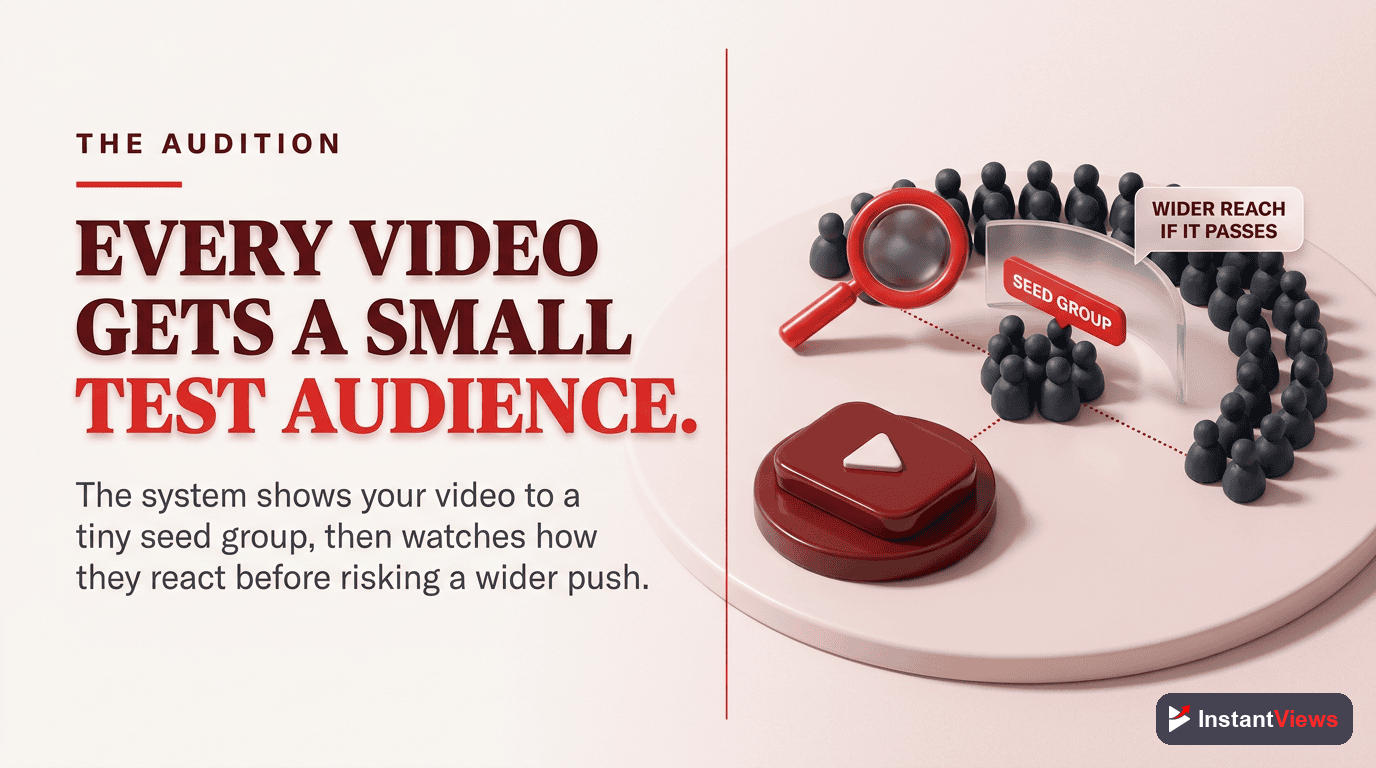
Every video you upload to YouTube begins life with an audition. The moment you hit publish, the platform does not simply broadcast your video to the world and hope for the best. Instead, it shows the video to a small test audience and quietly measures how those people respond. Within a day or two, that response decides whether your video gets expanded to a much larger audience or fades into the background.
This is why experienced creators obsess over launches. The first 48 hours are not just the start of a video's life — they are the period that most strongly shapes its trajectory. Beat the algorithm's expectations during this window and your reach can compound for the next one to two weeks. Miss them and even a genuinely good video can stall before most of your potential audience ever sees it.
The good news is that this process is not random, and it is not luck. YouTube tests new videos in a fairly predictable way, watching a specific set of signals. Once you understand what those signals are and how the test unfolds, you can plan a launch that gives every upload its best possible start.
In this guide you will learn exactly how YouTube tests a new video, which metrics decide its reach, what "Quality CTR" means in 2026, and a practical 48-hour playbook you can run on every video you publish.
- Why the First 48 Hours Matter So Much
- How the Algorithm Tests a New Video
- The Test Phases at a Glance
- The Metrics That Decide Your Reach
- Expansion or Suppression: How the Decision Plays Out
- What to Do Before You Publish
- Your First 48 Hours: A Launch Playbook
- A Worked Example: Two Videos, Two Fates
- Mistakes That Sabotage a Launch
- FAQ
Why the First 48 Hours Matter So Much
YouTube's job is to keep viewers watching and satisfied. To do that, it needs to know quickly whether a brand-new video is worth recommending. It cannot afford to show an untested video to millions of people and risk disappointing them, so it starts small — a few hundred to a few thousand impressions — and learns from the result.
That early learning sets a trajectory. If your test audience responds strongly, the algorithm gains confidence and widens the circle, showing the video to more people who resemble those early viewers. Strong signals carried through the window can expand a video's reach steadily over the following 7 to 14 days. If the early response is weak, the algorithm has little reason to keep investing impressions, and distribution quietly tapers off.
This does not mean a slow-starting video is doomed forever. Some videos find a second life later through search or a renewed wave of sharing. But those recoveries are the exception, not the rule. The simplest, most reliable path to reach is a strong launch — which is exactly why the first two days deserve your attention.

How the Algorithm Tests a New Video
Think of the test as a conversation between your video and the algorithm. YouTube asks a question by showing your thumbnail and title to a small slice of people, and your video answers through how those people behave. Two questions dominate that early conversation:
- Do people click? When YouTube surfaces your thumbnail and title, enough of the right people need to find it compelling enough to click.
- Do people stay? Once they click, the algorithm watches whether they keep watching or leave within seconds.
Crucially, YouTube does not judge these numbers in a vacuum. It compares them to expectations for your channel — how your past videos performed with similar audiences. Beating those expectations is the goal. A modest click-through rate that exceeds what your channel usually achieves can be a stronger signal than a flashy number that falls short of your own norm.
The test also leans on early satisfaction signals. Did viewers finish the video or a large share of it? Did they come back for more of your content? Did they like, comment, or share? These behaviors tell YouTube whether the click led to a genuinely good experience, not just a momentary curiosity.
The Test Phases at a Glance
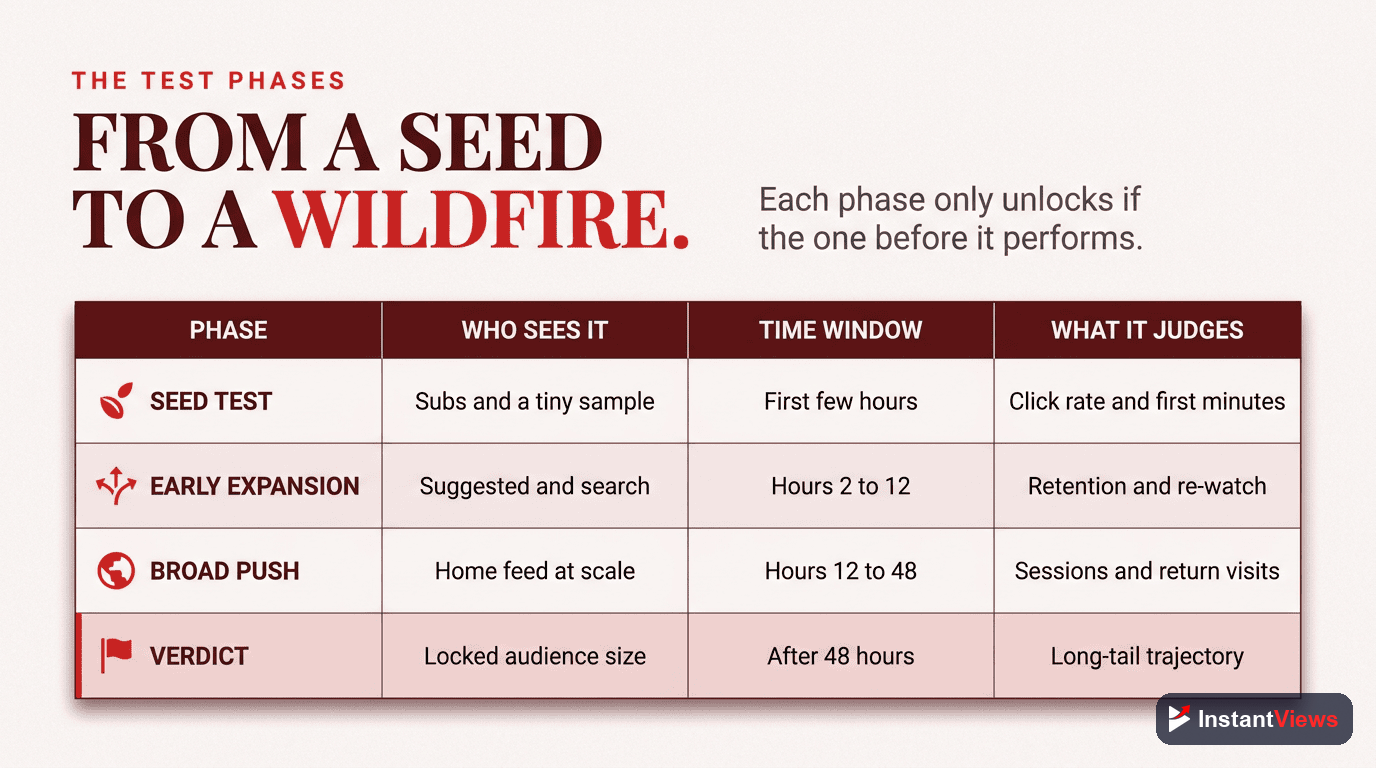
The first 48 hours are best understood as two overlapping phases. In the first, YouTube gathers signals. In the second, it acts on them. The table below summarizes how the window typically unfolds.
| Phase | Typical Timing | What YouTube Measures | What Happens |
|---|---|---|---|
| Signal collection | First ~2–12 hours | Click-through rate, average view duration, and early satisfaction versus channel expectations | The video is shown to a small test audience while YouTube learns how people respond |
| Expansion or suppression | ~12–48 hours | Whether the signals continue to beat or miss expectations as the audience widens | Beat expectations and impressions scale up; miss them and distribution tapers |
| Compounding reach | Following ~7–14 days | Sustained retention, satisfaction, and ongoing engagement | Strong signals carried through the window keep expanding reach over the next one to two weeks |
The boundaries between these phases are soft, and exact timing varies by channel size and niche. The pattern, however, is consistent: a small test, a decision, and then either growth or a gentle fade.
The Metrics That Decide Your Reach
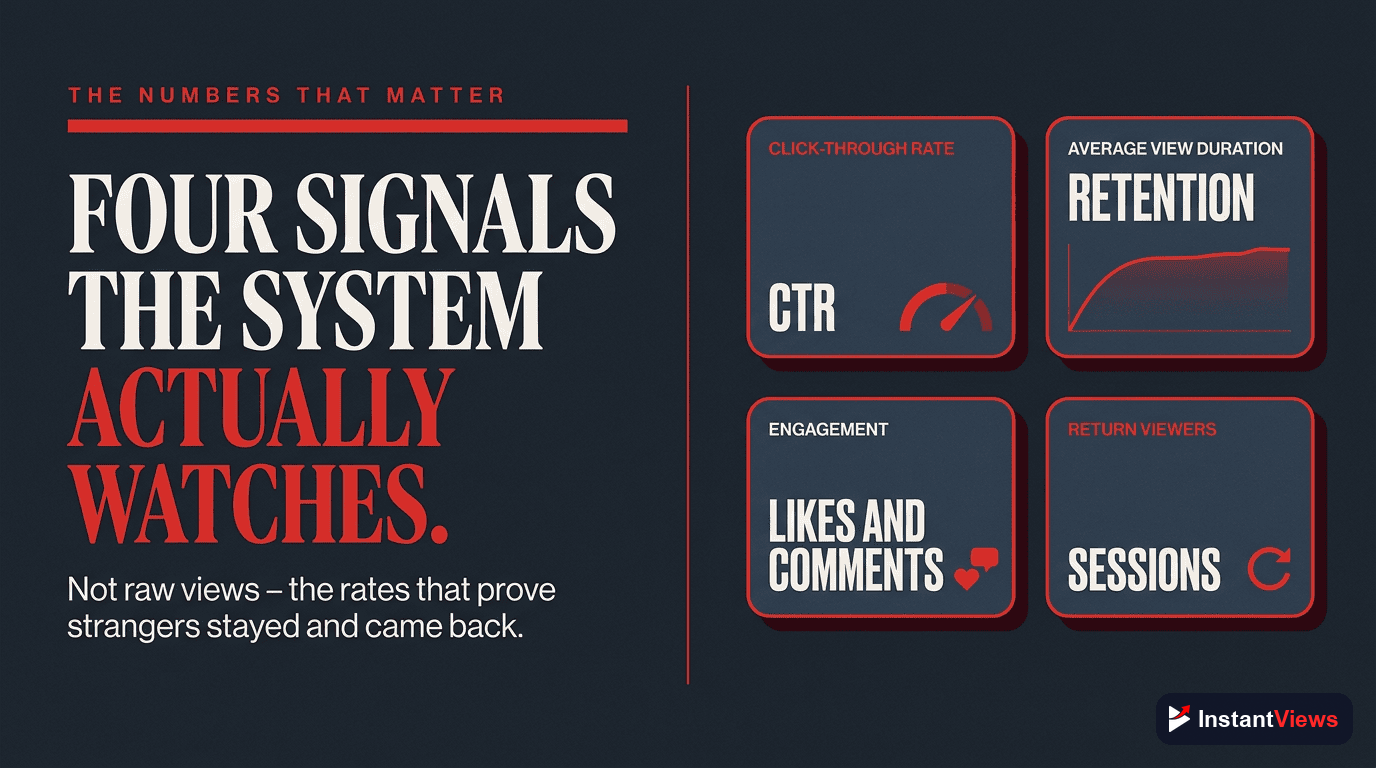
Three metrics carry most of the weight during the test window. Understanding what each one tells the algorithm helps you know where to focus.
Click-Through Rate (CTR) and "Quality CTR"
Click-through rate is the share of people who clicked after seeing your thumbnail and title. It is the entry ticket: if nobody clicks, nothing else can happen. But in 2026 raw CTR alone is no longer enough. YouTube now pays close attention to Quality CTR — clicks that are followed by real watch time.
A high click-through rate paired with weak first-15-to-30-second retention is now actively demoted. The algorithm reads that pattern as a title or thumbnail that overpromised relative to what the video delivered. In other words, a clever thumbnail that earns the click but loses viewers immediately can hurt you more than help you. Clicks only count when people stay.
Retention and Average View Duration
Retention — the percentage of the video viewers actually watch — is the strongest signal in the 2026 algorithm. It tells YouTube whether your content delivered on its promise and kept people engaged. The first 15 to 30 seconds are especially important, because that is where most viewers decide whether to stay or go.
Because the algorithm optimizes for satisfaction rather than raw minutes, length is no longer king. A 6-minute video held at 80 percent retention can outperform a 20-minute video at 30 percent retention. A shorter video that keeps people engaged often beats a longer one they abandon partway through.
Early Satisfaction Signals
Beyond clicks and watch time, YouTube reads softer signals of whether viewers were genuinely satisfied:
- Completed or near-completed views that suggest the video held attention to the end
- Returning viewers who come back for more of your content
- Engagement such as likes, comments, and shares that signal the video resonated
None of these replaces retention, but together they confirm or contradict the story the core metrics tell.
Expansion or Suppression: How the Decision Plays Out
Once the algorithm has collected enough signals, it makes a call. This is the moment the first 48 hours are really about.
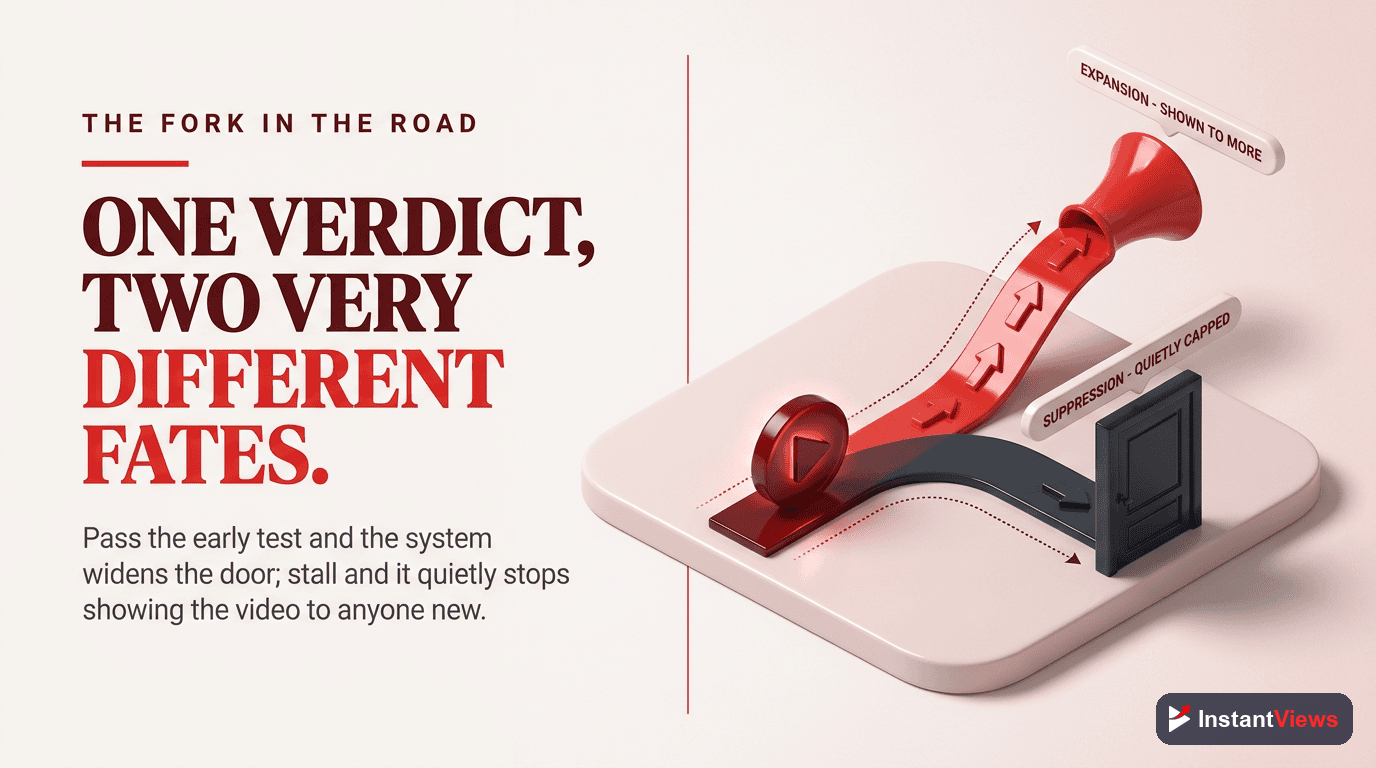
If your video beats expectations — strong Quality CTR, solid retention, healthy satisfaction signals — YouTube widens the audience. It shows the video to more people on the home feed and in suggested videos, watches whether the new, broader audience responds the same way, and expands again if they do. This is how a video gains momentum that can compound for one to two weeks.
If your video misses expectations, the opposite happens. The algorithm has little reason to keep spending impressions on a video that disappointed its test audience, so distribution tapers. The video does not get deleted or penalized in any dramatic way; it simply stops being pushed, and its view count flattens.
Do not change your title or thumbnail in the middle of the test window unless the video is clearly mislabeled or broken. Swapping them mid-test can muddy the signals YouTube is collecting and reset the learning process. Let the test run, gather the data, and make changes afterward.
What to Do Before You Publish
Here is the truth most creators learn the hard way: you win the first 48 hours before you ever hit publish. By the time the test begins, the most important decisions are already locked in. Three of them matter most.
The Title and Thumbnail Earn the Click
Your title and thumbnail are the only things the test audience sees before deciding whether to click. They need to promise a clear, specific payoff — not a vague tease and not an exaggeration the video cannot deliver. Aim for a promise your content genuinely keeps, because the click is only the beginning.
The Hook Earns the Stay
The first 15 to 30 seconds decide whether the click turns into watch time. Open by delivering on the promise of your title, not by clearing your throat with a long intro. Front-load the payoff: give viewers a reason to keep watching before they have a chance to leave.
The Whole Video Earns the Expansion
Strong retention across the entire video, not just the opening, is what convinces the algorithm to keep expanding reach. Tight pacing, a clear structure, and removing dead spots all help viewers stay to the end. Plan the video so every section earns the next one.
Launch Every Video Stronger
Explore our free suite of YouTube tools to research topics, test title ideas, and analyze the click-through and retention signals that decide your first 48 hours.
Explore Free YouTube Tools →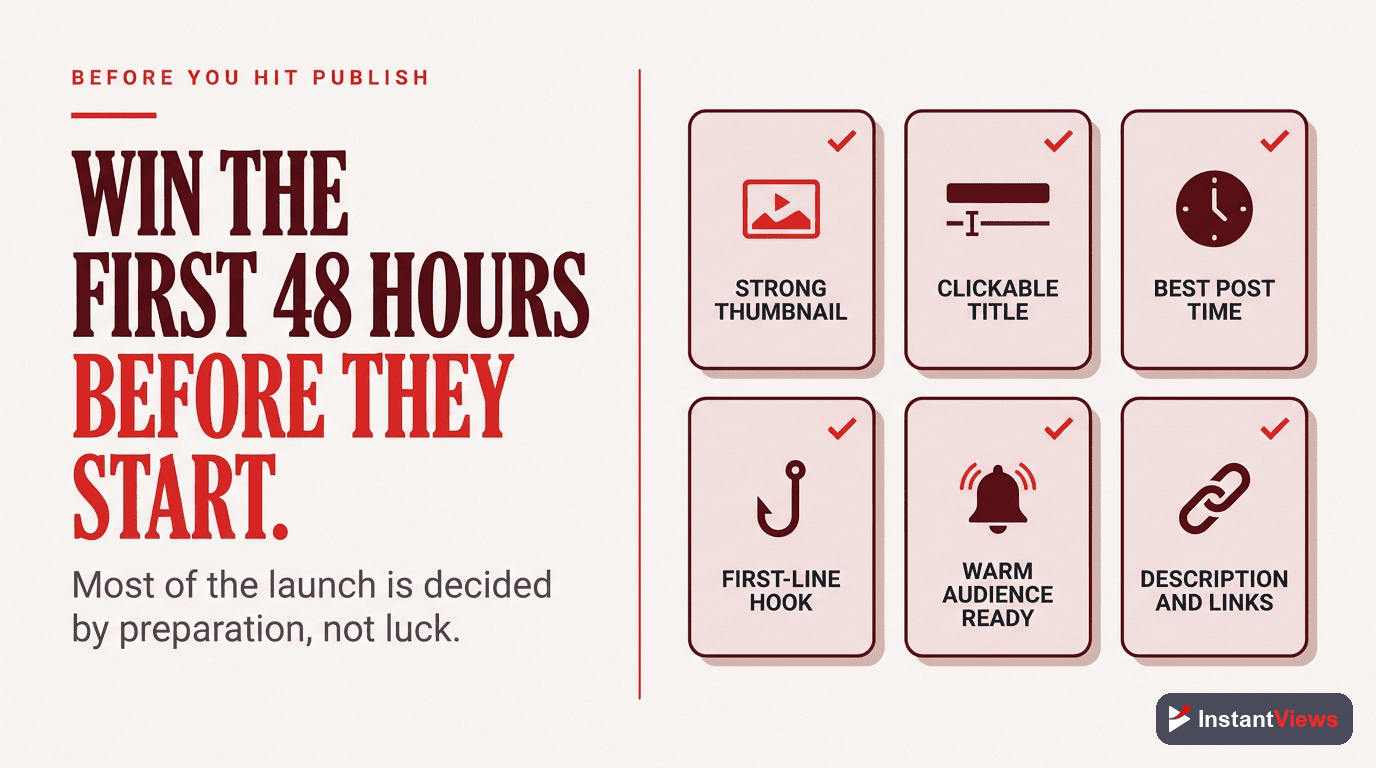
Your First 48 Hours: A Launch Playbook
With the right work done before publishing, the launch itself becomes a simple routine. Run these steps on every video to give it the cleanest possible signals.
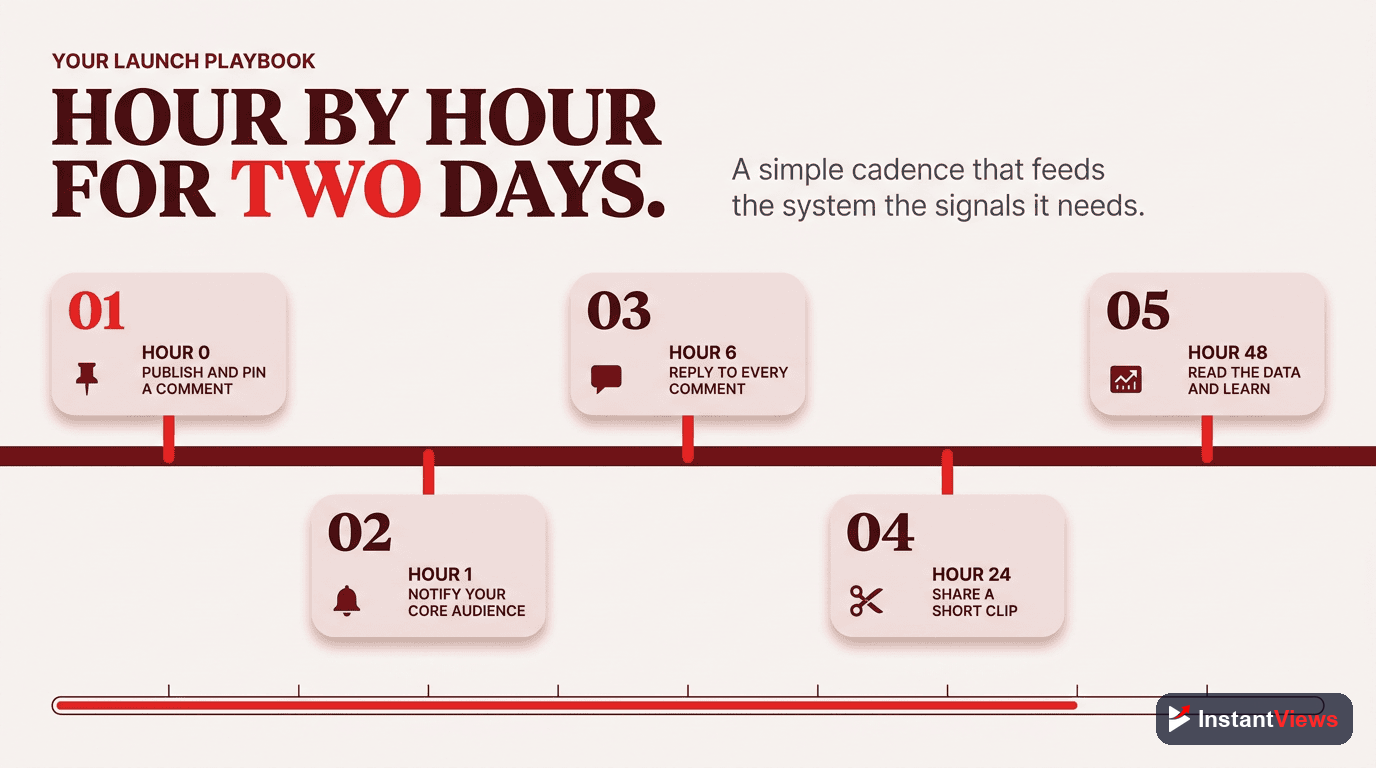
Publish Before Your Audience Peak
Schedule the video to go live a little before the time your viewers are usually most active. Early genuine views land while interest is high, giving the test audience a head start.
Notify the People Who Already Know You
Within the first hour, send an email to your list, post to the community tab, publish a Short that points to the video, and share it on your other platforms. Interested early viewers give the algorithm clean signals.
Engage With Early Comments
Reply to early comments and pin one that adds value or sparks a conversation. Fast engagement encourages viewers to interact and stay, reinforcing the satisfaction signals YouTube is reading.
Monitor CTR and Retention
Check your click-through rate and first-30-second retention several times across the window. Compare them to your own channel average rather than to other creators, and look for where viewers drop off.
Learn, Don't Panic-Edit
Use what the data tells you to plan your next video rather than frantically swapping titles mid-test. A weak hook this time becomes a stronger opening next time. Consistency compounds.
A Worked Example: Two Videos, Two Fates
Imagine two creators publish on the same day, each with a comparable subscriber base. Both videos earn an above-average click-through rate during signal collection — their thumbnails and titles are doing their job. So far, the test looks identical.
The difference shows up in the first 30 seconds. Creator A opens by immediately delivering the payoff the title promised, and retention holds strong as the video continues. The test audience stays, finishes, and a few share it. YouTube reads beating-expectations signals and widens the audience. Over the next week and a half, impressions scale up and the video keeps climbing.
Creator B has the same strong CTR but opens with a slow, rambling intro. Viewers who clicked expecting the promised payoff leave within seconds. That is the exact pattern — high CTR, weak early retention — that the 2026 algorithm now demotes. YouTube reads the title and thumbnail as having overpromised, distribution tapers, and the view count flattens within a day.
Same audience, same click-through rate, completely different outcomes. The lesson is blunt: clicks open the door, but only retention keeps you in the room. The work you do on the hook and the body of the video is what turns a promising test into expanding reach.

Mistakes That Sabotage a Launch
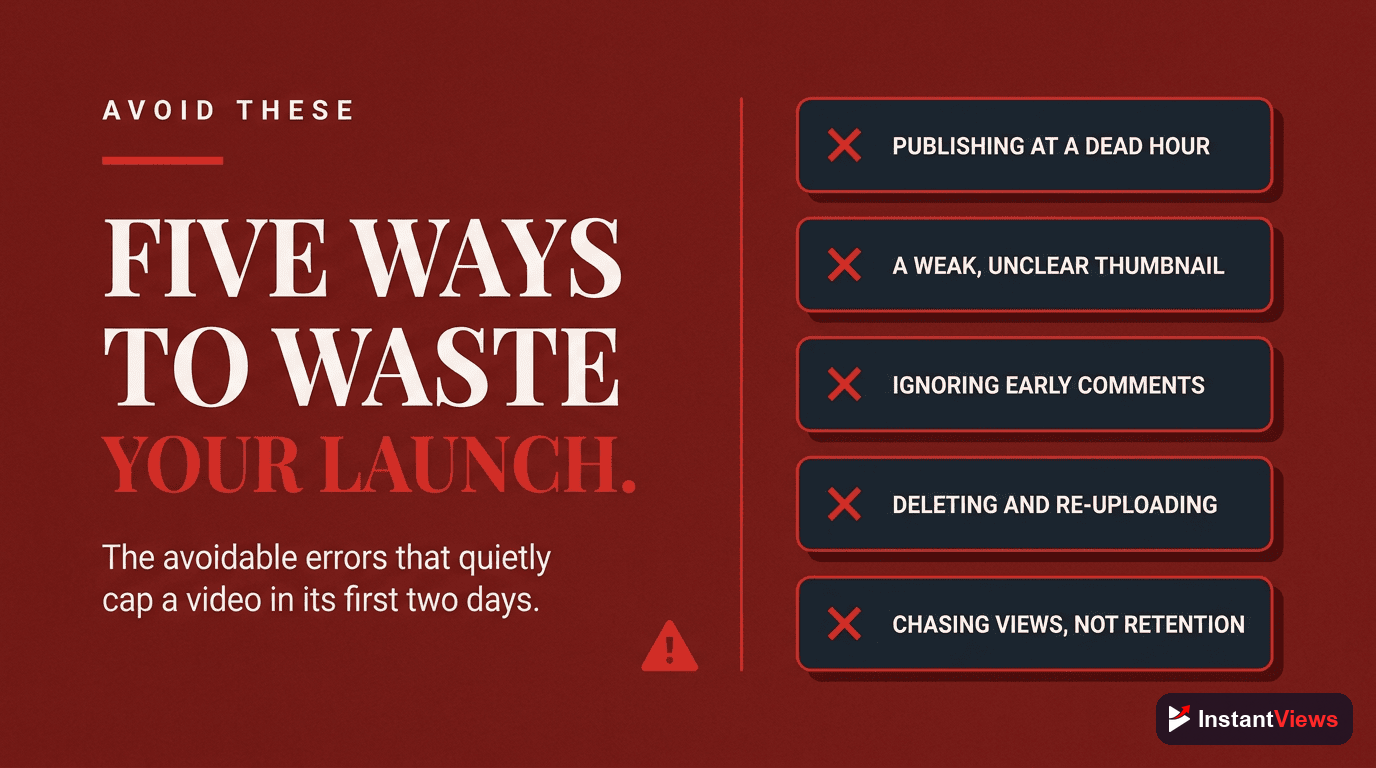
Even strong videos get held back by avoidable launch mistakes. Watch out for these:
- Overpromising in the title or thumbnail: Earning the click with a promise the video cannot keep triggers the Quality CTR penalty and demotes your reach.
- A slow opening: Long intros, logos, and throat-clearing bleed away the exact viewers you worked so hard to attract in the first 30 seconds.
- Publishing and disappearing: Skipping early promotion and ignoring comments wastes the most valuable window your video will ever have.
- Changing the title or thumbnail mid-test: Swapping them during the window can reset the algorithm's learning and confuse the signals.
- Chasing length over engagement: Padding a video to hit an arbitrary runtime lowers retention, and a tightly held shorter video usually wins.
- Watching only views: Views are a lagging vanity metric. CTR and retention are what actually predict whether the video will expand.
Most of these come down to one idea: respect the test. Give the algorithm clean, honest signals and a genuinely good viewing experience, and the window will work in your favor.
"A video's reach is decided in its first two days, not its first two weeks. Win the click, win the first thirty seconds, and win the watch — in that order — and the algorithm does the rest."
Frequently Asked Questions
When you publish, YouTube shows the video to a small test audience and measures how they respond. Strong early signals tell the algorithm the video is worth showing to more people, and impressions scale up over the following days. Weak signals cause distribution to taper. The first 24 to 48 hours set the trajectory that often shapes the next one to two weeks of reach.
It watches whether your test audience clicks (click-through rate), how long they stay (average view duration and retention), and whether their behavior beats the expectations YouTube has for your channel. Early satisfaction signals such as completed views, returning viewers, and engagement all feed into the decision to expand or limit reach.
CTR varies widely by niche and by how a video is surfaced, so there is no universal target. A useful habit is to check your impressions CTR a few times during the first day and compare it to your own channel average rather than to other creators. A sharp drop below your norm usually points to a title or thumbnail problem.
Quality CTR refers to clicks that are followed by real watch time. In 2026 a high click-through rate paired with weak first-15-to-30-second retention is now actively demoted, because the algorithm reads it as a title or thumbnail that overpromised. Clicks only help you if viewers stay once they arrive.
Generally no. Swapping the title or thumbnail mid-test can reset or muddy the signals YouTube is collecting. It is usually better to let the test run, observe the data, and make changes after the initial window unless the video is clearly mislabeled or broken.
Publish shortly before your audience is typically most active, then notify the people who already follow you: send an email, post to the community tab, share a Short that points to the video, and mention it on your other platforms. Early genuine views from interested viewers give the algorithm cleaner signals to work with.
Yes, though it is harder. Videos sometimes find a second life through search, a later suggested-video placement, or renewed sharing. But the easiest path to reach is a strong launch, which is why front-loading your best work and promoting early matters so much.
In 2026 retention is the strongest signal. A 6-minute video held at 80 percent retention can outperform a 20-minute video at 30 percent retention, because the algorithm increasingly optimizes for viewer satisfaction rather than raw minutes watched. A shorter video that keeps people engaged often beats a longer one they abandon.
Conclusion
The first 48 hours are the most consequential window in a video's life. When you publish, YouTube shows your video to a small test audience, measures click-through rate, retention, and early satisfaction against your channel's expectations, and then decides whether to expand your reach or let it taper. Understanding that process turns publishing from a hopeful gamble into a deliberate launch.
The metrics that matter are clear. Earn the click with an honest title and thumbnail, but remember that in 2026 a high click-through rate with weak early retention is actively demoted. Retention is the strongest signal, which is why a tightly held short video can outperform a long one that viewers abandon. Clicks open the door; staying power keeps you in the room.
You cannot control the algorithm, but you can control the signals you feed it. Win before you publish with a strong title, thumbnail, and front-loaded hook, then run a simple launch routine: publish before your audience peak, drive early genuine views, reply to comments, and watch CTR and retention rather than raw views. Do that consistently, and you give every video its best possible shot at the reach it deserves.