- Stagnation is rarely one problem — it is usually inconsistency, weak packaging, an unfocused niche, and low retention stacking up at once
- Start every turnaround with an analytics audit: find your best videos and make more of what already works
- In 2026 the algorithm rewards viewer satisfaction and retention, so fixing hooks and packaging beats simply uploading more
- Refreshing titles and thumbnails on existing videos can revive reach without filming anything new
- Recommit to a consistent schedule and use Shorts to reach new audiences while long-form rebuilds momentum
Every channel hits the wall eventually. The subscriber count that once ticked up daily freezes. Views flatten into a dull horizontal line. Videos that used to pull thousands now limp to a few hundred, and you find yourself refreshing analytics hoping the numbers will move on their own. If that sounds familiar, you are not failing — you have a stagnant channel, and stagnation is a solvable problem.
The good news is that a channel that already grew once has assets a brand-new channel does not: watch history, an audience the algorithm understands, and a back catalog of clues about what your viewers want. A turnaround is not about luck or a magic upload. It is a diagnostic process — find what broke, fix the weakest links, and double down on what already works.
This guide is written for creators whose growth has stalled, not for absolute beginners chasing their first thousand views. We will cover the common causes of stagnation, how to run a proper analytics audit, how to identify and amplify your best performers, how to fix packaging and retention, how to rebuild consistency, and how to use Shorts and old-content refreshes to find new momentum in 2026.
Work through it in order. The sequence matters: you diagnose before you prescribe, and you fix the biggest leak before you worry about the small ones.
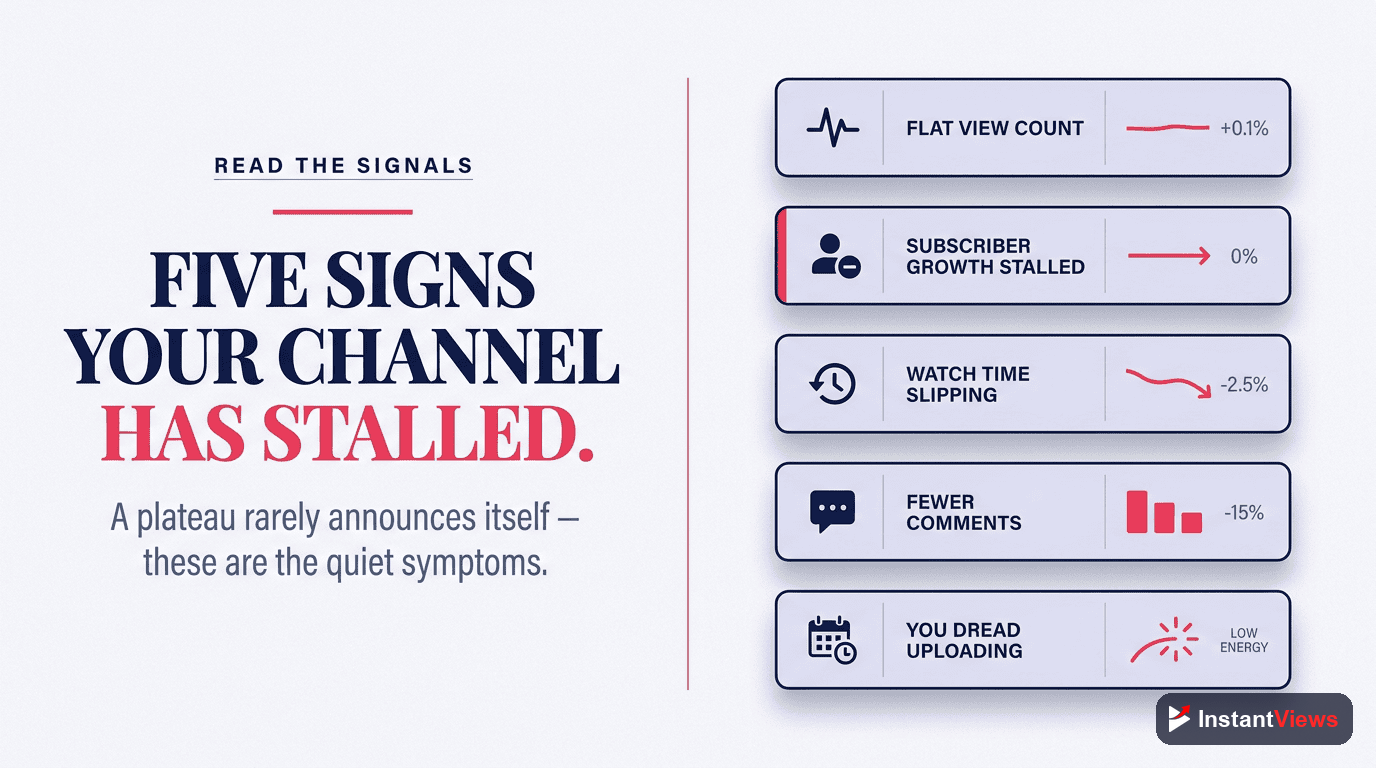
Signs Your Channel Has Stagnated
Before you fix anything, confirm that what you are seeing is genuine stagnation and not normal variance. A single slow month is not a crisis; a flat or declining trend across several months is. Look for a cluster of these signals rather than any one of them on its own.
- Flat or falling views: Your trailing 28-day and 90-day view counts have plateaued or are sliding, even though you are still uploading.
- Subscriber stall: Net subscriber growth has slowed to a trickle, or you are losing roughly as many as you gain.
- Impressions without clicks: YouTube is still showing your thumbnails, but your click-through rate has dropped — a packaging problem.
- Clicks without retention: People click, then leave in the first thirty seconds — a content or hook problem.
- Every video performs the same: No breakout hits, no clear losers — a sign your content has flattened into sameness the algorithm cannot champion.
Notice that these signals point to different problems. That is the whole point of diagnosing before acting: "my channel stopped growing" is a symptom, and the cure depends entirely on which underlying cause is driving it.
Common Causes of Stagnation
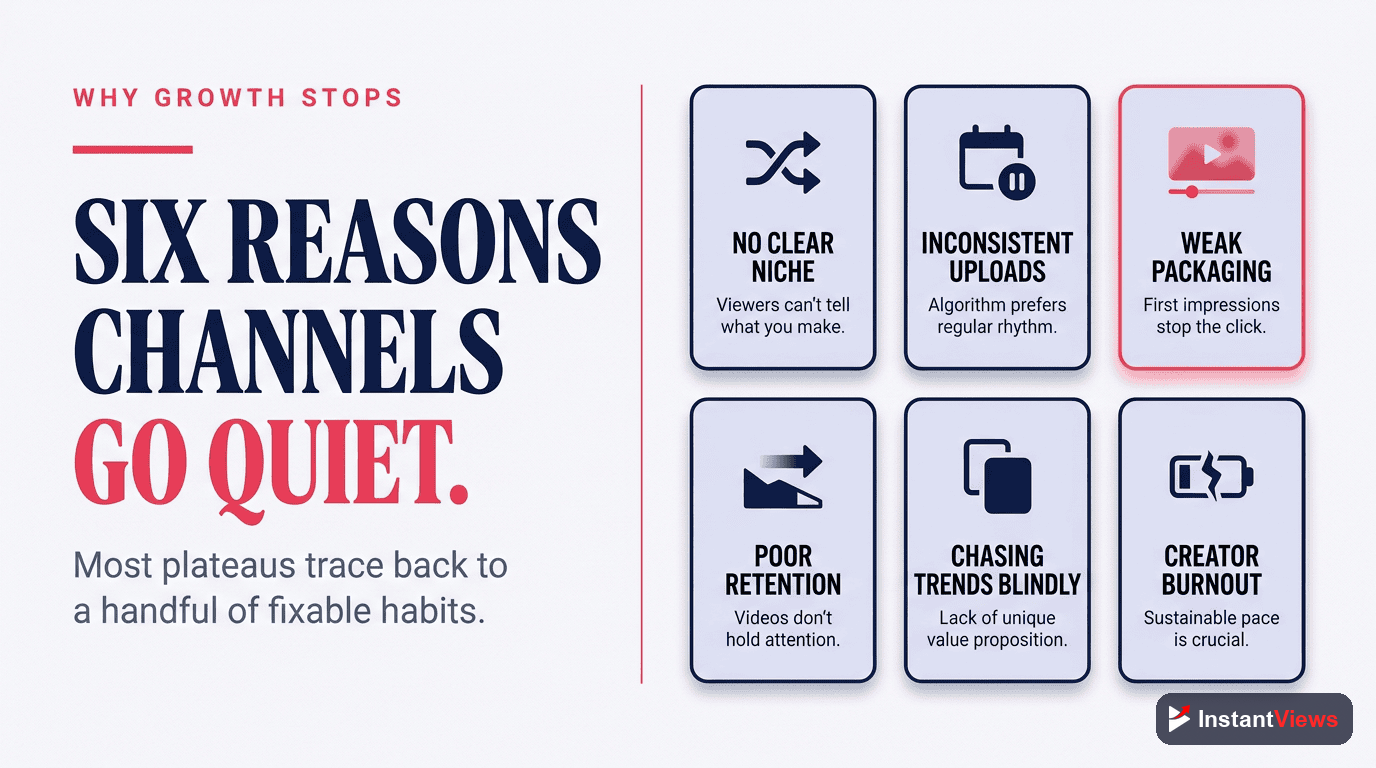
Channels rarely stall for a single reason. More often, two or three issues compound until growth grinds to a halt. The table below maps the symptoms you can see in analytics to their likely cause and the fix that follows in this guide.
| Symptom | Likely Cause | Fix |
|---|---|---|
| High impressions, low click-through rate | Weak titles and thumbnails | Rewrite packaging; test one element at a time |
| Good clicks, steep early drop-off | Slow or misleading hooks | Tighten the first 30 seconds; deliver on the title |
| Irregular spikes, no momentum | Inconsistent upload schedule | Commit to a cadence you can sustain |
| Few impressions on new uploads | Unfocused niche confusing the algorithm | Re-narrow your topic and audience |
| Views falling across the board | Chasing topics your core audience does not want | Return to proven, on-brand topics |
| No idea why anything happens | Ignoring analytics | Audit data before making decisions |
Two of these deserve special attention because they quietly kill more channels than any algorithm change. The first is niche drift: you start with a clear lane, then post a bit of everything, and the algorithm loses its grip on who should see your videos. The second is chasing the wrong topics — copying a viral format that has nothing to do with why your audience subscribed, getting a brief spike, and then watching loyal viewers tune out.
Run a Channel Audit
The audit is the foundation of every turnaround. You cannot fix what you cannot see, and your analytics already hold the answers — you just have to read them honestly. Set aside an hour, open YouTube Studio, and work through your data with the goal of identifying patterns, not judging yourself.
What to Pull From Analytics
Set the date range to the last 12 months and look at four things in order:
- Top videos by views: What topics and formats keep showing up at the top? This is what reaches people.
- Average view duration and average percentage viewed: Which videos hold attention? High retention is the algorithm's favorite signal in 2026.
- Click-through rate by video: Where is packaging winning the click, and where is it failing despite good impressions?
- Traffic sources: Are your views coming from search, browse, suggested, or Shorts? Each one rewards a different strategy.
Find the Overlap
The videos you want to study are the ones that score high on both reach and retention. A video with huge views but terrible retention got lucky once; a video with great retention but few views has a packaging problem. The videos that do both are your blueprint — they prove a topic, a format, and a style your audience genuinely wants more of.

Double Down on Your Winners
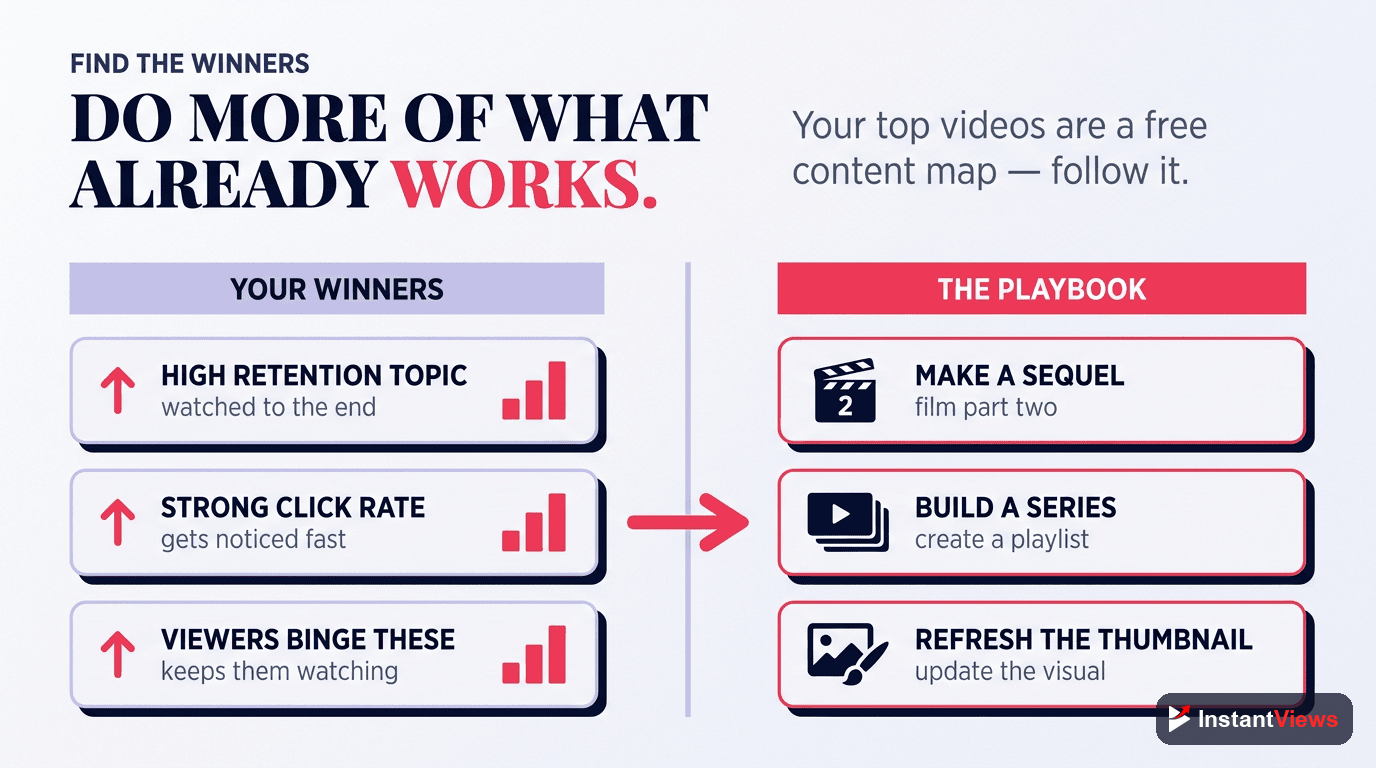
Once the audit reveals your best performers, the strategy becomes refreshingly simple: make more of what already works. This is the single highest-leverage move in any turnaround, and it is the one creators resist most, because repeating a proven idea feels less exciting than inventing a new one. Resist that instinct. Your audience told you what they want by watching it to the end.
Doubling down does not mean cloning the same video over and over. It means extracting the pattern and running variations on it:
- Same topic, new angle: If a "beginner mistakes" video took off, make "advanced mistakes," "mistakes I made," or "mistakes that cost the most."
- Same format, new subject: If your tutorial style retains well, apply it to the next ten things your audience needs to learn.
- Same hook, new payoff: Reuse the opening structure that kept people watching and point it at fresh value.
Think of your back catalog as a series of small experiments that YouTube already ran for you, for free. The winners are not flukes to admire — they are instructions to follow. A channel that commits to a focused run of videos in a proven direction gives the algorithm a clear, consistent signal about who to show them to, which is exactly what a drifting channel needs to recover.
Beware of survivorship bias dressed up as a trend. One viral video outside your niche is not a mandate to abandon your channel and chase that format forever. Look for repeatable winners that align with why people subscribed — not one-off spikes that brought viewers who will never return for your normal content.
Fix Your Packaging
Packaging — your title and thumbnail — is the gate every video must pass through. YouTube can show your thumbnail to millions, but if too few people click, the algorithm stops showing it. A low click-through rate is one of the most common and most fixable causes of stagnation, because you can improve it without filming anything new.
Titles That Earn the Click
- Lead with the benefit or the curiosity gap, not a dry description.
- Keep the promise specific and keep it honest — the title sets the expectation your hook must meet.
- Front-load the words that matter so they survive truncation on mobile and in suggested feeds.
Thumbnails That Stand Out
- Aim for one clear focal point that reads at a glance, even at a small size.
- Use high contrast and a limited palette so it pops against YouTube's white interface.
- Make sure the thumbnail and title work together as a pair — one should not simply repeat the other.
The most overlooked opportunity is repackaging videos you have already published. Find older uploads that still earn impressions but have a low click-through rate, then give them a stronger title and a fresh thumbnail. YouTube continually re-tests packaging against new viewers, so an improved thumbnail can revive an older video's reach weeks or months after it was published. Change one element at a time so you can tell which fix did the work.
Diagnose Your Channel Faster
Use our free suite of YouTube tools to research proven topics, sharpen your titles, and analyze what is working so you can rebuild momentum with confidence.
Explore Free YouTube Tools →
Fix Your Retention
If packaging wins the click, retention decides whether that click was worth it. In 2026 the algorithm optimizes for viewer satisfaction, and retention matters more than raw watch time. A short video that holds most of its audience and earns engagement sends a stronger signal than a long video that loses most viewers in the first minute. That single shift should reshape how you make videos.
Win the First 30 Seconds
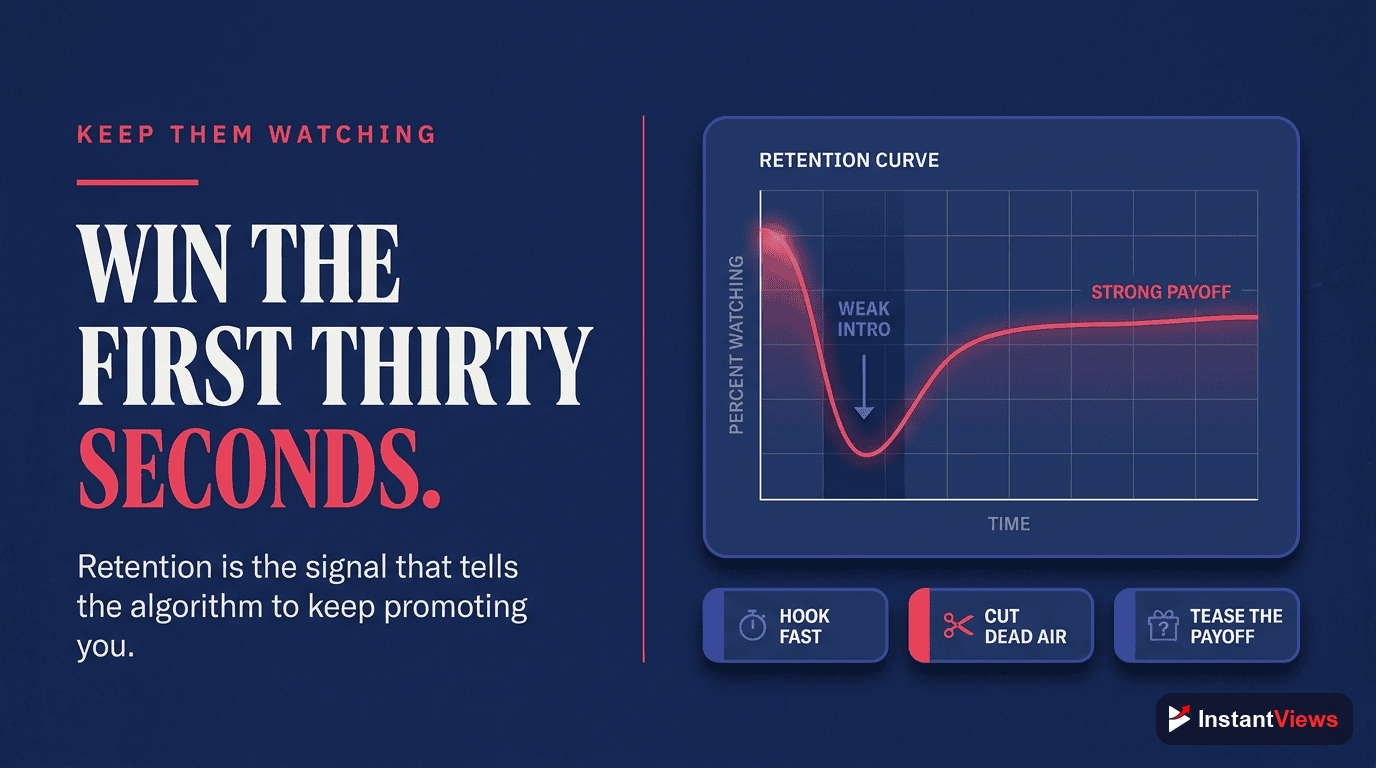
The steepest drop-off on almost every video happens at the start. Open your retention graph and look at the first thirty seconds — if it falls off a cliff there, your hook is the problem. Cut the long intro, skip the throat-clearing, and deliver on the title immediately. Tell viewers what they will get and start giving it to them before they have a reason to leave.
Hold the Middle
- Earn the runtime: A tight eight-minute video beats a padded twenty-minute one. Make it as long as it deserves to be, not longer.
- Use open loops: Tease what is coming next so there is always a reason to keep watching.
- Watch for dips: Find the moments where viewers leave and cut or rework whatever is there — usually a tangent, a slow section, or a broken promise.
Retention is also where satisfaction signals like likes, comments, and shares come from. A viewer who watches to the end and engages is telling YouTube your video deserves more reach. You do not earn that by begging for engagement in the first ten seconds — you earn it by being genuinely worth finishing.
Rebuild Consistency
Inconsistency is the quietest channel killer of all. The algorithm and your audience both reward predictability: a steady cadence trains viewers to expect you and gives YouTube a reliable stream of fresh content to test. Sporadic uploads never build enough momentum to compound, which is why a brilliant video every few months loses to a good video every week.
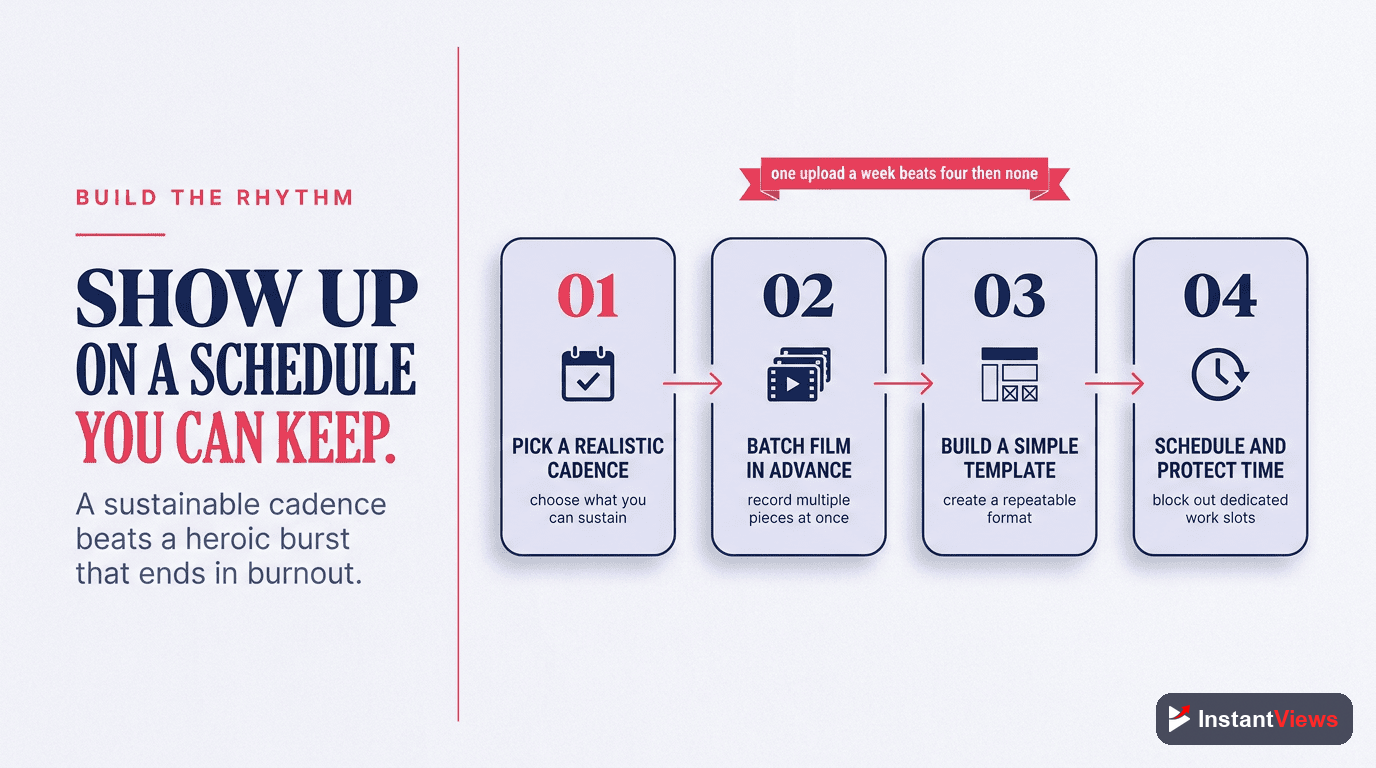
The key is to choose a schedule you can actually sustain through a busy month, not the heroic pace you can manage for two weeks before burning out. One reliable upload a week beats four in a burst followed by silence. Here is a simple turnaround plan to rebuild that rhythm:
Set a Realistic Cadence
Pick an upload frequency you can hold for three months straight, even on a bad week. Consistency you can sustain beats ambition you cannot.
Batch From Your Winners
Plan the next four to six videos around the proven topics from your audit, then script or outline them in one sitting so you are never scrambling.
Build a Small Buffer
Get one or two finished videos ahead of schedule. A buffer absorbs the busy weeks that would otherwise break your streak.
Protect the First 48 Hours
Publish at a consistent time, reply to early comments, and share the upload where your audience already is. Early engagement helps the algorithm find the right viewers.
Review Every Two Weeks
Check your audit metrics on a regular cadence. Keep what is improving, adjust what is not, and resist changing everything at once.
Use Shorts to Find New Audiences
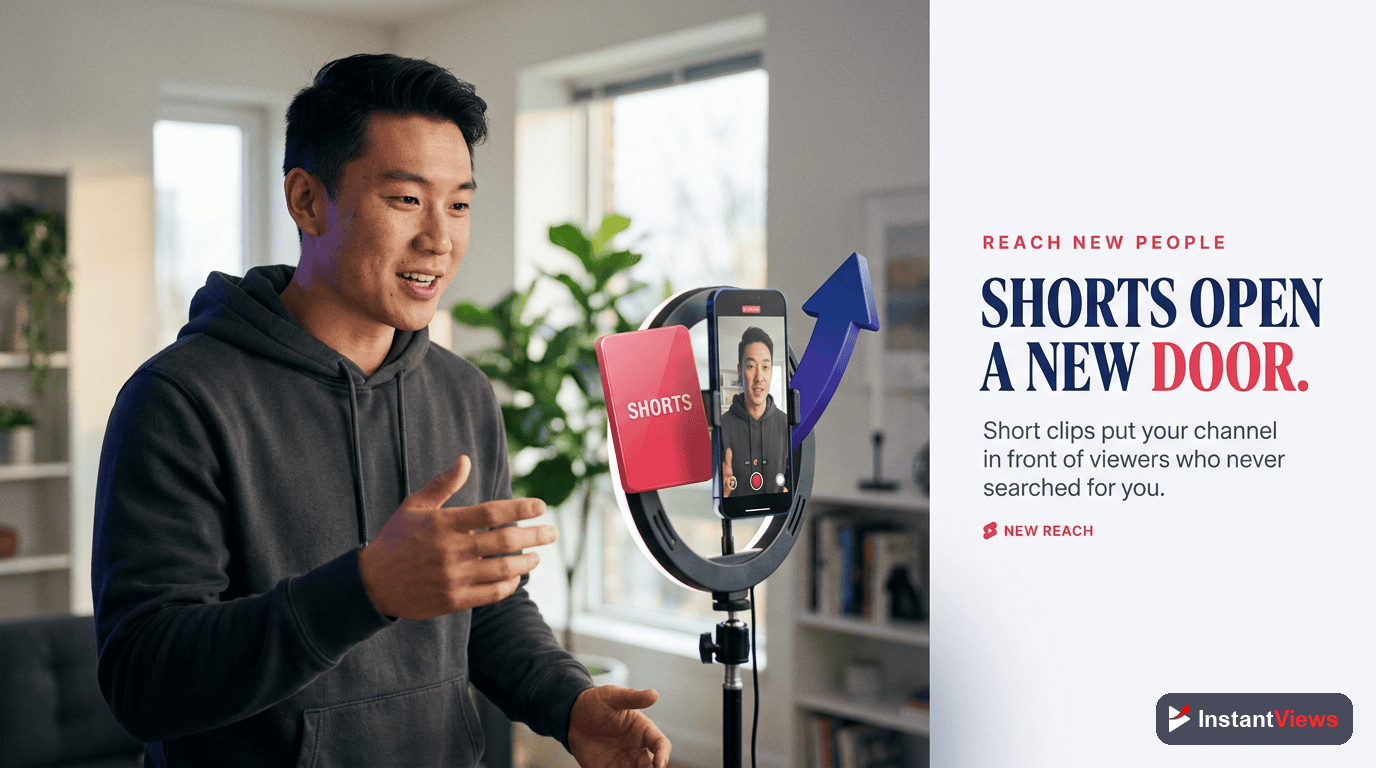
When long-form views have flattened, Shorts are the fastest way to put your channel in front of new people. The Shorts feed now serves over 200 billion views a day, and it is distributed largely independently of your long-form videos — which means a Short can reach viewers who would never have stumbled onto your channel through browse or search.
The most effective way to use Shorts during a turnaround is as a discovery layer that feeds your main content, not as a replacement for it. A few practical approaches:
- Repurpose your best long-form moments: Clip the strongest 30 to 60 seconds from a high-retention video into a standalone Short.
- Tease, then expand: Use a Short to introduce an idea and point viewers to the full video for the depth.
- Test topics cheaply: A Short is a low-cost way to see which ideas resonate before you invest in a full production.
Keep expectations honest, though. Shorts viewers do not always cross over into long-form, and Shorts subscribers can be less engaged with your main content. Treat Shorts as the top of your funnel — a way to win attention and re-warm the algorithm — while your long-form videos do the work of building the loyal, high-retention audience that sustains real growth.
Refresh and Repurpose Old Content
Your back catalog is an underused asset. Older videos already carry watch history and search authority, which means small improvements can pay off faster than starting from a blank timeline. Refreshing old content is one of the highest-return, lowest-effort moves in a turnaround.
What to Refresh
- Repackage steady performers: Update titles and thumbnails on videos that still earn impressions but have a low click-through rate.
- Update evergreen videos: Refresh descriptions, add current information, and link them to newer related uploads.
- Organize into playlists: Group related videos so a single discovery turns into a binge, lifting session watch time across your channel.
- Repurpose across formats: Turn a popular tutorial into a Short, a community post, or the basis of an updated remake.
A Quick Worked Example
Imagine a channel whose audit reveals one tutorial from last year with strong retention but a click-through rate well below the channel average. The creator writes three new title options, designs a clearer thumbnail with a single focal point, and updates the description with a link to a newer related video. Within a few weeks, YouTube re-tests the improved packaging against fresh viewers and the older video's impressions and views begin climbing again — without a single minute of new filming. That recovered reach then lifts the videos linked from it. This is the compounding effect a good refresh creates.
Turnaround Mistakes to Avoid
A turnaround can stall a second time if you fall into these traps. Watch for them as you work through the plan above.
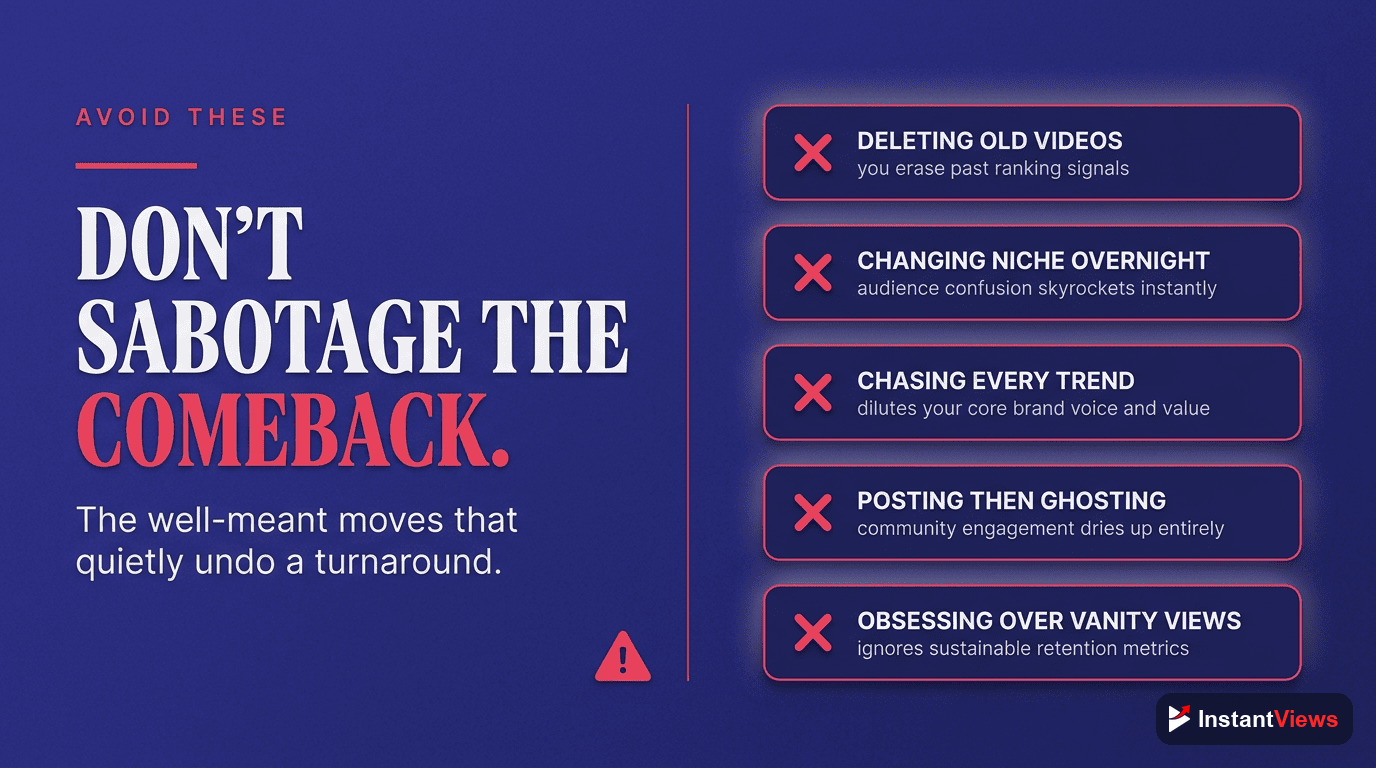
- Changing everything at once: If you overhaul packaging, format, schedule, and niche in the same week, you will never know which change helped. Move one lever at a time.
- Quitting too early: A turnaround is a campaign measured in weeks and months, not a single upload. Give each change time to show in the data.
- Chasing trends off-brand: Borrowing a viral format unrelated to your niche brings the wrong audience and confuses the algorithm further.
- Ignoring the audit: Making decisions on gut feeling instead of analytics is what let the channel stagnate in the first place.
- Mass-deleting old videos: Deleting rarely helps and can remove content that still brings in search traffic. Refresh or unlist selectively instead.
- Mistaking activity for progress: Uploading more without improving packaging and retention just produces more videos nobody finishes.
The thread running through all of these is patience and focus. Stagnation built up over months; it unwinds over weeks of deliberate, measured change — not in a frantic weekend of doing everything differently.
"A stalled channel is not a dead channel. It is a channel waiting for its creator to stop guessing, read the data, and double down on what the audience already proved they want."
Frequently Asked Questions
Stagnation usually has more than one cause. The most common are inconsistent uploads, weak titles and thumbnails that suppress click-through rate, an unfocused niche that confuses the algorithm, low audience retention, and chasing topics your core audience does not actually want. The fix starts with an honest analytics audit so you can see which of these is hurting you most.
Open YouTube Analytics, set the date range to the last 12 months, and sort your content by views, then by average view duration and average percentage viewed. The videos that rank high on both reach and retention are your winners. Those are the topics, formats, and styles to make more of — they have already proven the audience wants them.
Yes. Click-through rate is one of the strongest signals YouTube uses to decide whether to keep showing a video. Refreshing the title and thumbnail on an older video with steady impressions but a low click-through rate can revive its reach, because the algorithm continually re-tests packaging against new viewers. Change one element at a time so you can see what worked.
In 2026 the algorithm optimizes for viewer satisfaction, and retention matters more than raw watch time. A short video that holds most of its audience and earns engagement sends a stronger signal than a long video that loses most viewers early. Focus on keeping the people who click, not just on making videos longer.
Shorts are excellent for reaching new audiences because they are distributed mainly through the Shorts feed, which now sees over 200 billion views a day. They are best used as a discovery layer that introduces ideas your long-form videos expand on. Just remember that Shorts viewers do not always cross over to long videos, so treat Shorts as a top-of-funnel tool rather than a complete fix.
A turnaround is a campaign, not a single upload. Most channels need several weeks to a few months of consistent, improved content before the trend line clearly bends upward. The first signs — better click-through rate, higher retention, and more returning viewers — usually appear well before the subscriber count moves, so track those leading indicators to stay motivated.
Usually no. Deleting videos rarely helps and can remove content that still brings in occasional search traffic. Instead, refresh the ones with potential, unlist truly off-brand or low-quality videos if they dilute your channel identity, and reorganize the rest into playlists. Pruning your public-facing identity is fine; mass-deleting your library is not.
Rarely. An existing channel carries authority, watch history, and an audience the algorithm already understands — assets a brand-new channel has to earn from zero. Unless your niche has fundamentally changed or your old content actively misleads the algorithm about who your audience is, fixing and refocusing the channel you have is almost always faster than starting over.
Conclusion
A stagnant channel feels like a dead end, but it is really a diagnosis waiting to happen. Almost every stall traces back to a handful of fixable causes — inconsistency, weak packaging, an unfocused niche, low retention, or chasing topics your audience never wanted. The trend line flattened for reasons, and reasons can be addressed.
The turnaround sequence is the same every time: audit your analytics honestly, double down on the winners your audience already chose, fix the packaging that wins the click and the hooks that earn the watch, recommit to a schedule you can sustain, and use Shorts and content refreshes to find new reach. Fix the biggest leak first, change one thing at a time, and let the data tell you what worked.
You already cleared the hardest part — you built a channel that grew once. The audience, the watch history, and the algorithm's understanding of who you are have not vanished; they are waiting for a clear, consistent signal to follow again. Give them that signal, stay patient through the weeks it takes to compound, and the flat line will start to climb.