- YouTube tests every new video with a small audience first, then expands reach when early engagement signals are strong
- Likes, comments, shares, and early watch time act as proof that real people find your video valuable
- Comments carry more weight than likes because they take genuine effort, and thoughtful replies count for even more
- You can engineer early engagement with hooks, one clear question, a pinned comment, and fast replies
- Notifying your existing audience first means engaged fans arrive while the algorithm is still deciding how far to push the video
Every time you hit publish, YouTube quietly runs an experiment. It shows your video to a small slice of likely viewers and watches what they do. Do they keep watching? Do they tap like? Do they leave a comment, or send the video to a friend? Those early reactions — collected in the first hours after release — are the data YouTube uses to decide whether your video deserves a bigger stage or stays where it is.
This is why early engagement matters so much. With more than 2.7 billion monthly active users and roughly a billion hours of video watched every day, YouTube cannot afford to guess. It leans on the behaviour of those first viewers as a proxy for quality, and the 2026 algorithm leans on it harder than ever, optimizing for genuine viewer satisfaction rather than raw view counts.
It is easy to confuse this with the broader "first 48 hours" idea — the testing window where click-through rate and retention decide a video's overall fate. That is the wider story. This guide zooms into one specific part of it: the engagement signals themselves — likes, comments, shares, and active watching — and, more importantly, exactly how to spark them on purpose.
By the end you will understand what each signal tells the algorithm, why some matter more than others, and a repeatable playbook for generating a strong early response on every upload.
- What Early Engagement Actually Is
- Why the First Hours Carry the Most Weight
- The Engagement Signals That Matter Most
- Signal-by-Signal: Why It Matters and How to Spark It
- Earn Watch Time With a Strong Hook
- Engineer Comments With One Clear Question
- Notify Your Existing Audience First
- Use the Community Tab and Shares
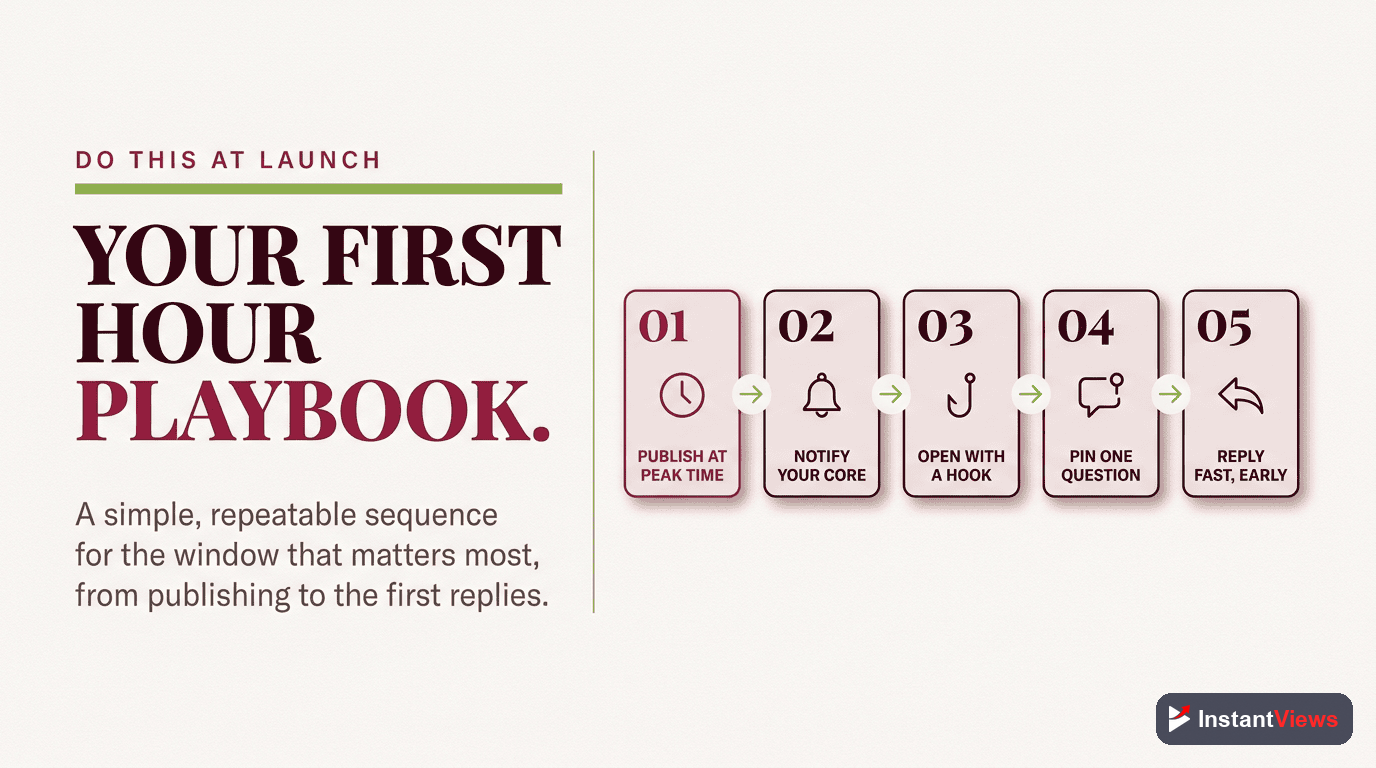
- Your First-Hour Engagement Playbook
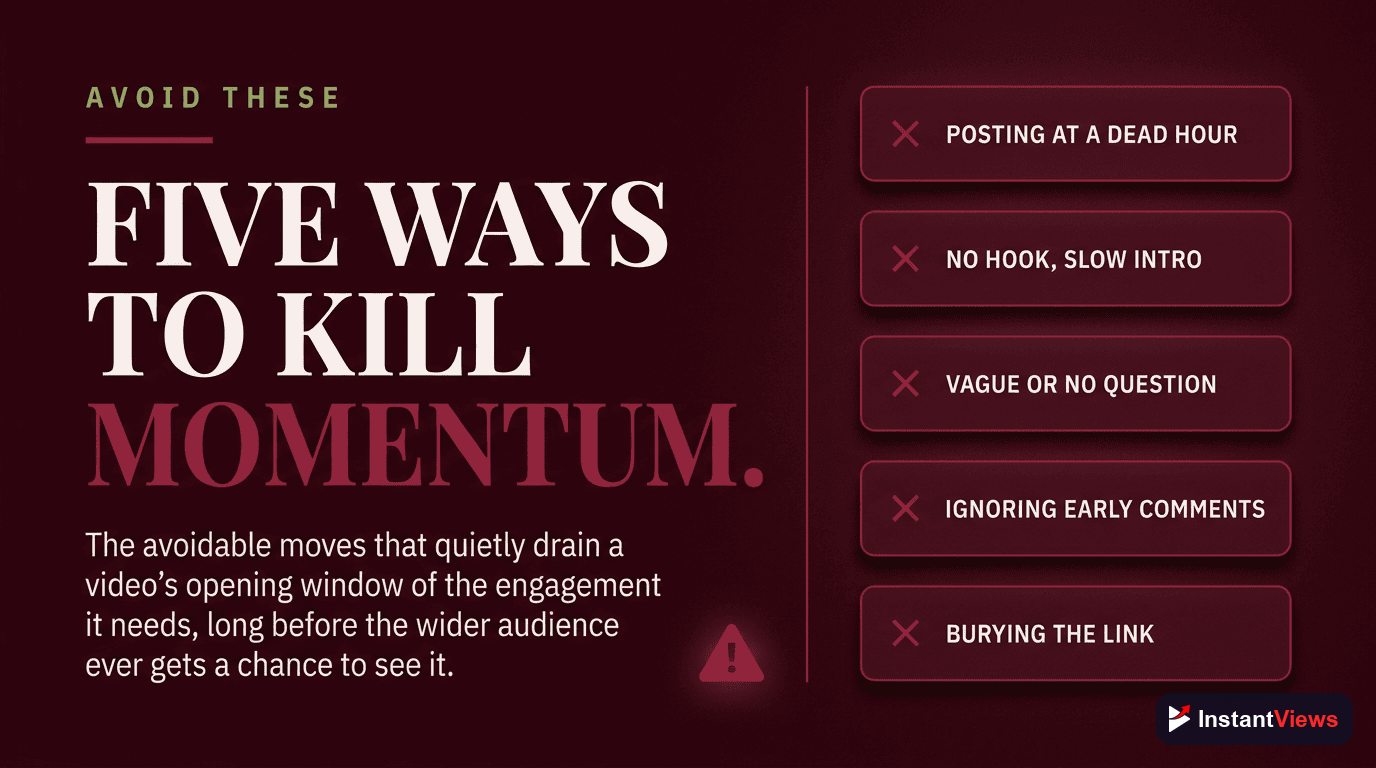
- Engagement Mistakes That Backfire
- FAQ
What Early Engagement Actually Is
Early engagement is the cluster of actions viewers take in the hours right after a video goes live. It is not one number but a bundle of signals: likes, comments, shares, and the watch time that holds people on the page long enough to react at all. Each one tells YouTube something slightly different about how an audience feels.
Think of it as the difference between a polite nod and a real conversation. A view says someone showed up. Engagement says they cared enough to do something. The algorithm is built to notice that distinction, because a video people actively respond to is far more likely to satisfy the next batch of viewers too.
Crucially, engagement is a relative measure. YouTube does not need a thousand comments to be impressed; it compares your video's response to what is normal for a channel of your size and a topic of that kind. A modest channel that earns a flurry of genuine comments in the first hour can send a stronger signal than a large channel whose new video lands flat.
Why the First Hours Carry the Most Weight
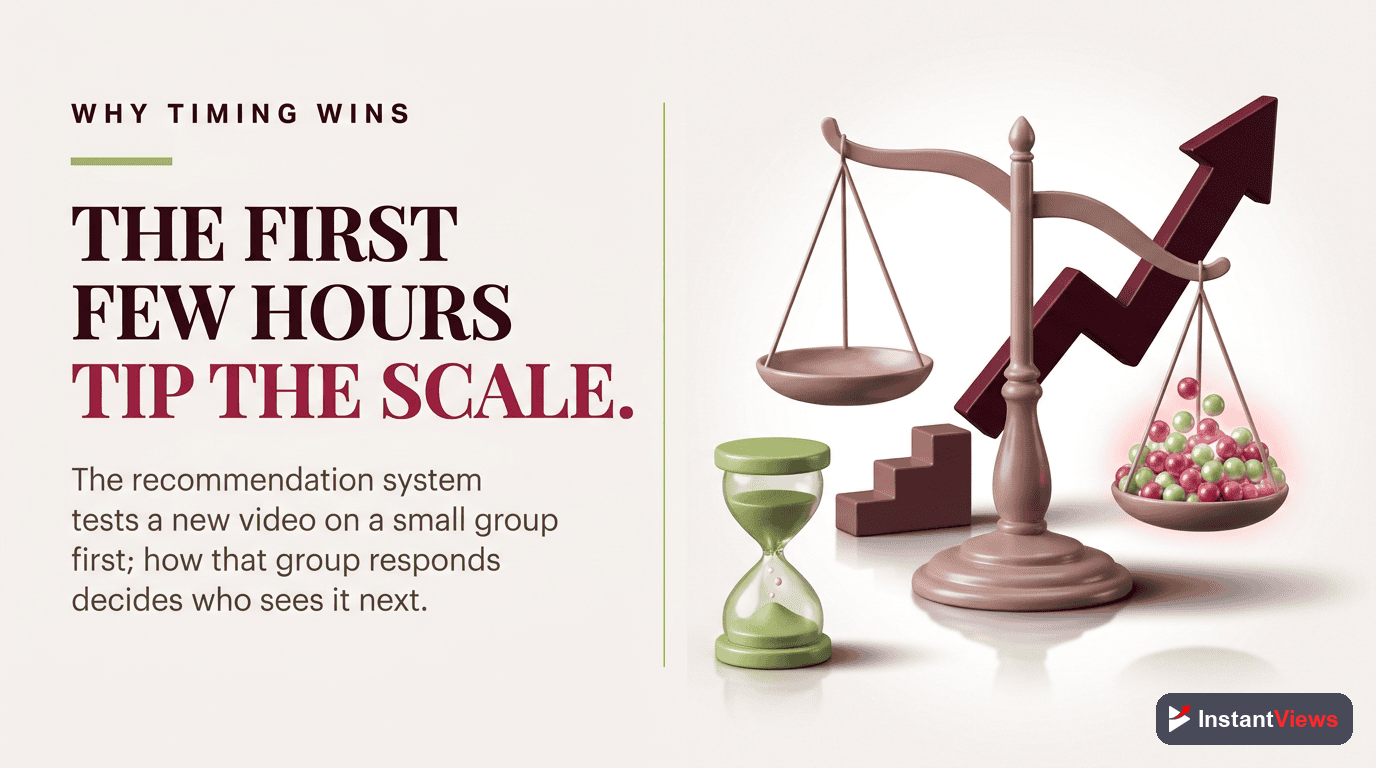
YouTube's recommendation system works in expanding circles. It serves your video to a small, carefully chosen audience first — usually your subscribers and viewers it expects to be interested. It then watches how that group responds before deciding whether to widen the circle.
When early engagement and satisfaction signals are strong, YouTube tests the video with broader audiences, sometimes within days rather than weeks. When the response is weak, the experiment quietly ends and the video settles into a smaller orbit. The first hours are the audition, and the algorithm is the casting director.
This compounding effect is why timing matters. Engagement that arrives while the video is still being actively tested does more work than the same engagement a week later. A comment in hour one helps decide how far the video travels; a comment in week two mostly lands on a video whose reach is already set.
The Engagement Signals That Matter Most
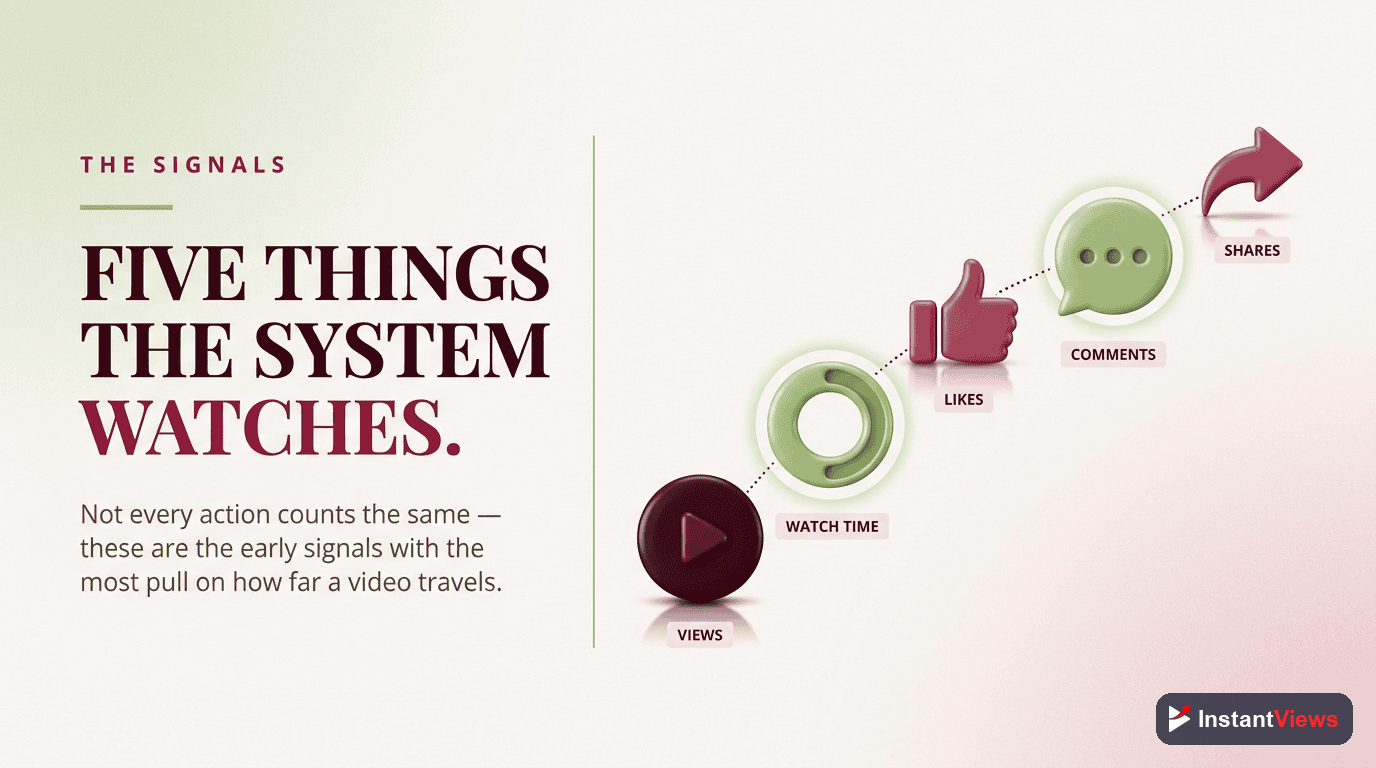
Not all engagement is created equal. The algorithm reads each action as a proxy for how deeply a viewer is invested, and effort is the currency. The more effort an action takes, the louder the signal.
Watch Time and Retention
Before anyone can like or comment, they have to keep watching. Early watch time and retention are the foundation that every other signal sits on top of. In 2026, retention matters more than raw watch time — YouTube cares whether people stay engaged, not just whether the clock runs.
Likes
A like is the lightest form of approval: one tap, almost no effort. It still counts as a positive signal, but because it is so easy, it carries less weight on its own than the actions that take real involvement.
Comments
Comments are where engagement gets serious. Writing one takes thought and time, so the algorithm treats comments as a meaningfully stronger signal than likes. It also weighs quality: a detailed reply that sparks a back-and-forth tells YouTube more than a single emoji.
Shares
A share is a viewer vouching for you with their own reputation. By sending your video into a private chat or another platform, they introduce it to people the algorithm has not reached yet — which is why shares are among the most powerful early signals you can earn.
Signal-by-Signal: Why It Matters and How to Spark It
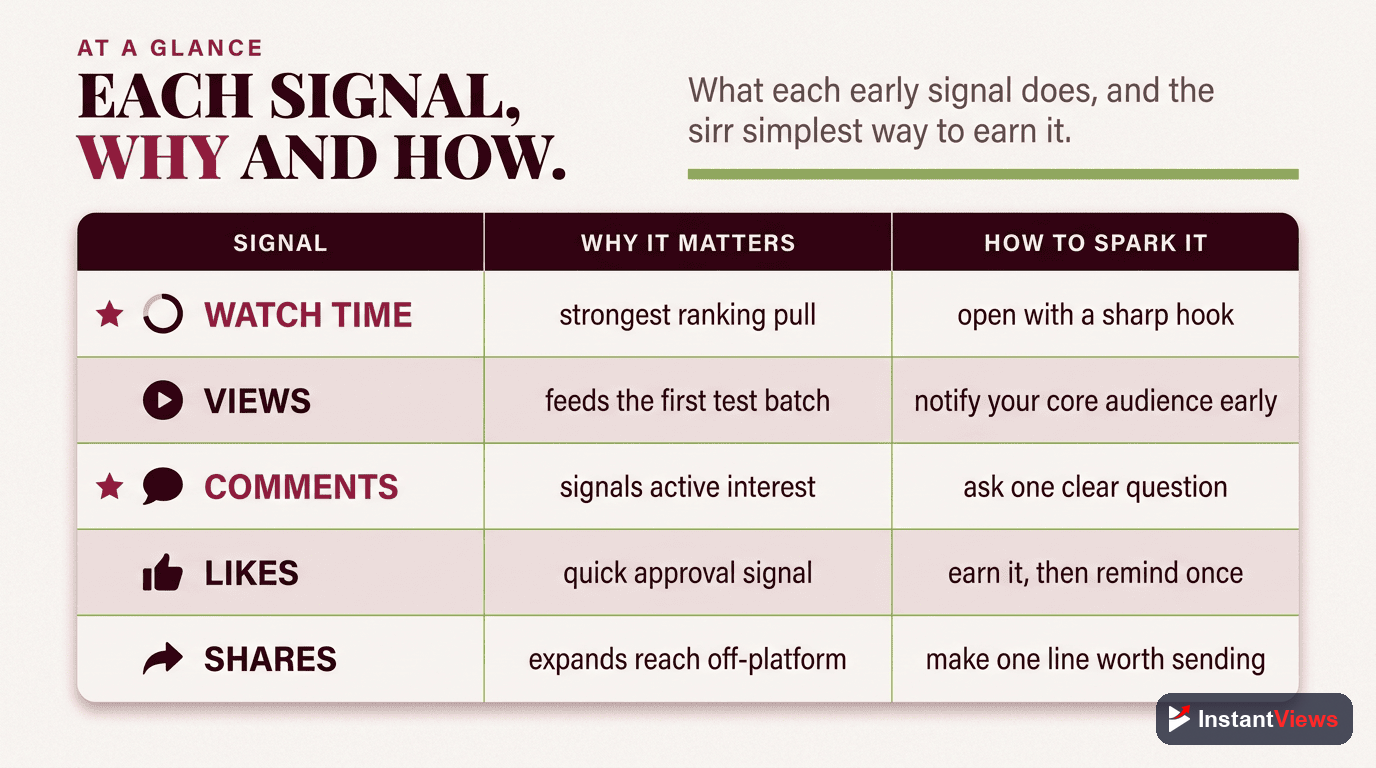
The table below breaks down each early engagement signal, what it tells YouTube, and the most reliable way to generate it on a fresh upload.
| Engagement Signal | Why It Matters | How to Spark It |
|---|---|---|
| Early watch time / retention | The foundation. People must stay before they can react, and retention is the signal YouTube weighs most in 2026. | Open with a strong hook, deliver on the title fast, and cut dead air in the first 30 seconds. |
| Likes | A light positive vote that confirms approval, though it carries less weight because it takes almost no effort. | Ask for the like at a high point in the video, right after you deliver real value. |
| Comments | A high-effort signal of genuine investment. Detailed conversations count for more than single words. | Pose one clear question, pin it in a comment, and reply fast to keep the thread alive. |
| Shares | The strongest social proof. A viewer puts your video in front of a network you have not reached. | Make a moment worth sharing and explicitly invite people to send it to someone who needs it. |
| Early subscribers | Signals the video earned enough trust to win a long-term relationship, not just a single view. | Earn it before you ask, then make the subscribe request specific and tied to future value. |
Earn Watch Time With a Strong Hook
Engagement starts with attention. If viewers click away in the first few seconds, there is no one left to like, comment, or share — so the hook is your first and most important engagement tool.
A great hook does one of three things in the opening moments: it makes a clear promise, it opens a curiosity gap, or it shows a result the viewer wants. Whatever the approach, the goal is to confirm fast that the video will deliver what the title and thumbnail promised, so the viewer relaxes and stays.
- Lead with the payoff: Tease the result or the most surprising point up front instead of saving it for the end.
- Cut the throat-clearing: Drop long intros and channel branding from the first 15 seconds — they bleed retention exactly when it counts most.
- Match the promise: Make the opening seconds clearly connect to the title, so viewers feel they landed in the right place.
- Set up a reason to stay: Hint at something valuable coming later in the video to hold attention through the middle.
Retention earned in the first 30 seconds is what makes every other signal possible. Treat the hook as the gateway to engagement, not just to views.
Engineer Comments With One Clear Question
Comments are the highest-effort, highest-value engagement signal, which makes them the one most worth engineering. The single biggest mistake creators make is asking nothing — or asking everything at once. The fix is to design one clear prompt.
Ask One Specific, Easy Question
Vague invitations like "let me know what you think" rarely work because they give people nothing concrete to respond to. A focused question that takes five seconds to answer — a this-or-that choice, a quick experience, a single opinion — gets far more replies. Lower the effort and you raise the volume.
Pin the Question So It Has a Home
Repeat your question in a pinned comment so it sits at the top of the section and gives the conversation an obvious starting point. A pinned prompt turns a blank comment box into a clear invitation, and it works even for viewers who joined late.
Reply Fast to Keep the Thread Alive
Responding quickly to early comments does two things: it keeps the section active while the algorithm is watching, and it signals an engaged community that makes others want to join in. A simple, genuine reply — or pinning a great viewer comment instead of your own — rewards participation and invites more of it.
Never buy engagement or beg with empty "like and subscribe" spam. Hollow or fake signals do not fool a system designed to measure genuine satisfaction, and YouTube is actively reducing the spread of low-value, mass-produced content. Real engagement from real viewers is the only kind that compounds.
Notify Your Existing Audience First
Here is the leverage point most creators miss: the people most likely to engage with a new video are the ones who already know you. If you can get them watching in the first hour, you stack the audition with your most enthusiastic viewers — exactly when their reactions carry the most weight.
That is not gaming the system; it is giving the algorithm an honest, high-quality first sample. Your warmest audience genuinely finds your content valuable, so their engagement is the most accurate possible signal of how the wider audience will feel.
- Your email list: The one audience you fully own. A short note when a video drops puts it in front of people who opted in to hear from you.
- The community tab: Post a teaser before and a link after publishing to pull your most active subscribers in early.
- Other platforms: A quick mention where your audience already spends time can bring engaged viewers across in the first hour.
- Group chats and DMs: A handful of real fans who reliably watch and comment early can give a brand-new video its first push.
Spark More Engagement on Every Upload
Explore our free suite of YouTube tools to research questions worth asking, sharpen your titles and hooks, and see which videos earn the most engagement.
Explore Free YouTube Tools →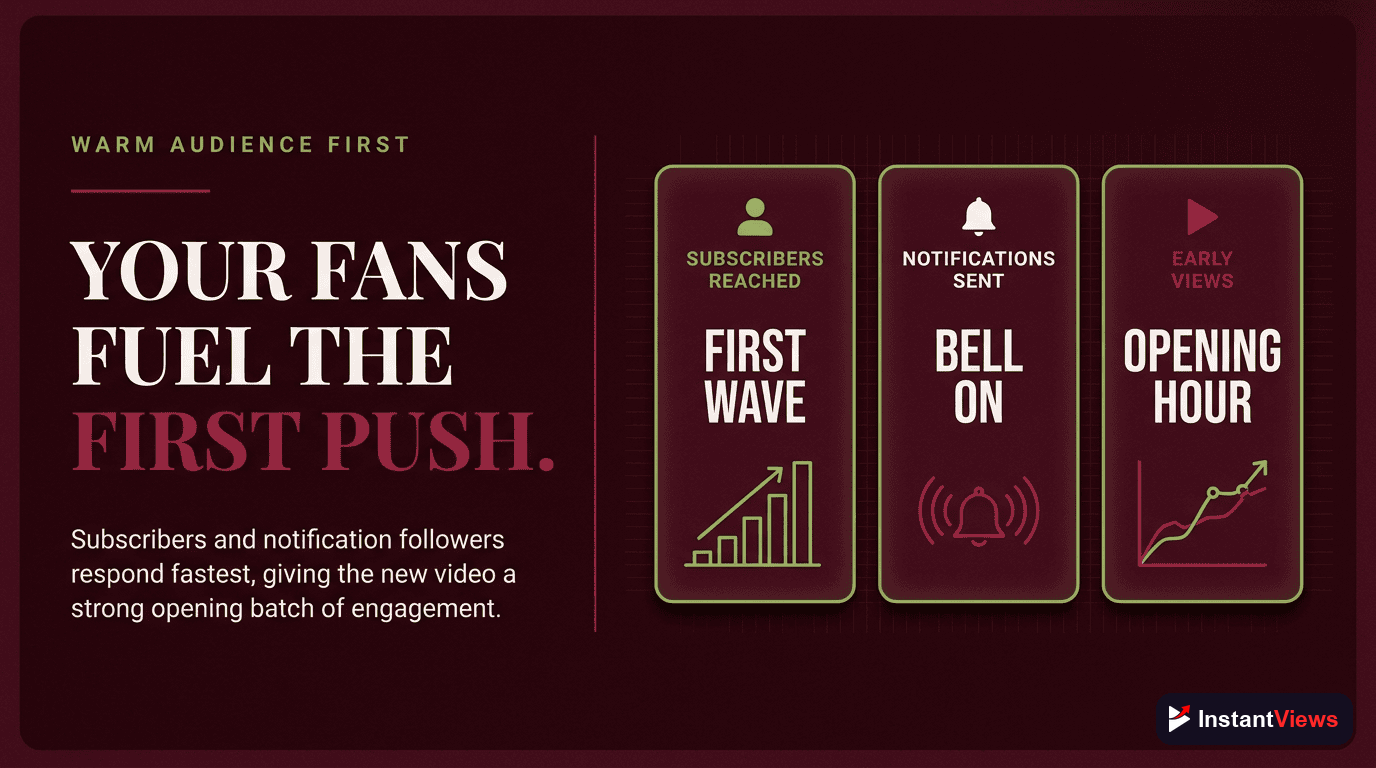
Use the Community Tab and Shares
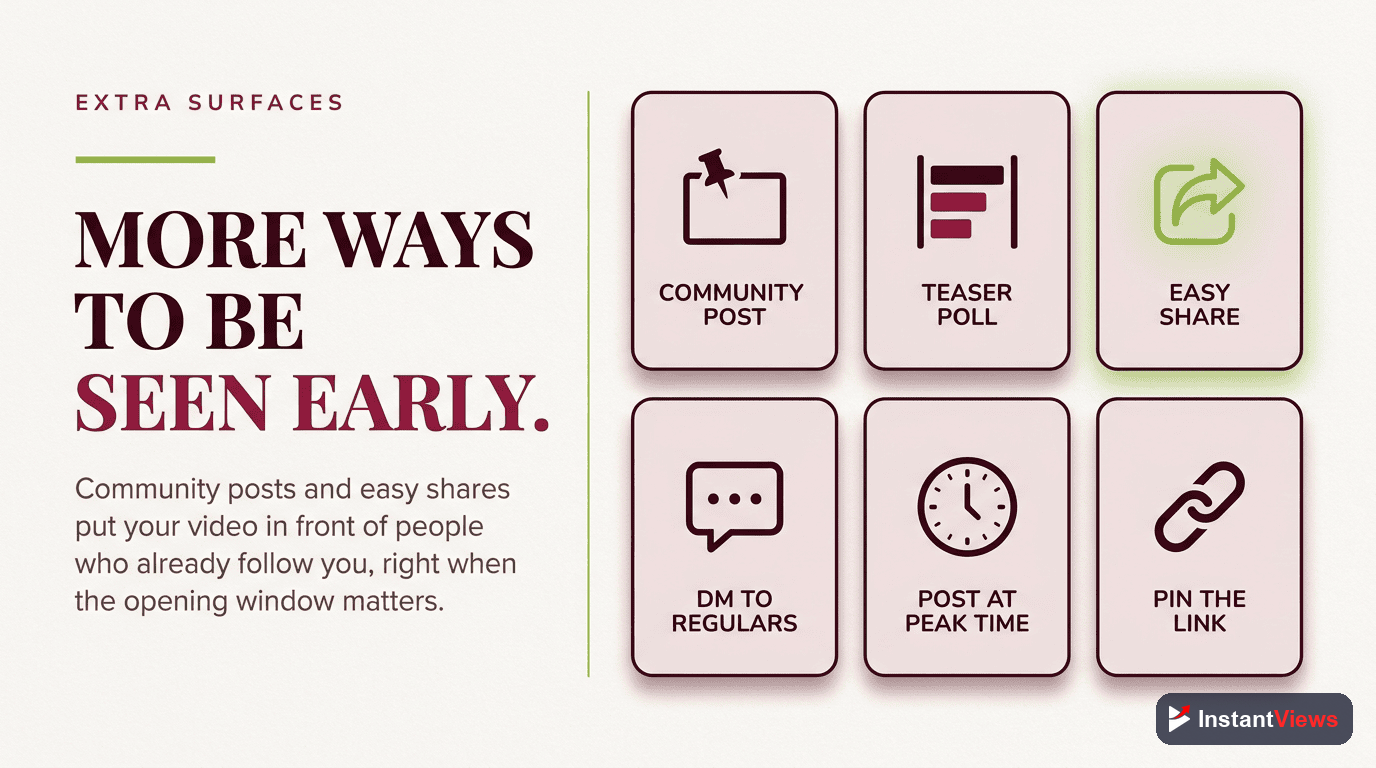
Two engagement channels are routinely underused: the community tab and shares. Both let you build momentum that spills over into your videos.
The Community Tab
The community tab keeps your audience warm between uploads and primes them to engage when a new video lands. Polls are the highest-performing format because they take a single click to join — the lowest-effort engagement there is, which makes them ideal for re-activating quiet subscribers.
Use it as a two-way bridge: post a poll or question that mirrors your upcoming video, then carry that same conversation into the video and its pinned comment. People who already weighed in on the community tab are primed to comment again once the video is live.
Earning Shares
Shares are hard to fake and easy to encourage. The trick is to give people something genuinely worth passing on — a surprising insight, a useful resource, a moment that makes them think of a specific person — and then to ask, plainly, that they send it along.
- Build in a "send this to…" moment: Name the kind of person who needs this video so a viewer instantly pictures who to share it with.
- Make one section quotable: A crisp, standalone takeaway is far more shareable than a point buried in a long explanation.
- Ask once, clearly: A single direct invitation to share beats no ask at all — most people simply forget unless prompted.
Your First-Hour Engagement Playbook
Here is a simple, repeatable sequence to put everything together every time you publish.
Plan the Engagement Before You Publish
Decide on the one question you want viewers to answer and the single action you want them to take. Write your hook, your pinned comment, and your call to action around that one goal so every part of the video pulls in the same direction.
Hook Viewers in the First Seconds
Open with a promise, a curiosity gap, or a result the viewer wants. Cut long intros so retention stays high, because watch time is the signal every other form of engagement is built on.
Notify Your Existing Audience First
Post to the community tab, email your list, and share where your fans already are. Engaged viewers arriving in the first hour give the algorithm its strongest, most honest first sample.
Prompt Comments and Pin a Question
Ask one clear, easy question inside the video and repeat it in a pinned comment so the conversation has an obvious place to begin, even for late arrivals.
Reply Fast and Keep the Thread Alive
Spend the first 30 to 60 minutes replying genuinely to early comments and pinning a great viewer reply. Keeping the section active while the video is still being tested is one of the simplest ways to lift reach.
Engagement Mistakes That Backfire
Trying to boost engagement the wrong way can do more harm than good. Watch out for these common traps.
- Begging instead of earning: Repeated "smash that like button" pleas without delivering value first feel hollow and push viewers away.
- Asking too many questions: Three prompts at once split attention and produce fewer answers than one clear question would.
- Publishing and disappearing: Going quiet during the first hour wastes the exact window when your replies matter most.
- Chasing fake engagement: Bought likes and comments are noise, not signal, and they do nothing to satisfy real viewers.
- Ignoring your own audience: Relying entirely on the algorithm to find viewers, when your warmest fans are one notification away, leaves easy engagement on the table.
- Front-loading the ask: Requesting a like before you have delivered anything of value almost always falls flat.
The thread running through every mistake is the same: engagement has to be earned through a video worth engaging with. The tactics in this guide amplify a good video; they cannot rescue a weak one.
"YouTube does not ask how many people watched — it asks how many cared. Early engagement is simply the clearest, fastest answer you can give it."
Frequently Asked Questions
Early engagement is the burst of likes, comments, shares, and watch time a video earns in its first hours after publishing. YouTube reads these signals as proof that real people find the video valuable, and uses them to decide how widely to recommend it.
YouTube tests every new video with a small audience first, then expands its reach if the engagement and satisfaction signals are strong. A strong early response tells the algorithm the video is worth showing to more people, which is why the first hours carry so much weight.
Generally yes. A like is a single tap, while a comment takes real effort and time, so the algorithm treats comments as a deeper signal of investment. Detailed conversations tend to count for more than single-word replies, which is why prompting thoughtful comments is so valuable.
Ask one clear, easy-to-answer question inside the video and repeat it in a pinned comment. Reply quickly to early commenters to keep the conversation alive, and notify your existing audience through the community tab and other channels so engaged fans arrive first.
Yes. Replying soon after publishing keeps the comment section active, encourages more people to join in, and signals an engaged community. Fast, genuine replies in the first couple of hours are one of the simplest ways to lift early engagement.
The first 48 hours describes the whole testing window, where click-through rate and retention decide how far a video travels. Early engagement zooms into one part of that window: the likes, comments, and shares that prove viewers are actively involved, not just watching.
Shares are one of the strongest signals because someone is willing to put your video in front of their own network. A handful of genuine shares early on can introduce your video to fresh viewers and add momentum the algorithm notices.
A clear, specific call to action helps, but vague pleas to like and subscribe rarely work. Tie the ask to a moment in the video, give people a real reason or question to respond to, and keep it natural so it adds to the experience rather than interrupting it.
Conclusion
Early engagement is the language the YouTube algorithm speaks. Every like, comment, share, and minute watched in those first hours is a vote that tells the system whether to widen your video's audience or quietly hold it back. The creators who grow fastest are not the ones who get lucky — they are the ones who understand this audition and prepare for it.
The good news is that early engagement is something you can shape. Hook viewers in the first seconds to protect retention, ask one clear question and pin it, notify your warmest audience so they arrive first, and spend the opening hour replying and keeping the conversation alive. None of these tactics game the system; they simply give an already-good video its best possible first impression.
Do this on every upload and the effect compounds. Strong early signals earn wider reach, wider reach brings more engagement, and over time YouTube learns that your videos are worth recommending. Treat the first hours as a launch, not a hand-off, and you turn the algorithm's test into your advantage.