- YouTube marketing began as interruptive pre-roll — repurposed TV commercials — and has become a full-funnel creator platform
- The biggest shift was the rise of creators: YouTube has paid creators more than $100 billion over four years, and authentic content now outperforms polished corporate ads in many markets
- Shorts created a new top-of-funnel with more than 200 billion views a day, while connected TV passed mobile to become the leading US viewing surface
- AI is reshaping production, but YouTube rewards original work and is reducing low-value, mass-produced AI content
- The modern playbook is one connected funnel: Shorts for awareness, long-form for consideration, and connected TV for household reach
YouTube turned twenty in 2026, and the way brands market on it looks almost nothing like it did at the start. In the early days, marketing on YouTube meant doing what worked on television: buy attention, interrupt the viewer, and hope the message stuck. Today, with more than 2.7 billion monthly active users and over a billion hours watched every single day, YouTube is no longer a place where you simply rent attention — it is a place where you earn it.
That change did not happen overnight. It came in waves: the rise of creators, the explosion of Shorts, the migration to the living-room screen, and the arrival of generative AI. Each wave rewrote the rules of what works, and each left behind marketers who kept playing by the old ones.
Understanding how YouTube marketing evolved is not a history lesson for its own sake. The patterns explain exactly why certain tactics fail today and why others suddenly work. If you know where the platform came from, you can see where it is going — and position yourself ahead of the next shift.
This guide walks through that evolution stage by stage, compares how marketing worked then versus now, and finishes with what the changes mean for your strategy in 2026 and the mistakes too many marketers still make.
- Then vs Now: A Quick Comparison
- The Early Days: Pre-Roll and Repurposed TV Ads
- The Rise of Creators and Authentic Content
- Shorts and the New Top of the Funnel
- Connected TV: The Living Room Takes Over
- The AI Era: Acceleration and Its Limits
- How the Algorithm Changed What Wins
- What It Means for Marketers Today
- How to Modernize Your Strategy
- Mistakes Marketers Still Make
- FAQ
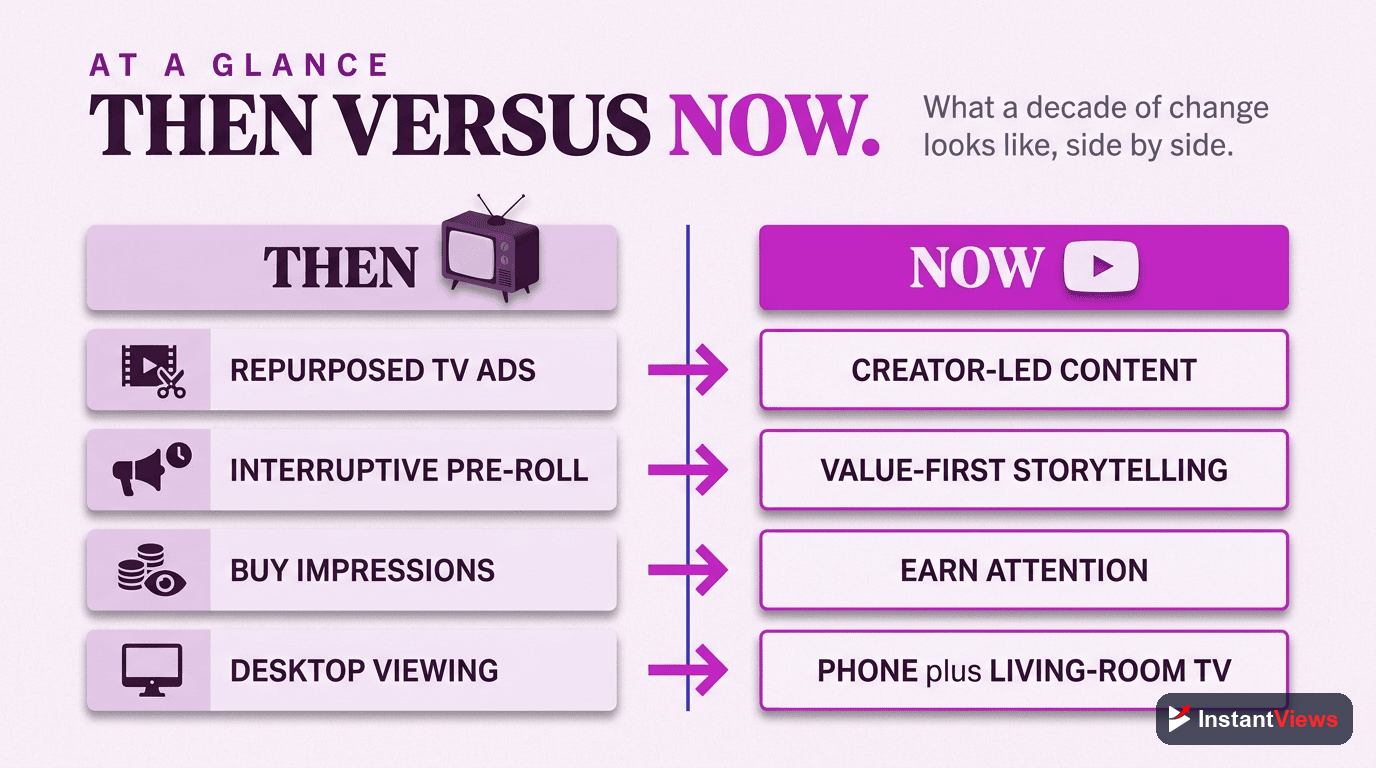
Then vs Now: A Quick Comparison
Before we walk through each era in detail, it helps to see the arc at a glance. The table below tracks how the core approach to YouTube marketing shifted across the platform's major phases — and, just as importantly, which metric marketers obsessed over in each one.
| Era | How Marketing Worked | The Metric That Mattered |
|---|---|---|
| Early days (broadcast mindset) | Repurposed TV commercials run as interruptive pre-roll ads in front of content | Impressions and reach |
| Rise of creators | Brands sponsor and partner with trusted creators; authentic content beats polished ads | Engagement and trust |
| Shorts era | Short vertical video opens a new, fast top-of-funnel for discovery | Views and audience growth |
| Connected TV | The living-room screen reaches whole households; online video and TV merge | Household reach and watch time on the big screen |
| AI era (2026) | One connected funnel; AI assists creation while quality and relevance decide reach | Viewer satisfaction and retention |
Notice the direction of travel. Every column moves away from interrupting people and toward satisfying them. That single theme is the thread connecting the entire history of YouTube marketing, and it is the lens to keep in mind as we go era by era.
The Early Days: Pre-Roll and Repurposed TV Ads
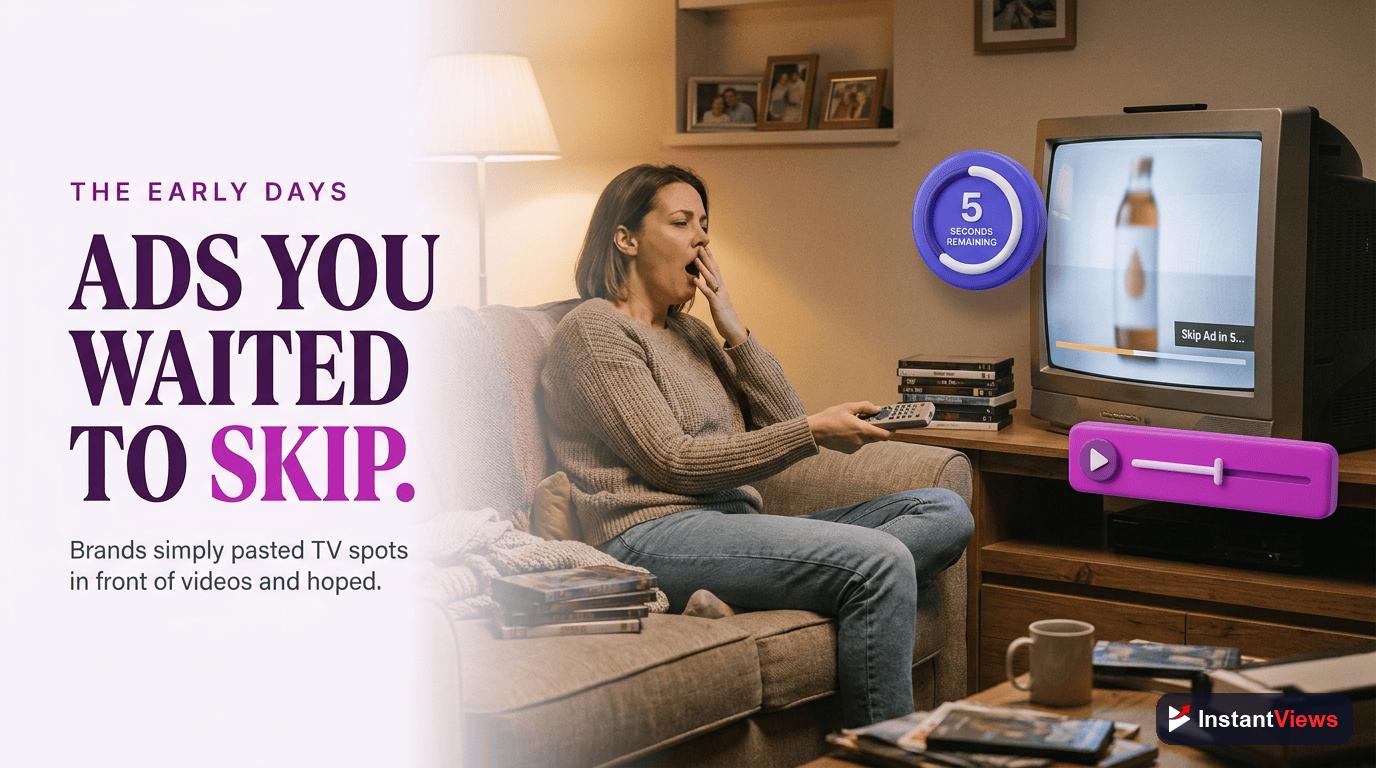
When brands first arrived on YouTube, they treated it like a smaller, cheaper television channel. The default move was simple: take the 30-second commercial you already had, and run it as a pre-roll ad in front of someone else's video. The format was interruptive by design. You did not earn the viewer's attention — you blocked the thing they actually came to watch until your message had played.
This made sense at the time. Marketing teams understood broadcast, agencies were built around it, and YouTube offered a familiar way to buy reach at scale. The metric that mattered was the same one TV had trained everyone to chase: impressions. How many eyeballs saw the spot?
Why the Broadcast Mindset Started to Crack
The problem was that YouTube viewers behaved nothing like TV audiences. They had a skip button, a back button, and an endless wall of alternatives one click away. An ad that interrupted without rewarding got skipped the instant it was allowed. The commercials that had worked in a living room with no escape fell flat in a medium built around choice.
Marketers slowly learned an uncomfortable truth: on YouTube, attention is not bought, it is granted. The viewer decides in the first few seconds whether you are worth their time. That realization set the stage for the single biggest shift in the platform's history.
The Rise of Creators and Authentic Content
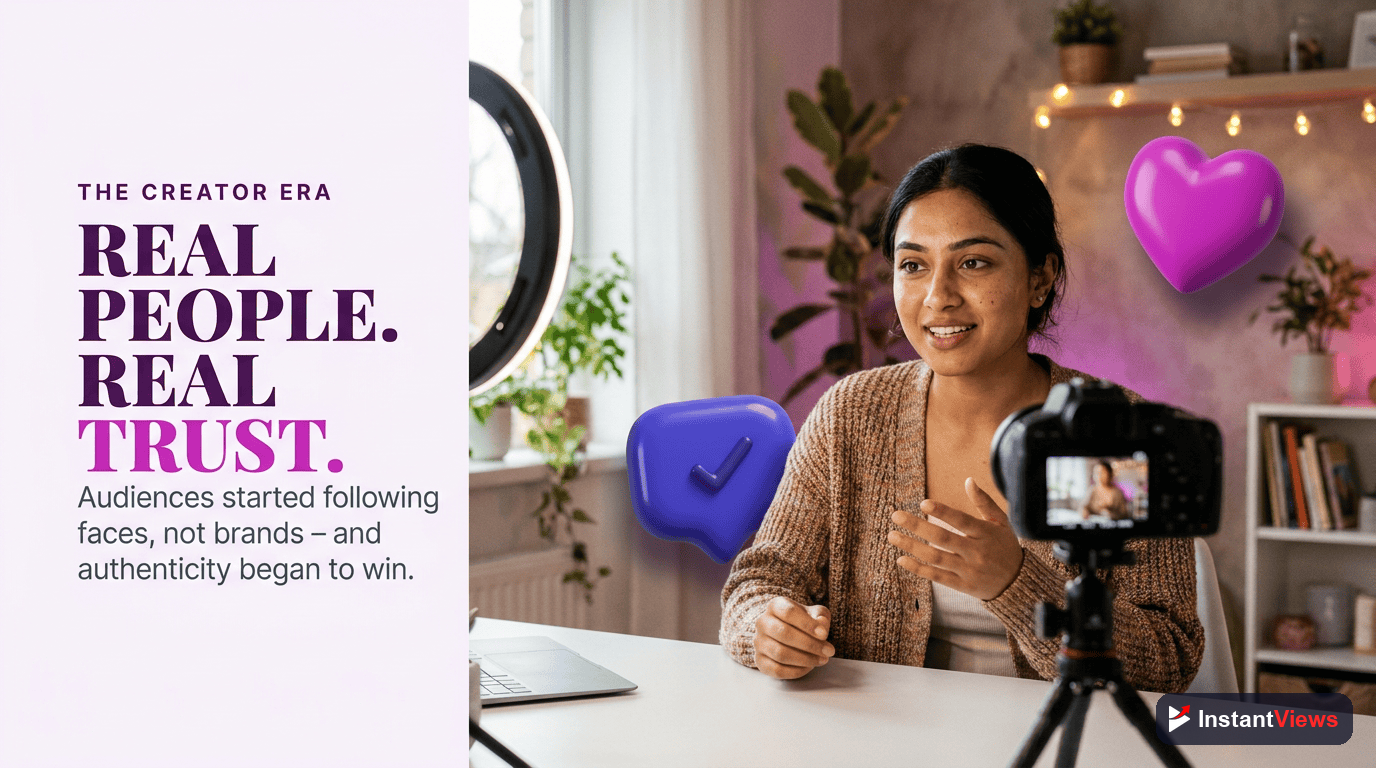
The defining change in YouTube marketing was not a new ad format — it was the rise of creators. As individuals built audiences of millions around a camera and a point of view, they accumulated something brands could not buy directly: trust. Over the past four years alone, YouTube has paid creators, artists, and media companies more than $100 billion, fueling a genuine economy of independent voices.
Those voices reset audience expectations. A viewer who trusts a creator's recommendation is far more receptive to a message delivered in that creator's voice than to a glossy corporate spot dropped in front of the video. In many markets, authentic creator-style and user-generated content now outperforms polished corporate ads — not because it is cheaper, but because it feels native and credible.
What Changed for Brands
- From producing ads to partnering with people: Sponsorships and creator collaborations replaced one-way commercials as the highest-performing format.
- From polish to authenticity: Overly produced footage began to read as "an ad" and get tuned out, while honest, human content earned attention.
- From renting reach to building relationships: The goal shifted from a single impression to an ongoing connection that compounds over time.
Shorts and the New Top of the Funnel
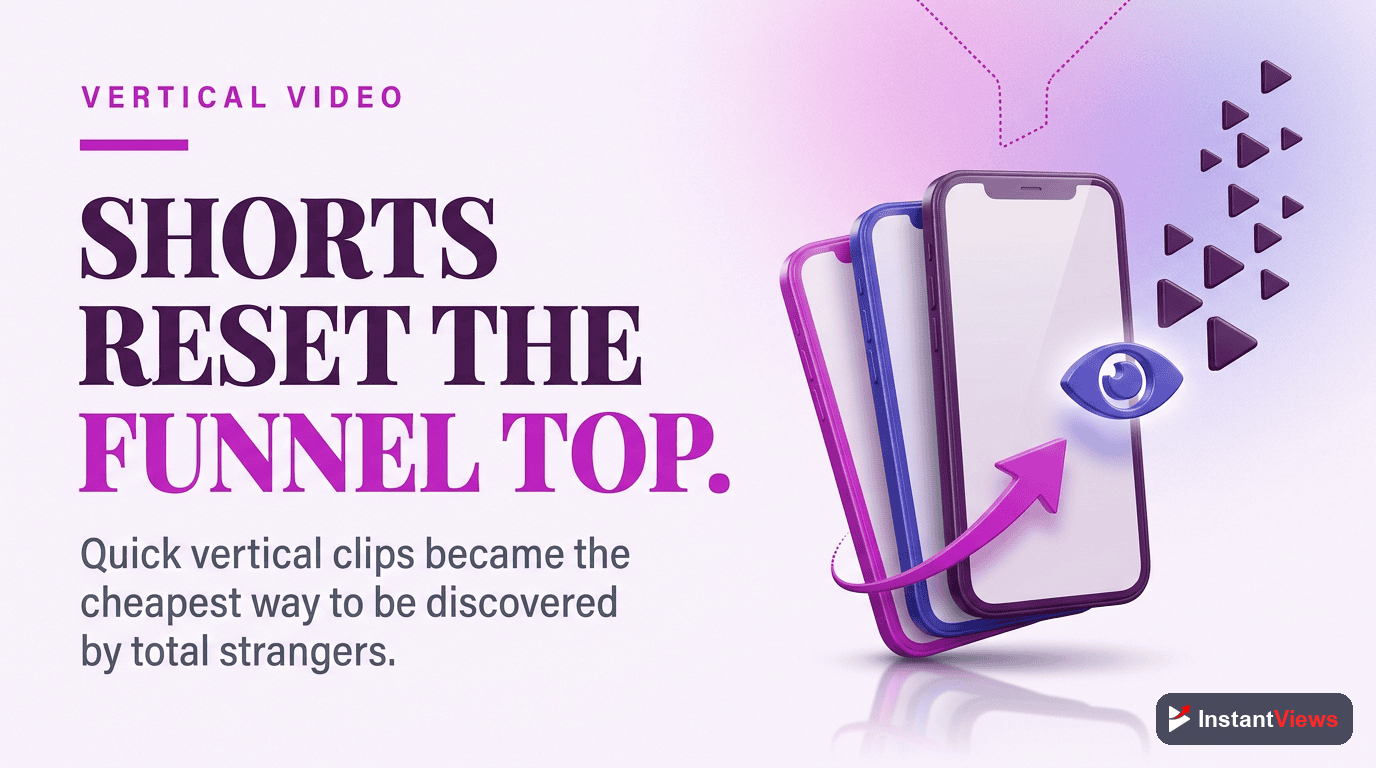
The next wave was vertical and fast. YouTube Shorts now draws more than 200 billion views a day, and in doing so it transformed how people discover content. Where discovery once depended mostly on search and suggested videos beside a player, Shorts created a continuous, swipeable feed that surfaces new creators and brands to viewers who were not looking for them at all.
For marketers, Shorts opened an entirely new top of the funnel. A short, punchy vertical video can introduce your idea, your product, or your personality to a huge new audience cheaply and quickly. It is the awareness layer — the first touch that pulls a stranger into your orbit.
Shorts Did Not Replace Long-Form
A common mistake is to treat Shorts as a substitute for everything else. They are not. Shorts excel at reach and discovery, but they rarely close a sale or build deep trust on their own. The strongest approach pairs them with long-form: use a Short to spark interest, then guide the curious viewer toward a longer video that delivers depth.
- Awareness: Shorts introduce an idea to a broad, new audience.
- Consideration: Long-form videos expand on that idea and earn trust.
- Continuity: Clear next steps move viewers from one format to the other instead of letting them bounce.
Connected TV: The Living Room Takes Over
For most of YouTube's life, the platform was synonymous with the phone. That assumption is now out of date. Connected TV (CTV) has passed mobile to become the number-one viewing surface in the United States, accounting for roughly 60 percent of US watch time — up from about 40 percent in 2022. YouTube streams more than a billion hours a day to television screens, more than any other streaming service.
This quietly collapses a wall that defined media for decades: the wall between "online video" and "TV." The living-room screen, once the exclusive territory of broadcasters and cable, is now a YouTube screen. And unlike traditional TV, it comes with the platform's targeting, measurement, and on-demand library attached.
What CTV Means for Marketers
The shift to the big screen changes both reach and craft. You are no longer addressing one person scrolling alone — you may be reaching a whole household watching together. That rewards content that holds up at television scale: clear visuals, strong audio, and pacing that works when the viewer is leaning back rather than leaning in.
Do not assume your audience is watching on a phone. A growing share of your views may be happening on a television across the room, where tiny text, frantic cuts, and mobile-only calls to action fall flat. Design your most important content to work beautifully on the big screen as well as the small one.
Keep Up With Every Shift
Explore our free suite of YouTube tools to research topics, refine your titles and thumbnails, and analyze what is actually working across every surface and format.
Explore Free YouTube Tools →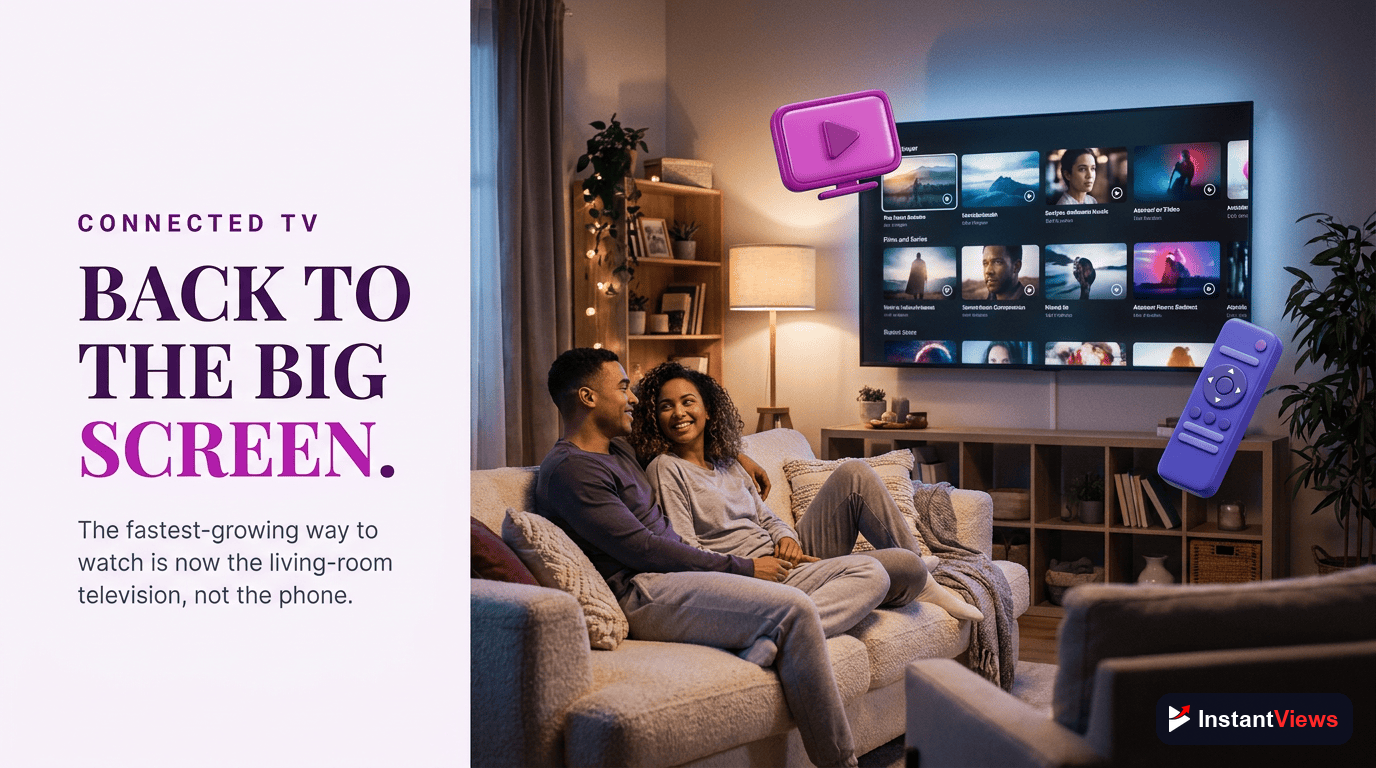
The AI Era: Acceleration and Its Limits
The most recent wave is generative AI, and it is reshaping how content gets made. More than a million channels now use AI creation tools for scripting, editing, ideation, voiceover, and more. Tasks that once took a team and a week can now happen in an afternoon, lowering the barrier to producing video at scale.
But scale cuts both ways. As AI made it trivial to mass-produce video, the platform filled with low-effort, generic content — and viewers noticed. In response, YouTube is actively reducing the spread of low-value, mass-produced AI content. The lesson is clear: AI is a powerful accelerant for original work, not a license to flood the feed with filler.
Using AI the Right Way
- Enhance, don't replace: Use AI to speed up research, drafts, and edits, then bring your own voice, expertise, and judgment to the final product.
- Stay original: The content that gets rewarded is genuinely useful and distinct, not interchangeable with a thousand similar uploads.
- Keep a human in the loop: Authenticity is still the currency that built the creator economy, and AI cannot manufacture it.
How the Algorithm Changed What Wins
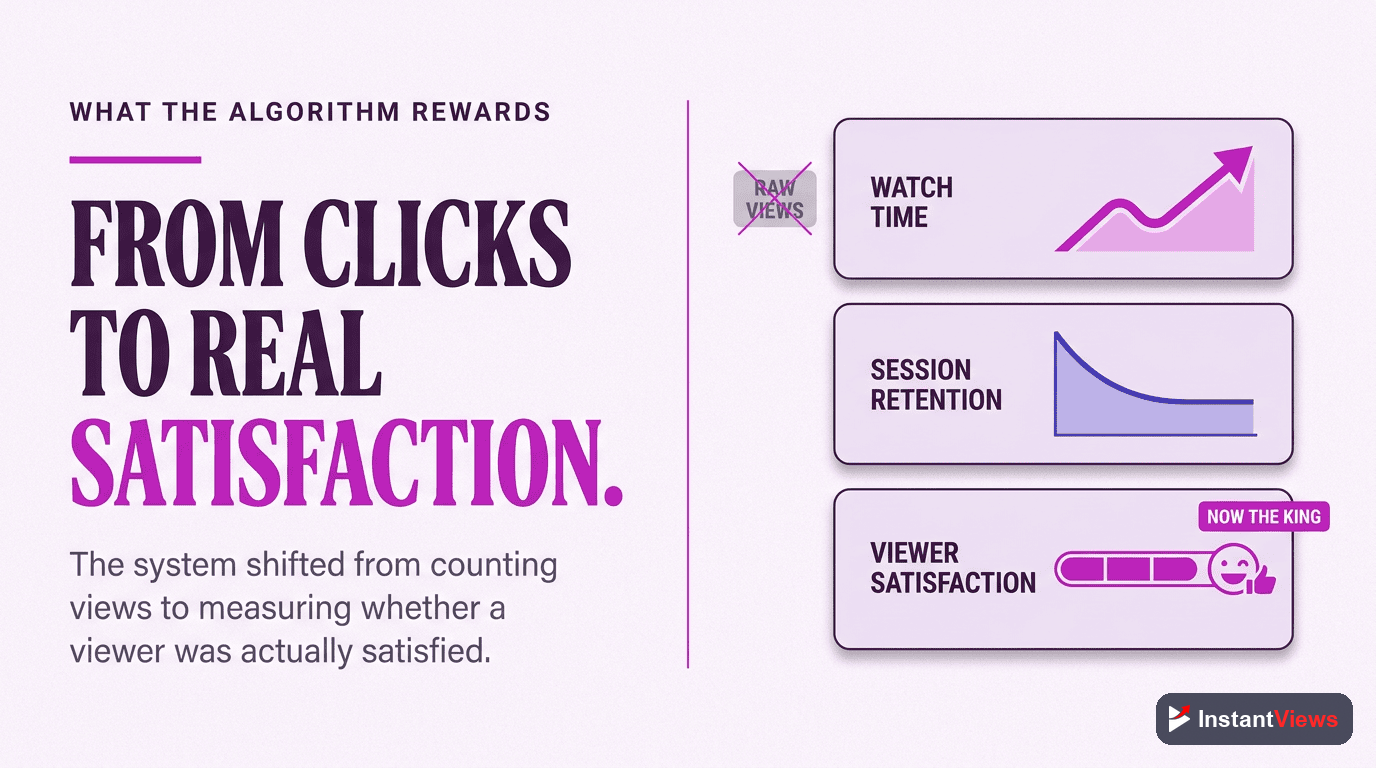
Underneath every era sits the recommendation system, and it has quietly undergone its own evolution. For years the algorithm chased watch time — whatever kept people on the platform longest was promoted hardest. That created perverse incentives: clickbait, padded intros, and content engineered to hold attention rather than to be worth it.
In 2026, the philosophy is different. The algorithm now optimizes for viewer satisfaction and retention, trying to answer one question for each person: which video will leave this specific viewer most satisfied right now? Retention still matters, but it is satisfaction — not raw minutes watched — that the system increasingly rewards.
For marketers, this is the most important rule change of all. Tricks that merely keep people watching no longer win. Content that genuinely helps, entertains, or resonates does. Quality and relevance, once soft virtues, are now hard ranking signals.
"YouTube marketing went from interrupting people to earning their attention. Every shift — creators, Shorts, the living-room screen, AI — rewards the same thing in the end: content people are genuinely glad they watched."
What It Means for Marketers Today
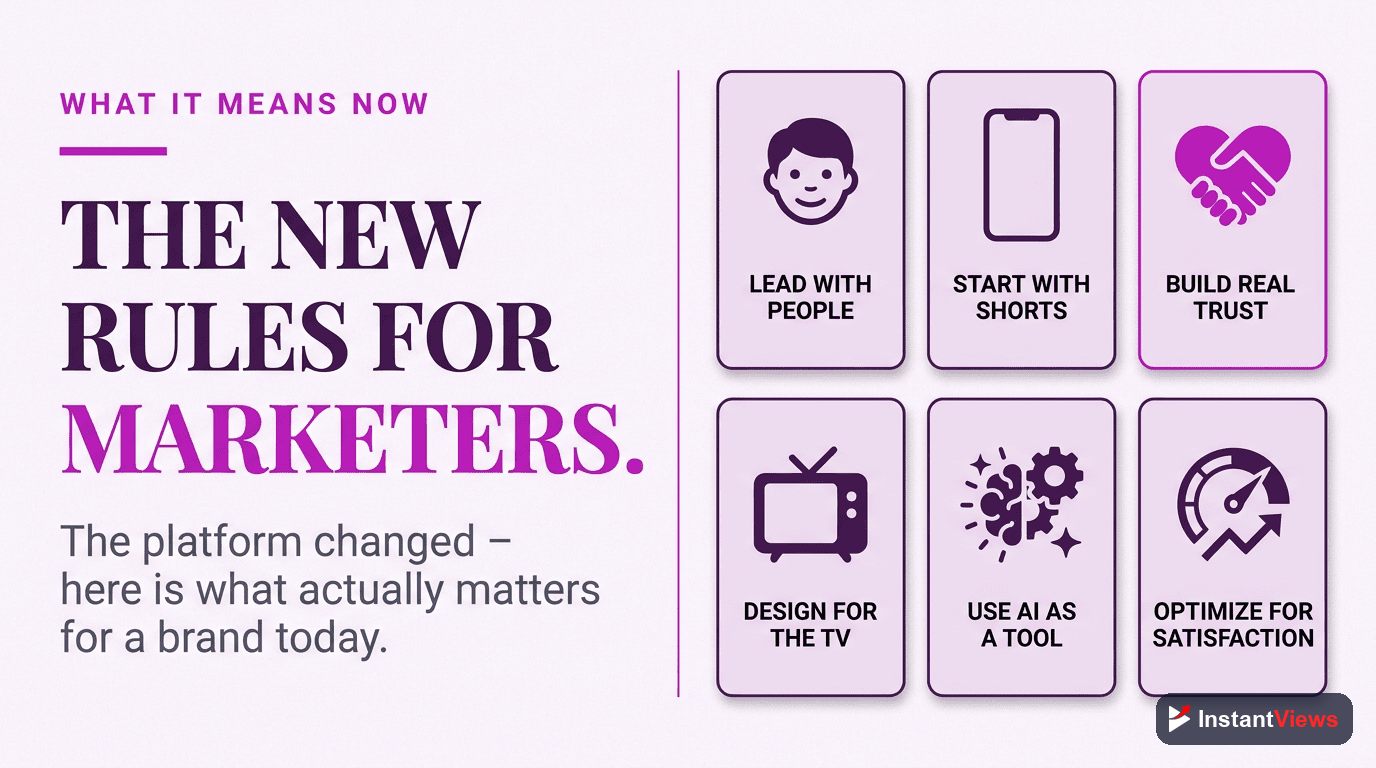
Put the waves together and a single picture emerges. The modern approach to YouTube marketing is one connected funnel, not a stack of disconnected campaigns. Each surface plays a distinct role, and they hand viewers off to one another.
- Shorts for awareness: The fast, broad top of the funnel that introduces you to new audiences.
- Long-form for consideration: The deeper content that builds trust and turns curious viewers into believers.
- Connected TV for household reach: The living-room layer that extends your best content to whole families at scale.
- Creators for authenticity: The trusted voices and human-led style that tie the whole system together.
The metric that unifies it all is no longer impressions or even watch time — it is whether viewers come away satisfied. Marketers who internalize that build content for people first and let reach follow. Those who still chase a single number in isolation find the platform working against them.
How to Modernize Your Strategy
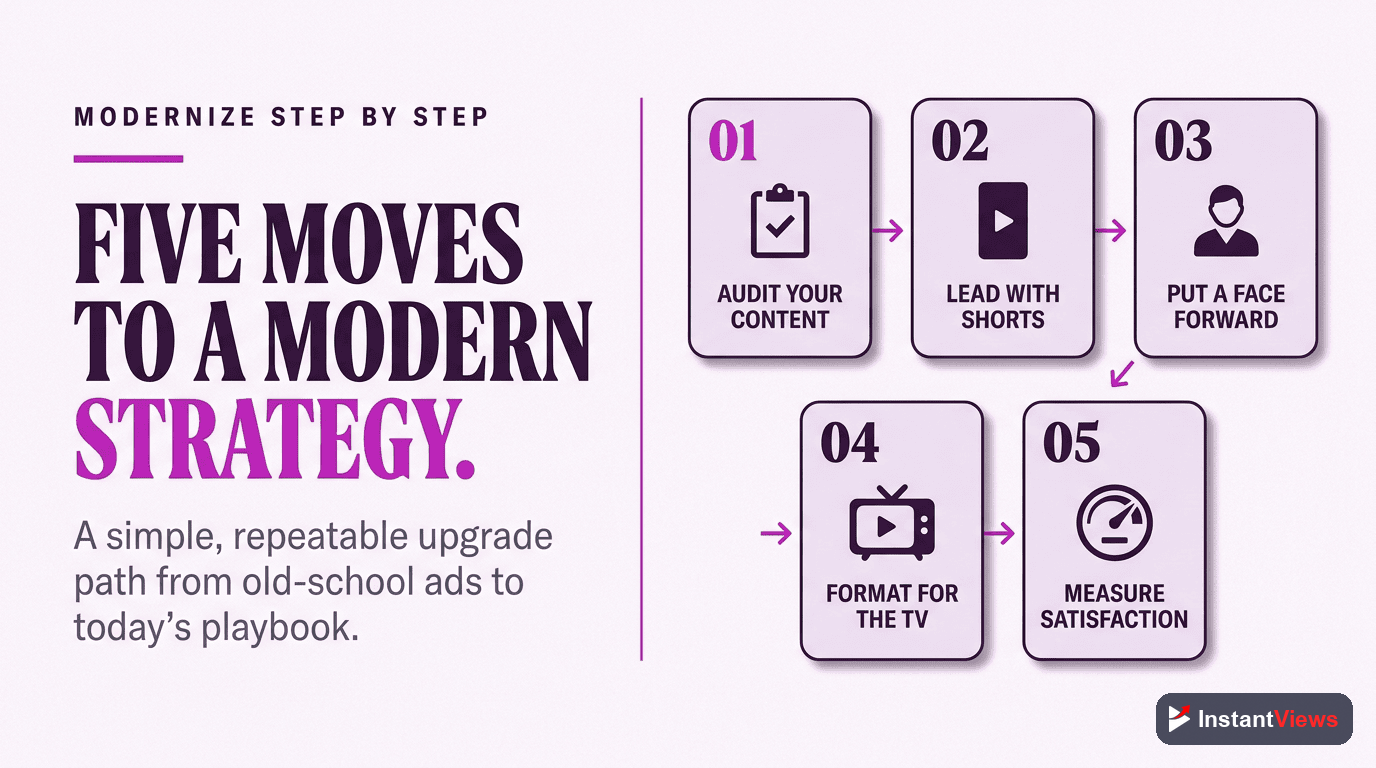
If your YouTube presence still carries habits from an earlier era, here is a practical sequence for bringing it up to date.
Audit Your Current Approach
Look honestly at what you publish. Flag anything that is a repurposed TV ad or a one-off campaign with no follow-up — those are the legacy habits to retire first.
Build a Shorts Awareness Layer
Create short, native vertical videos to reach new viewers, and use them to introduce ideas your long-form content expands on. Treat Shorts as the front door, not the whole house.
Invest in Authentic, Human Content
Produce or partner on creator-style videos that build trust. Prioritize genuine value and a real voice over polished corporate production that reads as an ad.
Extend Your Best Content to Connected TV
Make sure your strongest videos look and sound great on the living-room screen, since that is now the leading US viewing surface and reaches entire households at once.
Use AI Wisely and Measure Across Surfaces
Apply AI to enhance original work rather than mass-produce filler, then track satisfaction and retention across Shorts, long-form, and CTV as one connected funnel.
Mistakes Marketers Still Make
Even with all this history in plain view, the same outdated instincts keep resurfacing. Watch for these.
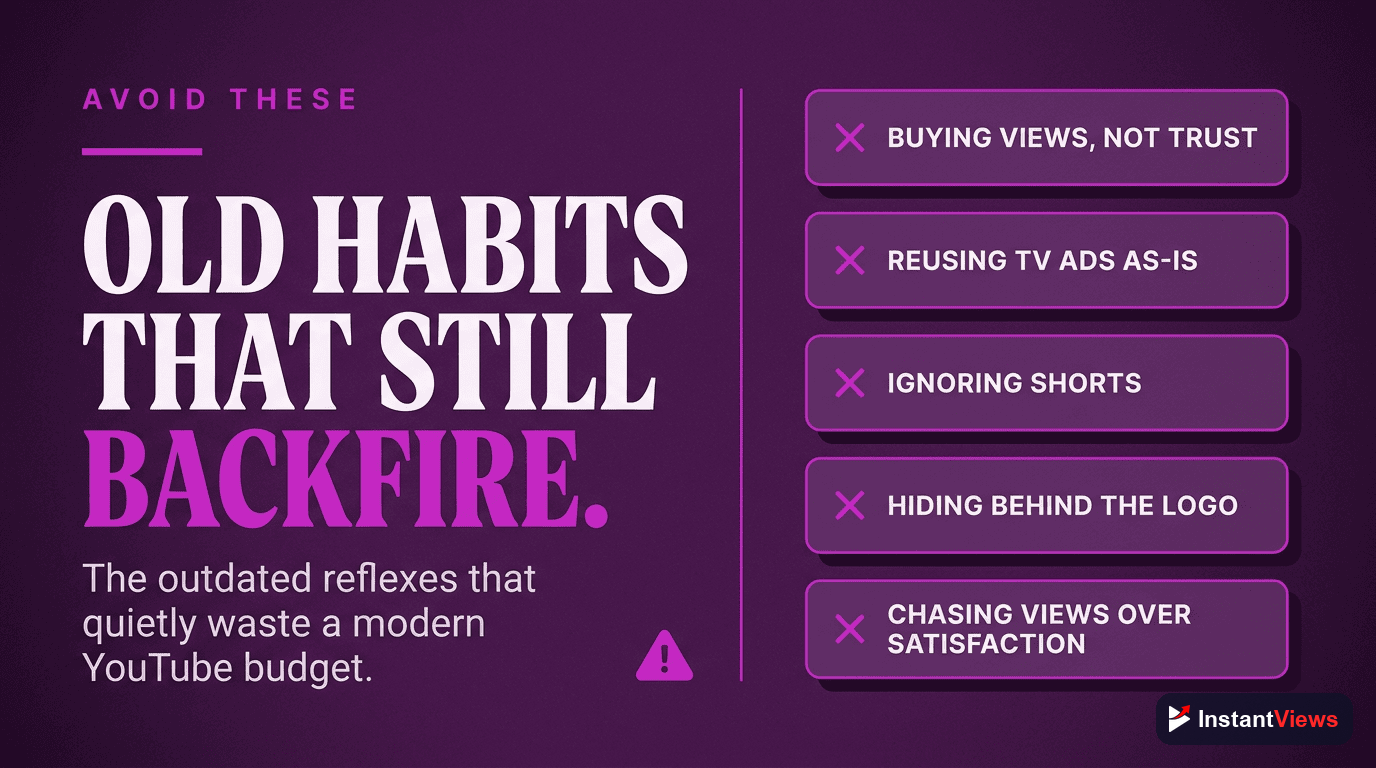
- Treating YouTube like television: Running a repurposed TV spot as your entire presence and expecting a captive audience that no longer exists.
- Over-polishing everything: Mistaking high production value for effectiveness when audiences increasingly trust authentic, human content more.
- Using Shorts as a dead end: Chasing viral views with no path from a Short to deeper long-form content or a clear next step.
- Designing only for mobile: Ignoring the connected-TV audience and shipping tiny text and frantic edits that fail on the big screen.
- Flooding the feed with AI filler: Mass-producing generic content that the platform is actively working to suppress.
- Chasing watch time over satisfaction: Optimizing for the old metric while the algorithm now rewards content viewers are genuinely glad they watched.
Each mistake is really the same mistake in a new costume: clinging to an earlier era's rules after the platform has moved on. The marketers who thrive are the ones who keep asking what the audience actually wants — and adjust faster than their competitors do.
"The platforms change, but the principle does not. Win the viewer's genuine satisfaction, and every metric that matters — reach, retention, conversion — eventually follows."
Frequently Asked Questions
YouTube marketing began as interruptive pre-roll — brands simply repurposed their 30-second TV commercials and bolted them onto the front of videos. It has since evolved into a full-funnel creator platform where authentic creator-style content, Shorts, connected TV, and AI tools all work together. The biggest shift is the move from interrupting attention to earning it.
Audiences trust people more than logos. As YouTube paid creators over $100 billion across four years, a generation of trusted voices emerged, and viewers learned to value their recommendations. In many markets, authentic creator-style and user-generated content now outperforms glossy corporate ads because it feels native to the platform rather than imported from television.
Shorts, now drawing more than 200 billion views a day, created an entirely new top-of-funnel surface for discovery. Marketers use Shorts to reach new audiences quickly and cheaply, then guide interested viewers toward long-form videos for deeper consideration. Shorts did not replace long-form — they became the awareness layer that feeds it.
Connected TV (CTV) has passed mobile to become the number-one US viewing surface, accounting for roughly 60 percent of US watch time, up from about 40 percent in 2022. That collapses the old wall between online video and television. Marketers can now reach entire households on the living-room screen with the same content and targeting they use everywhere else on YouTube.
Both, depending on how it is used. More than a million channels now use AI creation tools to speed up scripting, editing, and ideation. At the same time, YouTube is actively reducing the spread of low-value, mass-produced AI content. The winning approach uses AI to enhance genuinely original, human-led work rather than to flood the platform with filler.
The algorithm now optimizes for viewer satisfaction and retention rather than raw watch time. It tries to answer one question for each person: which video will leave them most satisfied right now. For marketers, that means content quality and relevance matter more than ever, and tricks that merely keep people watching longer no longer win.
It is one connected funnel rather than a series of disconnected campaigns. Shorts handle awareness at the top, long-form videos drive consideration in the middle, and connected TV extends reach into the household. Creator partnerships supply the authenticity that ties it together, and measurement follows the viewer across every surface.
No, but their role has changed. Pre-roll and skippable in-stream ads still work as one tactic within a broader strategy, especially for retargeting and reach. What no longer works is treating a repurposed TV spot as your entire YouTube presence. Ads today perform best when they look native to the platform and support an organic, creator-driven funnel.
Conclusion
The evolution of YouTube marketing is the story of one steady shift: from interrupting people to earning their attention. Pre-roll ads gave way to trusted creators, creators were joined by Shorts, Shorts reached into the living room through connected TV, and AI now accelerates how all of it gets made. Each wave looked disruptive in the moment, but together they point in a single, consistent direction.
That direction is good news for marketers willing to adapt. The platform now rewards exactly what audiences have always wanted — content that is genuinely worth their time. A connected funnel of Shorts for awareness, long-form for consideration, and connected TV for household reach, all carried by an authentic human voice, is not just the modern playbook. It is the natural endpoint of two decades of change.
Whatever comes next — and something always does — the principle will hold. Stop chasing the metric of the moment and start building for viewer satisfaction. Do that, and you will not just keep up with how YouTube marketing changes. You will be ready for the change after this one, too.