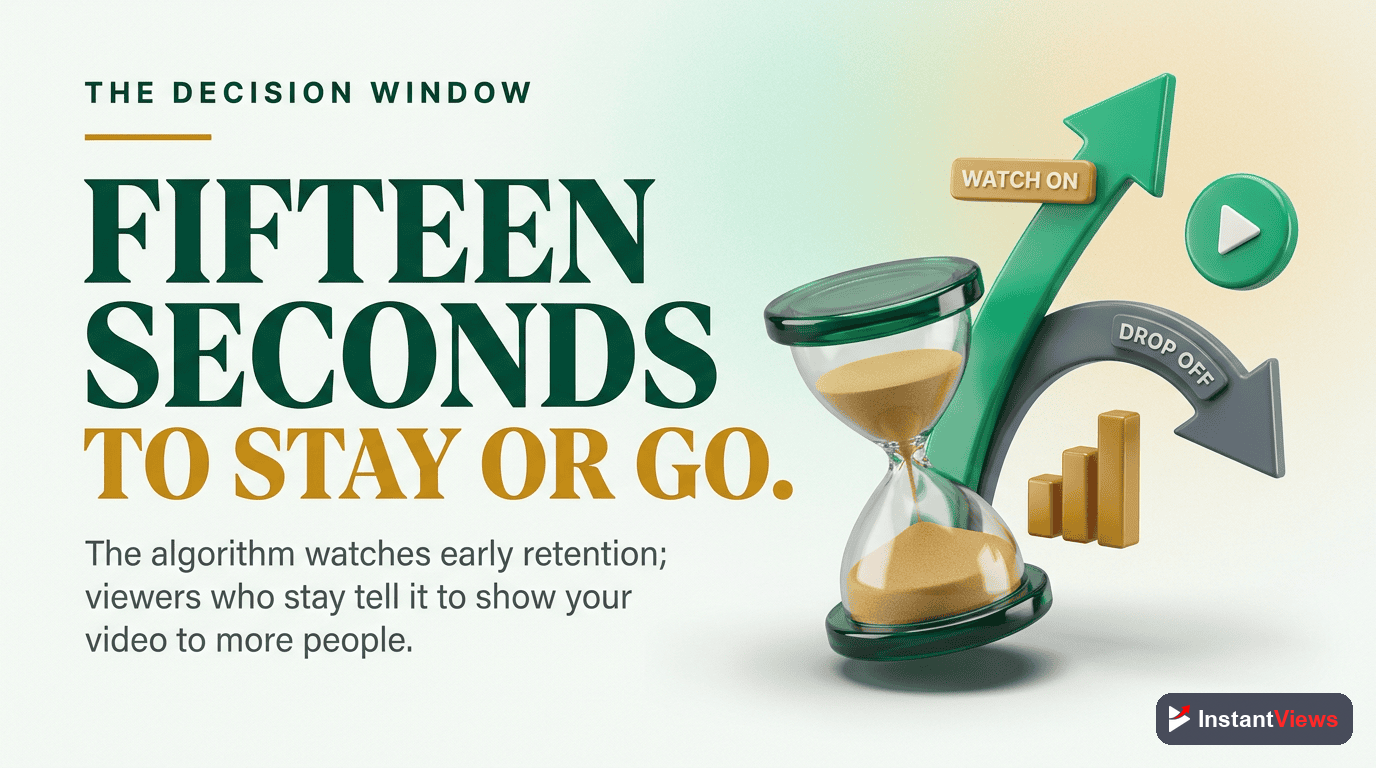
- The first 15 seconds set your early retention, and retention is the single strongest signal YouTube uses to recommend a video in 2026
- The 2026 algorithm judges Quality CTR — a high click-through rate paired with a fast early drop-off now gets a video demoted, not boosted
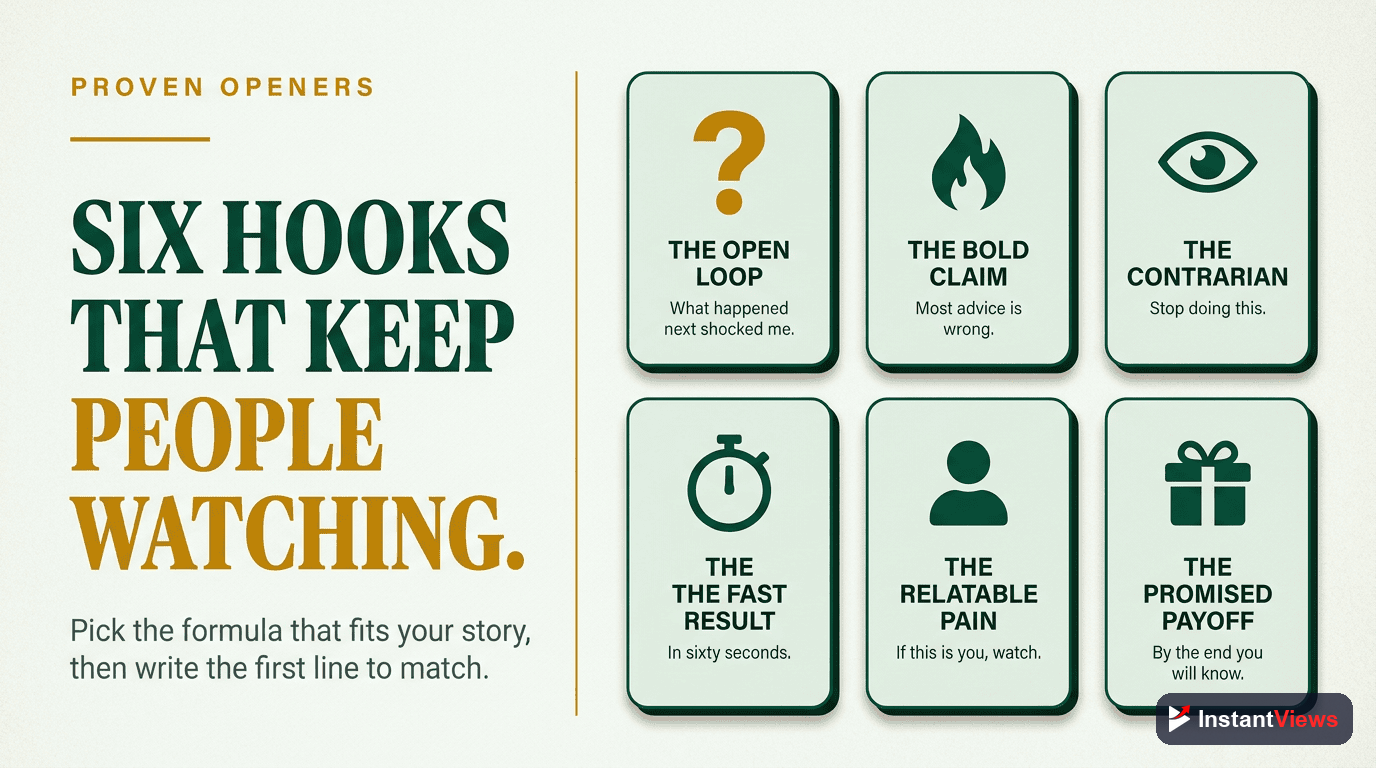
- Six reliable hook formulas cover almost every video: the question, the bold claim, the payoff tease, problem-agitate, the pattern interrupt, and in-media-res
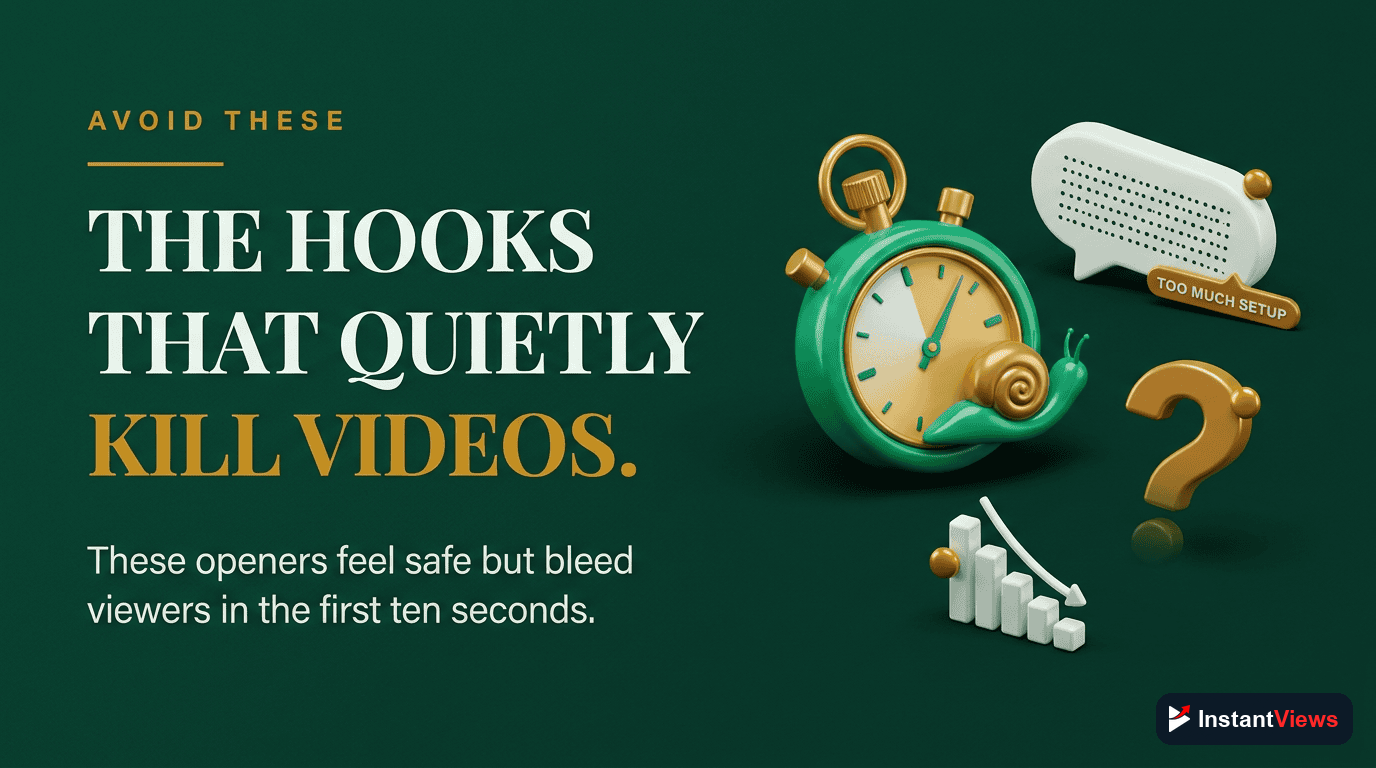
- Slow intros, long branded animations, and "hey guys, welcome back" are the most common reasons viewers leave before the value arrives
- Pair every spoken hook with an on-screen visual hook, because a large share of viewers start watching on mute
Every YouTube video lives or dies in its opening moments. You can spend a week scripting, shooting, and editing a brilliant ten-minute video, but if the first 15 seconds do not earn the next 15, almost no one will ever see the rest. The hook — that short window at the very start — is the most valuable real estate on YouTube, and it is where most creators quietly lose the audience they worked so hard to attract.
Here is the uncomfortable truth: viewers are not patient, and the platform is not forgiving. Research circulating among creators in 2026 suggests roughly one in five viewers drops off within the first 15 seconds — and often it is not because the video is bad, but because the intro never gave them a reason to stay. They clicked on a promise, and the opening failed to confirm it fast enough.
This guide breaks down the art and the mechanics of the perfect hook. You will learn why early retention now decides your reach, the six hook formulas that work across almost any niche, the intro habits that quietly kill your videos, and a complete before-and-after rewrite you can model. By the end you will be able to open any video in a way that stops the scroll and keeps viewers watching.
- What a Hook Really Is
- Why the First 15 Seconds Decide Your Reach
- The Anatomy of a Hook: 0–15 Seconds
- Six Proven Hook Formulas (With Examples)
- What to Avoid: Hooks That Quietly Kill Videos
- Before and After: A Hook Rewrite
- How to Write Your Hook, Step by Step
- The Visual Hook: Writing for Muted Viewers
- Test Your Hook Against the Retention Graph
- FAQ
What a Hook Really Is
A hook is the opening of your video — roughly the first 15 seconds — whose only job is to give the viewer a compelling reason to keep watching. It is not your intro animation, it is not your channel branding, and it is not a polite greeting. It is the moment you make a promise interesting enough that leaving feels like missing out.
Think of it the way a great first sentence works in a book. It does not summarize the whole story; it opens a loop the reader needs closed. A hook creates a small, irresistible tension — a question, a surprise, a stake — and signals that the rest of the video will resolve it. The viewer stays not because they are forced to, but because curiosity will not let them leave.
Crucially, a hook is a promise plus a reason to believe it. The promise tells the viewer what they will get; the reason to believe shows them you can deliver. "I tested every budget microphone so you do not have to" is a promise. Cutting straight to a wall of microphones on a desk is the reason to believe. Together they do in a few seconds what a slow, throat-clearing intro never could.
Why the First 15 Seconds Decide Your Reach
It would be easy to dismiss the hook as a stylistic nicety. It is not. In 2026, the first 15 seconds are mechanically tied to how far your video travels, because of how the recommendation system now works.
Retention Is the Strongest Signal
YouTube's 2026 algorithm optimizes for viewer satisfaction and retention, and retention now matters more than raw watch time. A six-minute video that holds 80% of its viewers can outperform a twenty-minute video that holds 30%, even though the longer video accumulates more total watch time. The platform would rather recommend something that keeps people engaged than something that merely runs long. Your hook is where retention is won or lost first.
Quality CTR Closes the Loophole
For years, creators chased click-through rate with dramatic titles and thumbnails. The 2026 system evaluates what engineers describe as Quality CTR: a video that earns a high click-through rate but then loses viewers in the first 15 to 30 seconds is now actively demoted rather than boosted. In other words, a clickbait title with a weak hook is worse than no clicks at all — you get the impressions, fail the retention test, and the algorithm stops showing the video to cold audiences.
The First 48 Hours Amplify Everything
Early performance compounds. The algorithm runs its most important test in roughly the first 24 to 48 hours after publishing, watching how your most engaged audience — subscribers and recent viewers — responds before deciding whether to push the video to strangers. A strong hook lifts retention exactly when that test is happening, which is why the hook and the critical early window are so tightly linked. (For a deeper look at that window, see our companion guide on the first 48 hours of a video's life.)
The Anatomy of a Hook: 0–15 Seconds
A reliable hook is not one moment; it is a short sequence. Across most well-performing videos, the opening 15 seconds break into three beats. Treat them as a structure you fill in, not a script to copy word for word.
- 0–5 seconds — the attention grab: Open the loop. Lead with a question, a bold claim, a surprising visual, or the single most interesting moment in the entire video. This is the beat that stops the scroll.
- 5–15 seconds — the promise: Make it explicit what the viewer will walk away with. Name the payoff so they know exactly why staying is worth their time.
- 15–30 seconds — the stakes or set-up: Establish context, raise what is at risk, or start the journey. This beat carries momentum from the hook into the body so there is no dead patch where attention can leak.
The biggest mistake is spending those first five seconds on anything other than the attention grab. Branding, greetings, and housekeeping all belong later — or nowhere. Every second you delay the promise is a second a viewer can decide they are in the wrong place.

Six Proven Hook Formulas (With Examples)
You do not have to reinvent the opening for every video. Six formulas cover the overwhelming majority of strong hooks. Learn them, then pick the one that fits the video you are making.
| Hook Type | How It Works | Example Opening Line |
|---|---|---|
| The Question | Opens a curiosity loop the viewer needs answered | "Why do some channels blow up overnight while better videos get ignored?" |
| The Bold Claim | States something surprising or contrarian that demands proof | "Your intro is the reason your videos are dying — and it takes ten seconds to fix." |
| The Payoff Tease | Shows the end result up front so viewers stay for the how | "By the end of this video, this empty room will look like this — for under a hundred dollars." |
| Problem–Agitate | Names a pain the viewer feels, then promises relief | "You post consistently, your videos are good, and still almost no one watches. Here is what is actually going wrong." |
| The Pattern Interrupt | Breaks expectation with an unusual visual, sound, or statement | "I deleted my three biggest videos on purpose. Let me explain." |
| In–Media–Res | Drops viewers into the middle of the action, then rewinds | "Three seconds before this whole thing collapsed, I was completely calm. Watch." |
How to Choose
Match the formula to your content. Tutorials and how-to videos shine with the payoff tease and problem-agitate, because viewers want to see the result and feel the pain you will solve. Opinion, commentary, and story-driven videos lean on the bold claim, the pattern interrupt, and in-media-res, which create tension and personality. The question works almost everywhere as a fast, low-effort way to open a loop. When in doubt, stack two: a bold claim delivered over a payoff-tease visual is often stronger than either alone.
What to Avoid: Hooks That Quietly Kill Videos
Most weak openings are not dramatic failures. They are small, familiar habits that each cost a few seconds and a few percent of retention — and together they sink the video before it has a chance. Watch for these.
- The long branded animation: A five-second logo sting at the start is five seconds of no value. Move branding to the end or trim it to under a second. Viewers did not click to watch your intro reel.
- "Hey guys, welcome back to the channel": The classic throat-clear. It tells the viewer nothing and delays the promise. Greet people after the hook has landed, if at all.
- Restating the title: If your title already says "5 Editing Tricks," do not open by saying "In this video I'm going to show you 5 editing tricks." Show the first trick instead.
- Slow context-setting: Long backstory before the point. Start with the point, then backfill context once you have earned the attention.
- Over-promising: A hook that promises more than the video delivers wins the click and loses the trust. Viewers leave disappointed, and that early drop-off signals low quality to the algorithm.
- Asking for the subscribe first: Requesting likes and subscriptions before delivering any value is asking for a favor you have not earned. Save the call to action for later.
A misleading hook does more damage than a boring one. When the opening promises a payoff the video never delivers, viewers abandon it fast — and in 2026 that steep early drop is read as a Quality CTR failure. The algorithm stops recommending the video, and your reach collapses even though your click-through rate looked great. Hook honestly.
Before and After: A Hook Rewrite
Theory is easy; rewriting is where it clicks. Here is a typical opening for a video titled "How I Edit My Videos Twice as Fast," shown before and after a hook rewrite.
Before (slow, generic)
"Hey everyone, welcome back to the channel. If you are new here, my name is Alex and I make videos about editing and content creation, so make sure you hit that subscribe button. So today, I wanted to talk about editing, because a lot of you have been asking me how I edit. So in this video I'm going to share some of the things I do. Let's get into it."
Roughly twenty seconds in, and the viewer still has not seen a single tip. There is a greeting, a self-introduction, a subscribe request, and a restatement of the title — everything except the value they clicked for. Most of the audience is already gone.
After (fast, specific)
"I used to spend six hours editing a single video. Now I do it in under three — same quality, half the time. The trick is not a faster computer or a fancy plugin. It is these three changes to how you cut, and the first one is the one almost everyone gets wrong. Here it is."
The rewrite leads with a bold claim and a payoff tease ("six hours to under three"), opens a curiosity loop ("the one almost everyone gets wrong"), and arrives at the first tip in seconds. No greeting, no branding, no subscribe request — just the promise, the proof it is coming, and immediate momentum into the body. Same video, completely different early-retention curve.
Sharpen Every Video Before You Hit Publish
Use our free suite of YouTube tools to research topics, write tighter titles, and analyze what is keeping viewers watching at every second.
Explore Free YouTube Tools →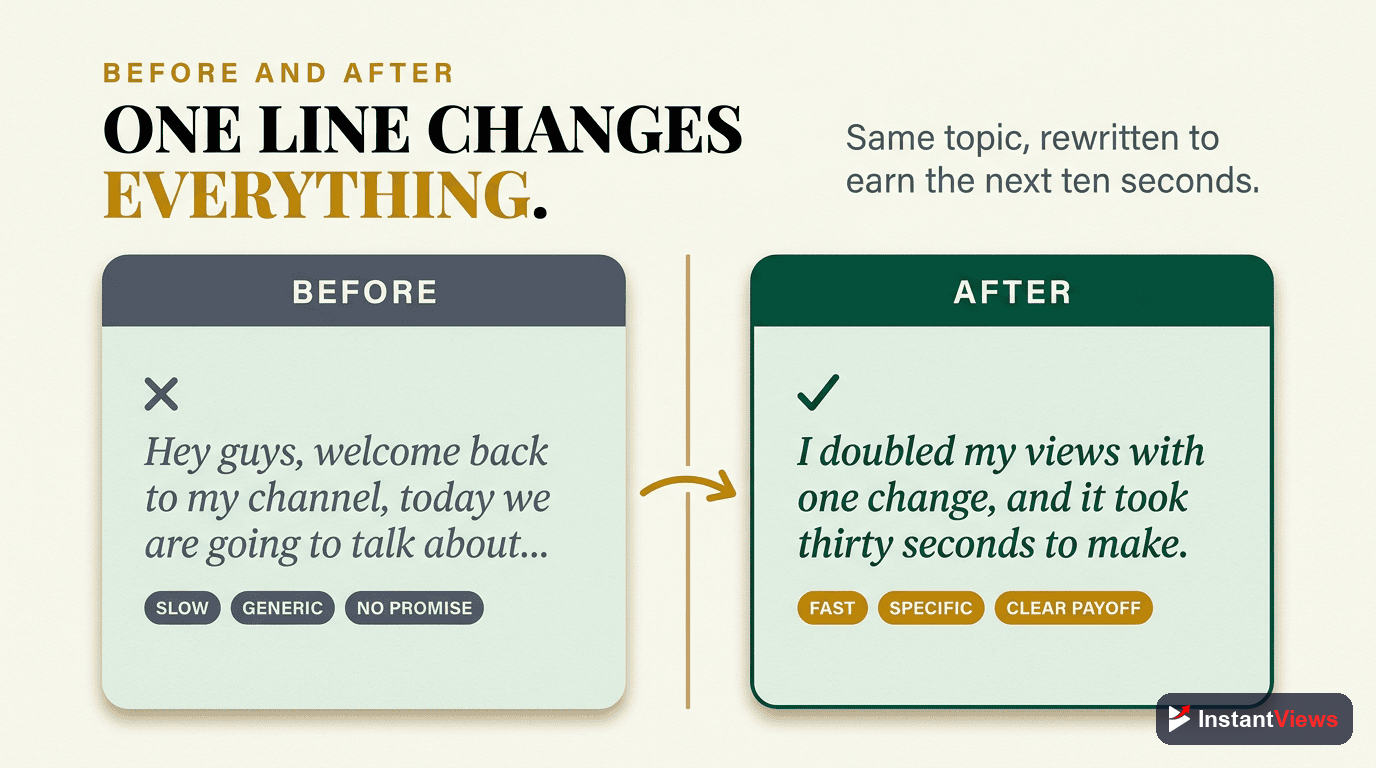
How to Write Your Hook, Step by Step
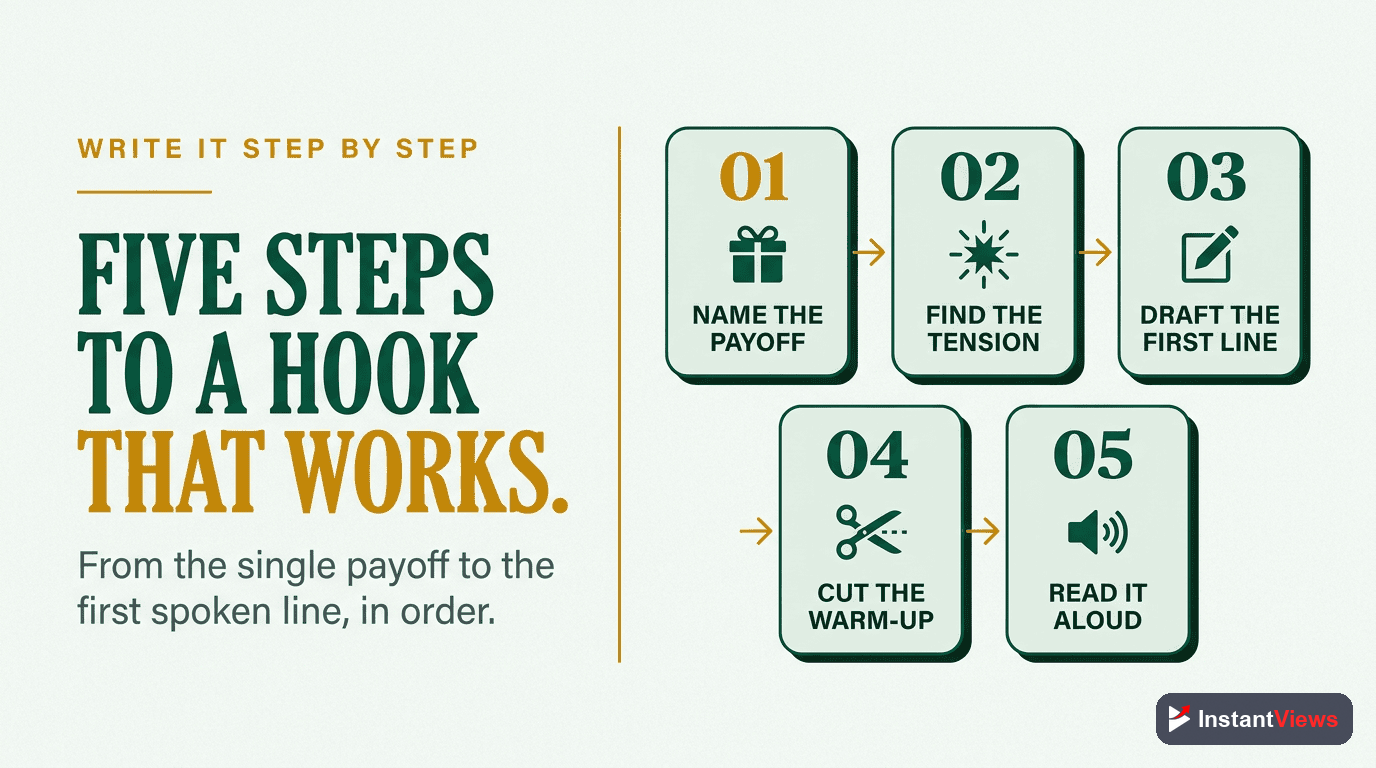
Use this sequence every time. It turns the hook from a thing you improvise at the camera into a deliberate part of your script.
Name the One Promise
Write the single payoff your video delivers in one sentence. If you cannot say it in one line, your video is trying to do too much — and your hook will be muddy. One video, one promise.
Pick a Formula
Choose from the six: question, bold claim, payoff tease, problem-agitate, pattern interrupt, or in-media-res. Let the content decide — tutorials tease the payoff, opinions lead with a claim.
Cut the First Five Seconds to the Bone
Delete the animation and the greeting. Open on the most interesting line or visual you have. If a sentence does not build curiosity or prove the promise, it does not belong in the hook.
Add a Visual Hook
Layer bold on-screen text or a preview clip over the spoken hook so the promise lands even on mute. The words you say and the words on screen should reinforce, not repeat, each other.
Read It Cold and Time It
Say the hook out loud and clock it. If the payoff has not appeared by the fifteen-second mark — or by three seconds on a Short — trim again until it does.
The Visual Hook: Writing for Muted Viewers
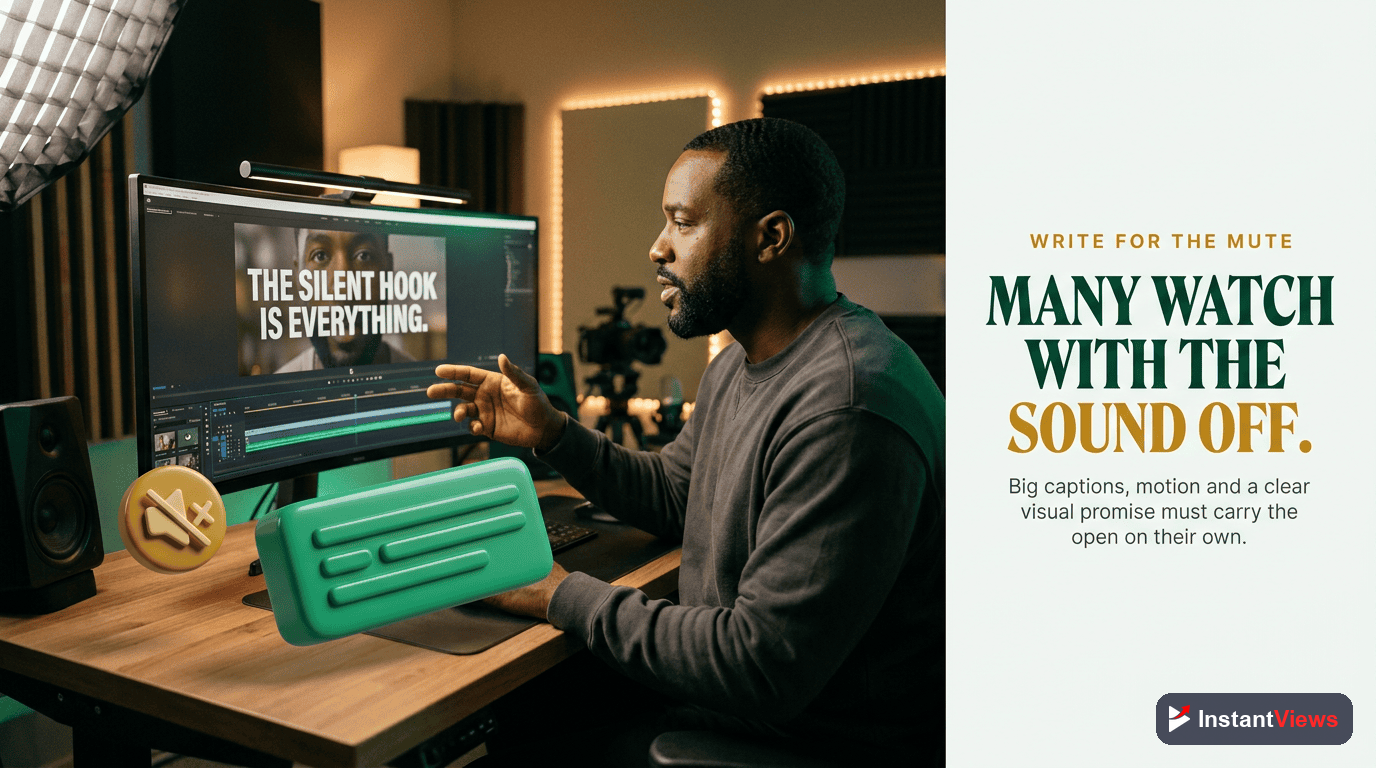
A spoken hook is only half the job. A large share of viewers start videos on mute or in noisy environments where they cannot hear you — on a commute, in an office, scrolling in bed. For those people, the visual hook does all the work, and a video that relies entirely on audio loses them silently.
That is why adding on-screen text and strong visuals to the opening pays off. Videos that put clear text on screen during the hook tend to hold more attention, because the promise is legible even with the sound off. The visual hook also reinforces the spoken one for everyone else, doubling the signal in the most important seconds of the video.
Make the Opening Work Silently
- Put the promise in text: A short, bold caption that states the payoff — "6 hours to 3" — communicates instantly.
- Open on motion or a result: A quick before/after, a striking shot, or the finished thing draws the eye more than a talking head.
- Avoid a static, silent first frame: A motionless thumbnail-like frame with no text gives a muted viewer nothing to grab onto.
- Keep captions readable: Large, high-contrast text that survives a small phone screen and a quick glance.
Test Your Hook Against the Retention Graph
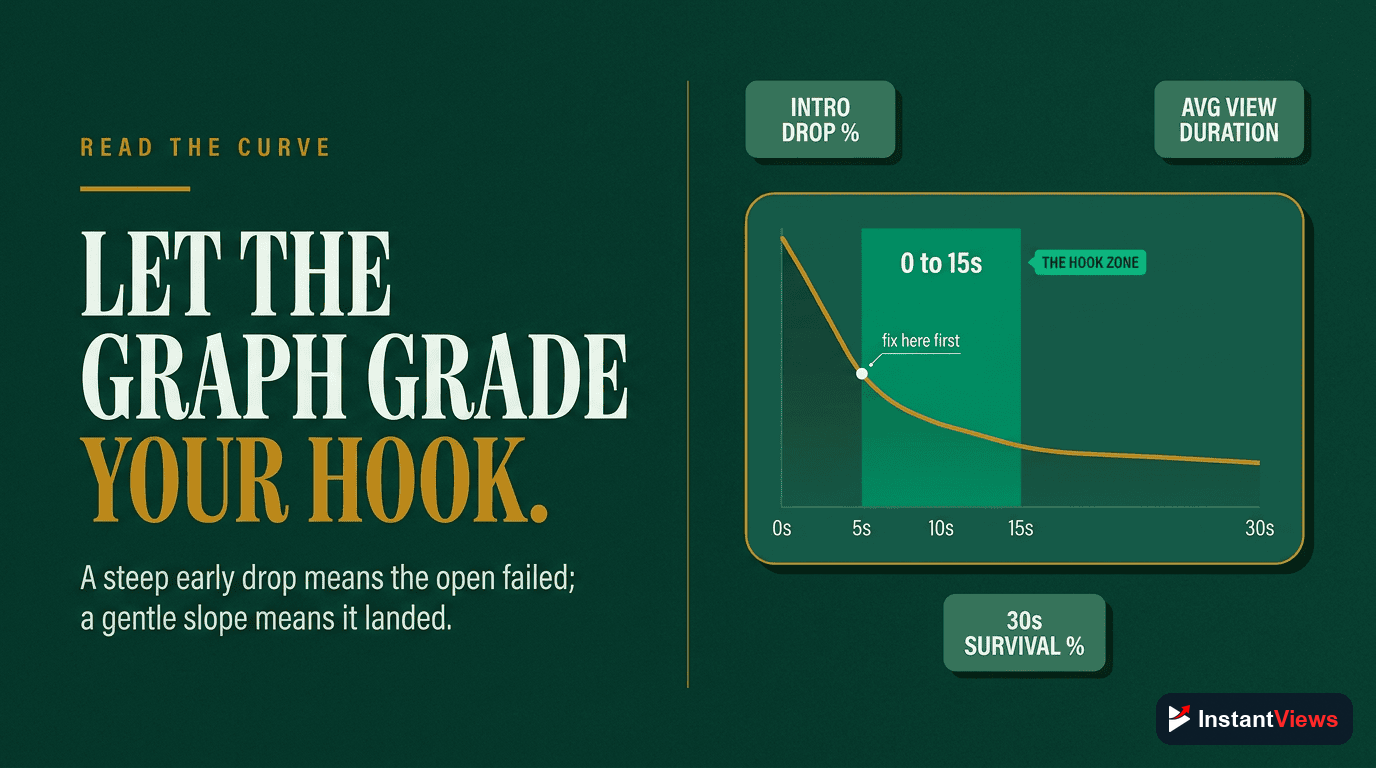
You do not have to guess whether a hook works. YouTube tells you. The audience retention graph in your analytics shows the percentage of viewers still watching at each moment, and the opening seconds are where the truth about your hook lives.
After publishing, open the retention graph and look only at the first 15 to 30 seconds. A healthy opening holds the majority of viewers through that window; a weak hook shows a steep cliff in the first few seconds. As a rough gauge, if you have already lost close to half your viewers in the first 10 to 15 seconds, the hook is the problem — not the topic, not the thumbnail, the hook.
Turn the Graph Into Better Hooks
- Find the cliff: Note the exact second where the biggest early drop happens and watch that moment back. Whatever plays there is what is pushing people away.
- Form one hypothesis: Too slow? Greeting first? Promise unclear? Pick the single most likely cause rather than changing everything at once.
- Rewrite and re-test: Apply the fix on your next upload and compare the opening curve. Hooks improve fastest when you treat each video as a small experiment.
- Bank what works: When a hook holds well, save it. Over time you build a personal library of opening patterns proven on your own audience.
This loop — write, publish, read the graph, refine — is what separates creators whose openings keep getting sharper from those who repeat the same slow intro for years. The hook is a skill, and the retention graph is your feedback.
"The first sentence has one job: to make you read the second. Every great video opening obeys the same rule — earn the next moment, and the moment after that, until the viewer forgets they were ever about to leave."
Frequently Asked Questions
A YouTube hook is the opening of your video — roughly the first 15 seconds — that grabs attention and gives viewers a compelling reason to keep watching. It promises a payoff, raises a question, or creates tension that can only be resolved by staying on the video.
Aim to land your hook within the first 15 seconds, with the strongest attention-grab in the opening 5 seconds. Short-form viewers decide even faster, often in under 3 seconds, so on Shorts your hook needs to do its work almost instantly.
The first 15 seconds set your early retention, and retention is the strongest signal YouTube uses to decide whether to recommend a video. In 2026 the algorithm evaluates Quality CTR: a video that earns clicks but loses viewers in the first 15 to 30 seconds is actively demoted, so a weak hook caps your reach no matter how good the rest is.
The most common killers are slow intros, long branded animations, throat-clearing like "hey guys welcome back," restating the title, and over-promising something the video never delivers. Each one spends precious early seconds without giving the viewer a reason to stay.
Yes. Many viewers start videos on mute or in noisy environments, so a visual hook — bold on-screen text, a striking image, or a quick preview clip — carries the promise even with the sound off. Pairing a spoken hook with a visual one makes the opening far more reliable.
Open the audience retention graph in YouTube Analytics and look at the first 15 to 30 seconds. A steep drop there means your hook is losing people. A healthy opening holds the majority of viewers; if you are below roughly half in the first 10 to 15 seconds, the hook needs to be rewritten and re-tested.
The principles are the same but the timing differs. Shorts demand an almost instant hook because viewers swipe within seconds, while long-form videos give you a few seconds more to set up stakes and context. In both cases you must lead with value and cut the slow intro.
No. A hook buys attention; the body has to keep it. An over-promising hook with a weak payoff actually hurts you, because viewers leave disappointed and that early drop-off signals low quality to the algorithm. The hook and the delivery have to match.
Conclusion
The perfect YouTube hook is not a trick or a gimmick — it is the discipline of giving viewers a reason to stay before they have any reason to leave. In 2026, that discipline is rewarded more directly than ever: retention is the strongest recommendation signal, and Quality CTR means a weak opening caps your reach no matter how good the rest of the video is.
Start with one promise, pick a formula that fits, and cut everything from the first five seconds that is not the attention grab. Pair the spoken hook with a visual one for the many viewers watching on mute, and lead with value instead of a greeting. Then let the audience retention graph tell you the truth and refine from there.
Do this on every upload and the compounding is real. A sharper hook lifts early retention, early retention earns the algorithm's trust in the critical first 48 hours, and that reach feeds the next video. Master the first 15 seconds, and you stop losing the audience you already worked so hard to win.